Author Archives: Abbie Jury

Unknown's avatar

About Abbie Jury

jury.co.nz Tikorangi The Jury Garden Taranaki NZ

Trees for Small Gardens

The handsome Queen Palm (Syragus romanzoffiana) comes with a warning

The handsome Queen Palm (Syragus romanzoffiana) comes with a warning

While I am a big garden specialist, gardening across hectares, not square metres, I have spent enough of my life selling plants and dispensing advice to understand that trees are problematic on the tiny urban sections that have become the lot in life for most people. I still think trees can be an option in small gardens or courtyards where a bit of height and form can give stature to an otherwise closed in space.

Worry about width, not height. I call it the footprint – how much space it takes up. Many people think that Magnolia Leonard Messell is a good option for small gardens because it only grows about 3 metres high. True, we have a specimen that is coming up to 30 years old and it isn’t much more than that – but man alive, it must be getting on for 5 or 6 metres wide. That is a lot of space. In fact it is about the same footprint as our large specimen Magnolia Iolanthe and nobody in their right minds would plant that in a tiny garden.

Magnolia Burgundy Star - a good choice where space is very limited

Magnolia Burgundy Star - a good choice where space is very limited

By contrast, Magnolia Burgundy Star is very narrow and upright. After fifteen years, the original tree here is about 5 metres tall but it is not much more than a metre wide. This means it can give height and presence without casting deep shadows and taking up room.

Prunus serrula - exquisite bark and narrow, upright growth

Prunus serrula - exquisite bark and narrow, upright growth

Flowering cherries tell a similar story. If you only look at the projected height so keep to lower growers like Prunus Shimidsu Zakura or sweet little weepers like Falling Snow, you are highly likely to get caught out by the width of the canopy over time and end up either brutally hacking into it or facing removal. Prunus serrula won’t give you the mass of fluffy flowers but it has wonderful bark and an obliging habit.

Palms, you may be wondering. Some upright, single trunked varieties like the bangalow (Archontophoenix cunninghamiana) or the more desirable Queen Palm (Syragus romanzoffiana) grow splendidly tall while taking minimal space. They are much favoured by landscapers for confined areas. However, they should come with a warning. They become too tall to groom so you have to let the spent fronds fall naturally and the sheath at the base of the frond is so heavy that it will break anything in its path, potentially ripping the spouting off your neighbour’s roof or causing panel damage to any vehicle in its path.

Conifers are often favoured – the narrow pencil cypress is the traditional look. Personally, I think they are a bit funereal and sombre, but others disagree. Conifers are not an area in which I have any expertise but you need to make sure that you have a variety which is not prone to red spider mite and be cautious if you think you will trim – many conifers don’t appreciate trimming and you can end up with unsightly bare patches.

Key pointers for choosing trees for small gardens:
1) Choose one that grows from a single trunk. Multi trunked and branched specimens take up a lot more room.
2) Keep to very narrow, upright growth. Shun anything with danger words like spreading, cascading, weeping or arching in the description. Think pillar-shaped (known as fastigiate).
3) Be cautious about a specimen you will have to prune regularly to keep under control. Anything over 2 metres high means you need a ladder and probably a pruning saw and loppers. It is better to plant the right sort of tree in the first place so that trimming requirements are minimal. By my definition, if it is under 3 metres, it is a shrub, not a tree.
4) Remember that it is not in the nature of trees to grow rapidly to the height you want and then to stop getting any taller. Trees that grow quickly will usually keep growing well beyond that. Small tree usually means slower grower. If it matters to you, pay the extra and buy an advanced grade specimen.

If you can find a tree with lovely bark or a seasonal flower display, then it is so much more interesting. Apropos of this, I came across a wonderful book recently by Waikato authors and tree-lovers, John and Bunny Mortimer. “Trees and their Bark” was published in 2003 but, being self published, I don’t think it received the attention it deserved. It is a delightful book, very readable with plenty of colour photos, by authors who know the topic inside out. It is still available and what is more, it is being remaindered at a ridiculously low price. I would not pass it by – it is worth having in the bookcase even if you are not in a position to plant trees. You will find the Mortimers listed in the Hamilton phone book or the white pages on line – there can only be one Bunny Mortimer.

Bunny’s pick for a small tree which can be grown on tiny sections is psuedocydonia which she feels ticks all the right boxes. You may have to get a copy of their book to find out more about it – it certainly has very striking bark as well as quince-like, fragrant fruit following on from japonica flowers. The only problem is finding it. You will probably have to grow it from seed.

First published in the Waikato Times and reproduced here with their permission.

Grow it yourself: Bok Choy or Pak Choi

Mark, the vegetable-growing husband here, comments that we have been a bit slow to wise up to the fact that the Chinese know a great deal about food production and we should have been looking to their crops a long time ago. Bok Choy, also known as Pak Choi, is a case in point. In the world of leafy greens, it is a great deal faster and easier to grow than the likes of spinach. It can also be grown throughout most of the year and deserves to be a staple crop, though you are best to avoid sowing in mid summer when it is more likely to get stressed and bolt to seed rather than to leaf. It is so easy to grow from seed that there is not a lot of point in buying baby plants.

Sow into the usual vegetable garden conditions – full sun and well cultivated soil with plenty of compost or humus added. Water if it gets too dry. Within a few weeks, the seeds will have germinated and you can start thinning the row and eating those baby thinnings as micro greens, raw in salads or lightly cooked in stirfries. Bok choy only takes about six weeks to reach maturity so you can be harvesting for as much as four weeks of that time, at various stages of growth. As with many crops, sowing a few seed every three weeks ensures a steady supply but it really comes into its own as a winter green when the more common crops basically stop growing and fresh veg are expensive to buy. There is a lot to be said for a quick maturing green vegetable which grows all year round and is not silver beet.

First published in the Waikato Times and reproduced here with their permission.

Tikorangi Diary: Thursday 16 September 2011

The original Iolanthe is a wondrous sight this week

The original Iolanthe is a wondrous sight this week


Veltheimia bracteata "Rosalba"

Veltheimia bracteata "Rosalba"

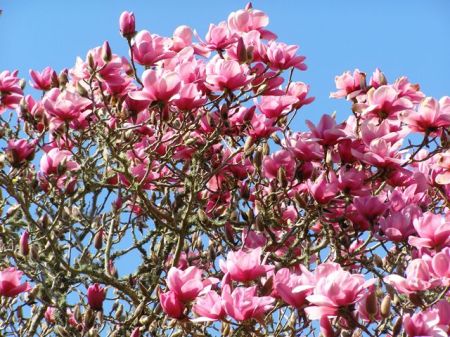
It is not easy to convey the full impact of the original Magnolia Iolanthe in flower. It is a wondrous event. Mind you, at about 50 years old, the canopy does measure around 10 metres across so there is rather a lot of Iolanthe to be wondrous. As somebody commented to us, what will Felix Jury be like in full flower when it achieves the same age and similar stature? Possibly even more astounding. We never tire of magnolia time here.

We advertise that we are open for plant sales on Fridays and Saturdays which means that we will definitely be here in attendance. In fact we are here most of the time and the garden is open every day (there is an honesty box if we are not around) but we just don’t guarantee our availability on other days. You can ring first to check if you want to come on other days. Details on what we have available are listed in Plant Sales. I have to comment though that despite every page on Plant Sales explaining that we do not courier or mail order plants, (sales are to personal customers only), every single day brings enquiries from people who have either failed to read that header comment or who hope that we will make an exception for them. If it was easy to pack and courier plants, we would still be doing it but it isn’t, so we don’t. End of story, I am afraid. We will however hold plants out the back while you arrange for somebody else to pick them up for you or until you can get here.

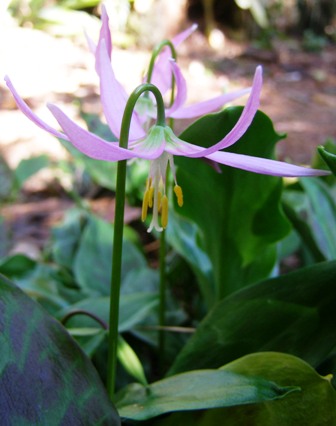
The dainty delight of the erythronium

The dainty delight of the erythronium

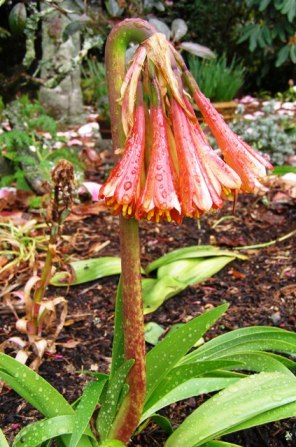
The highly sought after lemon and pink variant of veltheimia (bracteata Rosalba) is just coming into flower but we only have a few plants left so be in quickly if you want it. We have plenty of the more common pink (bracteata). And just as a complete contrast to the opulent magnolias, we have plants of one of the daintiest and most ephemeral seasonal delights – dogs tooth violets or erythroniums. Spring here is all about the big pictures and the tiny treasures. Why would anybody want an evergreen garden which looks the same all year round?

Tikorangi Diary, September 9, 2011

Magnolia Felix Jury in its glory now

Magnolia Felix Jury in its glory now

Latest Posts: Friday 9 September, 2011
Back in business! Today sees the resumption of weekly series of posts, but this time first published in the Waikato Times. It feels good to be back into regular writing to deadlines, believe it or not.

1) Plant Collector – campanulata or Taiwanese cherry trees and a photo of a feeding tui which represents about the 40th attempt to capture the moment.

2) Blighted! I don’t even like buxus hedging, but in deference to all the searches I see looking for information on wretched buxus blight, herewith the essential information as far as I can decode it.

3) Finocchio – the first of a new series looking at a different vegetable crop each week.

4) The constructions at Paloma Gardens – not from the Waikato Times, this one, but a piece I wrote for Weekend Gardener looking at the constructions and creations of the enterprising Clive Higgie. It was very interesting watching Alan Titchmarsh talking about the Victorian garden on TV last week. There is a shade of those Victorian gardeners to Clive – the flamboyance, the drive to be genuinely original and the passion for collecting plants which are different, new and interesting.

Prunus Te Mara and a seedling magnolia in our carpark area

Prunus Te Mara and a seedling magnolia in our carpark area

Tikorangi Diary: Friday 9 September, 2011

The abnormally cold weather of late winter may have taken out the early magnolia display (well, it did, to be more precise) but a week of mild weather has brought on the next flush of blooms and the garden is full of colour, flowers, fragrance and birds. This is when magnolias which flower down the stem (like Felix Jury) come into their own. The first blooms were taken out by the weather, but fresh flowers have opened and they look wonderful whereas cultivars like Lanarth, which only set buds on the branch tips and open all at once, was a non-event this year. If you want to see the magnolias and early spring garden, we are offering one free adult garden entry with each magnolia purchase today and this weekend. You can check out what we have available under Plant Sales.

Prunus Te Mara has never looked as good. This is a semi evergreen cherry and I had been threatening it with the chainsaw because I was underwhelmed by it. The winter chill this season took most of the foliage off and the flowering is considerably more impressive. I would guess that this is cherry better suited to areas with colder winters.

Moraea spathulata

Moraea spathulata

In the bulbs, it is Moraea spathulata which has been a minor triumph. It is not that it is meant to be difficult to grow, just that it has taken several attempts to find the right place for it in the garden. Apparently the front row of the rockery suits it just fine because it is flowering in a most obliging fashion. M. spathulata grows from a bulb which is similar to its more refined siblings, villosa and polystachya, but it is evergreen and its exceptionally long, strappy green leaves can be a little scruffy in the wrong place. I can forgive that when I see the delicate yellow iris blooms.

Plant Collector – Prunus campanulata

It took many attempts to capture the tui in the campanulata cherry

It took many attempts to capture the tui in the campanulata cherry

The cherry trees which have been in flower in recent weeks are the campanulata or Taiwanese cherries. Sometimes you will still see them referred to as Formosan cherries which may require a lesson in history for anybody under the age of about 60. True, the colours can be a little harsh in carmine pink, cerise and sugar-candy pink tones but on a bleak early spring day, who is going to quibble about the mass of flowers which appear on bare branches? The biggest bonus of the campanulatas is their attraction to tui who feed on the nectar. Our native birds are wonderfully unconcerned about whether or not their food sources are indigenous plants. We can have upwards of 30 tui bickering and squabbling for territory in a single tree, but they don’t stay still long enough to count accurately.

Campanulata cherries are not as hardy as the later flowering Japanese types but this is rarely a problem except in the coldest parts of the country. They are also more disease resistant and healthier in our climate and don’t succumb to the dreaded witches broom which can be a problem in other types. If you plant several (and being a tree of light stature, they are easy to fit in alongside other trees), you can have them flowering in succession over many weeks which keeps the tui at home. The big disadvantage is that many forms set seed freely and germinate readily. They are such a problem that they are on the banned list in Northland unless it is a known sterile form which doesn’t set seed. If you border native bush or a national park, make sure you search out forms advertised as sterile but otherwise you just have to be vigilant with your weeding.

(first published in the Waikato Times and reproduced here with their permission)