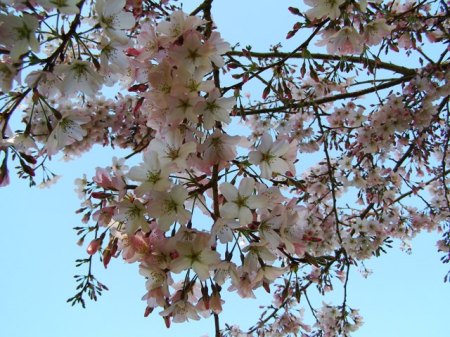
If you will only grow evergreen plants, you miss out on seasonal delights like Prunus Awanui in flower
I am trying to think if there are any plants which do not have an off period and which look good all year round. I have failed to come up with anything other than conifers and they are hardly the country’s most popular plant family these days. Every other plant I have thought of has times of the year when they look better than other times and generally they go through a scruffy period.
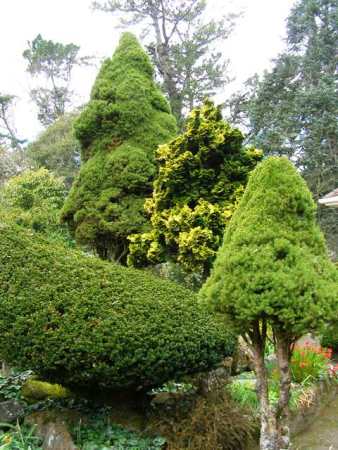
Most conifers don't seem to have an off-period but too few people want them in their garden these days
It is a bit like the perceived wisdom that evergreen trees and shrubs don’t drop their leaves. Sorry, but they do. They just don’t drop them all at once in autumn. It is in the nature of woody plants to drop a full year’s foliage every year. They may hold onto leaves for several years, but sooner or later they drop them. Some drop them gradually and quietly all the time. Some have a bit of an off period when they will shed more (usually just before the fresh growth comes). Some, like our enormous Schima noronhae, are semi evergreen and will drop the lot as the new leaves come so it is never without foliage but each set only stays one year.
Gardening and nature is an inherently untidy business. If you can’t live with that, you may be better off in an apartment with no outside space calling out for plants. What started this train of thought was reading a landscaper’s account of a client’s garden where plants were chosen for their year round foliage, their lack of an off season, preferably shiny green and fragrant (presumably they were allowed to flower because foliage tends to be aromatic, rather than fragrant). It is a list of attributes I have often seen before, almost invariably from novices, non gardeners and designers who by very definition tend to have clients falling into the first two categories. It all seems so controlling and static to me – wanting to create a pleasing picture that will stay the same all year. I just think that is what you do inside the house with inert objects away from the ravages of the elements. It is more about design than landscaping.
I can’t imagine having a garden which does not celebrate the seasons. Why would you want to eliminate the variables of nature when that is what makes it interesting? If you refuse to have deciduous plants, you miss the fresh and fulsome spring burst when they look so lush. You also miss the autumn colour on some (though this will be better if you live inland and in areas where you get sharp frosts to signal the change of season). There is a beauty in bare branches throughout winter, especially if the plant has interesting bark or form. These are not as obvious on plants which remain fully clothed all year round. So many deciduous plants burst into bloom, to be followed soon after by the foliage and those plants which flower on bare wood are hugely more spectacular than plants which flower amongst the foliage. Think of magnolias, flowering cherries or chimonanthus. But not just woody trees and shrubs: bulbs mark the passage of the seasons better than any other plant group I can think of. In the static picture garden, there is no place for bulbs, the vast majority of which have an undeniably scruffy season after flowering before they go to bed below ground for their dormant period. But before that scruffy time, they wow us with their flowering brilliance.
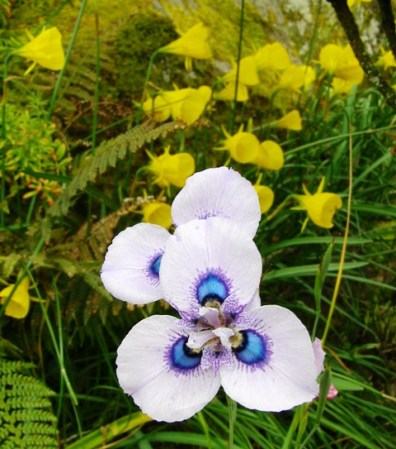
The delight of seasonal bulbs - Moraea villosa (the peacock iris) with Narcissus bulbocodium behind
That said, I wouldn’t want a garden which only has deciduous plants. Evergreens give year round structure and colour, even if they are mostly shades of green in foliage. It is the mix of plant groups and differing characteristics of plants that makes the garden a more interesting place.
Neither would I reject a plant because it lacks scent just as I would be unlikely to buy a plant on scent alone. We have many scented plants but it is more obvious with most if you pick them and bring them indoors. It takes a very strong scent to stop you dead in your tracks outdoors – some daphnes, perhaps, jonquils, auratum lilies and orange blossom come to mind. These are heady scents but you usually have to be within a metre or so of the plant to smell them. All that fresh air outside dilutes and dissipates scent more quickly than most people realise. It is far more common that you need to stick your nose right into the flower to smell it. Certainly, fragrance is a bonus but a basic criterion for selection? Not in my books.
I guess it all comes down to the difference between a designer and gardener. The former wants something that looks good and can be maintained easily while the latter wants something which is interesting, changing, even challenging and looks good.


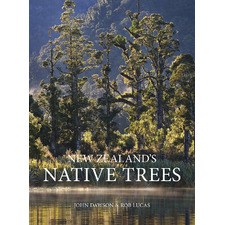 When one reviews books, there is a fair amount of dross to wade through to find the gems but only occasionally does a definitive benchmark study turn up. New Zealand’s Native Trees is a huge book (570 pages and 2300 photographs) and comprehensive, covering 320 different species of trees, including sub species and varieties – which is all of our trees, I understand. We don’t always realise in this country just how special and unique is our native flora and this book covers pretty much everything you will ever need or want to know. It is not an off-putting academic treatise, though it is a reference book (it is too large to be anything else – you need to rest it on a desk) but with accessible information. Trees are photographed in situ as well as with comprehensive close-ups to aid identification. The text is clear and able to be understood easily by anyone ranging from those with a desultory interest through to the enthusiast and the expert. Additional information of interest is contained in boxes – the cabbage tree moth which chews holes in cordyline foliage, how to tell kanuka from manuka and much more.
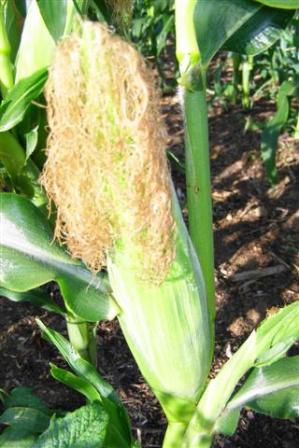 I am married to one of the world’s biggest fans of sweetcorn. Maybe he has been reincarnated from an indigenous tribe from the Americas, where our modern sweetcorn has its antecedents as the primary carbodydrate staple. He has planted his first seed of this season into small pots to get them started under cover and he will plant them out, in accordance with NZ tradition, at Labour Weekend. From there, he will sow in succession through as late as the end of January in order to get fresh corn for a period of five months of the year. Sweetcorn is worth growing at home because the freshly picked product is infinitely superior to anything you will buy. The natural sugars start turning to starch almost immediately on picking.
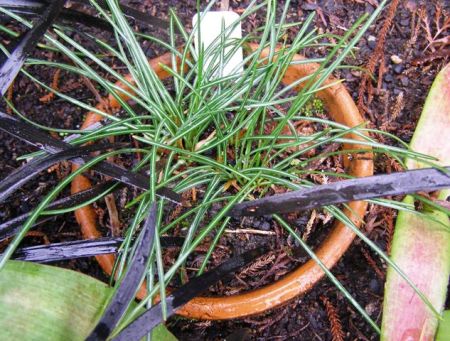 Plunging is a gardening technique that has been around for a long time but is not often seen in New Zealand. It is simply burying a porous pot in the ground so that only the lip is visible. Traditionally, in the United Kingdom, it was often done to stop the roots of the plants from freezing in cold winters. It also stopped terracotta pots from shattering in severe frosts. It is also done to equalise moisture and to stop plants getting either waterlogged or too dry. If you visit the alpine houses at the RHS Wisley Gardens, you will see that all the alpine treasures are grown in pots which are plunged into beds of compacted sand.
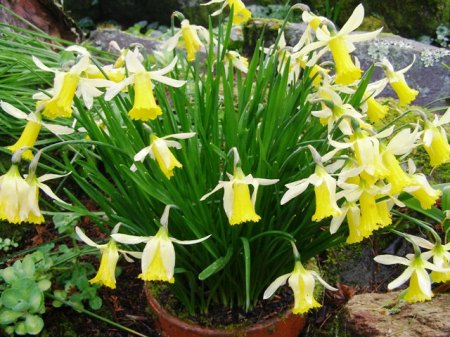
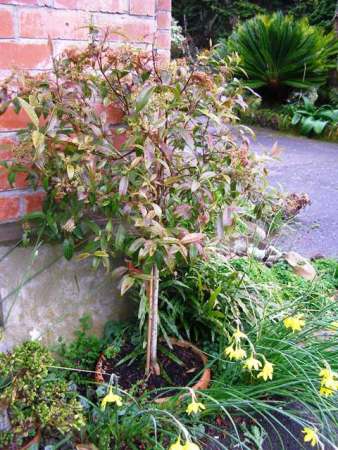
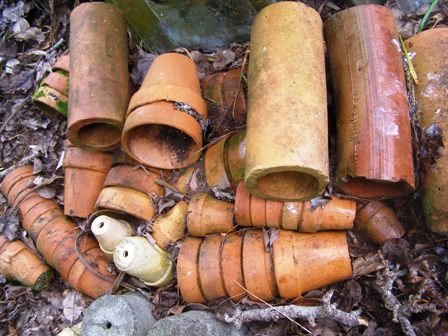 Plunging is a technique I have been using around our garden for a variety of purposes. It is important to note that it only works with porous pots. Fortunately, I inherited a collection of aged terracotta pots and drainage pipes in various sizes which fit the bill. If you use glazed or plastic pots, the water cannot move between the surrounding soils and the plant’s roots in the pot.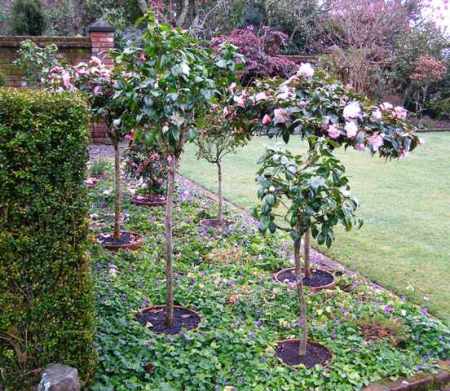

 Tikorangi The Jury Garden