Author Archives: Abbie Jury

Unknown's avatar

About Abbie Jury

jury.co.nz Tikorangi The Jury Garden Taranaki NZ

In the garden this week: April 8, 2011

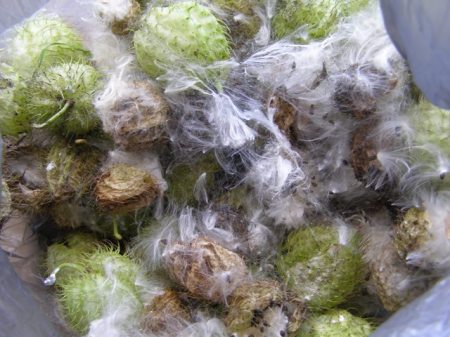
Time to gather swan plant seed

Time to gather swan plant seed

• If you had swan plants which were large enough to set seed, gather the seed and hold it over for planting in early spring. A row of plants in the vegetable garden is a satisfying summer entertainment.

• The walnuts are starting to fall. If you have trees, you need to gather the nuts frequently or you will find the wildlife beats you there at night – particularly rats. Nuts need to be dried before they can be eaten and stored. We spread them in a single layer on trays for a couple of weeks and try and fight off the vermin which will conduct raiding parties until we can get them stored away. Mark sometimes resorts to putting the dried nuts in tightly tied onion bags hanging from the shed roof.

• Pumpkins store better if they are dried out first. Eat any thin skinned varieties of pumpkin first (the green buttercup type along with squash) and keep the tough iron grey ones for last. However, if you plan on storing pumpkins, make sure that their outer casing is undamaged or they will just rot.

• Onions also store better if they are first dried in warm, light conditions.

• You are running out of time for planting vegetables to harvest during winter. Soon it will be time to plant for spring. Get in peas, brassicas and winter leafy greens (silver beet, spinach and winter lettuce) without delay.

• Sow down bare areas of the vegetable patch with green crops such as oats, lupin, vetch, phaecelia, mustard or rye grass. They will germinate and grow, reduce weed infestations and when you dig them into the ground in early spring, they will add goodness and structure to the soil. Leguminous green crops like lupin and vetch also fix nitrogen in the soil.

• You are not likely to ripen tomatoes on old vines now. Gather any perfect fruit, green or not, because they can be ripened off the vine and are less likely rot.

• If you have areas in the ornamental garden which are looking scruffy, past it and generally unappealing, lifting perennials and dividing them can make a big difference. These plants appreciate frequent handling and will respond with renewed vigour, especially if you dig over the area before replanting, water them back in and add a scattering of fertiliser. Perennial plants include all the clumping types of plants, as well as flaxes and grasses.
Plant Collector – Camellia sinensis

Grown to harvest for tea, rather than its floral display - Camellia sinensis

Grown to harvest for tea, rather than its floral display - Camellia sinensis

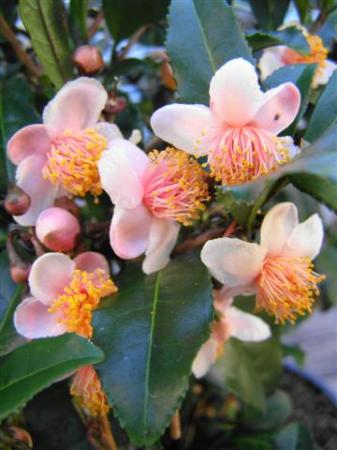
Despite being one of the first camellias of the season to flower, Camellia sinensis is not grown for its floral display but as a crop. It is the tea camellia. All tea comes from the same plant. Whether it is green tea, oolong tea or black tea depends not on the plant variety but on how it is dried, fermented and roasted. The preparation of quality teas takes a skill level on a par with roasting coffee or making wine. You can, however, harvest easily for home consumption, unlike wine and coffee. Green tea is unfermented and the leaves can be used fresh or dried. Oolong tea is lightly fermented (or sweated) and very lightly roasted. Further along the line is the fully fermented and roasted black tea. For the very best quality, you only pick the three leaves of fresh growth. By picking, you encourage the plant to continue pushing out fresh growth.

Camellias, as we all know, grow extremely well in New Zealand. The first attempts to grow sinensis commercially failed because of the site – cold inland valleys of Nelson. The frosts burned the desirable new growths. There is now a Taiwanese plantation near Hamilton which specialises in high quality oolong tea for the Chinese market. Most C. sinensis flower white. This form has flowers in dusky pink, but still tiny. The leaves are not like a common shiny japonica, being longer, crinkly and softer. We grow it in the vegetable garden and keep it to about 1.5m high x 1.2 m wide. Should Armageddon strike, we will have to drop coffee off the menu but we can still drink tea. I will just have to find out which bergamot is added in order to replicate our favourite Earl Grey tea.

Tikorangi Notes: Friday, April 1, 2011

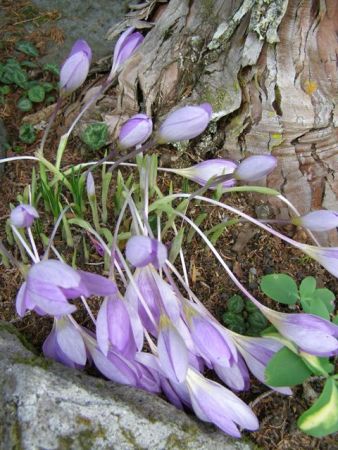
The blue autumn crocus - a fleeting seasonal delight

The blue autumn crocus - a fleeting seasonal delight

Nerines flowering in the rockery

Nerines flowering in the rockery

Latest posts:
1) Camellia sinensis is grown for harvesting, not for its floral display though its little pink flowers are charming if you look closely. The tea camellia in Plant Collector this week.

2) Garden tasks this week as we enter the second month of autumn.

3) Fifty Plants that Changed the Course of History – book review.

4) Outdoor Classroom this week looks at options for garden mulches in the first of a two part series. I was a little surprised to find that the dreaded scoria is still available.

Latest posts: While early spring is widely seen as the prime season for bulbs, autumn can be pretty rewarding too. The nerines are currently at their peak, the Moraea polystachya, zephyranthes and Spiloxene alba have particularly long flowering seasons, the Cyclamen hederafolium create carpets of pink and white, while the autumn crocus, colchicums and sternbergia are more fleeting delights. April heralds the start of our off season when we say the garden is closed, except by appointment. Mark stood in the rockery today, wondering why we advertise such an early closing date when there is still so much colour and interest.

In the Garden: Friday 1 April, 2011

A game of chance with the pepper crop this year

A game of chance with the pepper crop this year

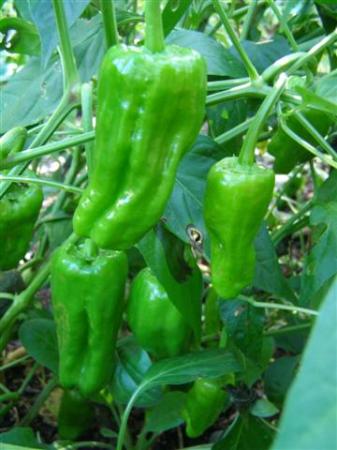
• The capsicum crop this year has been causing me problems. Peperone Padron is apparently a Spanish heirloom variety, renowned for the fact that it bears both mild and hot peppers but you can not tell the difference until you eat them. The seed packet proudly proclaims that eating a portion is popularly linked to Russian roulette. I prefer a little more predictability in the harvest so we may be more conservative with next year’s varieties.

• The spring bulbs are bolting into growth so if you have patches you have been meaning to dig and divide, do them this weekend and handle them gently. You have longer if you are buying dry bulbs which are still available at all garden outlets.

• We should still have at least five weeks of very mild weather, albeit with cooler nights, before the threat of frosts in inland areas and the first blasts of winter chill. So it is perfect planting time for trees and shrubs.

• The mild conditions are also the reason why right now is a good time to do an autumn fertilising round. The plants have time to benefit from the feed before they either go dormant or slow dramatically in growth over winter.

• Sow new lawns and over sow bare patches now. The grass has time to germinate and get some roots out before winter.

• Don’t walk away from the vegetable garden after you harvest the autumn crops, even if you are not intending to replant until springtime. It is time to do a big tidy and clean up. Remove blighted and mildewed plants entirely from the site to try and break the cycle. You don’t want the fungi and diseases wintering over in your patch. If you are going to dispose of them by burying them, don’t do it in your vegetable garden and only compost them if you make a hot mix. It is also good practice to rake up the leaves from fruit trees as they fall. You can help break the cycle of pests and diseases by good hygiene.

• With cooler nights, mice will be moving indoors. If you are storing seed, move the packets to rodent proof containers.

Fifty Plants that Changed the Course of History, by Bill Laws.

This is a book themed on plants, not to be confused with a gardening book. A collection of fifty chapters on disparate plants (agave, chilli pepper, coconut, olive and forty six others), it is filled with delightfully written random pieces of information. So the chapter on pineapple includes the Wardian case (a vital piece of equipment for transporting plants back alive on very long sea voyages, though it was originally designed for studying moths), a dissertation on the evolution of the glasshouse – and with that, the invention of Bakelite – along with a note about Mr Dole from Hawaii, a name immortalised on the tins of pineapple in our supermarkets. It is full of such curious, eclectic and wide ranging content, ideal for those who like to pick up a book and browse randomly in the hope that some day they may come up with the right answer in a quiz. But more than that, it is underpinned by a little bit of sound botany and wrapped up in a medium format hardback, packed with lovely botanical paintings, historical works of art, imagery and muted, modern photography. The English are masters of understated quality.

(Allen and Unwin; ISBN: 978 1 74237 218 1).