Author Archives: Abbie Jury

Unknown's avatar

About Abbie Jury

jury.co.nz Tikorangi The Jury Garden Taranaki NZ

Tikorangi Notes: Friday 17 December, 2010

Straight after the rains, the zephyranthes appeared this week

Straight after the rains, the zephyranthes appeared this week

LATEST POSTS: Friday 17 December, 2010

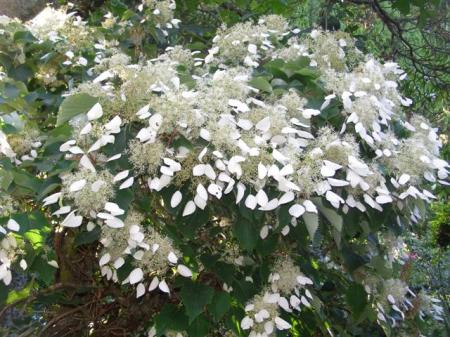
1) Cornus prefer a drier, continental style of climate to our mild, humid conditions but Cornus kousa var. chinensis flowers prettily at this time of year.

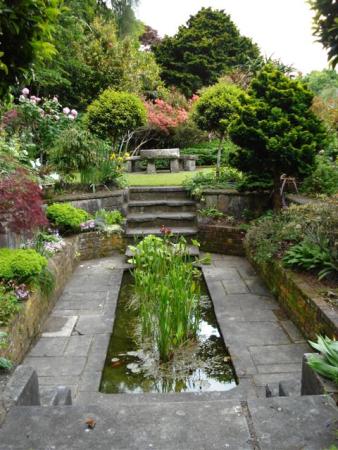
2) Water features can be more of a challenge than many gardeners appreciate when they decide to install one – Abbie’s column.

3) A week out from Christmas and we give our hints for garden tasks in this busy week.

TIKORANGI NOTES: Friday 17 December, 2010
While seven or eight weeks without rain may be nothing unusual for other parts of the world, here it has us in serious trouble so the 25ml that has fallen so far this week has been hugely welcome. Not enough, but it is at least a start. And that is all it took to bring the pretty copper and yellow zephyranthes into flower. These gently seed down beside our driveway and flower intermittently in the gravel for an extended period throughout summer.

The pitfalls and perils of garden water features

It may be a natural stream in our park but it is hardly an easy care water feature

It may be a natural stream in our park but it is hardly an easy care water feature

Water is an important inclusion in any garden, or so the common wisdom says. We laughed when Joe Swift on BBC Gardener’s World commented that he hated water features because they were rarely maintained. Water is difficult to manage well.

A natural stream might seem the best option for the lucky ones and on a fine day, the mountain brook that bounces its way through Ngamamaku Garden is indeed a source of envy for many of us. The trouble is that with our torrential downpours, natural streams can quickly become raging torrents which take out all your plantings. Tony has long since given up using treasures in his stream-side plantings. They disappear in the flood torrents. We have the upper reaches of the Waiau Stream running through our park and again, it is charming and a great asset. Because we control the flood waters by some simple but time honoured techniques (a weir and a flood channel), we don’t get the scouring but it takes constant management to prevent it all silting up and regular, heavy work to keep the water weeds under control – particularly oxygen weed and Cape Pond Weed.

Ponds – are ponds easier? Possibly the larger your pond, the more self maintaining it becomes though you generally need fish (commonly goldfish) to keep the mosquito larvae at bay. By definition here, a lake is sufficiently large to allow water skiing, or at least canoeing. If it is not of that dimension, it is a pond. Maybe a large pond, but a pond. By the time your pond has shrunk below about a metre square or round, it can’t really be called a pond any longer. A puddle, perhaps, or a basin? If you have a natural pond fed by a spring, it may stay fresher and relatively stable through the seasons. Home made ponds can be difficult. Firstly they are prone to developing leaks and that is a terminal condition unless you remedy the problem – which is never easy to do. Shallow ponds are problematic because the water heats up and that encourages algae growth. If it is too deep (somewhere about 40cm), you have to fence it. Basically a pond, by definition, is a static body of water which will therefore go stagnant. And homemade ponds are often lined in polythene which is really hard to manage so it is not visible in any way at any time – folds of polythene just look really tacky.

The formal pond that depends on pristine water quality shrieks out money. I have seen a couple and essentially they are the same as running a swimming pool – dependent on a full filtration system and frequent vacuuming. I have a few ethical issues with their sustainability and personally that swimming pool look does not strike me as aesthetically pleasing. It is all a bit too Beverley Hills. If you are going to have something that looks akin to a swimming pool, it may as well combine function with form and be a swimming pool. I also particularly dislike the hum of the pump as a background sound in the garden. To do it properly, you need a silent pump. The same goes for any water feature which relies on moving water to a part of your property where it does not naturally occur. Circulating the water does at least solve the problem of it becoming stagnant but it is a fraught activity, more often prone to lapses in taste and poor management. Fountains? A matter of taste. Repro classical fountains don’t do it for me. I have seen enough of the real thing in European gardens, which is where they belong – usually in the gardens of royalty or at least wealthy nobility. The increasing democratisation of the classic fountain hasn’t done much for its aesthetics. They are just a little “Look at me! Look at me!” in the average New Zealand garden. Leave them for Versailles.

The overseas fashion for rills or narrow canals has been slower to catch on here. I think the origins for these lie in Islamic gardens – the requirement to wash before frequent prayers. In recent years, English garden designers rediscovered them and you see the ribbon of lawn bisected with the water channel, often only 20cm wide. Hmmm. The words drainage channel and lacking in purpose spring to mind so we will say no more on the topic.

Mark has a mantra that design features in a garden need a logic to them, they need to make sense in the context. So creating a naturalistic waterfall cascading down from a dry hillside is a contradiction in itself. The fountain in the formal garden is not pretending to be natural – it is all about the imposition of human will and design on nature. The waterfall is trying to simulate a natural event so it needs to be as close to seamless as possible, not, as more often happens, a feature plonked in to “add interest” with little regard to logical context. Being able to hear the pump thrumming away as it circulates the water makes it even worse.

None of the above is to deny that it is possible to do water features well and when they are done well, they are a welcome addition to the garden, whether it be a reflecting pool, the sound of a babbling brook or cascading water, a formal design feature or a modest goldfish pond. The mistake is to think that they are mandatory and once in place, that they need no attention. And I own up to the fact that we have a formal goldfish pond which is severely afflicted by algal bloom at the moment.

The simplest type of water feature - in this case a stone millwheel with a bung in the base so it can be drained and refilled easily

The simplest type of water feature - in this case a stone millwheel with a bung in the base so it can be drained and refilled easily

A word on safety: we have all had it drummed in to us that children can drown in as little as 7.5cm of water, which means they can drown in a puddle, really. We were told by an inspector some years ago that the reason so many little ones drown in swimming pools is because they are attracted by the blue colour that is the norm and that once in, they instinctively try to reach the bottom to stand up. Vertical sides also make it near impossible to get out. These aspects do not generally apply to garden water features but if the safety aspects worry you, it may be better to dispense with the feature altogether rather than try and net it over.

If you absolutely must have water and your garden is small, a large container with some sort of plug or bung system to enable drainage is probably the most easy-care solution. You can then replace the water when the mosquito larvae start swimming around or it all turns green and yukky. If you plan anything more ambitious, think carefully before you start and be prepared to maintain it.

How ironical is it that one of the very best examples of gardening we have seen internationally is Beth Chatto’s dry garden in the UK? The dry, gravel garden at Hyde Hall nearby is also shaping up brilliantly. Mind you, both are in very arid, stony areas. Similar plants would rot out in our higher rainfall and humid conditions. But generally it is better to garden with the conditions and not to feel that one simply must introduce a water feature to counteract the dry areas.

In the Garden this Week: December 17, 2010

• The rain earlier this week was welcome for those of us who received it, but hardly sufficient to break the drought. However, it is easier to keep water levels up than to let everything dry out to dust before you start to water again. That said, in our conditions, it should only be necessary to water recent plantings, container plants, fresh sown seed and parts of the vegetable garden. Devotees of roses will water them too. The rest of it can pretty much take care of itself unless you are on fine, sandy soils right on the coast.

• We watched aghast as the Yates representative on Prime TV’s Get Growing programme last Sunday demonstrated the use of Blitzem slug and snail pellets. She poured what must have been half a packet in a carpet of green on a very small area. Don’t copy her. You do not use this poison like fertiliser. You do not need to lay so much that every snail and slug must trip over it. The pellets have an attractant and you only need to use a few – no more than you can count on the fingers of one hand – in each target spot. These pellets can be fatal to pets and poultry and are not great for humans. Use very sparingly.

• If you are a traditionalist with a proper tree (as in one that used to be growing til it was lopped off in its prime to serve as a framework for your lights and decorations), keep the water topped up. If it is on the agenda for this weekend, the best way to extend its life is to re-cut the base as soon as you get it home and then plunge it into a bucket of cold water. Forget the aspirin in the water and the other suggestions – a fresh cut and plenty of fresh water is all that is required to make it last the distance.

• If Christmas dinner this year is at your place and you need to tidy up in a hurry, in order of importance the following steps will have the biggest impact: mowing the grass, removing large debris and rubbish, sweeping paved areas and entranceways, cutting clean edges to lawns and gardens and removing weeds from paved areas (boiling water is the fastest way). You may be surprised how quickly you can give the appearance of sprucing up.

• Give roses a summer feed to encourage them to keep healthy and produce more flowers. Clip off the spent flowers and diseased foliage as you go and remove them to the rubbish, not the compost.

• Give planting brassicas (the cauli, broc, cabbage family) a break over summer unless you are willing to wage constant war on white butterflies. There are many other crops you can grow instead, including most of the leafy greens which mature quickly. It is too late to sow peas now (we have had the best ever crop this year), but you can still be planting sweet corn, green beans, potatoes, carrots, courgettes, pumpkin and beetroot.

Tikorangi Notes: Friday 10 December

LATEST POSTS: Friday 10 December, 2010

1) Dactylorhiza are looking very pretty by our stream this week. We have always had this one as D.maculata though it may be the closely related D.fuchsii instead – Plant Collector.

2) Garden tasks this week as we look more like the end of summer with our extended dry weather.

3) Dreamers of the Day – a large presentation volume on the history of Auckland’s regional parks.

4) It may be that access to stands of giant bamboo are more common in our part of the world than many others, which may limit the opportunities for some to build a stylish bamboo obelisk or teepee for climbing plants but we show you how to do it in Outdoor Classroom this week.

TIKORANGI NOTES: Friday 10 December, 2010

Wondering about watering the rose garden

As our abnormally dry spell continues, we are starting to accuse Australia of stealing our rain. Both our daughters live in the east of Oz these days – in NSW and ACT – and both are complaining of the wet. On the other hand, Mark has been doing something never seen before here – watering the lawn. Just small areas of it initially but we are starting to wonder if we might have to do some more active management than usual to keep the place looking good for the WOMAD event scheduled here for March. Fortunately our water comes from a bore which we own and the supply has never let us down yet. I am wondering about watering the rose garden. These are things we don’t normally have to worry about at all, so regular is our rainfall. At least the little disa orchids Mark has planted down by the stream won’t dry out where they are and we are delighted with their first flowering this year.

The little Disa tripetalata naturalising by the stream, we hope

The little Disa tripetalata naturalising by the stream, we hope

Plant Collector: Dactylorhiza maculata

Dactylorhiza - doing better on our stream margins than in the garden

Dactylorhiza - doing better on our stream margins than in the garden

Dactylorhiza are terrestrial orchids – in other words, ground orchids. We have had this purple one for many years. It is likely that Felix Jury imported it here in the early fifties and it has gently increased ever since. It has taken us a long time to realise that it is happier in the cooler, damper conditions of our stream margins where these specimens are growing taller and lusher than those we have in rockery or other garden positions.

The rhiza part of the name refers to the root which is liked a forked tuber, or rhizome and it increases in a similar manner to many bulbs. Dactylorhiza are very widespread in the cooler areas of the northern hemisphere, occurring as far north as Scandinavia and even Alaska. While we have always had this one as D.maculata, otherwise known as the Heath Spotted Orchid, there is a bit of a question mark over that and it may in fact be D. fuchsii, the Common Spotted Orchid or even a hybrid between the two. The differences are subtle – are the markings lines? Is that pointed area in the lower lip like a small middle tooth or is it a lobe? Whichever, the foliage generally has interesting deep maroon spots which are an attractive feature, even without the flowers. Each flower spike is about 20 to 30 cm high (a happy plant will put up a taller spike) and carries masses of individual orchid flowers which open pretty much all at once. The yellow behind the plants in the photograph is the common Primula helodoxa.