Author Archives: Abbie Jury

Unknown's avatar

About Abbie Jury

jury.co.nz Tikorangi The Jury Garden Taranaki NZ

Tikorangi notes: April 30, 2010

Latest posts.
1) The flower may look like a white camellia on steroids, but it is in fact Gordonia yunnanensis opening its first flowers now.
2) Lifting and dividing smaller growing perennials is straightforward, but sometimes it can be a bit daunting to know how to tackle huge and tough clumps of large growing plants such as our native flax (phormium) or astelia. We show how in the latest Outdoor Classroom.
3) Despite dry conditions throughout much of the country (and a downpour on Tuesday hardly penetrated the ground at all though it swirled all the mulch and leaf litter around) autumn can be a highly productive time in the garden – our recommended garden tasks for the week.
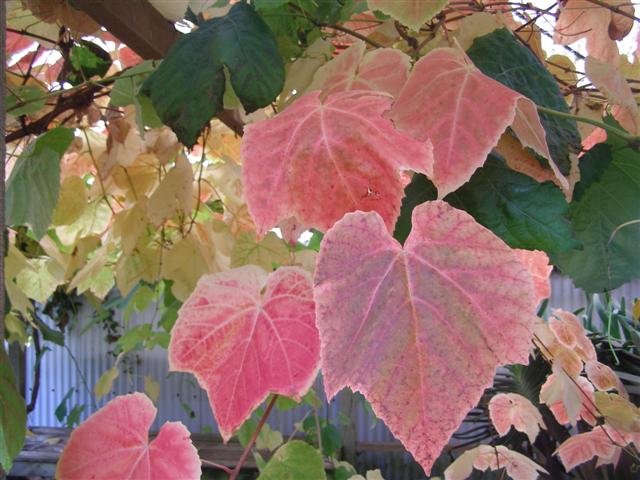
Grateful for the autumn colour of the humble grapevine
Autumn continues to be unusually dry and calm but as a rule, we don’t do good autumn colour on the coast. We drift so slowly from waning summer into autumn and winter that there is not sufficient temperature change to signal plants to change colour. Added to that, New Zealand gardens use so much evergreen material (and all this country’s native plants are evergreen) that the blaze of autumn colour common to countries with deciduous forests is largely missing. But the grapevines do colour and this one, a fruiting grape, has particularly ornamental foliage.

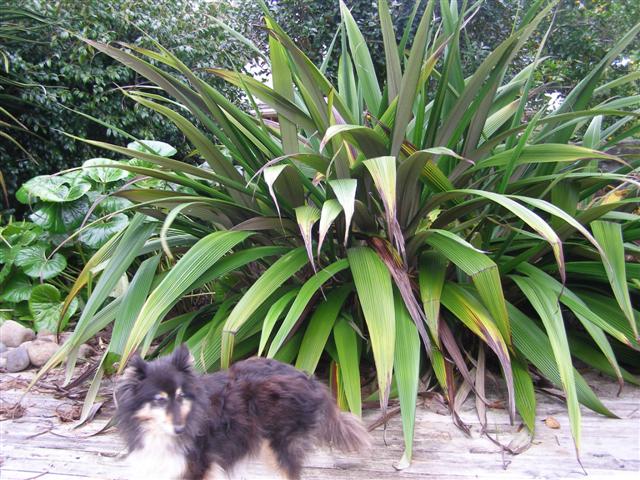
Curculigo recurvata is not common here and needs s p a c e


In an area where the giant gunneras – both manicata and tinctoria – are on the banned list and recommended for total eradication (they have naturalised too readily even on cliff tops and are swamping out native flora), the Curculigo recurvata in our swimming pool garden has been doing its best to emulate the proportions of the gunnera, reaching several metres across and staging a takeover bid. It is a most handsome plant with its pleated leaves, completely evergreen, but we had to reduce the clump back or we would have no decking left.

Flowering this week: Gordonia yunnanensis

A gordonia not a camellia

A gordonia not a camellia

This is not a camellia though the flower looks very similar to a large, pure white single camellia with showy golden stamens. They are botanically related from a distance, as stewartias are too. Gordonias are sometimes known as the fried egg plant because the flowers drop off whole and land sunny side up where they resemble, loosely speaking, that breakfast food. This form is yunnanensis which simply means it is from the Yunnan province in southern China. As far as I know, it is the largest flowered form. There are other forms around – axillaris is the most common but yunnanensis has much better flowers and plenty of them which open from now through winter. It also has a lovely glaucous, or blue-grey, tone to the shiny leaves. We also have an unidentified Vietnamese species which has slightly smaller flowers, bright green foliage and a more compact habit than yunnanensis though we are still talking around four metres high.

Gordonias are evergreen with shiny foliage and reasonable wind resistance. Most of them come from eastern parts of Asia (there are a few which come from mild areas of North America) and will make large shrubs or small trees. While we have seen the odd pink tinged one, basically they are all white with petals that look a little like crushed tissue paper. They could, perhaps, be described as the very large pure white camellia you have when you are not having a camellia.

In the Garden: April 30, 2010

• I am reliably informed that the autumn colour in colder inland areas is at its very best. The sudden cooling of temperatures in March followed by a long, dry and calm autumn has resulted in a splendid display. If you are wondering why we never get great autumn colour in coastal areas, it is because we lack the sharp seasonal changes which trigger deciduous trees to colour before dropping.
• Cleaning up fallen leaves and spoiled fruit from under your fruiting trees helps to reduce pests and diseases which can winter over in the debris. This is particularly true with apples and pears. Lay a blanket of compost after the clean-up to suppress weeds and to condition the soils.
• If you are wondering how to prune your raspberry bushes, we will do an Outdoor Classroom on this shortly. While timing is not critical, it is easier to see what you are doing when the leaves have dropped. The rule of thumb is that you remove all fruiting canes from this summer and just keep the new canes.
• Finish the autumn feeding round as soon as possible. While evergreen plants don’t go dormant like deciduous plants, their growth slows right down over winter which slows their ability to take up fertiliser. There is no point in feeding deciduous plants which are dormant or in the process of going dormant.
• Despite being horrified at the price and initially suspicious of an approved organic spray for aphids, Mark was pleasantly surprised to find that Yates’ Nature’s Way did actually work on the swan plants – killed the aphids without affecting the monarch caterpillars at all though it needed repeat applications because it is nowhere near as powerful as the pyrethrum based sprays. On the other hand, the Tui product, Eco-Pest, which is primarily canola oil, had absolutely no effect at all on the aphids when applied at the recommended dosage.
• Most gardeners will be looking at some pretty sad and leafless tomato plants by now. Unblemished tomatoes can be ripened off the vine so harvest these now and keep in an airy, light place to ripen. Gather up all the spent tomato plants and leaves and dispose of them in the rubbish or by hot composting to reduce fungi spores wintering over. I see the advice from Andrew Steens in the Weekend Gardener magazine is to put such diseased foliage on your lawn and then run over it repeatedly with a mulcher mower to chomp it up and leave it to feed the worms in your lawn. This of course assumes that you not one of those ecologically challenged types who kills out the worms in your lawn to preserve a better green sward.
• Some time ago, I wrote a glowing review of The Artful Gardener by Rose Thodey and Gil Hanly. I see it has been reduced from $60 to $25 on special at Touchwood Books (www.touchwoodbooks.co.nz). It was worth its original price, let alone the reduced price.

Tikorangi notes: April 23, 2010

Latest posts.
1) Nerines, mostly sarniensis hybrids, are a mainstay of our autumn rockery.
2) Instead of thinking buxus hedges, think instead about lines and definition in the garden. There are other ways to achieve a similar outcome without the blighted buxus hedge – Abbie’s column.
3) Our mild and dry autumn continues – weekly garden tasks and hints.
4) It may be six months until our annual Garden and Rhododendron Festival here in Taranaki, but dedicated garden openers are hard at work and counting down already.

Autumn in the rockery at Tikorangi

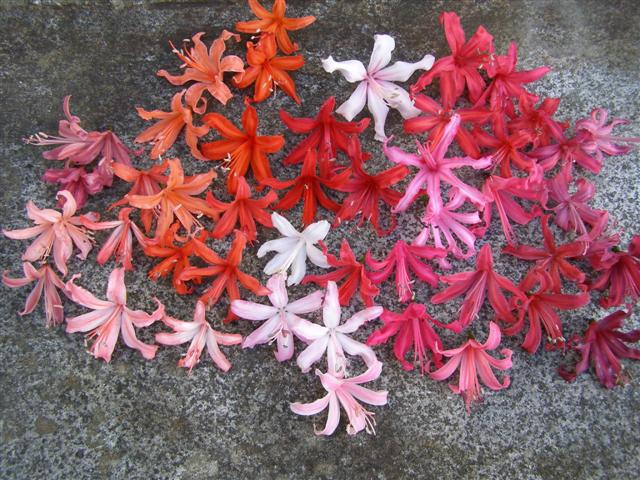
Our rockery has two main periods when it is at its fullest and most colourful – in the early spring when dwarf daffodils, snowdrops and many other tiny treasures bloom and right now in autumn when the nerines and cyclamen hederafolium are at their best. My summer mission taking apart every pocket in the rockery has borne fruit with renewed vigour apparent throughout. Some may think the nerines on the garish side but we love their autumn display. We have a whole range of colours now from nearly apricot through coral, orange, reds, pastel pinks to highlighter pink and deeper, smoky colours bordering on purple. Felix Jury worked with the nerines, mainly sarniensis hybrids and he acquired some of the Exbury hybids over 40 years ago. Most of the cultivars in our garden are unnamed hybrids from that time although Mark has also had a play in his turn and did name one, Coral Star, which we have sold in the past. Felix’s preference leaned towards the smoky plum colours and he named two: Smoky Queen and Nelson’s Blood.

From near apricot to near purple with plenty of oranges, reds and pinks between

Flowering this week: Nerine sarniensis hybrids

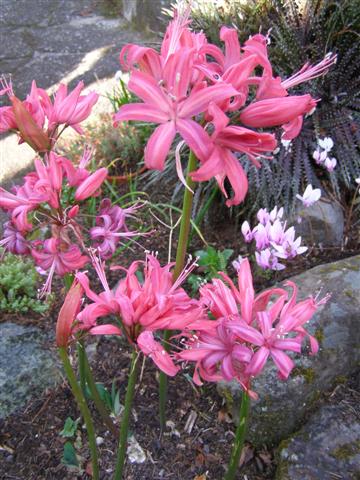
Years of work have made the sarniensis nerines a real autumn feature in our rockery

The nerines are looking wonderful in the rockery. These autumn flowering South African bulbs are members of the amaryllis family and are a mainstay of our April garden. There are a number of different species (about 30, apparently) but it is the large flowered, showy sarniensis hybrids which we feature. Felix Jury imported some bulbs and did quite a bit of work to extend the colour range here. He particularly favoured the smoky burgundy colours but we also have a shocking pink which is near iridescent, along with a whole range of different reds, oranges, pinks and corals from pastel to verging on purple and even apricot. They are grown as a cut flower commercially but we prefer them in the garden setting. These are large bulbs which are planted to half depth only with their necks exposed and they are happy with summer baking. Their strappy leaves come after the flowers and hang on until spring.

Nerines are sometimes called the Guernsey lily or the Spider Lily. Some of the other species have much finer, more spidery flowers than the sarniensis types, but lilies they are not. Neither do they originate in Guernsey though that island became renowned for its cut flower production and the bulbs have since naturalised there. Nerines were named after Nereis, a mythological Green sea nymph.