Category Archives: Abbie’s column

A morning in the graveyard

001

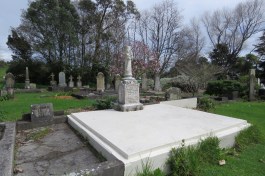
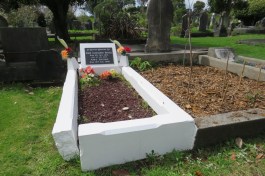
I do not make a practice of visiting graveyards and I have never been to New Plymouth’s cemetery before, despite living in the district for over 35 years. But a friend was insistent that I should go and look at the older sections. At this time in spring, it was simply charming. In my very limited experience, graveyards tend to be either of two types – very austere and plain, managed by tight local body regulation with the weedsprayer and lawn mower to hand. Or left to their own devices so that, over time, they progress from neglect with weeds and rank grass to that sense of nature reclaiming aged graves.

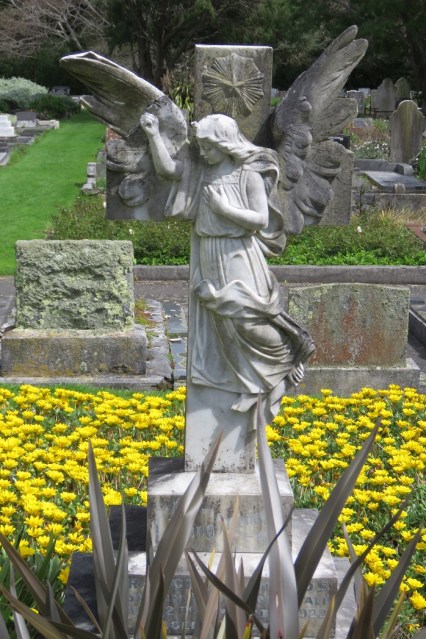
img_2164Somebody, or probably several living bodies, must have lavished a lot of love and care on this section of the graveyard over many years. It was so well done and individualised that it did not have the look of institutional management. Nor indeed of relying on family or descendant management of individual graves – though there were some examples of these.

img_2185It was the wide range of plants used, the attention to detail and the many delightful little pictures that were created as a result, the careful colour toning in some areas and the soft-edged maintenance that made me think it was not chance that created these scenes. Many are created as individual small gardens for a specific grave. I could not help but notice that the space of an individual grave back when the 1800s turned into the 1900s was considerably larger than a modern grave; family plots were larger again.
007

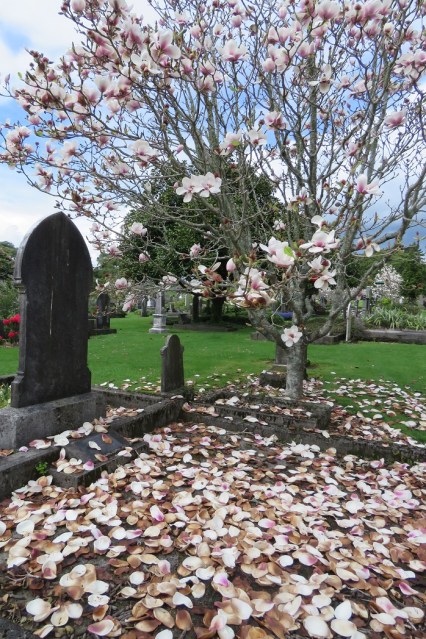
Mark tells me there are some Jurys buried in the graveyard (well, he mentioned his Uncle Les, the camellia breeder, but Jurys are so numerous that I am sure there must be many more). Having seen mature specimens of Jury magnolias felled to make way for the new road bridge at the entry to the cemetery area, it was a surprise to see more recent plantings of Felix’s magnolias scattered through the cemetery – several specimens each of Apollo, Milky Way, Athene and Iolanthe. As he looked at my photos, Mark commented that he felt the Jurys had a fair representation there.
005006


There are small businesses working in the area of grave restoration. I know this because I have been contacted by one who had looked at the Jury family graves in our little, local Tikorangi cemetery. I ascertained that their services were limited to cleaning the headstones and decided that if it really worried us, I could pop along myself with a scrubbing brush and some water with bleach and detergent. In the end, it comes down to personal choice how one wishes the graves of one’s ancestors to look to the public eye, but there is a certain jarring element to the restoration of some graves in the gentle environment of the old cemetery.

img_2222For spring scenes, the cemetery was unsurpassed. I must go again in summer and see if the secret hands have wrought similar magic into the next season.

img_2175If you are on Facebook, I have posted an album of additional photos to our garden page. I took so many and that medium is better for multiple photos.
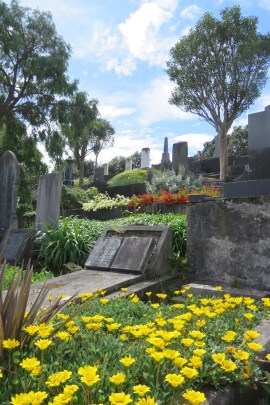
Looking left, the hanging gardens of New Plymouth
Looking left, the hanging gardens of New Plymouth

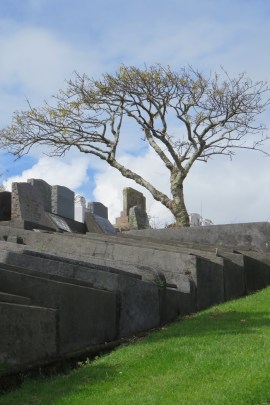
Interesting austerity to the right, topped by a kowhai tree

Interesting austerity to the right, under the sparse umbrella of a kowhai tree
The chainsaw mentality

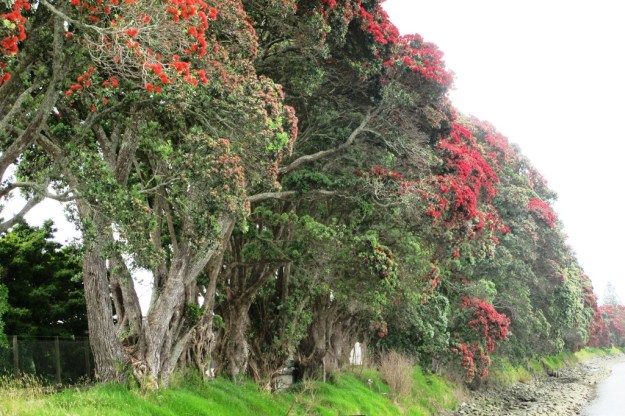
Sometimes we just want to weep; never more so than when we read stories like this one in our local paper. Too many New Zealanders think that they can extend dominion over everything in their view lines and that it is fair game to cut down or poison trees that “block” that view.  These were trees established on public land, in the harshest of conditions on a coastal reserve. It is, as we say, ‘down the coast from here’ and in possibly the most exposed location we have in Taranaki. But views of the ocean are way more important to some than protection from wind, other people’s rights and the value of established trees.

Indeed, a local resident (who, I note, just happens to own property in direct view line from where the trees were cut down) wants more removed. What is even worse is that this man – for the avoidance of doubt, he is a man according to the text – is willing to pose shamelessly as master of the barren view because he is seeking election to a local council. The article says:

He said he had heard that some of the neighbours did not like the increased wind now the trees were gone.

“If you are worried about the wind, go in your house, that’s what houses are for.”

He wants the smaller trees around the pohutukawas cleared along the clifftop so passersby can see the view and the pohutukawas can be seen in bloom, and have seats installed and the coastal walkway extended.

“I want to bring back this cliff area to what it was meant to be originally. It’s neglected….”

Where to begin? With his blithering disregard for his neighbours’ sentiments on this? With his dismissive attitude to the value of trees? Or with his assertion that he wants to return the cliff area to what it was meant to be originally? I don’t think he is talking about its original state pre-European settlement of the area when most of this country was forested or in bush.

The attitude expressed by the Council officer seems eminently reasonable to us. It must be a thankless task trying to keep ANY trees on public land with the chainsaw mentality that is still so alive and strong in this country. I wish we would grow up as a nation and rid ourselves of the pioneer mentality that if it is an established tree, it is fair game to cut it down. Established trees are not disposable commodities to be hacked out on a whim. Trees which have beaten the odds to grow on the most exposed and inhospitable coastline are even more precious.

266-copy

But where is the vision today? In Canberra. Apparently.

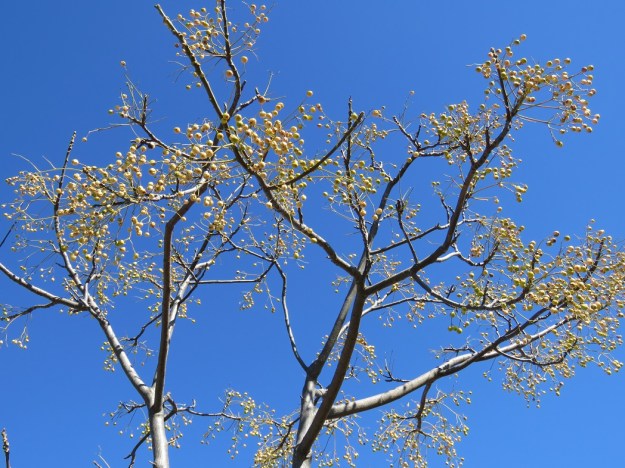
I can tell you that the Melia azedarach at the National Arboretum in Canberra was planted by Doctor Jose Ramos-Horta, President of Timor-Leste in 2010.

I can tell you that the Melia azedarach at the National Arboretum in Canberra was planted by Doctor Jose Ramos-Horta, President of Timor-Leste, in 2010.

I doubt that many people take the time to pause and send a vote of thanks to our forbears who had the vision to create city parks and botanic gardens. Our closest city of New Plymouth has its Pukekura Park, 52 hectares of park and gardens about 5 minutes’ walk from the main street. It dates back to the visionaries of 1880 and provides a green heart to the city. It is loved with a passion by locals and attracts large visitor numbers. Other New Zealand cities have their equivalents but most date back to a similar era. Aside from Auckland Regional Botanic Gardens being established in Manurewa, I can’t think of major new ventures from modern times.

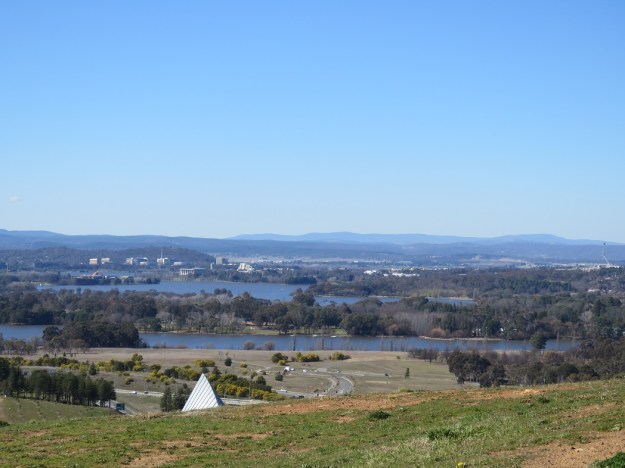
img_0854It was a second visit to the National Arboretum in Canberra that had me thinking along these lines. This enormous project, encompassing 250 hectares, is a response to the devastating bush fires of 2003 which burned out the area. It is a grand vision, still in its infancy, that will create a legacy for generations to come.
Looking over the city from the arboretum

Looking over the city from the arboretum

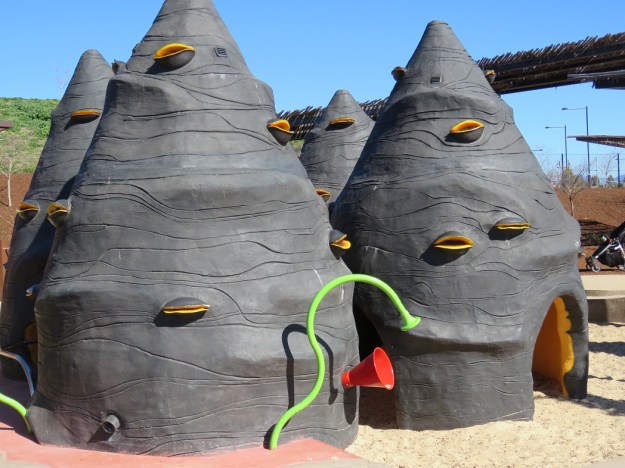
While some areas can look a little … utility, shall I say, at this early stage and the selection of some tree cultivars to be represented en masse may raise a dendrologist’s eyebrows, the large vision will triumph over such doubts with time. The infrastructure is going in with attention to architecture that will blend with the landscape, an attractive educational area and one of the most delightful children’s play areas I have seen in a long time. Everything appears to be done with a view to sustainable growth in the long term and it is an impressive venture. It has an international flavour with involvement from foreign embassies and heads of state. This is Canberra, after all.

Indubitably Australian at the National Botanic Gardens

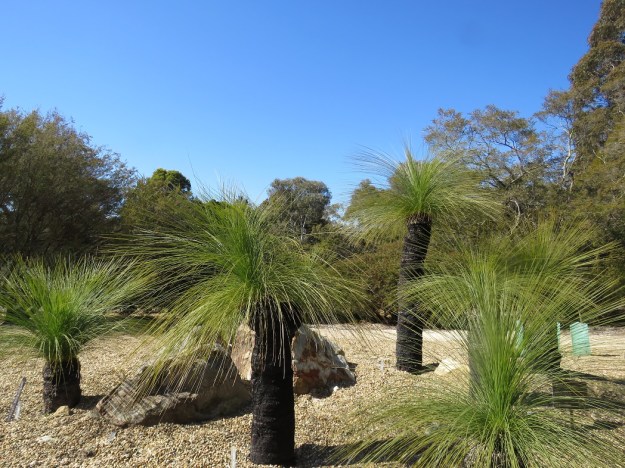
Indubitably Australian at the National Botanic Gardens

Canberra also has the National Botanic Gardens which were not officially opened until as late as 1970 although the first small steps to establishing them were taken in the late 1940s. In that harsh climate of hot, dry summers and cold winters which are often dry, they don’t get the same growth rates that we get here and to my eyes, the gardens still look young. I have been to them several times now. Because the focus is entirely on Australian native plants, they have a very different flavour to anything I see elsewhere and I really enjoy that difference, along with seeing new areas being developed within the site. It is indubitably …Australian. As it should be.

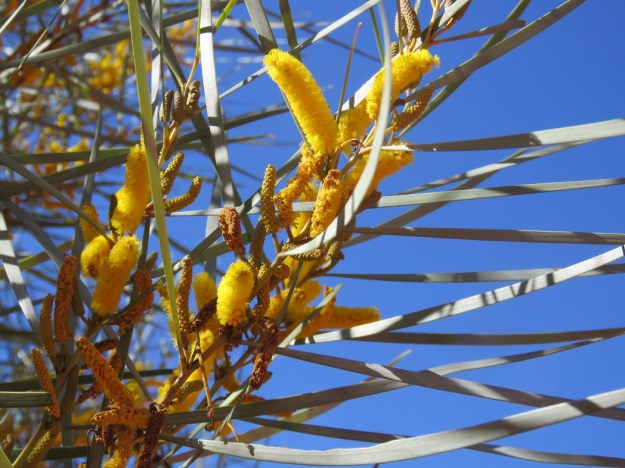
Banksia species in abundance at the Botanical Gardens in August

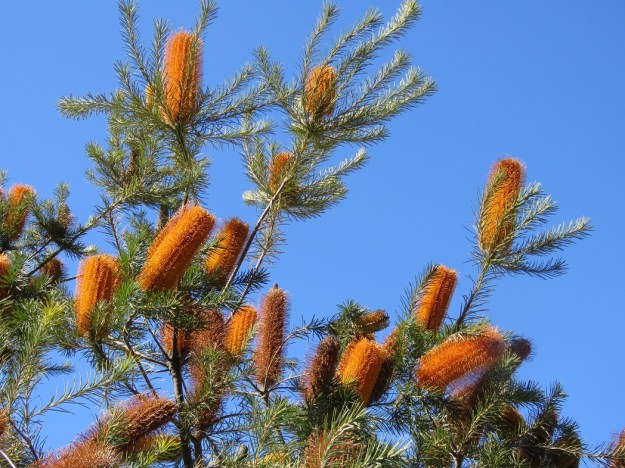
Banksia species in abundance at the Botanical Gardens in August

It made me wonder where our courageous new ventures are here. We generally steer clear of publicly criticising the local money being spent by the Taranaki Regional Council on what are described as the ‘regional gardens’. This amounts to many millions of dollars more than I think most ratepayers realise but it also sniffs of the cargo-cult mentality – build it and the crowds will come. It remains to be seen if that will happen but it seems unlikely in the long term. The problem is that the Council took on three existing gardens, all of which suffer from issues including obscure location, difficult access, off-putting terrain, pretty awful micro climates and somewhat anachronistic gardening visions from times past.

With so much spare money sloshing in the budget, we can’t help but think it was a missed opportunity to create a new vision for future generations, getting the location, micro climate and terrain right from the start. The role of public green spaces is so very important and likely to get more so into the future. It would be good to look to the future and to invest in that, rather than resting on the laurels of the visionaries of the distant past.

Banksia pods in the children's playground at the arboretum

Banksia pods in the children’s playground at the arboretum

and acorn pods

and acorn pods

img_0963


Flagging away the flag iris

021-3

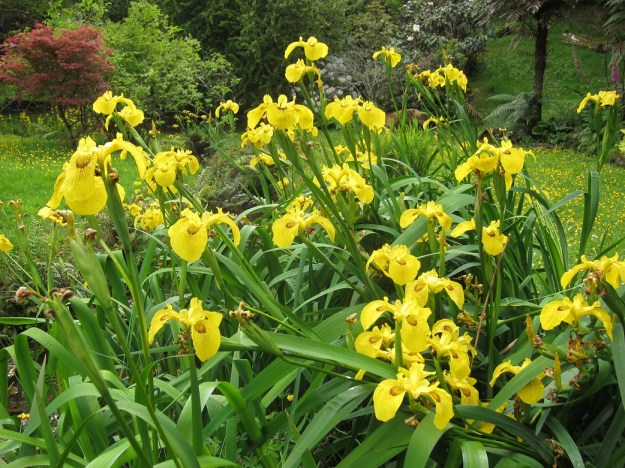
The first time I realised there was a problem with our flag irises was when Mark intervened to pull a photo from a House and Garden feature on our garden a few years ago. It was a view similar to that above. “It’s a weed,” he said. “It is embarrassing to be shown with a weed.” It has taken a while, but this week, I have dug out the last of it.

The offending flag iris

The offending flag iris

The problem with Iris pseudacorus is its resilient and invasive ways. It can survive in water, even in salt water, beside water, on water as a floating mat of rhizomes and even just on heavy soils and flood-prone areas. It is also poisonous to both humans and stock so is not controlled by animals. It is on most New Zealand weed lists and some regional councils require active management to control its spread.

Behold the offending rhizomes

Behold the offending rhizomes

Our flag irises have never set much seed, though all the descriptions say that seeding is a problem. We would have acted faster, had we seen threatening seed set. But the rhizomes, the rhizomes! They are sign enough of an issue. They form a dense mat both on and just under the surface. It reminded me of digging out wild ginger with their ability to form a solid barrier, choking out other growth. It was heavy, muddy work digging them out and prising stray rhizomes from farthest reaches with me, precariously balanced. I did not want to end up in the stream at this time of the year.

We had them planted by running water; the upper reaches of the Waiau Stream flows through our park. It was clear that floods or any disturbance of the rhizomes could cause some to wash downstream and from there, populate the countryside. It would not have been an issue had they been by a self-contained pond with no means of escape.

True, we grow Primula helodoxa and that is sometimes flagged as a weed issue by waterways but we dead head it. It is the seeding that is problematic with that plant.

Iris sibirica

Iris sibirica

Lovely Higo irises

Lovely Higo irises

and Louisiana iris

and Louisiana iris

Fortunately there are alternatives to the flag iris which do not seem to be a weed problem and are arguably considerably prettier.  Iris sibirica, the Higos and the Louisianas are all happy in similar conditions and give us a League of Nations in our park – Northern Europe and Siberia, Japan and USA. We just happened to have plants of all hanging about waiting to be planted. So while the three patches of flag irises are now muddy and apparently bare, in a few months’ time, they may even be flowering again in hues other than yellow.

036We are enjoying the water meadow effect we are achieving in that area of the garden.
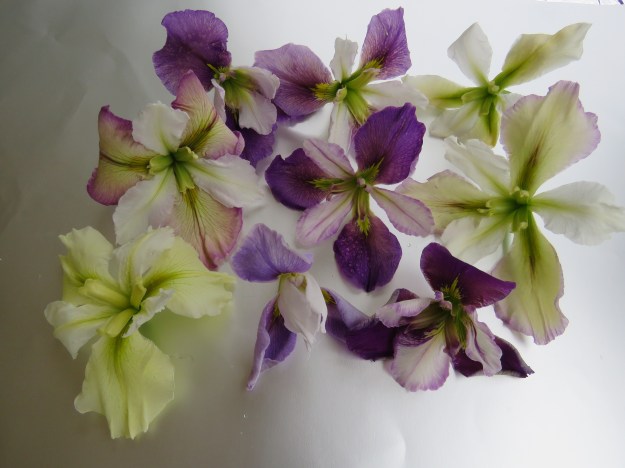
More Louisianas that Mark has been raising to plant out

More Louisianas that Mark has been raising to plant out


Plants that do not know their place – high maintenance culprits

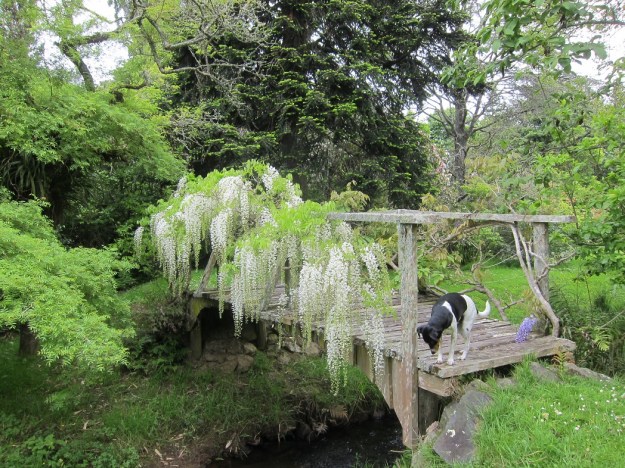
Dudley on the bridge amidst 'Snow Showers'

Dudley on the bridge amidst ‘Snow Showers’

You will never see me advocating enthusiastically for low maintenance gardening. It is not our style. But I do think some plants need to know their place in life. Some clamour for way more attention than they deserve. We have been thinking about plants that are unjustifiably high maintenance. First to go here were almost all plants that require chemical intervention (spraying) to keep them looking good – or even alive. Goodbye underperforming roses and badly thrip-infested rhododendrons. These might be great in other climates, but here? No. Next in the spotlight are some of the other high maintenance plant options.

Who doesn’t love wisteria? But unless you are willing to give them the attention they require, they are best admired in somebody else’s garden. More than any other plant I can think of, they cannot just be planted and left. Miss a prune and it only takes one season for them to crack the spouting – I know this from experience. They also put out runners that R U N considerable distances. What is more, if you prune them incorrectly, they don’t flower which really defeats the purpose of growing them.

We dug three wisteria out this winter. Two were not flowering well enough to justify keeping them (not enough light, I think). The third was running amok in a wild area and threatening world domination. We have still kept about seven plants, including two on our bridge which are great performers but I am meticulous about pruning them both in summer and winter. Even so, they can join hands in the middle, trying to block passage through.

Climbing roses are another plant that I personally think are best admired in somebody else’s garden. I once planted ‘Albertine’ over an arch in the vegetable garden. It looked lovely in flower but then it produced many long whips covered in fierce thorns. Not only were they waving away waiting to ensnare anyone who walked down the path, pruning was a Major Mission. When it took me the better part of a day to prune it and tie it in, I decided that the rewards did not justify the effort. The advice often seen in English media about letting climbing roses scramble through trees and not worrying about pruning them at all does not translate to our gardening conditions. Any rose that strong is more likely to collapse the host tree, or swamp it at least. We are trialling some semi-thornless pillar roses but rampant, thorny climbers – no thanks.

magnolia-little-gemAny potentially large tree planted in the wrong place is going to be high maintenance. Vegetable time bombs, we call them. I see it with Magnolia grandiflora “Little Gem” in urban gardens more than any other plant I can think of. Aforementioned “Little Gem” is only little by comparison with something that might equally be called “Extremely Giant Gem”. It is not a dwarf tree. Plant it in a confined space – I know of a twin row of five or six aside lining a very narrow driveway in town – and it will either be high maintenance on an ongoing basis to keep it confined or an expensive removal job when it becomes a major problem.

Clipped hedges can give great definition in a garden – green walls, really. But I rate any hedge that needs trimming more than once or twice a year as high maintenance. While some people are quite happy to trim hedges frequently to keep sharp-edged definition, I see that activity as being like vacuuming the house. There is nothing creative about such a repetitious activity. To me, hedges are   utility tools, a background, not the centre of attention so they shouldn’t be demanding as much or more attention as the foreground stars of the garden. I would not plant any in teucrium or lonicera for these reasons.

A blight upon your buxus!

A blight upon your buxus!

Buxus used to be infinitely useful and undemanding hedging plant. But with the advent of buxus blight in many areas, that status has changed. I know of gardeners who are spraying their buxus hedges every few weeks, just to keep them leafy and to hold blight at bay. Woah there! Aside from environmental considerations (even if it is just a copper spray, the long term use of that is not good), it turns a handy, low maintenance plant into a high maintenance option.

Camellia Fairy Blush

Camellia Fairy Blush

Give me our small leafed camellia hedges any day. A hard prune in early spring followed by a light tidy-up in autumn is all they need. Also they light up a winter’s day while feeding the birds and over-wintering monarch butterflies. Camellias ‘Fairy Blush’, transnokoensis and microphylla are our preferred options.

We can and do fuss over some plants but utility plants? No. They need to know their place in life and that means not being so demanding.

First published in the September issue of NZ Gardener and reprinted here with their permission.