
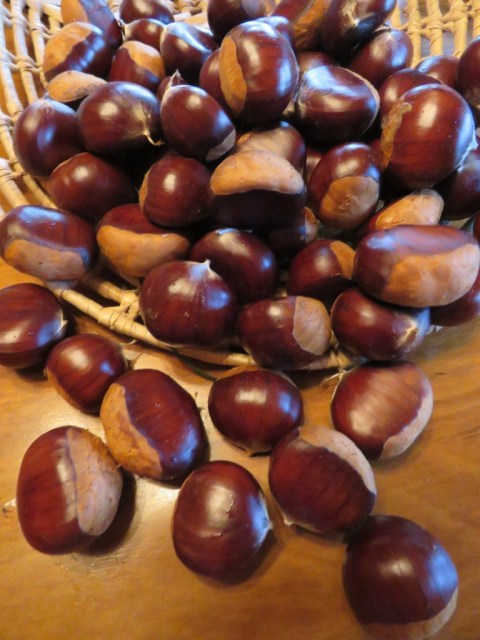
 It is chestnut season.
I have childhood memories of roasting chestnuts on the fire, for I had a Dunedin childhood and an English mother. It was a seasonal treat, handling burning hot chestnuts to peel off the outer skin (usually burnt on one side) and then dipping them in butter and sprinkling with salt. As she bought the nuts at the fruiterer, it was always a bit of a lucky dip as to whether the one you had was going bad or not. These nuts have a short shelf life.
Mark too has childhood memories of gathering chestnuts from a neighbour’s tree but he recalls boiling them and then carrying them in his pocket as snack food. There was nothing, he says, like reaching into your pocket after school and finding a few chestnuts you had forgotten about.
This year we have been given free access to a couple of trees nearby and there are nuts in abundance. I realised that the difference in our childhood memories is that Dunedin has a colder climate so the chestnut season coincides with the lighting of winter fires. Here in the milder north, we have not yet started winter fires, which is probably why Mark had only tried boiled chestnuts when I met him. These nuts we are gathering are large and very fresh – no nasty surprises with the flesh going off. The trees will be named selections and the ease of handling larger nuts has convinced us that if you are going to plant a tree, it is worth paying the extra to get one which has been selected for its larger nuts.
We ate a dish in China recently of meatballs and chestnuts in a casserole and this inspired us to harvest more to freeze and eat later. Chestnuts are not the easiest crop to prepare. We have taken to parboiling them which means the hard outer casing can be peeled off (we cut the top point and then insert a sharp vegetable knife to lever off the casing) but the inner brown covering is not so easy to get rid of. Parboiling means the kernel holds its shape and we are freezing them at this stage. Gently frying or roasting them in a mixture of butter and oil and then adding a sprinkling of salt makes them delicious. I put some in a tagine over the weekend but the long slow cooking broke down the kernels. To keep the texture and shape, I will add them in the last 15 minutes of cooking in the future.
We had thought they would offer an additional source of protein in our diet, but I see online that they are basically all carbohydrate with very little protein or fat so really they are a taste and textural addition.
The edible chestnut grown here is the European tree – Castanea sativa. It is not to be confused (but still is by some folk) with the horse chestnut which is an aesculus. There is a similarity in appearance of the nuts but that is all. Horse chestnuts are inedible and moderately toxic though, in another memory dredged from my childhood, they are used in the game of conkers which we used to play. With a hole drilled through the centre and then suspended on a short string, they became a weapon to assault a similar conker held stationary by the adversary. The winner was the one whose conker did not split. My brother always won, as I recall.
The horse chestnut is a very decorative tree. We have the smaller growing Aesculus x carnea in our park and it is particularly pretty in flower with its red plumes. Water chestnuts (Eleocharis dulcis) are different again, being a grassy reed or sedge, traditionally grown in water. They are not a nut because what are eaten are the nodules on the roots. Apparently it is in New Zealand and Mark has a yen to try growing them when we track down a plant.
 First published in the NZ Gardener April edition and reprinted here with their permission.
  Ping ducks! Not the Yangtze River, but as soon as I saw these ducks, I recalled The Story About Ping. It dates back to 1933 so I am guessing it was part of my childhood. We certainly read it to our children and it must be in the bookcase somewhere to this day. I was shocked, shocked I tell you, that none of the others around me at the time had ever heard of Ping. They must have had deprived childhoods is all I can say. Ping ducks in China were a delight. I bought a little Chinese bird whistle – the sort where you blow through water and get bird warble rather than a piercing squeak – to gift with the book to our grandson in due course. (The Story About Ping by

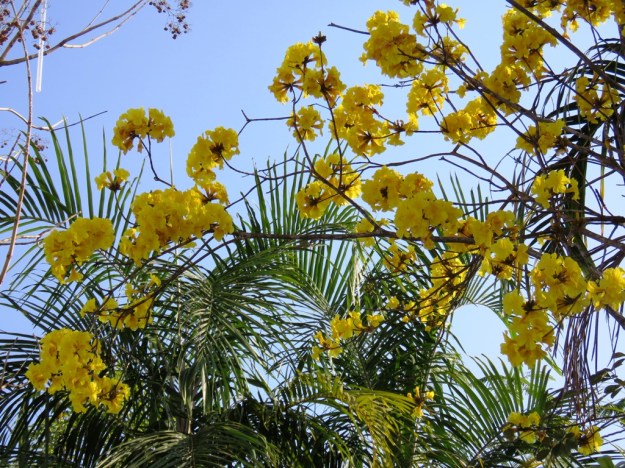 Sometimes Mark can surprise me with his knowledge. “It’s a tabebuia,” he said when he looked at this photo, though he had never seen one in real life. He then had second thoughts and wondered if it is Tecoma stans. A search on Wikipedia has us leaning to the tabebuia because it was more tree than shrub. Both tecoma and tabebuia are in the bignoniaceae family so there is a familial connection between them though they are not close relatives. The big yellow trumpets were a delight in the sub tropical climate of Jinghong, at a temple beside the Mekong River in Southern China.
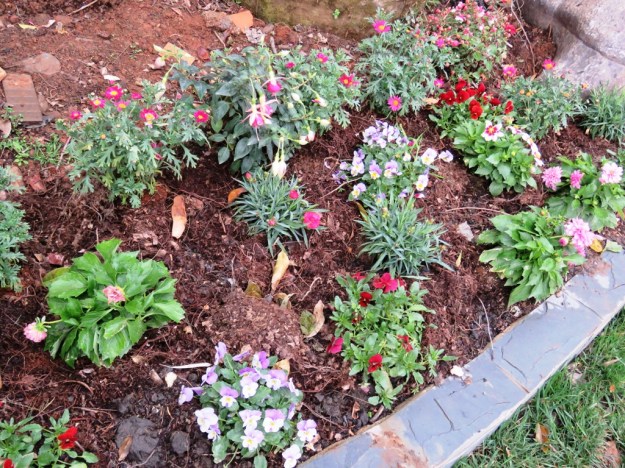 Ha! Under planting can be as crass, random and ill thought out in China as in New Zealand. When I visited a group of open gardens at home, I noticed that the under planting was a major weakness but I did not feel able to use the photos I took because the owners might well recognise their place and feel hurt and betrayed – even if I did not name the location. But honestly, planting bedding plants in alternating colours or random arrangements rarely cuts the mustard. In some of our local gardens, I have seen alternating blue and yellow pansies as a border edging beneath well kept pink roses. Neither is alternating white alyssum with yellow pansies creative or classy and alternating two colours of petunias is no better. If you don’t want your garden to look like an amateur version of a traffic island, then be very circumspect with punnets of annuals from the garden centre.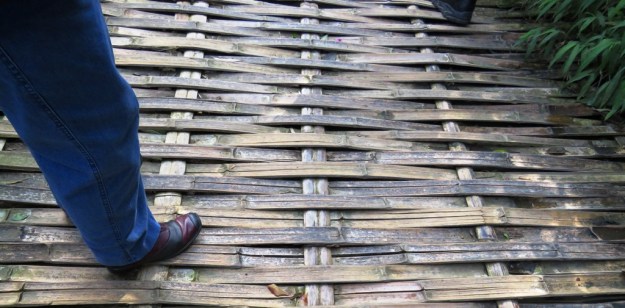
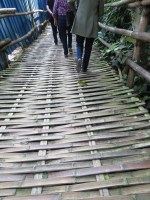 There were no panda bears to be seen on our trip, but what can’t you do with bamboo? Here we saw it used as a walkway in what is described as a primitive forest in Xishuangbanna. It was also used in much wider expanses as decking over rough ground at the Jinhuo tourist village. It is a bit shaky to walk on and I have no idea about its longevity but the use of a traditional material that is fully biodegradable has some appeal in a modern world of concrete and plastic.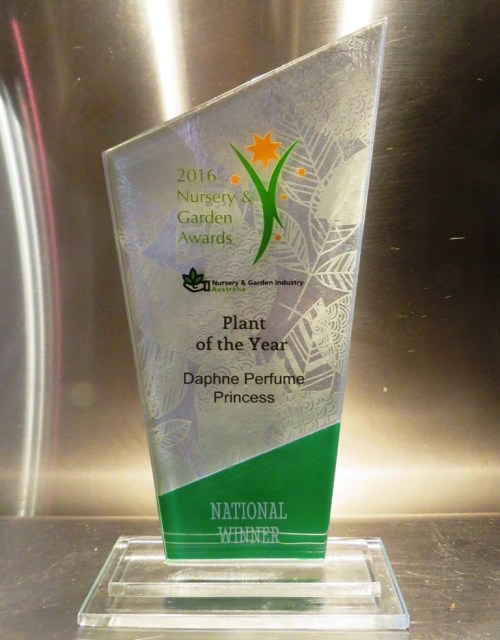
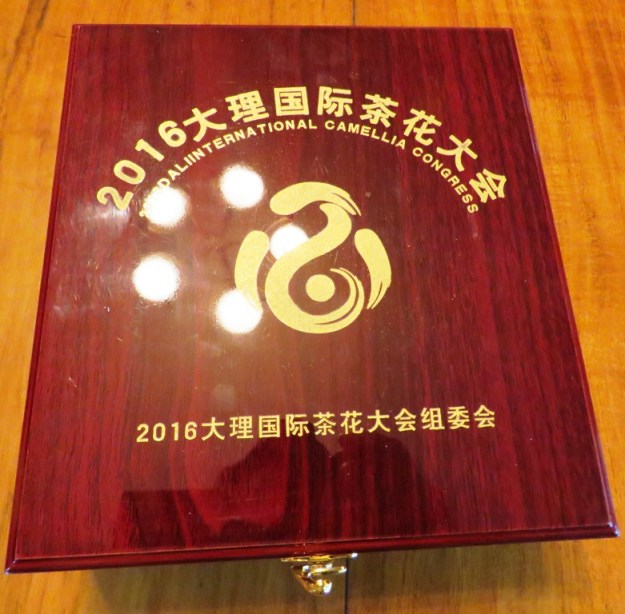 While on trophies, how can I not share the Dali camellia medal we brought home from the International Camellia Congress? There is no personal recognition attached to this medal. All overseas attendees were given one. This meant, of course, that we had two. As they are relatively substantial and heavy, we re-homed the second one and only carried one back.
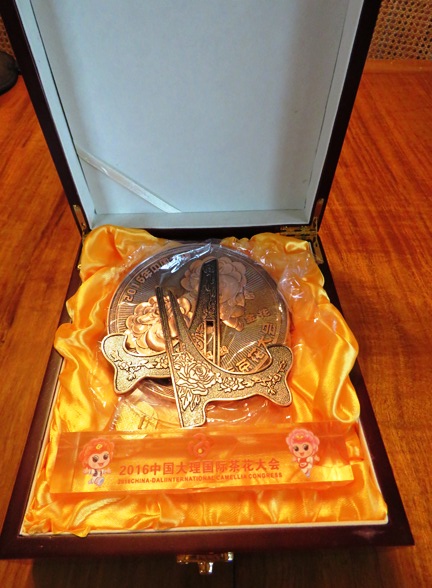 Bear with, bear with on the slow reveal.
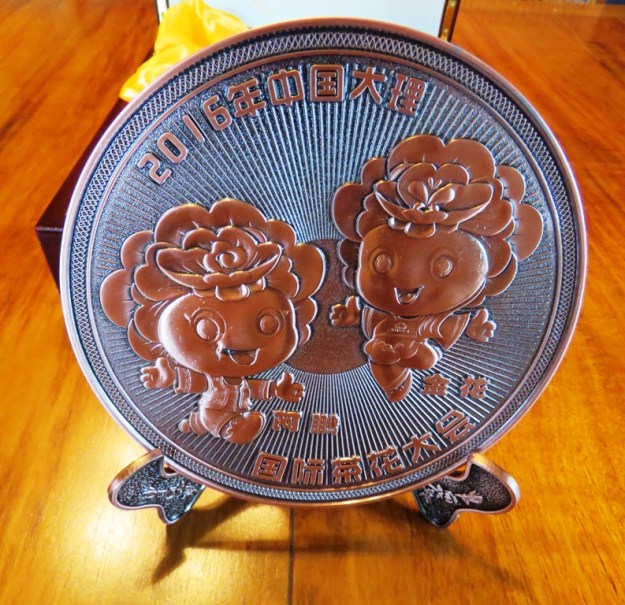 It is quite remarkable. And quite large.
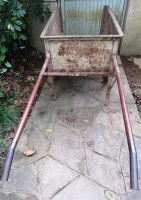 “The invention of the wheelbarrow is usually traced to China’s Chuko Liang, and adviser to the Shu-Han Dynasty from AD 197 to 234, who had it developed as a means of transport for military supplies. The first evidence of wheelbarrows being used in Europe is found in illustrations in the thirteenth century.”
 Remembering that odd piece of information from earlier use, I had to photograph a garden barrow when I came across it in Kunming Botanic Gardens in China last month. In fact these Chinese barrows are more like carts and they must be pulled, not pushed. If your definition of a wheelbarrow is that it be a single-wheeled cart, then these would not qualify, even though they are to be found in the original habitat.
 Double wheeled barrows are, however, clearly more stable than our garden barrows, capable of holding a greater volume and decidedly versatile. We came across this building site in a small village in the south of China where it is a receptacle for winching bricks up to the second storey. There did not appear to be a New Zealand Workplace Safety Officer on site.
 And then winched down again to be refilled.
 Tikorangi The Jury Garden