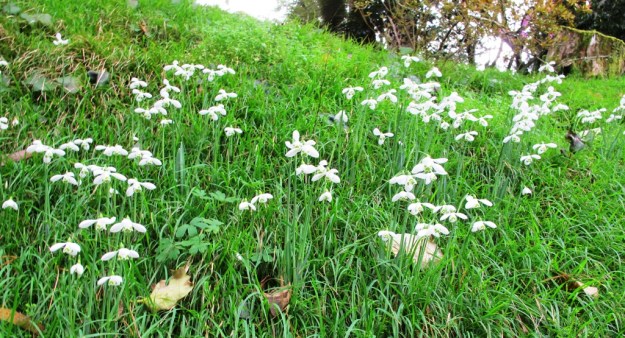
Snowdrops on a hillside
You can never have too many snowdrops in my opinion, and the varieties that do well with us are building up to a satisfying level. By definition, that is when we have enough to move them out of optimal garden or nursery conditions and start establishing them in carpets.
It is our interest in what we call “romantic gardening” – others refer to it as “naturalistic gardening” – that we derive as much, if not more pleasure from plants naturalised in meadow conditions as we do from cultivated, tightly maintained garden beds. It is a blurring of the edges in gardening, exploring how far we can replicate the simple charm of wildflowers but in a managed situation.
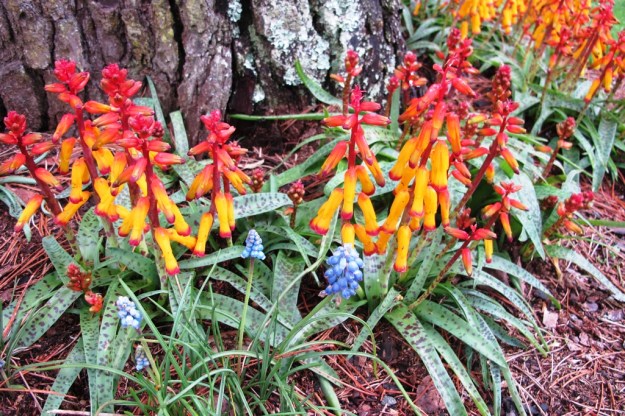
Lachenalia aloides and grape hyacinths (muscari) at the base of Pinus muricata
It is not as easy as it sounds. Many of the charming bulbs in their natural environment have conditions which are much harsher than here. Winters that are very cold and often dry mean that most growth stops, as do summers that are hot and dry. But in our dairy-farming heartland, soft conditions keep grass growing all year round and that growth will simply swamp most bulbs. It has taken us some years to learn to manage this. Selecting bulbs that will cope in our conditions has been trial and error.
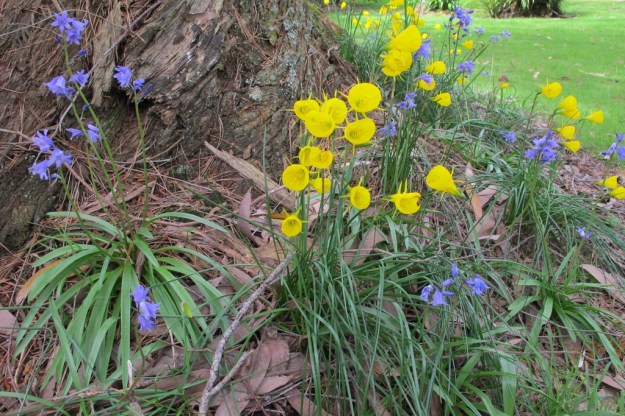
Bluebells and hooped petticoats (Narcissus bulbocodium) planted at the base of a eucalypt
It also takes eleventy thousand more bulbs than you think it will. Even bulk buying a couple of hundred bulbs is not going to create much of a carpet in the short term. To get a quick result using large bulbs like daffodils or bluebells, planting at one every 10 square centimetres means 100 per square metre. I worked this out because I was planting a little mixed area. Using dainties like erythroniums, dwarf daffodils, snowdrops, crocus and rhodohypoxis, it took about 4 of these small bulbs per 10 square centimetres – or 400 per square metre. That is a large number and may explain why we don’t see many bulb meadows in this country, beyond well established fields of daffodils dating back many decades. Obviously, if you plant at greater spacings, you can cover a larger area but you will wait longer for the carpet effect.
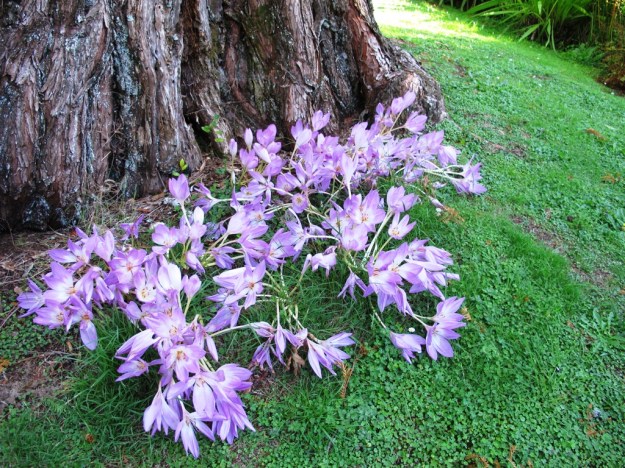
Colchicum autumnale flowering at the base of a metasequoia
While planting around tree trunks is not the same thing as naturalising bulbs in a meadow situation, it proved to be a good place to start for us. We have many trees in fairly open situations where it is possible to establish easy bulbs beneath. Most bulbs need sun so these need to be trees with a higher canopy to allow light below. Planting amongst the exposed roots of established trees ensures the bulbs don’t get mown off or trampled as they surface and generally they get established with little competition. It is also an effective way of controlling some of the invasive bulbs like ipheions and ornamental oxalis.
Scattering seed is hit and miss and slower to give any results but much easier. We were delighted this year to see Cyclamen hederafolium showing its colours where Mark had scattered fresh seed several years ago. He had given up hope that it would work but lo, there are rewards for patient gardeners and the older we get, the more patience we seem to be developing.
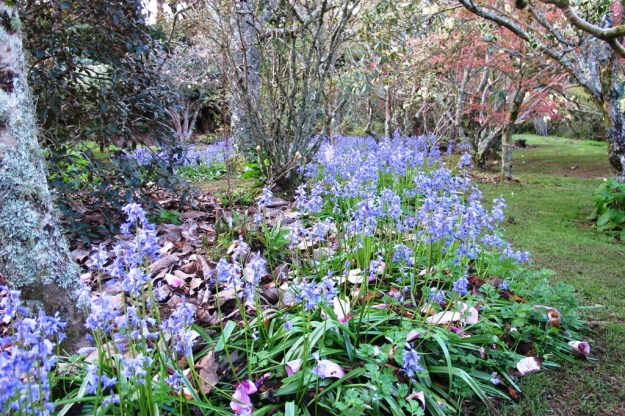
Bluebells planted on the margins, drifting through our park area
Bluebells are easy and we have used them in swathes around shrubs in the area we call our park. Because they are flowering at the same time as the full flush of spring grass growth, we have to keep them to the side of areas we need to mow. Bluebell, and indeed snowdrop, woods that we have admired in Britain are carpets beneath deciduous trees. Our woodland areas are heavily dominated by evergreens so we don’t get enough light to replicate those carpets here. That is why we have to opt for the margins instead.
The triumph of experience has been getting grassy banks with dwarf narcissi and snowdrops naturalised. To do this, Mark spent some years establishing the native grass, microlina. It is finer and less vigorous so doesn’t swamp the bulbs and can be controlled with minimal cutting – just a pass over with the weedeater from time to time. It is not quite the same as a bulb meadow, but we have learned to work with what we have here.
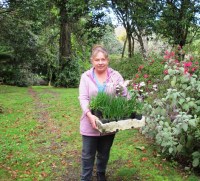
Carrying a tray of Nerine pudica, in case you are wondering (which I admit I planted in the rockery, not in meadows)
First published in the July issue of New Zealand Gardener and reprinted here with their permission.

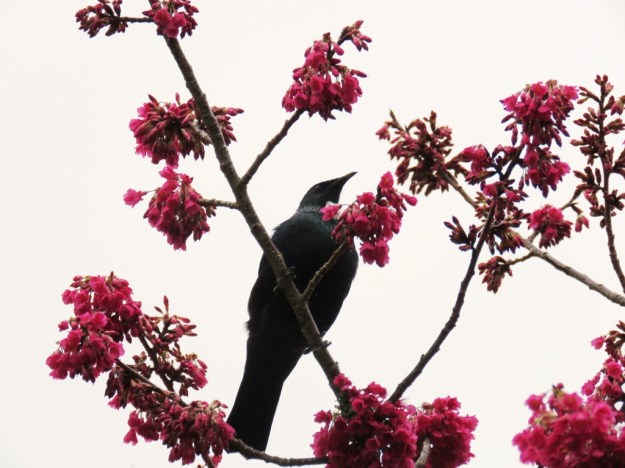
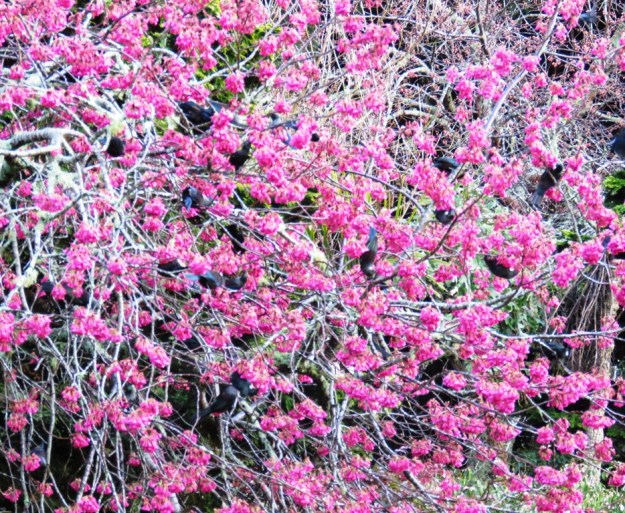
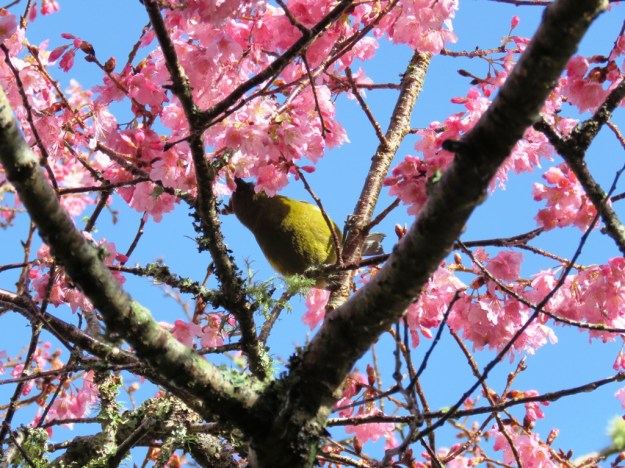
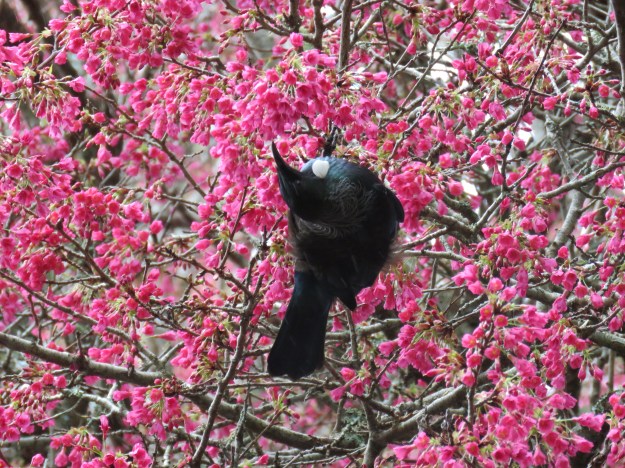
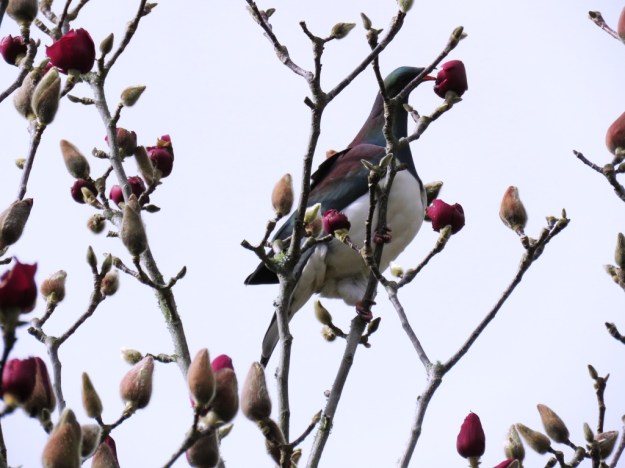

 There has been a bit of a scandal recently about kereru being served as part of a traditional feast – did the Parliamentarians know they were eating kereru? – so it is poor form to even make jokes about eating them. Besides, even when a beautiful plump specimen died before my eyes after flying into one of our house windows, we could not bring ourselves to try cooking it. Instead we bought window decals from Bird Rescue to try and prevent such a thing happening again.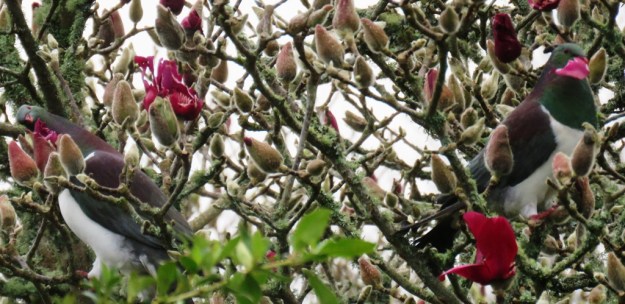
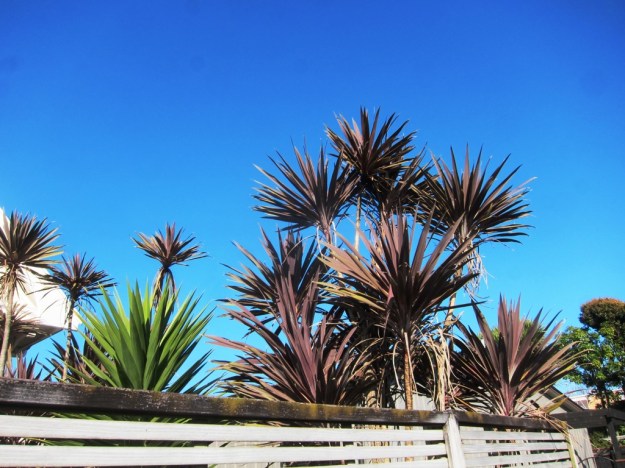
 Certainly for those who crave perfection in their garden plants, our native cordylines can develop a motheaten appearance. Caterpillar damage from a native moth – Epiphryne verriculata – is typical in this country whereas the cordylines I have seen overseas, particularly in the UK where they are a prized plant, keep cleaner foliage.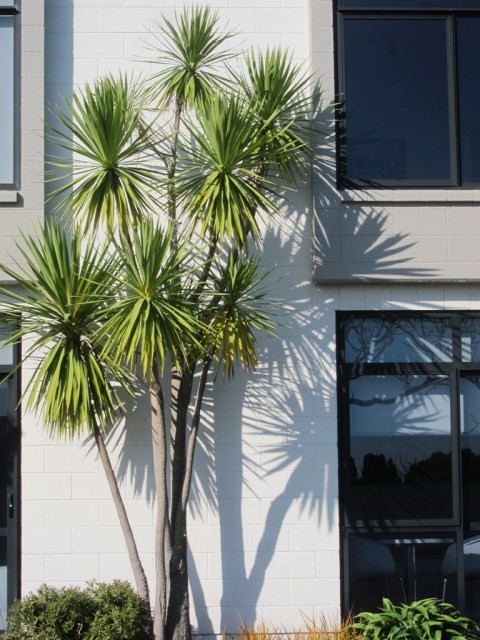
 Heading out of town, I stopped by the recent planting of an avenue of cordylines leading up to the golf club. You may notice it is an informal avenue which seems a wise decision given that this is not a plant that is particularly cooperative when it comes to straitjacketing it into precision formation. It is much too individual and unpredictable to achieve rigid conformity.
 The established block beside the airport turnoff has been there for a fair time now. They were both eye-catching and appropriate when first planted and I think they are maturing well. The planting beneath is our native flax or phormium.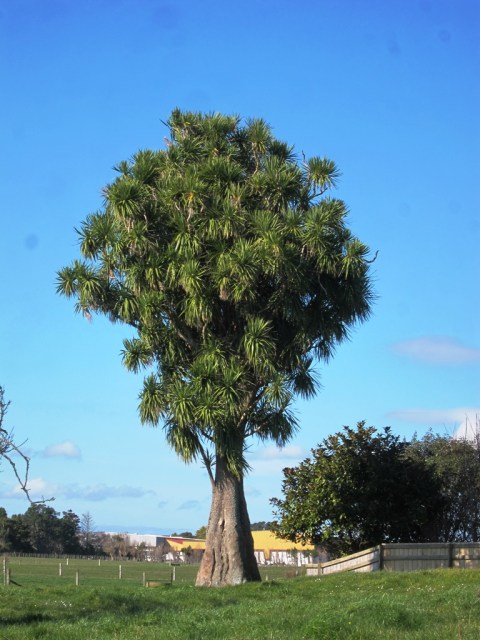







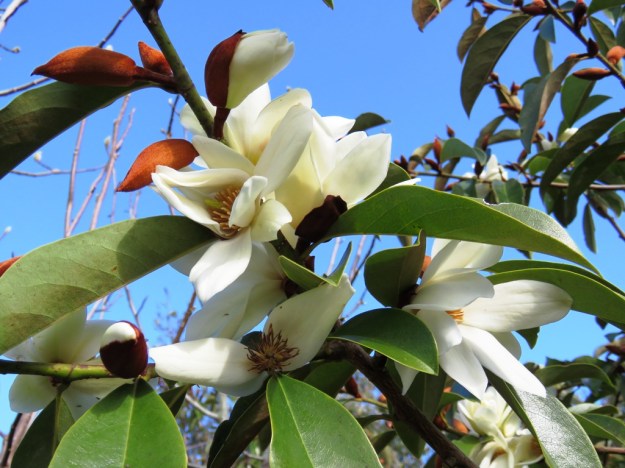

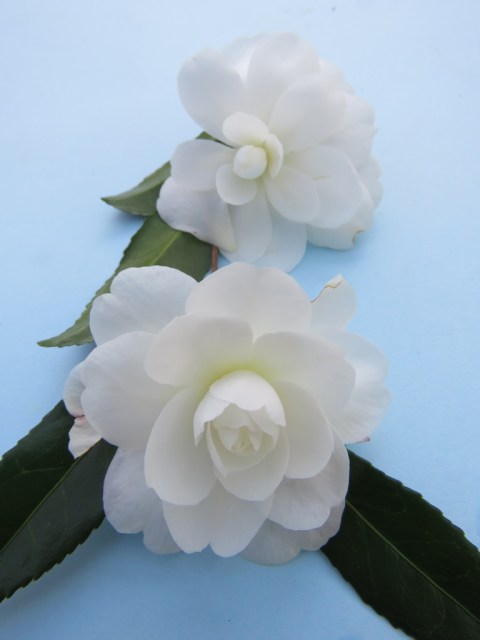
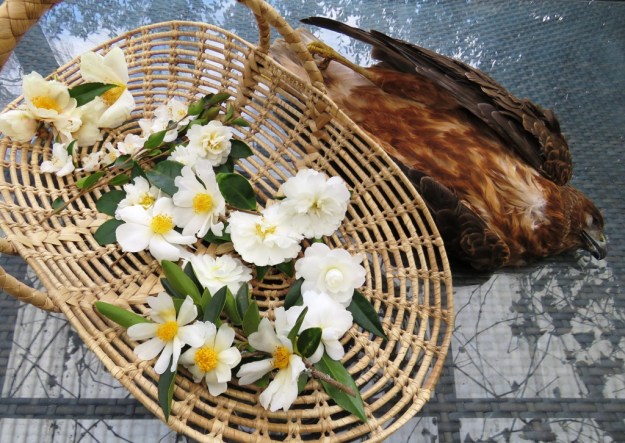
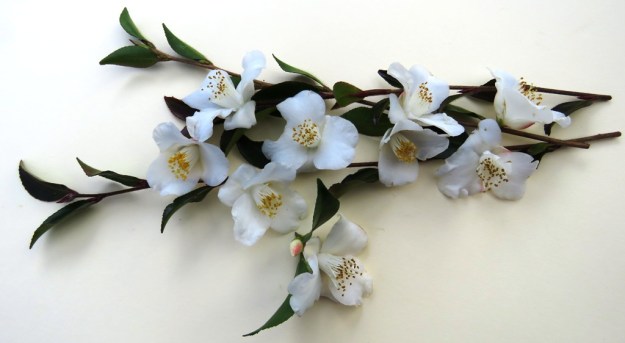
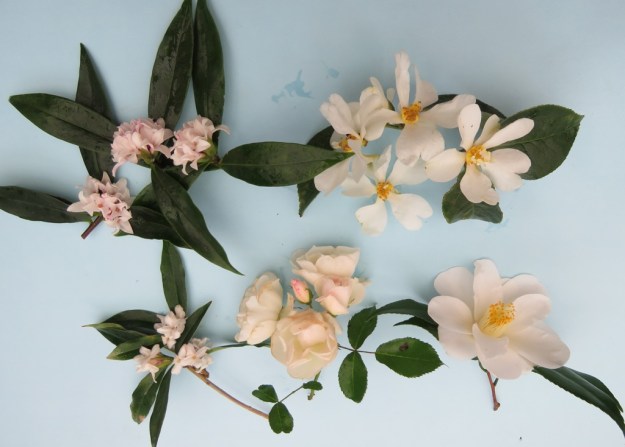
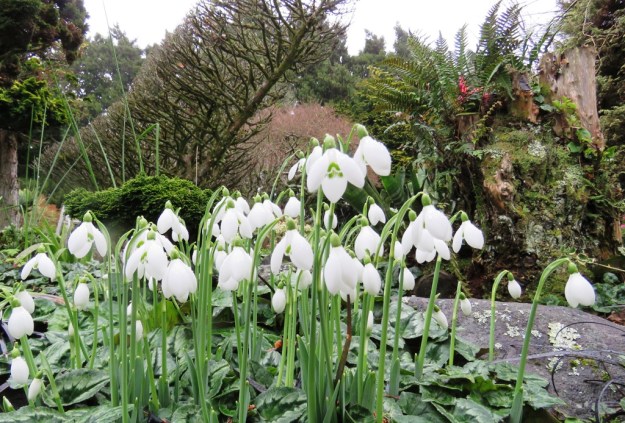
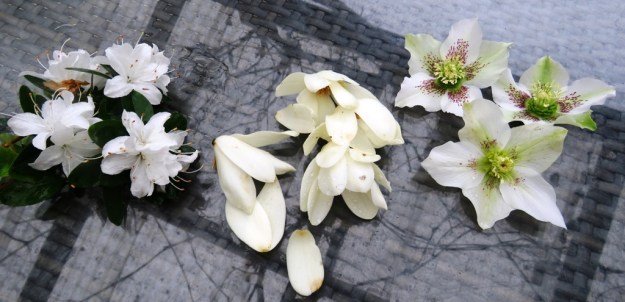 Finally today, I headed out into the chill to find the white evergreen azaleas, the very first of the new season’s michelias (deliciously fragrant) and white hellebores. By this time, I found my eyes being drawn to colour and red blooms were demanding my attention. I would find a monochromatic garden soon palled but the colours will have to wait for another day as I end with the simple perfection of Camellia Superstar below.

