Category Archives: Abbie’s column

Abbie’s newspaper columns

For those in need of a little support

Climbing plants give height to a garden but there is often the problem that they need something to climb up.
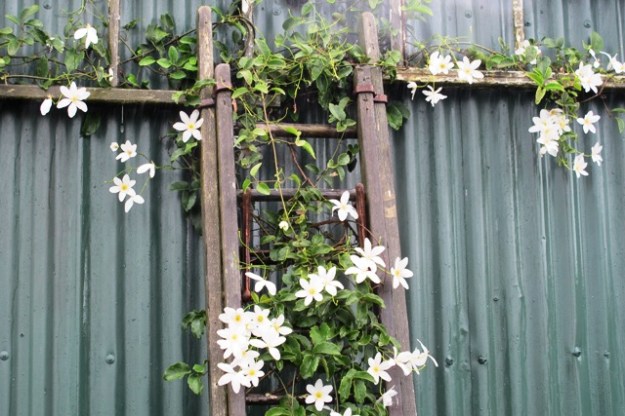
old wooden ladders1) The old wooden ladders, one vertical and one secured horizontally across the top, are the effort of a creative gardener down the road. The clematis appears to be a strong growing variety which will cover pretty much the entire shed wall in relatively quick time. If you can find old ladders cheaply, it is a quick solution but I do not think that old aluminium ladders would be so pleasing visually.

simple bamboo grid2) Where you have masonry or brick surfaces, separate framing can avoid the need to drill holes. Here we have constructed a simple bamboo grid, tied together with twine, to give a light weight frame for the seasonal climber, Tropaeleum tricolourm. Gridded wire used to reinforce concrete can also make a handy and economical frame for climbers which can be cut to the required size.
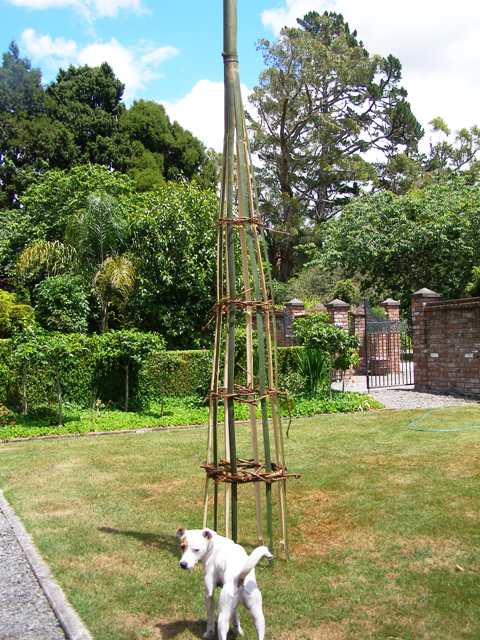
bamboo obelisks003 insert - Copy3) We make our own bamboo obelisks specifically to hold clematis. They last for several seasons you need access to fresh giant bamboo to use as the raw material. That is grape vine pruning holding the verticals apart. You can improvise something similar with wooden or cane teepees. If you want step by step instructions for the bamboo, click here.
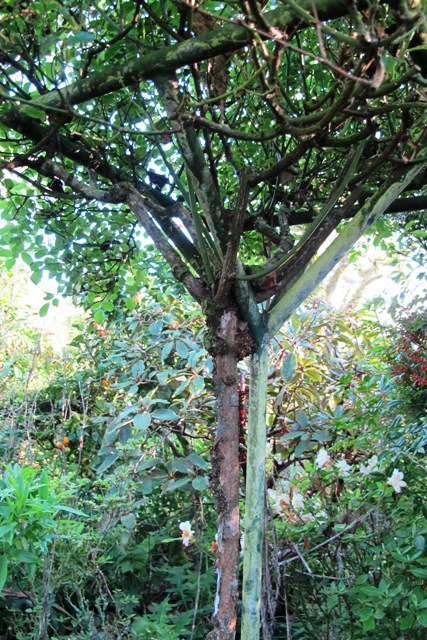
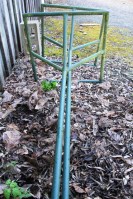
pipe framespipe frames4) I had these pipe frames built to hold my tall weeping roses, though I am now using two of them for wisterias. They were not cheap at the time, but they have proven their worth over more than 15 years. They need to be driven a long way into the ground – around 40cm at least – to keep them rock solid but they are capable of supporting a weighty mass of foliage at the top. Top heavy plants can readily snap off when only the stem has been staked.
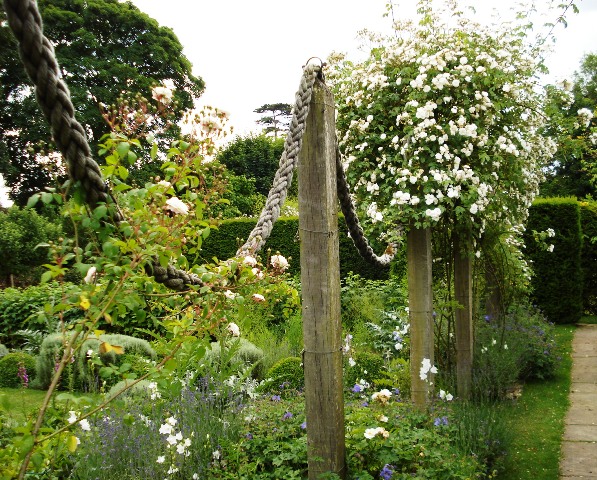
Tanalised timber posts and old maritime rope5) Tanalised timber posts and old maritime rope have been used to construct this frame which gives a simple garden structure as well as a support for climbing plants. It should last for many years and the only stumbling block I can see is sourcing the rope. The aesthetics rest entirely on having heavy, old rope. Modern, coloured nylon rope with a thinner girth just will not cut the mustard.
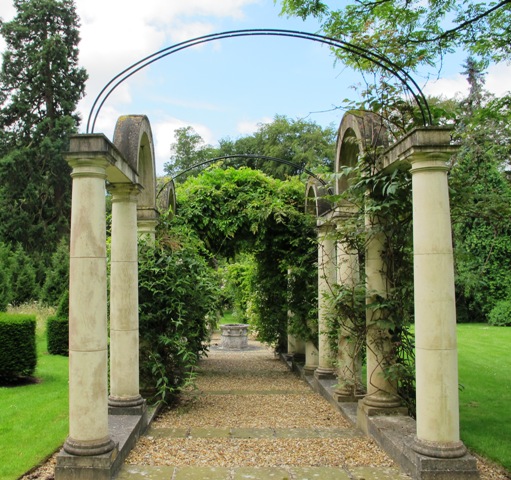
photographed in a Yorkshire garden6) From the cheap and cheerful, to the mid priced permanent, to this handsome splendour – which I photographed in a Yorkshire garden. The owner deprecatingly refers to this modern recreation as a “plant carrier”. It is there solely to support climbing plants and to provide an attractive structure within the garden. It is all concrete but using the ground-up local stone added to the concrete mix gives it a weathered stone appearance and colouring that fits the local environment.

First published in the Waikato Times and reprinted here with their permission.
The October Garden

The glory of the sino nuttallii rhododendrons

The glory of the sino nuttallii rhododendrons

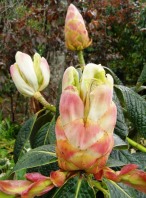
Floral Legacy in bud

Floral Legacy in bud

Rhododendons may no longer be the elite fashion item they were for so many decades, but we still love them.

When we started in the plant business back in the early 80s, rhododendrons were a hot ticket item. We were but one of several rhododendron nurseries in Taranaki and to survive, we needed to find our own niche. To this end, we grew a different range, specialising in varieties that would perform well in warmer climates – like Auckland. After all, even back then, one in four New Zealanders lived in greater Auckland and we figured that if we were going to sell them rhododendrons, we might as well sell them ones that would do better for them. Mark’s father just happened to have done some breeding to find varieties that were more resistant to thrips, didn’t get that burned and crispy edging to their foliage and were predominantly fragrant as well as floriferous. It gave us a good place to start.

Nowadays there are no specialist rhododendron growers in Taranaki at all and the demand has melted away. I no longer have to try and convince people that not all rhododendrons have a big full truss in the shape of a ball but many have loose trumpets in curtains of bloom instead.

Rhododendrons are one of the backbones of our garden and we wouldn’t have it any other way. While they have a relatively short season in full bloom, the anticipation of fattening buds stretches out the weeks with the promise of delights to come. They are as fine a shrub as any we grow here and a great deal more spectacular than most.

The nuttalliis! Oh the nuttalliis!

The nuttalliis! Oh the nuttalliis!

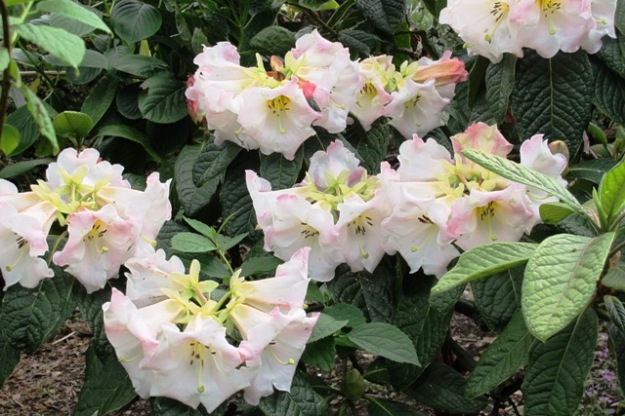
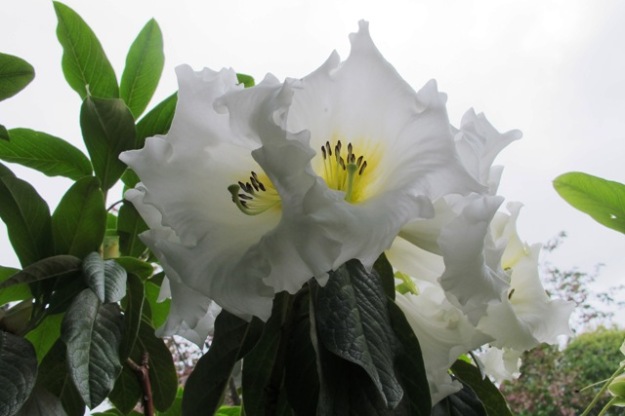
The nuttalliis. Oh the nuttalliis. Peak nuttallii season doesn’t start until closer to the end of the month, taking us into November but some varieties have already done their dash for this year. If we could grow only one type of rhododendron, we’d choose a nuttallii and even more specifically, the sino nuttallii from China. You can keep your big red rhodos (most people’s favourite pick). We love the fragrant, long, white trumpets which look as if they are made from waxed fabric, the lovely peeling bark and the heavy textured foliage. These are rarely offered commercially now so grab one if you ever find it for sale.

Thrips!

Thrips!

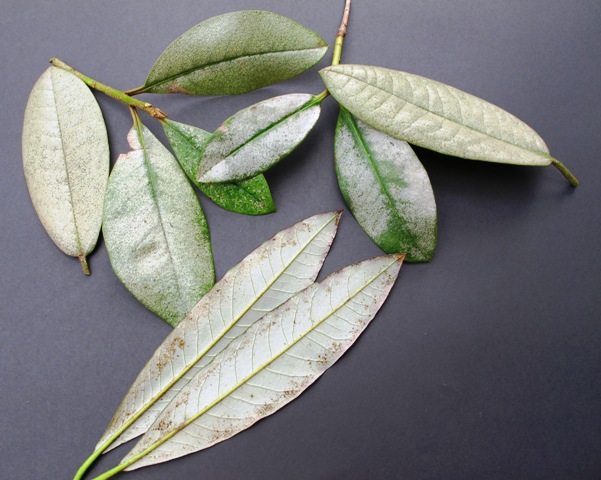
It is, by the way, nasty little leaf-sucking thrips that turn foliage silver and no, you can never turn those silver leaves green again. If you look at the underside of the leaf, you can see dark thread-like marks – these are the critters that do the damage. All you can do is to try and prevent the new season’s growth from getting similarly infested. We are not at all keen on spraying insecticide these days and you need a systemic insecticide that the plant absorbs into its system to get a thorough kill. If you must go down this path, spray in mid November, early January and late February for maximum effect. Others praise Neem oil instead but we haven’t tried it.

We favour choosing more thrip-resistant varieties, keeping them growing strongly and opening up around them to let more air and light in. Thrips prefer shade and shelter. Unless it is really
special, if it is badly thrip-prone, we replace it with a better variety. Not every plant is precious.

In the longer term, plants come and go in the fashion stakes. Goodness, even red hot pokers are having a resurgence of popularity. We don’t worry about the fashion status of the rhododendron and Mark continues hybridising for better performing cultivars. If there is no commercial market for the results, it doesn’t matter. We will continue to enjoy them in our own garden.

First published in the New Zealand Gardener and reprinted here with their permission.
Rhododendron Barbara Jury - one of Felix's  hybrids

Rhododendron Barbara Jury – one of Felix’s hybrids

The Romantic Garden (part 1)

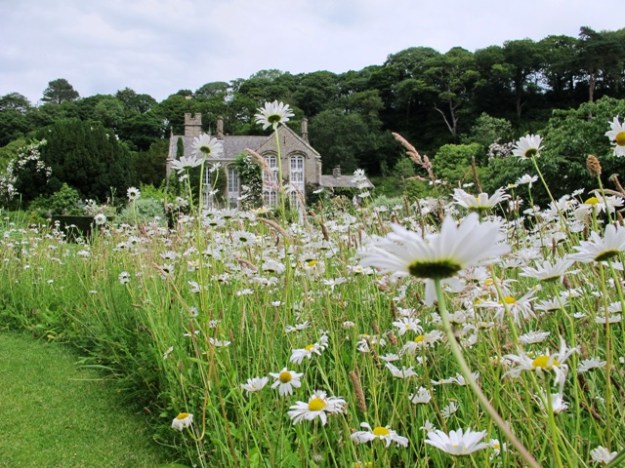
Good bones help but the contrast of plants and the simplicity of the daisies would work even without the hall in the background.

Good bones help but the contrast of plants and the simplicity of the daisies would work even without the hall in the background.

We have been talking about romantic gardens here. Not that commercially packaged ‘romantic’ imagery of twilight, candles, a bottle of wine and two glasses. No, we are looking back to the European Romantic period from the late 18th century onwards blended with what is often called naturalistic and gardenesque styles of gardening, but in the 21st century.

The gentle, at times sentimental soft focus of ‘The Secret Garden’ by Frances Hodgson Burnett has stayed with many of us all our lives. It was something of an anticlimax to me when I finally discovered that the history of those walled gardens in Britain has rather more to do with growing fruit and vegetables than roses. So too have I never forgotten the image of Elnora Comstock in ‘A Girl of the Limberlost’ though I admit I mentally had her in an arbour, not beneath a willow tree*.

Gresgarth offered many small pictures of subtle detail.

Gresgarth offered many small pictures of subtle detail.

How does this translate to gardening? Forget the twee, the naff, the contrived sentimentality. That is romantic gardening in the hands of the wannabe. It started to fall into place for us when we visited Arabella Lennox Boyd’s garden called Gresgarth in Lancashire, north west England. The pictures today tell the story. It was wildly romantic though not, I would guess as a deliberate contrivance. Lady Lennox Boyd is renowned as both a highly skilled garden designer and a plantswoman. This is her private garden and a reflection of her personal tastes. Unfortunately she was away the day we visited. We would have liked to have met her because we loved her garden.

It was not a show garden designed to impress. We have seen enough of those to pick them instantly. This was a garden with soul, underpinned by a very deft hand and eye. There were many detailed little pictures as well as the grand views, a marriage of formality and informality with areas of gentle abandon. It was a garden which served multiple purposes including supplying the house with produce and replenishing the soul. It wasn’t perfect. There were a few areas which were certainly not above criticism. In short, it was a garden to be lived in.

It wasn’t until later that we came to the conclusion that the best descriptor was “romantic”. This was despite the coach load of visitors and others who were there at the same time. I can tell you that garden coach loads do not vary a great deal whether they are in New Zealand or overseas. There is a certain herd tendency to tour groups. But even their intrusive presence did not detract from our enjoyment.

I think it was the gardener’s cottage in days gone by, located in the walled garden.

I think it was the gardener’s cottage in days gone by, located in the walled garden.

Gresgarth gave us a reference point as a romantic garden. Even if the handsome residence and the old stone and brickwork were stripped out, it would still retain that sense of romance because it lay in the garden, not primarily in the wider architectural or landscape context. Though it certainly makes life easier if you start with some good bones, as they say.

Romantic gardening is pretty much at the far end of the spectrum from hard-edged contemporary garden design with shiny stainless steel, matt black and sharp white structures and plants selected solely as soft furnishings. It is also well away from austere, classically derived formality although it may have some formal elements.

It wasn’t all pastel and white at Gresgarth.

It wasn’t all pastel and white at Gresgarth.

What else defines it other than that distinctly nebulous and subjective description of having ‘soul’? We are still unravelling this here but romantic gardening brings together a number of threads we have been discussing in recent years – sustainability, support for natural ecosystems, better environmental practices in gardening, a respect for nature which involves a cooperative relationship, some level of prettiness, often a celebration of simplicity rather than grandeur. None of this is a surprise when you consider that the Romantic era originated as a reaction against the Industrial Revolution and the elevation of science and reason above nature.

Maybe it is time for Neo-Romanticism or maybe the Romantic Revival as a response to the elevation of economics and self interest above nature and community? Only time will tell.

* “One afternoon early in July, Ammon came across the fields. He inquired for Elnora at the back door and was told she was reading under the willow. He went around the west end of the cabin to her. She sat on a rustic bench they had made and placed beneath a drooping branch. Ammon had not seen her before in the dress she was wearing. It was clinging mull of pale green trimmed with narrow ruffles and touched with knots of black velvet; a simple dress but vastly becoming.”

A Girl of the Limberlost by Gene Stratton Porter (1909)

First published in the Waikato Times and reprinted here with their permission.
Stepping up and stepping down

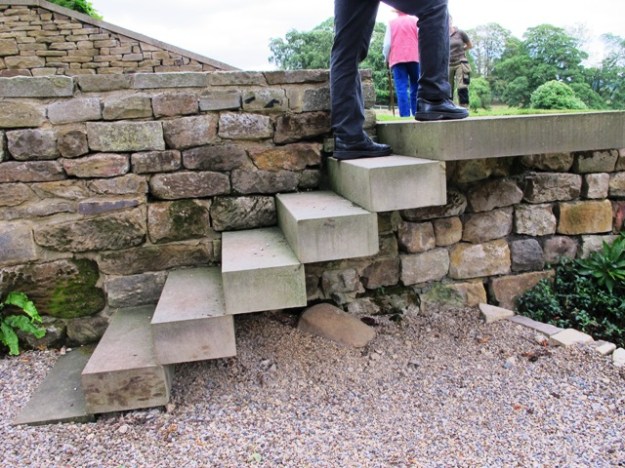
floating or suspended stepsThe floating or suspended steps with no visible support structure are a common feature in modern interior architecture where a lighter look is desirable. I can’t recall seeing them used in a garden before and, to be honest, I am not sure they add a great deal to this particular scene. But I did photograph it in a place with a large budget where the owners and designer could clearly afford such attention to detail.
??????????????????????????????????????????????????????????????

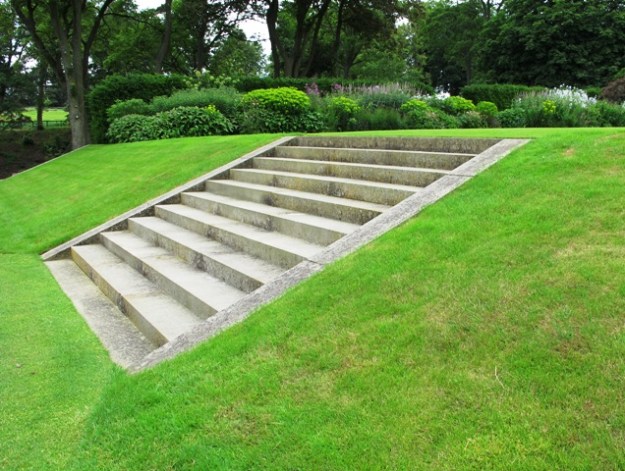
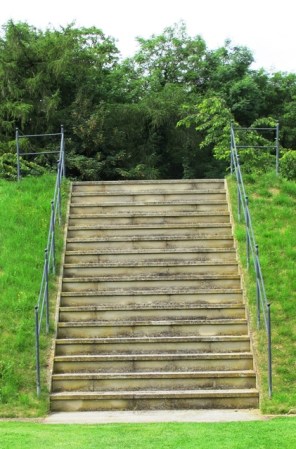
Wide steps, beautifully constructed, link two different levels of the same garden (Mount St John in Yorkshire). It is the generous width of the steps and the gradient which make this look more graceful than the inset photograph from Scampston. The gradient is sufficiently gradual to enable the use of a lawnmower alongside and to avoid the need for the decidedly utility hand rails which detract from the other steps.
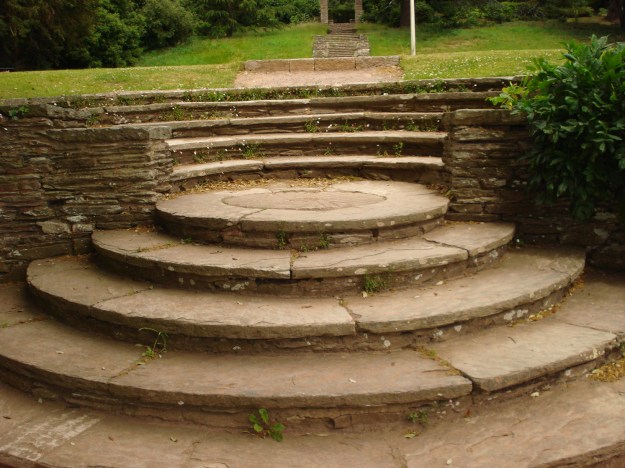
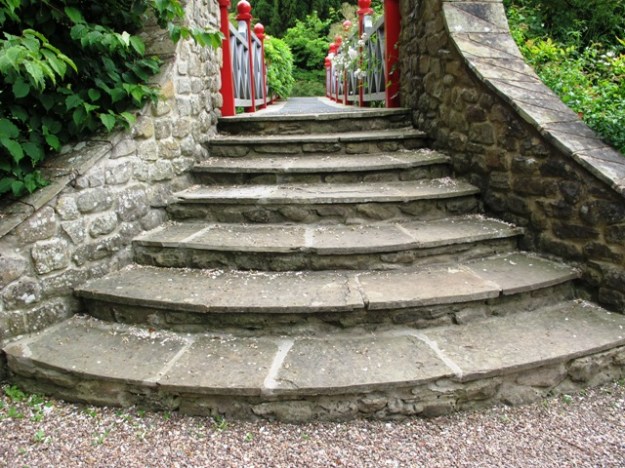
003These are the classic steps which are attributed to the great architect Edwin Lutyens during the time of the Arts and Crafts movement at the turn of last century. A central circle has inwardly curved steps on the upper side and outwardly curved steps leading downwards. Good design does not date. Good construction also lasts the distance.
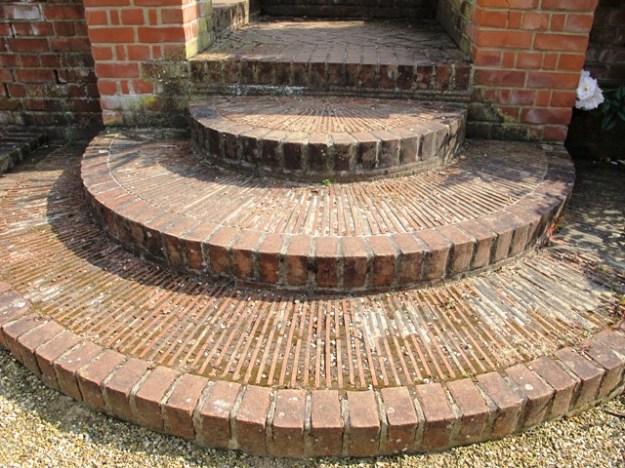
???????????????????????????????These steps have the outward curve only, but I chose them because they are an example of dry climate steps. The narrow strips on the treads are actually terracotta tiles placed on their sides. The look is detailed and attractive although I imagine it would be expensive to do here Both clay brick and terracotta will become moss-covered and very slippery in damper climates like ours. Note the care and precision in construction.
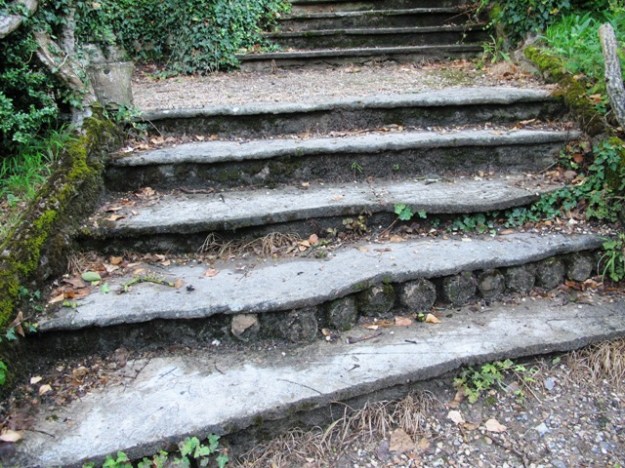
???????????????????????????????Not every set of steps is going to be a precisely engineered work. These were clearly DIY, although access to flat slabs of stone for the treads gives the impression of permanent quality. Look at the risers – some are local round stones held together with cement. In the absence of suitable stone slabs, check out the modern concrete pavers on offer. These can be cut to size and the finish can be good enough to deceive most eyes.
???????????????????????????????No matter what material you choose to construct your steps, there are well established guidelines for measurements. For comfort, the gradient is less than internal house stairs. Step risers should not be more than 15cm high and the corresponding step tread around 30cm from front to back. There is plenty of information on proportions that work best. Generously wide steps usually look more gracious than tight, narrow steps where space allows.

First published in the Waikato Times and reprinted here with their permission.
Peak bluebell!

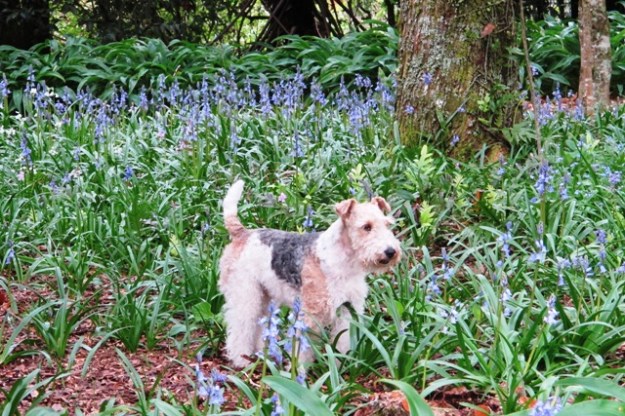
Flynn the dog did not show a great deal of respect for the Te Popo bluebells, alas

Flynn the dog did not show a great deal of respect for the Te Popo bluebells, alas

The first time I visited Scotland was at exactly the right time to see the bluebells bloom. This was in woodland near Gatehouse of Fleet in the south west. Like many others, I was enchanted by this natural phenomenon.

It is Peak Bluebell here this week. We headed down to see the blue glory at Te Popo Gardens in central Taranaki. While we grow bluebells in relatively large numbers ourselves, we have yet to attain the magnificent expanse they manage in their conditions.

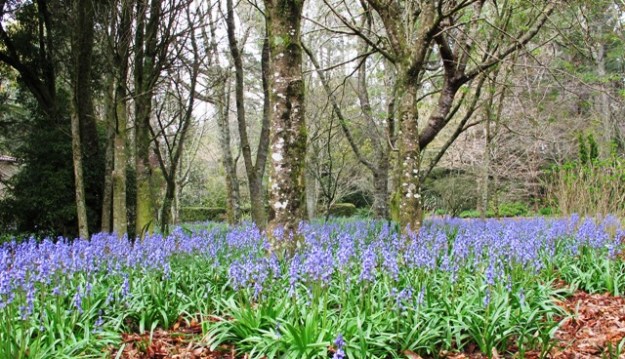
At Te Popo, there are many deciduous trees which creates a woodland cycle. When the leaves fall, they are left to lie. The bare trees let in winter light. It is at the turning of the season when the fresh growth is just starting on the trees that the bluebells flower, creating great swathes of blue carpet beneath. As the trees take on their full summer leafy garb, light conditions will decrease below which suppresses competing weed and grass growth.

Bluebells beneath deciduous trees at Te Popo

Bluebells beneath deciduous trees at Te Popo

In our garden at Tikorangi, our tree cover is such a mix of evergreen and deciduous that our woodland areas tend to be a little dark for most bulbs. When it gets too dark, the bulbs don’t set flower buds and gradually die out. We have to go for the margins and find the balance between necessary light levels and the grass growth that comes as a result. We are less blue carpet and more drifting carpet runner, if you see what I mean.

Bluebells are strong growing bulbs, also given to seeding down, so are better suited to a more natural style of gardening rather than intensively maintained borders. Lorri Ellis at Te Popo uses them extensively with hellebores to good effect. We have both found that spreading them in areas which can then be more or less left to their own devices is most effective. It is the massed, natural look that works.

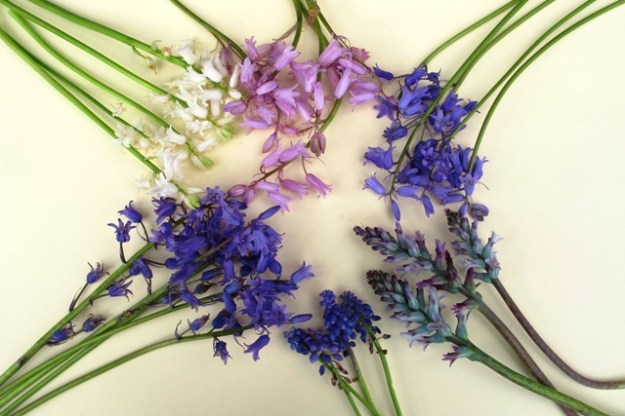
Bottom left, clockwise: Spanish bluebells in blue, white and pink, allegedly English bluebells, blue lachenalias and grape hyacinths – muscari – which some people mistakenly refer to as bluebells.

Bottom left, clockwise: Spanish bluebells in blue, white and pink, allegedly English bluebells, blue lachenalias and grape hyacinths – muscari – which some people mistakenly refer to as bluebells

There is ongoing angst in Britain over the incursions of the stronger growing Spanish bluebell, Hyacinthoides hispanica, dominating and hybridising with their native bluebell H. non scripta. We spent some time discussing the difference. Lorri has a large patch that she understands is the true English bluebell and she has kept it isolated from the rest which are probably mostly Spanish, or Spanglish as I call the hybrids between the two – technically H. x massartiana.

Bluebells and very fragrant jonquil species are both originally from Spain.

Bluebells and very fragrant jonquil species are both originally from Spain.

One way you can tell what you have, apparently, is by pollen colour. The English ones always have creamy pollen whereas the Spanish ones often have blue pollen. I had noticed the latter. After some random sampling and Mark’s memories of what he refers to as “Grandma’s bluebells” (technically his great grandmother, I think), we came to the conclusion that it is likely that most of what we have here are hybrids. We are none the wiser as to whether Grandma started with English or Spanish ones, but we think that the lilac pink and white ones that were brought in to add variety are all of Spanish origin.
Mostly Te Popo 014 - Copy
Te Popo Gardens are located near Stratford and will be open during the Powerco Taranaki Garden Spectacular from October 31 to November 9

First published in the Waikato Times and reprinted here with their permission.