Category Archives: Abbie’s column

Abbie’s newspaper columns

Modern directions in perennial planting patterns

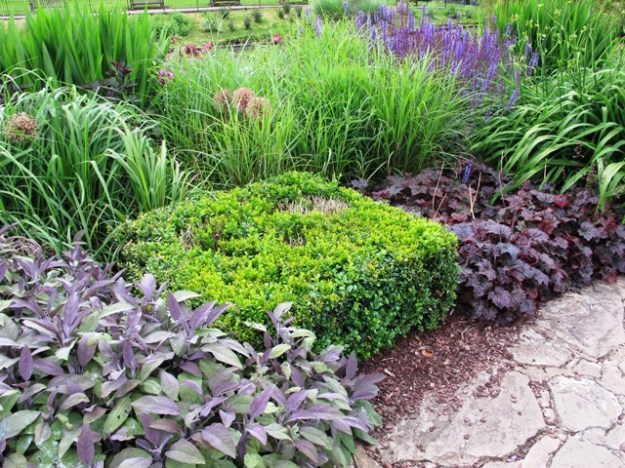
Hampstead Heath1) Confining planting to geometric blocks (Mondrian-style perhaps, for students of art), has been evident in show gardens in recent years but has now become mainstream. This is a new planting on Hampstead Heath, done by the public authorities. The sharp lines will blur over time. It is a shame about the buxus blight that is already evident. A different clipped shrub may have been a better choice.
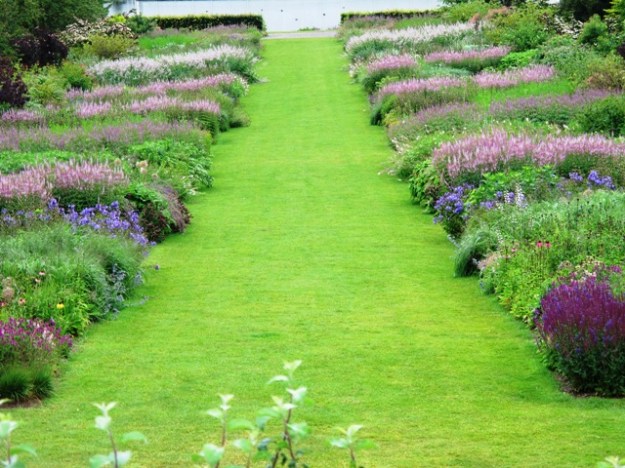
Wisley2) Piet Oudolf’s rivers of colour in the modern borders at Wisley have been controversial since they were planted in 2000, but we think they are glorious. They also take much less labour to maintain than the traditional twin herbaceous borders. Each ribbon of colour has about four different plants in it and the colours will change through the season. You need to be able to look up or look down on this type of planting (or both). Viewed on the flat, you would not see the diagonal effect.
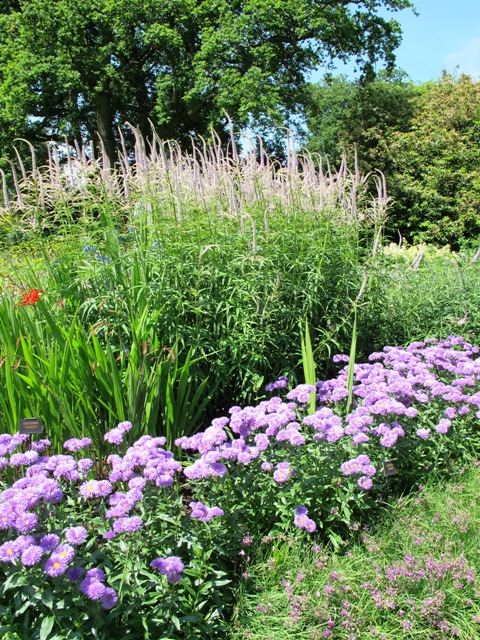
A river effect3) Less ambitious may be to snake a river of one perennial through clumping plantings. In this case it is an erigeron daisy but I have already done it in my own garden with irises (the blue sibirican ones and also Higo iris). A river effect alters the dynamic of big, round clumps of plants or can give some visual unity to an otherwise disorganised planting.
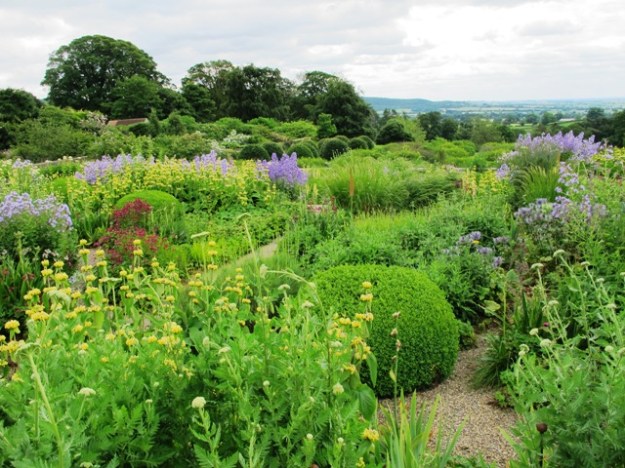
Tom Stuart Smith4) Big generous clumps of perennial plants, each standing in its own space, are one of the hallmarks of the New Perennials Style that has been widely adopted in modern UK and northern European gardens. This is a private garden, the work of British designer, Tom Stuart Smith. It takes a big area to carry out well. Each plant is occupying an area at least a metre across, sometimes more. Clipped shrubs act as punctuation points.
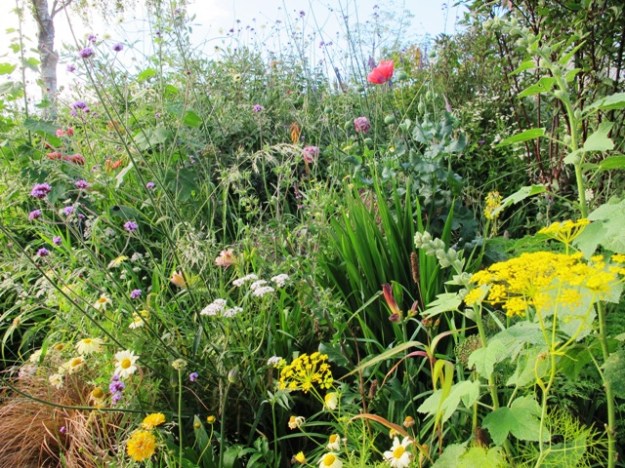
Dorset garden5) The classic cottage garden mix and match style is harder to manage than it looks if you are determined to keep both a succession of flowers and good coverage – to avoid bare patches – throughout the warmer months. This is in a Dorset garden owned by a good gardener. In lesser hands, it can become a hodge podge with bare bits and small plants of potted colour added in an effort to fill in the gaps.
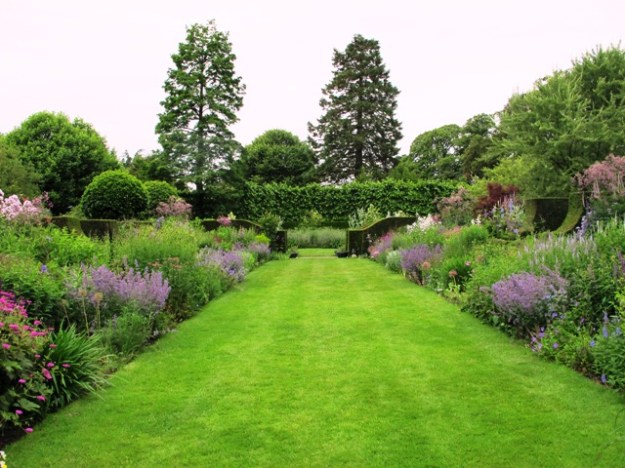
Gresgarth, near Lancaster6) The classic twin herbaceous borders adapted to a more personalised, private garden (in this case Gresgarth, near Lancaster) by breaking up the expanse into shorter sections using clipped hedging in battlement style and strategic topiary. In line with modern expectations, planting is now deliberately colour-toned and separate sections allow the colour palettes to be kept apart. The effect is deliberately refined.

007 - Copy7) Grasses! Grasses! More grasses! And many meadows, let alone prairie plantings. No discussion about modern perennials is complete with referencing these major trends. These deserve attention in greater detail and are part of a bigger picture of focussing on more environmentally friendly approaches to gardening.

First published in the Waikato Times and reprinted here with their permission.

All for show? Not necessarily

“Our Garden” by Andy Sturgeon – I wouldn’t mind this as my garden

“Our Garden” by Andy Sturgeon – I wouldn’t mind this as my garden

We have never been to the Chelsea Flower Show and have no particular desire to go. We went to the NZ equivalent, the Ellerslie Flower Show maybe three times, just to keep in touch. Maybe we are just too cynical about show gardens.

A six-way discussion on this topic recently illustrated the division. The four hands-on gardeners around the table felt there was little cross-over from show gardens whereas the two academics with a design focus (whom I do not think ever allowed dirt beneath their finger nails) argued that show gardens were trend setters. I guess the divide may be whether one thinks designers are more important than gardeners.

We were at the Royal Horticultural Society flagship garden, Wisley (near Guilford) for a couple of days and their installation of model gardens in the area they call “Witan Street” suddenly took on new meaning. These are show gardens, all measuring a uniform 9m x 6m, designed by members of the Society of Garden Designers and installed between 2004 and 2008. Where else are you going to see what show gardens look like up to ten years on, after being given only a moderate level of routine maintenance?

“I don’t think much of these,” sniffed a passing garden visitor, dismissing the whole lot in one sweep of the hand. On the contrary, we thought quite a lot about them. What these gardens showed is that good design lasts, fashion items don’t. A well designed show garden can mature gracefully and become a softer-edged back garden appropriate for a domestic setting.

Perspex panels, no thank you. Dated already, as fashion items do.

Perspex panels, no thank you. Dated already, as fashion items do.

Perspex panels were not a good long term option. The clear perspex example was a bit grungy and in need of a good clean. The coloured perspex panels no longer looked cutting-edge contemporary in style. They looked like outdated, tacky gimmickry.

The full length mirror also looked grubby and unappealing. We never liked this idea, even when it was promoted in this country. “Make your garden look larger and reflect light”, some suggested. Mirrors are best in bathrooms and bedrooms. They are a bit contrived in a garden setting, in my opinion. It appears they don’t age gracefully either. We felt further vindicated when an English gardener commented on how dangerous mirrors are for birds who can fly into them at speed. No garden mirrors here, thanks.

The blue and yellow colour scheme is very “of the day”. I am reserving judgement on the stainless steel

The blue and yellow colour scheme is very “of the day”. I am reserving judgement on the stainless steel

I am keeping an open mind on the use of stainless steel. It looked okay in Dizzy Shoemark’s “A Garden of Contrasts”. It did, but I would want to see it in another decade before deciding whether it is legitimate long term material or fashion item.

Flat planes of colour on boundary walls can date a garden quickly but are relatively easy to update – if you notice. The danger is that the aubergine, Mexican gold or solid blue that looks so sharp and edgy when first painted then stays on well past its use-by date, in danger of achieving floral carpet status over time. The owner can become so used to seeing it there, that he or she fails to register that it is now tired, faded and dated.

The Rill Garden. I am sure it would have had many scatter cushions in its original inception

The Rill Garden. I am sure it would have had many scatter cushions in its original inception

Each garden has an information board  in show garden style

Each garden has an information board in show garden style

I fear that the Rill Garden by Roger Webster showed too much bare concrete to achieve its aim of “a sensual and social space evocative of a warm climate”. But I would bet money that in its original concept, all that expanse of concrete benching was luxuriously encased in the many scatter cushions that featured in most show gardens of the day. Without said cushions, the seating looked cold, damp and very hard to the derriere.

Water is clearly problematic and much depends on design and installation. Some water features looked decidedly stagnant and unappealing whereas others were standing the test of time. Water is not low maintenance and you need to get it right – or live with the consequences of mosquitoes, in our climate at least.

I think the maturing block planting had achieved the status of being dull in ‘Intersection” where the designer states: “Blocks of yew and box reflect the geometric design of the garden and contrast with the more informal drifts and random planting that flows around the static elements.” I have seen it done better and the square blocks were not inviting as a back yard option.

But some of the gardens had mellowed out to charming effect. These gave lie to my dismissal of show gardens. Yes you can learn from them. They demonstrate trends and fashion and focus the mind on design. I just think they are a lot more interesting a few years later if given the chance to settle in, lose the hard-edged perfection and to actually grow.

First published in the Waikato Times and reprinted here with their permission.

Edging garden borders

We have been looking at English summer gardens for the last few weeks. In my quest to offer alternatives to edging plants and tidy little hedges delineating garden beds, I collected some examples.

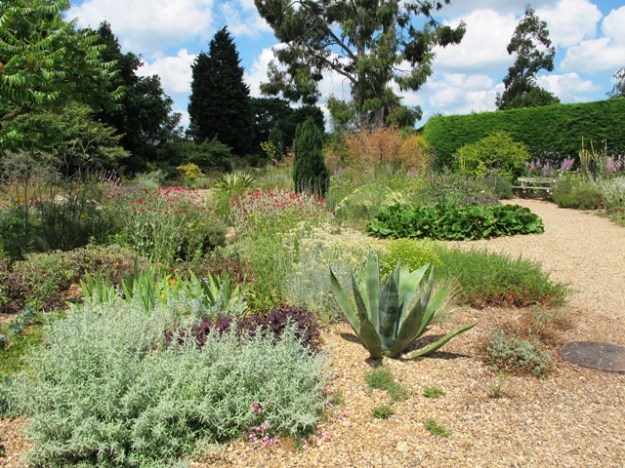
Beth Chatto’s dry garden in Essex

1) Beth Chatto’s dry garden in Essex was groundbreaking in its day and is still a remarkable place to visit. Here the same honey-coloured gravel has been used both for paths and as garden mulch, blurring the transition between garden bed and access ways. There are no straight lines anywhere and the effect is relaxed, soft and inviting.

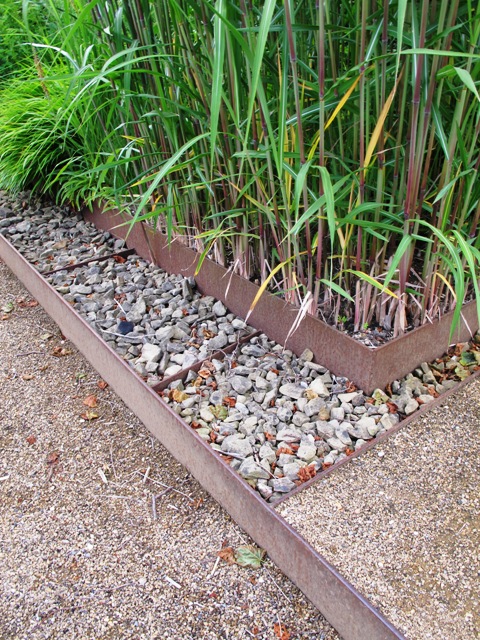
The grass garden at Bury Court in Hampshire

2) The grass garden at Bury Court in Hampshire was hard-edged, contemporary design. We did not expect to like it but were won over by the movement and texture. The contrast between geometric design and the wayward growth and sway of the tall grasses and perennials gives dynamic tension. The hard edged, rectilinear constraints have been achieved using rusted metal, coarse stone chip and fine gravel, put together with considerable precision.

Also at Bury Court, the flower gardens

3) Also at Bury Court, the flower gardens were defined simply with a sharply cut edge where garden beds met lawns. You can do this with a spade if you lack the requisite edging tool but you need to make sure you are not shaving a little more off the lawn every time. I speak from experience on this. One day you may look and realise the lawn has shrunk.

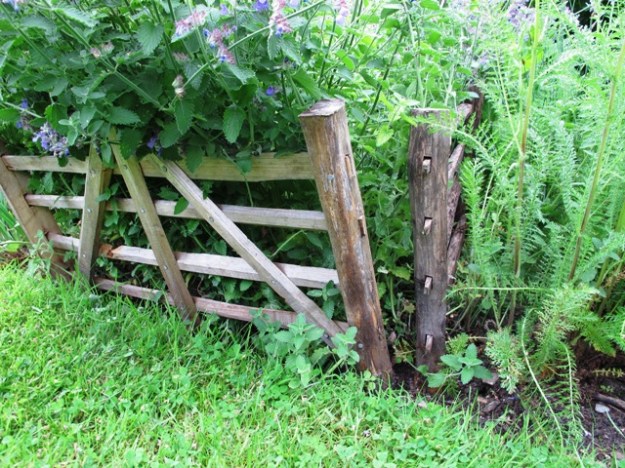
Gresgarth Hall in Lancashire

4) Gresgarth Hall in Lancashire had purpose-built miniature hurdles to restrain wayward plants. These are only about 25 to 30cm high, as you may realise looking at the catmint (nepeta) behind. We saw variations on this theme but the rule of thumb is that if you craft them a little, rather than using tanalised timber offcuts, they will look more discreet and natural. Their purpose here is to stop the plant from flopping outwards onto the lawn, leaving a hole in the border while smothering the grass.

stack of woven screens

5) Also at Gresgarth, we saw stack of woven screens of a similar size to be used as plant restrainers. Rather than following the oft-repeated advice to spend cold winter days cleaning and sharpening your garden tools, you may like to try your hand at weaving little screens for summer use. Hazel is the most common UK material but you can use any flexible prunings including grapevines, michelia, willow or birch.

Froth!

6) Froth! If you have a voluptuous planting, paving up to the garden allows the plant to cascade over the edging. This softens hard lines, gives room to the plants and is altogether more relaxed and romantic than straitjacketing the garden borders into rigid lines. This is at Wisley, the flagship garden of the Royal Horticultural Society. Their main twin herbaceous borders have wide pavers laid either side with a wide grass lawn down the centre. It gives a softer effect than paved right across as shown here.

For earlier thoughts on this topic, check Begone edging plants!

First published in the Waikato Times and reprinted here with their permission.
A retirement garden from scratch

The garden owners know exactly what they like and how they want their new garden to look

The garden owners know exactly what they like and how they want their new garden to look

Every time I drive to town, I pass a large new garden that was started from scratch late last year. The owners are usually outside, beavering away. Curiosity overcame me and I had to stop and chat.

Ann and Maurice did not want to be identified beyond their christian names and that is fine because what interested me was to find out how they decided where to start with their blank canvas. There was just some perimeter hedging and a new house at one end of the plot when they started. It is a large section – a full acre they told me – and this is their retirement garden.

Both came from larger gardens, considerably larger in their earlier days, so the prospect of an acre held no fears for them, but the fact that it is pretty much dead flat was important. There are good reasons why most people retire to the flat in later years – gardeners’ knees for one.

I asked them how they decided where to start and the response was completely matter of fact and decisive. They wanted a garden that was fully visible from the house. There was to be no slow reveal or secret garden to be discovered. In a modern house designed for indoor-outdoor flow, they wanted to be able to survey their garden in its entirety from the living areas. There is no right or wrong way on this. It is entirely a matter of personal taste and they know what they like. The result is a large expanse of central lawn surrounded by garden borders on the perimeter.

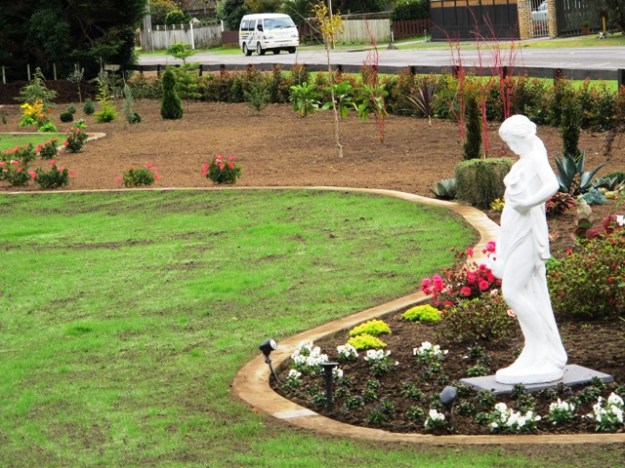
All the garden borders are curved, serpentine even. Ann was equally decisive on this design decision. She does not like straight lines in gardens and regards them as boring. Again this is a matter of personal taste and design choice. There is no correct or incorrect way.

Where their gardening experience showed was in the generous width of the perimeter borders. Irrespective of whether your edgings are railroad straight or gently curving, one of the most common design mistakes is to make borders too narrow. In a large space, narrow borders can look mean, out of proportion to the scale of the garden. But even in a small space, it is very difficult to work with narrow borders. Plants grow – often much larger than expected and few novices can envisage the amount of space trees and shrubs will take up once established.

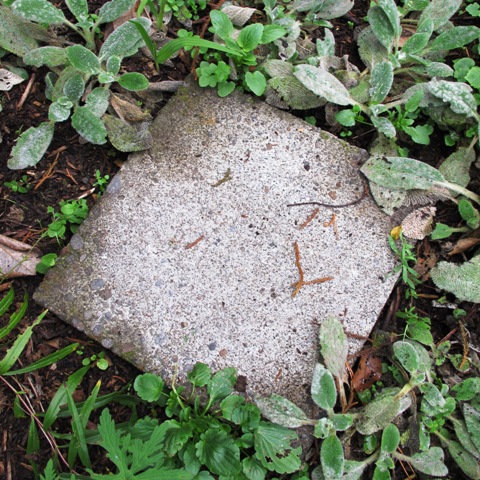
Scatter pavers in the middle of wide borders to give somewhere to stand when tending to the sections that can't be reached from the side (this one in my garden)

Scatter pavers in the middle of wide borders to give somewhere to stand when tending to the sections that can’t be reached from the side (this one in my garden)

We have been dogged by garden borders that Mark’s parents put in back in the 1950s, which ended up being too narrow. It is not easy to widen borders retrospectively when they have permanent concrete or stone edgings in place. We have done it to several, but getting it right from the start saves bother. Never less than two metres in width would be my rule of thumb, wider where possible. Maybe consider having fewer, wider borders if the amount of garden is scary. Scatter a few pavers in the wider expanse of the border if you don’t want to stand on the soil so that you can tend to the central area that is out of reach.

Ann and Maurice are planning their garden from the start so that they will be able to maintain it as they age. It is, after all, their retirement project. All borders have been edged with a wide concrete mowing strip, hand mixed and poured by Maurice. This gives definition to the borders and makes mowing easy. There are no island beds to circumnavigate. The lawn is uninterrupted. Maurice has given considerable attention to the lawn and they have not shied away from spending money on getting it right from the start. The level is consistent and flush to the mowing strips. It is a large area but dead flat and easy to mow with a ride-on – an important factor in longer term planning.

While the new border plantings include both perennials and annuals, the long term emphasis is on the trees and shrubs. Over time, these will grow and mature, providing a low maintenance backdrop for when hand weeding and kneeling become onerous. “It will be easy,” they explained. “All that will need to be done to keep the place looking good is to mow the lawns.”

Ann and Maurice were keeping their intensively gardened areas close to the house - very close for these areas under cover

Ann and Maurice were keeping their intensively gardened areas close to the house – very close for these areas under cover

Detailed gardens have been kept very close to the house with particular emphasis on the new conservatory which sports a permanent garden.

It is difficult to imagine a time when these two will not be out in their garden. They know what they like, they know what they want and they have made plans for it to see them into the future. No matter whether one’s personal tastes and preferences differ, there is a magnificence in such confident enthusiasm backed up by hard work.

First published in the Waikato Times and reprinted here with their permission.
“My tree will stop growing when it reaches 3 metres, won’t it?”

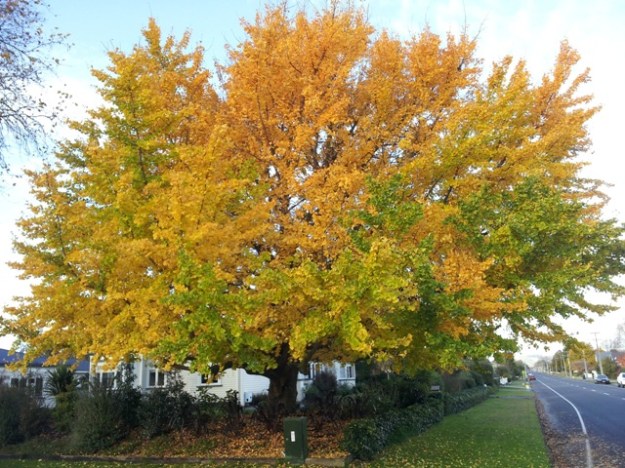
This ginkgo tree on the corner of Hall and Williams Streets in Cambridge gives lie to the 2.5 metre claim, though it is over 10 years of age. (Photo: Michael Jeans)

This ginkgo tree on the corner of Hall and Williams Streets in Cambridge gives lie to the 2.5 metre claim, though it is over 10 years of age. (Photo: Michael Jeans)

I am still chuckling. While I was preparing the recent column on ginkgo trees, a friend commented that she had one at the bottom of her garden and very pretty it is, too. Knowing she lives on a small town section, I replied that I hoped she had allowed plenty of room for it to grow. No, she assured me. She had looked it up and it only gets to 2.5 metres.

Raising my eyebrows, I sent her the Wikipedia link which declares ginkgo trees in the 20 to 35 metre range, with some specimens in China known to have reached 50 metres. I could feel her blench, even down the internet cable. It turns out that the internet site she drew her information from was a nursery selling the plants which stated 2.5 metres high in 10 years. Ginkgos are pretty slow growing but we would rate 2.5 metres as very conservative. We would expect that in 5 years here. And even in our nursery days, I do not think we would ever have declared a potentially huge tree as a suitable option for small, town gardens.

For as long as I can remember, the convention in this country has been to declare sizes on plant labels based on an average expectation of growth in 10 years. Problems come when the person writing the label may never even have seen the plant at 10 years of age, let alone 20, 30 or 40 years. We have always understood that the 10 year estimate came because that is the usual life expectancy of a plant in a New Zealand garden but I have no idea if that is true. The cynic in me says that it is more likely to be that customers would be frightened off purchases if they knew the real potential size of many trees and shrubs. Years ago, I wrote a series of columns on large, middle sized and small trees for gardens and a colleague chided me. I should not give mature sizes, she told me, because if customers knew those, they would never buy the plant.

As I mentioned recently in Garden Lore, it is easy enough to plant small specimens but if they outgrow their allotted space and become a problem, it can be very difficult and extremely expensive to get rid of them. It is also such a pity, particularly with trees. How much better is it to get the selection right from the start, so they can bravely grow on and reach their potential through the decades?

The problem often lies with impatient gardeners or home owners. Dear reader, Sod’s Law says that if a plant grows rapidly to the 3 metres you want, it is either very brittle and won’t last long, or it will continue growing to a much larger size, although the growth rate may slow. It is not going to reach the height you want and obligingly stay that size.

Experienced gardeners know that declared sizes are an inexact business at the best of times. A huge amount depends on conditions – sun, shade, wind, temperature, drainage, soil type and other variables. Geography plays a big part, both across the world and even within New Zealand. Plants grow more slowly and tend to stay more compact in colder climates.

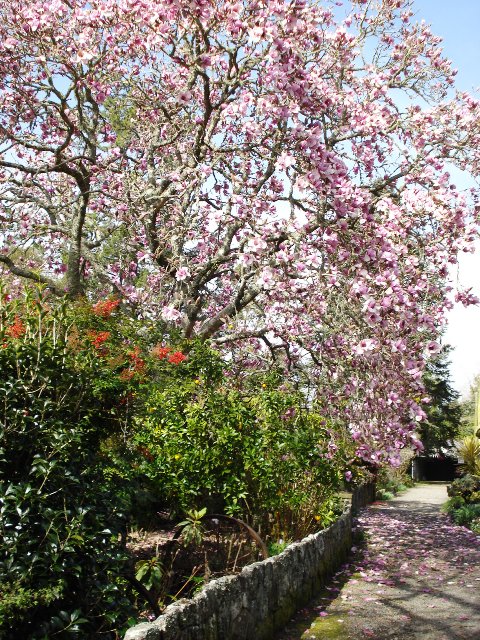
Magnolia Iolanthe is not going to stop growing when it has reached 2 or 3 metres

Magnolia Iolanthe is not going to stop growing when it has reached 2 or 3 metres

I suggest you seek your advice from a number of different sources. Don’t accept a 10 year height as a final height and don’t expect that to be 100% accurate in your situation. It is only a guide and some guides are more accurate than others. We once found our magnificent Magnolia Iolanthe declared as a two metre high tree in a retail outlet.

If you want a tree that is going to be a focal point, consider spending more and buying an advanced grade specimen. You are paying to get a jump of several years in growth and that can make quite a difference in a small garden if you want instant impact. But keep to the slow growing varieties which will stay smaller. It may look as if you are getting more bangs for your buck if you buy a larger, fast growing one but really, you are just buying a vegetable time bomb.

Where space is limited, take potential width into account as well as height. A multi stemmed plant will generally be much wider than one with a single leader. Width can be a greater problem than height.

A mature Camellia Tiny Star makes an almost perfect small tree but it takes many years to get there

A mature Camellia Tiny Star makes an almost perfect small tree but it takes many years to get there

I would rate Camellia Tiny Star as close to perfection in a small tree – single trunked, gentle shade, evergreen, small foliage and plenty of tiny flowers, doesn’t get diseased, needs no maintenance and has reached its full potential. The downside is that it took a lot more than 5 years to get there.

First published in the Waikato Times and reprinted here with their permission.