Category Archives: Abbie’s column

Abbie’s newspaper columns

Better in theory than practice – planting street berms in edibles

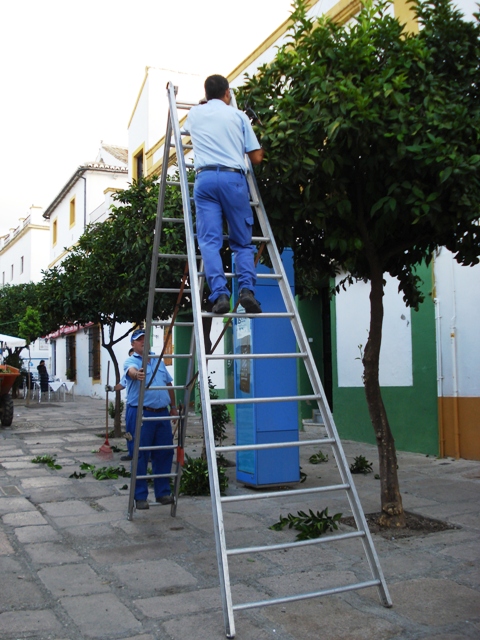
Street plantings of orange trees in Cordoba

Street plantings of orange trees in Cordoba

I have been following with some interest the debate about Auckland’s road berms and the transfer of mowing responsibilities to the closest house occupants. I can’t think that I have ever lived anywhere with road berms that Council mows so my sympathy is limited for those who are railing against having to take responsibility. Road berms are community spaces that stop our urban areas from being too grey and congested.

The debate about alternative uses was more interesting. I was amused by the wit who suggested that a creative approach could solve the lack of new housing space in Auckland. Indeed, if you look at contemporary Japanese domestic architecture, I feel sure there is potential for space-saving apartments to be constructed on some of the wider berms. Though I can already hear the cries of protest from the adjoining landowners.

Often I hear the claim that berms should be planted out as community vegetable gardens and that all street trees should be fruit trees for the benefit of residents. It is so easily said and on the surface it sounds such a good idea but there are reasons why this is not so popular with powers that be.

Starting with the vegetable garden berm idea – how are you going to stop every passing dog from urinating on your plants? Or worse. Just watch a dog being taken for its walk and you may lose enthusiasm for growing vegetables out in a public space very quickly. Is the berm to be fenced to keep out wandering dogs? This rather defeats the whole notion of common space when ownership is claimed by way of a fence.

Unless your berm is at the end of a very quiet cul de sac, there are issues with automotive pollution, not to mention road splash. Okay, the lead content of our petrol has dropped dramatically from where it used to be, but I am not too sure about wanting to eat plants which are grown with full exposure to petrol and diesel fumes. And road spray on wet days is likely to be introducing more contaminants.

Then there are all the issues of ownership of the produce when it is on public land. How happy would you be if somebody came along and harvested your entire potato crop just as it hit its peak – or worse, before it has? And if one or two key individuals do not take ownership of the garden and manage it, soon it will descend into an unsightly mess which is a great deal worse than a bit of rank grass.

Vegetable gardens on the berms are not that easy. This is not to say it can’t be done, but it is not a universal panacea and it will take a lot more individual effort than mowing.
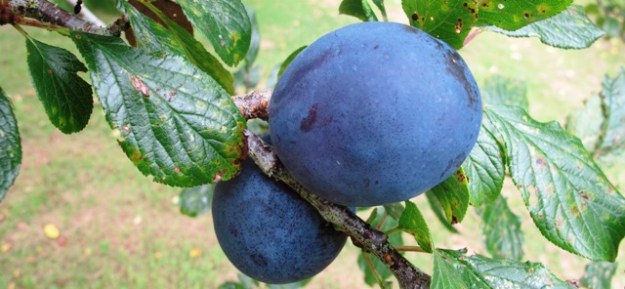
Plums - more likely to feed the birds than the human populace

Plums – more likely to feed the birds than the human populace

So, fruit trees as street trees? I really do not envy any Council staff who are faced with decisions on street trees but I applaud their valiant efforts to plant up our urban areas. Street trees have to be able to grow in exposed conditions, sometimes highly polluted. They need to have small leaves which decompose quickly so they don’t block all the drains. Their root systems are vitally important (don’t want to break up sewers or sealed areas but they need to be sufficiently well rooted not to blow over) and so is the ultimate shape of the tree. They need to be more upright than wide spreading. On top of that, if they are too desirable, they are vulnerable to theft when young and they need to be able to grow with a minimum of attention and no spraying.

That is a pretty big list already and that is just off the top of my head. There are probably more criteria than that. So tell me which fruit trees match those sorts of criteria. If it was easy, I am sure we would see it done more.

I have seen oranges used as street trees overseas – table oranges in Sorrento in Italy (tourist town, though, so maybe less inclined to be nicked) and bitter Seville oranges on the streets of Cordoba in Spain. The ones in Cordoba were harvested commercially, I found out. Citrus are not high maintenance trees but they still need spraying with copper and they are vulnerable to borer.
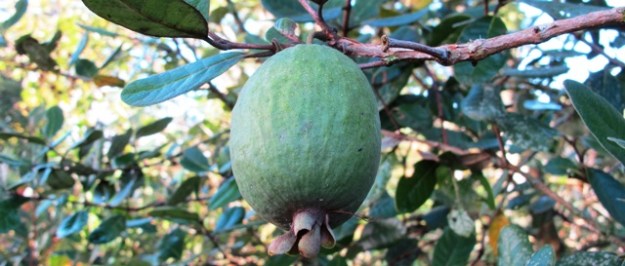
Feijoas! Definitely an option for road verge plantings

Feijoas! Definitely an option for road verge plantings

The best option I could come up with here is feijoas. They require next to no care and are reasonably wind tolerant. The fruit is peeled before eating so street pollution is not such a problem. Apples, pears, plums – all need care and are more utility than attractive. They are not even utility if they are uncared for and don’t crop. Plums are more likely to feed the birds than humans.

I think street trees are street trees. It is not a situation that lends itself to an ill-thought out philosophy that they should all be fruit trees in suburban areas as a matter of principle. I can only see it working where an adjacent householder takes responsibility for the trees and that includes dealing with theft and vandalism. It’s a nice idea in theory.

I admit, however, that I yearn to live somewhere with street plantings of oranges.

First published in the Waikato Times and reprinted here with their permission.
Low(ish) maintenance shade gardening

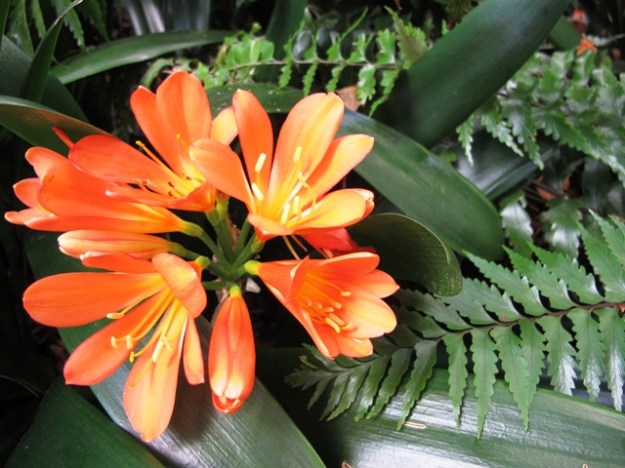
016 (2)It is clivia season here though it may not be clivia season for those who live in colder areas. Despite being much favoured by modern landscapers, these plants do not like more than a light touch of frost at most.
There are reasons why clivias are loved by landscapers. Of all the options for shady areas, they must be one of the most tolerant, forgiving and easy-care there is. For the better part of the year, they sit as a tidy clump of strappy foliage requiring little or no attention and when they flower in spring, the showy blooms last for many weeks. Plants can be left for years requiring no attention.

I looked at a photo of a property where the owners had used a reputable landscaper and the shady side of the house consisted of an access path with two narrow borders either side bounded by a solid fence. Both borders had been planted with clivias in single file, surrounded by bark chip as mulch. It is a very tidy, utility solution which, if the fence and path are smart, can even look stylish. If you like that sort of look.

Everything looks better with ferns, in my opinion. Ligularia reniformis.

Everything looks better with ferns, in my opinion. Ligularia reniformis.

Clivias are not a great choice for inland areas unless you are confident that you are frost free, which most of Hamilton and the Waikato won’t be. Sometimes such borders are beneath the eaves of the house and that will afford protection. But you will often see the same look achieved with, maybe, the tractor seat ligularia (L. reniformis), Ligularia ‘Desdemona’ or a similarly reliable, evergreen perennial.

It will come as no surprise to regular readers that it is not a look I favour, personally. While I can see the logic to keeping clean, crisp lines and some degree of simplicity, I just think it would look so much more interesting with the introduction of another one or two types of plants. They don’t have to be expensive or choice plants but what they add is textural interest, variation in height and sometimes the bonus of seasonal flowers.

Most gardens have a shaded area – at least that narrow side that runs alongside the bathroom and laundry and is on the other side from the sunny living areas. If it is a little-used area which is primarily access and has no house windows that look out to it, then it hardly warrants great expenditure of either money or ongoing effort. But a small amount of effort can make it so much more attractive and the beauty of shade gardening is that it tends to be much lower maintenance.

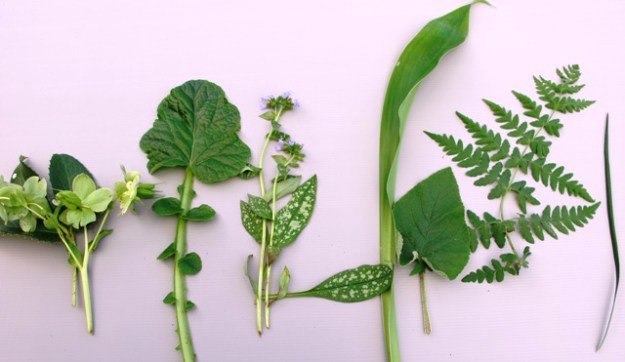
left to right: Helleborus x sternii, Francoa ramosa, pulmonaria, arthropodium (renga renga), phlomis, random fern and mondo grass - all cheap, reliable options for low maintenance shade gardening

left to right: Helleborus x sternii, Francoa ramosa, pulmonaria, arthropodium (renga renga), phlomis, random fern and mondo grass – all cheap, reliable options for low maintenance shade gardening

I headed out to the garden to look for options to add interest to a shade garden. There are plenty to choose from – just don’t choose them all if you want a clean look. Keep it to a maximum of three. Ferns. Pretty much everything looks better with ferns in the shade. They add a lightness of texture and detail of leaf to solid plants like clivias or ligularias and it is that contrast that can add interest.

Renga renga lilies are happy in more shaded areas and have the bonus of spring flowers. We have a lot of success with phlomis (P. russeliana or Turkish sage) with its yellow tiered flowers in summer. Similarly, the bridal wreath flower – particularly Francoa ramosa – is easy and obliging with summer flowers. The unattractively named lungworts or pulmonaria family combine very well with bigger, chunkier foliaged plants and add detail with their gentle variegation. Even common old mondo grass, be it black or green, can add a different texture. Helleborus x sternii is a reliable shade option with lime green flowers in winter.

If you keep to evergreen perennials which don’t require much more than an annual clean-up and which can be kept for several years without having to dig and divide them, you can make a low maintenance shade garden. Take care to plant them well in soil you have dug over, add plenty of humus or compost, mulch after planting and generally they can look after themselves.

It does not have to be expensive or difficult. If you can get simple combinations that are compatible, look good together, are happy in the conditions and meet the requirements of the gardener, it is a great deal more interesting than looking at a single plant variety en masse.

But that is the voice of a gardener, not that of a landscaper.

First published in the Waikato Times and reprinted here with their permission.

The Yellow Magnolias and Honey Tulip

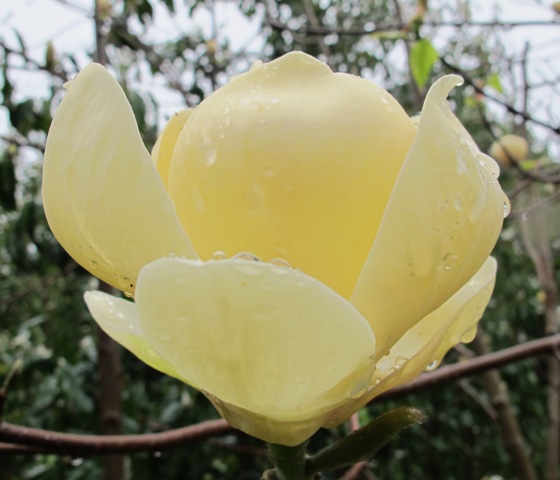
Honey Tulip - looking very good this week

Honey Tulip – looking very good this week

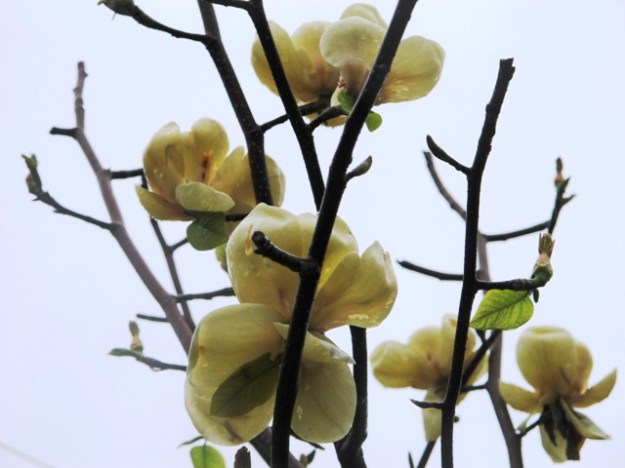
There is some relief here this week as our newest magnolia, Honey Tulip, is looking particularly good. It is always a bit nerve wracking releasing a new cultivar on the market and hoping we have it right.

We are still a little bemused by a communication from some random person when Honey Tulip was first shown in an overseas publication. I will have to paraphrase it because I must have deleted it in irritation at the time, but it said something along the lines of: “It is good that Mark Jury is discerning in the magnolias he names, but the world has enough yellow magnolias already….” It then proceeded to instruct my Mark on what he should be breeding for instead.

The international world of magnolias is pretty small, the number of international magnolia breeders even fewer. We know most of them by repute, if not personally. This email did not come from anyone we had heard of before. What was galling was that in the heady world of new magnolias, Honey Tulip represents a genuine step in flower form for the yellows.

Honey Tulip - a lucky break in flower form and performance

Honey Tulip – a lucky break in flower form and performance

The yellow magnolias descend from a single species and while most magnolias originate from parts of Asia, the yellow deciduous M. acuminata and the evergreen grandiflora magnolias are from USA. M. acuminata is from eastern USA up into southern Ontario in Canada. We can remember when it first came into this country maybe 25 years ago, along with four of the earliest yellow hybrids – Yellow Bird, Yellow Fever, Elizabeth and Koban Dori. They were a collector’s novelty. Who knew that magnolia flowers could be yellow?

It did not take that long to realise that the yellow magnolias were not quite like the big pink, red, purple and white ones. There are a few problems yet to be solved. M. acuminata itself grows very rapidly and very large which takes it beyond the size most gardens can accommodate. The flowers are small, very small by magnolia standards, though they have good fragrance. Mind you, it has to be a very strong scent to mean anything when the blooms are 20 metres up above.

However, the biggest problem with acuminata and most of the hybrids is that the flowers come so late in the season that they coincide with the new foliage which then hides them. We are of the opinion that the whole point of a deciduous magnolia is to have all those fat, furry buds exploding into a mass of blooms on a bare tree in late winter and early spring. So little flowers, no matter what colour, obscured by masses of fresh foliage, are not going to set the world on fire.

Magnolia Yellow Fever planted on our road boundary

Magnolia Yellow Fever planted on our road boundary

We have not kept buying the many new yellow hybrids that have come on the market. There is a limit to how much space we have and too many of them show the same flaws. In a large garden, the best performer we have seen so far remains the early American hybrid with the unfortunate name of Yellow Fever. It is not the strongest yellow but it does flower on bare wood and is a pretty primrose, unlike Elizabeth which is more cream.

There is yellow form of the Asian M. denudata but we have not heard of it being imported to this country yet and have not seen it in person. It is difficult to judge colour from the range of hues shown on the internet. A form called ‘Yellow River’ is being sold overseas but the nature of its breeding and origin is unclear. Certainly it came out of China and it has denudata origins but whether it is a yellow sport of that species, a natural hybrid or a controlled cross seems unclear. Even less clear is when or if it will become available in this country. Only time will tell whether international breeders get the jump on different yellow magnolias using denudata yellow, with or without acuminata.

For all these reasons, our Honey Tulip represented a significant breeding step. It flowers on bare wood, before the foliage. It does not appear that it is going to be of timber tree stature. The colour is a pretty butterscotch but the big breakthrough is the form. While not huge flowers, the tulip shaped blooms are larger than most other yellows – very similar in fact to a soft yellow form of Magnolia Black Tulip. It was also a lucky break because it was the only one of the plants from that particular cross that flowered in that form and colour.

The ultimate challenge is to get a pretty yellow Iolanthe with big cup and saucer flowers. Mark has about 20 years left in him to work towards this goal. I wonder then if the overseas critic who saw himself as an expert on yellow magnolias will concede that there is always room for improvement.

The ultimate breeding challenge - is a yellow Iolanthe even possible?

The ultimate breeding challenge – is a yellow Iolanthe even possible?

First published in the Waikato Times and reprinted here with their permission.

Pruning and shaping

Ulmus Jacqueline Hillier after pruning. For the avoidance of confusion, this plant is only 3m by 3m, not a forest giant.

Ulmus Jacqueline Hillier after pruning. For the avoidance of confusion, this plant is only 3m by 3m, not a forest giant.

I am married to a master pruner. I recognise his skills are hugely greater than mine. This was reinforced when he pruned the Ulmus Jacqueline Hillier at the weekend. This plant is meant to be a dwarf but it is looking less and less dwarf-like in our rockery and needs attention most years to keep it to a suitable size for that location.

At the end of the better part of half a day, he asked me how I thought it looked. In fact it looked very similar to how it had looked when he started. It is a plant with a lovely characterful shape and fan like sprays which hold the tiny leaves. There was close to as much lying cut off on the lawn as there was left on the shrub but you would not pick that. It had been reduced considerably in size and scale but had lost none of its form or shape. That is good pruning, dear Readers, as opposed to the butchery carried out by lesser mortals.

There was almost as much on the ground as left on the plant but you could not tell that by looking.

There was almost as much on the ground as left on the plant but you could not tell that by looking.

Such dedicated and meticulous pruning takes time, skill and sharp hand tools.

We joined a garden tour in the north of Italy some years ago and anyone who has visited those grand Italian gardens will know that most are clipped and shaped to within an inch of their lives. In fact they are so heavily clipped and groomed that plant health is often not that great. It is all about form and shape and very labour intensive.

Similarly, we have looked at the meticulous bonsai specimens in the Chinese gardens in Singapore. These are tended constantly by people with nail scissors, I kid you not. It may not be nail scissors exactly, but they were definitely nipping and snipping with scissors of some description. Surgical precision and detail. Again, labour intensive.

We lack the personpower here to carry out that sort of heavy clipping and shaping. Oh, to have a small army of serfs that we could upskill and then reward with a hovel in which to live and the occasional sack of spuds. But even then, we would not want a heavily contrived and clipped garden, preferring instead to go with some degree of natural harmony. It is all about degrees, however. Gardening involves a whole lot of management and manipulation to get desired effects.

Once the initial shaping and training is done, it does not take huge skill to maintain it. These are just camellias used as shapes in the garden.

Once the initial shaping and training is done, it does not take huge skill to maintain it. These are just camellias used as shapes in the garden.

Getting the initial shaping on plants is the skill, or bringing an over-sized specimen back to a more manageable size and shape. Once it is done, it only takes a moderate level of skill and care to maintain it.

I have watched Mark bring a wayward plant into line and that is why I am happy to concede his skills are so much greater than mine. He takes his time and he concentrates. He is up and down the ladder repeatedly (despite this playing havoc with a dodgy knee joint), viewing the plant from all angles at all stages. Major cuts are very carefully considered because you can’t glue a branch back on if you make a mistake. It is all about finding the natural shapes within the plant and highlighting those.

Frankly, it would often be faster to cut a plant out, even if it then involves major work removing stumps and roots. But if one forever removes plants when they get some size and maturity, then there is never a chance for them to develop character and the garden will remain perpetually juvenile.

All this comes back to the fact that we use plants as features and focal points in our garden, not ornaments. We prefer to clip a strategic plant here and there than to paint the outdoor furniture a different colour or place an urn.

First published in the Waikato Times and reprinted here with their permission.

Tulips, but not from Amsterdam

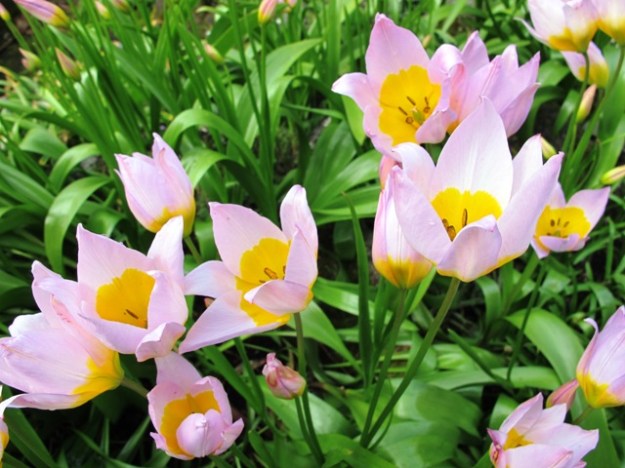
Tulips from Crete - T. saxatilis

Tulips from Crete – T. saxatilis

Tulips. They are Dutch in origin, aren’t they? Well no. The original tulips are no more Dutch than I am, but the modern hybrid tulips largely originate from the flat home of dairy, dykes, windmills and clogs. And in a love affair spanning 450 years, the Dutch have made this plant family their own.

We don’t grow many tulips in our own garden. The showiest by far is a tulip from Crete – T. saxatilis. Most people are surprised to find that there is a tulip from that Greek island because, after all, tulips come from Holland, do they not? In fact the species in the wild – and there appear to be somewhere between 70 and 100 different species recorded – do not originate from anywhere in Northern Europe. Instead, stretching from Southern Europe, through Northern Africa, the Middle East and spreading overland from Turkey to north western China, tulips have a wide territory. Many of them favour mountainous areas with hot, dry summers and cold winters and therein lies the hint to the problems people can have with getting the modern hybrids to flower past the first season in their garden. Most need a much greater winter chill than we can give them here.

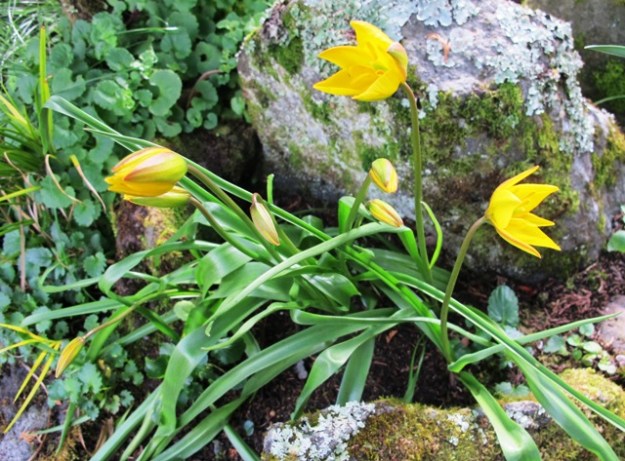
Some species - we just don't know which one

Some species – we just don’t know which one

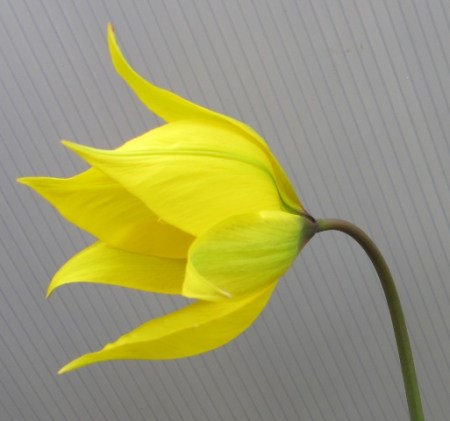
We have three different tulips in the garden. The Cretan species is wonderfully easy-care and increases gently and reliably. I love the unlikely contrast between the lilac pink and bright gold. Then we have a pure yellow one which is inclined to nod its head. Mark thinks it may be a hybrid, not a species, though I am unsure of how he reached this conclusion. It never increases but it does at least return each year. And we have a small flowered, small growing species of unknown origin. Charmingly understated, might be the descriptor.

Indubitably tulip, but we have no name on it and it never increases.

Indubitably tulip, but we have no name on it and it never increases.

I am not the world’s greatest fan of modern tulip hybrids but concede I am in a minority. I have toyed with the idea of bulk buying bulbs of one or maybe two selected cultivars to drift through areas of the garden. A swathe of pure white tulips or maybe clusters of a deep wine colour might add to the early spring herbaceous plantings even though they may be a little clichéd. But I prefer to spend money on bulbs which have a life-span beyond just one season. I can’t bring myself to treat tulip bulbs as a disposable commodity. It seems a shocking waste of money, resources and effort.

I was a bit surprised to find that even in the UK, tulips are often treated as annuals because their repeat performance is patchy at best, despite the fact that their winters are much colder than ours. Tulip bulbs are much cheaper to buy there which may be a factor.

It is not that these hybrids all die after flowering for the one season. They just decline and flowering diminishes considerably in subsequent years unless you go to the trouble of lifting them, separating the offsets, chilling them and replanting in fresh ground. That is a lot of effort. Holland apparently produces fresh tulip bulbs by the billions each year, so I guess there is an insatiable demand from people who do keep replenishing supplies.

The early variegations and novelty breakthroughs were almost certainly caused by virus which, while giving variety, also weakens the plants over time. Nowadays, the variegations are the result of genetic breeding and selection, and considerable effort has been made to get rid of the debilitating viruses. Most of the modern hybrids descended originally from T. suaveolens, which we do not have in our garden here.

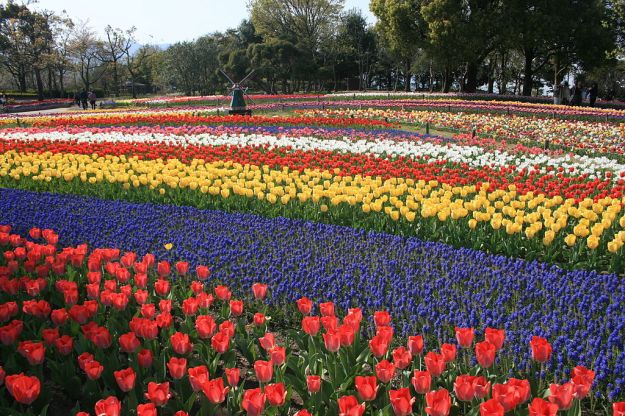
I went looking for a photo of tulip fields in Holland and found instead this one of tulip fields in Japan, pretending they are in Holland!

I went looking for a photo of tulip fields in Holland and found instead this one of tulip fields in Japan, pretending they are in Holland!

The history of tulips is fascinating but not without debate. The earliest cultivation of tulips was apparently recorded 1000 years ago in Persia. How and when they arrived in Northern Europe is disputed, but they appear to have been taken there in the mid 1500s. By 1637, what is now called “tulip mania” had hit Holland. Single bulbs could command fabulous prices – reportedly as high as 10 times the annual income of a skilled craftsman. But it was not just the wealthy plant collector who coveted these flowering plants. They had become an investment commodity, priced way beyond their actual value. This extraordinary situation has received a lot of attention because it was the first recorded instance of rampant, economic speculation on a product but there is ongoing debate about the extent and the detail. Economic data from 1637 is always going to be a little sparse and sometimes unreliable. Whatever, it makes a good story and “tulip mania” has entered the lexicon as a term for a freakish economic bubble, such as the sub-prime mortgage bubble in most recent times.

Going back to garden plants, in their simplest form tulips are generally cup-shaped and can face upwards or downwards. Essentially they all have strappy foliage and while it looks as if they have 6 petals, botanically they have 3 petals and 3 sepals. Ten times an average income seems an awful lot to pay for one of those.

First published in the Waikato Times and reprinted here with their permission.