Category Archives: Abbie’s column

Abbie’s newspaper columns

Irises – named for the Greek goddess of rainbows

Louisiana iris are flowering by our stream

Louisiana iris are flowering by our stream

I am enjoying the irises enormously this season. This week we have three main types in flower – the Sibericans, bearded irises and the Louisanas.

Botanically Iridaceae, they are more romantically named for Iris, the Greek goddess of the rainbow. It is a big family – there are maybe 300 different species and they are grouped in different botanical sections. Then there are thousands upon thousands of different hybrids, for irises have been bred extensively for hundreds of years. Some of those hybrids are what I would describe – politely, if disparagingly – as ‘novelties’. This is more evident in the bearded iris class than anywhere else but I will draw veil of silence beyond saying that not all hybrids are improvements.

'Crowned Heads'

‘Crowned Heads’

We are not the best bearded iris territory here. These ones grow from rhizomes that sit on top of the soil and they tend to prefer free draining, sandy soils (great if you live on the coast though you may have to stake the flower spikes). They like their rhizomes baked in the sun and they are fine with winter frosts but are not so at home in high rainfall, high humidity climates. They are also better without a whole lot of other foliage flopping over their rhizomes, which tends to happen in perennial beds.

Yes that is a black iris, called 'Anvil of Darkness' no less, and an old yellow variety to the right

Yes that is a black iris, called ‘Anvil of Darkness’, and an old yellow variety to the right

The modern hybrids are often touchier than the old toughies. I was delighted by the iris fields of nursery plantings I saw last spring (www.theirisboutique.co.nz) and tramped up and down looking at them all. The owner, Coleen Peri, has given me a few new ones to try here. Bless her, she avoided the weird colour mixes, splashes and splotches that I personally dislike. The very dark ones are interesting but are not going to be easy to place in the garden so that they stand out. There are some exquisite blues available but my most reliable standby is still an old pure yellow one which dates back to Mark’s mother. It is very forgiving and tolerant.

One of the easiest of all iris to grow, as long as you have heavy or damp soil - Iris sibirica

One of the easiest of all iris to grow, as long as you have heavy or damp soil – Iris sibirica

The easiest of all irises to grow must be the Siberian iris or I. sibirica. As its name suggests, it is fully hardy but it does want to grow in a heavier soil which doesn’t dry out during the growing season. It is dormant in winter, so winter dry won’t matter – though few of us have dry winters in this neck of the woods. It has the classic form with three upright and three falling petals and comes mostly in gorgeous shades of blue. Because it is clump forming (it has a fibrous root system as opposed to many irises which are either bulbs or rhizomes), it can be planted and left for many years. I get a lot of pleasure from the border where I have combined it with the big hairy-leafed Bergenia ciliata. I like the contrast between the foliages and they co-exist happily together.

The Louisiana irises are in flower down by our stream. These ones hail from the bogs and swamps of Louisiana and are easy to grow in clumps on the margins of water, although they can also be grown in heavy soils. These are plant and leave types, too. The lovely Japanese Higo irises will not come into flower for another few weeks yet. We are still working on establishing these here and they appear to be at their best immediately by water. We want lots of them blooming into December because we love their colours and ethereal form.

Moraea villosa or the peacock iris

Moraea villosa or the peacock iris

Then there are the Dutch iris (often sold widely and cheaply as corms in autumn). They looked out of place in the rockery, vulgar even, so I moved them into a perennial border where they flowered away in early spring and looked much better. Dutch iris are not native to Holland. It is just the Dutch who did the breeding to get these popular forms for the floristry and garden markets. The dwarf (ground-hugging) Iris cristata from USA look much more appropriate in the rockery and have that classic three up, three down petal formation so often associated with the iris family. The peacock iris (moraea) species which grow from corms, also fit in well with the rockery and different species flower through autumn, winter and spring though many people would not even pick some as irises.

It seems a general rule that if the iris grows from rhizomes or bulbs, it needs excellent drainage and will do better in lighter soils and full sun. If it has a clumping, fibrous root system, it leans more to heavy soils and damper conditions. One size does not fit all when it comes to the large iris family.

A field of irises being grown commercially

A field of irises being grown commercially

First published in the Waikato Times and reprinted here with their permission.
Where to start? Childhood success in gardening

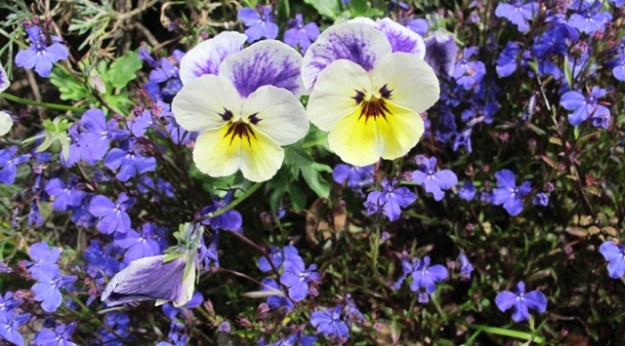
Lobelia and pansies - two choices among many quick maturing annuals

Lobelia and pansies – two choices among many quick maturing annuals

I was chatting to a Waikato reader this week and we got on to the subject of encouraging children to garden. It’s not rocket science. Setting up your child for success will breed enthusiasm and confidence.

Our three progeny are well and truly adult now (and gardening adults at that) but they were whizzes at school garden competitions, sand saucers, miniature gardens and floral art. In self defence, I have to say they never won any of the calf rearing cups and ribbons (their experience was at rural schools) and success in the lamb-related sections was rare. But at anything to do with gardening and flowers, they were winners. We set them up for success.

Back in the days when rural schools here promoted competitive school gardens, I was once asked to judge the winners. These were little plots at home where the children grew flowers, herbs or vegetables. Goodness me, they were all raised from seed in those days, organised at a subsidised rate by the schools.

I still remember that judging round as I visited maybe 20 different garden plots. The saddest sight was that of a sole child of older parents. They had a lovely house and garden and poor daughter had been banished to a hidden, shaded spot out the back so as not to spoil the overall appearance of the property. She was doomed to failure.

Children’s gardens need to be in the best possible position where they are in full view and walked past all the time, not hidden away. Think of it like the wretched trampoline that dogs so many parents. If that is hidden away from view, it is not used anywhere near as much as if it is in prime position. As every parent knows, the years of childhood seem long at the time but in retrospect they have flashed past. Tramps, sandpits, paddling pools, plastic toys and their ilk don’t combine with the beautiful house and garden but they are transient. Children’s gardens are in the same class. Celebrate them. Don’t hide them away. Put them in a prominent spot by a main access path in full sun.

Rural families may have a damaged farm trough to recycle as a child's garden but move it to a sunny, prominent spot

Rural families may have a damaged farm trough to recycle as a child’s garden but move it to a sunny, prominent spot

Children like a defined space that is their own. A raised garden bed may be just the ticket but is not necessary. Defining an area with stones or bricks may suffice. Our youngest had a successful garden in a cracked farm trough which had been recycled as a sandpit and then had a third life as his vege garden. I mention this for rural readers who may have suitable farm trough lying around which they can move to the right position.

Keep the size manageable. Generally a metre square is all a small child needs, maybe two square metres for one who is a little older. Getting too large can become daunting, especially when it comes to weeding.

Guarantee success by preparing the soil. Digging it over, making sure it is friable without huge clods and adding compost or sheep pellets means that most plants will grow as required. It is too much to expect young children to be able to dig a garden. That ability comes with experience. If time allows, letting the first flush or two of weeds germinate and push hoeing them off saves an awful lot of weeding later on. Odds on, however, most children will be too keen to get planting and not want to wait for that process but at least rake the surface level for them.

If you are starting on a patch of lawn, make sure you remove all the turf first rather then digging it in.

The purist in me says that children should be encouraged to learn how to grow plants from seed. The realist says that times have changed and for a first experience, it gives a quicker result to start with punnets of small plants. The middle ground is to do a mix of purchased seedlings and seed that can be direct sown into the ground. Just avoid seeds that need to be started in individual pots or seed trays.

Let your child choose what they want to grow. Herbs often appeal to older children. Oreganum, marjoram, thyme, chives and parsley are good options. Coriander can be direct sown. If flowers are the choice, guide them to quick maturing annuals. Pansies, lobelia, nigella, petunias, alyssum, ageratum – the list is long. Let your child choose maybe five different ones. Most children I have seen like to plant in patterns.

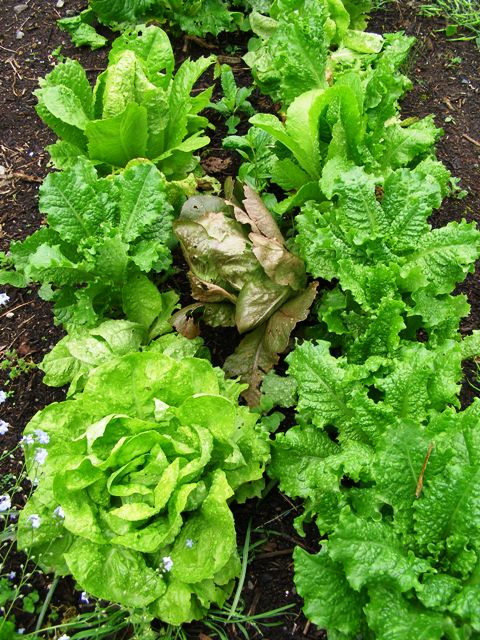
Quick maturing vegetables are the way to go with children

Quick maturing vegetables are the way to go with children

When it comes to vegetables, quick maturing is the way to go. Lettuces or Asian greens are good options. Radishes are the classic choice but few children like eating them. Peas and dwarf beans can be direct sown from seed. A Sweet 100 tomato is a good choice, but keep it to just one strong plant. By mid to late summer, it will probably take up the entire patch but by then, many of the other crops will have finished and interest may have waned.

Success breeds enthusiasm. Set your child up for success from the start even if it involves some work behind the scenes.

First published by Waikato Times and reprinted here with their permission.

Why viburnums send a shiver down Mark’s spine

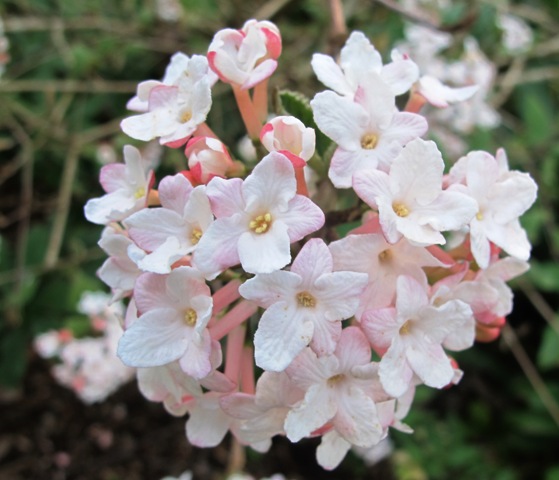
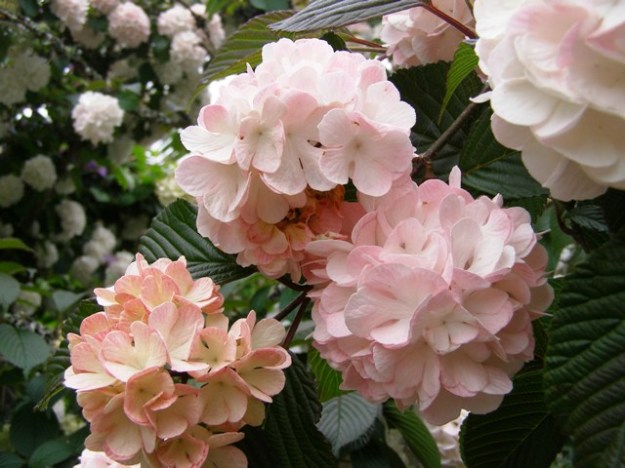
Viburnum plicatum 'Roseace' - pretty as a picture

Viburnum plicatum ‘Roseace’ – pretty as a picture

In times gone by, we used to retail plants from here seven days a week for much of the year. My Mark was a reluctant retailer at best, though his plant and gardening knowledge is immense and he was perfectly capable of giving good advice if he liked the visitor. Alas, too often he would comment wryly: “That was one who put the cuss into customer”. He certainly never subscribed to the view that the customer is always right.

The mere mention of viburnums sends a shudder down his spine, even after a fair few years. A couple came in asking for Viburnum plicatum ‘Mariesii’ which they had seen growing in a prestigious garden. Mark checked that they understood this was a white lacecap variety and they assured him they knew what it was. Turned out they had no idea at all. Some time later, when the plant came in to flower and was not the common white snowball bush, the husband dug it up from the garden, put it in a supermarket bag and brought it back wanting a refund. He’d probably only paid $15 for a big plant of it. It was of course correct to its descriptive label (we take pride in such matters) and a fine specimen but it just wasn’t what he thought it would be. It is a bit like opening a packet of lollies, tasting one and then expecting to return the open packet many weeks later because you didn’t like the flavour.

I felt sure ‘Mariesii’ should be in flower for me to photograph – it is a beautiful big white lacecap flower on a large shrub with fresh green, pleated foliage and it tends to grow in layers like a cake. Mark and I agreed we must have it planted somewhere. We just can’t quite remember where. That is the problem of a big garden lacking records. It will have to wait in anonymity until we stumble over it again.

What started me thinking about viburnums were two plants which are looking particularly striking this week – ‘Roseace’ and one with the difficult name of V. sargentii ‘Onondago’. It took me a while to commit the second name to memory.

‘Roseace’ (sometimes ‘Rosacea’) is the pink form of the classic pompom viburnum, which is usually the form known as V. plicatum ‘Sterile’, or the Japanese snowball. It is a sport which was sold widely two decades ago and it forms a large, deciduous shrub to over 2 metres tall with an abundance of pretty, peachy-pink snowball flowers. That is at its best. Being a sport, it can revert to the more dominant white. We found this to our cost when we propagated a fair number from our main plant and then had to wait until they all flowered because only some of them came pink. Mark went through the original plant and pruned out all the white sections a few years ago but I see it is rather patchy pink and white again, though nevertheless very pretty and showy.

V. sargentii 'Onandago'

V. sargentii ‘Onondago’

‘Onondago’ is different, being narrow and upright. Its fresh spring foliage comes out deep maroon and lacecap flowers (like flat hydrangea blooms) have the tiny fertile flowers in deep red in the centre, surrounded by a ring of larger white sterile flowers. It is a selection out of the US National Arboretum in Washington and, being a seedling not a sport, it is very stable.

Viburnums come from a large family with over 150 different species identified. Most are from the temperate areas of the northern hemisphere so are generally hardy and are of the shrub/large shrub/small tree type. There are evergreen, semi evergreen and fully deciduous species. I am pretty sure it was the evergreen V. tinus I saw grown quite widely throughout Hamilton making a small tree that flowers in spring.

Balls of delicious fragrance from one of V. carlesii hybrids

Balls of delicious fragrance from one of V. carlesii hybrids

Earlier in the season, we had the somewhat short-lived delight of the waxy, fragrant balls of a couple of different ones. I am pretty sure they were ‘Anne Russell’ and x carlcephalum – both are hybrids from the Korean species of V. carlesii. We have them planted beside the driveway and the scent is easily as strong as a good daphne with more spectacular flowers, though their season is much shorter.

Most viburnums are very easy to grow, being not at all fussy about soils and conditions. They are a bit of an unsung hero, really, making good backbone plants which star when in flower and behave themselves for the rest of the year. Some of the deciduous varieties also give good autumn colour in inland or colder climates.

Just try and find out what you are buying before you plant it and don’t expect to dig it up and return it bare rooted because you made a mistake. Mark might have been more understanding over the ‘Mariesii’ had the customers been a little less know-it-all at the time of purchase. Instead he was intensely irritated, scarred now by the memory.

First published in the Waikato Times and reprinted here with their permission.
About tanalised timber in the veg garden…

Our bean frame - it's hard to avoid tanalised pine in the veg garden

Our bean frame – it’s hard to avoid tanalised pine in the veg garden

Living rurally, the stream of free farming newspapers descending into our letterbox seems never ending. I cannot say we read them from cover to cover, but it is surprising how much interesting material is in these publications. It was ‘Straight Furrow’ that yielded this week’s most interesting article. It was about a project looking for hard wood alternatives to tanalised pine.

The timber production of this country, based as it is on Pinus radiata, derived from a forestry project started way back in the 1870s, trialling various options. Clearly the pine was the stand out performer and work has been ongoing on selecting the best characteristics for plants which are to be commercially cropped. Modern plantation pine is a somewhat different tree to the gnarly old pines sourced originally from Californian and then Australian seed sources. The use of pine as a building material is a boon for what little is left of our native forests, though we are guilty of plundering the hard woods of Asia instead – especially when it comes to outdoor furniture and more upmarket decking.

The pine we use is grown very quickly and is soft as a result. To get any durability outdoors, it is treated by tanalising it in a solution that contains chrome, copper and arsenic. There is now a quest to find quick growing hardwoods as an alternative and some of the eucalypts look extremely promising.

What does this have to do with gardening? The impetus for this research was, apparently, the discovery of arsenic in the Marlborough aquifer back in 2003. In this case, it was not a cause for panic. That arsenic was occurring naturally and not a danger to health. But, as an aside to that particular study, elevated arsenic levels were found in the soils. These were linked to the use of tanalised posts. When you think about it, we use gazillions of tanalised posts in this country, many of them treated to an advanced level so that they are durable in the ground. There is a scary thought.

It appears that those readers who ask whether it is safe to use tanalised timber in the vegetable garden are indeed asking a valid question. It is pretty difficult to avoid when you think about it. The planks many people use to avoid compacting soil when walking between rows are likely to tanalised. The waratahs often used to stake tomatoes, the poles to build the bean frame… but especially the sides of raised vegetable beds. Yes, apparently these do leach toxic chemicals into the surrounding soil. And plants are very good at absorbing heavy metals, especially leafy greens like vegetables.

It appears that some within the wine and kiwifruit industries are very keen on non-tanalised hardwoods as an alternative. Both these producers have extensive need for wooden growing frames. Organic farmers and growers are also anxious.

I have not read that it has been proven beyond any doubt that anyone has suffered from ill health or death as a result of secondary contamination from tanalised timber. It is your call entirely as to whether you consider it is a risk worth taking. It appears that different people respond differently to chemical poisoning. An anecdote about somebody who lived to a ripe old age despite an extremely careless attitude to sprays is not proof of safety because it may be that the next person suffering multiple allergies is a result of very little exposure.

Presumably the leaching of chemicals from tanalised timber slows down as it ages, so if you are using some near edible crops, look for the old stuffveg.

Heart macrocarpa is probably the most suitable alternative to tanalised pine at this stage, though it will rot eventually. The eucalypt alternatives being researched are offering maybe 25 years without being treated but the research project has a way to go yet.

For the record, the article referred to is in the October 15 issue of Straight Furrow, page 11, headed “Hardwood project promises billions”, written by Jon Morgan. The sad point of that story is that they just missed out on $3 million dollars of government funding because they were not able to guarantee that the project would earn $200 million dollars in exports by 2030. It is a fairly sad comment on the nature of government funding for research. It seems an exorbitantly high bar to set for a modest contribution, but the project is continuing. Imagine some of our pine plantations replaced with eucalypts. That would change the landscape.

First published in the Waikato Times and reprinted here with their permission.
The merits of mulch

Homemade compost - our preferred garden mulch

Homemade compost – our preferred garden mulch

Mulch, dear readers, mulch now. Mulch well and you will be grateful later.

There are good reasons to mulch. In areas prone to drying out over summer, a good layer of mulch put on now will contribute to retaining soil moisture levels later. You don’t want to be mulching when the soils have already dried out because, equally, it acts as a barrier to stop water being absorbed.

Mulching also keeps down weeds and hugely reduces the amount of summer weeding that is required. There are two provisos. You need to clear the area of weeds first. Mulch won’t kill existing weeds. It just discourages germination of all those seeds lurking in the soil waiting to spring forth when the time is right. It also makes it much easier to pull out those that do penetrate through the layer. The second proviso is that you need to be using a weed-free mulch and many home compost mixes won’t have achieved that state.

Avoiding soil splash is another benefit. In areas of heavy rainfall (and some of us can get downpours akin to the tropics, albeit without the warm temperatures), bare soil splashes back up and this can spread disease amongst vulnerable plants. Soil splash also makes vegetables dirty. Mulch acts as a cushioning filter.

Depending on your choice of mulch, it can act as a soil conditioner and add valuable carbon content. Some will gradually break down as worm and microbial action incorporated it into the soil. Obviously this is only true for organic matter. We are big fans of organic mulches here, less so of inorganic options like limestone chip or gravel. But no matter what you use, a mulched garden looks better than expanses of bare soil. It is the experienced gardener’s not-so-secret weapon. You won’t find many good gardeners who do not mulch regularly.

So what to mulch with? Our number one preferred option is compost, homemade compost in fact. It does three jobs in one hit. It mulches, it feeds the soil so that we rarely have to use other fertilisers and it looks unobtrusive. But then we do not want a mulch that looks obvious. It is a tool, not a display in itself.

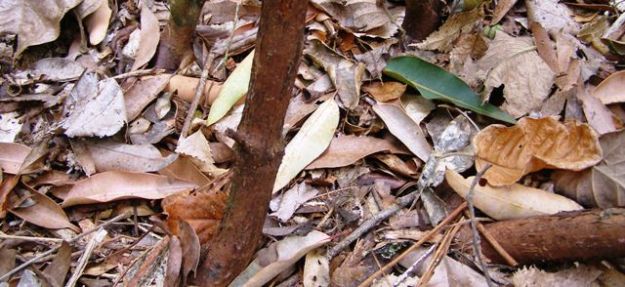
Leaf litter can be untidy but makes a good mulch

Leaf litter can be untidy but makes a good mulch

The second choice mulch here is leaf litter. We don’t waste any organic material. If it doesn’t get composted, then it gets raked into a back area to gently decompose and darken, before being raked back out around plants. Leaf litter can be untidy but it is good in less formal areas.

Then there is fresh wood chip. We own a good sized mulcher so we generate a fair amount of wood chip from the garden debris that is too large to go into compost. Calf shed shavings and sawdust also come into this category. When fresh, all these materials have to be used as mulch but not dug into the soil or they will rob the nitrogen as they break down. Laid on top and exposed to the elements, the decomposition happens slowly and naturally and should not cause problems. If you are going to use sawdust, just make sure that it is never, ever tanalised (you will poison your soils) and be prepared for a few months of a somewhat alarming orange appearance.

Old wool carpet and newspaper (weight the latter down) can be used as mulch if you don’t mind the look. We do mind, so we don’t go down that track. Just make sure the carpet is 100% wool and not synthetic and keep to newspaper – leave the glossies out with the recycling.

Pea straw may be a better option for the vegetable garden than the ornamental garden

Pea straw may be a better option for the vegetable garden than the ornamental garden

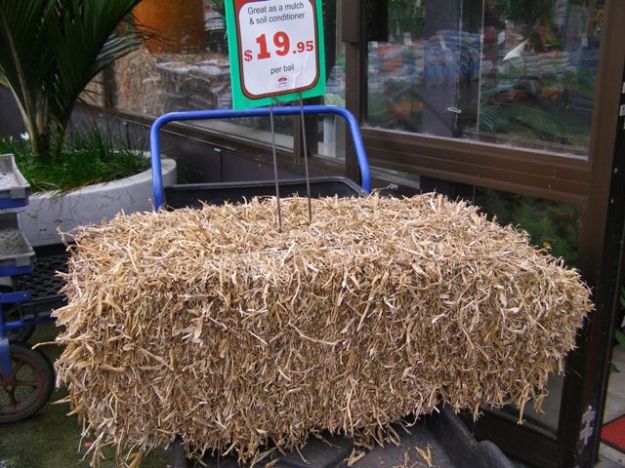
If you need to head off to the garden centre to buy your mulch, you will often find pea straw on offer. While this is a traditional mulch, if you are not in a pea producing area, consider its carbon footprint. It blows away unless you keep it damp. It is a myth that it helps fix nitrogen in the soil – that capacity is in the pea roots and all you are buying are the tops. Aesthetically, I think it looks fine in the vegetable garden (especially if it is all around high-producing strawberry plants) but I am less keen on the look in ornamental gardens. A bale should cover around 6 square metres of area.

Granulated pine bark is often favoured. Try and get it pre-composted. Compounds in the bark stop it rotting down too quickly so it lasts a surprisingly long time on top. It is a discreet looking mulch but it adds no fertility. If you have a big area to cover, buying it in bulk will save money. A cubic metre should cover around 15 square metres.

You need a layer of 6 to 7 centimetres to be effective. You will often see 10 cm recommended but that is pretty deep. Finally, try not to pile the mulch hard in on the trunks of woody plants. It doesn’t matter around perennials but trees and shrubs run the risk of collar rot.

The mulching effort now will reward you further down the track.

First published in the Waikato Times and reprinted here with their permission.