Category Archives: Abbie’s column

Abbie’s newspaper columns

Ideas for very small gardens

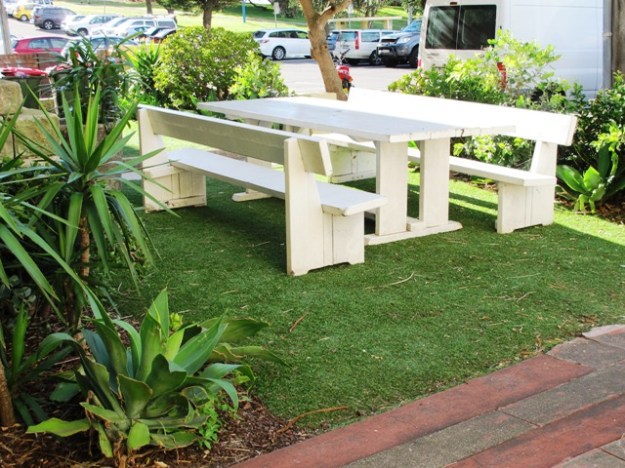
Synthetic grass has come a long way in recent years and can look surprisingly like the real thing. In a few circumstances, it may even be a better option.

Synthetic grass has come a long way in recent years and can look surprisingly like the real thing. In a few circumstances, it may even be a better option.

Camera in hand, I was thinking of you, dear Readers, on my recent trip to Sydney and Canberra and I gathered up three examples of very small, urban garden spaces.

Artificial grass or synthetic turf is often a source of much derision. The common name of Astro Turf is in fact a brand name of one of the early pioneers of this product. Given that I live in a place where we have green grass all year round, I have been guilty of sniffing snootily at the mere thought and indeed the examples I have seen have been such luminous green as to shout, let alone the nasty, rough nylon texture which bears no resemblance to the real thing at all.

The front apartment next door to where I stayed in Coogee on Sydney’s eastern beaches had artificial grass. I knew it had to be artificial because it was a uniform green with no weeds in it and everywhere else was turning brown. But I had to touch it to confirm. And it made me think that this product has come a long way from the early days. I reviewed my blanket dismissal. I won’t be rushing out to buy any, but in this situation, it had a lot going for it. If you have lawn, you have to own machinery to mow it. If you have lawn on sandy soils, you have to water it just to keep it alive. Where space is small and accommodates an outdoor dining setting and barbecue, the furniture has to be moved to mow the grass and the sections subjected to shade or constant scuffing will suffer. If you lay pavers instead, the area will get hotter and that is not always desirable.

A little leaf and soil litter from the surrounding plants gave this synthetic lawn a far more natural look. I could see why the owners had made that choice and I thought it looked fine.
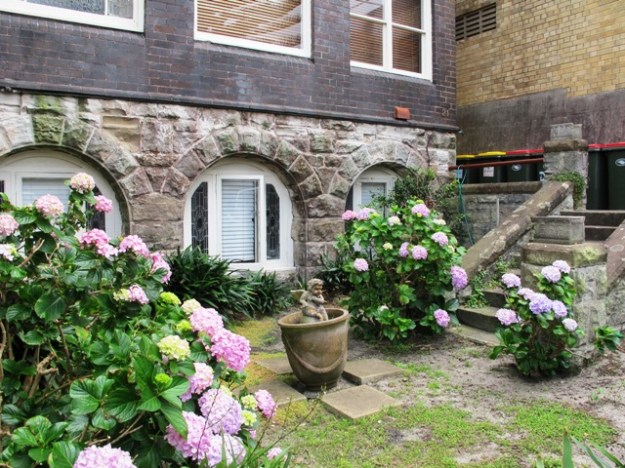
The gothic revival courtyard had a sense of romantic abandon at odds with its Coogee Beach location.

The gothic revival courtyard had a sense of romantic abandon at odds with its Coogee Beach location.

Further up the road was a front courtyard that had me entranced. Gothic revival, I decided. It wasn’t an area to live on. Nor was it tightly manicured for kerb appeal. It was a courtyard that could have come from a story book. Stone steps led down to a simple, geometric space which, despite its austerity and laissez faire maintenance, had an air of romantic abandon. It is hard to beat stone for long term landscaping. It ages so gracefully. Mind you I have a penchant for Gothic lines which I have to keep suppressed here because there is not a Gothic hint to build upon.

Note the very modern row of wheelie bins to the right. It is a bit of a shame about those but rows of wheelie bins are a fact of life in high density urban situations. The shared bins of apartment living may be necessary but they have the interesting side effect of absolving the residents from knowing how much waste they generate individually. We are so close to our household rubbish at home that I know exactly how much we generate when I carry the bag and the recycling out to the roadside each Sunday evening. Not these city dwellers. All they do is separate their recycling and load out to common bins with no investment in reducing their personal waste.

Simplicity, formality and immaculate presentation gave kerb appeal although there is little to appeal to the creative gardener

Simplicity, formality and immaculate presentation gave kerb appeal although there is little to appeal to the creative gardener

Up the road from my Canberra daughter’s home, I had to photograph a new property. It stood out on that street with its immaculate presentation. The roses were at their peak and there was a seductive simplicity to the scene. The standards are good old Iceberg. I don’t know what the shrub roses were – something similar to one I have here that is a low-growing, white single. There were only two rose varieties plus the clichéd standby of buxus hedging. It bore all the hallmarks of being professionally designed, installed (and I use that word deliberately) and maintained. I am pretty sure that road verge is irrigated and sprayed to keep it looking that good. On the day, I would have to give it full marks for kerb appeal though it was totally derivative. The problem is what it would look like when the roses are not in flower – dull as ditchwater, I suspect. This is not gardening for gardeners. It is gardening for property owners who place a high value on external presentation and there is nothing wrong with that.

This particular property confirmed my thinking that if you are not a keen gardener, opting for a formal layout and a very limited plant palette is a safe choice that, when maintained well, can look most effective.

I just preferred the Gothic revival courtyard but that is personal choice. On which note, I wish all readers a safe and happy festive season.

First published in the Waikato Times and reprinted here with their permission.

The call of gardening in less hospitable situations

Indubitably Australia

Indubitably Australia

I went to Australia last week – Sydney and Canberra. We have a daughter in each city and both are putting roots down across the ditch. Literally. It is very interesting watching one’s children become inspired by gardening.

Sydney daughter is the younger of the two and still in rental accommodation. But having lived in upper floor apartments before, she is now adamant that she needs outdoor space, be it ever so compact. Her current garden is not much larger than our dining room at home. I recall her growing huge and productive Sweet 100 tomatoes when she was a student at Waikato University. In an upper floor apartment in London, she acquired small window boxes to grow herbs. The current space, be it ever so modest, is palatial by comparison.

As the space also accommodates the accoutrements of modern life (outdoor dining table and chairs, barbecue and sun umbrella), her actual gardening space is limited to two narrow, raised beds along the perimeter and an assortment of pots. But she has made space for the two critical requirements for the hipster urban gardener – a worm farm and a covered compost box. She is limited to growing herbs and a few vegetables at this stage but I can see the makings of a lifelong gardener.

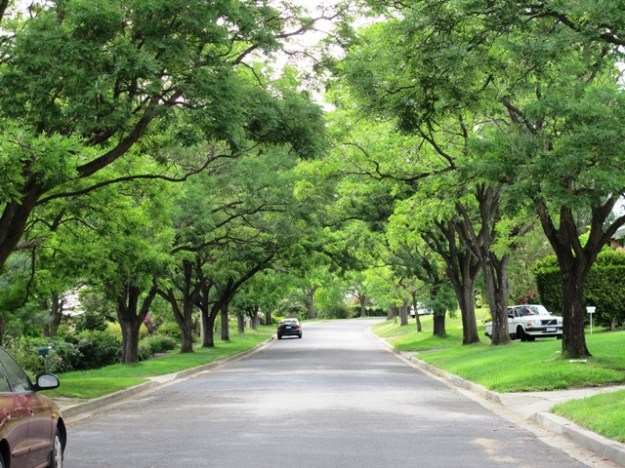
We could learn a thing or two from street trees in Australia - this pleasant leafy road is in in Canberra

We could learn a thing or two from street trees in Australia – this pleasant leafy road is in in Canberra

Elder daughter is now a proud home owner and that is an entirely different kettle of fish. She too started gardening as a student and is a reasonably competent vegetable gardener with over a decade of experience behind her. But now that she has some security and stability in her life, she is looking to expand beyond the quick turnaround of veg and herbs. She was after ideas to develop the ornamental garden.

Canberra is not the easiest of places to garden. Not at all. She commented it is not possible to put plants or seeds in with a reasonable expectation that they will grow and flourish. It takes hard work to get plants established. I walked around her pleasant, leafy suburb to get a feel for the place and it was clear that gardening was a challenge and it was the street trees that gave the area its appeal. We could learn a thing or two from street plantings in these Australian cities.

I realised, however, that this was not a place where that tenet of modern living applies – the indoor/outdoor lifestyle. That is because the winters are cold. I have visited in winter and I doubt that many people sit out in their gardens drinking their morning coffee, even on a fine winter’s day. The summers, on the other hand, are hot. Very hot, even as November became December. It was too hot to be outdoors after 10am and temperatures will rise considerably. So for a good six or maybe seven months of the year, it is an indoor lifestyle.

Then there is the dry. There has been a great deal more rain this spring than usual so the grass (one hesitates to call it lawn) is still green rather than dead. This is unusual.

There were clearly many who found the call of gardening too difficult so they just kept to a few trees and shrubs, mostly in hedges. Nandinas grow well, as do oleanders, crepe myrtles, camellias and pittosporums. The ornamental plum (a selection of Prunus cerisifera) is widely grown with its striking deep burgundy foliage which looked particular fetching with a white cockie feeding in it.

My advice to daughter was pragmatic. Because they have two small dogs (fur grandchildren, Mark and I call them), they only use the fenced back section, which now has a fine veg bed and a well organised compost alley. Concentrate her efforts there, I suggested, and indulge her interest in prairie gardening. It suits the climate.

What to do with a front yard which is merely access to the house?

What to do with a front yard which is merely access to the house?

The front can then become low maintenance window-dressing for kerb appeal. I suggested they get rid of all but one of the finicky garden beds and all the plant containers out the front. These need watering every day. What is more, the beds are raised which means they dry out even faster. Drop the level of the one remaining bed to ground level to reduce watering and the constant spillover of garden mulch. Plant that one remaining bed in easy care, shade tolerant plants – hydrangeas and hellebores – and retain the boundary hedges. Mow the rest. They only have to mow for four months of the year. I bought her my favourite tool for digging out the flat weeds. If you are stuck with fairly rough grasses, it looks much better without the flat weeds.

The same advice may well be applicable for people in coastal situations here. New Zealand lacks the extremes of temperature, but people gardening on sandy soils will experience similar problems. Emulating the lush growth more commonly prized in most gardens is fighting nature in such conditions. It is better to work with what you have.

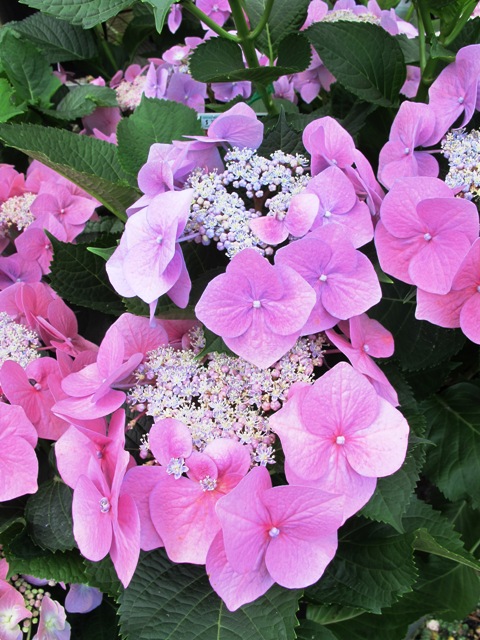
Hydrangeas - easycare plants. They are all pink in Canberra.

Hydrangeas – easycare plants. They are all pink in Canberra.

First published in the Waikato Times and reprinted here with their permission.
Bulb meadows

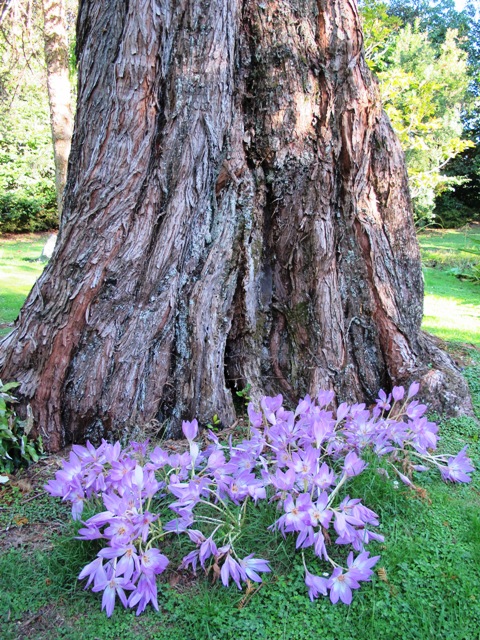
Colchicums in the park

Colchicums in the park

The demise of two of our grand old pine trees a few weeks ago has necessitated a fairly large clean up. They were about 140 years old and had been on a major lean for much of that time. Clearly they passed the point of balance. But, as happens in gardens, their collapse also opened up an opportunity. Suddenly there was a nice little area which had been dense shade and more or less left to its own devices but was now light, open and clearly of potential.

“Bulbs,” I thought, “I shall plant it in a succession of bulbs to take it through the seasons.” I started with what was already there – a congested but large clump of snowdrops, a few cyclamen and some valiant pleione orchids which were battling on despite choking ground cover plants. Then I raided the nursery where we still had quite a few pots and trays of suitable bulbs, particularly dwarf narcissi of various types. By this point, I was already committed to using minis and dwarf growers which would co-exist and not choke out their growing companions.

So how many bulbs are needed to fill an area?

So how many bulbs are needed to fill an area?

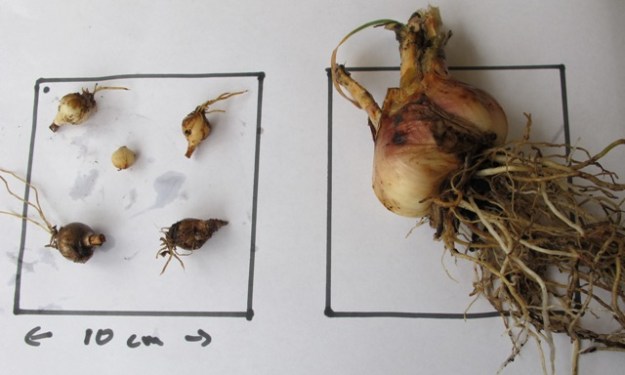
    As I continue to raid suitable bulbs from wherever I could find them, I started to do the maths. We are not talking a large area here. It is maybe 10 square metres (5x 2) at the most. Do you have any idea of how many dwarf and mini bulbs are needed to fill that space? Allowing maybe 5 bulbs per 10cm square, that adds up to a massive …. 5000! Okay, so the cyclamen are not planted at that density, but many of the others are.

Had I chosen to start with larger bulbs of stronger growing varieties – full sized daffodils, bluebells, tulips, colchicums and the like – I could have planted them at maybe 10 cm spacings so would have only needed about 1000 bulbs. It is still a lot.

The lesson is that if you are besotted by bulbs, as we are, it helps to learn how to look after them so that you can increase the supply for other plantings. Having depleted the nursery of spare bulbs that are suitable for this situation, I am now taking apart beds in the rockery to thin the bulbs there and get the surplus for my new area. So far, as well as the types already mentioned, I have added rhodohypoxis, blue brodiaeas, various different lachenalias and crocus. I am aiming for mix and match in the hope that there will be something seasonal and dainty flowering in that particular section at all times of the year. It will take some tweaking over time to get it right.

Belladonnas beneath the gum tree at our entrance

Belladonnas beneath the gum tree at our entrance

    I have a mix and match of large and some invasive bulbs beneath a huge old gum tree at our entrance. Invasive bulbs are easily contained there and there is room for sometimes scruffy performers like the belladonnas to put on a good show.
Bluebells to the left and common old Lachenalia aloides in front

Bluebells to the left and common old Lachenalia aloides in front

    Elsewhere, we have tended to keep our bulb plantings separated by variety. This may be our nursery background – keeping the option open to start selling bulbs again if need be. But a big show of a single variety can be striking. We sometimes use the root zone at the base of large, specimen trees, usually on the sunny side because most bulbs enjoy light but are adapted to surviving quite harsh conditions. This gets them out of the way of the lawnmower.
Drifts of bulbs are harder to manage here

Drifts of bulbs are harder to manage here

    But really what we covet most are drifts of bulbs – informal, randomly organised rivers of seasonal colour flowing through. In harsher climates where the grass stops growing in winter (too cold) and summer (too dry), it is possible to do it in grass. But not here. Without significant management, the strong growing grasses overwhelm the bulbs and need mowing before the foliage has had a chance to carry out its function of replenishing the bulb.

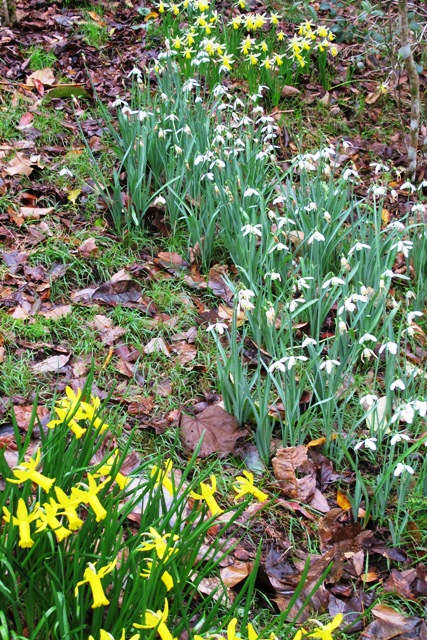
It is easier to work with bulbs which shed their foliage quickly. There are big differences in how long different types keep their leaves – anything from 4 to 6 weeks up to 11 months. Fortunately the pretty snowdrops (galanthus) are light on foliage, because what we really want over the next decade is to develop proper drifts of snowdrops. Not a few hundred. Thousands. They will be a fleeting wonder lasting a mere week or two each year. But it is the sheer frivolity of self indulgence that will spur on the snowdrop dream. At least we know which ones perform well in our climate – without snow or much winter chill – and we will just gently work on it by continually dividing and spreading the existing clumps. I am guessing the one clump of Galanthus viridapicis in my new little bulb garden yielded upwards of 300 bulbs. That is a good return.

First published in the Waikato Times and reprinted here with their permission.

Maples in the garden

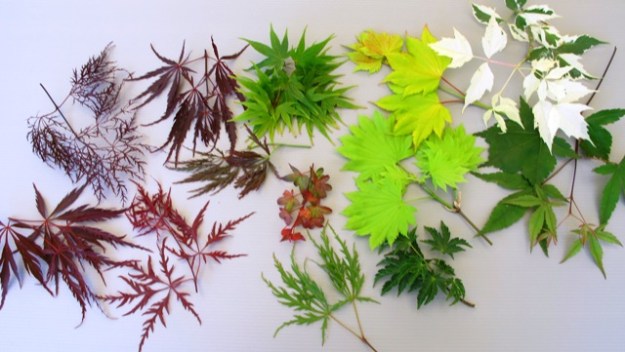
???????????????????????????????Maples. They are acers, botanically speaking and there are plenty of them. They are often seen in gardens too, though the majority are probably what is commonly referred to as the Japanese maple – A. palmatum usually dissectum. There are multitudes of selected forms of this around, many of them carrying Japanese names. One of the reasons I have not written much about Japanese maples is because we don’t have names on many of the ones in our garden here and I have not gone to the trouble of working out which varieties they are. This failure is irrelevant when it comes to their role in the garden but it matters rather more when I write about them.

A random collection of maple leaves from around the garden

A random collection of maple leaves from around the garden

The world of maples goes well beyond those feathery Japanese ones. Maple syrup, dear readers does indeed come from maple trees, unless it is a synthetic version. Acer saccharum – the sugar maple – and that is the inspiration for the Canadian maple leaf emblem. It is also a major contributor to the autumn colours we associate with North America, along with Acer negundo. These are large landscape trees, not dainty little garden specimens though Acer negundo ‘Flamingo’, a pretty variegated form, is widely sold here and stays small enough to be a good option.

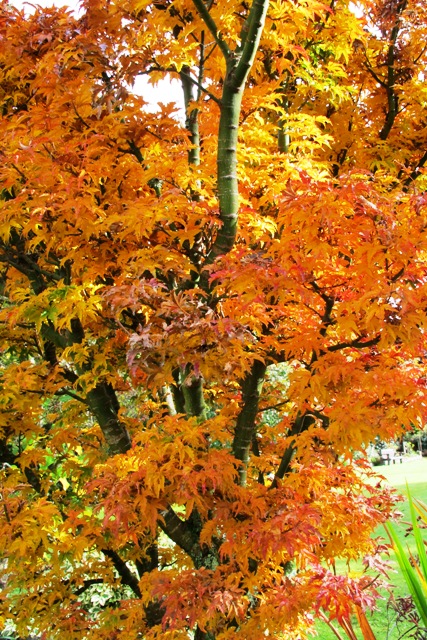
Autumn colour supreme

Autumn colour supreme

Maples are classified botanically and share certain characteristics including curious winged seeds which are designed to be dispersed by wind. In a gardening or landscape context, they have some common ground too. The foliage is soft so almost all of them are unsuitable for windy locations. They need adequate moisture levels in summer so are never going to like baking in hot, dry conditions. Many of them are happy in semi shade though some will lose their colour and become dull green in low light levels. Many colour up beautifully in autumn, even in milder climates.

Beyond that, rather than looking at pictures and deciding that you want a particular variety, this is one plant family where I suggest you go to your garden centre and read the plant labels. If you are really lucky, you may even strike someone there who knows about maples. You need to make decisions about whether you want a tree (and if so, what sized tree) or a little dwarf – often called patio maples. Also whether you want weeping or arching growth, or a more upright habit. Then there is the colour and whether you want one that keeps the same colour through spring and summer because some of them change colour as the leaves age.

I would counsel caution against buying too many red or burgundy foliaged maples. These are very dominant colours in the garden landscape and best used sparingly as feature plants. And if you feel compelled to plant a collection of maples, bear in mind that there may not be a huge difference in style between the dreaded conifer garden of the 1970s and the maple garden of more modern times. Enough said on that issue.
???????????????????????????????Besides feature trees which add to the skyline, we find the smaller growing maples combine well in a variety of situations. I really like the little weeping one we have planted with roses growing through it. It is a very pretty combination, especially with perennials also in flower. Pretty too are the ones in a semi- shaded bed with clematis scrambling around them and seasonal bulbs at their base. We have more upright forms in the rockery where we can keep their bases clear and they give good year-round form.
???????????????????????????????But one of the unsung delights of the smaller growing maples is that as they grow older, they can be gently encouraged into natural bonsai forms which give shape and interest in winter when they are fully naked. We do a bit of thinning and shaping but not much is required to make a feature of a maple with a good skeleton.

Plants which delight with distinctive, fresh spring foliage, last all summer, colour up in autumn and then have a really interesting shape in winter justify their garden position all year round. Add in their adaptability to a range of situations and their happy characteristic of combining with all sorts of other plants. It all comes down to making the right decisions on the variety and the garden position from the start. These are good staple plants to incorporate into any sheltered garden.

First published in the Waikato Times and reprinted here with their permission.
Stripes, splashes and edges – variegated plants

Yellow variegated conifers are redolent of the 1960s and 70s but we have retained those that add a statement to the garden landscape

Yellow variegated conifers are redolent of the 1960s and 70s but we have retained those that add a statement to the garden landscape

New Zealand gardeners are not, in the main, huge fans of variegated foliage. There are exceptions – hostas being one – but as a general rule, we tend to avoid bi-coloured variations. This often surprises overseas gardeners, particularly British ones who are far more enamoured of such things.

I am sure it is related to the differing quality of light in this country. New Zealand is remarkable for its clear, bright light. In recent times, that light has been even less filtered due to the hole in the ozone layer. Those prized white, cream, yellow or pale variegations burn badly in the sunlight. If the sun doesn’t get them, then the winds often do and burned brown edges take the charm away.

It is different in countries with softer, more diffused light. Often such conditions go with lower sunshine hours and in a climate which is generally greyer, yellow plants and variegations can add a bright touch in the garden and landscape which is valued.

Variegations are usually sports – mutations, genetic aberrations, if you like. Sometimes it is the result of a virus. Most plants grow with one solid colour on the foliage. All sorts of plants can throw up a branch or stem with a variegation but most of these will be unstable and revert back to the original single block colour. Where a variegation can be isolated and increased by propagation, the resulting plants often the lack the vigour of the original plant.

Hideous variegated plants I have seen include a nasty variegated oleander in Spain. The mottled and margined leaf added nothing to what is a lovely flowering street tree in the right climate, in my opinion at least. There was a ghastly variegated spirea (a yellow and green leaf with murky pink flower) that we saw being sold widely in the UK. In this country, the top selling rhododendron for a number of years in the 80s was a mutant named President Roosevelt. Some of you may still have it in your gardens so stop reading now if you are going to take offence. It was the first plant I cut out when we bought the property across the road from where we now live. I do not think the yellow mid-rib to the leaf added anything but when you add a red and white variegated flower to green and gold foliage, it was all too much for me. But distinctive, so it sold.

We have retained the odd variegated yellow conifer here but only because they are handsome, established trees which make a contribution to the landscape. I can’t think that we would choose to plant them from scratch.

The variegated disporum lit up a dark area but proved altogether too invasive

The variegated disporum lit up a dark area but proved altogether too invasive

That said, in darker areas of the garden, the odd bit of variegated foliage can light up an area. It was for this reason that Mark planted the ground cover that I think is Disporum sessile variegatum. It’s pretty green and white foliage gave a lift in the shade. I have spent the better part of this week weeding it out because, unlike other disporums we grow (‘diaspora’, I keep calling them), this one was scarily invasive. It spread alarmingly, rampantly and through everything. We have retained only one small patch in a confined area. The rest is now in the compost heap. Plant this one at your peril. This variegated form is an exception to the rule in that, for us, it is much strong growing than the others we grow.

Farfugium tussilagineum argenteum looks good in shaded areas

Farfugium tussilagineum argenteum looks good in shaded areas

Other variegated shade plants we use – but in moderation – is a white edged form of Soloman Seal, a yellow striped renga renga lily (arthropodium), a handsome variegated crinum, farfugiums (which most readers will still know as ligularias) and, of course, hostas. But not all together. The secret to using plants with variegated foliage is to set them off with plenty of block-coloured foliage.

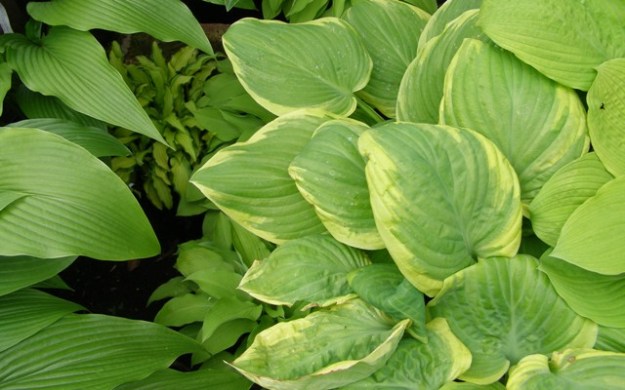
Offset variegated hostas with other plain coloured varieties for best effect

Offset variegated hostas with other plain coloured varieties for best effect

Nowhere is this more apparent than with hostas. Too often, people will only buy the fancy, variegated ones and I have never seen a good planting of a variegated hosta beside other variegated hostas, all different. But take the same hosta and put it beside some plain coloured foliages and it can add zing and star in its own right.

Most variegated plants lean to the “Look at me! Look at me!” sort of statement. If you are going to grow variegated plants, make sure that you use them so that they are the feature they want to be and don’t sit them alongside a medley of other plants also demanding to be the star. That becomes a jumble.

First published in the Waikato Times and reprinted here with their permission.