Category Archives: Abbie’s column

Abbie’s newspaper columns

January bulbs for mid summer

Regular readers will know that we are very keen on bulbs here. As I surveyed the January ones, I figured that most bulbs are stars on their day. I guess because they are both seasonal and transient, they have to wow in their short time in the spotlight. A bulb in bloom can make you look in admiration, despite even the most unattractive location. We would not be without them.

The prized worsleya

The prized worsleya

Indubitably, the star this week is the unusual Empress of Brazil (Worsleya procera syn. rayneri) which does indeed hail from Brazil. It is an exotic showstopper. But the reason it is hardly ever seen is because it is rare in cultivation and requires a patient gardener. This particular specimen took 13 years from planting to bloom. There aren’t many gardeners willing to wait over a decade for a flower.

Scadoxus multiflorus ssp katherinae

Scadoxus multiflorus ssp katherinae

The Scadoxus multiflorus ssp katherinae are also big and showy but much easier to source, being very popular with Auckland landscapers. We have reached the point where they seed down and are naturalising themselves beneath trees where they have become a real feature in the summer shade garden. Some of those blooms are getting close to the size of human heads. We have South Africa and Zimbabwe to thank for these beauties.
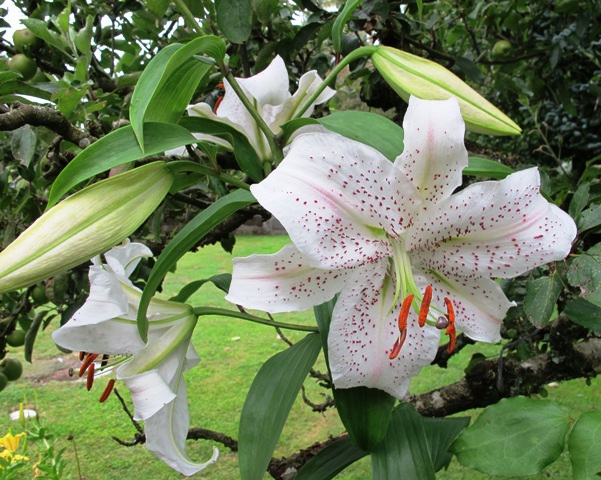
Auratum lilies

Auratum lilies

In sunnier spots and on the margins, it is the lilies that astound. I wrote about the aurelians two weeks ago but it is now the time for the auratums (sometimes known as the golden-rayed lily of Japan). These can be sourced from garden centres in winter. Just make sure you never let the bulbs dry out, even when they appear dormant. If you give them lots of TLC for the first few years, you can increase numbers from the small offshoots as well as raising seed.
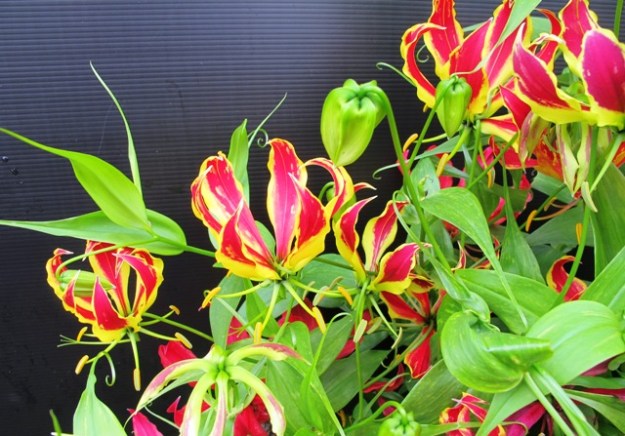
Gloriosa superba

Gloriosa superba

Gloriosa superba are often called climbing lilies, though they are only distant relatives at best. These are great plants for hot, dry conditions – the sort of spot many of us have under house eaves facing north. They flower for a long time in high summer and require absolutely no care at all beyond giving them something to cling to so they can climb rather than tumble.
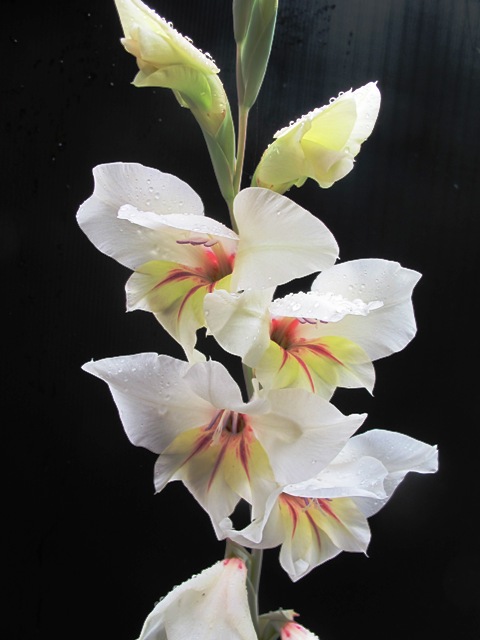
Gladiolus

Gladiolus

Gladioli! Dahlias! We often take both families for granted but summer gardens would be poorer for their absence. We don’t have many of the Dame Edna hybrid gladdies. While there is a certain charm in their exuberant vulgarity, we are less enamoured of the rust that afflicts the foliage, making them unattractive plants. This white gladiolus is not a species, as far as we know, but it is somewhat further back up the breeding chain from the modern hybrids. Dahlias I tend to lump in with perennials though technically they are tubers, so within the bulb group.
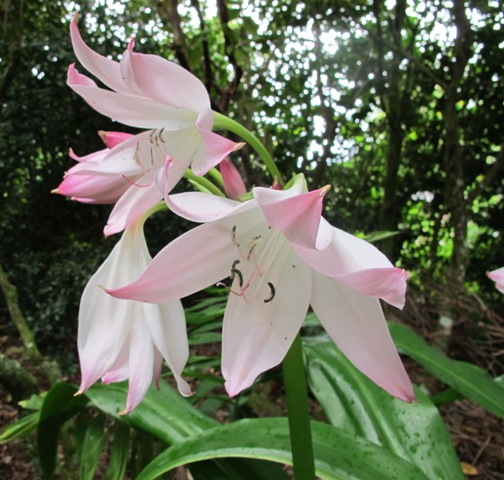
Crinum moorei

Crinum moorei

The crinums are coming into flower and C. moorei is another shade garden option though it needs to be in a position where its rather large foliage can be ignored during the times when it is scruffy. These plants stand chest height, the fragrant flowers close to nose level so there is nothing small and dainty about them.

Add in the crocosmia featured last week, the tigridias in Plant Collector today, summer flowering ornithogalum, the yellow zephyranthes (‘rain lilies’), even the early Cyclamen hederafolium coming into flower. While January is not in any way peak bulb season, those in bloom add a great deal to the summer garden.

First published in the Waikato Times and reprinted here with their permission.
Climbing and clambering clematis

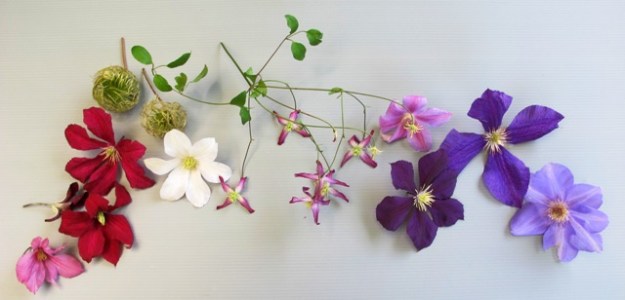
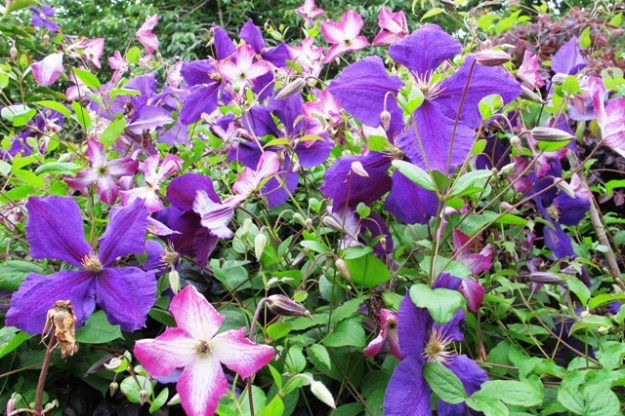
A selection of clematis which are still flowering in the garden, including two of the decorative seed heads

A selection of clematis which are still flowering in the garden, including two of the decorative seed heads

Clematis. I have not written about clematis before. This is in part that there is clematis specialist living around the corner from us and my technical knowledge on the genus is so sparse that I am worried about betraying my ignorance. I am terrified he will come and set me right. But they are such a lovely addition to the summer garden.

When I looked up clematis, I didn’t feel quite so bad about my botanical ignorance. It is a huge family with hundreds of different species (somewhere between two and three hundred or even more). Add to that the thousands of different hybrids that have been named. While ignorance may not be bliss, it is at least understandable in the face of such complexity. At least I found out that they are buttercup relatives – members of the Ranunculaceae family.

There are clematis and there are clematis. Some are altogether too vigorous. Who can forget “old man’s beard must go” on the telly? Clematis vitalba is such a strong grower that it threatens our native forest and can kill established trees. It is one garden escape that cost this country dearly. C. vitalba is not alone in its strangling and invasive personal habits but one hopes that somebody will have made those decisions long before you look at a pretty plant in the garden centre.

Clematis are equally notorious for karking it when planted out. That magnificent specimen in a pot with a frame covered in flowers can disappear before your very eyes when transferred to the garden. The problem is usually “clematis wilt”, reportedly a fungal affliction. If you spot it, cut back to healthy leaves, or even to the base of the plant if the whole thing is affected. Remove the diseased sections, cross your fingers and wait. Often, the plant will shoot again but it can take a while and the clematis roots can survive a year or longer without shoots above ground.

These are the only plants I know where the advice is to plant deeper in the ground than in the pot – around 8cm deeper is good. This is largely protection against the dreaded wilt, as far as I can see, so follow the advice. Like most climbers, they prefer their roots in cool, humus rich soil with adequate moisture levels but their heads in the sun. This is not always that easy to find, especially as you have to combine it with something for them to climb up. Once away, they can get purchase and twine onto surfaces that are not smooth – their instinct is to reach for the sun so most will climb if possible.

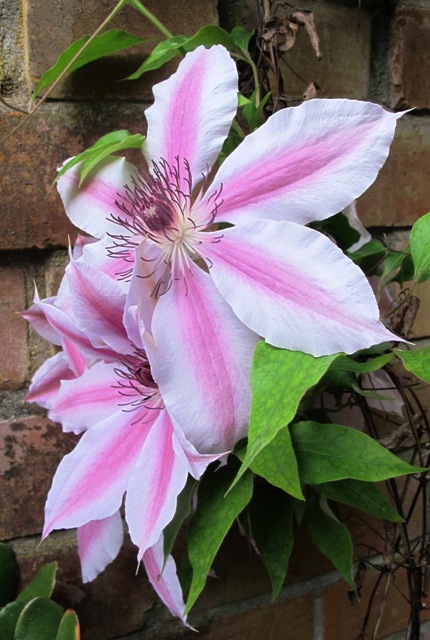
What we have as the tried and true "Nellie Moser" although it may be a seedling rather than the real thing

What we have as the tried and true “Nellie Moser” although it may be a seedling rather than the real thing

As garden plants, I favour the hybrids and the viticella types. We have a fair number twining their way through shrubs in mixed borders and they never fail to delight when they flower. You need to make sure that you don’t have overly rampant varieties when they are expected to co-exist with other plants. I took out what I think were texensis types – given to me as ground cover but distinctly shy on flowering, bell-shaped which I was not so keen on, and given to choking habits. I did not think they justified their position but there may be better texensis varieties available.

We have several growing under cover. Everybody admires “Niobe” in bloom. She has large flowers in deep burgundy but she proved damn difficult in the garden and it has taken several attempts over a fair number of years before we had a plant performing well, scrambling through evergreen azaleas. Planted in the ground but under cover with just some rain run-off to keep the roots moist, she has been much more reliable.

At the opposite end of the scale, the lovely, late-flowering yellow C. tangutica threatened a takeover bid in the garden but when relocated to a trellis under cover, behaved perfectly in comparative isolation.

Two named varieties. I just don't have the names any more.

Two named varieties. I just don’t have the names any more.

Often they can be combined with other climbers to extend flowering interest. We have clematis planted successfully with wisteria, Trachelospermum jasminoides and schizophragma. The latter two plants, for those who struggle with plant names, are a garden-friendly jasmine-type plant and a variation on the climbing hydrangea.

If you cut back most of the hybrids to just above ground level after flowering, feed and water them, you can encourage a second coming about six weeks later. Now is the right time to try this if you have some that have, as we say, ‘passed over’. However, it won’t work with the early spring flowering Clematis montanas. We don’t have C. montana any longer (it is a bit rampant for the garden, being better at covering old water tanks or sheds. It is once flowering only and needs different pruning treatment, if any. Most of the others I cut back to maybe 30cm above ground in winter and they are fine. Once established, they are easy and reliable and bring delight in spring and summer.

We have some lovely native clematis in this country but they are a story in their own right for another time.

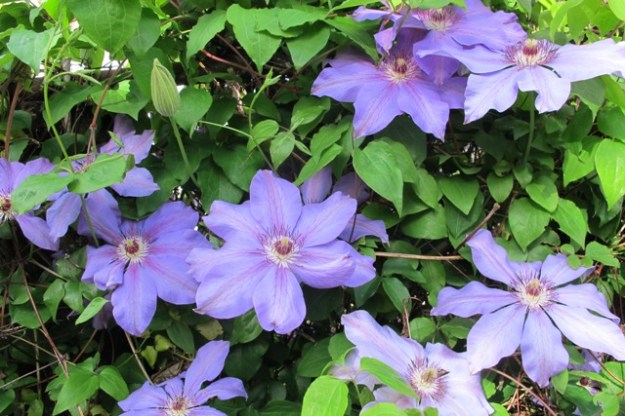
An unnamed blue seedling that has settled down happily in a mixed border

An unnamed blue seedling that has settled down happily in a mixed border

If you want to know more about different types of clematis or maybe even buy mail order, my neighbour is http://www.mrclematis.co.nz/ (email: yaku@xtra.co.nz). He produces a phenomenal range and has a passion and knowledge for the genus way beyond mine.

First published in the Waikato Times and reprinted here with their permission.
The answer truly lies in the soil

005 (2)Who has never complained about the absence of flavour in supermarket tomatoes, particularly when out of season? Almost without exception we laud the merits of homegrown produce as being much more flavourful, even more so if crops have been grown from heritage varieties. Very hipster these days. Many people believe that the flavour has been sacrificed in commercial crops in the quest for high production.

Things are never that black and white. For some years, we have been pondering the triggers for flavour. I cite my experience with tomatoes in Southern Italy. A taste treat beyond compare, so full of flavour were they. But it was only the first week of June so it wasn’t a hot, dry summer that determined the quality of the taste. Nor, indeed, was it the variety. In recent years there has been an explosion of heirloom or heritage seed varieties becoming available in this country. We have tried growing a fair number of different ones and, to be ruthlessly honest, while better than the wishy washy supermarket ones, they all fall well short of those I ate in Italy. That leaves the soil as the key variable.

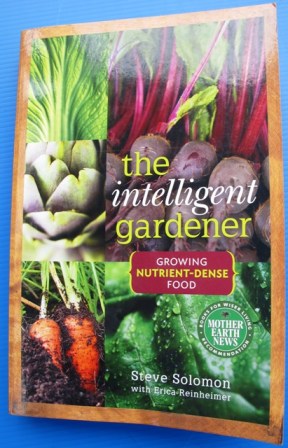
The answer may indeed lie in the soil. Unfortunately the solution is not as simple as scattering fertiliser with added trace elements, which is the usual recommended treatment. We have taken good care of our soils here and believed that we made good, balanced compost to nourish them. I use the past tense – believed. Summer reading here is “The Intelligent Gardener” by Steve Soloman. That is to say, Mark is reading it and sharing the highlights as he goes. While some of the book drives him nuts, the underlying premises make a lot of sense. Our soils are almost certainly nowhere near as good as we thought.
008
The subtitle of the book is “Growing Nutrient-Dense Food”. Nutrient density has been hovering on the periphery of our lives ever since Kay Baxter started writing about it. It is the principle that you can have two apparently similar crops but one has a much higher nutritional value than the other. Kay Baxter is the leading light of the Koanga Institute and a true pioneer of organics and the preservation of heirloom and heritage varieties in this country. She advocates the use of Brix measures to determine nutrient density. Brix are commonly used in the wine industry to measure sugar content.

It may be something of a leap to link flavour to nutrient density, but it seems logical that there may well be such a link and certainly both go back to the nature of the soil.

As a country, New Zealand has some widely recognised soil deficiencies. Insufficient naturally-occurring iodine is why we have iodised salt in this country. Prior to that, goitre was very common in humans and indeed in animals. “Bush sickness” is a widely recognised problem attributable to cobalt deficiencies on pumice soils. Selenium is deficient. At the risk of treading on sensitive ground in the Waikato, I understand that the trace element fluorine is deficient in NZ which is a major contributor to why New Zealanders have long been renowned for poor teeth. According to my father, who was a medico in the British army in WW2, they could pick the NZ soldiers at time of autopsy because most had false teeth. Correspondingly, pre-dental bleaching, all those beaming white toothy smiles of many Americans were apparently attributable to higher levels of naturally occurring fluorine.

If you are really keen on running a closed system of food production with no external inputs, it matters a great deal that you understand the exact composition of your soils in considerable detail. Even then, it is not as simple as topping up a certain element because there are reactions and inhibitors which can affect the ability of soils to incorporate additions. But most of us get our food from a variety of sources, which means deficiencies don’t usually have dire effects on human health because there is a degree of balancing out which occurs.

Mark is planning to delve further into the exact compositions of our soils. We are interested to see whether better balanced soils will give us better flavoured food. We will be watching to see if the link between flavour and nutrient density is proven. Certainly, it is disconcerting to have our existing notions about the quality of our soil and compost turned upside down. But this is not a once over lightly project which will appeal to all gardeners.

If you want to know more, the Koanga website is: http://koanga.org.nz/ The book referred to is “The Intelligent Gardener” by Steve Soloman. (New Society Publishers; ISBN:978 0 86571 718 3). Elder daughter purchased it for her father from the bookshop of Canberra Botanic Gardens. In this country, you may need to order it, in which case the ISBN number is important.

First published in the Waikato Times and reprinted here with their permission.
New Year’s Gardening Resolutions for 2014

Plant food for the bees. Collectively, gardeners can make a difference

Plant food for the bees. Collectively, gardeners can make a difference

I failed on the Christmas-themed column. I am not big on poinsettias and I couldn’t think of anything new to say about Christmas trees. But New Year’s resolutions – these are different. If you are making garden resolutions, you may like to consider some of the following.

Lawns are a shocker when it comes to good environmental practice. There is nothing sustainable and healthy about most lawns but the vast majority of us have them for a variety of reasons. Don’t make the mistake of thinking that if you cut your lawn really short, it will mean you have to mow it less often. Not true. You stress the grass and open it up to weed invasions. Set the level on the lawnmower a little higher to keep a green sward. Good lawns invariably have longer grass.

Next time you buy a lawnmower, choose one that mulches the clippings. That way you don’t have to remove the clippings to get a tidy finish and if you are not removing the grass, then you don’t need to feed the lawn to keep it looking healthy. It reduces your inputs and therefore reduces both time and cost.

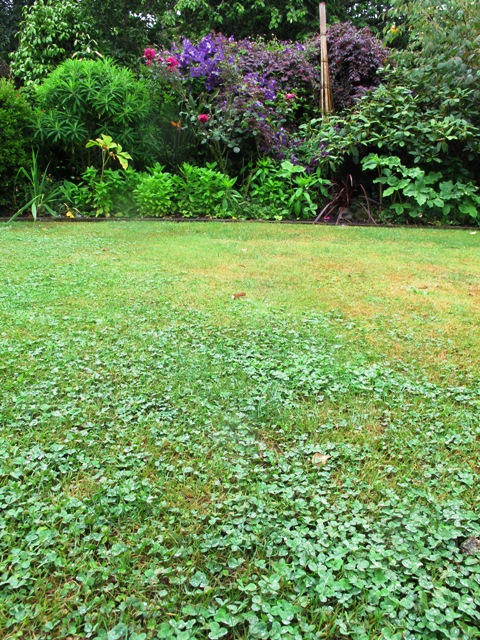
We are encouraging clover back into our lawns. It stays green, doesn't need mowing as often and feeds the bees

We are encouraging clover back into our lawns. It stays green, doesn’t need mowing as often and feeds the bees

Be cautious about lawn sprays and read the label information carefully. We are not fans of lawn sprays at all here. Year in and year out, we field enquiries about plant damage which is attributable to spray drift from lawn sprays. If you are using a spray which has a six month withholding period before it is safe to use on food crops (and that is common), you may want to think again about how environmentally sound is your gardening practice. Putting it through the compost process will not make the clippings safe for use. It might even be time to move on from the Chemical Ali generation. We are going back to encouraging the clover here. It used to be popular in days gone by and it has many merits.

Mulch. Mulch well, but only after the soil is wet through. If you lay mulch on top of dry soil, it stays drier longer. The rains this week may have been a reprieve for those who missed getting mulch laid in spring. If you lay the mulch on top of relatively weed-free soils, it will save you a lot of work later because it should suppress many of the germinating weed seeds that lurk in all our soils.

While on the subject of weeds, if they really worry you (and they do worry most of us even though, as the old saying goes, a weed is merely a plant in the wrong place), remember the old adage that one year’s seeding gives rise to seven year’s weeding. It is best to weed before the plant sets seed if you want to save yourself work down the track. If you weed with the push hoe, you need to remove seed heads that have formed already. You can leave the rest of the plant to wither in the sun but the seed heads will just continue to ripen and then germinate.

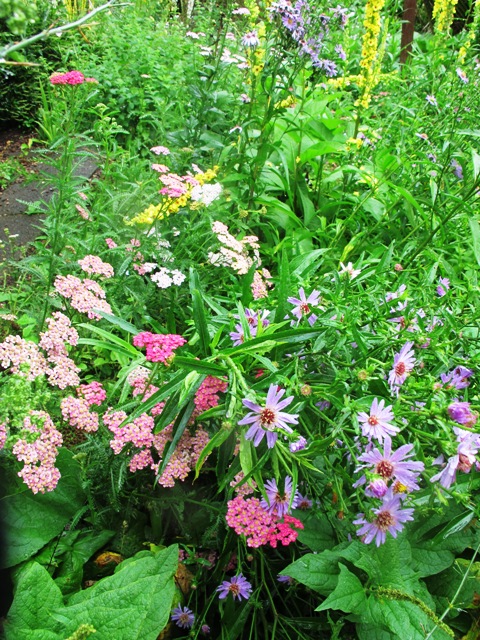
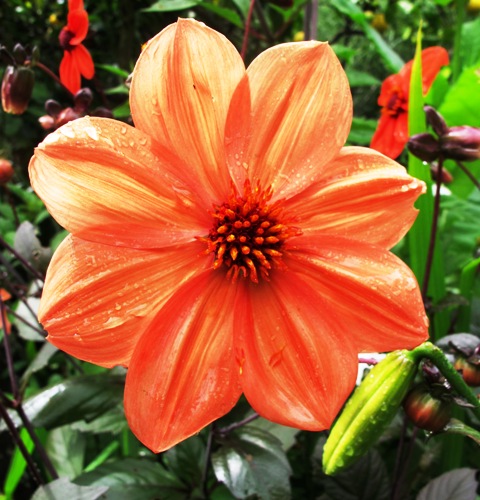
Single flowers with visible pollen and stamens feed the bees and indeed the butterflies

Single flowers with visible pollen and stamens feed the bees and indeed the butterflies

Grow plants with flowers for the bees. This means any flowers with visible stamens and pollen. We all know the bees are under deep stress, here in New Zealand as well as the rest of the world. We need the bees for pollination even more than honey. Every gardener’s contribution counts and collectively, we can make a difference to their food supplies. Fortunately, most of us have moved on from the austerity of the 1990s minimalist garden which contributed a big fat zero to the natural environment.

I am of the view that gardening should be two things above all else. It should be a pleasure. At its best, it can make your heart sing at the beauty. At a more mundane level, it can be quietly satisfying. If you get neither pleasure nor satisfaction from your garden, if it is all a great, big, tedious chore then review what you have and what you are doing.

If you really don’t enjoy gardening, then keep it very simple. It is much easier to maintain, especially if you can’t afford to pay someone to come and do it for you. If all you have to do is maintain edges, sweep paved areas, mow the lawns and do a seasonal round of tightly defined garden beds in order to keep it looking tidy, then it becomes more manageable for the reluctant gardener. Alternatively, move to an upper floor apartment.

Secondly, I think we should be gardening WITH nature, not in spite of it. Gardening shouldn’t be about imposing human will over nature, controlling and suppressing it, establishing dominance. Too much gardening practice is an imposition on the landscape, a battle with nature. Happy gardeners are often those who have managed to carve out a more constructive relationship with the natural world.

On which note, I wish readers a happy gardening year in 2014.

First published in the Waikato Times and reprinted here with their permission.
Toxic plants and natural remedies

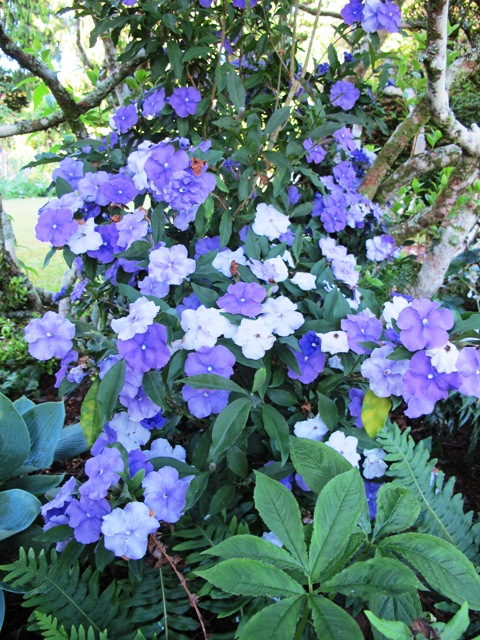
Brunfelsia, or the Yesterday Today Tomorrow plant, is highly toxic to dogs but fortunately few dogs eat flowers.

Brunfelsia, or the Yesterday Today Tomorrow plant, is highly toxic to dogs but fortunately few dogs eat flowers.

My mention of the toxicity of oleander in Plant Collector last week yielded the following comment via Twitter:
I remember seeing a photo as a kid of someone who had made a bonfire with oleander. Poor guy looked like he had been doused in acid. He inhaled some smoke and wound up in intensive care with lung damage.

Before you rush out to dispose of your oleander – if you have one – you may like to ponder that if you are determined to rid your garden of all poisonous and therefore dangerous plants, you will have to remove all daphnes, laburnum, alocasias, rhus, karaka, brunfelsia, aroids, colchicums, tulips and a whole lot more. You will end up removing half your garden. There is a certain folly to thinking that you can make your garden safe for small children and dogs by only growing non-toxic plants. Goodness, even oak and yew can be toxic to dogs.

The plant kingdom is still the prime source for most of our pharmaceutical compounds and our poisons. Aspirin was derived from willows, morphine from poppies. When a natural compound to treat cancer was isolated in Taxus baccata, British gardeners were urged to deliver their yew clippings to depots for a few years so researchers could isolate the relevant chemical compound.

Fortunately for the plant kingdom, scientists then set about re-creating the desired plant sequence in laboratories to avoid the problems of depleting natural resources.

I am sure it was Agatha Christie who alerted her readers to the fact that laburnum seeds are highly toxic and can in fact be used to poison off one’s enemy. But there are so many other sources of poisons. Cyanide is a natural compound, found in peach and apricot kernels, cassava, even apple pips along with many other sources. Ricin, one of the deadliest natural toxins, is derived from the seed of the castor plant (Ricinus communis) – as indeed is castor oil. The castor plant is highly decorative and still found in some gardens and public plantings. It was ricin that was used to murder Bulgarian dissident, Georgi Markov, in London back in 1978. He was poked with an umbrella spike in the street which transferred the poison capsule into the back of his thigh. It took three days for him to die.

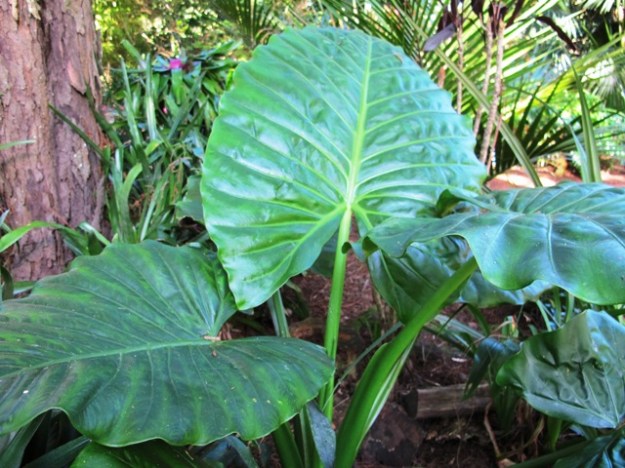
Most of the alocasias are toxic but this one particularly so. We are cautious handling it in the garden

Most of the alocasias are toxic but this one particularly so. We are cautious handling it in the garden

All this gives lie to the feel-good myth that “if it is natural, it must be good for us”. These can be powerful substances with unexpected side effects for the unwary. The potential for enthusiastic amateurs to get it wrong is just as great today as earlier.

The world has been grappling with the thin line between safety and danger in plants for over two millennia. It was the Ancient Greek Theophrastus, back before Christ was born, who is credited with first starting to try and sort out the plant kingdom into some comprehensible form, a task that was not completed until Carl Linnaeus in the 1700s. When humankind depended entirely on wild-gathered plant material for medicine, the potential for matters to go badly wrong was enormous. The majority of the populace has some difficulty in recognising different plants, even more so if they look similar. It is highly likely that there were a fair number of people out there a-diggin’ (for roots or bulbs), a-cuttin’ (for foliage or flowers) and a-gatherin’ (seeds) who subscribed to the “near enough is good enough” school of thought, especially when collecting for payment.

The pharmaceutical industry comes in for a huge amount of bad press but at least it has standardised product removed from the vagaries of human error. My elder daughter is a synthetic organic chemist who spent her later university years working on replicating a compound of great potential that had been identified in a plant native to Thailand. I was discussing herbal remedies with her recently and her comment was that, certainly when it came to ingesting a remedy, she’d rather buy it ready-made because then there is more certainty about the accuracy of the source plants and the dosage. For of course the time of the year when plant material is gathered can have a dramatic effect on the concentrations of a desired compound, let alone growing conditions. There will be much greater margin of error when it comes to home-prepared topical applications – in other words applied directly to the skin. But I would be very cautious and want certainty when it comes to swallowing or inhaling.

We are raised in this country to fear most mushrooms and toadstools. The dangers of misidentification can be fatal when it comes to eating them. That caution is not always extended to the plant world. Natural is not a synonym for safe and healthy. If you want wild gathered food skewers, use sticks of a rosemary bush not daphne or, as mentioned last week, oleander.

First published in the Waikato Times and reprinted here with their permission.