Category Archives: Abbie’s column

Abbie’s newspaper columns

All Gardeners Dream

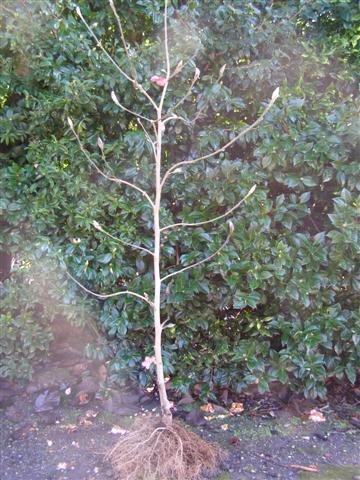
Buying bare sticks with a dream but at least this Magnolia Iolanthe has the promise of flower buds

A letter to the editor last week talked about the Pukeiti dream as if Pukeiti had the monopoly on dreams. I would suggest that pretty well every gardener I know works on dreams. It is what keeps us going. Call it vision, if you prefer, or hope or trust – but every time somebody buys a bare stick in mid winter, they are dreaming of what it should look like in spring when it comes into leaf.

Often folk will plant a long term tree with a dream. No matter that they know they will not live long enough to see the tree reach maturity. When one heads out with the spade and the plant, the dream is of how it may look in the future, always with the hope that subsequent generations will appreciate it. If it wasn’t for the dream, why would anyone plant rimu, kauri, totara, davidia involucrata, monkey puzzle trees (Araucaria araucana) and any number of other high quality, slow growing trees? Maybe to plant one is a dream for the future, to plant many is an inspired vision.

I briefly toyed with a theory that ornamental gardens (those planted merely to delight the eyes and nose and not to feed the stomach) are based on dreams whereas the current rage of the productive garden (fruit and veg) is based on pragmatism and quick results. But Mark disabused me of that idea immediately. No, he replied. Of course all those fruit trees and edible crops are based on dreams. Romantic dreams, fantasies even, of The Good Life, of eating wholesome food that not only tastes yum but is free of dodgy chemicals, of children who frolic out joyously to pick the silver beet for dinner and then consume it with gusto. The mere term home orchard conjures up picture book images of apple trees laden with ripe red fruit awaiting harvest. Hark, is that a swing I see hanging from the branch of the old apple tree? (But not from our dwarf apples, unless it is for dolls). The common mental image used to have grass beneath the trees in the old orchard (entered by a lichen encrusted wooden gate) but that betrays my age. These days it is more likely to be comfrey carpeting the ground below. Or maybe borage to attract the bees. It really does not matter that we all know there is a big gap between reality and the dream. There is much that can go wrong. The barefoot children can be stung by the bees on the borage. The trees need pruning and, upon occasion, spraying if there is to be much of a harvest. None of it is as easy as it looks. It takes time and practice to learn. Some veg crops will fail altogether. Some will hardly be worth the effort while some will yield an embarrassingly large harvest, much of which goes to waste. It will rain and the ground will get soggy and boggy (garden dreams are usually sunny). It is the nature of gardening that it is unpredictable and greatly dependent on factors beyond our control – particularly the weather.

Ornamental gardening is even more based on dreams because it is purely aesthetic and there is not much of the quick random reinforcement of harvests, however meagre. Those who rip into gardening and view it like interior decoration will overplant badly to get a quick effect and then tend to lose heart when it all becomes an overgrown jungle too quickly. Creating a lovely garden and creating a lovely house interior are opposite ends of the spectrum. Interior design is about creating the perfect picture (hopefully combined with good function) from the start. It is a fixed picture, already finished in its perfection and it sets the standard to maintain (though in all honesty it is mostly downhill from then on as day to day living scratches the paintwork, marks the carpet and personal clutter builds up).

Gardening, on the other hand, is about putting the building blocks in place and allowing time for plants to grow with the hope that the mental picture will be achieved over time. It is a much less exact and precise activity, fraught with outside interference. A garden is never finished. It is in a constant state of change and prone to unpredictability. That is why we dream, why we build mental pictures of our goals.

We may put in a row of little plants at 60cm spacing and trust that in time the plants will close up together, grow uniformly and make a smart hedge. Or we may build a seat beneath an overhead frame and trust that the bare sticks we plant will come into leaf and flower to create a shady bower for summer. We may (and more should) plant an arboretum across many acres with fine specimens of trees for centuries to come. Or we may develop a large garden which we hope will create a magical place full of scent, colour, form and botanical interest as well. Or we may just plant an orange tree and hope optimistically that in the future there are so many oranges to harvest that it feels fine to squeeze the juice from half a dozen just to get a glass of fresh OJ a day.

They are all dreams. No, the whole issue about dreams here is about who pays for them. Once the public purse is expected to foot the bill, it becomes a whole new ball game. Some might think that only the very naïve or optimistic could believe that the Pukeiti dream of the founders is in safe hands in the public sector. What will be safer in the public sector are the expansionist dreams of the latter day guardians of Pukeiti and that doesn’t have a whole lot to do with the hallowed founders. But even they may have been surprised to read last week that Pukeiti is apparently some sort of de facto war memorial. Hmmm….
It doesn't have to be all or nothing – using native plants in our gardens

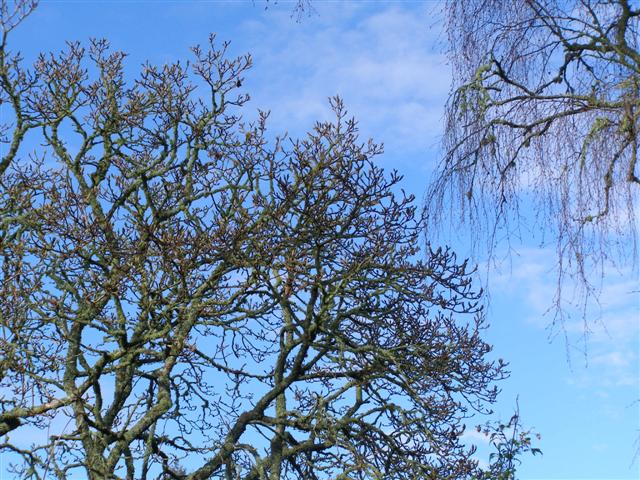
A magnolia to the left and silver birch to the right, silhouetted against the winter sky

A magnolia to the left and silver birch to the right, silhouetted against the winter sky

Mark has been hiding indoors on bad weather days, watching Victory Gardens on the Living Channel. It is not that it is a very good American programme, he is just addicted to TV gardening. But he was a little shocked recently by presenter, Jamie Durie. Now we are not going to be critical of said Australian who has done a great deal to sex up gardening in his native land and who is a young man of considerable talent. He has also managed to cross over successfully to American TV and we love him because it was he who has twice promoted our very own Cordyline Red Fountain on the Oprah Winfrey Show. Our home grown gardening celebs, such as they are, don’t fall into the same league. I don’t think any of our local candidates would have an alternative career stripping for Manpower Australia. But I digress.

There was Jamie, talking with passion about Australian native plants, brandishing what looked suspiciously like a New Zealand cabbage tree. It was. Our most common cabbage tree is Cordyline australis, you see, but australis does not mean it comes from Australia. The kind interpretation is that our iconic tree is now Australasian, just as our soccer team briefly enjoyed that curious status. Australia does have its own members of the cordyline family including congesta, fruticosa and stricta, but australis is not among them. We are now wondering where Jamie Durie thinks Dicksonia antarctica hails from. It is the Tasmanian tree fern which is a close relation of our own ponga trees.

But at least Jamie avoids the dreary political correctness of a pretentious novel I was recently reading for review. Describing the Christchurch gardens of the relatively well-heeled, the author wrote: “Most of the gardens were populated with imported English varieties, but there were a couple of house owners who had made some effort with native New Zealand vegetation, and the dark greens and rich browns stood out among the bleak, bare branches of the non-native trees that seemed to claw at the grey air.”

I read this passage aloud to Mark who instantly demanded to know what native tree is a rich brown. Shades of green, dear, they are shades of green. I envisaged the PC Christchurch of the future where gardeners could only plant native trees – towering rimus, totara or kahikeatea, perhaps, which on a small town section will remove all winter sun and light from your neighbour’s property. Or maybe some of the smaller trees such as the interesting dracophyllums or nikau palms which, typically, are forest growers, designed to grow in company and with the protection of surrounding plants. Let’s be PC and maroon these forest dwellers in a sea of suburban grass.

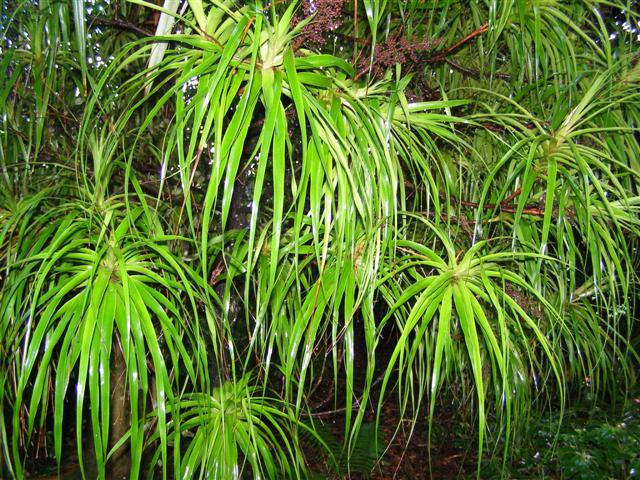
Our native dracophyllum, better in company than marooned as a lawn specimen in solitary splendour

While we are about it, shall we eradicate all the imported fruit trees, veg plants and even the ubiquitous grass? We do have native grasses but they are not usually the ones found in lawns, on road verges or pasture. I am not sure that the author had any understanding at all of botany, let alone gardening. I would be guessing that her derisive reference to imported English varieties includes the cherry trees for which Christchurch is renowned (hailing from Japan), the deciduous magnolias (from Asia), dogwoods (cornus – mostly American) let alone the rest of the options from around the world. As you may have gathered, I regarded that particular passage as particularly ill-informed and downright silly.

I will absolutely stand up for the preservation (and preferably extension) of our remaining forest remnants where the eradication of competing imported species is important. I think defending our diversity of indigenous plant material is equally important. I think incorporating native plants into our public plantings is highly desirable and that our native flora has a key role in our domestic and private gardens. It is what makes us different. But I am not going to put our native plants on such a pedestal as to declare that, by definition, native equals good, imported equals bad and reactionary.

We are hardly living and gardening in an environment where our native plants originally thrived. New Zealand attitudes to our indigenous flora have waxed and waned in recent years. The early settlers often found the native forests intimidating which is to be understood when you consider that all our plants here are evergreen whereas the majority of both native and introduced trees in Britain are deciduous. The forest remnants I have seen there are what I would call woodland. Our bush is akin to impenetrable, tropical forest without the tropical temperatures. I imagine they were terrifying to people more accustomed to woods of white barked birches, sweet chestnut or oaks carpeted below with wild bluebells and snowdrops. No wonder they planted to remind themselves of home.

Even thirty years ago, there was a pretty large-scale dismissal of our native flora as dull, boring and not worthy of garden space. Native plants on sale were under-valued, so sold cheaply and seen as utility – a bit like riparian plantings today. All function and no aesthetics. Then came the big turnaround and suddenly native plants were all the rage. Led by government agencies, public plantings were heavily dominated by native plants. This crossed over to private gardens and planting native became the higher moral ground, a point of principle. A stream of Bright Young Things could be found browsing plant stocks, determined to buy and plant only natives. Though they would make an exception for an apple tree (from Central Asia), a macadamia (from Australia) or an olive tree from Greece. There was also a myth that you had to plant natives to feed our birds. In fact you have to plant the right plants to encourage birds and our indigenous birds are not fussy about whether it is a native or an introduced plant.

The author of whom I am so critical is caught in this PC time warp. As always, the answer lies in the middle ground. We have many fantastic native plants ideal for gardens. We also have boring, utility native plants ideal for land reclamation, shelter or nurse plants. But it doesn’t have to be all or nothing at a gardening level. It is the vast array of plant material that we can grow here, the mix of indigenous and introduced, which makes our gardens interesting. Those Christchurch houses so maligned for their plantings are probably much better served by deciduous specimen trees which allow light and winter sun through. We tend to have cold houses in this country and we don’t need to make them any colder by planting so that they are in the winter shadow of evergreens. Bare branches silhouetted against a winter sky can be seen as a beautiful tracery just as readily as the aforementioned bleak, bare claws. Long may common sense and aesthetics triumph over ignorance, however well intentioned and at least those Christchurch houses planted trees rather than keeping everything to under a metre in height.

Cranberry Update

Making the acquaintance of proper cranberries (vaccinium) instead of the so-called NZ cranberry (Myrtus ugni)

In the review I wrote of the now infamous Tui NZ Fruit Garden (which was guilty of both plagiarism and downright bad information), I mentioned cranberries and that what we know and grow as the NZ cranberry is in fact Myrtus ugni whereas the proper, genuine article is Vaccinium marcrocarpon. I noted that we were not aware of the proper cranberry being grown in this country and to my delight, a bag of the genuine article arrived from one of the very few commercial growers, Cranberries NZ, They grow them in cold valleys on the West Coast and harvests are still small so I don’t think they reach Taranaki supermarkets yet. These fruit were a bit of an eye-opener – larger than the myrtus berries and not at all nice raw, being a little sour, crisp and not particularly tasty in that state. But cooked in fresh cranberry muffins they took on a different character altogether and were voted a genuine taste treat, a great deal superior to dried fruit.

Ever the keen gardener, Mark could not resist saving a few seed. Most berries were pale inside but just a few were dark red right through. Given that proper cranberries need cold winters and do best in fairly heavy soils, we don’t have conditions that resemble their habitat in any way, but he will not let that deter him from trying to grow a few plants to add variety to our home orchard.

Read the original review of the Tui NZ Fruit Garden.

A letter from a ratepayer

Mr David McLeod, Chair
Taranaki Regional Council,
Stratford

Dear David,
I was terribly thrilled to read your press release about having secured the future of Pukeiti. That is so exciting.

I see that you personally rank the importance of Pukeiti right up there alongside our maunga, our mountain, Taranaki. Now I don’t want to be accused of raining on your parade, but you don’t think that maybe you were getting a little carried away with the hype of the situation? That perhaps you have overstated the importance just a trifle? I admit I don’t know you (you don’t mind me addressing you as David, do you? It is just that as you are quite good at spending my money, I feel as if I have some sort of relationship with you). Maybe you do in fact wake each fine morning and look out at both Mount Taranaki and Pukeiti and feel a sense of identity. Maybe when your travelling children are asked where they are from, they identify themselves as coming from Taranaki, the home of Pukeiti Rhododendron Trust. Maybe you have enjoyed such frequent visits to Pukeiti all your life that you feel a deeply personal sense of ownership and belonging. Alas, much of your electorate has already voted with their feet and decided that in fact Pukeiti is not such a part of their very identity – that is the whole nub of the problem. Visitor numbers simply haven’t been high enough to support the dream – a dream that belonged to somebody else. But I don’t want to be negative. I am assuming that you and your councillors did a breakdown on visitor numbers to work out how many were local and how many were tourists? And as you are so hellbent on making it free for everybody, I guess that your public consultation showed that ratepayers are glad to pay so that tourist attractions have free entry for visitors from out of the region.

I mention this, David, because in your press release you approved the takeover of Pukeiti “in the wake of positive feedback during public consultation…” That is absolutely wonderful, no doubt about it. I wouldn’t for one minute want to be accused of pouring cold water on your plans. It may be that your networks in the gardening, plants and garden tourism scene are hugely better than mine. That would explain why nobody I have met in the last six months has been consulted. My networks must be terrible. I am talking to the wrong people. No matter, you have apparently found the right people to talk to. Mark says he would really like to hear the names of all three of them.

But lest you think I am moaning, really, David, my reason for writing is to offer you some help. Your press release says that ” …work will begin soon on plans to develop and enhance the property and its plant collection. This will be similar to the planning processes which resulted in the very successful redevelopment and refurbishment of the Council’s existing heritage properties, Tupare and Hollard Gardens. We are looking forward to involving the Trust, PKW and a range of people in this exercise.” That sounds absolutely splendid, very consultative. It is just that I am pretty sure that this has all been done already, quite recently in fact, and I still have the discussion papers in my archives. Actually it is not that long ago – 2005 in fact and I can date it exactly because it all happened when Mark and I were flicking off to look at magnolias in northern Italy. I think along with all the discussion papers from Big Names like Boffa Miscall, Berl and others, somewhere, just somewhere, I even have a letter from your CEO, Basil, telling me how much ratepayer money had been spent on these plans. These sums (measuring into the multi hundreds of thousands of dollars but I would need to find the letter to confirm exact figures) included plans for Hollards and Tupare as well, but the ratepayer has already paid for big plans to take Pukeiti in to a new era of popularity.

Sure, it has to be admitted that some of those plans may have been just a tad grandiose. I think they even included a new home for the wandering gondola, along with a little shopping arcade, of sorts. A tourism hub, even. And fabulous (and I mean fabulous) visitor numbers.

But a little bird told me, and I wouldn’t want to be quoted on this because I haven’t had the information officially and it may be completely wrong, that after Regional Council paid for all those plans five long years ago, the Pukeiti Trust Board commissioned another review and set of development plans immediately after. I think what I was told was that the annual grant of $50 000 of ratepayer money, allocated by Regional Council, was further reinvested in this new set of plans to save Pukeiti. I just recall some discussions at the time because some of us felt that maybe they could have been spending that windfall of 50 grand on another gardener instead of yet more development plans. I am just guessing, maybe putting two and two together and making five, that that was why Pukeiti went ahead and appointed a new CEO with a highly relevant record in managing Speedway. I recently found a newspaper clipping where that new CEO declared that within six months of him starting in his new position, Pukeiti would be re-branded as a functions and events centre. Funny thing that. Six months came and went and it doesn’t seem that long after, the new CEO also went. Made redundant in preparation for Regional Council taking over, do we think?

David, I don’t want to be a moaner but it just may be that there are plenty of recent reports already available to be drawn on, without having to start again. We don’t want to be accused of re-inventing the wheel, do we? Or to make ourselves vulnerable to an accusation of pouring more rate-payer money down the wishing well. Maybe somebody could pick up the phone and have a chat to the immediate past CEO to find out what did and didn’t work?

You don’t think, do you, that maybe it could be argued that it is a teensy weensy little bit precious to say that the cost of Regional Council picking up the tab for Pukeiti will have “minimal impact on average regional rates — over a full year, less than half the cost of the $14 entry fee Pukeiti has been charging up until now” (your words, not mine). That might be true had all ratepayers demonstrated that they wanted to visit Pukeiti at least once a year. A veritable bargain in fact. Such a shame they didn’t. Had they shown this burning desire to visit, Pukeiti would not be in the pickle it is. Instead they would have been run off their feet, even more so on their gold coin donation days when the financially impoverished would have flocked there. In fact, if you take the cost of running the place and divide it by the number of visitors, it just may be that you will find the cost of attracting every single visitor is somewhere nearer $70 per person. Even if you double the attendance in a short space of time, it is still around $35 of ratepayer money to give every visitor free entrance.

Lest you think I am being grumpy, David, I am already on public record as saying that for us personally, Regional Council making sure that Pukeiti survives is, on balance, a good move. We know what Pukeiti’s standing has been internationally, which is more than many of your ratepayers who just have to take your word for it. We also know which key individuals worked tirelessly to earn Pukeiti that credibility. In fact we know quite a bit about the history of Pukeiti. We just hope that you and your fellow councillors have a pretty good grip on it all too After all, you wouldn’t want history to record that you were the people who were all too ready to spend other people’s money trying to realise a lost dream. The Pukeiti dream of Douglas Cook and the founders has long gone. Now you have a large garden in a cold and damp out-of-the-way position, served by a really bad road, branded with a plant which used to be incredibly popular and of high status but few people want any longer.

Do let me know if you need the reports I mentioned.
Kind regards,
Abbie

Today’s column is but the latest in a series over recent years. Earlier columns on this topic include:
1) A tale of Pukeiti Rhododendron Trust and ratepayer funding Published March this year.
2) Taranaki Regional Gardens Part 1 – first published late 2004
3) Taranaki Regional Gardens Part 2 – first published, apparently January 2005 – the best piece of writing for those who can’t be bothered wading through the lot.
4) And Taranaki Regional Gardens Part 3 – which rather tells about the treatment of an unsolicited submission. When in doubt, levy accusations of self interest.

Taranaki Regional Gardens: Part 1. First published December 2004

THERE is great excitement around our place at the moment. This has come about because we finally got our hands on a copy of the report to the Taranaki Regional Council on the path ahead for the Trust Gardens — Tupare, Hollards and Pukeiti.

We had been waiting for a couple of years to see what was being mooted for these gardens and it was certainly worth waiting for. Silly us. There we had been thinking that the TRC might be looking cautiously at spending a hundred thousand dollars or two on the gardens, accepting that they were regional assets even if they were unlikely to ever pay their own way, in our lifetimes at least.

How wrong we were. No. The plans propose spending around $15 million, give or take, and all of that is on capital works with no allowance made for the management, ongoing maintenance and staffing of the gardens. Not that the $15 million dollars is necessarily all TRC money, but some of it is.

Naturally, we turned to the figures to see how many visitors they were expecting to these gardens. And you could have knocked us down with a feather. We were blown away by the visitor projections. Stunned would be understating our response.

This is such exciting news but we are ever so slightly miffed that all the other private-sector garden openers in the province have not been warned about the tidal wave of visitors about to hit us in the next two to three years. We have swung into emergency mode. Clearly we will need to buy the neighbour’s property to extend our carpark. Our existing facilities are woefully inadequate for visitor numbers confidently promised to rise by between 500% and 1000% by 2006 or 2007. We are going to need more toilets, let alone the fact that the paths around our garden are not adequate to cope with the projected numbers. Our excitement is tempered by panic at this hitherto unexpected surge in garden visitors to our province.

And what are the predicted numbers? Hollards is a fine garden that has rightly been accorded the status of Garden of National Significance but is dogged by both a difficult location some distance from the main road and by an unpredictable climate. The predicted visitor numbers are quite conservative for Hollards — a mere 500% or so increase over the next two years to 12,000.

Tupare was once a fine garden but has declined considerably over recent years and didn’t even make the cut as one of the best 23 gardens in the province in the Blue Ribbon days. It has a wonderful location in the city but a difficult terrain for garden visitors. No matter, the report to the TRC confidently predicts that by 2006 (that is only next year), visitor numbers can be 24,000. Tupare’s current visitor numbers are stated with wonderful imprecision as between 2000 and 4000 per annum. Our best guess, based on 17 years of opening our own garden, is that 2500, maybe 3000 max, would be about right.

And Pukeiti? The garden destined to need the lion’s share of the money if the recommendations are endorsed? Again dogged by a difficult climate and a difficult location, but these problems are clearly not going to hold people back.

The report confidently asserts that visitor numbers to Pukeiti will climb to 34,000 by 2007 and that figure does not include visits by members of Pukeiti. Possibly add another 3000 for members’ visits. That is starting from a current base of around 8000 people each year.

We are assuming that there will be a spin-off for us and for all other garden openers in the province. Naturally we don’t expect millions of dollars of outside funding to be spent here, so we can’t expect the astronomical increase in visitor numbers that the three trust gardens are planning for. We will settle for a mere 300% increase in visitor numbers in two years, thank you. That will still mean we will get considerably fewer than even Hollards expect, but it will pay for the new gardener we confidently plan to appoint in anticipation.

A brave new world of garden visiting apparently awaits us all. After all, Business and Economic Research Ltd (Berl) and the TAG group that prepared the reports for the regional council have predicted it and they must know what they are talking about.

How else could they justify advocating spending close to $1.7 million on Tupare over the next few years? That $1.7 million excludes GST, operational and management costs and costs associated with the plant collection. Add another few hundred grand per annum to cover running costs.

Hollards is clearly a bargain. It is only going to take just over $1.3 million (plus GST and ongoing operational and management costs) to lift this garden into its new, heady space. This includes removing the house (Bernie and Rose Hollards’ home may be older than the house at Tupare but it is not grand enough, dear) and replacing it with a “modest” visitor pavilion. A modest visitor pavilion where the house used to stand, costing a modest $581,500 (including the fit-out but excluding GST).

The big bikkies are reserved for Pukeiti, as befits the premier destination expecting the largest visitor numbers. More than $10 million dollars is all that is needed to take this garden beyond what any of us currently know and respect. That figure of course excludes GST, management and operational costs and it also does not include the development of water-supply systems and effluent management systems required in that sensitive environment to cope with the massive increase in visitor numbers.

There we were, thinking that when the regional council took over Tupare and Hollards and took Pukeiti under its wing it would help fund skilled labour to keep these gardens as regional treasures, accepting that in doing so they would be in direct competition with the private-sector ratepayers who pay for their own gardens.

But what would we know about all this? We are just humble ratepayers and gardeners who open our own garden to the public.