Category Archives: Abbie’s column

Abbie’s newspaper columns

Taranaki Regional Gardens: Part 2. First published 19/1/05

Our bubble has burst. There we were, when I wrote my last column, terribly excited at the prospect of a huge leap in the garden visitor market. But we hadn’t read the fine print of the Concept Development Plan recently tabled with Regional Council.

The new carpark is fine as long as it is in the neighbour’s. And we can take on the new gardener. But everything else is governed by the Florence Charter. This is like the Kyoto Protocol of the gardening world. Nobody seems to know if our government is actually a signatory to the Florence Charter but no matter. The report uses the Florence Charter as its guiding principle and this important document, which nobody in this country had apparently heard of until a national landscape consultant raised it, is to govern all management of historic gardens. Well, almost all aspects as regards Hollards and Tupare. Some aspects, perhaps.

Certainly the Florence Charter is to be applied to all plant material in the garden so no plants which are recent introductions or developments are to be in these gardens. They must be replanted and maintained with material which was available when the Matthews and the Hollards were gardening. This will see the burgundy loropetalums and the precious Michelia alba ripped out of Tupare along with most of the more recent plantings.

And the Florence Charter is to be slavishly applied to the house at Tupare. Gone is the ensuite bathroom which was installed upstairs, probably at great expense. And the new kitchen is to go, along with any other modifications to the house. Attention to detail is such that even the doorbell is mentioned at least twice in the report. And there is to be a 1951 Bentley parked in the garage along with a 1940s Vauxhall. These were apparently driven by Sir Russell and Lady Matthews at some point in their lives (presumably in the days when they were just Russell and Mary).

The house at Hollards, although older than the house at Tupare, is for some curious reason exempt from the Florence Charter, so it is to be removed. Of course the house is not as cute as Tupare so perhaps that is why it is expendable despite the Florence Charter. And indeed the garden itself is exempt. Only the plants must be frozen in times past. The Project Advisory Group will have the skills, apparently, to improve on Bernie and Rose Hollard’s landscaping abilities and there will be three new buildings dropped into the garden too. History does not apparently record what vehicle Bernie Hollard drove, so we don’t need to emulate that in 2005.

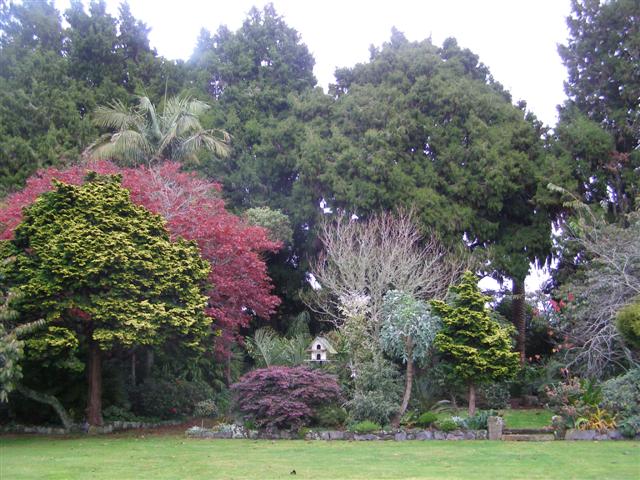
Mark and I are the current owners of a large garden and home which is contemporary to Hollards and Tupare. Possibly it is the last surviving garden of that vintage in private ownership. At the time there were others. Les Jury had a fine garden called Sunnybank which he used to open to the public in the 1950s and which was acclaimed in its day. Fred Parker had a notable garden. Grant Maxwell and Griff Williams are other Taranaki gardening names from the past.

But now we are concerned lest we be contravening the Florence Charter with our extensions to the garden and our alterations to the house. I am really too scared to ring our brickie and tell him that our fine brick wall, of which we are terribly proud of and on which we spent many dollars, will, alas, have to be demolished. It is not original. We had our official opening a few weeks ago. The demolition party may not be so happy.

We are going to have to get the diggers in to reinstate the park how it was. Gone will be our ponds, our meandering stream, bridges and growing herbaceous borders. In its heyday, under the stewardship of Felix and Mimosa, the park was inclined to flood every time it rained and always boggy. And it followed the style of gardening espoused by the New Zealand Rhododendron Association of the time which saw trees and shrubs in splendid isolation surrounded by long grass. Somewhat like parts of Tupare were at the time too. It will save lawn mowing. We can just put sheep back in and shut the gate. As long as they are the right type of sheep.

Our home is a little more modern than that at Tupare and although architecturally designed, it was not by Chapman Taylor. But it is quite a fine example of a solid five bed roomed home built in 1949 but designed to look timeless so rather redolent of the 1920s art deco English style. And there is a lot of history in it.

To my shame, I had not realised that the concrete laundry tubs and the farmer’s shower in the laundry were important historical features. I have been enjoying a modernised laundry which doesn’t get mouldy. And a modern shower located in the bathroom with underfloor heating and an extractor fan had been bringing me pleasure too, until I realised the crime we had committed in altering the original design. Mark is just relieved that we have discovered the folly of our ways before we started to renovate the original kitchen. We will both miss the efficient woodburner which stopped the house being an icebox in winter, but of course we must go back to the open fires.

But the problem that is really taxing us is what vehicle we must buy and restore to park in the garage. Tupare is to have a Bentley and a Vauxhall. I think the Humber Super Snipe which Felix and Mimosa drove in the fifties would look better than the more modest Singer Vogue which they changed to in the mid sixties. Or can we find an old Packard which predated the Humber Super Snipe? Our Toyotas just don’t cut the mustard in this new era of historical accuracy. We may have to park them in the visitors’ carpark.

But we mustn’t be grumpy. Thank goodness we have saved the 100 year old totara hedge, and the rimus, pines and gums which were now over 125 years old, planted by the original Jury here. These are older than any of the plants at Hollards and Tupare. And if those gardens are to be frozen in time, then the same fate must be waiting for our garden.

Is it any wonder that I made my pronouncement to our three children over Christmas dinner: “When Dad and I die, under no circumstances whatsoever are you to allow the garden to pass into public ownership.” And that was before the ramifications of the Florence Charter had sunk in on us.
And part 3 of Taranaki Regional Gardens. Date of original publication uncertain but around 2005

Cut to the quick, we were, dear Reader by the accusation in last Saturday’s paper that we were being negative and acting out of vested interests. That came from the Wellington consultant in charge of the Regional Gardens Project. After several weeks of intensive work analysing and discussing the proposals, a group of us tabled a common sense alternative plan with the Council. Well, we thought it was based on common sense and lots of experience. Alas the project group appeared to have made up its mind already that we were being negative, unhelpful and driven by self interest.

So what did we propose? Mindful of the fact that every owner of a large garden knows that gardens and property are bottomless pits which will absorb all the money you throw in and more, we urged caution. These are ratepayer dollars we are talking about and we will all end up contributing.

The Regional Council took over Hollard Gardens near Kaponga and Tupare in New Plymouth. We urged Council to understand that while these gardens are publicly owned, they are domestic gardens which are very different to public parks. By their very nature, domestic gardens start life as family gardens created with the skill, vision and the personal money of their owners. They are individual, personal and intimate. That is what makes them so different to public parks and gardens. The challenge for Council is to retain that individuality when they are in the public domain and to avoid the tendency to treat them like public parks and contract out management and centralise services. Such a move, we cautioned, would turn these two gardens into mini urban parks, except that one is in a relatively remote location and the other has a very steep terrain.

Both Hollards and Tupare have suffered for years from chronic underfunding and understaffing. Despite that, Hollards has retained its premier position and is independently rated as a Garden of National Significance. Tupare has not fared anywhere near as well and is a shadow of its former glory under the Matthews’ family management. We advocated learning from what has worked. Hollards has a resident garden manager who loves the garden, was trained in part by the Hollards themselves and who has kept standard high.

Give Tupare the same, we suggested. A resident garden manager who can give the garden the love and skill it needs.

Keep the gardens autonomous, we urged. Of course it makes sense to centralise marketing and administration, but the day to day management of the gardens is best done by a skilled head gardener. That way the personal nature and the individuality is retained.

Staff the gardens adequately. Spend more money on staff and less on management and operations. Hollards needs three gardening staff (it is very labour intensive) while Tupare, after an initial huge injection of funds and labour to get it right again, should be able to be maintained by two fulltime gardeners. Have people working in the gardens to talk to visitors rather than relying on storytelling devices like storyboards and handouts. These gardens must be better than any other garden all year round – showpiece gardens – so make sure they have sufficient skilled people to achieve this.

Start an apprenticeship scheme in the gardens to train quality gardeners and put Taranaki on the map. There is a growing demand for trained gardeners and a desperate shortage. Give Taranaki people another career choice and enhance the future of the gardens.

Get the gardens right and prove a demand exists before spending megabucks on capital works. Council took over gardens to manage and this should be done well first. In recognition that Tupare has the potential to become a heritage house and garden, place a moratorium on further structural alterations to the house and the original landscaping. Keep up the maintenance but stop pouring money into the buildings and facilities and concentrate on the garden.

Record the special values of each property and set in place a really simple low cost or no cost monitoring strategy to ensure that a wayward and determined head gardener can not wreak havoc on the place. Cut out other unnecessary layers of management.

When we tabled to Council last week, we noted that around $250 000 had been spent already on consultant reports but not one extra hour of labour or one extra plant had gone into the gardens. In fact more up to date figures show that it is now over $297 000 spent so far and still climbing. (Maybe it was negative to point that out?)

Get back to basics. Learn from what has worked. The gardens are individual. Keep them that way. One size does not fit all. Steer away from the institutional model and keep it simple.

We advocated for some discussion on potential cost recovery on the gardens (charging entry, in simple terms). As the plans stand, most of the money flow is one way – out from Council coffers. Sure council parks are always free, but we tried to stress that these gardens are not the same as council parks. These domestic gardens are considerably more expensive to run than a council park on a per square metre basis. At least talk about charging issues with the gardens and weigh up the options.

I am a little ashamed to admit that we failed in our presentation to grasp the importance of The Vision. We had thought that valuing the heritage of Tupare and Hollards, making them fine assets for both locals and tourists, setting the standard in open gardens and leading the way in putting Taranaki on the map as a garden visitor destination was a justifiable vision. But of course if you are going to spend nearly $300 000 (and still rising), clearly you want a Grand Vision – with a grand budget of several million dollars to match. And apparently you can’t have strategy without vision. We criticised the plans on the table for discussion at the moment as being long on vision and short on reality. Our alternatives, I fear, are actually long on strategy but apparently narrow in vision. C’est la vie.

And we applauded the resolve of the Council to make these two gardens excellent and to resolve past difficulties in managing them well.

If that, dear Reader, and much more detail, smacks of self interest and negativity to you, then we stand guilty as charged.

Correspondence from Rewi Alley and holding back the encroaching deserts in China's northwest in the early 1950s

My late mother-in-law’s archives came home recently. Very late mother-in-law, to be honest. She died about 1985 but the local museum decided recently her archives were of no interest and returned them. After the slight chagrin at being told this, we are very pleased to have them back because we found all sorts of interesting material. The detailed instructions on how to wax your camellia blooms can wait (that is for those devotees who are absolutely dying to learn the lost art of waxing camellias). One of the historical gems from the collection was the correspondence from Rewi Alley.

If you are much under the age of 50, you may have to google Rewi Alley. He is certainly one of our most interesting and colourful ex-pats having upped sticks and gone to live in China in 1927, there to stay for the rest of his long life which he dedicated to improving the lot of the Chinese peasant. He saw out civil war, acute famine, the Japanese invasion, the rise to power of Chairman Mao and communism, the Cultural Revolution and China’s isolationist policy, achieving venerated status by the time he died in the late 1980s.

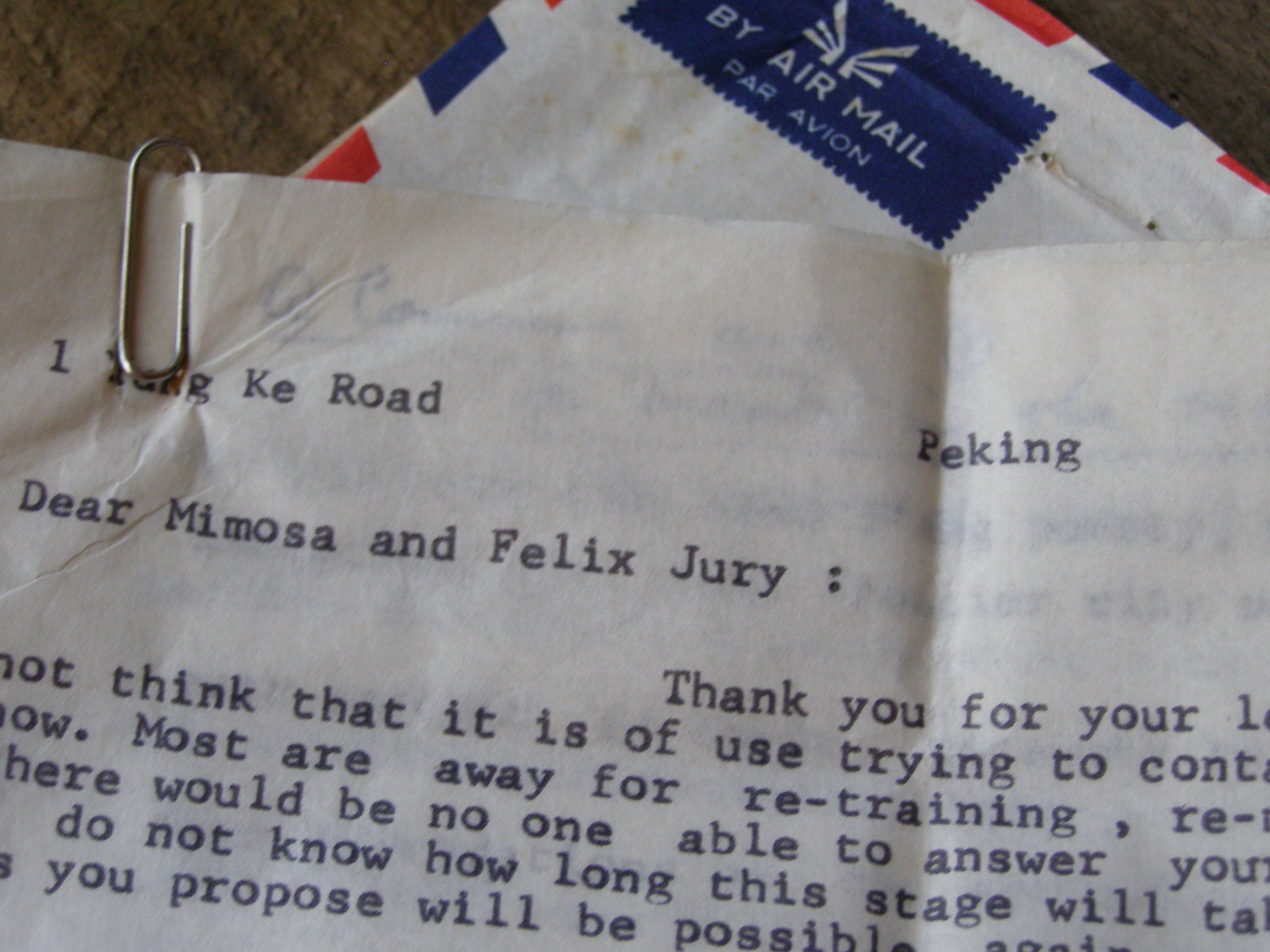
Do not ask me how Mark’s mother, Mimosa Jury, ever found an address for Rewi Alley in Peking, as it was still known back then. But find one she did and that can not have been easy, given that she was writing to Alley in 1970 when the Cultural Revolution and the rabid ideology of the Gang of Four saw his position as a foreigner in a closed country more precarious than at any other time of his life. Knowing the late parents in law as I did, I would guess that Felix was trying to get access to some of the special plant material which, even then, was known to be native to China but still not introduced to the west. Mimosa was a thwarted researcher by nature so she would have taken on the task of ferreting out the information. Together, they were going to bring Camellia Diplomacy to China and open doors.

Rewi Alley’s reply is dated October 11th, 1970. His first paragraph speaks volumes about the good nature and resignation of somebody already in his seventies with strong humanitarian principles, politically left wing and taking the long view.

“Dear Mimosa and Felix Jury:
Thank you for your letter about Camellias. I do not think that it is of use trying to contact cadres of institutes now. Most are away for re-training, re-moulding, and politics, so I do not know how long this stage will take, or when such contacts as you propose will be possible again.”

He follows this with a paragraph professing to share their interest in camellias, though it is pretty clear that this is more courtesy than fact because he really doesn’t know anything about them, except for one interesting observation: “… it’s seeds are valuable for food oil. Many counties, especially in the South Kiangsi, are completely dependent on the seeds for their food oil supply. Possibly the olive would give more oil seeds per mou than Cha Shu (the camellia), but then Cha Shu grow wild all over the hills and can be helped to spread.” Best guess is that he is talking about Camellia oleifera, although you can also extract edible oils from other camellia species. This was news to me. Should the end of the world as we know it arrive, we may be self sufficient here in cooking oil between the camellias and our solitary olive tree.

But Alley’s heart lay in reafforestation long before we in the west started to worry about global warming and conservation. He writes with conviction of the pressing need to reclaim deserts, like those of Sinkiang and he enclosed a typed copy of an article about a 1950s reclamation project in the north western area of Liangchow or Wuwei. The article is not attributed but I would guess that it is one of Alley’s own (he was a prolific writer). Globally, it would be hard to find areas with more inhospitable and harsher conditions than the northwest of China. Think of the well known Gobi Desert, though it is in fact the Tengri Desert he writes about – dry, windswept and bitter cold in winter while summers are dry, windswept and hot.

I would assume that the deforestation of China, which is referred to as having taken place over centuries, happened because the population depended on timber for both building and cooking but gradually population growth led to greater demand which outstripped the ability of forests to regenerate. Once denuded of its former cover, the land loses its top soil, floods become more frequent and there is nothing to stop the desert sands from blowing in. From time to time we hear about the spreading of the deserts in Africa but in terms of land mass degraded by encroaching desert, China has the worst problem.

Reference is made to “a low bushy tree, the sand date, locally called the ‘hero of the desert’ because it grows almost everywhere”. The sand date may be hardy but it took three attempts to get it growing, involving digging holes three feet deep (a metre deep is a huge hole to dig for every tree), carting in top soil and watering regularly – all done manually in the early 1950s. Water of course had to be carried with buckets on poles, presumably quite some distance. I tried to find out what the sand date was because it didn’t sound like the date palm which grows in marginal areas of North Africa. It is more likely to be the Chinese date or Ziziphus jujuba.

Aside from the details of this early and apparently successful small effort to hold back the desert, the political context is equally fascinating. Reading between the lines, the original letter sent from Mimosa to Rewi Alley must have mentioned something to do with forestry and described it as being beyond politics. New Zealanders, in those days, tended to see politics as a separate entity altogether with little impact on daily lives (how often did we used to hear the cry that sport has nothing to do with politics?). Rewi Alley was not having a bar of that. Not for nothing had he spent his life working for change in China. He was very much a mouthpiece for the new order of Maoist communism.

“Politics teaches why and for whom a thing is done. If the people can best be served by forests which will prevent floods and drought, then we have forests allright. And national effort is spent in getting them. Which means that it must be a mass movement, and to generate a mass movement, we must have politics. Which is seen here as the task of the government – to so raise the consciousness of people that they activate their minds and hands to carry through the job in hand.”

Consider yourself told. It may be that totalitarianism is a more effective means of countering deforestation and global warming than unfettered free enterprise and market forces. And we should continue to remind ourselves that in New Zealand we have just as a poor a record of deforestation. We are just lucky we don’t have deserts moving in.

There are no shortcuts when it comes to notable trees in the landscape

A great grandfather's legacy - the canopy of rimu trees planted in 1880 as a shelter belt.

A great grandfather's legacy - the canopy of rimu trees planted in 1880 as a shelter belt.

New Zealand is a windy country. It seems self evident but it wasn’t until I started travelling overseas that I realised that the wind we have learned to live with here is not the experience of many. But you just have to look at a map and see our long thin islands surrounded by vast bodies of ocean and it is hardly a surprise that we have on shore winds, off shore winds, winds from the south, the north, the east and the west. It is the norm and consequently shelter belts in rural areas are also part of our landscape. Australians have commented to me about the predominance of clipped hedging in our garden landscape too and a lot of that has to do with minimising wind.

Many readers will be aware that hedges and plants are better at dissipating the blast of wind than a solid barrier. Walls and fences can funnel the wind up and over, protecting only the area in the immediate lea of the barrier because the air then flows down again. Even then, you are only protecting for the height of the wall so any time a plant gets its head above, it catches the full blast.

But it is not hedging for urban gardens that I have been thinking about, rather the benefits of a bit of creative thinking and plantsmanship when it comes to utility shelter belts. Here we benefit greatly from the vision of Mark’s great grandfather when he settled here 130 years ago. Presumably Tikorangi had already been cleared of most of its native tawa forest cover because the first thing Thomas Jury did was to get in and plant some shelter from the prevailing winds. Those trees give us our stately garden avenues today and we have learned much from looking at them. The more spectacular is the rimu avenue, often likened by visitors to the effect of a vaulted cathedral ceiling. Now those trees give us an environment which is one of the most special areas of our garden – and as it has taken well over a century to reach this stature, it is not easily replicated.

Our other avenue comprises mere pine trees, but pines of huge grandaddy stature – towering over 40 metres high and a mixed blessing. At ground level they give us wonderful gnarled old trunks, again in rows because of course they started life as a shelter belt. Above is a little more problematic with falling pine cones and a few swinging branches but nobody has been injured so far. Both avenues continue to perform their initial function – they break the wind and shelter the garden.

How many of today’s shelter belts will still be around in another century? And how many are planted in trees with the potential to add significant impact to the landscape? Leightons Green, phebalium, nasty yellow conifers or pittosporumns … I don’t think so.

After 130 years, our Pinus muricata are somewhat more compact than the P. radiata windbreak trees of the same vintage.

After 130 years, our Pinus muricata are somewhat more compact than the P. radiata windbreak trees of the same vintage.

It is of course Arbor Day tomorrow and that is a good time to make some shelter belt resolutions. These wind breaks do not have to be 100% cheap, utility and uniform. Dropping it to 90% cheap, utility and uniform is fine and there is the opportunity to use these shorter term plants of little or no aesthetic value to act as nurse trees for the long term landscape trees. For who will plant the rimu, totara, araucaria (Norfolk Island pines, monkey puzzle and the like, along with our own kauri), picea, abies, tawa, beech, oaks and other splendid trees with the potential for stature and longevity? As the size of town sections grows ever smaller, the need to continue planting potentially large trees in positions where they have the opportunity to reach maturity becomes correspondingly more important. Owners of lifestyle blocks have a chance to make a significant long term contribution and leave a worthwhile legacy if they just plant some decent trees. It is all very well thinking farmers should do it. Some do, but you can’t just plant trees in paddocks which are grazed. Trees have to be fenced off and that is very expensive and fiddly on a large scale. By their very nature, shelter belts are double fenced and planting is the easy part.

When it came to our own roadside shelter belts some fifteen years ago, Mark went for the mixed and layered approach. Quick, cheap cover came from expendable alders. Long term landscape trees are mostly kauri, rimu and totara, planted perhaps for our grandchildren and great grandchildren. Then, because we don’t have to buy the plants, seasonal impact has been added with magnolias – both showy deciduous types and larger growing evergreen michelias. The final layer is the roadside camellias – larger growing varieties surplus to garden requirements. They are a bit of a seasonal statement, some of our shelter belts, but also practical and planted with an eye to the long term future.

Many years ago, I wrote a column advocating that every person should plant at least one good, long term, landscape tree in a position where it has the chance to reach maturity. I recall two responses. The first was: “What, only one?” Fortunately a few will plant many but that only compensates for some of those people who will never, ever plant a decent tree in their entire lifetime. The second person castigated me for being too honest about how large a large tree will eventually grow. “We will never sell any if people know how big they can get,” she said.

In my books, landscape trees are large, handsome and long lived. These are not to be confused with pretty but low-grade, short term, quick impact trees favoured in most home gardens – the Albizia julibrissin, flowering cherries, robinias and their ilk. As a general rule, fruit trees will never make a landscape tree either. By definition, any plant with the telltale words compact or dwarf in the description will lack stature.

Our country is still somewhat raw and utility in our approach to trees. To many farmers, they are a waste of valuable grazing space and they get in the way of machinery in this heady world of high production but green desert farming. To many town dwellers, they block views and are messy. In a country with a tendency to cold houses, the shadow they cast is another black mark. Any tree of stature is measured in terms of timber potential, not landscape value. Compare that to the pride taken in the UK with their champion trees – those specimens judged to be the largest of their type in the country and awarded accordingly and in Europe where trees of ancient pedigree are venerated. I have seen the plane tree, now some 2500 years and definitely ailing, beneath which Hippocrates apparently sat to write the Hippocratic Oath. We have a long way to go yet here. Arbor Day would be a good place to start.

Rimu trees from 1880 in the background, mixed plantings from 1950 to now in the middle ground

Rimu trees from 1880 in the background, mixed plantings from 1950 to now in the middle ground

A Worm's Tale

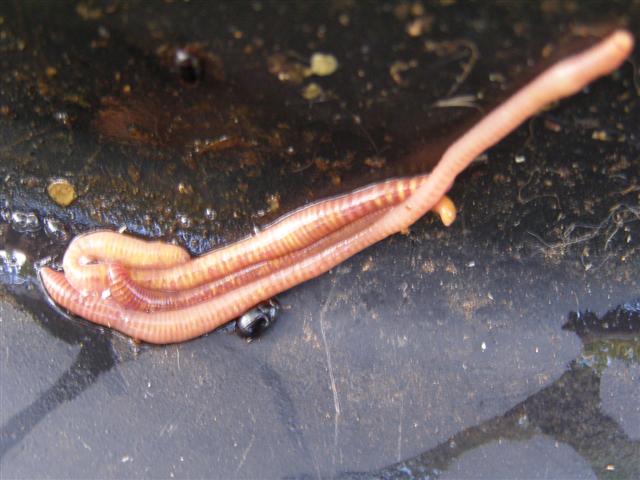
Presumably called tiger worms because of their stripes, not their size or ferocity

Mark has been having fun with tiger worm jokes. Tiger worms are what you commonly have in your worm farm and they are voracious devourers of vegetative waste. But we found in Radio New Zealand’s archives an interview from last year where Kim Hill interrogated her gardening guest on a range of topics including aforementioned tiger worms. Said guest was badly out of her depth although she knew a smidgen more than Kim (who is clearly no gardener) so she survived on a degree of bluff. But the suggestion that you want to try and keep your tiger worms in your worm farm and that if they escape to your garden they may eat your root vegetables (as in, they may have eaten Kim’s missing radishes) had us snortling in derision. Yes snortling – that is a combination of snorting and chortling.

Mark has taken to issuing warnings. Round up your tiger worms now and corral them back to the worm farm. Tiger worms are so-called because they have jaws with sharp teeth. The reason why you should never put meat in your compost is because the tiger worms develop a taste for it. Haven’t you heard about the elderly gardener who tripped and fell by her worm farm and all they found was a skeleton after the tiger worms had finished? Licences are about to be issued before you are allowed to have tiger worms on your premises and an inspector will ensure that you have them suitably housed and restrained.

The bottom lines are that while tiger worms are entirely suited to worm farms, they can be found elsewhere in the garden. Worms only process dead and decaying matter, not living plants. They have no teeth and jaws to chomp into your root vegetables. Slugs, snails and weevils will attack your plants but the faithful garden worm will not. There are many different types of worms and some, like the tiger worm or Eisenia foetida, are designed to accelerate the process of composting. Others prefer to live deeper in garden soils and these are the ones who help to aerate the ground by burrowing. A garden full of worms is a sign of good soil health and to be valued. If you spot the somewhat striped tiger worm in your garden soils, it is more likely to be an indication that you have a humus-rich layer of mulch on top.

I am sure it is a hard enough life being a worm without being accused of eating the vegetable crop. It is, by the way, apparently a myth that if you cut a worm in half, both halves will survive. They merely wriggle and die. While a worm can survive losing a bit off the end of its tail, it is not quite as resilient as many of us were brought up to believe. Oh dear, I wonder how many humble earth worms we gardeners sever in their prime or are we liberating them from life’s mortal coils?