Category Archives: Abbie’s column

Week six of lockdown already but gardening continues

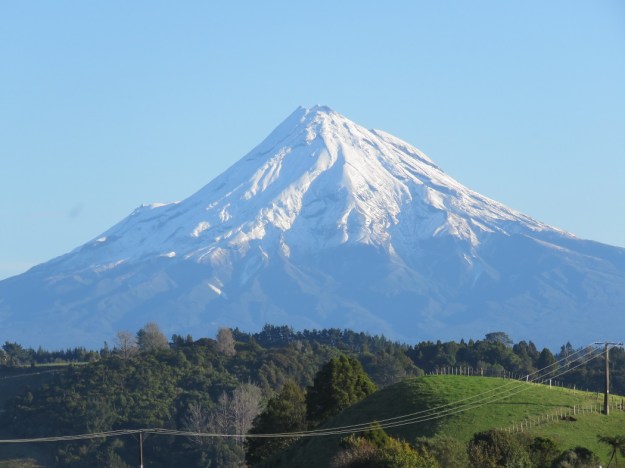
Te mounga – Mount Taranaki – with its first major snowfall of the year this week

The first wintry blast struck this week and our mounga has put on his winter coat. In our part of NZ, these early cold blasts are generally brief – two days this week – and we are now back to mild, calm and sunny autumnal days. This settled weather can often continue through until the shortest day, which is only six weeks away now, when we settle into proper winter. By mid August we will warm up again and spring will be here so we mustn’t complain about a full-on winter that only lasts about 7 or 8 weeks.

Flooding in the sunken garden soon after the upper garden beds were removed 
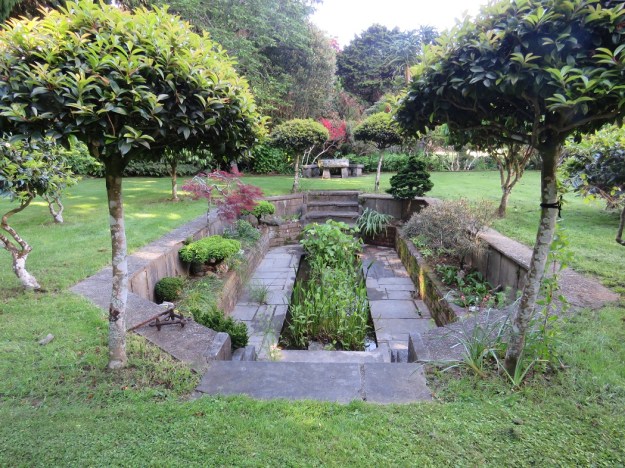
Flooding has not been a problem once the grass was well established

Eighteen months ago, I wrote about the unexpected consequence of flooding the sunken garden when we stripped out the surrounding garden borders that had clearly soaked up the rainfall in the past.  Fortunately, we did not rush into major work to rectify the situation because it turned out to be temporary. When the grass was fully established, the flooding issues disappeared. It is an interesting lesson in the importance of vegetation – even just grass – in preventing water run-off. Presumably all the roots create small channels, enabling the water to be soaked up by the ground where it falls. Bare soil is not good. It is a shame that the Council has never learned this. They still send out contractors to spray the roadsides, under the delusion that bare, denuded road verges channel the water away quickly, solving flooding issues. All it does is concentrate the flooding issues at the lowest point and prevent the ground from absorbing and filtering the water long before it gets to that lowest point.

Stipa gigantea – I removed maybe six plants from this section to give the remaining ones room to spread to their natural form

I have also been thinking about the lessons I am learning in the new grass garden. Even with quite a bit of gardening experience, I thought I was planting at final spacings in the new grass garden when in reality, I was planting for immediate effect. I am now going through removing overplanting – just about every second Stipa gigantea at this stage. Many plants, especially grasses, look better to my eyes when they have their own space without competition. It is then possible to enjoy the shape of each plant rather than the massed effect where shapes become enmeshed. Maybe next time, I will have learned enough not to repeat the same mistake of overplanting. It is even more important with trees and shrubs which are not as easy to thin as perennials.

Lloyd is back!

As we dropped down a lockdown level to 3*, Lloyd was able to come back to work. Physical distancing is not a problem here. I was very pleased to see him back. I do not drive the quad bike or the tractor – nor indeed the fancy lawnmower – and cannot manage a trailer so cleaning up after cutting back and clearing areas is much more problematic without him. With both his wife and son-in-law being medical professionals, he is extremely mindful of safe practices and the dangers of getting careless with regard to Covid, so we feel quite safe about him joining our home and workplace bubble.*

(*For overseas readers: we have our own Covid vocabulary in NZ and, thanks to the very clear communication from our prime minister, we all know exactly what bubbles and levels are and we have swapped out ‘social distancing’ for the more accurate ‘physical distancing’. With daily Covid cases down to one or two only, some days none at all, we are on track to eliminate the virus from our shores as long as we maintain border controls and quarantine. What happens longer term is as yet unknown but in the present, we are still alive and well, bar a few unfortunates.)
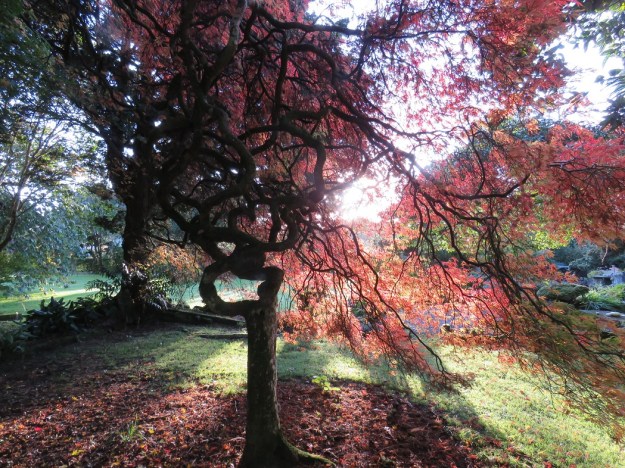
An autumn morn this week

Can I give a shoutout to our travel agent and the company she works for – Hello World? Against all expectations, she negotiated a full refund of both our long-haul airfares on Qatar Air and the travel insurance we took out for our cancelled trip to Greece and the UK. The money appeared back in our bank account yesterday. This was by no means a sure thing and many others have been left with airline credits, heavy penalty fees and financial loss. I am deeply relieved. None of us know when the world may open up again but in the medium term, we have our fingers crossed that the border with Australia may open soonish so that we can see our three children and grandson again.
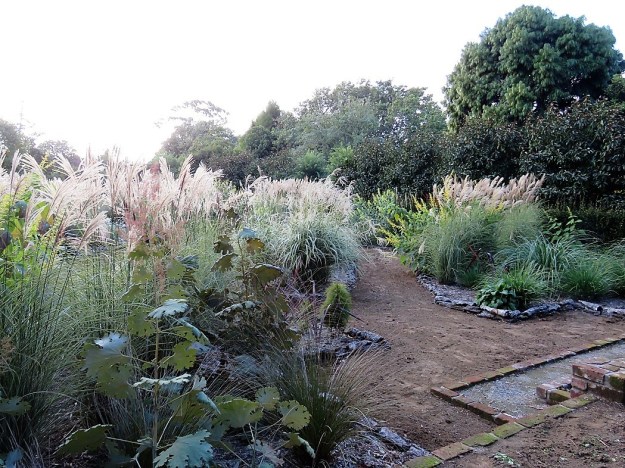
One year on – the Court Garden

April 25, 2020

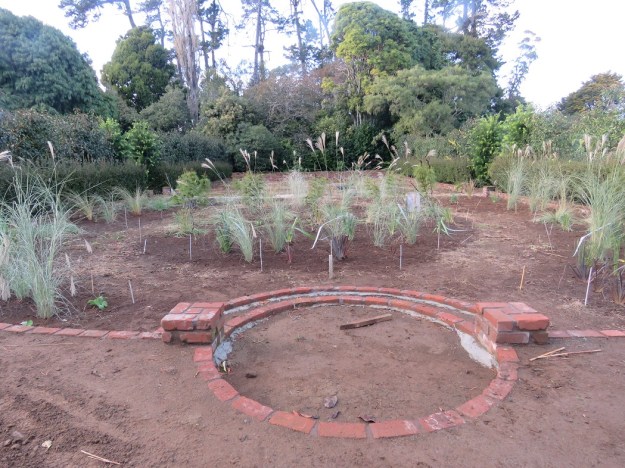
I say one year, but that is from when I first started planting the new grass garden. Much of this is only eleven months. I took this photo last Saturday, April 25.

May 16, 2019 

May 16, 2019

These photos, taken from either end, are dated May 16, 2019. We still haven’t filled the steps or laid the path surfaces but the plant growth has been phenomenal. New ground – plants love new ground. I expect the rates of growth to slow.

I planted at what I intended to be final spacings and there is only one section that I have put in too closely and will need to reconsider. The rest, I think, will be fine for some time. Mark would like more flowers so I am working in a bit more colour as I find plants that I think will be able to compete. The giant Joe Pye Weed (Eutrochium purpureum) which the bees and monarch butterflies love is the next to move in.
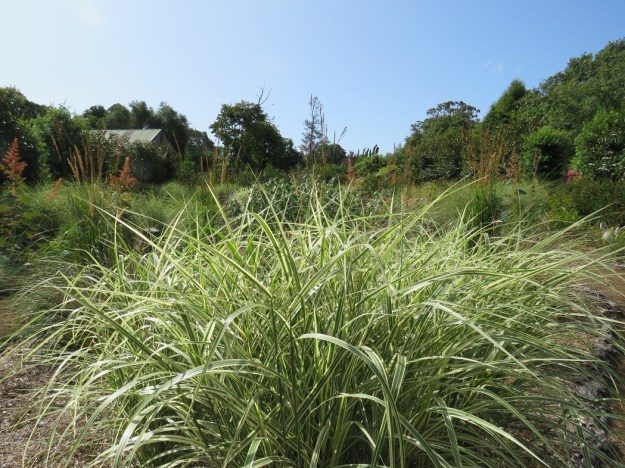
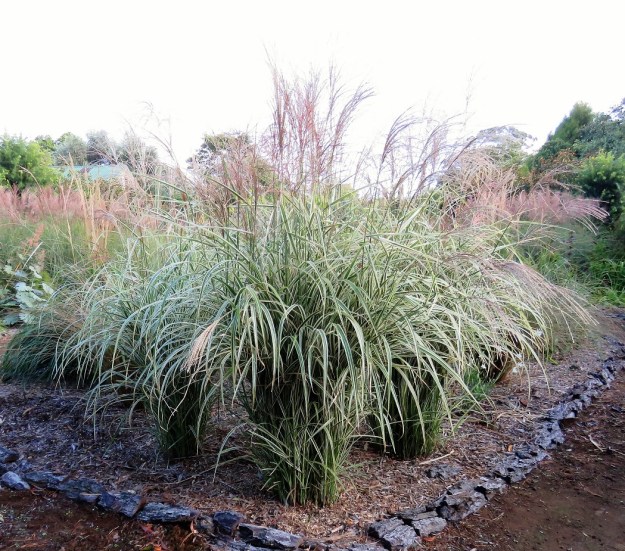
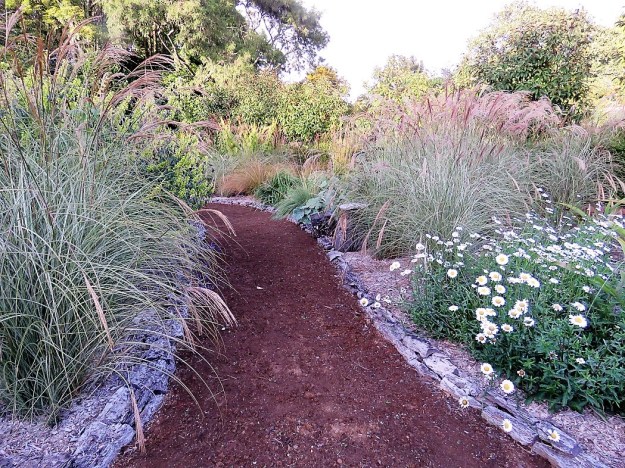
I was worried that I had too much Miscanthus ‘Morning Light’ until I took a closer look this morning. There are only four waves across the whole garden and I don’t think that is too much. It is just that it is very dominant at this time of the year. It is a brilliant tall grass and only throws up a few unwanted seedlings.

Big miscanthus flopping after only 10 months 

All it took was three lengths of jute string to restore order and form

A friend gave me a larger growing form of miscanthus, similarly variegated but with a wider leaf. It was too large for her and fell apart too readily. It is an excellent looker but I worried when even the fresh divisions started to fall apart and flop onto the paths as early as January. I don’t want plants that I have to dig and divide every year. The solution was simple. I tied a string around each clump, just a length of anonymous jute string that is not visible. A five minute job solved the problem.

I would like more large grasses for variety but have failed to source additional options so far. They are obviously not that popular in this country. I looked at Miscanthus ‘Zebrinus’ which is available and rejected it. The variegation looks too much like spray damage to me.

For those of you who are interested in grasses, I offer this update on performance of others I have used:

Chionochloa rubra (our native red tussock) is brilliant. My favourite grass of all. It needs space around each plant so that its attractive fountaining habit can be admired.

Chionochloa flavicans is often described as a miniature toetoe though it is a different family. I had a lot of trouble getting plants large enough to survive sustained attack from rabbits. Mark has shot 34 of those cursed bunnies so far this summer and most of the plants are now large enough to withstand future attacks. If you can control the munchers, it does indeed look like a small toetoe in flower though it is pretty anonymous in leaf and form.

Proper toetoe are now classified as austroderia and I think it is A.fulvida that I sourced through Trade Me – the only three plants I had to buy for this whole new garden. They have grown ten fold since I planted them but that is fine because I gave them space. I am looking forward to their flowering next year.

Stipa gigantea (Golden Oats) – an attractive enough grey-green, fine-leafed grass but the main appeal is their ethereal, large flower heads on tall spikes. The wretched sparrows took out every one of the main flowering but they have persevered and continued to put up new flower spikes. It appears to be sterile.

Miscanthus, as mentioned above, is a key feature and the only fully deciduous grass I have used. We started with just one established plant which was elsewhere in the garden and I have lifted and divided it over three years to get as many as I want. It doesn’t need to be divided that often but I wanted more plants.

Calamagrostis ‘Karl Foerster’ I took out of the twin borders because it is too rampant. I thought it may be fine in the more spacious grass garden but it is too rampant. It is beautiful when it puts its flowers up in late spring but it is altogether too strong, spreading rapidly with its expanding root system. I am thinking I will take every second plant out this autumn and look to replacing it altogether as soon as I find a less vigorous alternative.

If any readers have other suggestions of tall grasses that are available in NZ, I would be pleased to hear.

Meet Albert

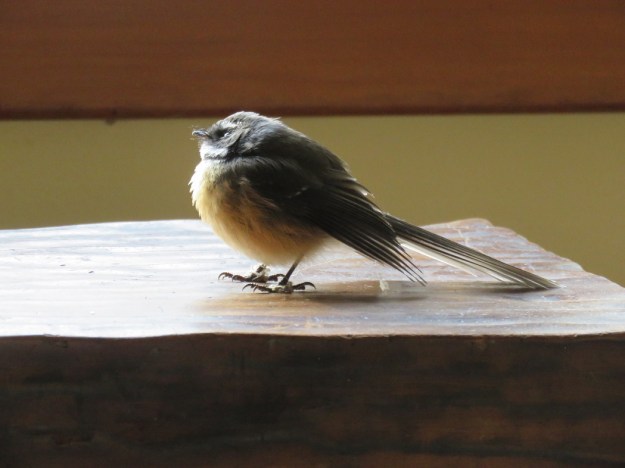
Albert the piwakawaka

May I introduce you to Albert – about 8 grams of chattering, feathered confidence? Albert has learned that the laundry door is left open during the day (in order to allow easy passage in and out of the house for our increasingly geriatric dog, Spike) and he has taken to popping in and out of our isolation bubble during the day. So confident has he become that I no longer have to open windows and shut doors to enable him to get out. He knows the way in and out and comes and goes at will.

It is hard to photograph them with their fan tails fully extended because they are such active flibbertygibbets

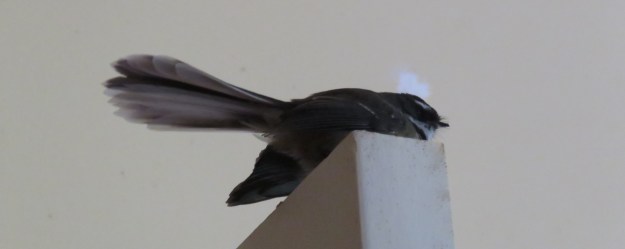
Albert may of course be Albertina. I tried searching how to tell a male piwakawaka from a female but failed to find anything definitive. The common name for these little native birds is fantail, on account of their tails which they hold out as full fanned fannies, really. They are notoriously difficult to photograph, being hyperactive, so these photos show just how chilled out Albert is indoors.

He likes to announce his arrival by chirruping noisily. Rating the decibels generated in proportion to extremely slight body weight, this must be one of the noisiest birds on the planet. Piwakawaka are insect eaters and I think Albert finds random reinforcement from his house visits in the form of raiding small flies from the occasional spiders’ webs that have escaped my notice.

Albert contemplating cooking lessons

We have fantails in the garden all year round but at this time of the year as the autumn fruit fall and we are gathering in the harvest (grapes this week), they will often come into covered areas in search of fruit flies. It is a good thing we are not superstitious. It is common lore in NZ that a piwakawaka coming indoors is a harbinger of death, attributed to Maori mythology. In fact, if you look into it, it may be a sign of an impending death OR a messenger from the gods. In a country where the ancient myths and legends are based entirely on oral tradition, there is a fair amount of regional variation. We are going with the theory that Albert is either an opportunist or a benign messenger. We have grown quite fond of him and the feeling appears to be mutual, as much as 8 grams of feathered determination can demonstrate bonding.

For scale, this is Albert in the the TV room. 

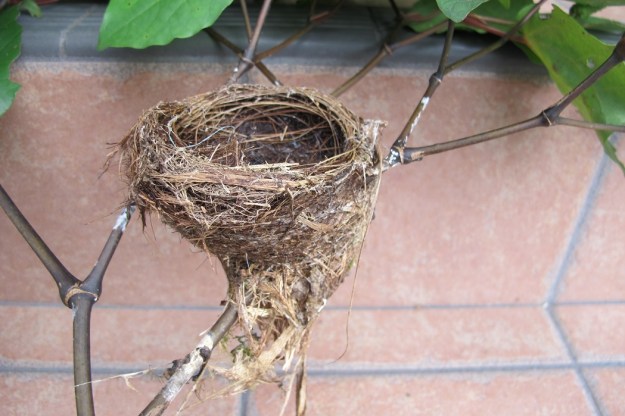
And a fantail nest from my files

When is a wild garden too wild to be comfortable?

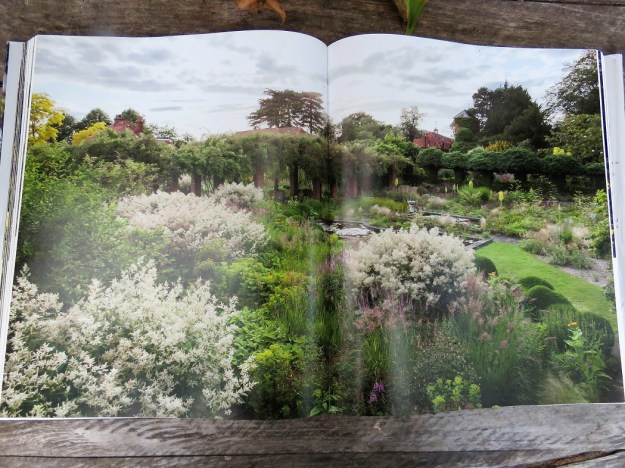
I have never written about Waltham Place in Berkshire that we visited in 2014. To a large extent that is because there was a total ban on taking photos there – I have no idea why. But also, we weren’t at all sure when we walked out of the garden if we had just seen something cutting-edge as claimed by some or whether it was a case of the emperor’s new clothes. The fact that we are still talking about six years later suggests the former – that it was indeed sufficiently cutting-edge to challenge our preconceived notions.

Resorting to photographing photos in a book….

I couldn’t find photographs on line that were available for reuse though you may wish to google the name and see more for yourself. I had to resort to photographing pages from ‘The New English Garden’ by Tim Richardson. These images are a fine example of how structure photographs well and gives form and solid shape to a scene that may not look quite the same to the naked eye. Make that ‘does not look the same to the naked eye’. This garden pushed the concept of naturalism further than we were comfortable with and it was considerably wilder, or rougher, than it appears in photos.

Thinking about it again recently, I figure it took the conventions of what I call the pictorial English manor style of garden design and turned them on their head. Most, if not all of the structure pre-dated the current garden and that suited the style of Dutch designer, Henk Gerritsen. He was heavily influenced by the famous Dutch landscape designer from the preceding generation, Mien Ruys with the philosophy of ‘a wild planting in a strong design’. Gerritsen was attracted to wild plants and his approach was to utilise many wild plants – what are often referred to as weeds. Memorably, his willingness to use plants like burdock, docks, teasels and bindweed (common convolvulus) in decorative situations is disconcerting. He was good friends with Piet Oudolf – these days crowned the undisputed king of the New Perennials movement – and drew on at least of the garden plants that Oudolf had picked out as excellent options but pushed his gardens right to the wild, most naturalistic end of the spectrum. Oudolf is far more controlled and painterly in his use of plants.

From ‘The New English Garden’ by Tim Richardson

The twin borders also use strong design which looks far more effective viewed from above than at ground level – and indeed the main upstairs rooms in the house look down at them. At ground level, I remember them being very brown. This was not a pretty garden.

Although Gerritsen’s interest in plants started with looking at wild flowers in their natural habitats all over Europe over a period of quite a few years, his palette of plants had far more to do with wild plants naturalised at Waltham Place. I can not say that we recall much botanical depth in terms of drawing on many of the remarkable wild flowers especially bulbs, that occur in those parts of the world. It was more of an intellectual exercise looking at the plants used within that garden situation where it becomes survival of the fittest with a very light hand indeed on garden maintenance. So, as a garden, it lacked two of the elements we value highly – botanical curiosity and some level of prettiness and beauty in plant combinations. It is a garden that needs to be viewed through a different set of glasses altogether and we only partially succeeded at that. We did at least leave with an open mind.

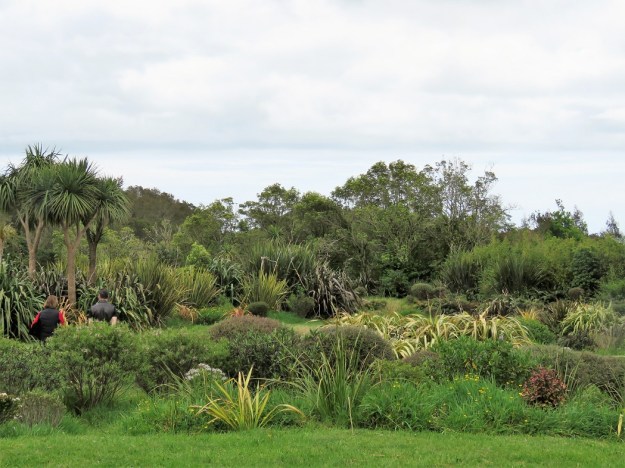
Sunset Garden near New Plymouth

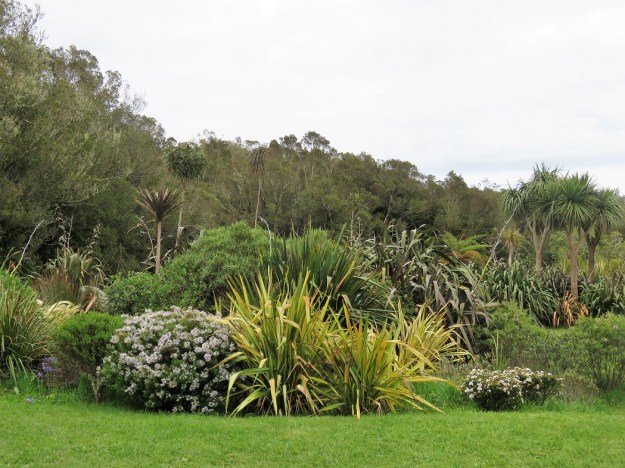
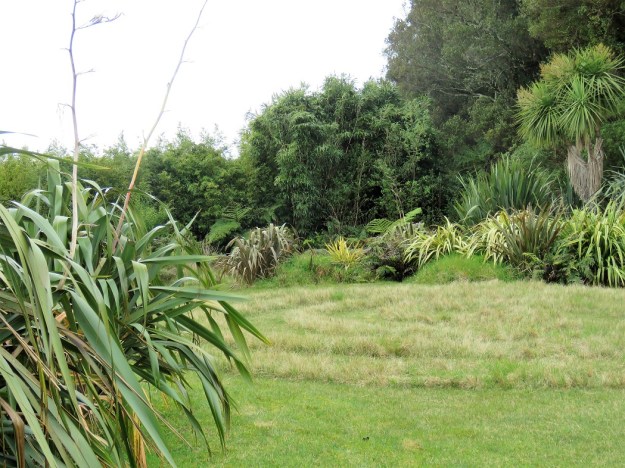
As New Zealanders, these wild plants are introduced and often invasive weeds in our country. It is a bit different when they are in fact native to your land. Maybe we would feel more comfortable with this style of gardening were the emphasis on our indigenous plants. In fact, I have seen it done locally in Sunset Garden, I think it was called, on a chilly site set with some elevation on the flanks of our local mountain. I believe the site was once the home of the local naturist club before they moved to a warmer location down by the sea. That garden certainly had a charm of its own, albeit with zero hard landscaping and a light hand on maintenance but some may struggle to view it as a garden in the usual understanding of the word.

Sunset Garden again

It is all food for thought when we consider how our garden practices fit in to the wider environment, what we value visually and our relationship with nature.

Finally two quotes from Henk Gerritsen which, I think, come from his renowned Essay on Gardening, published just before his premature death in 2008. I haven’t bought it yet (it is a book length essay) because I haven’t psyched myself up to spend $120 on a book with black and white photos:

‘What is straight, should be curved, what is curved, should be straight. Meaning: in a garden where everything is straight, the walls or hedges around it and the path through it, the secondary landscaping should be curved: sloping or freakish paths, hedges, lawns or borders and the other way around: in a freakish or shapeless garden the secondary landscaping should be straight, in order to obtain a harmonious image.’

‘Plants that can’t live without the use of chemical fertilizers or pesticides don’t belong in my garden.’

Sunset Garden may not be sufficiently gardenesque for some tastes


Green breathing space

Informal green space at Pettifers in Oxfordshire, a private garden created by Gina Price

Have you ever walked around a garden that is so full, hectic even, that you come out feeling exhausted? I have. Several in fact, but one in particular. I don’t like to show a photo of it because while I think he may have died, I am pretty sure a number of his friends will read this. It is an affliction more commonly seen in small urban gardens where the owner is so keen that they want to use every bit of available space. And uncultivated space is seen as wasted space.

I am sure that trained garden designers are taught the value of incorporating open space – part of what is often referred to as ‘negative space’, I think. I call it breathing space – a restful area which gives respite in a particularly busy garden. But not many of us use skilled garden designers and the notion that quiet areas need as much attention in planning as actively maintained areas filled with plants and colour may be a foreign idea.

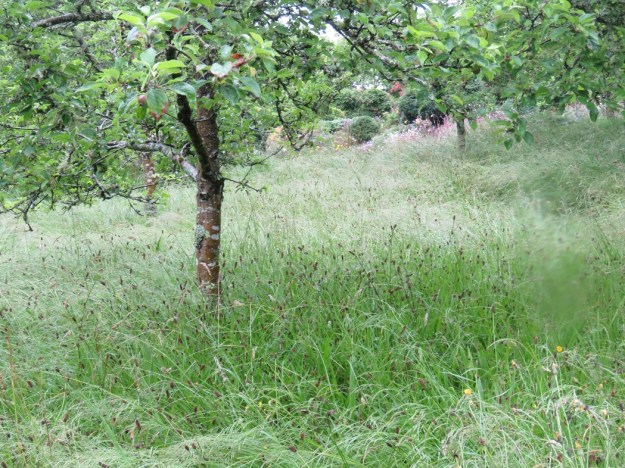
Wild green space at Hestercomb

In practice, most of us use mown grass to achieve this. When I first wrote about green breathing spaces in 2010, I clearly had not looked past the garden lawn as an option. And we still have extensive grass lawns and pathways that we mow to fill this function. Mark is missing Lloyd during lockdown here as the mowing of the grass is his role. Yesterday, Mark hopped on the new lawnmower and headed over to mow our tenants’ lawns across the road. He came back somewhat stunned at how fast the new Walker mower goes. Slightly unnerved, he was, by its top speed, comparing it to a race the mower would win if competing against a sprinting human.

Mondo grass instead of lawn

I was recently asked about using mondo grass instead of lawn grass which had me finding a piece I published in 2015, showing the use Auckland gardener and photographer, Gil Hanly has made of mondo grass to give a green breathing space in her very busy and full city garden.

Lawns have a purpose if you have children who like to play cricket or any ball games outside. We used to play family badminton on our front lawn way back when we still undertook such wholesome family fun. It is a better home option than tennis when you don’t have a fully netted court. And lawns have a function if you entertain larger numbers of people outdoors. Beyond that, they are basically green space, framing garden and landscape views, or keeping the amount of garden space to a manageable level. It is easier to mow grass than to maintain most garden areas.

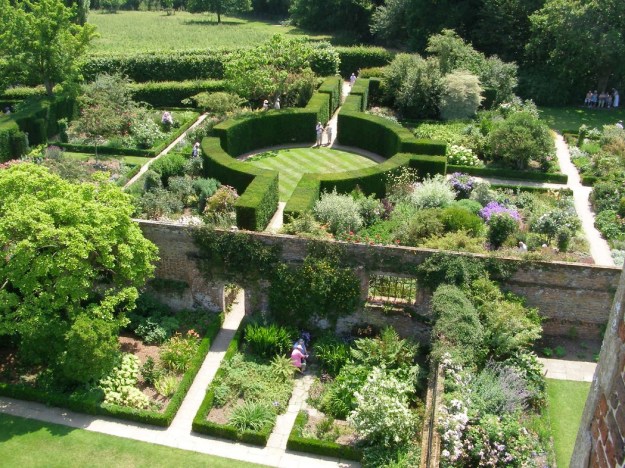
Pictorial green space as perfect circle at Sissinghurst 

Green space at Wildside 

Wildside again

But what if you have a wilder or more naturalistic garden and don’t want to mow green spaces? I found a few examples when I was going through photos for my last post. While Sissinghurst and Hidcote have very clearly constructed green breathing spaces integral to the garden, the modern gardens we have visited have their own take on the same need.

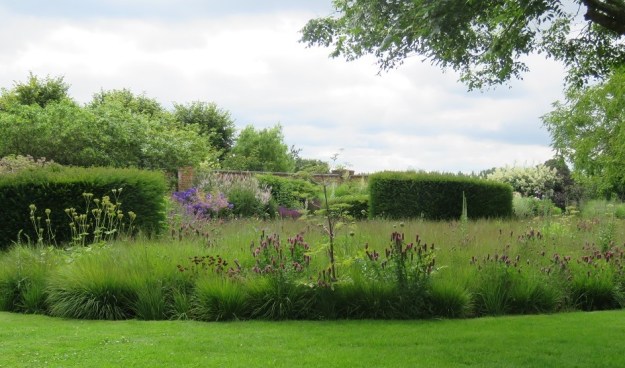
This area could have been all mown lawn but how lovely is that combination of mown grass and molinia meadow? Piet Oudolf at Bury Court

The combination of both lawns and green space in the molinia meadow at Bury Court may strike a chord with many, as it did with me. Definitely less wild, more designer-led and immaculate in its own way, it still fills the function of giving a calming experience in a complex garden.

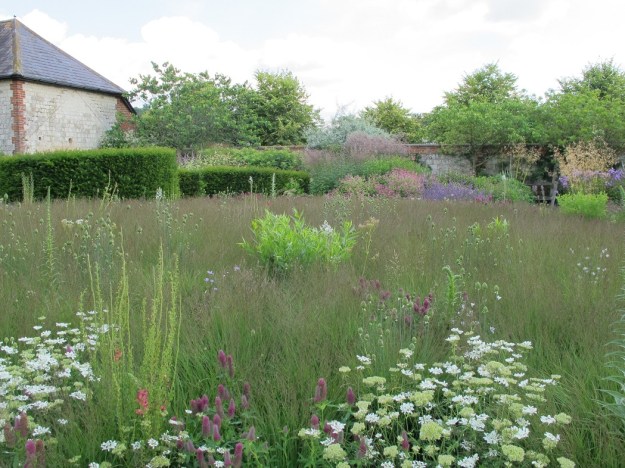
Green space doesn’t have to be mown lawn.

I find Piet Oudolf’s molinia meadows a great deal more pleasing as green space 

… than his more formal green breathing space at Scampston that was altogether too redolent of a graveyard for my liking

Easter greetings from my corner of a locked down world to all of you in your lock down locations.