
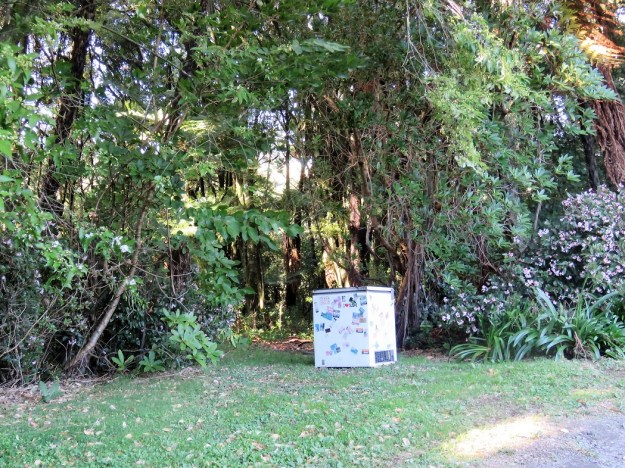
The abandoned deep freeze – a harbinger of worse to come
It was the abandoned deep freeze that first alerted us to the potential scale of problems at our rental house across the road when we arrived back from Melbourne. Why, we wondered, was it left there?
The tenant, gone AWOL overseas, had sent a friend (now a former friend for reasons that will become very clear) to move her mountain of belongings. The friend had done a sterling job getting out a fair amount – nowhere near all of it, but a surprisingly large amount. It appears that it may have been the deep freeze that tipped her over the edge. She had looked inside.
The power had been disconnected a few weeks earlier and warm, late summer temperatures had also contributed to the truly, mind-blowingly foul stench once the lid was lifted. But there was worse to come.
The deep freeze contained a dead dog. Now I hasten to add that the dog was small, had been euthanized humanely by the vet and placed in a cardboard box with a plastic flower on top. But it wasn’t in good shape. It fell to poor Mark to deal with the contents which contained not only the dead dog, but also decomposing pork trotters (even more bizarre when you know that the tenant had allegedly converted to Islam and is currently domiciled far, far away with her Islamic husband whom she appears to have met over the internet), fish bait and various other unmentionables. All had to be removed from their plastic wrappings and buried. Mark carried out this task without complaint while Lloyd and I exited the property on account of the all-pervasive stench.

The foetus tree
But a further problem awaited us. Not as gross. More grotesque. The foetus tree. I had emailed photographs to the tenant of the bewildering chaos of her remaining belongings and she replied: “I did not see the tree in any of the pics either that is in the black tub , this was planted by my mother when I was seven and it has my own babies I lost buried in it.” Unfortunately, the tree was still on the property.
What on earth is one meant to do with a tree which contains the decomposed foetuses from well over a decade ago?
The tree we identified as Cedrus deodara, maybe aurea. We used to grow a few of these commercially and I am sure that the specimen before my eyes is not the 45 years of age the tenant claimed (planted when she was just seven). Given it has had a hard life and been kept in a comparatively small pot, I would guess about 20 years. But apparently containing foetus remains. What sort of a person carts around foetuses? It is not as though she had no live births. There appear to be seven extant offspring.
We didn’t want the responsibility of this tree. Neither, apparently, did the adult children living not that far away. But knowing that it contained human remains, meant not treating it with the contempt we hold for all the other remaining detritus left for us to deal with. I consulted my locked social media account. There was unanimous agreement that we needed to recognise the tapu* nature of the tree. One friend came up with what I thought was a brilliant solution. Relocate it, she suggested, to an unmonitored burial site or cemetery and advise the tenant where it is so that she can arrange its collection. We have such a site just down the road and it is unlikely that anybody will notice the arrival of the foetus tree in its pot, for a while at least.
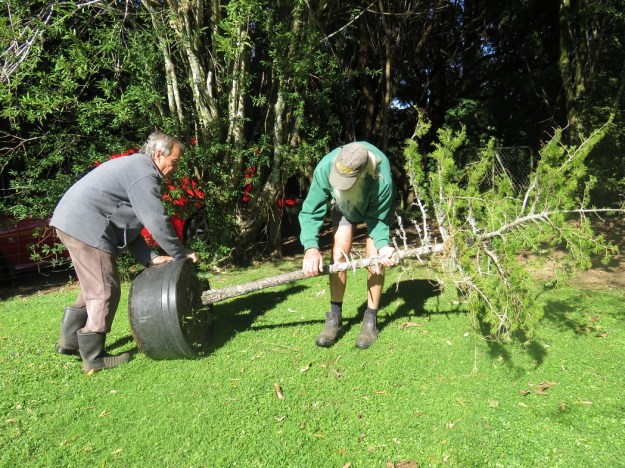
Removing the foetus tree from the property
As Lloyd and Mark loaded the heavy tree into the back of Lloyd’s ute, my heart lightened. It was a genuine relief to see it disappearing down the driveway. I went down to the cemetery later with my camera, in order to send photographs of its new location to the erstwhile tenant, that she may make arrangements for its collection.
Was she grateful? No. Of course not. She ignored my email but I heard from a third party that she was deeply offended, enraged even. I have no idea what she expected us to do with the tree. I thought we had found an elegant solution. But then the decision to cart the remains of one’s miscarried foetuses around long after their demise is also a huge mystery to us.
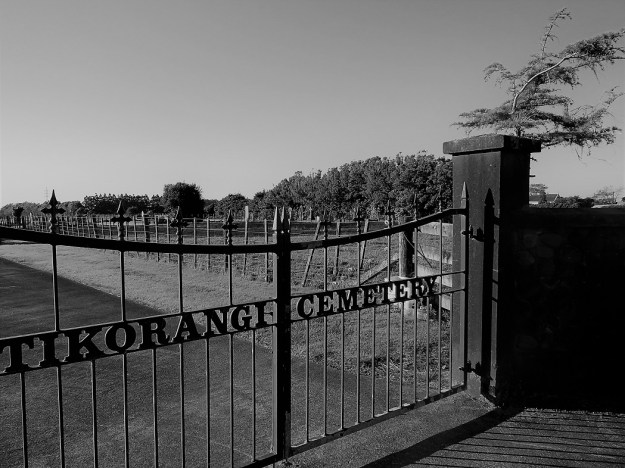
Just inside the cemetery gate, for easy collection

*tapu – sacred in Maori. Or, to be more precise: “an ancient Māori spiritual and social code that was central to traditional society, is about sanctity and respect for people, natural resources and the environment.” It is only when I am writing for overseas readers that I realise how much we have now incorporated concepts and language from NZ’s indigenous people into common parlance, with a reasonable expectation that other New Zealanders will understand.
Postscript: As Lloyd quipped that he was worried about being caught on CCTV (which is only funny if you understand the nature of very small, rural cemeteries that date back to the nineteenth century and have remained very small to this day), the irony of the sign beside the current resting place of the foetus tree brought a wry smile from Mark. 







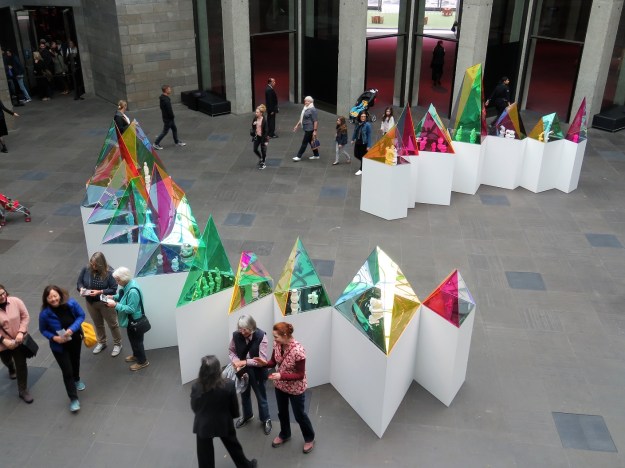 After two hot days in Melbourne last week, the temperature plummeted from 27 degrees to about 10 (Celsius). Fortunately, I had looked at the weather forecast and packed extra layers but I did wonder if I was going to have to buy myself gloves as my poor arthritic fingers complained. It was a day for indoor activities so we went to Melbourne Art Gallery instead.
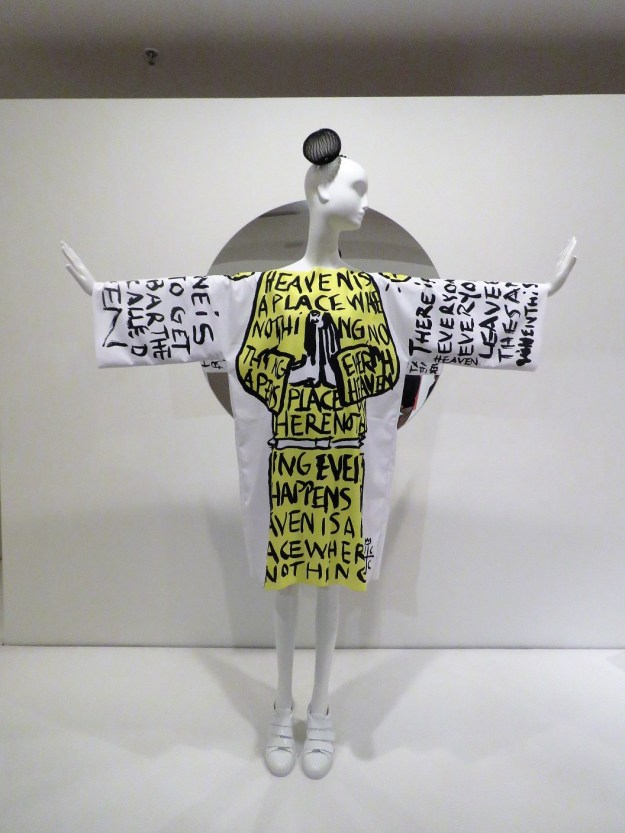 It was the final day for the Escher exhibition and the queues were enormous so we avoided that and went instead to the Krystyna Campbell-Pretty collection of haute couture and Parisian fashion from 1890 to the current day. Now, haute couture does not feature in my life, I admit that. But staging exhibitions has been on my radar from earlier in my life when I worked in an art gallery for close to five years. With over 150 outfits on display, the first rooms were simply staged to feature the gowns.

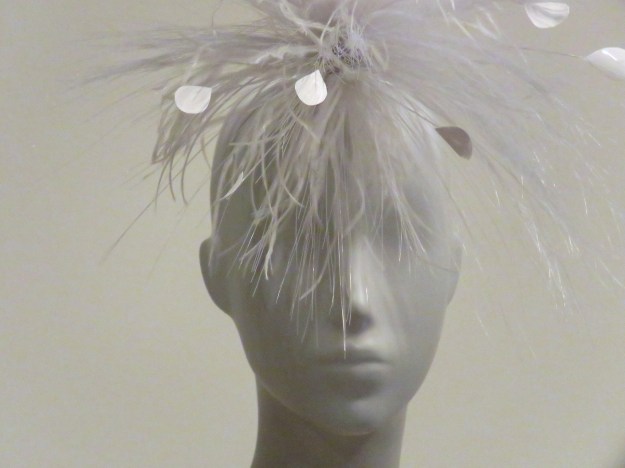 Over 150 gowns is a large number and I guess when I started photographing the models’ heads, my attention was already slipping. But then I noticed another aspect entirely. My guess is that the first gallery rooms were staged initially but then the exhibition designer and hanging assistants also found their attention straying and decided to step everything up several notches.
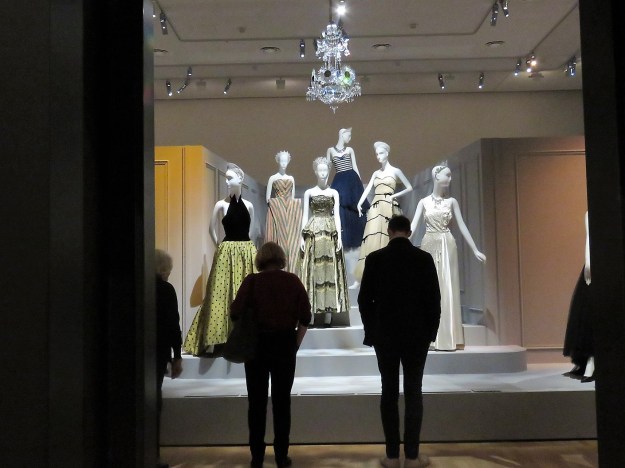 First it became somewhat theatrical in the staging.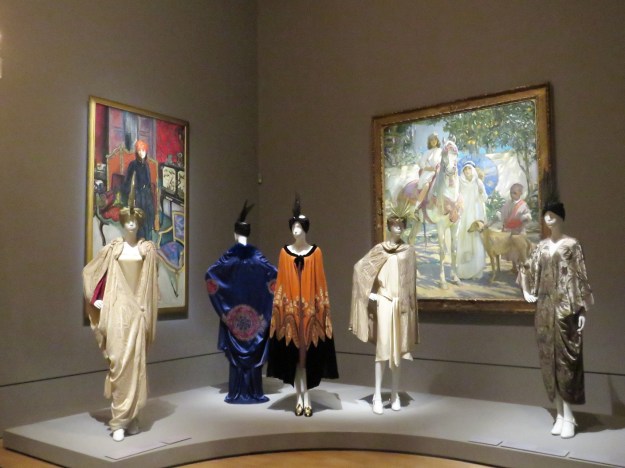
 Then we came across examples where the models and gowns were clearly matched to the paintings on the walls. They were witty but it does mean that one’s eyes naturally focus on the whole scene, rather than on the individual gowns. Which is fine, after 100 or so gowns.
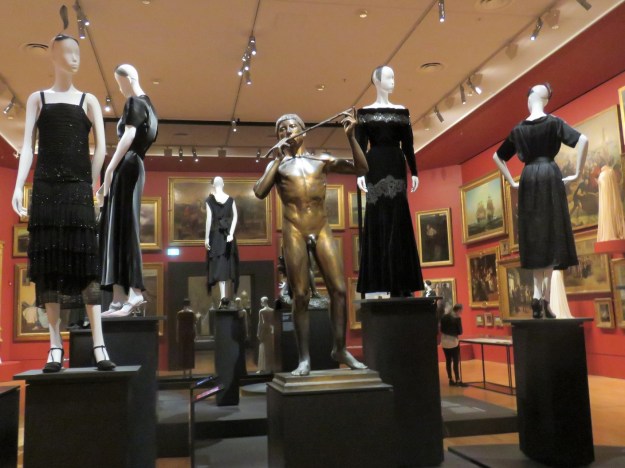 The gallery of the little black dress was Something Else. In the centre of the room, the models were staged with a collection of 3 or 4 smaller, nude men in bronze which was pretty humorous.
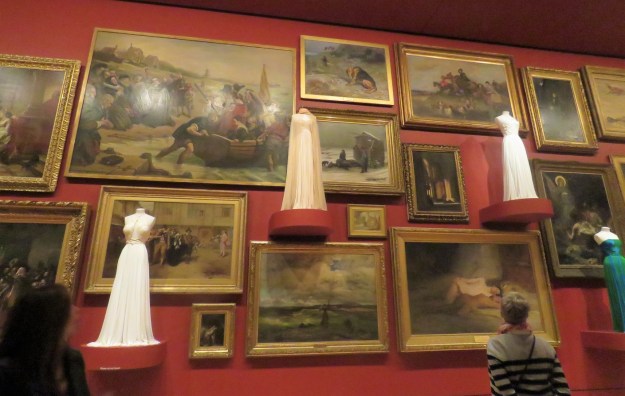 But around the walls, the gowns were arrayed on a series of rising platforms on the wall, and as they rose, the models became not only elevated, but also headless.
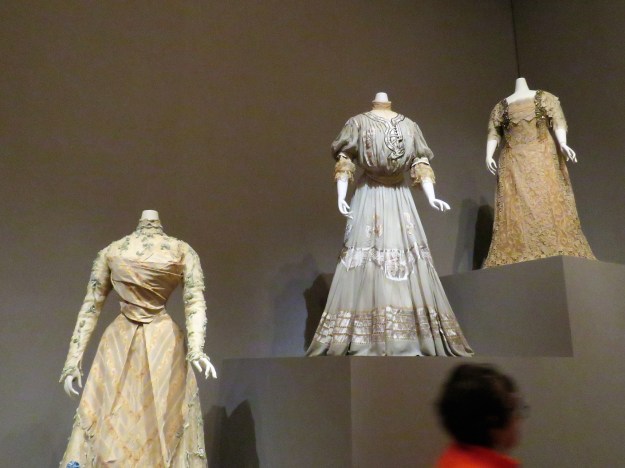 As we exited, I saw this display which had me come home and Google when bras were invented. These three gowns came from around 1890 to 1905 and the first and third gown presumably indicated the use of binding that pre-dated bras. The middle one, it appears from the shape, was for the bra-less – a 1905 afternoon gown from Marie Callot Gerber. And in case you are dying to know when bras appeared, the first models were around this time but they did not come into widespread usage until the 1930s.
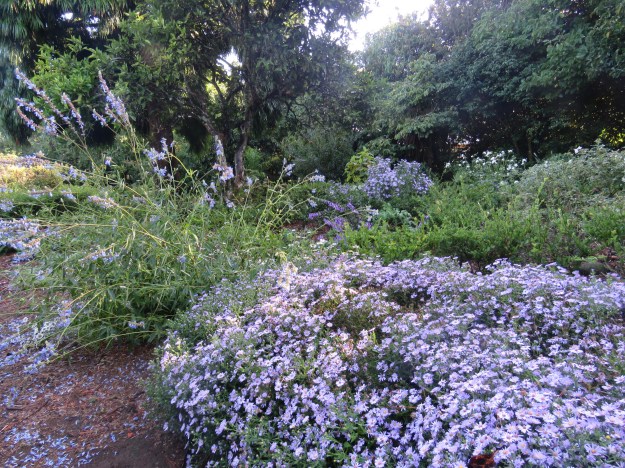
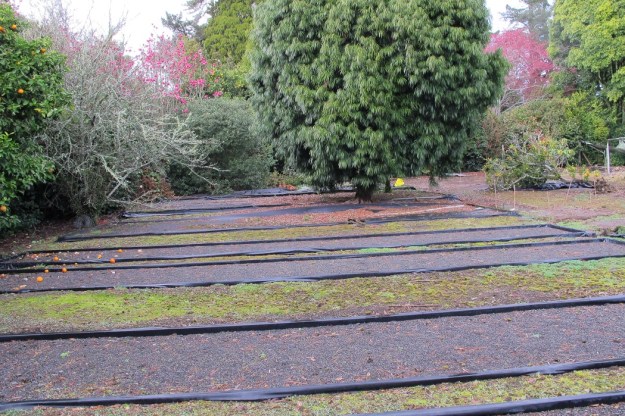
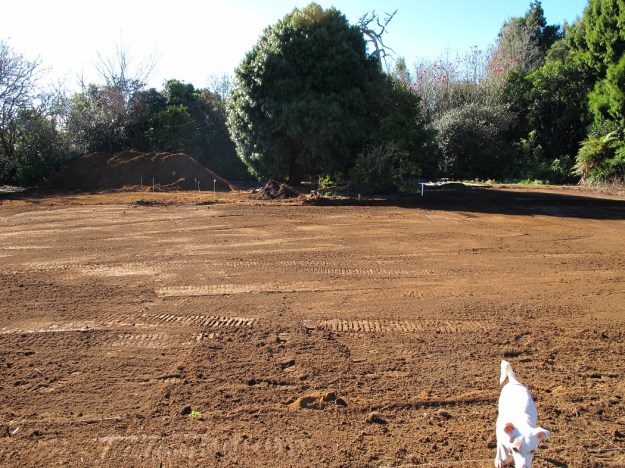
 The caterpillar garden has been bringing me much delight this summer.




 Tikorangi The Jury Garden