
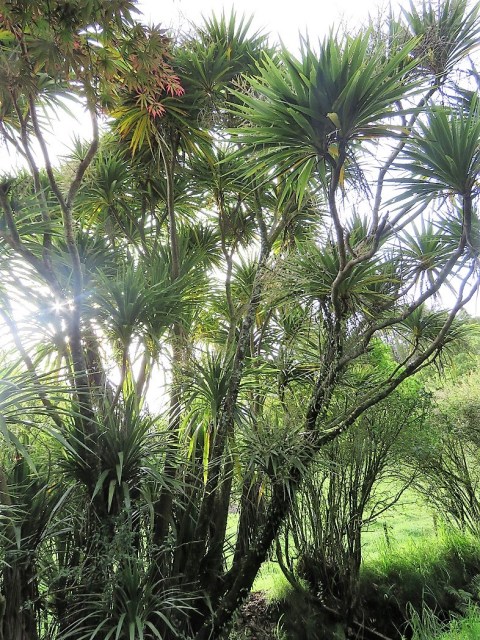
The cordyline just arrived, I think. It is growing right on stream bank at water level and I can’t think that anyone would have planted it there
We like to garden with a wide range of plants here. A VERY wide range. Not for us that prescription from some *designers* who decree a garden should have no more than ten different plant varieties in it. I can’t give the most recent reference for that because I thought it was such a remarkably stupid thing to write that I didn’t bookmark it. I guess the author was thinking of small town gardens but even so, both Mark and I would be bored stiff.
I have been thinking about the extent to which we incorporate our native flora. The purist *native garden* is not for us, nor indeed the predominantly native garden. We are too much of the complex layering, detailed planting persuasion, using an extensive range of plant material in mix and match combinations, to ever want to place that type of restriction on ourselves. But when I walk around and look, it is a surprise even to me just how many native plants we grow and often take for granted.
I figured there are at least four groups of native plants – the volunteers that just arrive of their own volition, the rare and endangered which actually owe their continued existence to the horticultural trade, the utility backbone plants that we take for granted but are actually native and the ones that are grown because they are simply great ornamentals in their own right.
A note about naming: in NZ we know most of these plants by their Maori names. While there aren’t too many truly bi-lingual speakers in this country, our every day language is peppered with Maori words, names and phrases that can confuse English speakers from other countries. I hadn’t really thought of this until I mentioned pohutukawa on a Facebook post and an American replied, “Maori common names just don’t stick in my memory, I think that’s a Metrosideros?” Botanical names really do aid international communication so I have added those in brackets below.
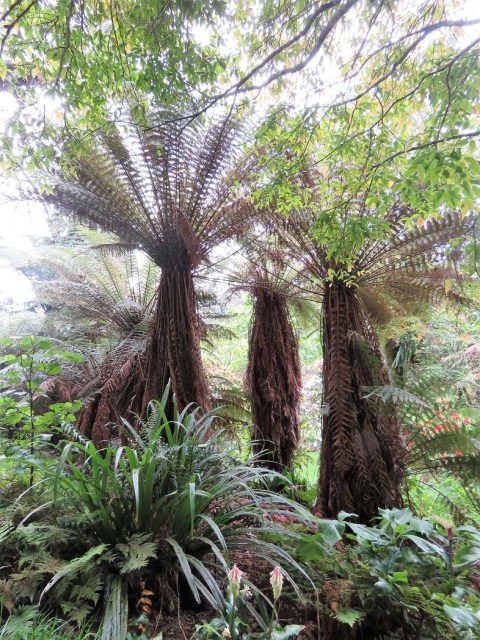
We have never planted any tree ferns. They just arrive of their own accord.
The volunteers that just arrive will vary throughout the country. Ours include the tree ferns (commonly known as pongas – pronounced ‘pungas’, botanically cyathea and dicksonia), the nikau palm (Rhopalostylis sapida) , cabbage trees (cordyline), an abundance of pepper trees or kawakawa (Macropiper excelsum) and a wide range of ferns. If they are not in the way, we just leave them to grow where they wish. Even NZ gardeners may not realise that we have three native dicksonia species and seven cyathea species. I think we just have the most common four or maybe five species seeding down in our garden.
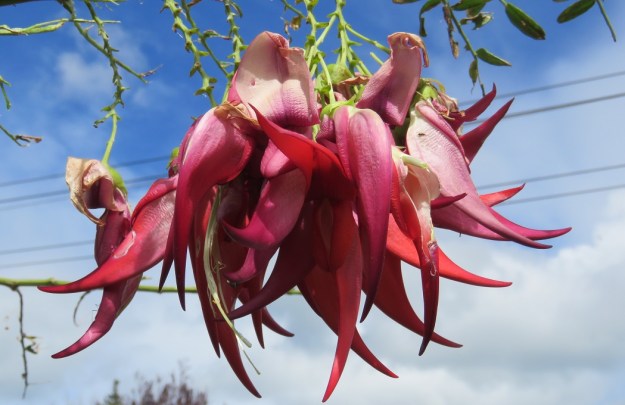
Kakabeak, growing in a town garden (hence the power lines). I have the white form in a new garden but it has its own little wire cage because pesky rabbits just about ate all of it over just two nights
The rare and endangered plants contain some special stories. The tree Pennantia baylisiana and the climber Tecomanthe speciosa were both down to a single surviving specimen in the wild but are now relatively common thanks to sustained efforts to propagate and distribute them. Similarly, the two species of kakabeak (clianthus) were at the extremely endangered status in the wild but are now widely planted in gardens. Sometimes commerce can ensure the survival of a species where protection of their natural environment has failed. Even Astelia chathamica was rated as under threat in the wild (in the Chatham Islands which are our southernmost islands marooned in the Southern Ocean) but there is no danger of it being lost these days, so widely is it grown now in mainland gardens.
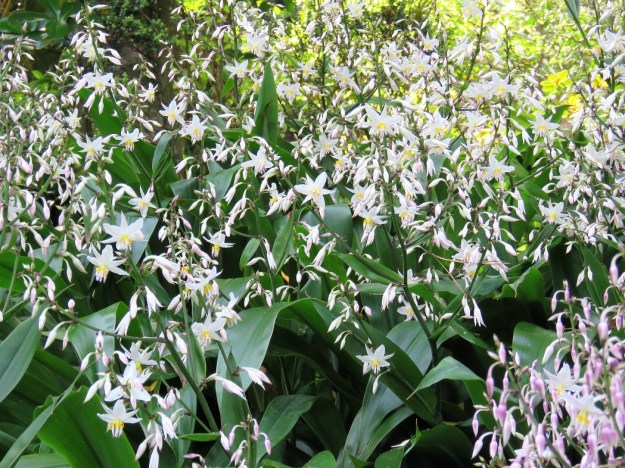
The renga renga lily, as seen in almost every garden
Utility backbone plants include a fair swag of trees grown in this country but especially the kowhai (sophora – there are eight native species though S. tetraptera is the most common) and the pohutukawa (Metrosideros excelsa). Both of these are absolute standouts in bloom. What we call the rengarenga lily (Arthropodium cirratum) is so widely grown that it is probably seen as a garden cliché. But we don’t have a whole lot of flowering herbaceous plants that are native to New Zealand when you think about it. And our gardens would be the poorer without the native astelias which are used very widely, being preferable as garden plants to our native flaxes (phormiums)
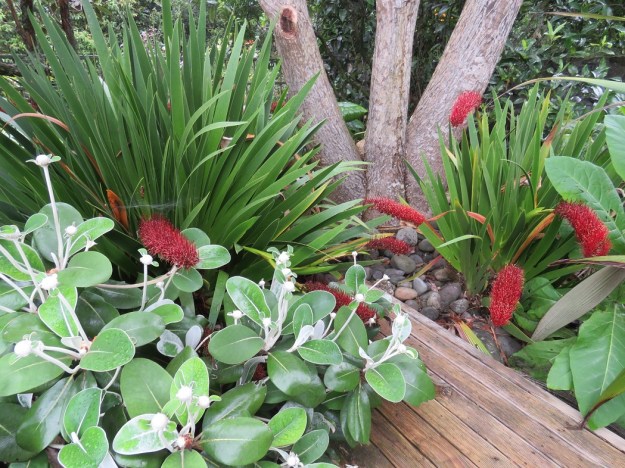
Pachystegia insignis to the left (the white buttons are the flower buds) and Xeronema callistemon with the red flower spikes
Some native plants are special in their own right as ornamentals and not necessarily easy to grow in conditions far removed from their natural environment. The Marlborough rock daisy (Pachystegia insignis) occurs naturally on exposed coastal rock faces in dry, hard conditions ; the celmisias are predominantly mountain daisies : the Poor Knight’s lily (Xeronema callistemon) comes from sub-tropical northern islands and is distinctly frost tender and needs brilliant drainage, preferring coastal conditions. These and other plants are well out of their comfort zone here but interesting, showy and still indigenous plants if you take the country-wide definition.
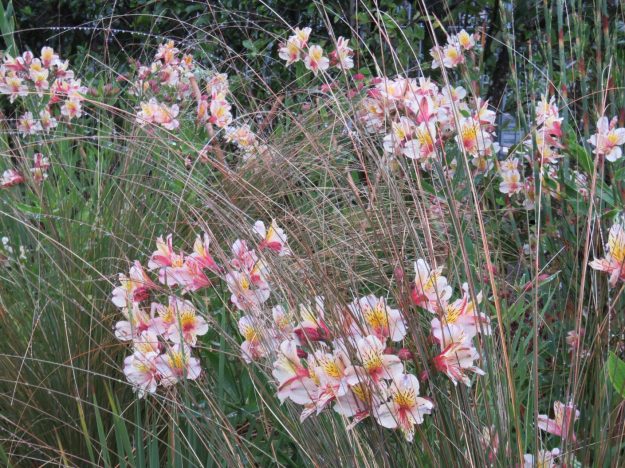
The alstromeria is certainly not native but the grass is – Chionocloa rubra
What I don’t think has been helpful is the polarised positions adopted by some. The native purist position has long been claiming the higher moral ground (but only applying that to ornamental plants, and mostly trees at that, as I wrote about here) In turn, this spawned the sniffy response that our native plants are “boring”. Neither is a logical or thoughtful position.
I will say that if we stripped out the native plants from our garden, there would be HUGE gaps, not the least being our rimu avenue (Dacrydium cupressinum) and our totara hedge (Podocarpus totara). And yet, to the casual eye, most visitors would not pick that our garden is rich in a wide variety of native plants. I like to think that is because of a seamless blending of native and exotic flora rather than any self-conscious display of indigenous plants.
The widespread use of native plants is one of the key differences in NZ gardens and that is worth celebrating. We are derivative enough here. We don’t want to be a nation of gardens that could be located in any number of other countries around the world with no unique features to define our own location and heritage.
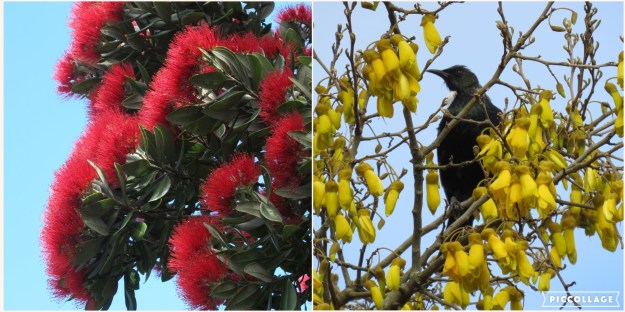
Pohutukawa to the left, kowhai with tui bird to the right
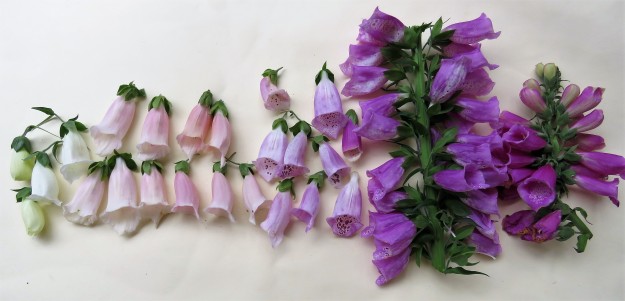
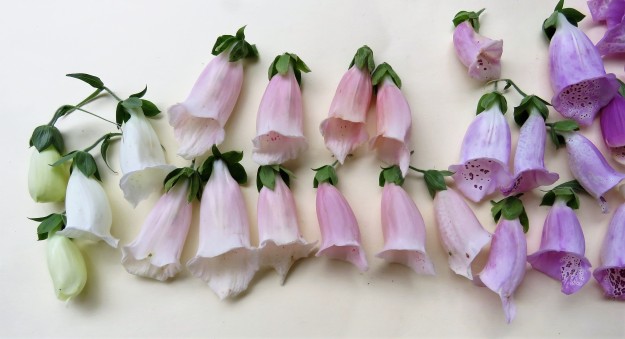
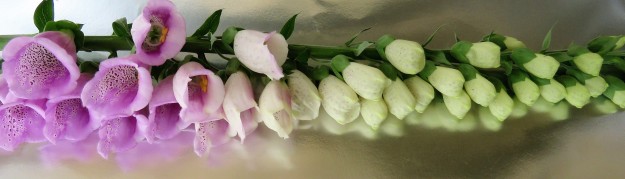
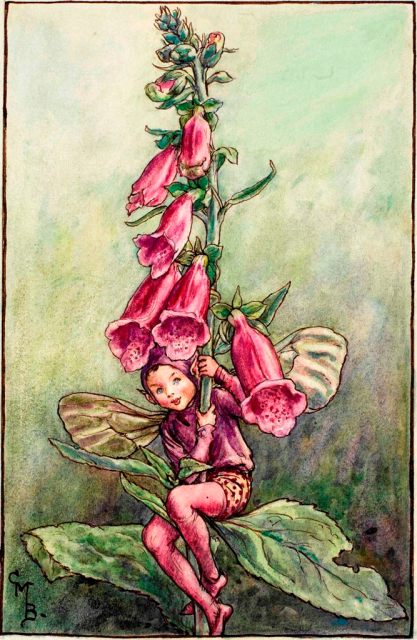
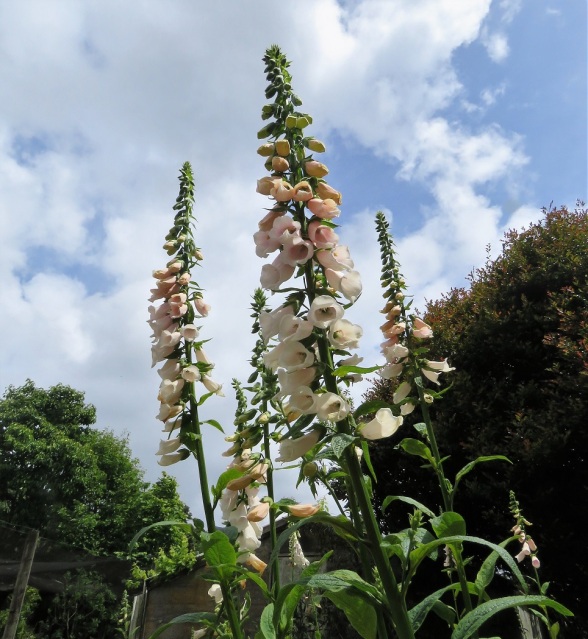 I like foxgloves, in a wild flower sort of way. But the common pinky-purple form around here, not so much. In fact I have been pulling them out this week. I haven’t gone to the effort of trying to get white and pale ones established to see them all gradually returning to that hard shade of deep pink. I had a pretty honey peach coloured one that flowered in isolation in a gravel heap last year and left it to seed, thinking that as it was standing alone, the seedlings would be the same colour. There were over a hundred seedlings and at least half have gone back to the deep pink colour I spurn. I have been pulling them out as soon as they reveal their true colours to try and preempt the bees cross pollinating.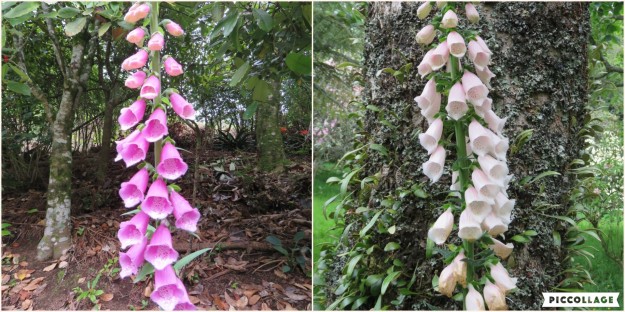
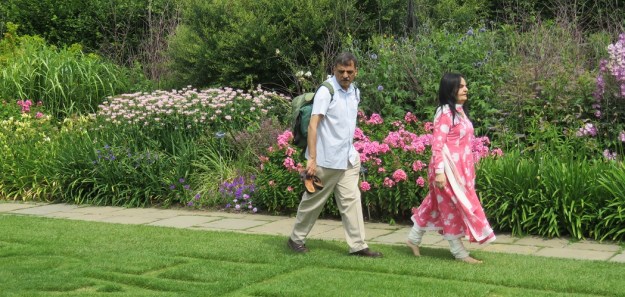


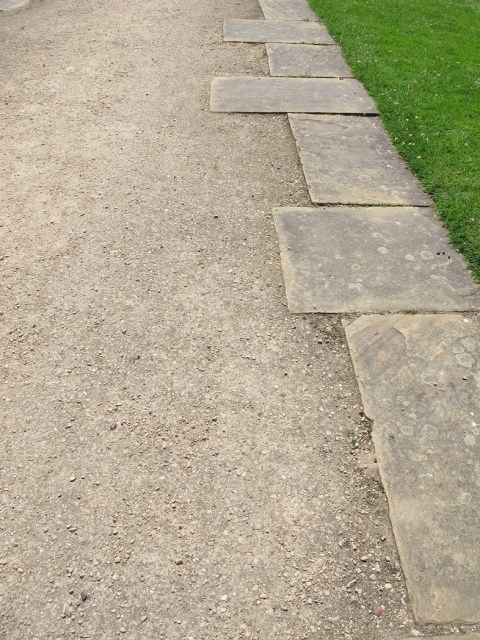
 I photographed this casual arrangement of river rocks defining a woodland path because it struck me at the time that the rocks were wrong. Unless you have a rocky stream flowing through your woodland, then the rocks are out of context. Some form of wood off-cuts or branches would seem more logical because they belong in that scene. But others may not be as picky as I am.
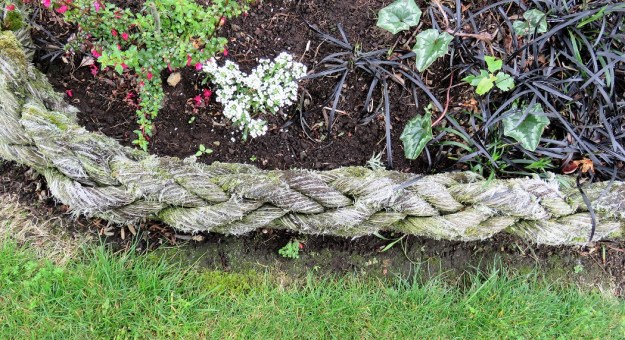
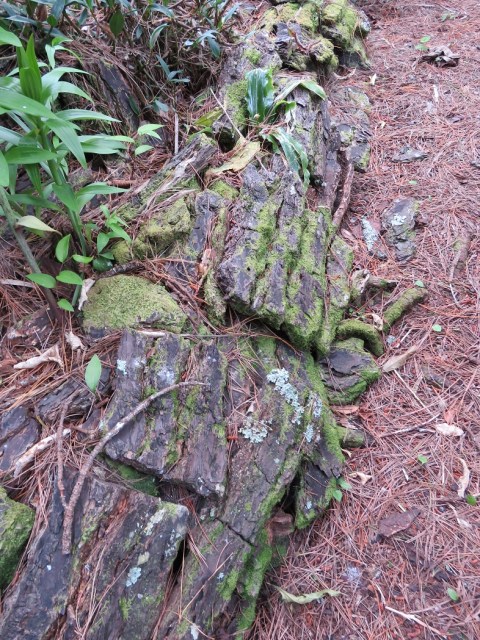 We tend to use what is at hand in the woodland areas – which in one garden means chunks of pine bark. I like the little pine bark walls that serve as an unobtrusive retaining structure while still allowing some soft definition. Pine bark has good longevity and is a natural alternative for us to use, given our pine trees. Sometimes we will use lengths of wood that have fallen from the trees above and that is a softer, more environmentally friendly option than hard edged concrete or similar. A bit like a horizontal bug hotel, if you like (bug hotels being super trendy these days).

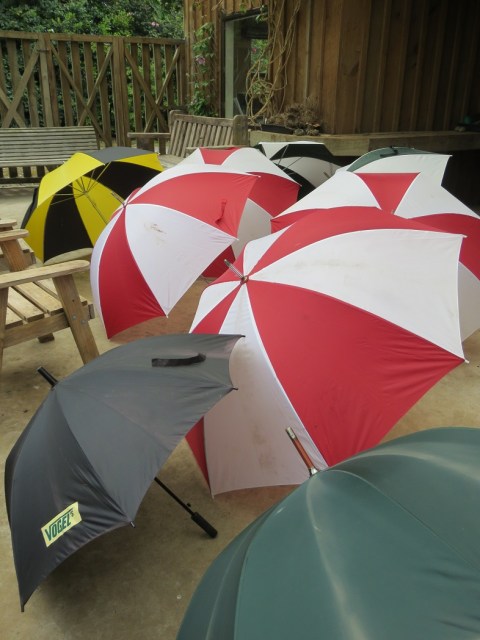 Umbrellas are a part of our lives here. We own quite a few of them and use them often to move around the property. That is because it rains quite a bit and the rain can often be torrential. We get 150cm a year (60 inches). I try and keep the respectable brollies that are in good condition tucked away for when visitors need them, confining us to the somewhat derelict ones. When I say we own quite a few, I mean getting up towards 20 of them and I don’t want to end up with 20 old, crusty brollies. Here I am, drying out some of the better ones to put away again after a garden tour last Sunday.
 The tour was a small group of British and American gardeners, led by a tour host whom we particularly like, which is why we agreed to their visit when the garden is otherwise closed. It is a very different dynamic to host tours with a knowledgeable leader and plenty of time for a leisurely walk around followed by morning tea. We really enjoy their company and that has not always been true for garden tours down the years. The more you get, the less personal the experience and, I am sure, less rewarding for the visitor too. The rain didn’t even matter much and it stopped soon after it started.
 The English visitors felt right at home as soon as we reached the park and they saw the meadow although one of them marvelled, looking back and seeing our native tree ferns growing amongst the trees – they are self-sown here but very highly valued in the UK. Though truth be told, the most common tree fern grown overseas is the Tasmanian species, Dicksoniana antarctica.

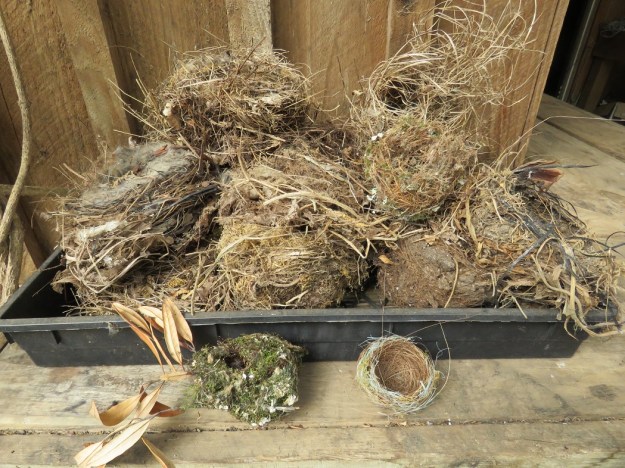 I have a collection of birds’ nests and have been wondering how to display them. I have at last found a suitable tree skeleton that I think can be severed and brought under cover so I can tie the nests to the bare branches. Whether I can do it without it looking terribly naff remains to be seen.
 Gardening is a wonderfully cyclic affair. Is there anybody as finely tuned to the seasons as the keen gardener? Yesterday was the first pick of the roses for the season. All but two of these have such scoury foliage that they have been banished to Mark’s vegetable garden (a large area that he refers to as his allotment) so the only reason they still survive is for the cutting of the blooms. Not only is gardening cyclic, it can also be distinctly ephemeral. But often those ephemeral pleasures can be the most charming on the days when they are at their best.

 I got to thinking about this because the Resene magazine ‘habitat’ (the lower case indicates modernity, darls) turned up in my letter box. Resene is a leading paint brand in this country. And I burst out laughing at the guide to ‘your next big colour trends’. This is because we are renovating our two main living rooms so I know that the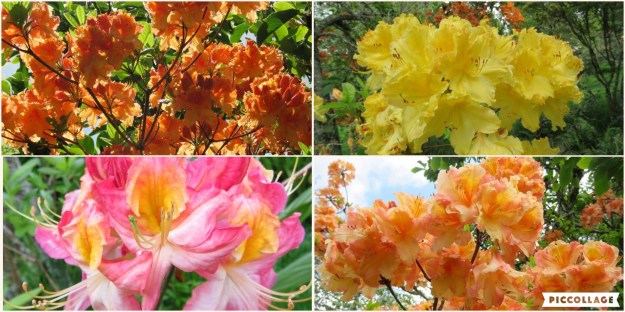
 All this return to colour thinking was also sparked by wandering through our park and looking at the deciduous azaleas with their OTT, unabashed vibrancy – vulgarity, some may think. And I remembered the man who came around the garden when we were still open and asked ‘what is the big orange rhododendron behind the house’. We have garden borders behind the house but I couldn’t think of a plant like that there so I suggested he go and pick a flower and bring it to us. Well, not only did it transpire that ‘behind the house’ meant the spacious park area but he returned bearing an entire head of an orange azalea that he had snapped off, not the single bloom. After all that, we did not have it available for him to buy.
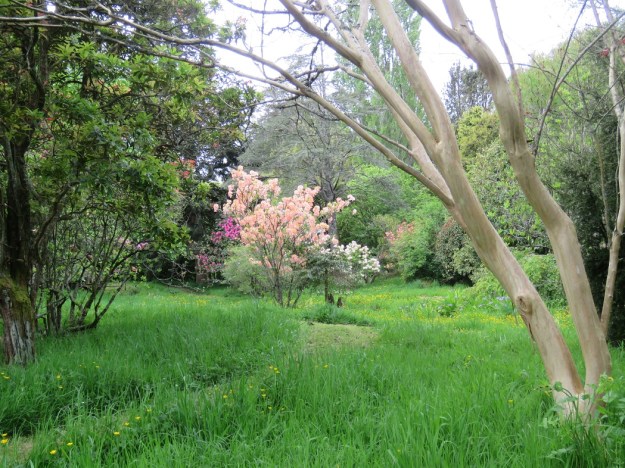 In self-defence, I say that our bold azaleas are mostly interspersed throughout the park, so surrounded by acres of verdant green rather than being planted en masse to dazzle the eyes. And they have been there quite a long time so endured the changing fashions of colour down the decades.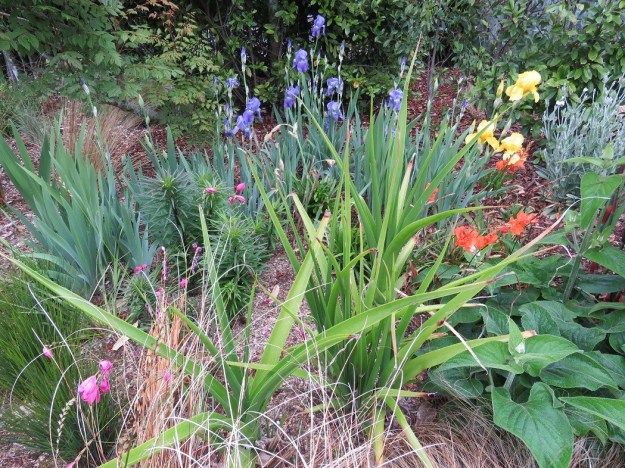
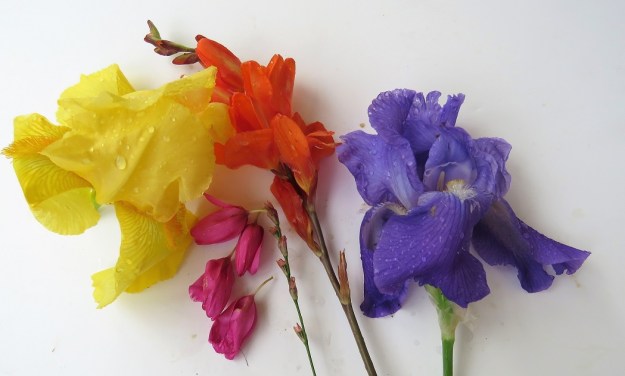 I was slightly alarmed by an inadvertent colour combination in my new borders. I picked a flower of each to show the colours more clearly. I am pretty sure I thought the bearded irises were all yellow when I planted them but 80% are purple. While the colour is sparse in these early stages of planting, I am thinking ahead to when each forms a large wodge of colour.
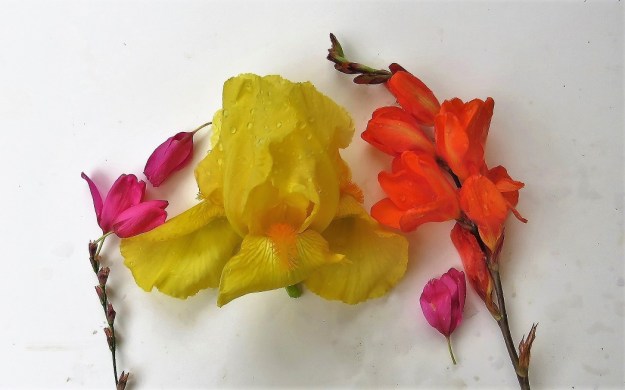 Take the blue-purple out to keep the ramped-up colour.
 Or take the yellow out and it looks very different, toning it down considerably. I am marking the ones flowering yellow. I think I prefer the second version but it all comes down to personal taste in the end.
 Tikorangi The Jury Garden