The man himself – Karl Lagerfeld (photo: Wikimedia Commons)
In honour of the now late Karl Lagerfeld, I recalled a piece I wrote back in April 2012 when I was still writing for The Waikato Times. I don’t usually republish, but I thought maybe it was acceptable at this time.
I admit I had never really registered Karl Lagerfeld until last week. Sydney daughter sent a little clip of his quotes. “Sweatpants are a sign of defeat. You lost control of your life so you bought some sweatpants.” Ouch. “Florals are for middle aged women with weight problems” and “Having adult children makes you look 100 years old. I don’t want that.”
I started to feel vulnerable until daughter pointed out to me that while I am upon occasion seen in public with one or more of my adult children (and isn’t Lagerfeld so right that it makes one look old?), she could not recall me wearing florals or sweatpants.
In case you are equally ignorant about Lagerfeld, think elderly German fashion designer, made his name with Chanel, now slim, white haired, permanently suntanned and always wears dark glasses. These days, his main claim to fame appears to be his capacity for pithy, outspoken comment. I could find no evidence whatever that Mr Lagerfeld has had anything to say about gardening. But let that not matter. Shamelessly putting words into his mouth, we started a meme: Karl Lagerfeld on gardening. This is what we consider he would be likely to say, should he ever turn his attention to botanical issues.
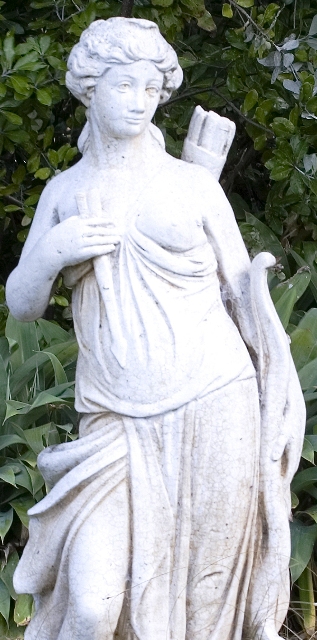
Only the real thing will do
“If you can’t afford the real thing, then it is better to go without.” There would be nothing armless, legless or headless in Karl’s garden, especially nothing white unless he could persuade the British Museum to loan him some of the Elgin marbles. Reproduction classical just wouldn’t do.
“Never plant an avenue of the same tree unless you can afford to replace the lot should one ail. A gap in an avenue is like a toothless smile – engaging in children but an indication of lack of care in an adult.” Karl understands that when an established plant dies, it is almost always an indication of a problem below ground so there is no point in replacing like with like. The incoming plant will succumb to the same problem sooner rather than later. And avenues with gaps look, well, like avenues with gaps or a smile with missing teeth, really.
“Glazed blue pots are so last century. There is nothing aesthetic about a bright, shiny blue pot from Vietnam. Leave them to women who wear floral prints or straw hats adorned with fake flowers.”
“Buxus hedging,” declaims Karl with withering scorn, “is the polar fleece of the garden. Ubiquitous, utility but the comfort refuge of the unimaginative.” Harsh this may seem, but edging garden beds in rows of grassy plants gives rise to even stronger condemnation: “Reminiscent of crimplene trousers with elastic waists.”
Karl would put the not into knot gardens – as in advising not to be seen dead with one in your garden unless you have a European title (minor nobility is fine), live in Europe and can claim direct lineage to the design. Otherwise it is a knock-off copy and Karl does not do knock-off copies. Ever. Accordingly, he rejects chevron gardens, parterres, potagers, rills, canals and the like, unless you have the castle or palace to go with them. At the very least, a stately home is required.

Perhaps better than the toilet bowl recycled as a garden feature, but blue pots are problematic
“Unspeakable. I will say no more,” is his response to any toilet humour in gardens. He shudders in distaste at the thought that anybody, anybody at all, could ever think it was witty or clever to recycle an old toilet bowl as a plant container. In fact Karl is equally unimpressed with any efforts to recycle old baths, laundry tubs or other accoutrements as garden features. “We don’t have a bathroom in our dining rooms. Some things are best kept discreetly out of view at all times if you want to retain any mystique.”
When faced with the new breed of gardener who will only grow plants that are edible, Karl sniffs. “You might just as well say that you will only wear clothes that can be machine washed and never need ironing. Fashionistas would not be seen dead in polyester. Just as high end fabrics are used for high end clothing, so too are high end plants used for high end gardening. Some things exist because they are beautiful. That is enough. Broccoli is never beautiful.”
Long an advocate of the little black dress, Karl is only too well aware that the same little black dress on one woman will look like a shapeless sack whereas another will carry it off to perfection and on most men it will simply look silly. So too with gardening. “You cannot fake chic,” he says (yes he actually really did say that!) “Some do it with style. Others just follow the rules and it shows.”
“I am a fashion person, and fashion is not only about clothes – it’s about all kinds of change”. Karl is well used to ringing the changes, to leading the way. Not for him to slavishly copy and follow rules.
We will leave the penultimate comment to the man himself: “I’m very down to Earth, I’m just not from this Earth.” If he thought about it, he would be likely to add the advice that you should not think that just because you are working in your garden, trackpants or floral attire are acceptable.
First published in the Waikato Times and reprinted here with their permission.

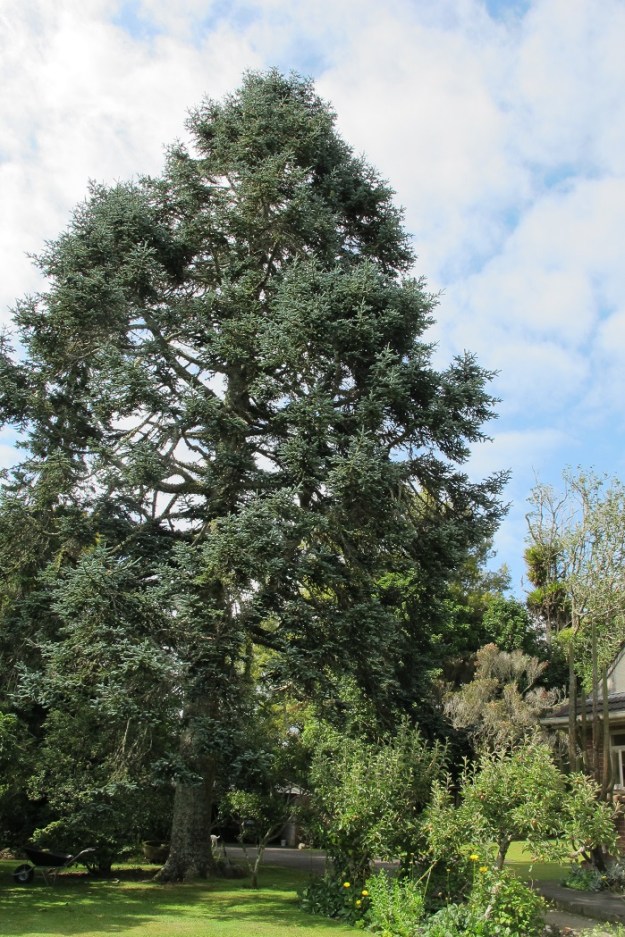
 Oh look, here is a little photo taken earlier. Best guess is that it is early 1960s, when Felix planted it in the rockery. I am reassured that he, too, could plant without doing adequate research on ultimate size. Or maybe he thought it was a dwarf conifer at the time. At least he moved it out of the rockery while he could but it would have been helpful had he moved it more than 8 metres from the house. It is now over 20 metres tall, though not very wide, and we are psyching ourselves up for its removal. Should it fall (and it did have an issue with rot at its base, though that appears to have healed over time), it is likely to take out a good part of the house, starting with our bedroom. It is one of those major and expensive jobs that we know is coming up sooner, rather than later. Beautiful tree. Wrong location.
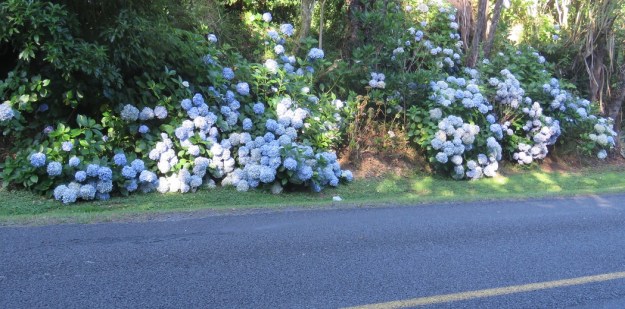
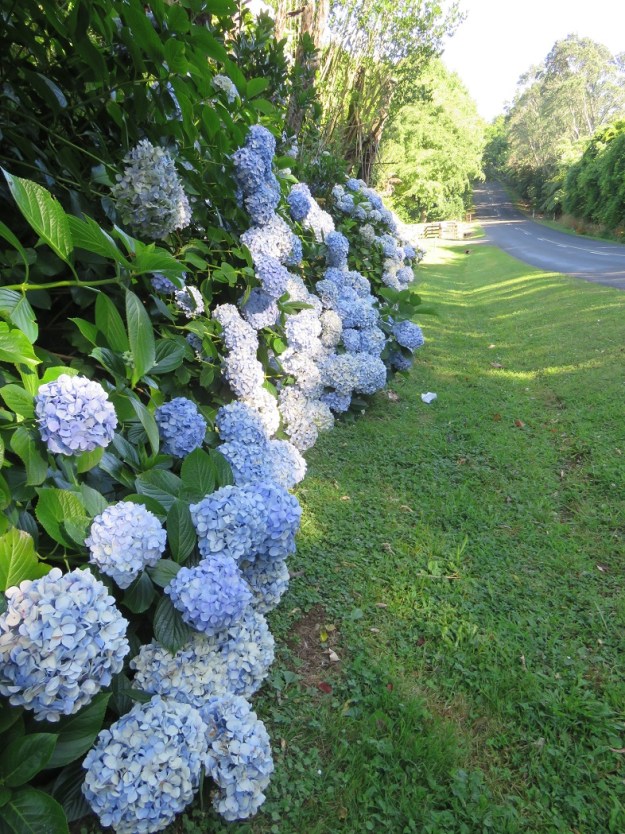 Basically, hydrangeas are blue in Taranaki. This is to do with
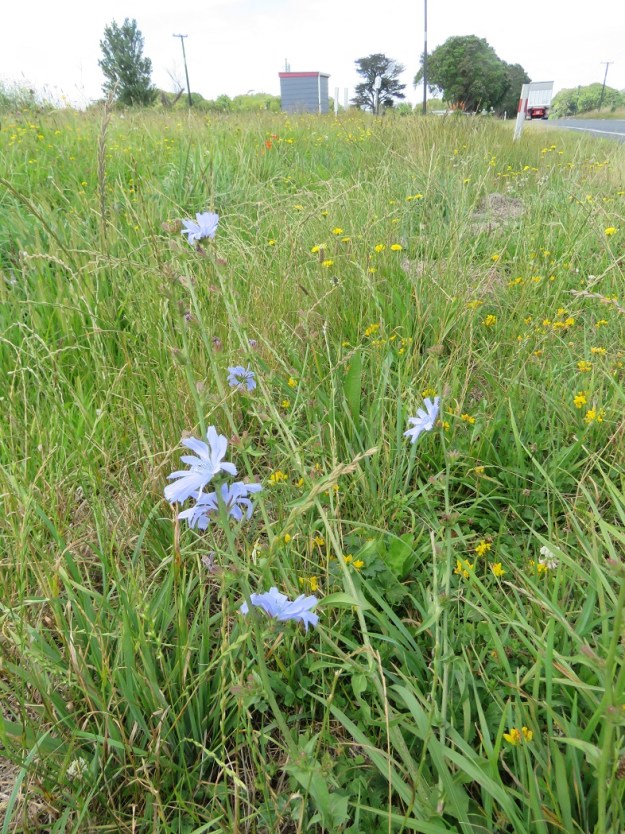
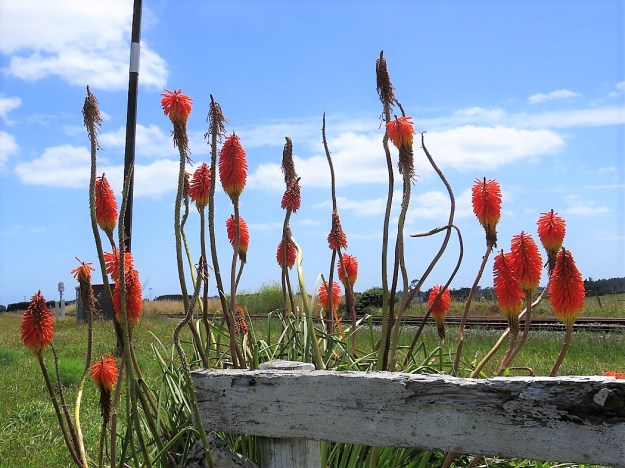
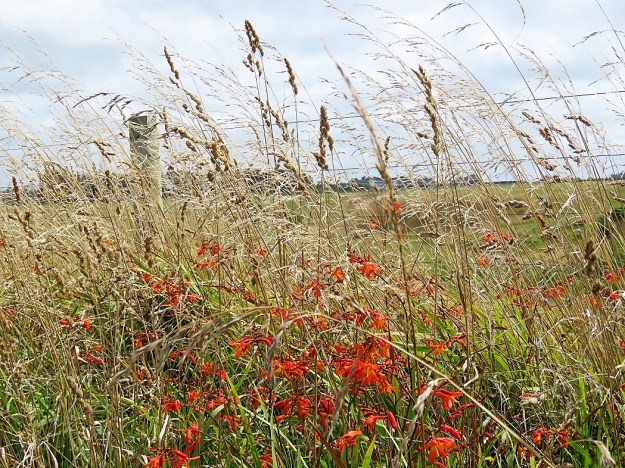
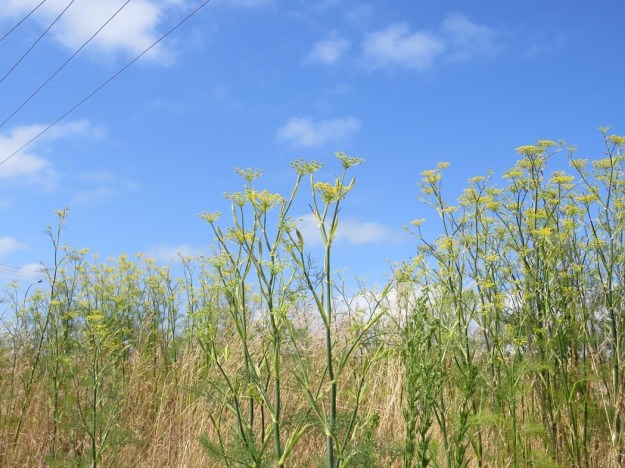



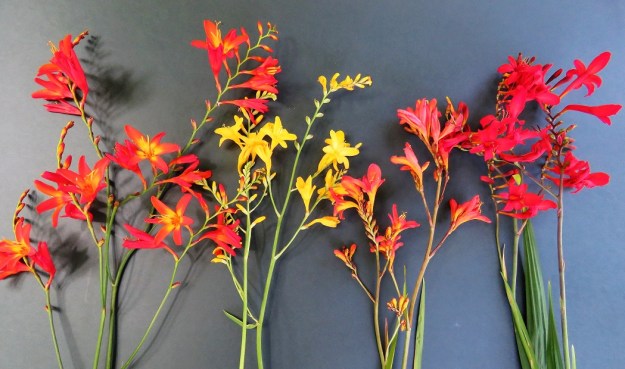
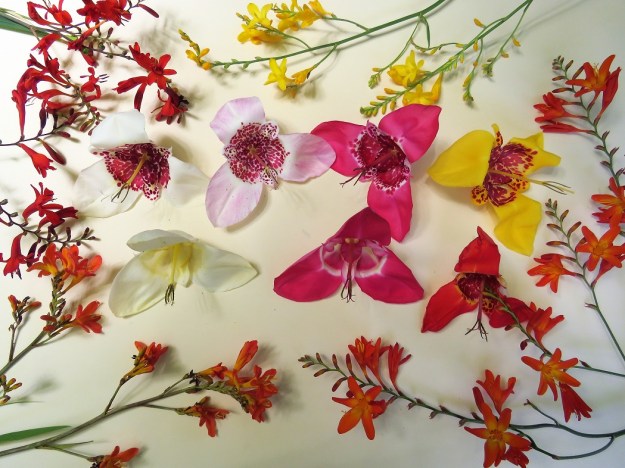 I started by thinking I would do a comparison of tigridias. And then crocosmias. It was too hot to be out in the garden and I couldn’t go down to the shaded areas of the stream in the park to clear weeds on the banks and free up the water from some of the choking weeds on account of having stuffed my dodgy wrist doing this heavy work the day before.
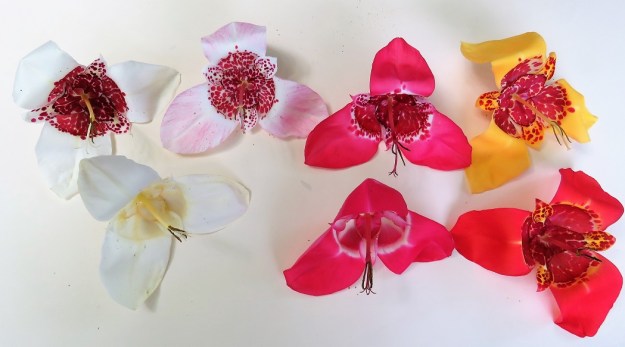 I have spent some time separating the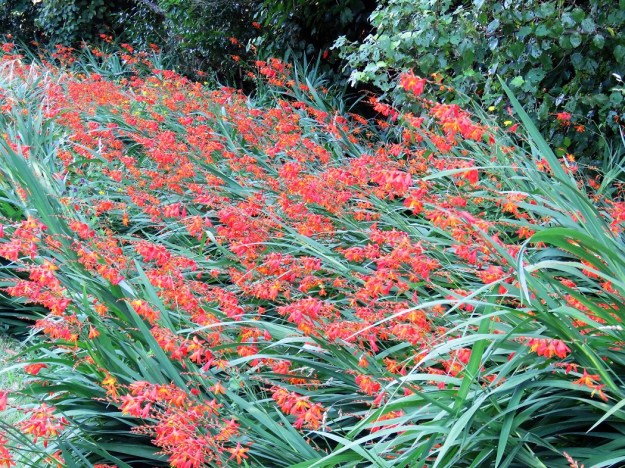

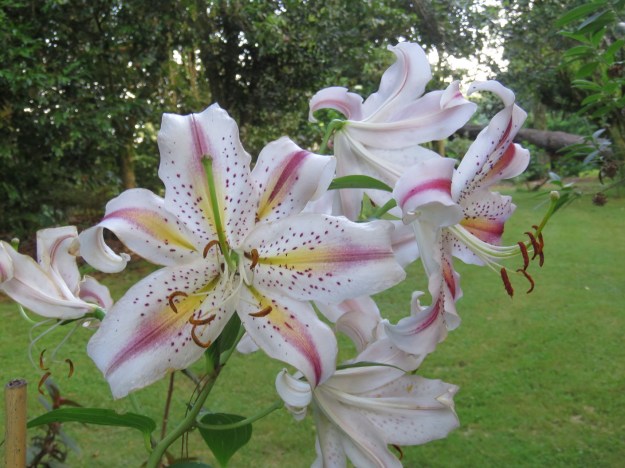
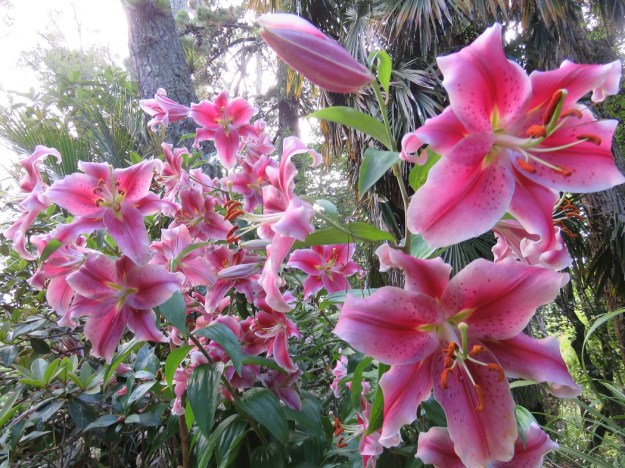 Auratum lily time is a delight, a joy even. Showy, over the top, flamboyant but glorious. And we are just entering these weeks of glory.
 We grow lilies in the better lit areas of woodland. They can get somewhat stretched reaching for the light so need more staking when not in full sun. I am rounding them up to limit the areas where we have them growing in order to make that seasonal staking task easier. But they certainly light up the woodland margins.
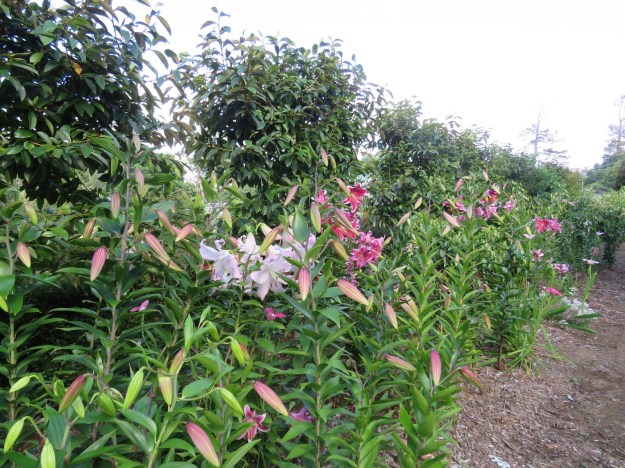 The new lily border has just opened its earliest flowers. These are the result of a determined and sustained effort to
  Almost all of ours are unnamed hybrids raised by father and son – first Felix and now Mark. Felix named a few that we used to sell but they are pretty mixed in the garden now. All are outward facing, not upward facing. That was one of the breeding aims. Upward facing lilies act as leaf and debris catchers and weather-mark badly.
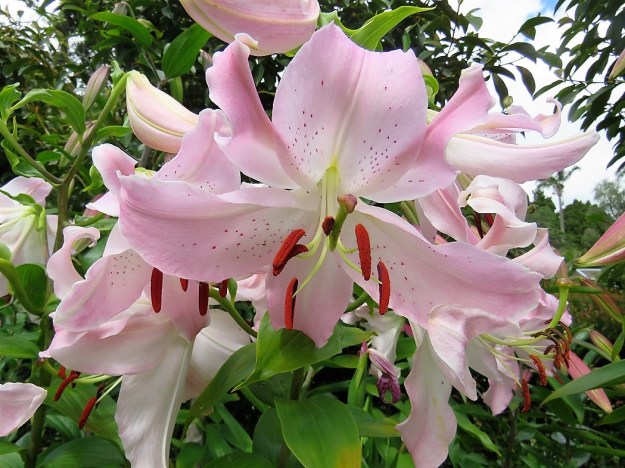 Of them all, I think these soft, marshmallow pink ones of Mark’s raising may be my favourite. Or it could be another one in a few days’ time.
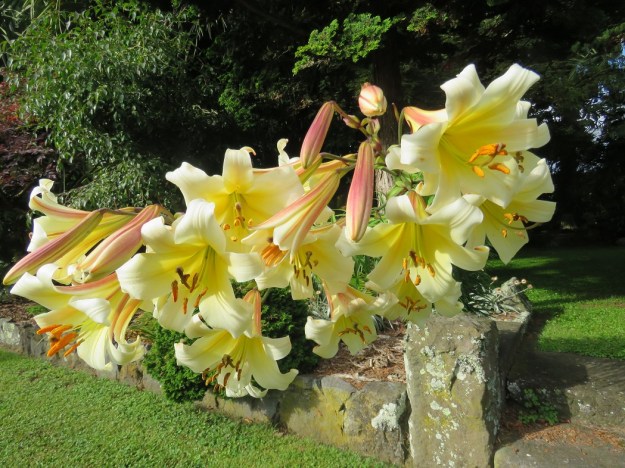 Finally, just in case there are any lily experts reading this: I assumed these trumpet lilies elsewhere in the garden are an unusual, honey-coloured