Category Archives: Abbie’s column

Shades of white in the world of flower gardens

“The arums make the white of Persicaria polymorpha a very definite cream and highlight the problem I had with Sissinghurst of putting too many whites together in one space. White flowers always have something else in them, be it blue, pink, mauve or even brown, and these off-whites soon look grubby when they are shown up by the purity of something like Zantedeschia aethiopica. A cream rose such as Rosa ‘Nevada’ needs to be with the right partners, and, since it fades to pink, it is a shame for this ageing process to feel muddied by wrongly placed companions.”

Natural Selection, A Year in the Garden by Dan Pearson (2017)
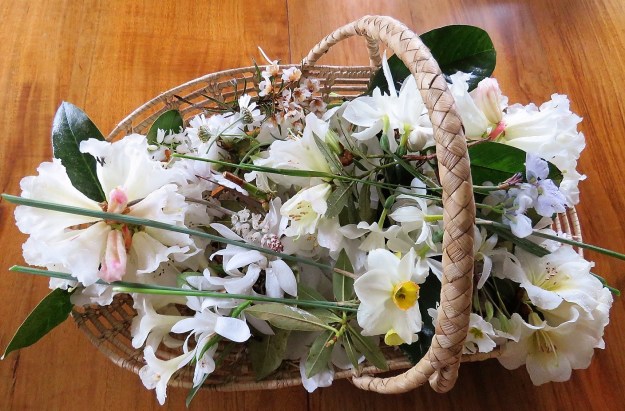
I have been drafting a piece about contemporary white gardens for a publication, so my mind has been on white blooms. Yesterday, in the post-election hiatus and the gloom of a wet, grey day, I headed round the garden with my vintage flower basket to pick a selection of white and largely white flowers.
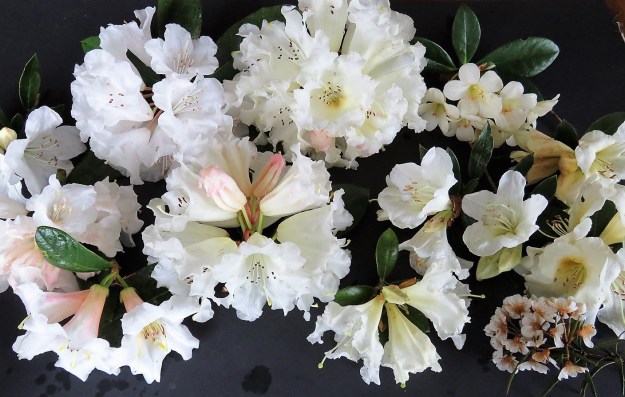
Ringing in my ears were Dan Pearson’s words above, even though I had read them so really they should have been flashing in front of my eyes – visible rather than audible, so to speak. I had not really got my head around the different shades of white before. Neither, I am sure, had the many women whom we used to describe as being of the Remuera genre back in the 1990s, but who would be known as “ladies who lunch” these days. These were the ones who were hellbent on putting in a white garden, à la Sissinghurst. They were numerous and, in our peak retail days, we met a fair number of them. I recall some for whom white flushed pink was out of the question. Candidates for their white garden had to be pure in hue. White and nothing else. I wish I had the Pearson quote back then. There are many, many plants that open from a pink bud to a white bloom.

Never did I hear any of these women getting their heads around the different shades of white. Nor indeed the role of cream and where creamy white becomes more cream than white. Let alone where cream crosses over to palest yellow. It is spring here, so we have a number of rhododendrons in flower. Of the maybe ten different white rhododendrons I picked, only one was what I would call pure white.
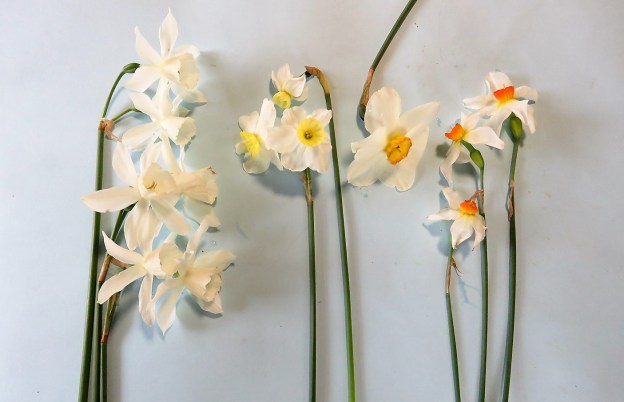
Is Narcissus ‘Thalia’ (on the left) acceptable in a white garden, though it is cream, not white? If ‘Thalia’ is acceptable, how about the narcissus with the pale lemon corona and white petals? And if that lemon corona is still okay, does this go across to ‘Beryl’ and other poeticus hybrids with white petals and small coronas which are somewhat stronger coloured and into the yellows and oranges? Where is the cut-off point? I tell you, this white garden business is fraught with problems and judgement calls.
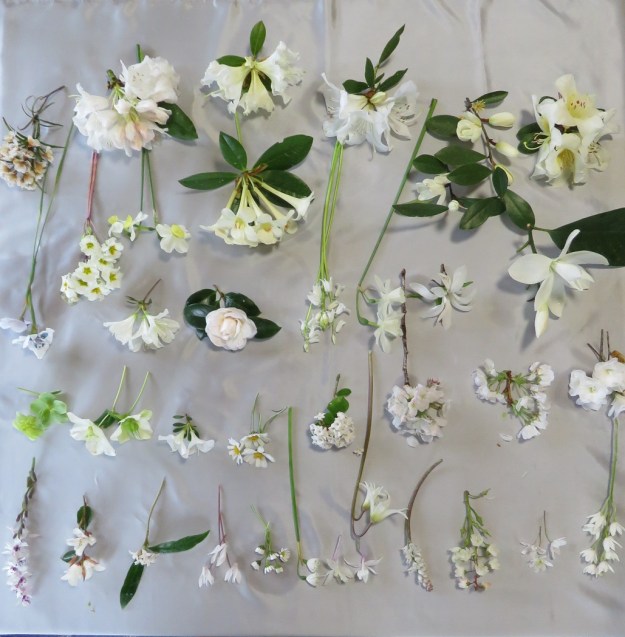
Are green flowers permissible? If so, why not the white Moraea villosa with blue peacock eye markings or Lachenalia contaminata or Onixotis triquetra which are white with maroon markings? If the latter two are not acceptable, does that rule out the white rhododendron with maroon spotting. Is it not sufficiently pure? Is it okay for a white rhododendron to open from a soft pink bud? No? How about a soft lemon bud or one with a green cast?

I laid all the whites out to peruse and Mark walked into the room. All he wanted to do was to add yellow to lift the scene. I have never wanted a colour themed, pure white garden. It is just not our style and it is hard to stop it being a little flat, a little lacking in energy or pzazz. But if you want one, maybe start considering the importance of different shades and textures of white.

White is not always whiter than white and not all whites are the same. Detail matters and never more so than when you are taking on somebody else’s idea in your garden. Without that attention to detail, you will only ever have an inferior interpretation of the original but without the originality.
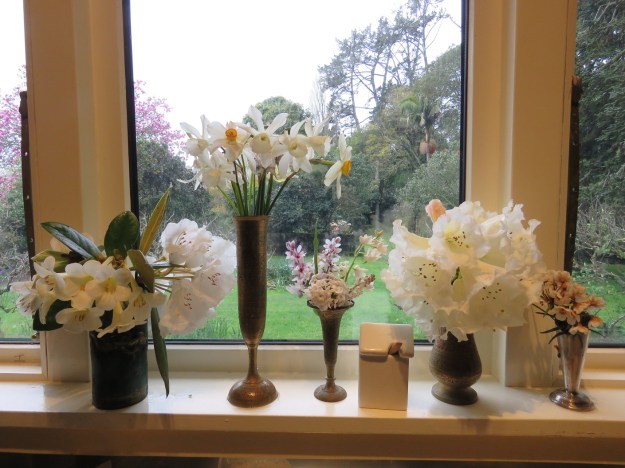
Postscript: Should I mention to overseas readers that the white arum lily, Zantedeschia aethiopica, can be found listed on every weed reference site in New Zealand, though I am not sure how widely it has been banned outright at this point? It is generally seen as a sign of poor land management to be growing it. Pure white it may be, valued it is not. It joins the giant gunneras and even the erigeron daisy as a botanical crime here.  

Why so very grey, New Zealand?

Why so grey, New Zealand? Each time we fly somewhere, Mark looks out the plane window and winces as he sees the sea of grey roofs. It is quite a while since we had to re-roof a house, but I assume roofing is available in other colours? It is not compulsory to roof in grey, is it?

As we drive around the countryside, he groans at the modern new builds which are pretty much grey. Grey walls and grey on the roof with grey paving. Fortunately, we lead such a non-suburban life that he rarely has to enter modern city suburbia or he may despair at the symphony in grey. I would not dare take him looking at carpet but again, the choice in carpet colours in this country these days is about 95% prison grey with a few options in mud.

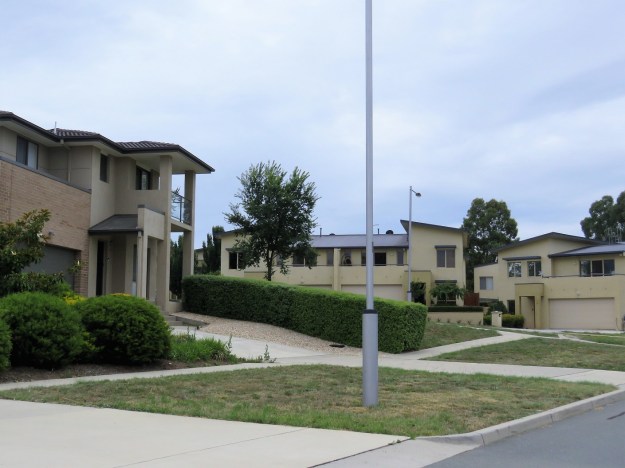
The Australian version is at least  in shades of warm sandstone

It is a cultural thing, this world of colour. We swung by a new suburban area near Canberra on our last visit. There the houses were all the colour of warm sandstone which seemed preferable to the cold grey of home.

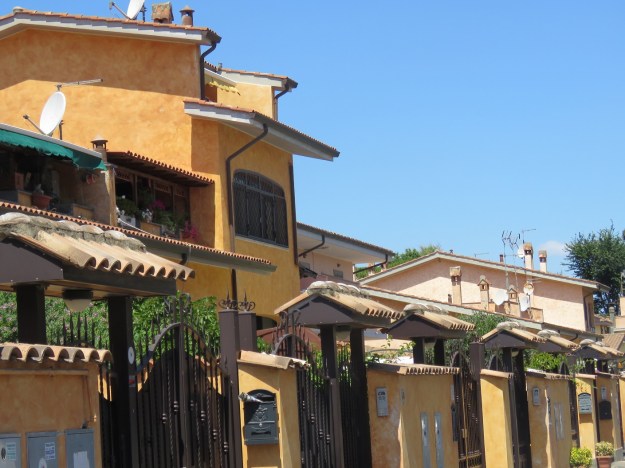
Welcome to Italian suburbia

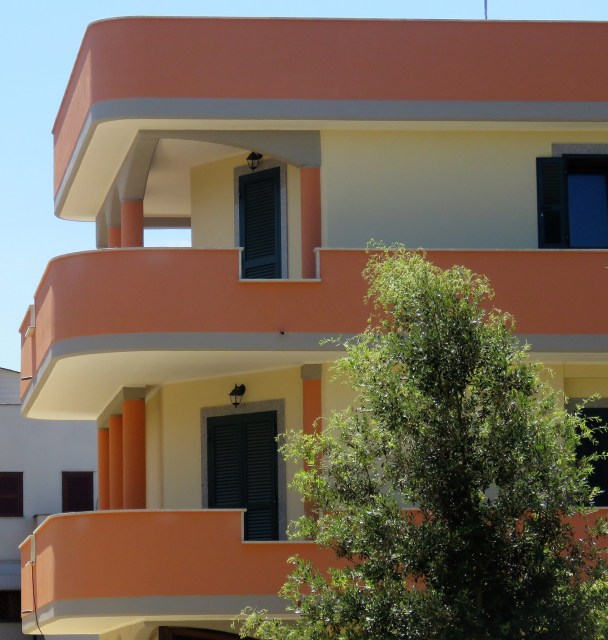
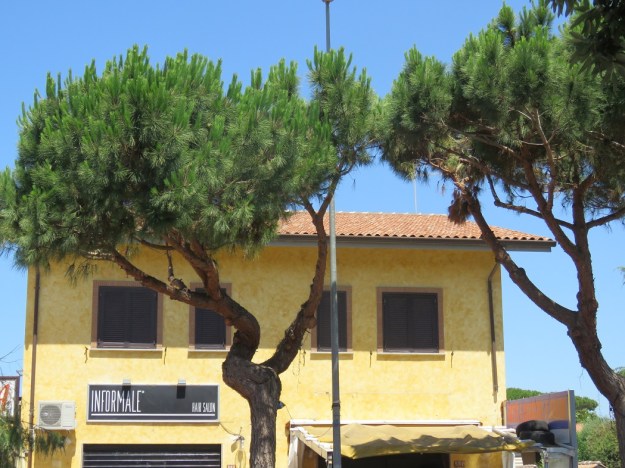
A day in modern suburban Italy was a revelation. This is Fiumicino near Rome airport. It is still suburbia but it is like an explosion of colour. All those flat planes of rendered plaster are painted. In colours other than grey. These are not even utility paint jobs. There are often different colours used and different paint finishes to add textural variation. It was a revelation to see a society where colour is part of daily life.

A choice of grey or black cars in the UK

Colour, colour everywhere in suburban Fiumicino

Even the cars in Italy were generally coloured. When driving in England, we took to photographing our rental car when we parked, to make sure we could find it again. Because, as Mark said, in the UK you can have any colour of car you like, as long as it is grey or black. We were looking at Tesla electric cars while travelling (because we are planning an electric car purchase at some stage). All Teslas were in grey or black until Mark got positively excited to tell me he saw a white one. I want my next car to be powder yellow.

It is a different world of colour

What is it with colour, I wonder? And I do not know. We live in a place with remarkably high sunshine hours and intense clarity of light. Where we are in Taranaki, there is some debate on exactly how many sunshine hours we get. The rate shot up when the measuring was automated a few years ago and despite having the machine retested and recalibrated, there still seems some anxiety about it. But even if we take a mid figure, we come out around 2400 hours a year. Compare that to London at 1400 hours pa and extremely sunny southern Europe at around 2800 hours pa and there is no doubt that we are on the high side as far as daily sunshine goes. We also have a bright clarity of light that is different to most of the rest of the world (and one of the highest rates of skin cancer as a result). You don’t get SAD (Seasonally Affected Disorder) due to low light and lack of winter sunshine in our neck of the woods.

In New Zealand, this building would likely be in two shades of grey

So why, oh why, do we want to surround ourselves with grey? I can not think that grey ever lifts the spirits, raises a smile or puts a spring into a step. Given that the dominance of grey and colour neutrals is not determined by either raw materials or climate here, it must be driven by cultural factors. We were not always so grey and restrained in this country yet somehow that colour has become synonymous with “good taste” and “contemporary modernity” here. And maintaining resale values. I bet a disproportionately large number of those modern grey houses have neutral *magnolia* walls indoors (aka half way between white and cream) with grey carpets.

I know we were on holiday in Italy and that always makes things appear different, but it is the sheer vibrancy and colour that is a part of daily life throughout much of southern Europe that makes me want to return, time and time again.

Vegeconomy

This scene reflects experience and resources

Vegeconomists are people who suggest that the poor should be growing their own food at home. I had not heard the word until it came up on social media this week but boy, I have heard the sentiment. Often. Usually in the context of, “What is wrong with these people? Why don’t they just get off their chuffs and plant potatoes and cabbages in the garden to feed themselves?” (Can you tell it is election time in this country and one of the big issues is the rising incidence of poverty and the growing gulf between the rich and the poor?)

There are many, many good reasons to grow your own vegetables but saving money is not usually one of them. And I would bet that the judgemental vegeconomists I have heard on this matter have not actually done it themselves. Or if they have, it was when the world was a very different place forty years ago and they are now speaking with a rosy glow of smug nostalgia.

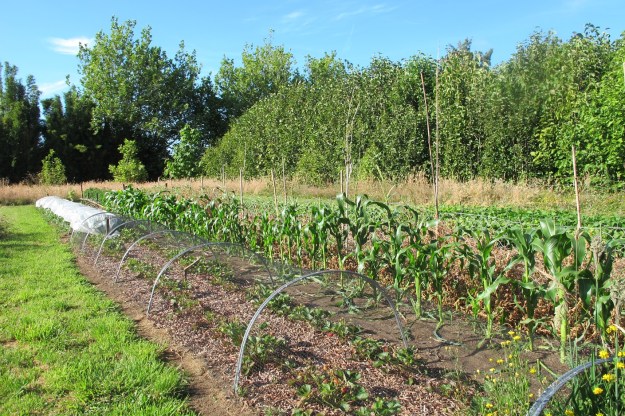
Just one section of Mark’s various vegetable patches

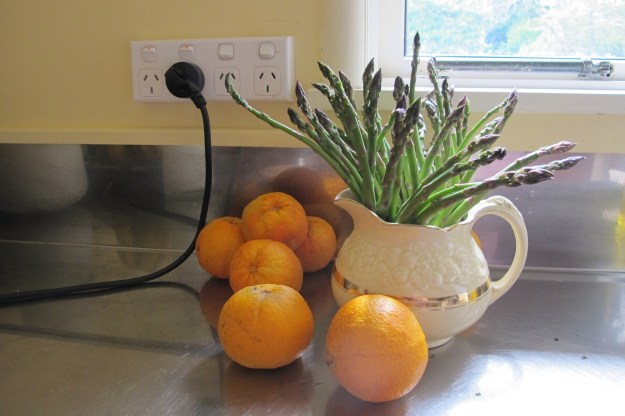
It is not impossible to save money growing your own veg but it takes experience, timing, the right conditions, planning and a fair amount of good fortune. And good land. I dispute that you can save money on a square metre of garden and a few pots. Mark is of the view that it is possible to save money on winter salads. We eat salad every day, fresh from his garden, and the daily fresh greens and other raw ingredients would indeed command a premium in the off season at the supermarket or greengrocer. Mark has been vegetable gardening since we moved out to a country cottage the first year we got married so he brings over four decades of experience to the edible garden. These days, with more time and a lifetime of resources, – including things like moveable cloche frames, a propagation house, bird netting and plenty of posts and poles to hold the netting up, a fully functioning compost heap plus a small tractor to cart the compost if more than a few barrow loads are needed, along with plenty of good land with good shelter – yes, these days his vegetable gardening is very productive.

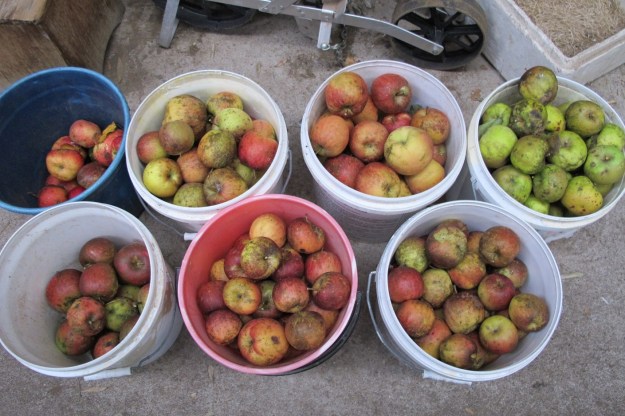
Sorting the apples for winter storage (in the second fridge)

We have also learned which vegetables and fruit store well and how to eat with the seasons. And that involves a deep freeze and a second fridge. We ate the last apple from autumn this week, the last frozen asparagus from November 2016 and I think there is only one packet of frozen broad beans left though there is still plenty of frozen corn. We are eating soy beans instead of borlottis this year because the borlotti bean crop failed but the soy bean crop was remarkably good. There is still an open verdict on the success or otherwise of the surplus brussel sprout crop which is fermenting into sauerkraut at this very moment.

So, please spare me from glib pronouncements that people can solve their poverty related issues by planting silver beet and taties. I have a great deal more respect for those experienced growers who get out there and work with community gardens to foster a love for growing your own, or with schools to encourage children to appreciate that fresh is indeed much nicer. But the economies of mass production mean that in dollar terms, it will almost certainly be cheaper for most people to buy vegetables than to grow their own.

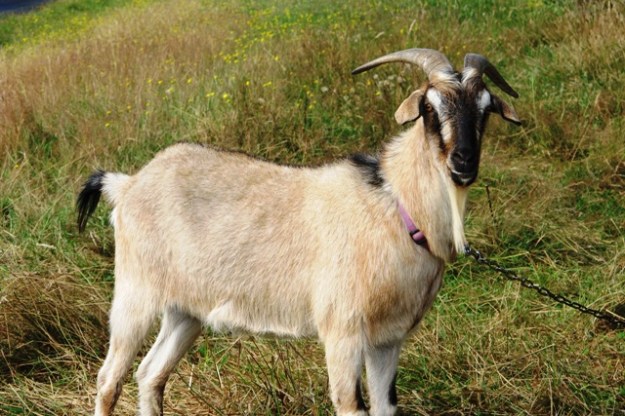
All this was eclipsed, I must say, by the gentleman from down south somewhere who took it one step further on social media. There was, he asserted, no reason for hunger in New Zealand when people could grow their own food and head out to the country to kill a wild goat for meat. I do not think he meant a tethered goat like this handsome fellow from up the road. I also suspect he did not get out much and maybe thought it was still 1950 when jolly practical young fellows could head out with the gun and shoot a rabbit or goat for the pot, all the while speaking with a fridge and freezer full of meat already paid for, packaged and ready for his wife to cook for dinner that night. Bah humbug.

Just for clarity’s sake – growing your own fruit and vegetables can be enormously pleasurable, tasty, convenient and healthy along with bringing better flavour and often a higher nutrition level. Just don’t expect it to save you a whole lot of money as well. And maybe stop judging the poor as lazy because vegetable gardening is just too difficult for them and planting fruit trees is not practical in an unstable housing situation.

FAQs, as they are called. Magnolia questions answered.

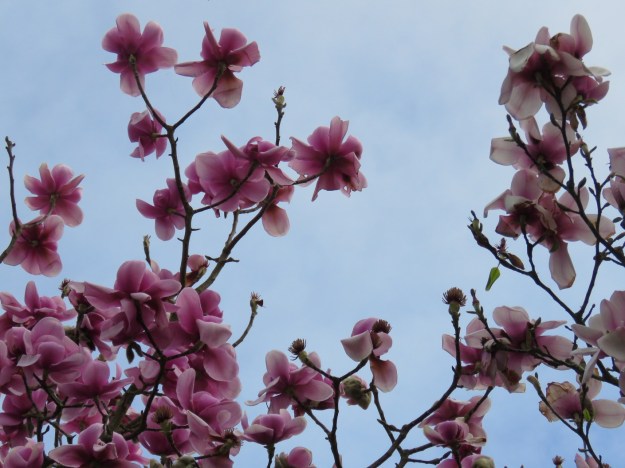
Just an unnamed seedling but glory, glory glory.

Is there a lovelier plant than a magnolia in full bloom? Maybe that is too extreme, but at this time of the year the absolute glory of magnolias all around me truly makes my heart sing. I will be talking about them with Tony Murrell on Radio Live tomorrow morning – tune in at about 7.45am these days.

Herewith, my answers to frequently asked questions.

A stomach full of red magnolia buds

  • If your magnolia looks as if it still has furry buds (the outer casing of the flower bud that our children used to describe as sleeping bags for mice) but they fail to open to blooms or only show a splash of damaged petal, the culprit is almost certainly a possum. If you examine a bud, you will see where it has eaten its way in to take out the tasty centre. A single possum is capable of destroying most of the buds even on very large trees. Mark has been shooting possums most of his life and has carried out autopsies on the stomach contents of literally thousands of them over the years. This is because he wants to know what they are eating and it is part of the process of skinning them and jointing the carcass to feed the dogs. Old habits die hard and it seem a waste to discard both the fur – which can be sold – and the meat. At this time of the year, he can find a few possums wreaking havoc with stomach contents entirely comprised of magnolia buds. Red buds from early varieties on this one in the photo.

    A kereru eating early blooms on Magnolia Vulcan

  • Once the flowers are open, we have seen kereru eating the petals, particularly of the early varieties. But they don’t destroy an entire tree and we are willing to accept the damage. We have heard of the Eastern rosella parrots stripping trees up north but we have not seen it here, even though we have some of this Australian import here.
  • This is your annual advice NOT to spray your lawn from here on. Without fail, every year, we get enquiries about magnolias opening with distorted foliage and without fail, when we enquire, the person has used lawn spray nearby in early spring Most lawn sprays are hormone-based and will cause damage to a number of crops including tomato plants, kiwi fruit and grapes. Magnolias are particularly vulnerable at the point when they are about to break into fresh leaf and because they are often used as specimen plants in or close to the lawn, they cop the spray drift. If you must spray your lawn, at least wait now until later in spring when the trees have put on their new foliage.

    Just more pretty skypaper

  • As far as we are concerned, it is a myth from England that magnolias cannot be moved. We have moved large trees but do it in late autumn or winter, not spring.
  • If your coloured magnolia is flowering for the first time and the colour is not what you expected, take a look at the flower form. Some magnolias will put up pale blooms to start with. If the flower shape is more or less correct, then be patient. With a bit more maturity, the colour should deepen. This is particularly true of the deeper coloured reds and purples.
  • If your magnolia has two totally different flowers on it, it is most likely that the root stock has escaped and is growing too. Most magnolias are budded onto a strong growing root stock. Over time, a root stock that has put out shoots will out-compete the chosen variety budded onto it, so it really does need to be removed. Examine the base of the trunk. Budding is done just above the soil level so you will find the rogue growth on the lowest branching level. Anything below the bud (or graft) is rootstock, above is the chosen variety. The sooner the escaped root stock is removed, the better.

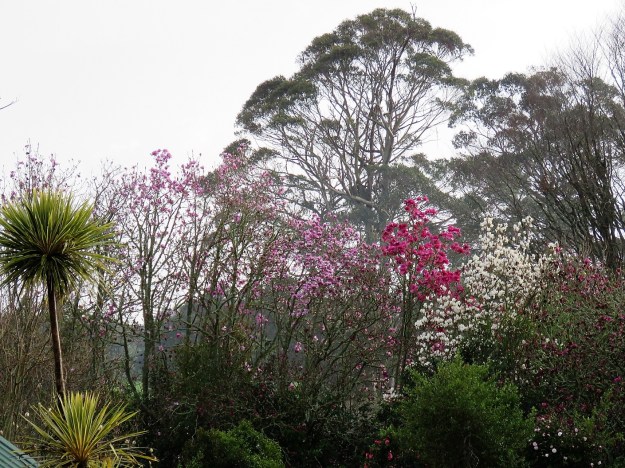
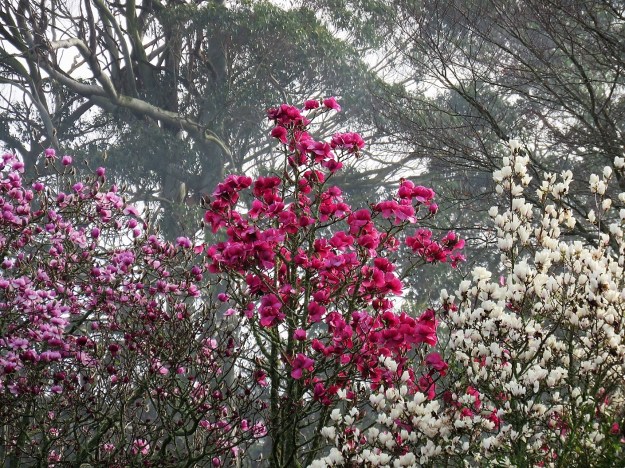
Finally, I posted the two photos below on our Facebook garden page but I wanted to include them here too. This is the sight I see when I look out of the window every morning – upstairs, looking across to one of our boundaries. That stand-out magnolia is Mark’s Felix Jury, named for his father. The white adjacent to it is Manchu Fan, the pinks are all unnamed seedlings. It is an absolute stand-out magnolia and I can boast because Mark won’t.

Rubbish in the magnolias

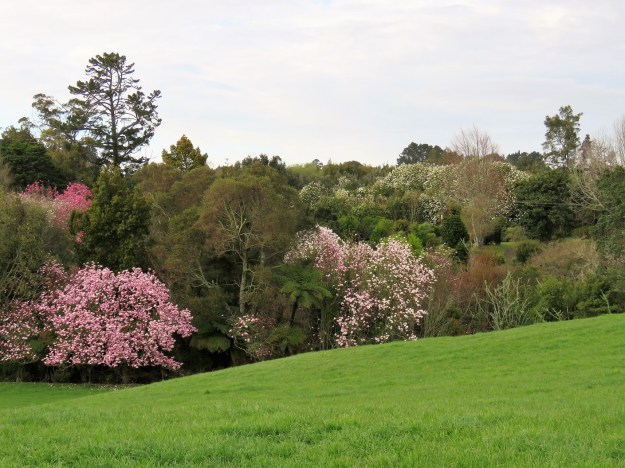
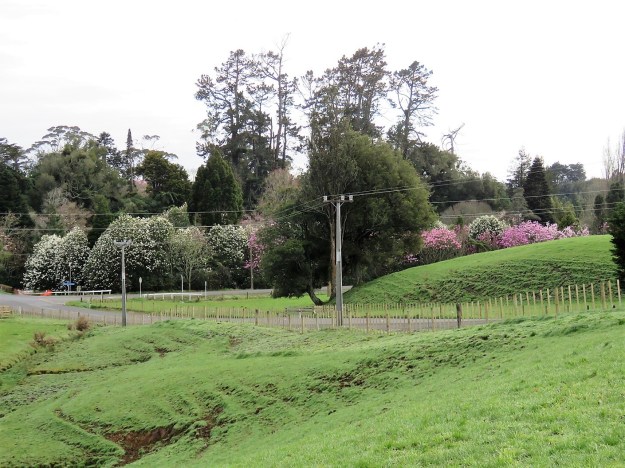
This particular view of our place is one enjoyed by the neighbour’s cows

I headed out this morning to photograph the view the dairy cows that surround us get at this time of the year. Very pretty, it was too. Our property is in dairy heartland, for those of you who do not know this area, so largely a green landscape of rye grass.

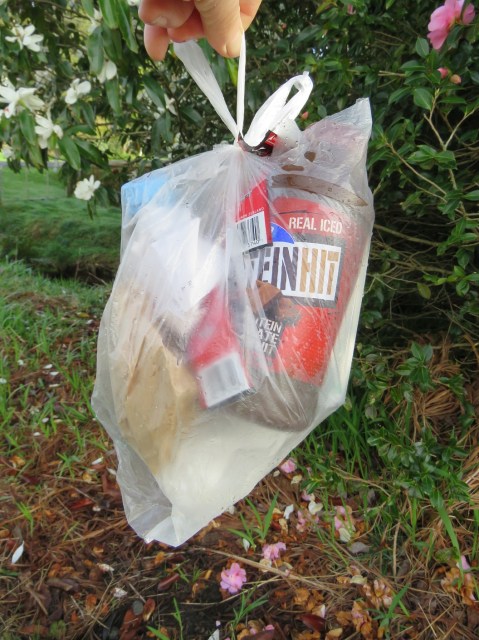
Tied neatly in a bag

But why, of why, do people think it is “tidy” to tie their rubbish into a neat plastic bundle to throw on the road verge for somebody else to pick up? This is not a rare event around here. Do these people not realise that the plastic that they discard will not decompose? Either somebody else has to pick it up or it will lie there, breaking into smaller bits, until a flood comes through to sweep it downstream out to sea where it will kill turtles, fish and seabirds instead.

A preponderance of high energy drinks and snacks. Some are even gluten free.

A forensic analysis of the contents shows a disproportionately large number of high energy foods and drinks which suggests that, in this case, it may have been recreational cyclists that discarded this bundle. There is a cycle trail that runs along that road. In which case, shame! Shame! Shame! You get out on your bike to enjoy the beautiful countryside which you proceed to despoil. Cyclists do not have this unlovely attribute to themselves, however. It is more commonly thrown from cars. It appears that we live about the distance from the city that it takes to completely eat a takeaway meal from MacDonalds, Burger King or KFC. We know this because we often pick up the waste from our road verges.

What is wrong with these people? Could they not just open their eyes, smile at the flowers, sniff the scent-laden air and take their rubbish home with them?

The view of the other end of the property