
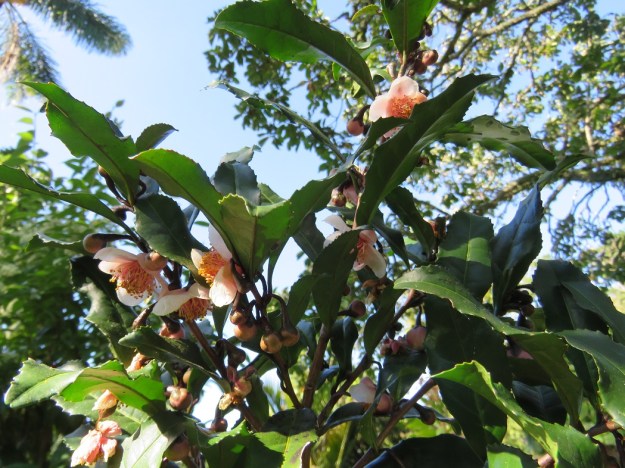
Camellia sinensis, the tea camellia, flowering at the end of March
With just one sizeable bush of the tea camellia, C. sinensis, the harvest was never going to be huge but after fiddly-faddling with a few minor efforts in recent years, I was determined to get as much as I could this year. I now have considerable respect for the tea-pickers of Sri Lanka and India but I assume one gets faster with practice. Mark tells me he has another three plants ready to be put out into the garden so we should, with more attention, be able to increase the harvest, though we are unlikely to achieve self sufficiency.
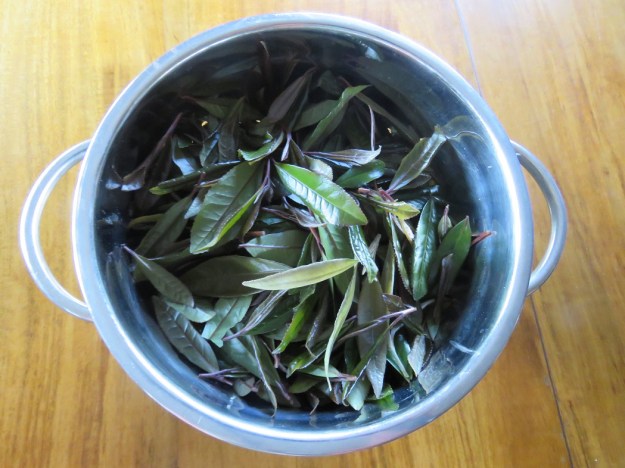
The first, small pick of tender tea tips
Harvesting is picking just the top two or sometimes three leaves from each growing tip, just as they are unfurling and still very soft and young.
The tea bag has a lot to answer for in terms of reducing the drinking of tea to the most convenient but mundane and utility level of activity. Where is the romance? Let alone the quality? Even worse are the gourmet tea bags which appear to be packaged in individual nylon bags and are therefore non-biodegradable, whatever the packet says. As our lives have become more leisured here at Tikorangi, we reinstated the old ways of making good loose-leaf tea in a teapot for the afternoon cup. Sometimes I bring T2 loose leaf tea back with me from Australia but we also have a New Zealand mailorder supplier at Tea Total and I have come to conclusion I prefer their teas. It is not as cheap as supermarket tea but for the afternoon ritual, we think the better quality and flavour is worth every cent.
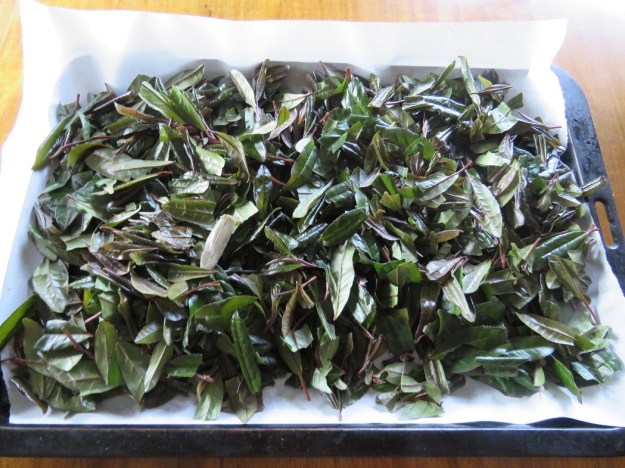
Spreading on a flat tray to lightly oxidise and dry
My home-grown tea is free. Because we like aromatic teas, I have flavoured three batches differently. The first is lemon scented – I added some of the young leaves of the lemon myrtle – Backhousia citriodora. The second batch I dried with orange blossom (proper orange, not the mock orange philadelphus) and a few fine peelings of the outer rind of an orange and rose petals. The third was lime (lime blossoms and few young leaves) with mint and rose petals.
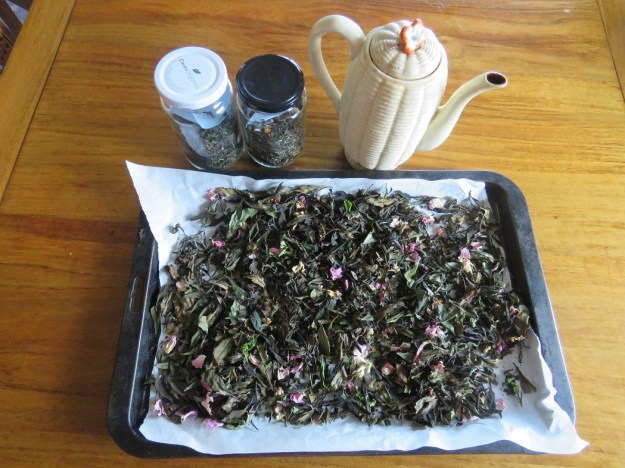
The yield from a tray is not large once it has dried – but fresh and aromatic
We tried making straight green tea in the past, first from fresh leaves straight into the pot and the then with leaves just wilted and left overnight. The taste was perhaps just a little too subtle for our palates. Now I do a process somewhere between green and black tea – bruising the leaves and leaving them covered overnight (which starts the oxidation process). Then I sun dry them on flat tray – which can take from one to three days, depending on the strength of the sun. And voila! Fresh tea ready for the pot. With no packaging and no carbon footprint.
In answer to the question as to whether there are different camellias for different teas, I quote Wikipedia: “Camellia sinensis and its subspecies, Camellia sinensis var. assamica, are two major varieties grown today. White tea, yellow tea, green tea, oolong, pu-erh tea and black tea are all harvested from one or the other, but are processed differently to attain varying levels of oxidation.” There are different selections of the species and some will have different characteristics, but the vast majority of tea sold in the world is indeed from Camellia sinensis.
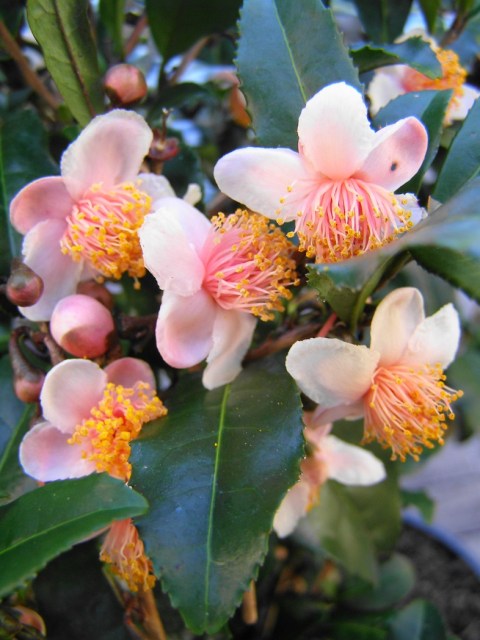
Our form of sinensis is pink flowered which is unusual. But I think I strategically placed additional flowers to make this photo showier than it is in real life.

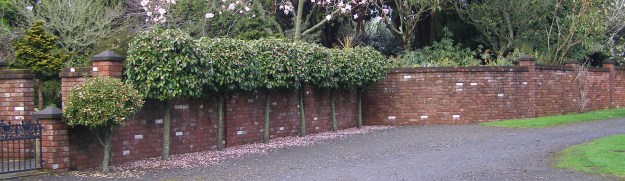
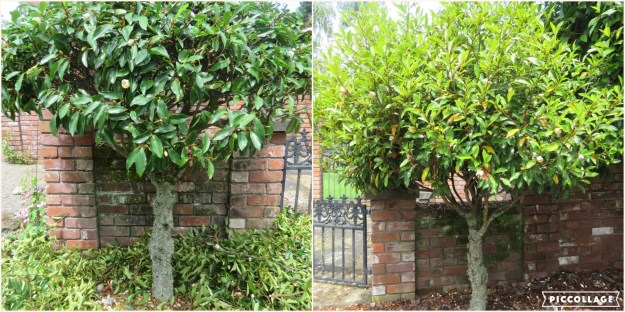 Aesthetically speaking, cutting with secateurs means there is no leaf damage whereas the speedier clippers or hedge trimmer will cut almost every external leaf which will then discolour on the damaged edges. It is also easy to reach in at the time and remove dead wood and do a clean-up of the interior of the ball using secateurs and the finished result is less… brutally shorn, shall I say?


 Australia continues to embrace the briefest of brief swim attire for men, usually referred to as budgie smugglers. For recreational wear, New Zealand men long ago moved to the more modest baggy attire of surf shorts. I am fairly sure that only competitive swimmers and the occasional embarrassing older dad wear such brief togs in NZ these days. But then I do not think we have ever had an onion-munching prime minister who took some pride in being photographed publicly in these budgie smuggler togs. If you google Tony Abbott, you will find plenty of evidence and if you are not Australian, it is near incomprehensible.
 I photographed this sign in Canberra but ringing in my ears were the cries I often hear in our local city of New Plymouth to fell trees where the roots are starting to lift the seal. It is a curious fact that as soon as this occurs, legions of people suddenly speak up for the welfare of the elderly who, in our local area at least, are allegedly incapable of coping with an uneven surface. Having travelled in Asia, Australia, Europe and the UK, I can assure you that a bit of lifting or cracking of seal is NOT seen as a reason for removing trees in those places.




 People can be so CARELESS about the environment. While in Melbourne, I went to the botanic gardens and clearly people feel it is appropriate to graffiti plants. Why would anybody think it is okay to carve names and messages into this beautiful silver agave? And in the stand of giant bamboo, I could not see any stems that had not been claimed by autographs and marks. It is a form of territory marking, like dogs, but this is not their territory to mark. I just don’t get it. I really don’t.
 Tikorangi The Jury Garden