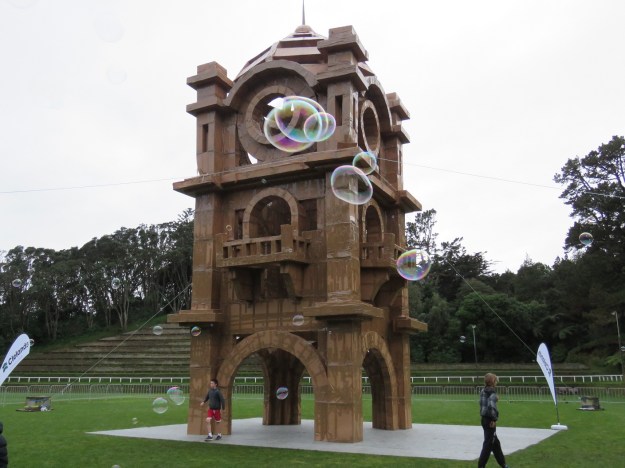
In the fading light of late afternoon, a one-day cardboard tower on the cricket field at Pukekura Park (with bubbles)
The photo is of The People’s Tower, built yesterday in New Plymouth in cold, wet and miserable conditions under the direction of visual artist Olivier Grossetête. Today it will be demolished for it was only ever to be a temporary installation. Today is the last day of our Arts Festival, you understand.
I admit Mark and I only turned up on our way to an early evening show. We did not assist with the construction in trying conditions during the day. The reason I wanted to record the magnificent sight is because of cartons. Believe it or not, cartons and carton closure tape have played a significant role in our lives. Indeed, we are probably alone in being aghast at 1500 custom-sized cartons (in two different sizes) and 264 rolls each of 100 metres of tape being used in this handsome structure.
When Mark first set up the nursery here in the early 1980s, he started by selling plants mailorder. It was a major part of our lives for the next two decades. It takes a lot of cardboard to mailorder plants, especially large grade trees and shrubs. Mark would gather as much as he could from recycling bins, particularly out the back of the supermarkets. Needs must and there was no place for faux dignity when it came to gathering cardboard. He was a whizz at constructing cartons to protect plants – it took several biscuit cartons, for example, to construct a sturdy protective cage for a single magnolia. We still have the industrial strength staple guns and hand-held dispensers for the tape.
As the nursery became more profitable, we took to buying in the largest size cartons. Because these were custom made to our specifications, we had to order them in quite large quantities. It worked out just over $5 a carton and this was back in the 1990s. The bill for a batch of cartons seemed eye-wateringly large at the time and, as the bill-payer, I have never forgotten my anxiety at the cost of cardboard. In the same manner, it took many years for Mark’s eyes to stop zeroing in on potential sources of recyclable cartons. So we did marvel at the wanton display of extravagance in the cardboard and tape People’s Tower, magnificent though it is.
Funnily enough, I checked this week on the date of our last ever mailorder catalogue. It was 2003. We must have had one helluva reputation because even today, I field enquiries pretty much every week from people wanting to mailorder plants from us. Dear Peoples, we do not sell plants at all these days. And we have not sent plants to your door for the past 14 years. Cardboard cartons and carton closure tape are well in our past.

Mark is casting an experienced eye over the cartons and the tape….
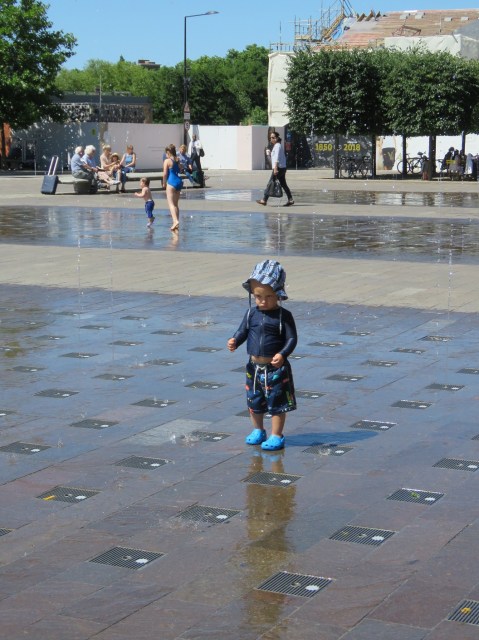
 As we walked along, we saw a few sodden children in their togs (bathing suits) and towels walking towards us. We rounded the corner and there, truly, was an amazing sight. The fountain in Granary Square. It was large and safe for playing. The seating around was occupied by parents watching their children as the water danced in sequences, sometimes stopping altogether for a brief moment, sometimes shooting high and then in waves across the area. It was magnificent. And safe fun. An urban beach, of sorts. Our kids would have stripped off and been in that water like a shot when they were young. It wasn’t exactly tropical on the day we were there but clearly kids still love water play. At night it lights up – 1000 different points of water and light.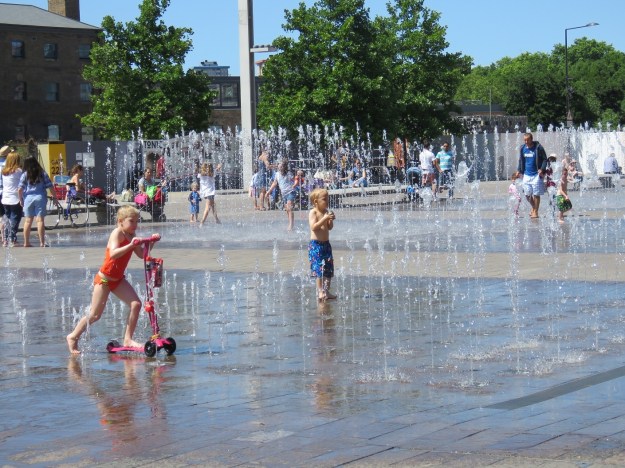
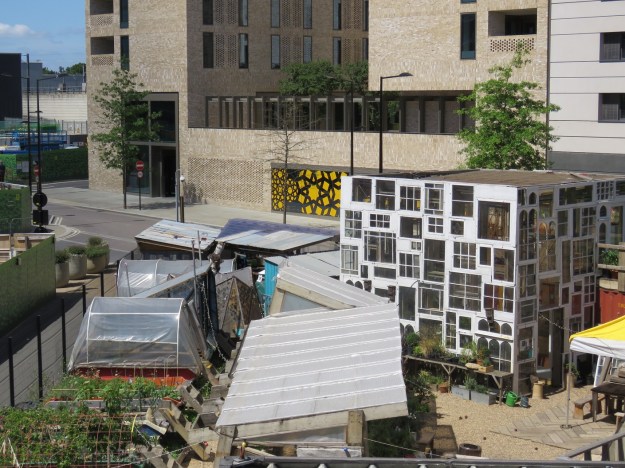
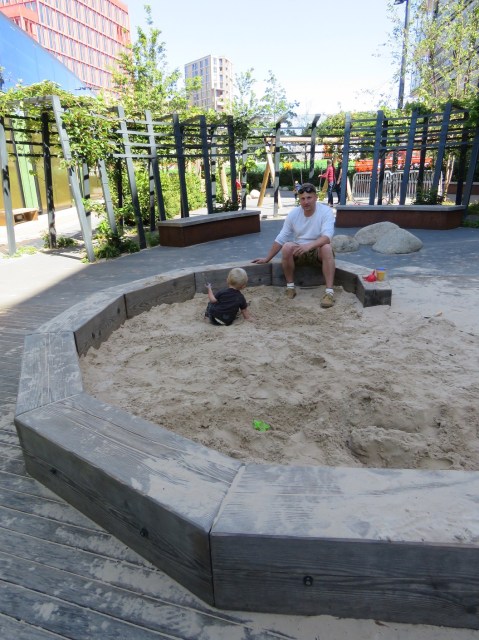
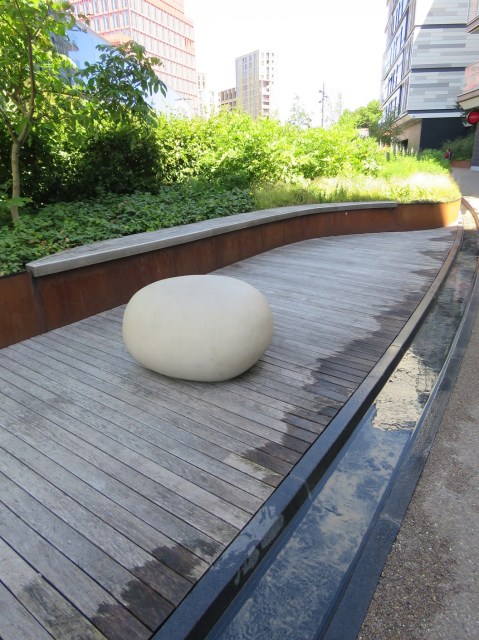
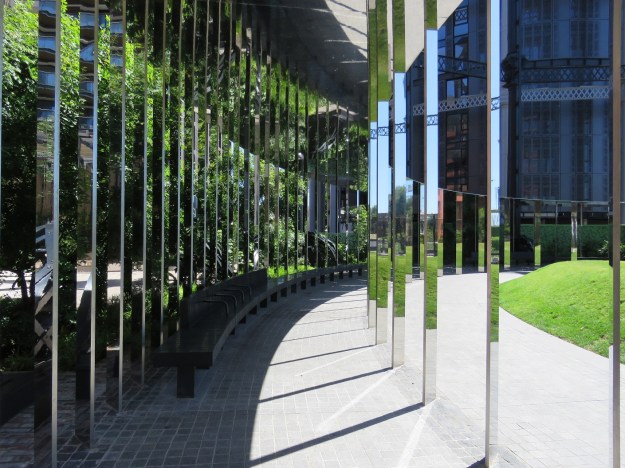 From there we wended our way round to the Gasholder Park, a major redevelopment utilising the old gas tanks for upmarket canal-side apartments and green space and gardens open to all. There is serious money going into this redevelopment around Kings Cross and
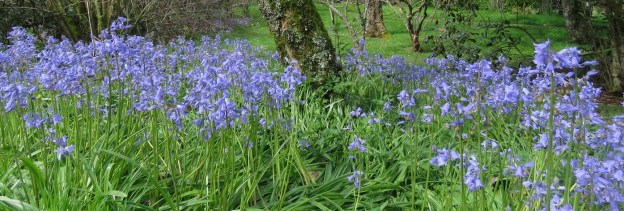
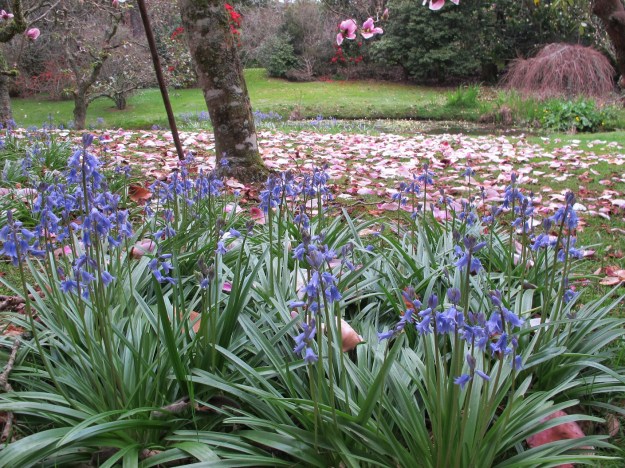 There is something wildly romantic about a proper bluebell wood. I have never forgotten being entranced by the haze of blue through woodlands near Castle Douglas in Scotland and that was more than two decades ago. Those particular bluebells and woodland trees are native to the area but this does not stop many of us trying to replicate the effect at home.
 It took UK writer Ken Thompson to demystify bluebell differences for me. The English Hyacinthoides non-scripta has sweetly scented, deep blue flowers on a droopy spike which means most hang to one side. Individual flowers are narrow tubes with reflexed tips. The Spanish H. hispanica is much stronger growing with an upright spike and flowers radiating all round. There is a greater range of colour from pale to dark blues and lilacs along with the pinks and whites. Individual flowers are bell-shaped and while the tips of the blooms flare out, they don’t reflex. They have little scent.
 A word about white or pink bluebells. While the English bluebell can occasionally throw a white mutant, given the rarity of H. non-scripta in this country, it seems likely that all colour variants we have are either Spanish or hybrids. The whites and pinks are charming mixed with the predominant blues, making a pretty scene. Isolate them out by colour on their own, and they become a novelty plant. Bluebells, by definition, should be mostly blue. A display of only pink bells would look awfully contrived for this simple flower while a mass of white bells might as well be onion weed, really. That is my opinion.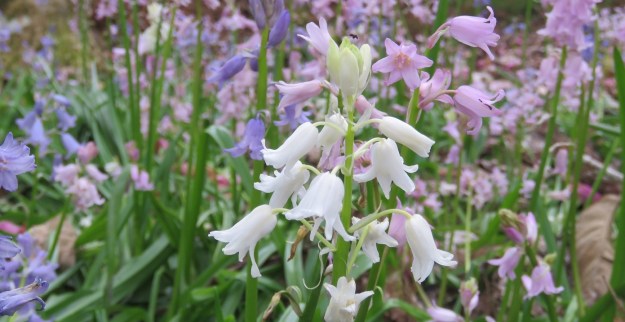

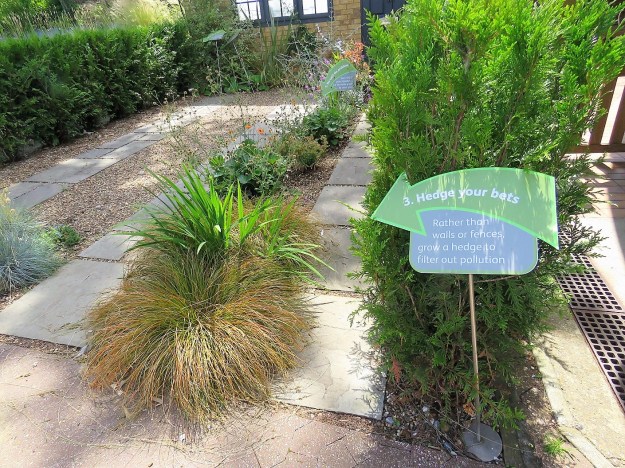
 The environmental benefits of growing plants are perhaps a harder concept to sell to people who don’t see anything wrong with living in concrete jungles. But we ignore the evidence of declining insect populations and the loss of biodiversity at our peril. Our planet is hitting crisis point, fuelled by human ignorance.
 It is not that the RHS are the only body leading public education in this area, but they are an influential one and all power to that.




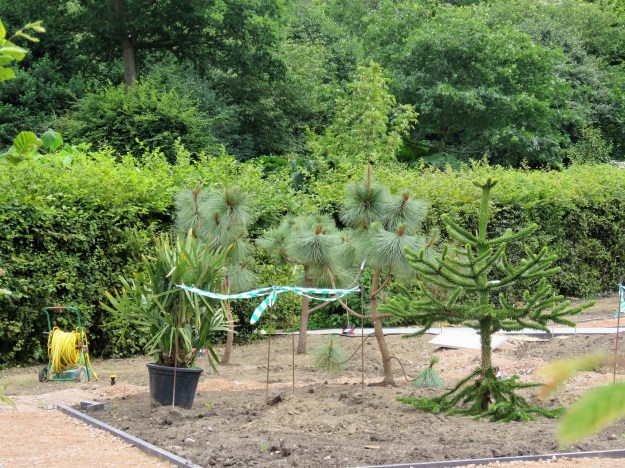 These friends had recently been to Great Dixter and expressed surprise at Christopher Lloyd’s dramatic ‘subtropical’ garden being taken out and seeing conifers going back in instead. It became a little clearer when we came across the Wisley project along similar lines. The conifers are being used as a framework for subtropical plantings. This is not a combination that would ever occur to a New Zealander but we will reserve all judgement until we see the finished product. Sometimes it is good to be surprised. Conifers are long overdue a revival and who knows? Maybe a new combination will launch a new fashion. Or maybe not.
 Tikorangi The Jury Garden