
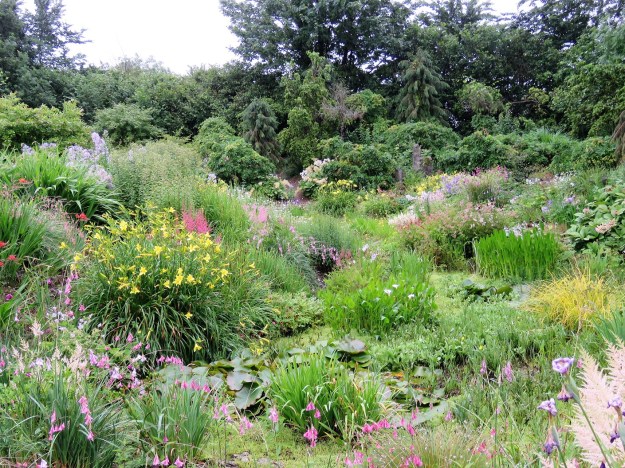
Layer upon layer of plants in this complex but relaxed style of new naturalism
It was raining on the second last day of June when we visited Wildside Garden in Devon but this did not deter us. However, it did mean some of my photos have raindrops blurring out sections when I failed to check my lens. At least it was summer rain and neither cold nor windy. It was our second visit to see if the buzz we felt when we first saw it in 2014 was still there. It was. This is an exceptional garden in our eyes.
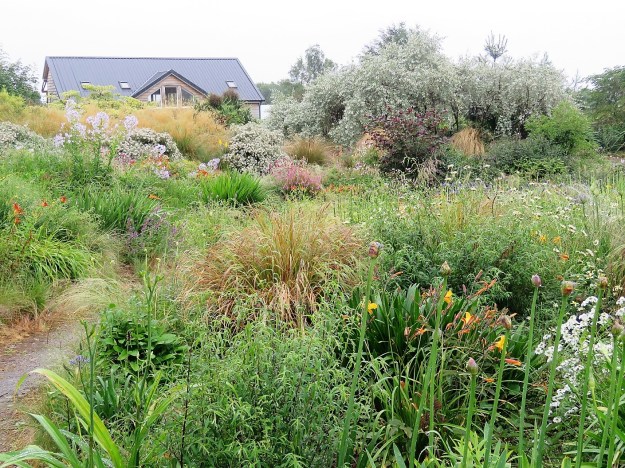 Keith and Ros Wiley had shut the garden for the past two years in order to start building their house and are still only open for very limited days but it is worth planning a trip around those days. It was interesting to see the way in which the building of the house gave a central heart to what is a private and very personal garden. But also, we knew we were looking at a situation where the owners’ energies had largely been going into the house in recent times. The garden hadn’t expanded physically into the remaining areas that had already been prepared when we visited in 2014. It will happen at some stage, I am sure. The existing plantings had filled out and softened in the intervening time.
A plant collector is one for whom the thrill of acquisition and ownership of plants is an end in itself. A plantsperson is one who not only knows what plants are special, but also how to grow them and feature them to advantage. Sometimes a really good gardener is also a top plantsperson and they don’t come much better than Keith Wiley. He finds plants fascinating. He collects plants. He knows how to grow them well, even very difficult material. And he gardens with a huge range.
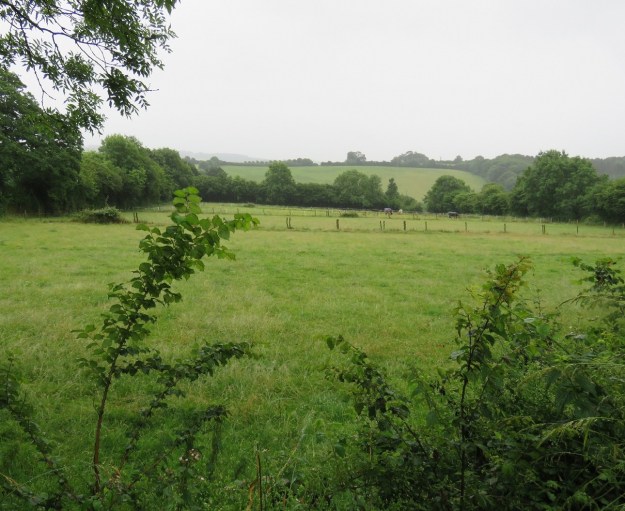
Wildside has been sculpted from a 4 acre, near flat paddock like this one next door
It is even more remarkable when you consider that Wiley started work with a near flat block of land. He has not only manipulated the contour to create a landscape of hills, hollows, banks and even the odd ravine, he has managed the depth of soil and its composition appropriate to the plants he wants to grow. From the start, his planning was to accommodate communities of plants – to create different ecosystems within the garden to enable growing a wide range of different plants.
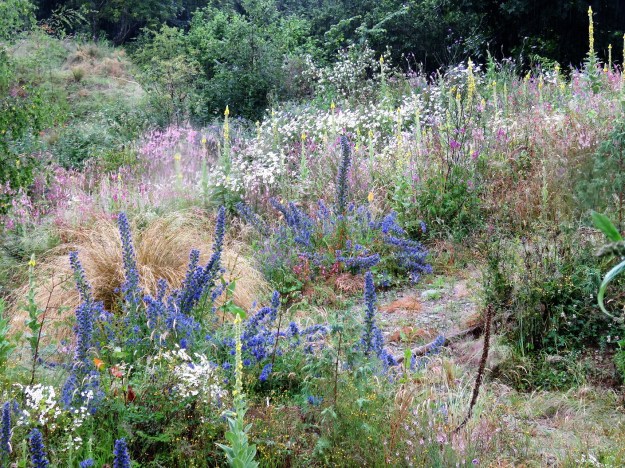
Like an Impressionist painting
If you are not much interested in plants themselves, you can admire the scenes he composes These can be like Impressionist paintings though perhaps more Georges Seurat and pointillism than Monet. I am sure it is no coincidence that Ros Wiley is also a painter who prefers flowers and landscape as her subjects. But we are interested in the plants and plant combinations as well. Presumably Wiley has one of the most comprehensive collections of dieramas (angel’s fishing rods) around but they are used throughout and not all concentrated in one block, as “national collections” are usually displayed. We were in the wrong season for the erythroniums for which this garden is renowned but it also has extensive collections of different daphnes, cyclamen, Japanese maples, kniphofia, roscoeas, agapanthus and a host of other bulbs, perennials and smaller growing woody plants.
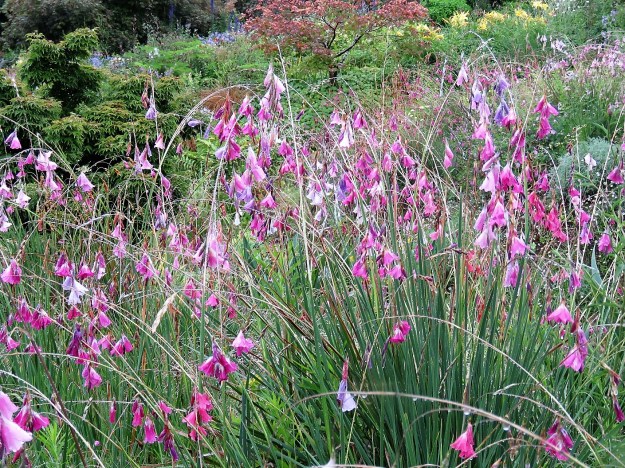
Dieramas or angels fishing rods in abundant quantities and many hues
There is next to no hard landscaping beyond deliberate placement of rocks and constructions of microclimates. Wiley is one of the early practitioners of the new naturalism gardening style, predicated on working in cooperative harmony with nature and creating eco-systems which are a refined version of many different, natural habitats. Do not confuse this with a wild garden which is left to its own devices. It is controlled but deceptively so, with a light hand.
We had been looking at the naturalistic prairie-style plantings around Olympic Park just a few days prior, greatly enjoying their simple charm. At Wildside, we felt that the Wileys were achieving a hugely detailed, complex and skilled variation of those Sheffield School plantings at Olympic Park, but still on the same spectrum of contemporary naturalism. It is no designer garden. It is a landscape created with sensitivity and top level plantsmanship.
It is also a garden that we will make the effort to keep returning to see. There aren’t many gardens that we have visited where both of us walk out feeling as if we have had an experience of joy. Wildside is one.
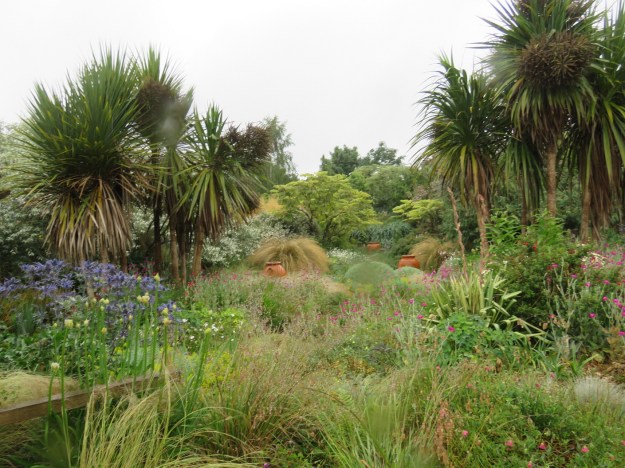
New Zealand cordylines in Devon
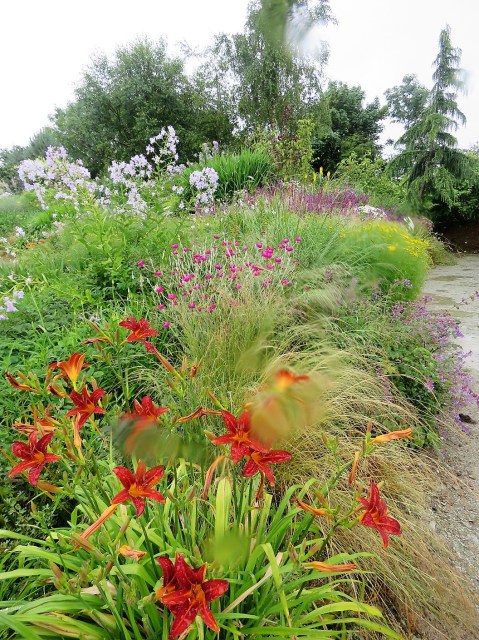
Raindrops keep falling on my camera lens…
If you want to see more of Wildside, I have posted the companion album to our Facebook page.
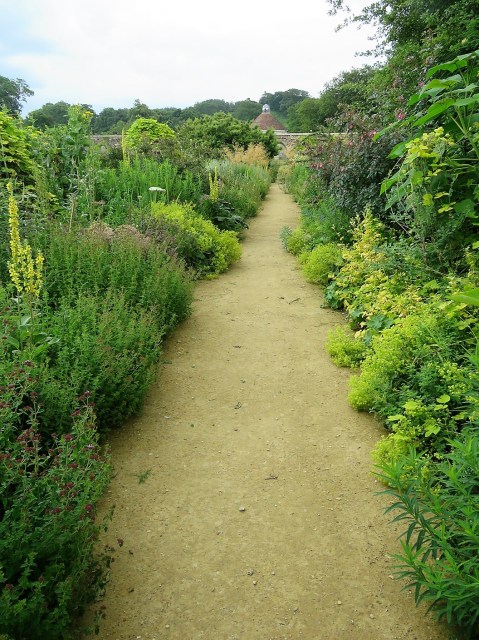
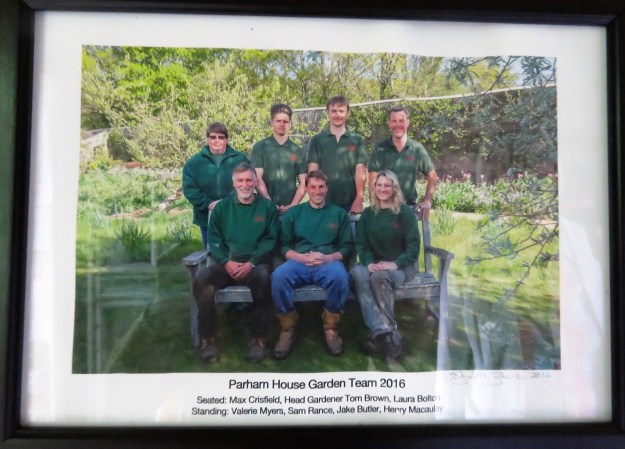 There was a team of seven hard working gardeners though I can’t tell you if they are all full time. We met the head gardener because he did his apprenticeship under the eye of our friend who took us there. Britain still has an enviable tradition of training professional gardeners. I have seen a few gardeners at work when we have been out touring, and I can tell you that these Parham ones were hard workers and focused on tasks to hand.
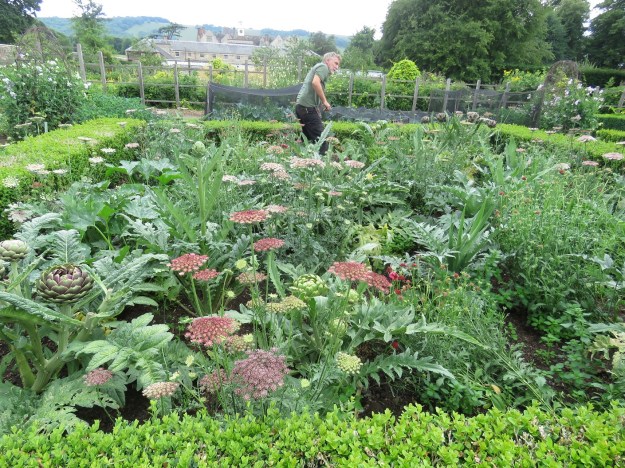 From memory, they are required to provide 30 buckets of blooms to the big house a week. That is a huge amount and they must be hard pressed in winter. But the production of both food and cutting flowers was impressive – highly productive, in fact. Also done without chemical sprays.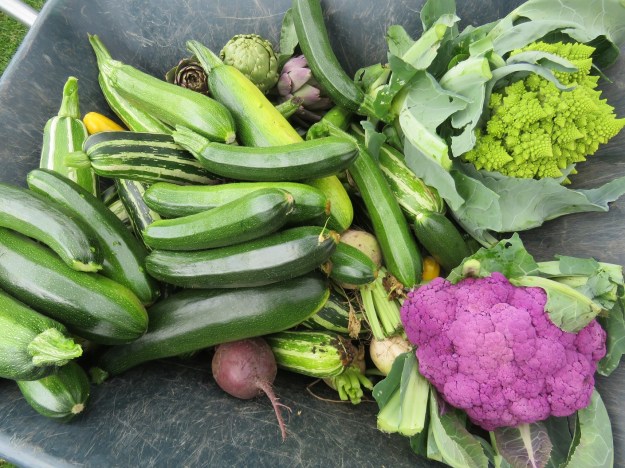


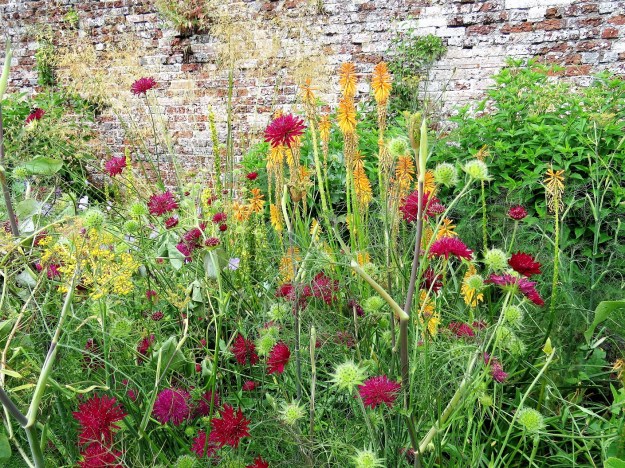
 The herbaceous borders were another modern take on classic design and techniques. The blue border was the most recent to have had a major makeover and it certainly looked glorious. I complimented the woman in blue whom I photographed strolling through the border, for her superb choice of toning colours. The yellow border was less flowery on the day but carefully composed and easy on the eye. The shorter white border was also at peak border perfection that the Brits can do so very well. If there was a red border, I missed it entirely but I do not think there was.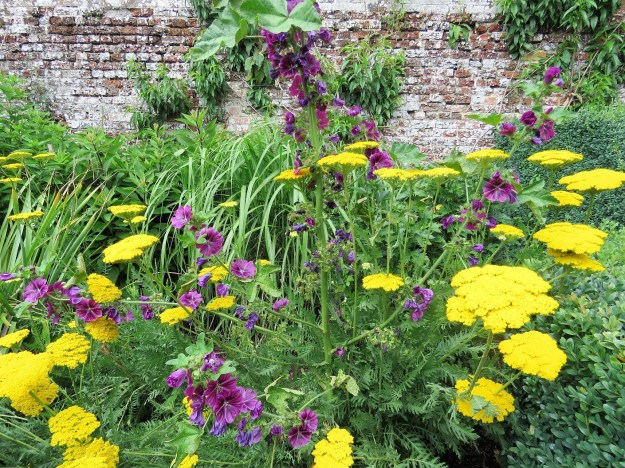
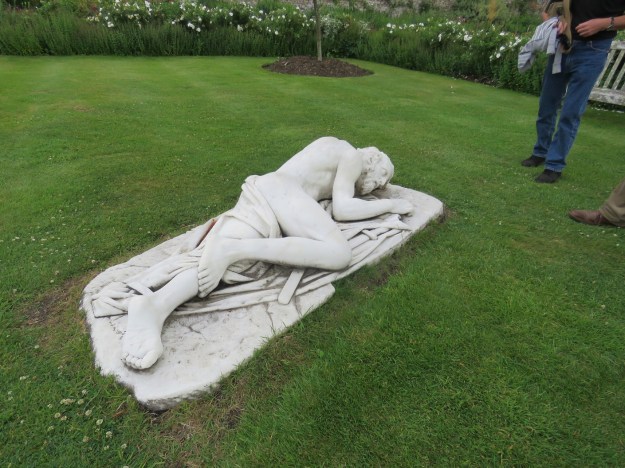
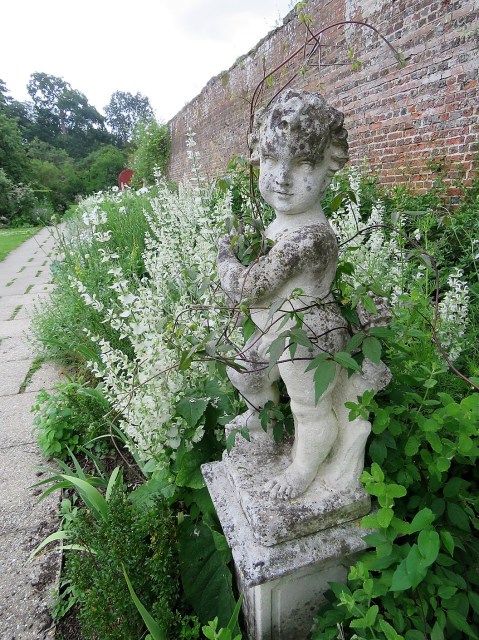
 Some of the statuary was… very white. Not necessarily to my taste. Some were more subtle than others. This was not. I am sure there will be somebody out there who can explain the significance of this figure and the inscription he is marking out with his finger.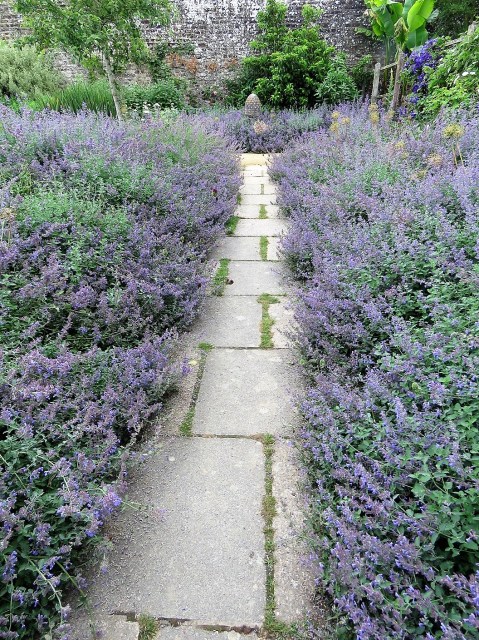

 The front garden was the first to be done and is a walled area. We have seen a number of large scale Oudolf plantings now. Bury Court is early Oudolf but, more interestingly, it is domestic and private in scale and design which makes it very different. The perennial plantings are still big, bold and bouffy but on a scale suited to this environment. I look at the photos and I see how much thought has gone into the combinations and juxtaposition of plants but when you are surrounded by them in person, it is more an experience of being enveloped by the vibrancy.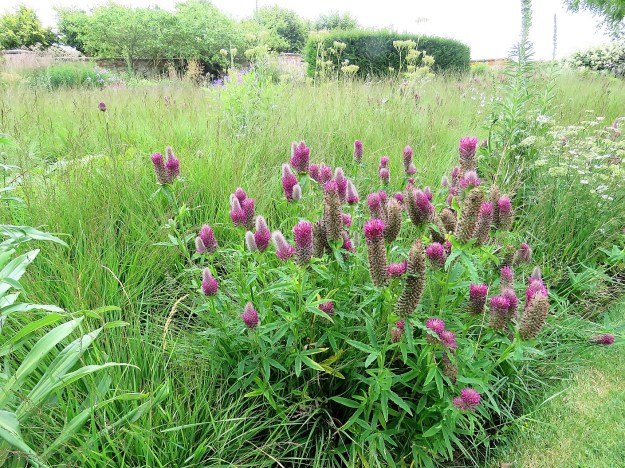
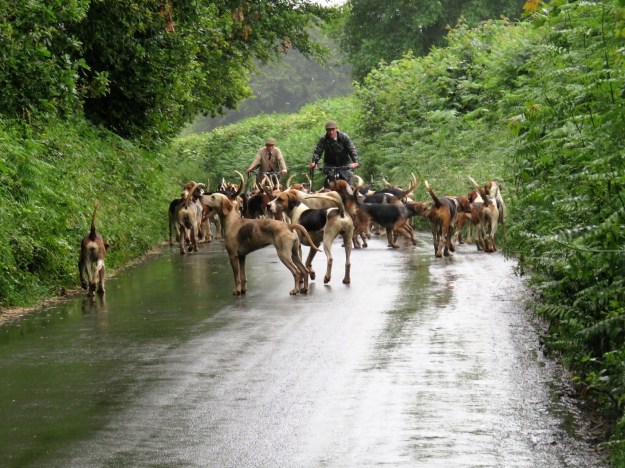 The hunt dogs! Or hounds, I have just been informed (see reader comments below). Indubitably hounds. Out for a morning run on a Devon lane with their keepers on bicycles. Beautiful hounds, so very well trained and an interesting scene but still incomprehensible to me. English garden media personality and writer of steamy romantic novels, Alan Titchmarsh, may defend foxhunting on the grounds that it is, apparently, a traditional part of country life – country life, that is, as experienced by the toffs who cry ‘tally-ho’, not so much a traditional pursuit for the peasantry. But tradition alone is not a justification for anything, really.
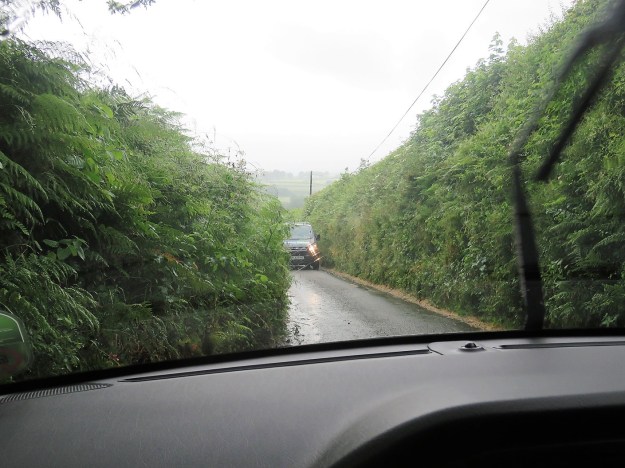 The Devon roads can be notoriously narrow, though they are by no means alone in that. These roads can carry more traffic than the upgraded, single carriageway that passes by our place at home but there does not appear to be an uproar with loud demands that they be widened, straightened and allegedly made ‘safer’ for cars and trucks. It means drivers must be fully alert, dropping speed to meet the conditions, courteous and capable of backing up to the passing bays that are dotted along these roads. It is a very different ethos to the aggressive driving on New Zealand roads. If we were more defensive, tolerant and patient drivers, maybe our corner of the world would be a better place?
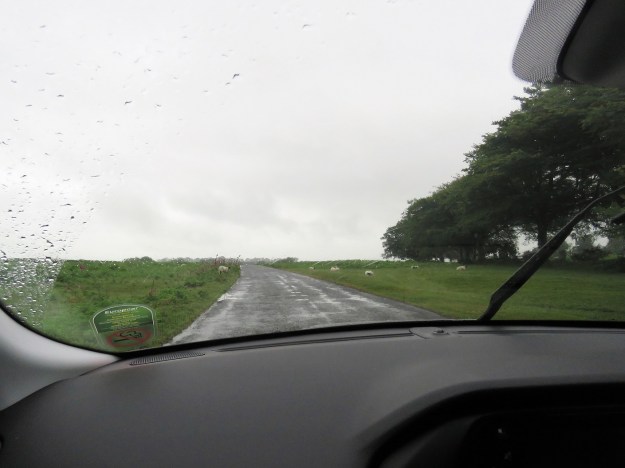 We went to south Devon to have another look at one of our all time favourite gardens – Wildside. More on this garden in a future post, but it is on the edges of Dartmoor. It rained on our day there, though fortunately it was not cold. There is a certain evocative gloom to the open moorland on a grey day with low light levels. Because I have always done my reading from across the world in New Zealand, the geographic location of different moors is hazy at best (though I think I have the heaths and heathers of Scottish moorland separated in my mind). I kept thinking of the likes of Daphne du Maurier but I see she set ‘Jamaica Inn’ on Bodmin Moor which is the next one down and Dartmoor belongs to ‘Hound of the Baskervilles’. But one can imagine this landscape with the bleak winds of winter blowing across it and it certainly has its own identity, including the roaming stock and lack of fencing.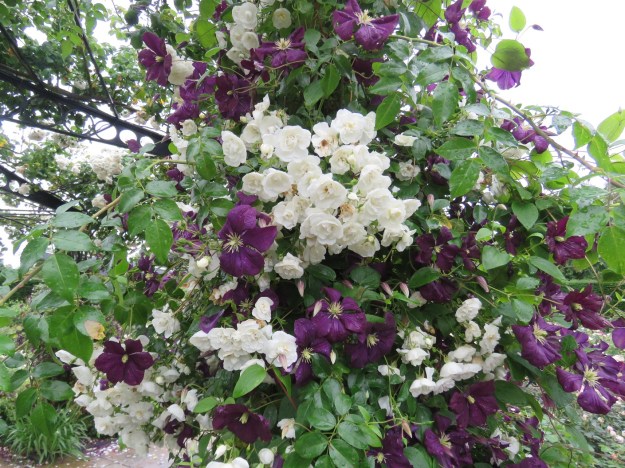
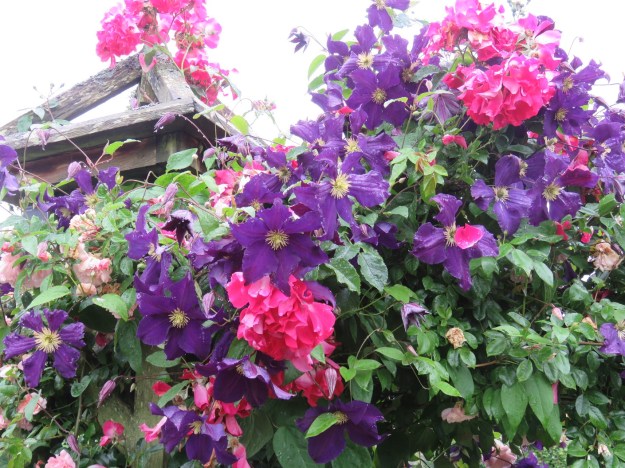 While in the area, we headed over to see the RHS garden, Rosemoor. The original garden and accompanying land was gifted to the RHS by Lady Anne Berry, now a long-time resident of Gisborne. Lady Anne had been particularly kind to us in our earlier years so we were pleased to finally get to see Rosemoor. While the traditional rose garden left me unmoved, the rose and clematis combinations in the adjacent garden enclosure were a delight.
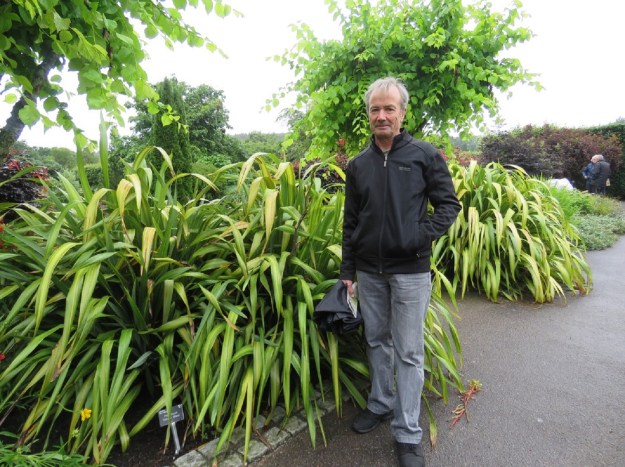 I make Mark pose for vanity photos beside what we call ‘Jury Plants’ as we come across them around the world. Part gentle boasting, part family record. In this case it is Phormium ‘Yellow Wave’, bred by his father Felix and one of the first generation of variegated flaxes for home gardens. He never received a cent for it (or a penny, as it would have been back then) and is rarely credited with it. It is not easy to keep good foliage on phormiums in New Zealand so Felix moved on to astelias and then clumping cordylines in his attempts to get an extended colour range into plants with this habit of growth and foliage. Eventually, this led to our Cordyline ‘Red Fountain’ but Phormium ‘Yellow Wave’ continues to hold some ground internationally.
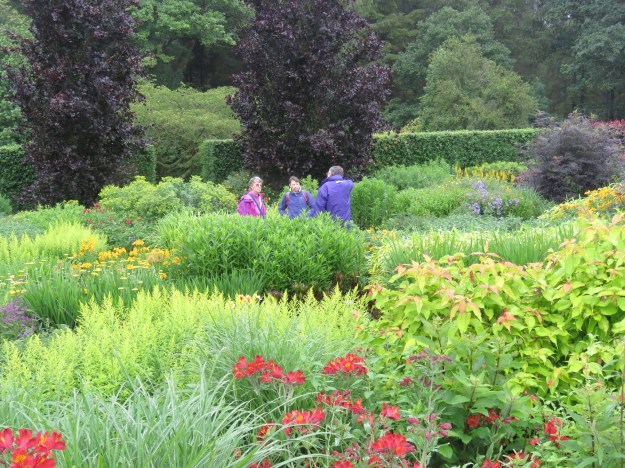 Still at Rosemoor, the herbaceous plantings are terrific. If you are looking for a middle road between the traditional herbaceous border and the grassy new wave look of Oudolf, Stuart-Smith and New Perennials proponents, you probably end up with something closer to these Rosemoor beds and borders. Lots of vibrant colour and care with combinations, often quite tight colour toning but also lighter on plant options that need continual maintenance to keep them flowering and looking good. However, these are herbaceous plantings for large, public spaces, not so much for downscaling to the home garden. You can see more in the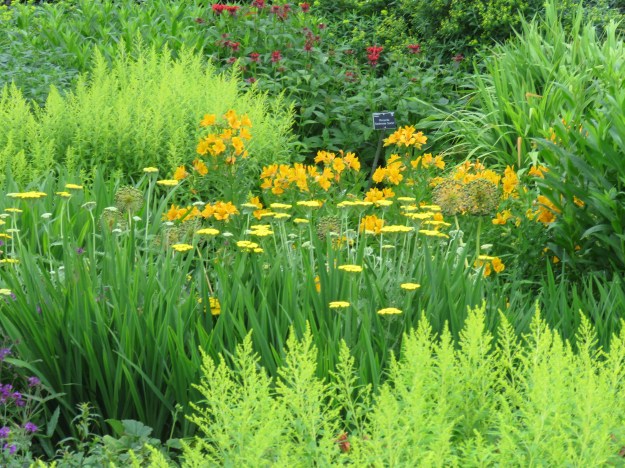
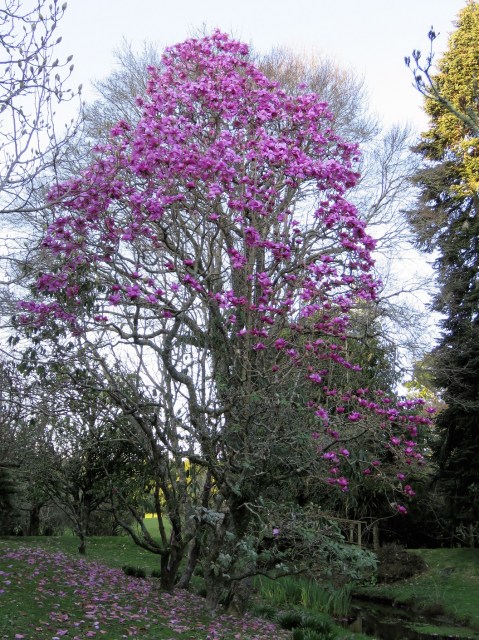
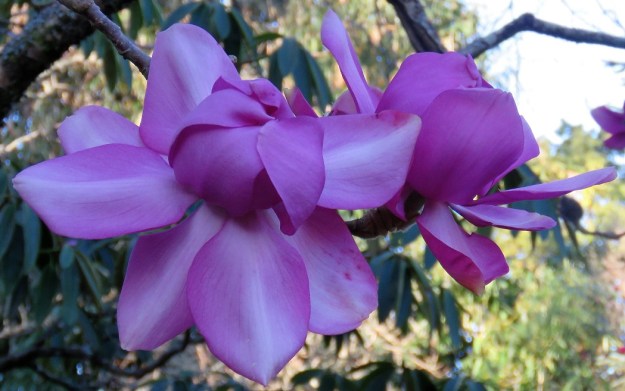
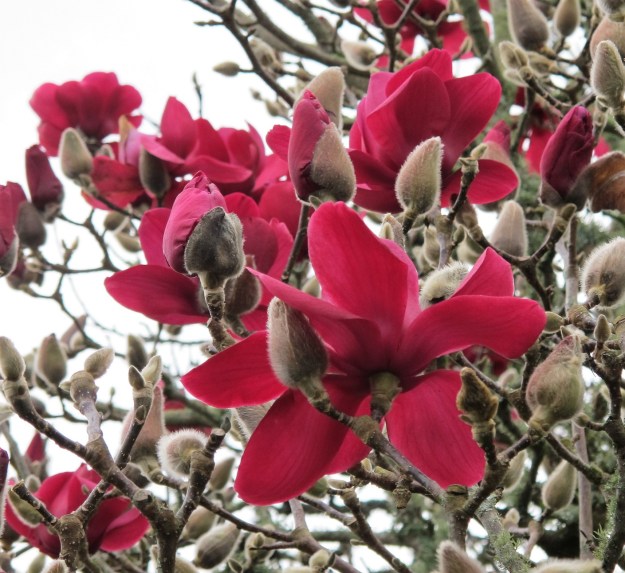
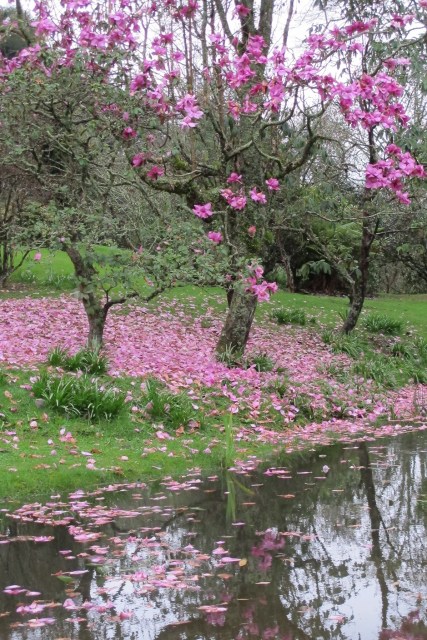
 The true ‘Lanarth’ finally flowered here in the 1960s and it became the key to Felix’s best known success – the colour breakthrough from purple into red tones, first seen in Magnolia ‘Vulcan’. The rest, as they say, is history and New Zealand is now recognised internationally as the home of the best red hybrids. These days with the downstream breeding, the purple tones of ‘Lanarth’ are being eliminated in favour of purer red shades. Now it is the case that there are several good red magnolias on the market, but no large, purple-flowered, garden-friendly improvement on the original ‘Lanarth’ that we have seen. It has been attempted. We just haven’t seen one yet that we think is as good as, let alone better than the original.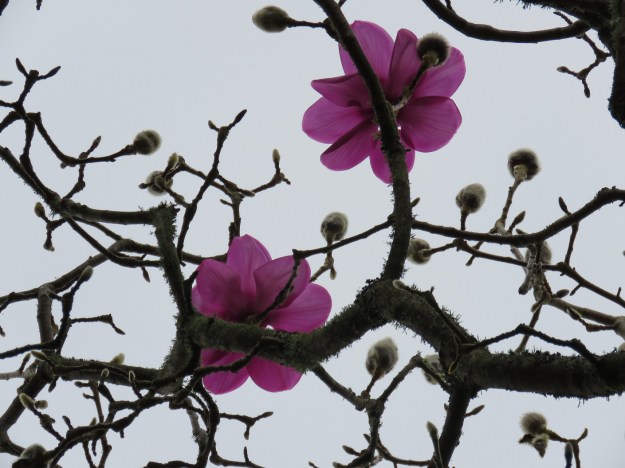

 Tikorangi The Jury Garden