
My Sunday mornings with Tony Murrell on Radio Live’s Home and Garden Show have moved to the more civilised hour of 7.45am. This was just as well this morning with our land line down. Because we live in a mobile black spot, I headed out across the property under an umbrella (it was spitting), to the point where I know I can get at least one and sometimes two bars on my mobile phone. I was committed to speak on my concern of the week – green waste and the ubiquitous wheelie bins.
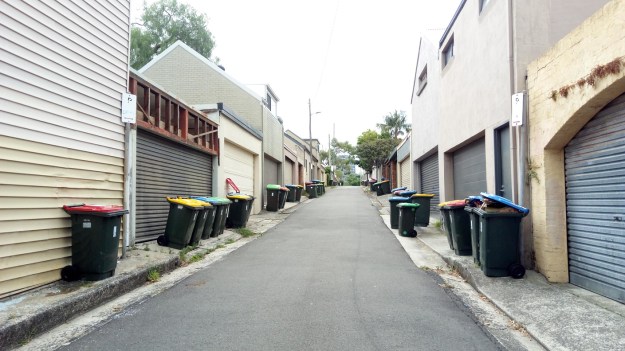
“Go forth and multiply” – the rise and rise of the wheelie bin
When the directive came to “go forth and multiply”, I cannot think that it was ever meant to apply to wheelie bins. But that is the case. We live in the country and for years we took responsibility for our own waste disposal. When the local council extended rubbish collection to many rural areas, it was undoubtedly convenient but it came with a hefty price tag. We now have a wheelie bin for recyclables and an inconveniently shaped bin for glass which needs to be transferred to a wheelbarrow to transport it out to the roadside. But wait, there is to be more. Plans are afoot for another wheelie bin to take the non-recyclable rubbish, another for green waste and I am not sure where the plans are to give us a fifth small bin to sit upon the kitchen bench to take the green waste before we transfer it out to the wheelie bin. Plastic, plastic and more plastic.
As I said, we live in the country. Everybody I know who lives in the country has some sort of composting system. There is no need to charge us for removing our green waste and increasing its carbon footprint further by transporting it to a central depot.
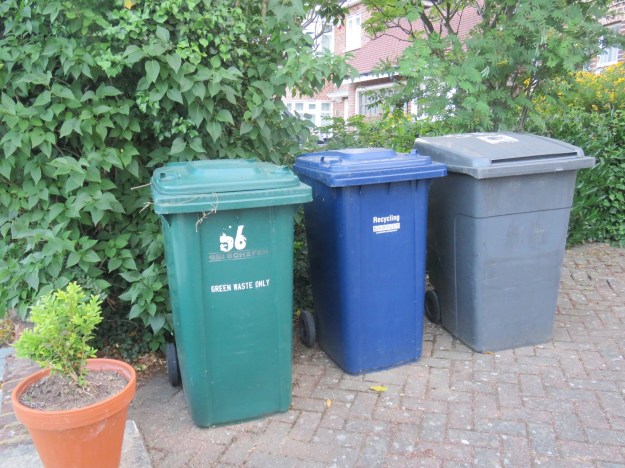
Wheelie bins of London. I have seen British gardening shows showing strategies for concealing your wheelie bins in little enclosures with “living roofs”
What worries me the most is that this new drive to collect everything from the gate actually fosters an “out of sight, out of mind” mentality. And these great thunking wheelie bins encourage people to put yet more rubbish out. Councils such as ours can espouse “zero waste by 2040” sentiments all they like, but these are aspirational only when their actions are geared to hoping residents will sort their rubbish at home before they wheel it out for collection. It is still predicated on ratepayers paying a levy for somebody else to cart away their rubbish and to deal with it. The feel good factor without actually achieving much at all.
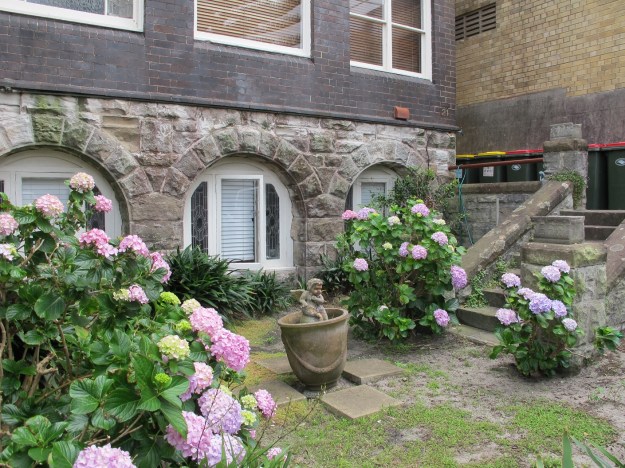
Wheelie bins of Coogee to the right
Our Sydney daughter lives in a third floor apartment and has a worm farm. She alerted me to Compost Revolution, an organisation that works with Sydney councils to encourage residents to take responsibility for their own green waste and to deal with it at home. Attend a two hour course and you get either a free or heavily subsidised composting option – Bokashi, worm farm or bin, whichever is best suited to your circumstances. That is a constructive model that gets ‘buy-in’ from participants and changes long term behaviour. Green waste can account for around half of household waste. So it is a huge reduction in volume if it can be dealt with on the home site and a big reduction in carbon footprint if it is not being carted away for recycling. It is interesting that Compost Revolution appears to have worked on solutions applicable to high density urban living.
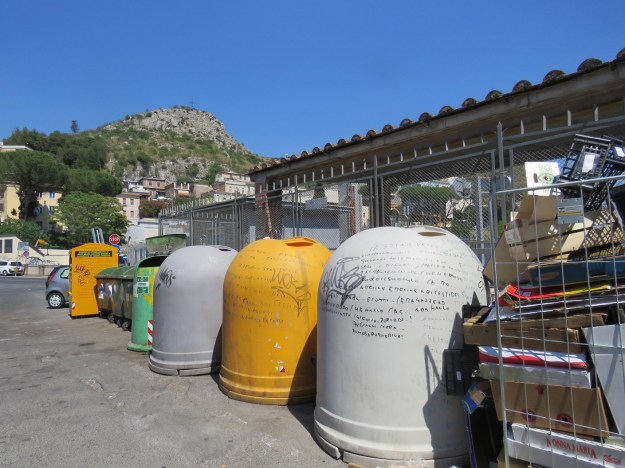
Centralised waste collection in Tivoli
I was impressed by the European models I saw of centralised collection points where people sorted to the appropriate bins as they dropped off their rubbish. In a densely populated, old town like Tivoli, individual household collection would be near impossible. These collection points were emptied each day and the area swept. There was nothing offensive about them, even in very hot weather. Everything about this model encourages a reduction in volume and individual responsibility.
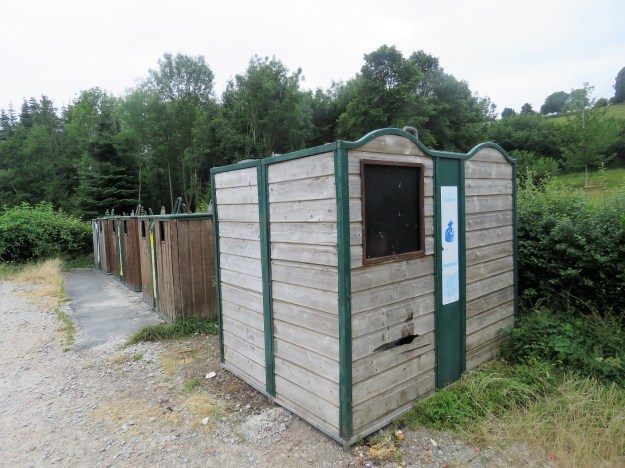
Rural waste collection in Camembert, France
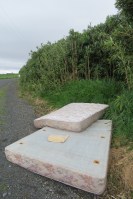
Rubbish disposal, New Zild style, near where I live.
In France near Camembert was this smart and tidy collection point for community refuse. It remained tidy for the several days we stayed nearby. Sometimes I despair at home. Prior to the collection of our refuse from the gate, Council tried a local collection point down the road from us. People treated it like a roadside tip. Literally. It was revolting. Don’t worry about how the system works. Just hiff your rubbish out from your vehicle whenever you want. Sometimes we seem so backward and uncivilised in this country I love and never more so than on household rubbish. Out of sight, out of mind.

Don’t, just don’t pile up your lawn clippings around the street trees. This is likely to kill them. Mount Eden, Auckland
At the very least, next time you replace your lawnmower, get a mulcher mower. It chomps the clippings so finely that they reintegrate with the turf. This means you do not need to collect them and then find some means of disposing of them. It also means you never have to feed your lawn because you are not stripping all the nutrients off. And look at other ways you can deal with the majority of your green waste on site rather than paying somebody else to remove it and to take responsibility for your waste. It matters.
Should you wish to do a bit of DIY compost, I have in the past posted step by step instructions on
*IMO – in my opinion. The Radio Live Home and Garden Show opinion pieces each Sunday may translate to a new series of posts here.

 To set the scene, from memory the owners told us it is an acre in size. It is flat and Pearson took it back almost to a blank canvas. With the typical Cotswold two-storeyed cottage in the local golden stone being on the road side of the site, the body of the garden has four distinct sections, three of which feature water. The first is by a charming stream boundary and centres on a large elliptical pool with restrained plantings. The second is a formal garden built around a canal, with a dining area closest to the house. The third is the most spacious and contains a swimming pool. It was apparently the first garden Pearson had done that included a swimming pool and he was not keen. I can understand why. Pools are awfully difficult to integrate without turning it into the Miami look. But this pool was beautifully executed, though that is easier when you don’t have our laws requiring childproof fencing close in on all swimming pools.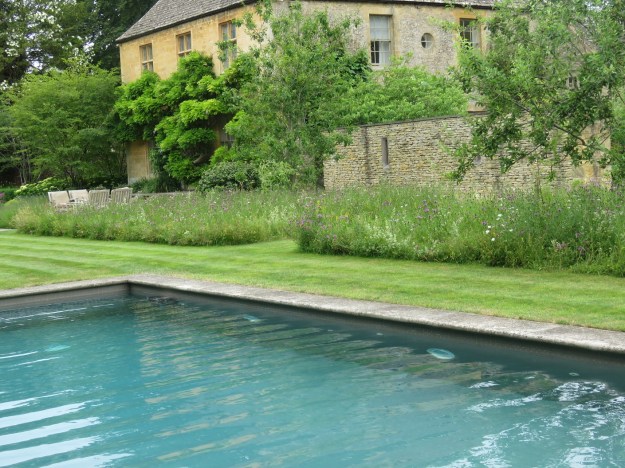
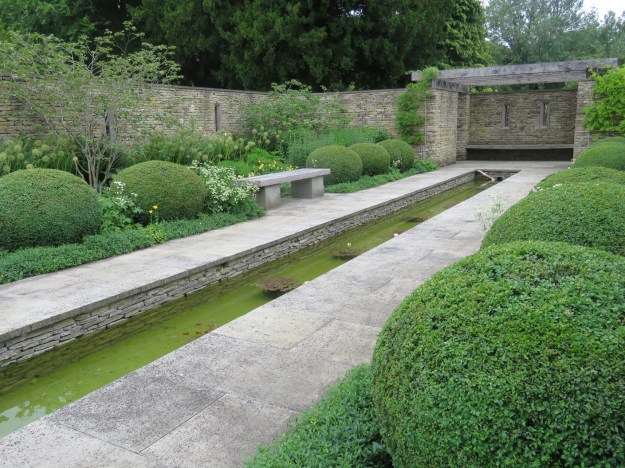
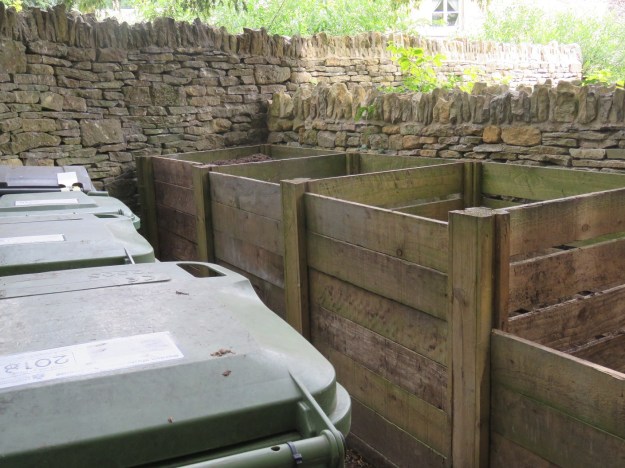
 What I call the ‘hidden infrastructure’ of the garden is well camouflaged to the point where it was not apparent at all. Again, attention to detail is paramount. There is no pond lining visible on the elliptical pool. I asked and the pool is made the old fashioned way, presumably with clay lining to remove the need for an unsightly pool liner. I did not spot a single skerrick of plastic anywhere in the garden. No cheap solar powered lights either. There were no visible hoses hanging about, no clumsy afterthoughts of garden edgings. The swimming pool filter was housed out of sight. The motorised pool cover was near to silent and the wiring was hidden. The compost bins and inevitable wheelie bins were discreetly housed. Everything had been thought of. We fall well short of that in our own garden but we admire the impressive attention to detail.


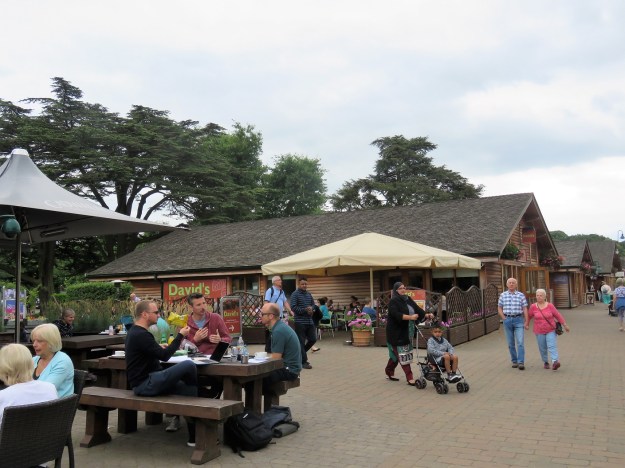
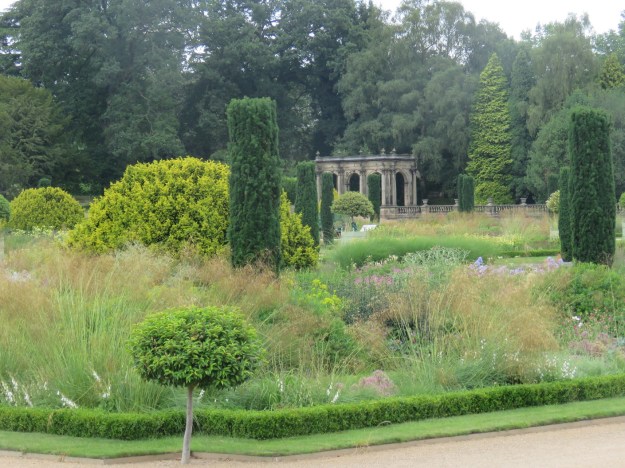
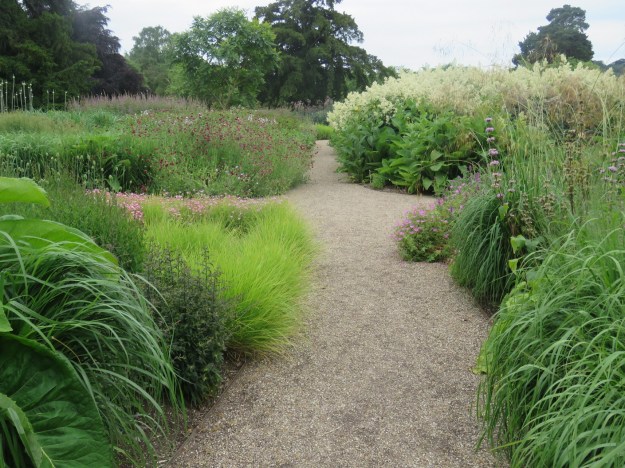
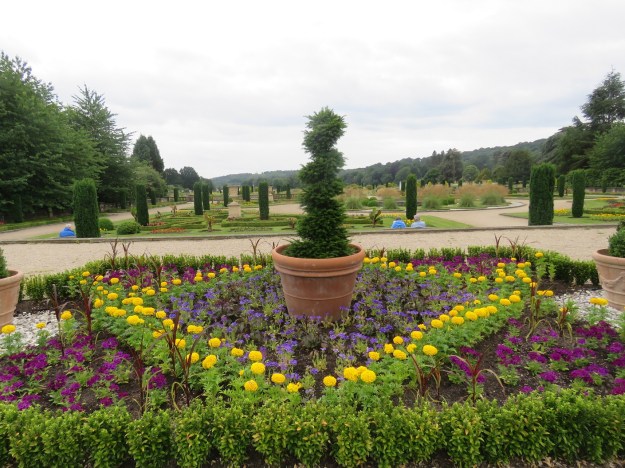
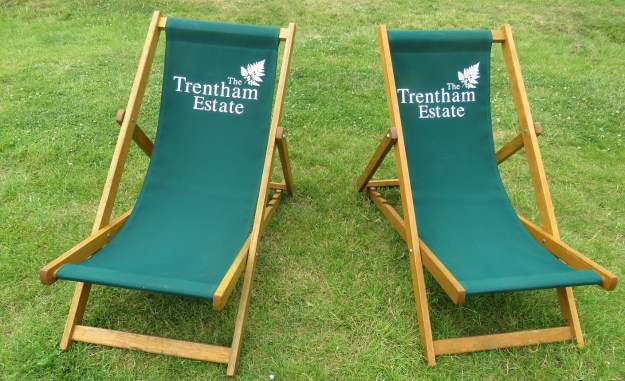 Trentham Gardens shows that it can get pretty close to being all things to all people. Even on a cool, grey Monday afternoon, the place was humming. Mark and I have a running gag about the “sense of arrival” at gardens. One day I will explain the origin of our cynicism about this but we worked out long ago that the greatest “sense of arrival” is a full carpark. And on this Monday afternoon, I photographed our rental car so we could find it again later. As an aside, you can have any colour of car you like in Britain, as long as it is black or grey. And one grey rental car looks pretty much like 80% of the other cars.
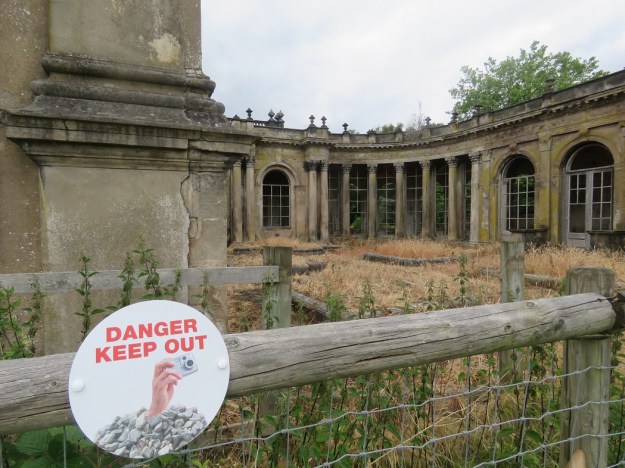
 Those plans included extensive gardens, monkeys, a luxury hotel on the site of the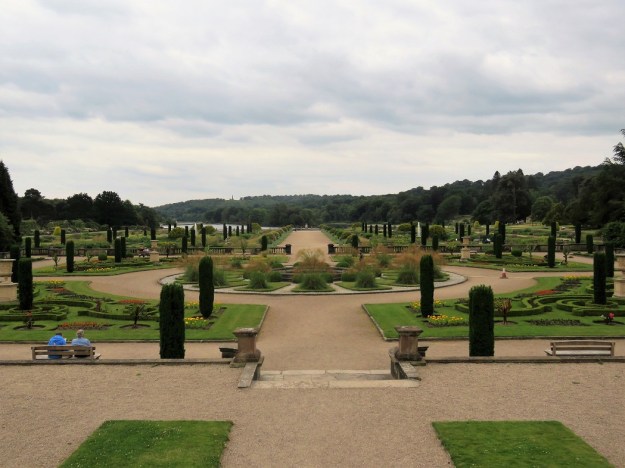



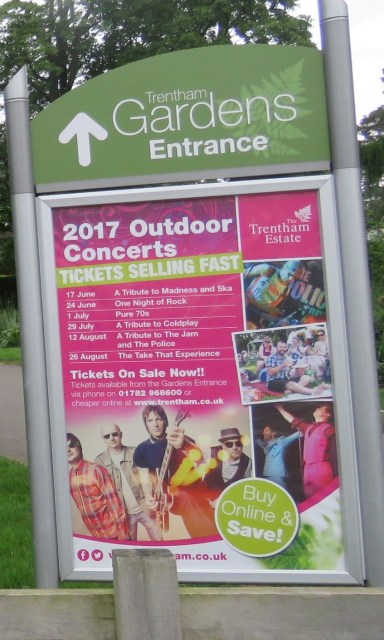 Postscript *I do not want to overstate the evening concerts. In fact I looked at the programme boards and wondered if it was just the one contracted band in different guises. The amphitheatre stage was but modest. Maybe they are catering to a specific local demographic, this year at least? On our last visit we saw Hatfield House in London preparing for a major concert. U2? Or was it UB40? I have waited three years to use my photo of the portaloos at Hatfield. Trentham is not trying that scale of concert at this stage but give them time. I am sure they will be looking at it for feasibility and profitability.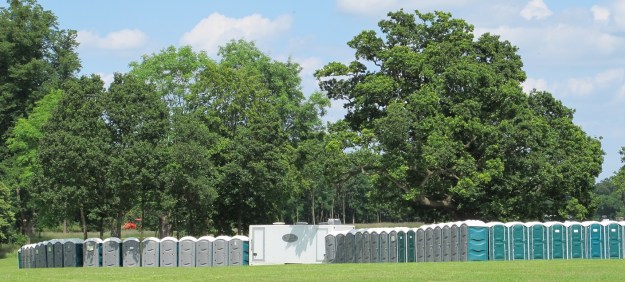








 Tikorangi The Jury Garden