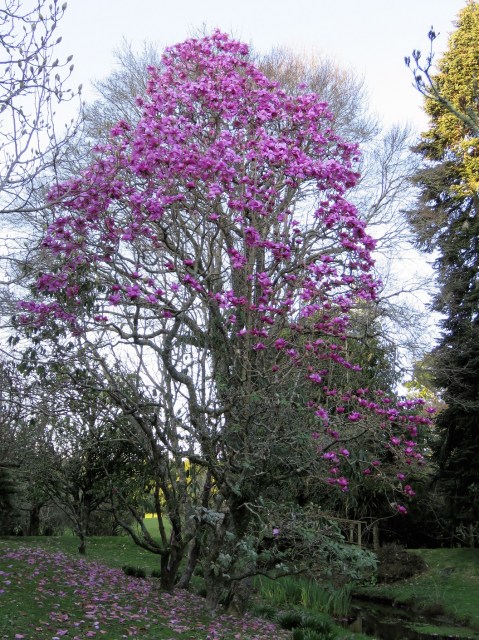
Lanarth in all its purple glory
Ah, the colour purple. I have yet to see a purple magnolia that eclipses the glorious sight of ‘Lanarth’ in full bloom. That is Magnolia campbellii var. mollicomata ‘Lanarth’ to be precise, not to be confused with the pink and white Magnolia campbellii var campbellii about which I wrote last month. Same species but different variants.
‘Lanarth’ is another example of a variety that belongs in every magnolia collection but, as a single specimen for the home gardener, it is not without its issues. Even if you can find one for sale – and it is not easy to propagate and get growing strongly – it is not what is known as a reliable, commercial plant. Its biggest problem is that it only sets flower buds on its branch tips. This means that all of them come out at once, giving a spectacular but brief show and a bad bout of spring weather can cut that display overnight. Modern hybrids are often selected for the plant’s ability to set flower buds down the stems so they come out in sequence over a longer time. We are happy to enjoy this species in its glory and I have a particular affection for what I call petal carpets. ‘Lanarth’ creates a wonderful carpet down by our largest pond.
Besides, this particular magnolia has a special place in our own family history. Mark’s father Felix imported what was meant to be ‘Lanarth’ in the early 1950s when first planting out the park area here. It took some years to get large enough to flower and when it did, it was clearly something else. Enquiries from the nursery source, Hilliers in the UK, established that what he had was most likely a cross with M. sargentiana var robusta. They sent a replacement, grafted this time to ensure that it was correct and that is the plant we have growing as a splendid specimen. Felix named the earlier seedling for his youngest son and Magnolia ‘Mark Jury’ went on to be the not-so-secret Jury weapon in breeding a whole new range of magnolias. It is the father of ‘Athene’, ‘Atlas’, ‘Iolanthe’, ‘Lotus’, ‘Milky Way’ and ‘Serene’ and is also influential in the following generations of ‘Felix Jury’, ‘Black Tulip’ and ‘Honey Tulip’.
 The true ‘Lanarth’ finally flowered here in the 1960s and it became the key to Felix’s best known success – the colour breakthrough from purple into red tones, first seen in Magnolia ‘Vulcan’. The rest, as they say, is history and New Zealand is now recognised internationally as the home of the best red hybrids. These days with the downstream breeding, the purple tones of ‘Lanarth’ are being eliminated in favour of purer red shades. Now it is the case that there are several good red magnolias on the market, but no large, purple-flowered, garden-friendly improvement on the original ‘Lanarth’ that we have seen. It has been attempted. We just haven’t seen one yet that we think is as good as, let alone better than the original.
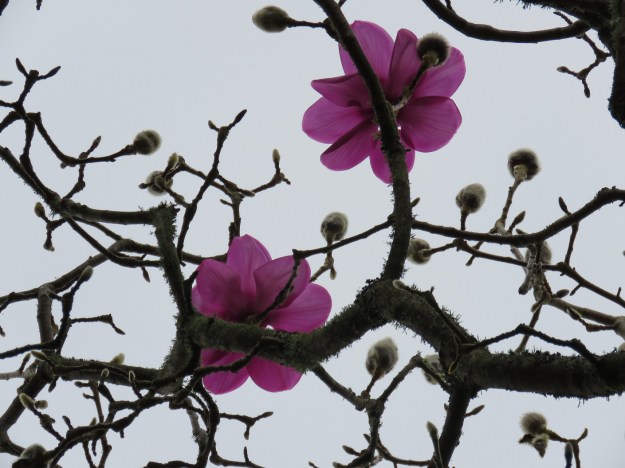
Looking up into the sky, the petals can take on the look of stained glass
‘Lanarth’ originates from a seed, one of only three that germinated from those collected by plant hunter George Forrest in southern Yunnan, China, near the border with Burma in 1924. There were other collections of Magnolia campbellii var. mollicomata around that time but most flowered pale. Being raised from seed, there was the typical seedling variation that one expects from these early specimens and ‘Lanarth’ was the stand-out plant, particularly in flower colour. In order to maintain the desirable characteristics of ‘Lanarth’, it is necessary to propagate subsequent plants vegetatively (not just to raise seed) – which means layering, budding or grafting because it is does not generally strike from cutting. So every magnolia named ‘Lanarth’ should be a genetic carbon copy of that first plant that was raised in the garden of the same name in Cornwall. Raised from seed, there is no guarantee that it will be the same as ‘Lanarth’ and it then goes back to its species name of M. campbellii var mollicomata.
There is always something to learn and we had not realised that Magnolia ‘Charles Raffill’ is a cross between the two different species of campbellii – that is var. campbellii and var mollicomata (though a paler form) so it is still technically a species, not a hybrid. If that is as clear as mud, then just accept the glory of purple ‘Lanarth’ for what it is.
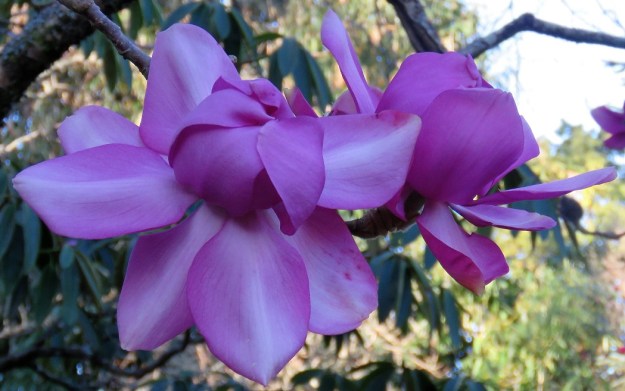
The pollen of Lanarth is in the genes of the red Jury magnolias
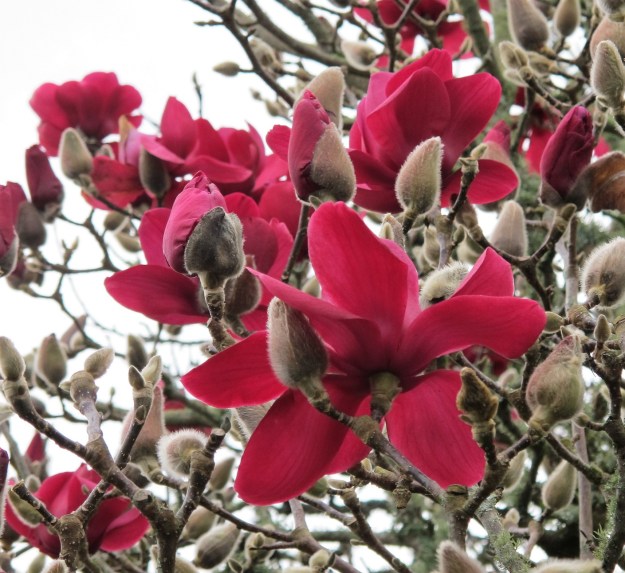
It was Lanarth that enabled the colour breakthrough to the reds – in this case Vulcan looking at its very best

Magnolis ‘Mark Jury’ is thought to be half ‘Lanarth’ in its genes and has been a brilliant breeder parent.
First published in the August issue of New Zealand Gardener and reprinted here with their permission.
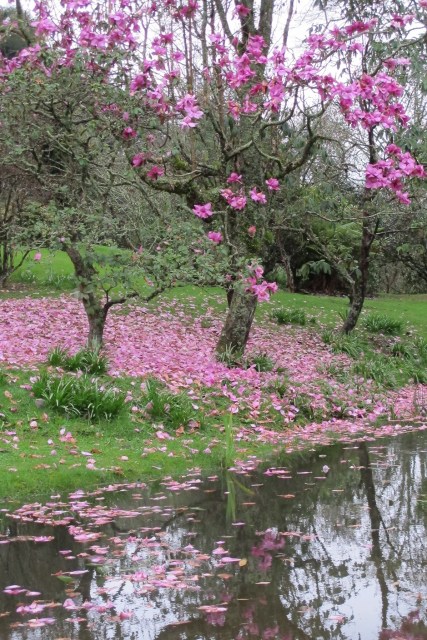
Lanarth by our big pond

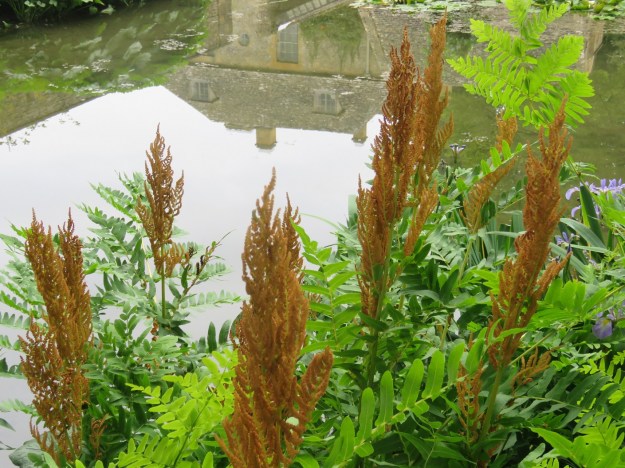
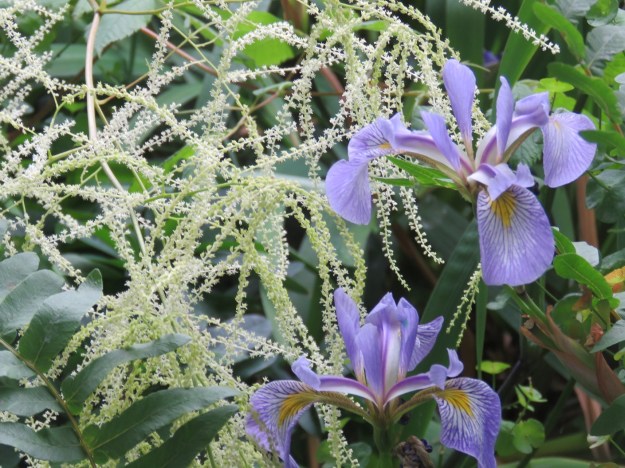 To set the scene, from memory the owners told us it is an acre in size. It is flat and Pearson took it back almost to a blank canvas. With the typical Cotswold two-storeyed cottage in the local golden stone being on the road side of the site, the body of the garden has four distinct sections, three of which feature water. The first is by a charming stream boundary and centres on a large elliptical pool with restrained plantings. The second is a formal garden built around a canal, with a dining area closest to the house. The third is the most spacious and contains a swimming pool. It was apparently the first garden Pearson had done that included a swimming pool and he was not keen. I can understand why. Pools are awfully difficult to integrate without turning it into the Miami look. But this pool was beautifully executed, though that is easier when you don’t have our laws requiring childproof fencing close in on all swimming pools.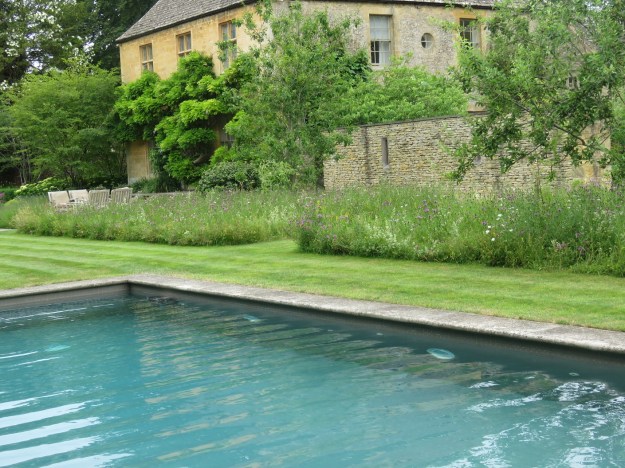
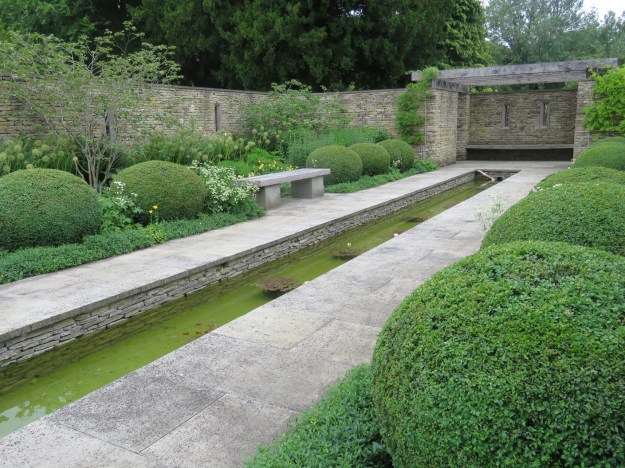
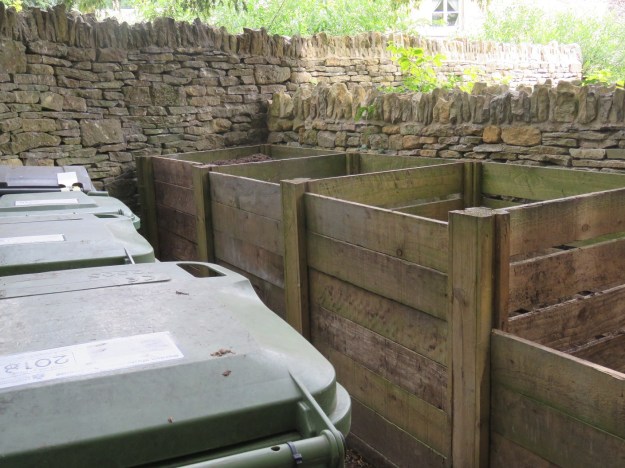
 What I call the ‘hidden infrastructure’ of the garden is well camouflaged to the point where it was not apparent at all. Again, attention to detail is paramount. There is no pond lining visible on the elliptical pool. I asked and the pool is made the old fashioned way, presumably with clay lining to remove the need for an unsightly pool liner. I did not spot a single skerrick of plastic anywhere in the garden. No cheap solar powered lights either. There were no visible hoses hanging about, no clumsy afterthoughts of garden edgings. The swimming pool filter was housed out of sight. The motorised pool cover was near to silent and the wiring was hidden. The compost bins and inevitable wheelie bins were discreetly housed. Everything had been thought of. We fall well short of that in our own garden but we admire the impressive attention to detail.


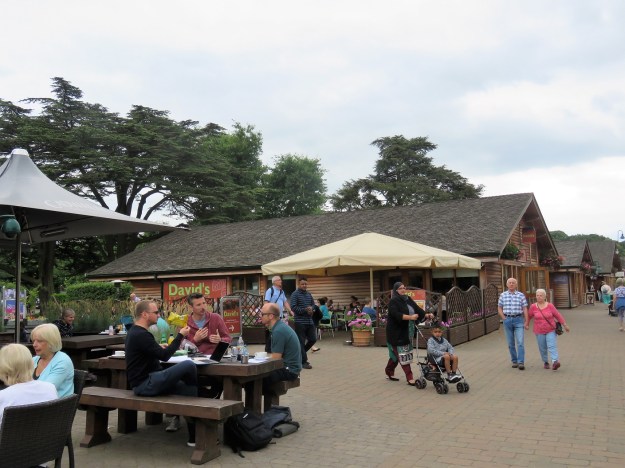
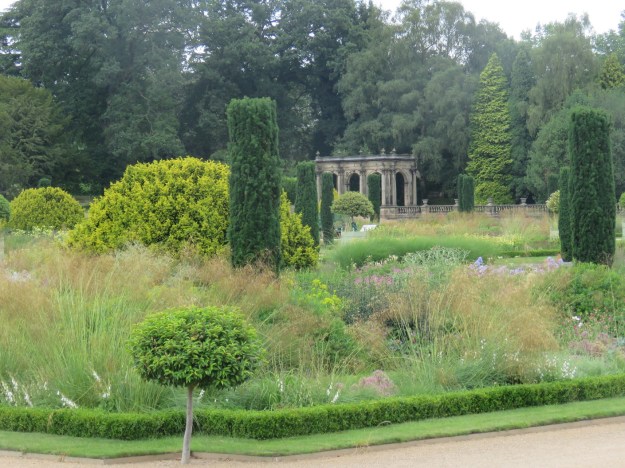
 Trentham Gardens shows that it can get pretty close to being all things to all people. Even on a cool, grey Monday afternoon, the place was humming. Mark and I have a running gag about the “sense of arrival” at gardens. One day I will explain the origin of our cynicism about this but we worked out long ago that the greatest “sense of arrival” is a full carpark. And on this Monday afternoon, I photographed our rental car so we could find it again later. As an aside, you can have any colour of car you like in Britain, as long as it is black or grey. And one grey rental car looks pretty much like 80% of the other cars.
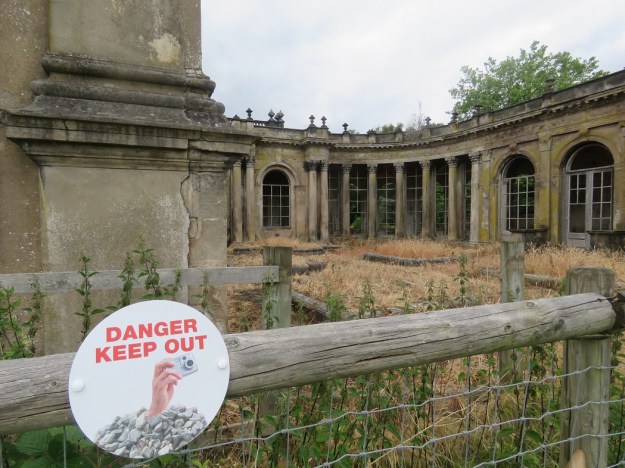
 Those plans included extensive gardens, monkeys, a luxury hotel on the site of the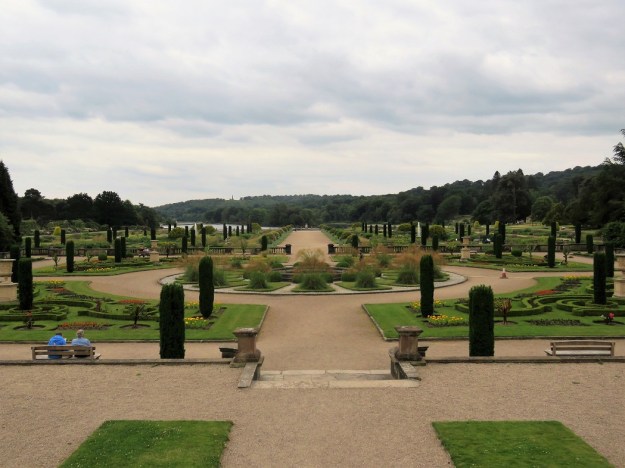
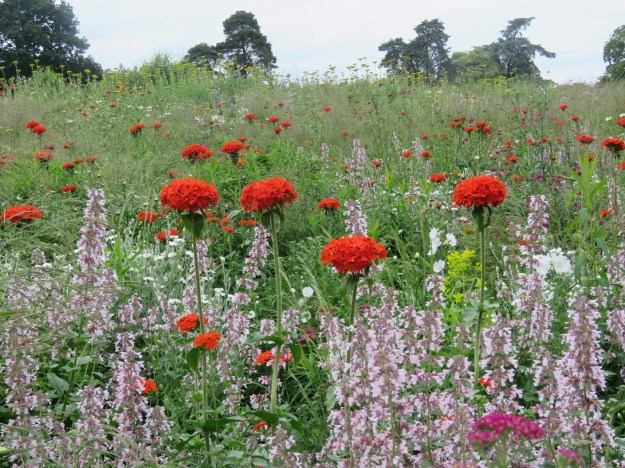
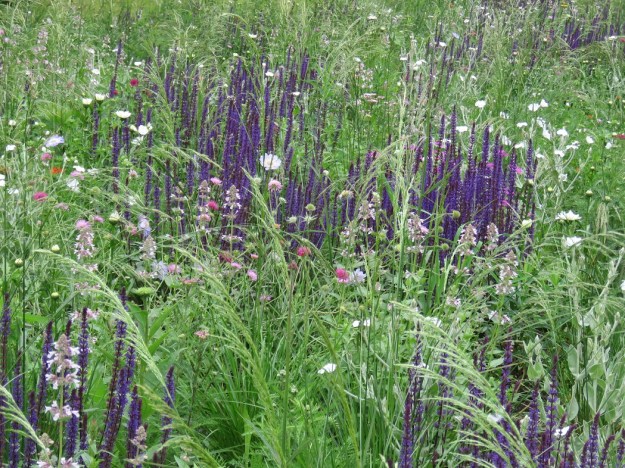
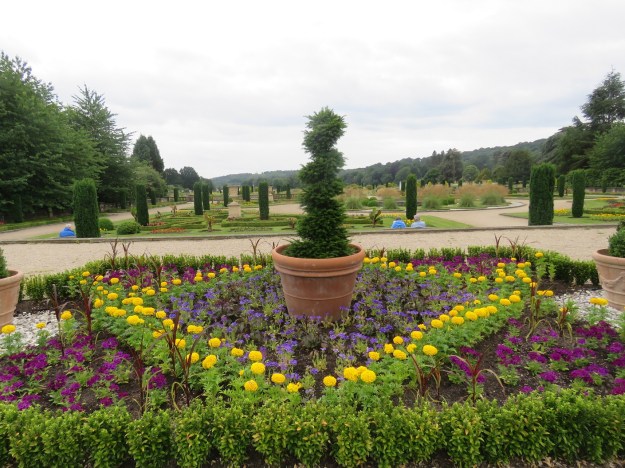
 Postscript *I do not want to overstate the evening concerts. In fact I looked at the programme boards and wondered if it was just the one contracted band in different guises. The amphitheatre stage was but modest. Maybe they are catering to a specific local demographic, this year at least? On our last visit we saw Hatfield House in London preparing for a major concert. U2? Or was it UB40? I have waited three years to use my photo of the portaloos at Hatfield. Trentham is not trying that scale of concert at this stage but give them time. I am sure they will be looking at it for feasibility and profitability.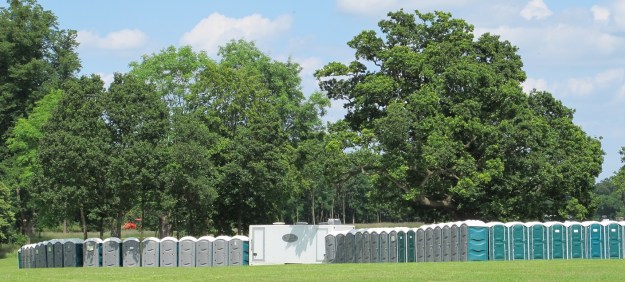





 Tikorangi The Jury Garden