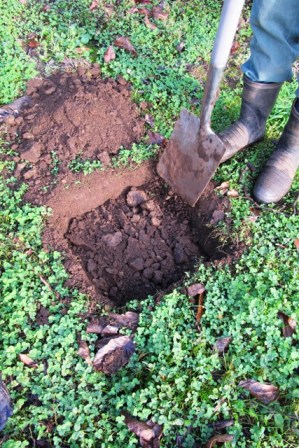
1) If you are planting into grass or paddock, remove the turf from the area first. The rule of thumb is to dig a hole at least twice the width of the root ball of the tree and a little deeper. Break up the clods of dirt thoroughly as you go, because you want friable, well cultivated soil so the tree can get its roots out easily. If water ponds at the bottom of the hole as you dig, look for another site. It will rot the roots. Keep the top soil to one pile and the subsoil and clay to another for when you refill the hole so the subsoil can go back in first.
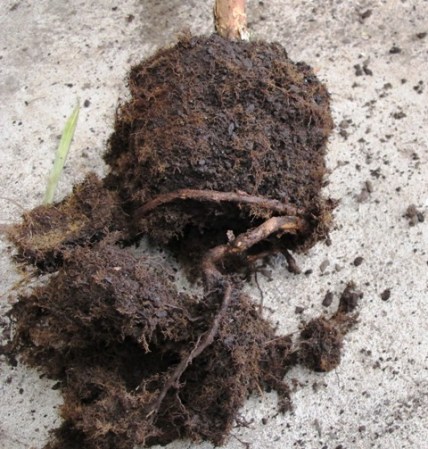
2) If the plant is in a plastic bag, cut the bag off to avoid damage. Examine the roots. The fine roots are the most important ones. If there are strong roots wound round and round the outside, these need to be cut, because they will stay in a corkscrew shape and not spread out.
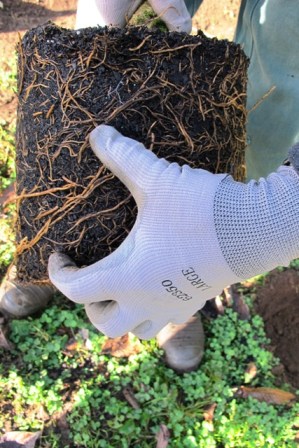
3) Often there is a mass of fine roots and the plant is difficult to get out of its pot or bag. Roughen up the outside of the rootball with your hands or make several shallow cuts down the sides. However, do not try and tease all the roots out to spread them. You are far more likely to cause damage than to do any good. As long as you plant into friable soil, the plant will get its roots out on its own. However, if the roots have grown into an envelope shape at the bottom of the planter bag, these can be trimmed off.
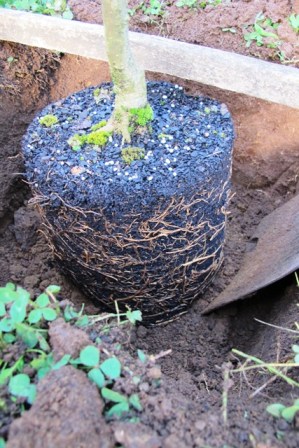
4) Getting the plant at the right level in the hole is extremely important. If it is too deep, you risk rotting the stem, too shallow and the roots will be exposed and the plant will dry out too easily. Measure with a stick and backfill the hole with compost and soil to get the level right.
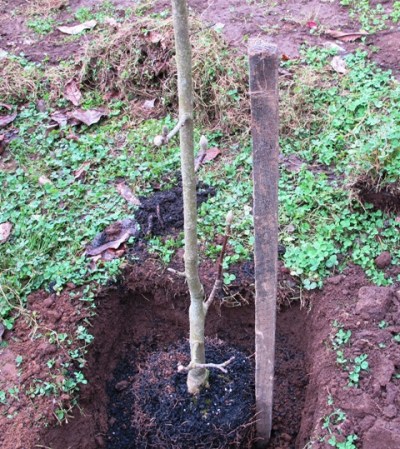
5) Only stake the plant if it is necessary because of strong wind or instability. Trees grow better unstaked because the rocking movement in wind makes them form a strong tapered trunk. Staking can slow this process so never have a stake more than a third of the tree’s height. Put the stake in beside the plant before you refill the hole. Never drive a stake in close to the trunk. You are shearing off an entire section of roots.

6) Where soils are poor or heavy, layering in compost gives better soil texture. However, there is no point in adding extra fertiliser to the hole at this time of the year. Plants take up fertiliser when they are in growth so the time to feed is in spring and summer. Added in winter, it will leach out and disappear with the winter rains, giving no benefit.

7) Once the tree is in place, fill the hole with the original dirt which you have broken up to form a finely textured soil. Firm the plant and gently tread the surrounding soil but do not stomp heavily close to the stem or you risk tearing off the roots. A final layer of mulch will stop weed competition and protect the roots.
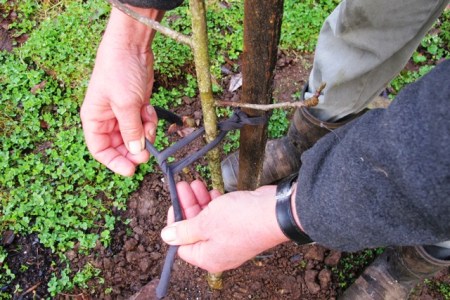
8) Where staking is necessary, always use a soft tie such as the stockinette shown here (available from garden centres) or old pantyhose. These do not cut into the bark of the tree. Cross the tie between the stake and the tree to reduce the bark rubbing on the stake. Make sure that the top tie is never more than one third the height of the tree.
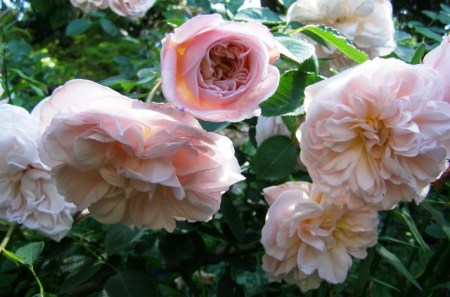
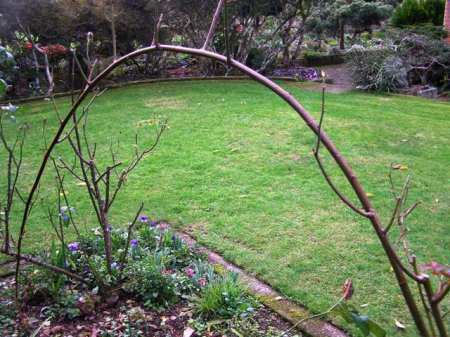
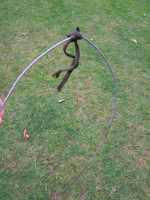 4) Some roses put on very long, whippy growths. Where space allows, arching these growths over and tying them down (I use hoops of wire and a soft tie) forces all the buds along the stem into growth and greatly increases the floral display. Similarly, tying a climbing rose to a horizontal line, encourages that stem to flower all the way along rather than just on top.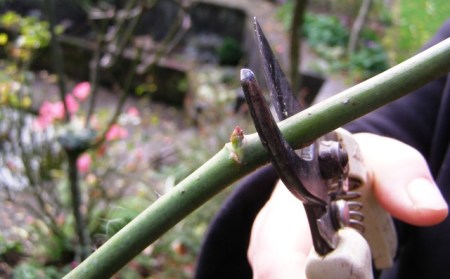




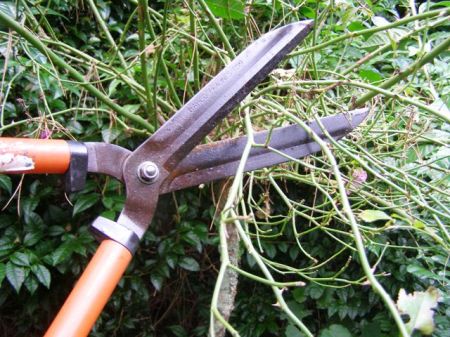
 3) Strong gloves are recommended, along with sharp secateurs.
 4) This season’s new canes which will bear fruit next summer are red. The old canes, which are dying off, are brown and dry. Remove all old canes from the base of the plant. Thin out any weak new canes.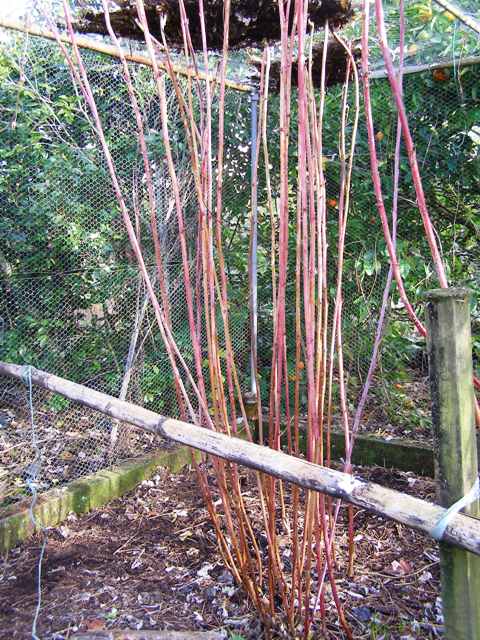
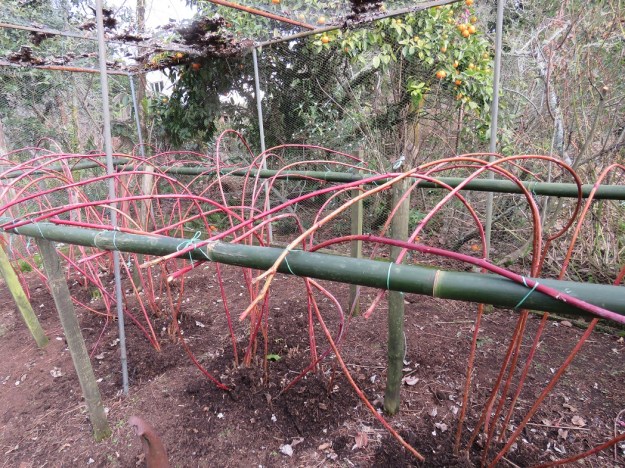 6) Alternatively, hoop the canes over and tie them to a frame as shown here. This is now my preferred approach. While it takes a little more time, it keeps the rampant canes under better control, increases the fruit set down the stem and makes picking very much easier. I then feed each clump with a generous helping of compost.
 6) The prunings need to be burned or disposed of. We clip them to manageable lengths and gather them in a wool bale for convenience. You can’t compost prickly old stems. Town dwellers may like to dry them and then burn them on a woodfire or put them out with the rubbish. Ours will go on the burning heap.



 Tikorangi The Jury Garden