
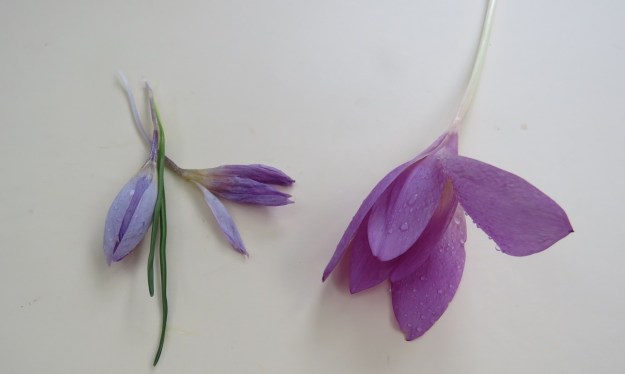
Crocus to the left, colchicum to the right
It is that time of year, dear Readers, when it is time to remind some of you, that the larger bloom to the right is NOT a crocus. Not at all. It is not even a relative. It is a colchicum. The left-hand flower is an autumn flowering crocus, probably one of the C. serotinus group, maybe salzmanii.
Colchicums come from the family of Colchicaceae and the order of Liliales.
Crocus belong to the subfamily of Crocoideae, family of Iridaceae and order of Asparagales.
That is the botanical explanation. The lay explanation is that crocuses are much smaller and daintier and bloom at the same time their fine foliage is coming through. Many of the 90 or so species flower in spring but some will bloom in autumn.

Colchicums flowering now
Colchicums, on the other hand, bloom well before their foliage ever appears and have much larger chalice blooms – and more stamens if you can be bothered counting. Compared to the crocus, they look as if they are on steroids but in fact it is the product of colchicine which is extracted from them. Colchicine’s main use was – or is – as an anti-inflammatory for the treatment of gout. Not one to try yourself at home, however, because it is highly toxic in the wrong hands. When the foliage appears much later, it is large and lush all winter until it dies off, untidily, in mid spring.
Because they flower before the foliage appears, colchicums are sometimes referred to as “naked ladies” (even “naked boys” I found somewhere on the internet though I have never heard that), but that is merely confusing to those of us who understand belladonnas to be naked ladies.

Crocus, but probably serotinus, not the saffron crocus
Crocus, on the other hand, give us saffron. Well, the saffron crocus does but we failed with our efforts to grow it here despite starting with a fair number of corms. They did not reappear after the first season. Too wet and humid, I think.
Colchicums are a better bet when it comes to naturalising bulbs in a meadow setting, being somewhat tougher and showier in such circumstances.
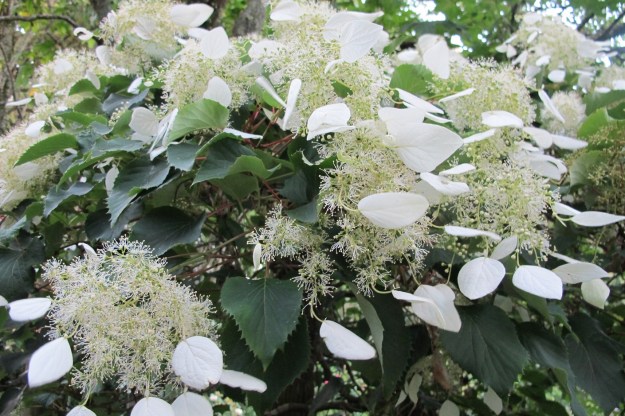 Yes, Schizophragma hydrangeoides looks like a climbing hydrangea but it is not the common climber which is Hydrangea petiolaris. This one comes from Japan and we prefer it to the usual form despite its difficult name. It is a close relative and a member of the same family but one step further back on the plant hierarchy from species to genus to family. Planted side by side, the schizophragma (pronounced skitsofragma or shyzofragma, whichever you prefer) is more floriferous and has significantly larger flower heads which seem to dance on the vine. This may be because its larger, winged petals (technically bracts, not petals) are held singly whereas H. petiolaris has its smaller bracts grouped in four, like a little flower all on its own. The schizophrama is self-clinging and relatively slow growing so it doesn’t take over and swamp neighbouring plants. It needs something to climb up, however. If left to ramble at ground level, it doesn’t seem to flower though it does layer its way along so you can get more plants from it by this strategy.
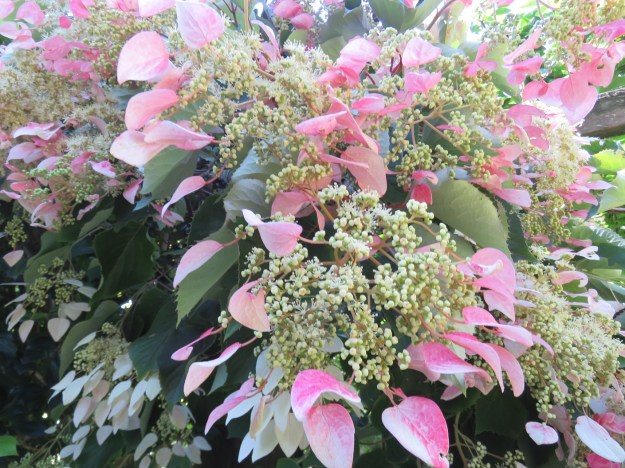 The pink form is even more unusual. This fact was often not appreciated in the days when we used to sell plants. I recall too many customers who were at best ABP – Anything But Pink, at worst IOBW – I Only Buy White (flowers). Such self-imposed rules can certainly limit appreciation.



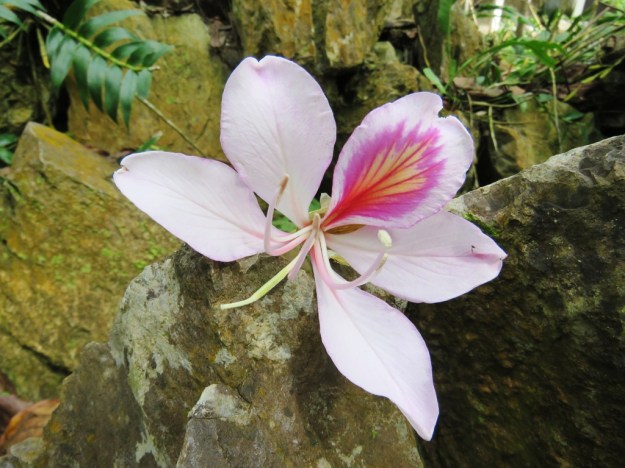 I have a sentimental attachment to bauhinias with a personal memory of Mark bringing me a bauhinia flower in our early days together. It was just the most exotic and beautiful bloom. So they caught my eye, growing in southern China in the Xishuangbanna area (near the border with Burma).
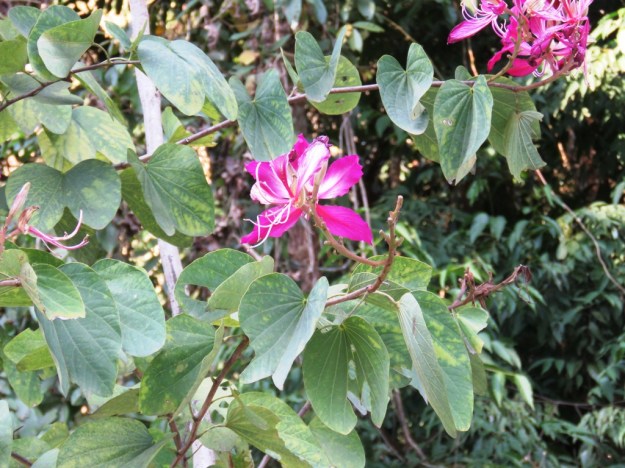 The bauhinia family is huge – around 500 different species – and in the fabaceae family (so a legume). I can’t unravel them to identify the ones I photographed, though the dark pink may be Bauhinia x blakeana, otherwise known as the Hong Kong Orchid Tree and the floral emblem of that island. They are not orchids, they just look as they should be. Or maybe exotic butterflies.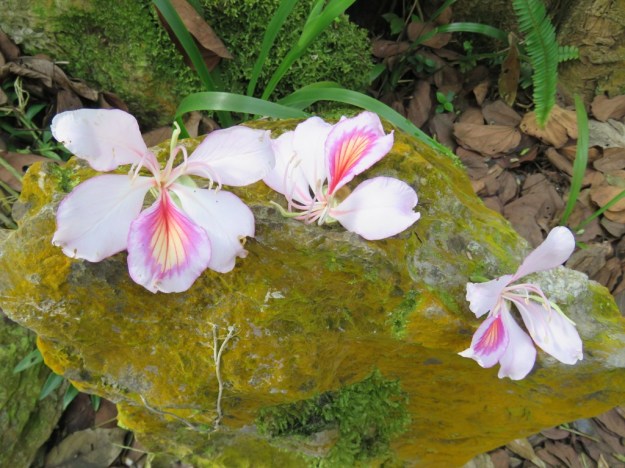
 Tikorangi The Jury Garden