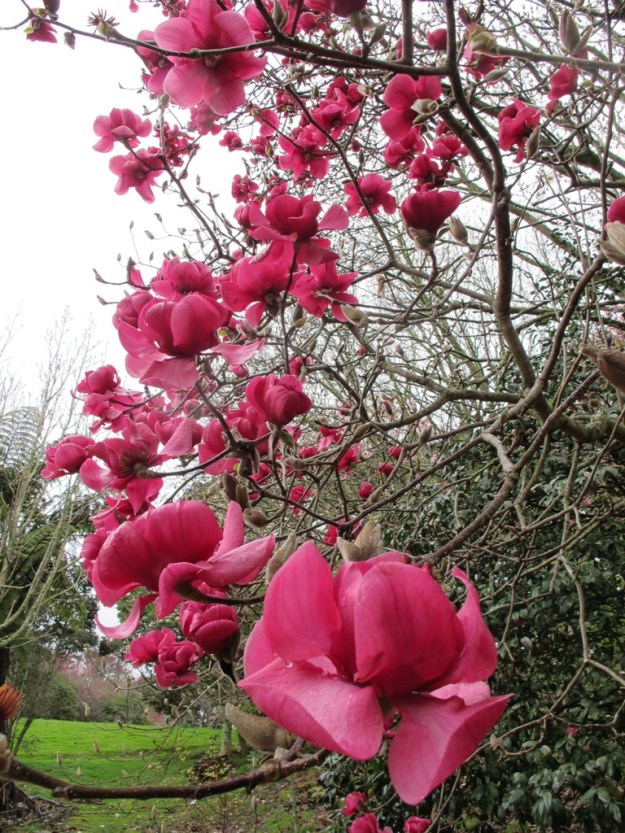
Magnolia ‘Felix Jury’
with September leaning more to the pinks, whites and yellows. While others may delight in one or two red magnolias, we get them en masse. For every named variety, there are many sister seedlings that will never be released but keep on growing and flowering each year. Magnolia trees just get bigger and better as the years go by so the annual display keeps on getting more spectacular.
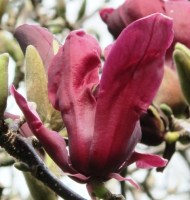
Magnolia liliiflora ‘Nigra’
When Felix Jury, transferred the pollen of
Magnolia ‘Lanarth’ onto
Magnolia liliiflora ‘Nigra’ in the early 1960s, I doubt very much that he contemplated a significant breakthrough in the international world of magnolias which would bring fame – though not fortune. He just wanted to see if he could get to large red flowers. Lanarth (technically
M. campbellii var. mollicomata ‘Lanarth’) has lovely flower form and at its best is a magnificent purple on a handsome tree.
M. liliiflora ‘Nigra’ can have good red colour but with small flowers on a shrubby, spreading plant, it is not showy.
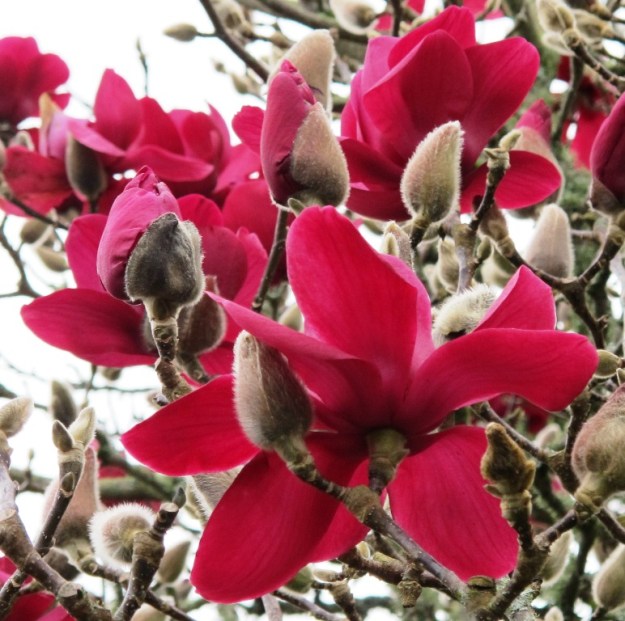
Magnolia ‘Vulcan’
The best of the progeny he named Magnolia ‘Vulcan’ and for the next decades, it stood proudly on its own as a major step along the way to red magnolias. Sure, it is not a pure red and the later season flowers fade out to a somewhat murky purple. There is always room for improvement but Felix laid the foundations for what is following now and he showed that a determined, self-taught, hobby plantsman at the bottom of the world could make a major contribution to the international magnolia scene.
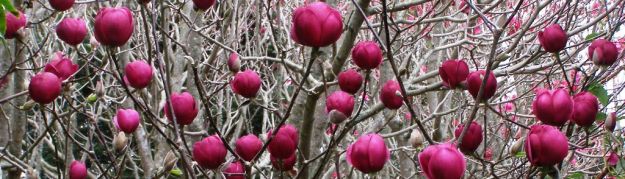
Magnolia ‘Black Tulip’
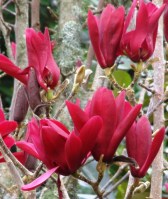
Magnolia ‘Burgundy Star’
Our spring display is arguably the best in the world. For reasons yet to be determined, we get deeper and stronger colours here, certainly than in the UK and Europe. There, they are accustomed to white, pink and now yellow magnolias, but the impact of the red types that are now relatively common here never fails to stun international visitors who come in spring. Felix Jury paved the way with Vulcan. His youngest son, Mark – the man to whom I have been married for more decades than we like to tally – continued building on this foundation, as has fellow Taranaki magnolia breeder, Vance Hooper.
Mark’s quest is a pure red magnolia, losing the purple tones that dog the earlier hybrids. He is getting very close – not quite there yet, but close enough to think that it is achievable. Like his father before him, Mark prefers large flowers with solid colour both inside and outside the petals (technically tepals).
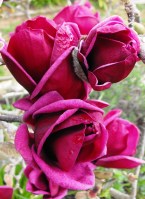
Magnolia ‘Genie’
Vance Hooper is going down a slightly different track and shows a liking for bicoloured flowers. In magnolias this often means a paler inner petal. He is also actively selecting for smaller growing trees which are floriferous over a long period of time, often with smaller flowers. His best known red cultivar to date is Magnolia Genie but he too has a whole range of red seedlings under observation and a number of other named varieties already released.
Felix named one purple – Apollo – and one into the red tones, Vulcan. Mark has named only three reds so far – Black Tulip, Burgundy Star and Felix Jury. Of these, Burgundy Star is arguably the reddest but it is the one he named for his father that brings us greatest pleasure. As a juvenile plant, it started off with OTT giant pink blooms but as it matured, the colour deepened and we now get enormous red flowers – though I admit they fade out to pink. This magnolia represents what Felix himself was trying to get to – a rich coloured, very large bloom of the Iolanthe-type.
It is a source of quiet satisfaction to us that Felix lived long enough to see his son achieve this outcome and it was for this reason that Mark named it for his father. We were most gratified to learn that it has been given an Award of Garden Merit by Britain’s Royal Horticultural Society.
I have never forgotten the customer who came in to buy a magnolia some years ago. She didn’t want a red one, was sick of seeing them – too common, she declared. No, she wanted a white one. I think I remained steadfastly polite but as our forest of colour blooms each August, I rememer her blissful ignorance.
First published in the August issue of New Zealand Gardener.
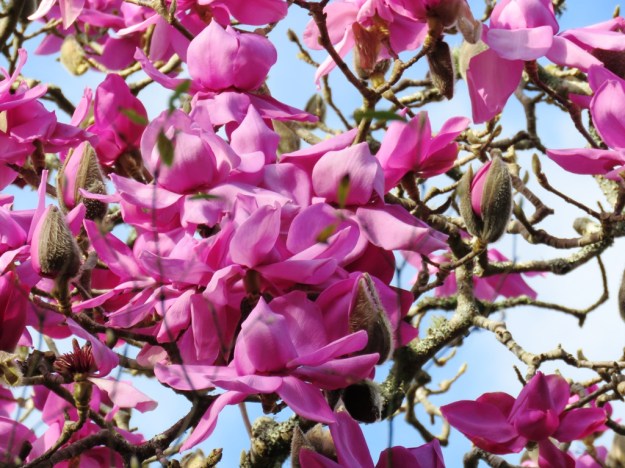
‘Lanarth” is in full flower and looking particularly fine this week


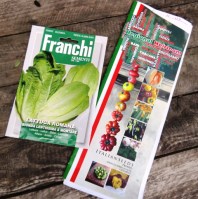 The new Franchi seeds catalogue arrived in the mail last week. If you haven’t met this brand before, you can find them on line at
  I was positively excited to buy my very own spade recently, and what a lovely spade. It is a Joseph Bentley border spade with a handsome oak handle so it must be imported from the UK. A border spade is both smaller and narrower than a conventional spade and I find the lighter weight makes it easier to use – a pleasure, even. There are cheaper spades around – I think I paid somewhere between $70 and $80 for this one at Palmers Garden Centre – but I have not found a spade I like more. I expect it to last as long as I do. Mark kindly oiled the handle again before use, using linseed oil. And he sharpened it for me. I sometimes wonder whether the current fashion for no-dig gardening and the desire by some to avoid the effort of digging is related to blunt spades. A sharp spade makes digging so much easier but I can’t recall seeing the advice offered widely that you need to sharpen your new spade before use and then to keep an edge on it from time to time. If you are wondering how to do this, I see I published a little
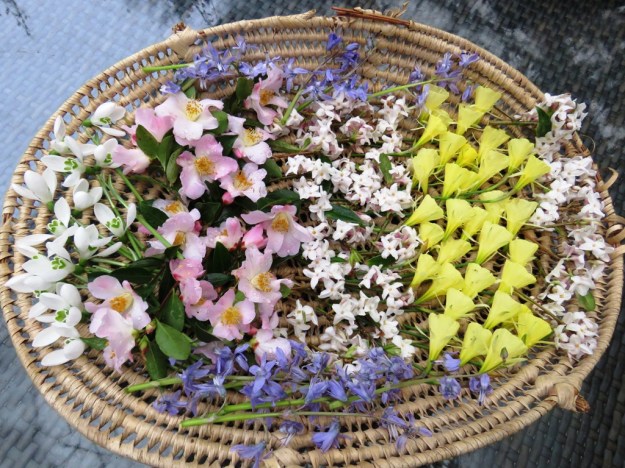
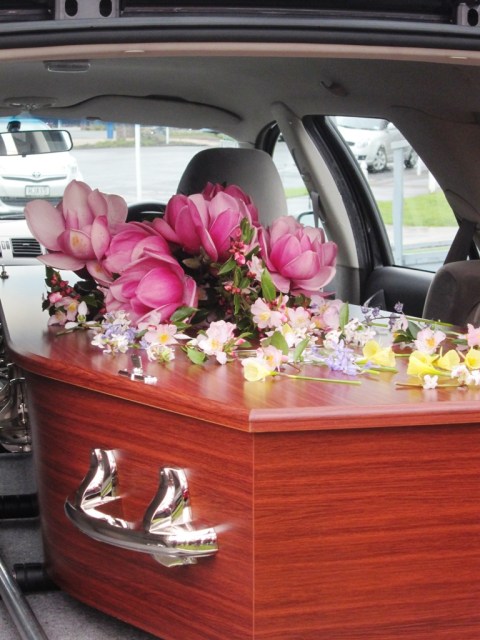
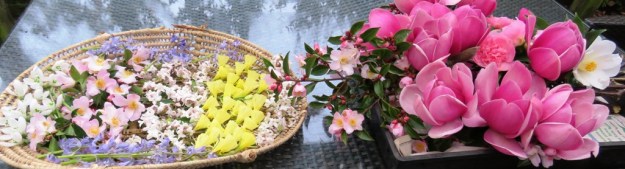 That was a comment in a eulogy at the funeral we attended today. We seem to be making a habit of these in the last month or so. On this occasion, it was to remember a lovely lady, and I use the word ‘lady’ advisedly. She had led a life of ninety years filled with kindness and care. The mother of one of Mark’s oldest friends, she had been a particularly strong influence in his teen years so we were really pleased when the family accepted our offer to do the flowers for the coffin. It is not that we have any floral art inclinations – though Mark can cobble together a bouquet with some simple flair when need be. It is more a case that to celebrate a life – and a keen gardening and flowery life at that – with seasonal blooms that have been picked for remembrance is much more personal than going for a standard florist’s package.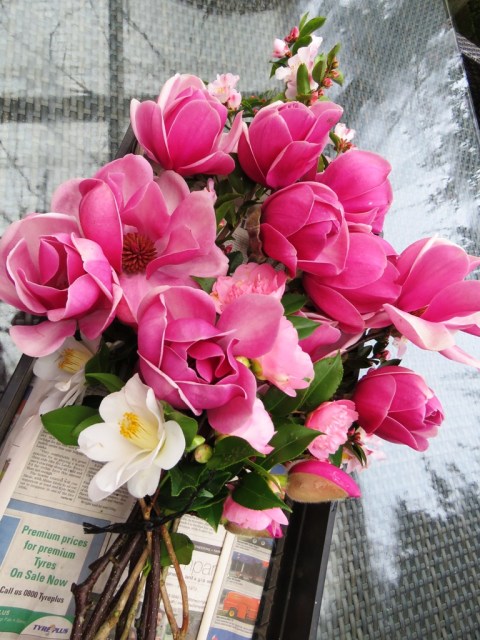



 Tikorangi The Jury Garden