
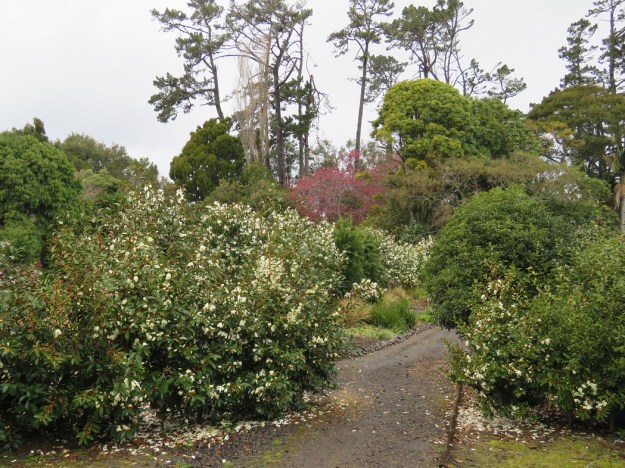
“It’s very white out there,” he said
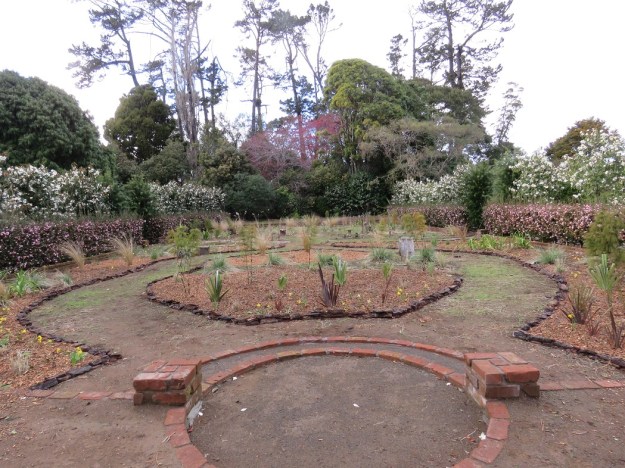
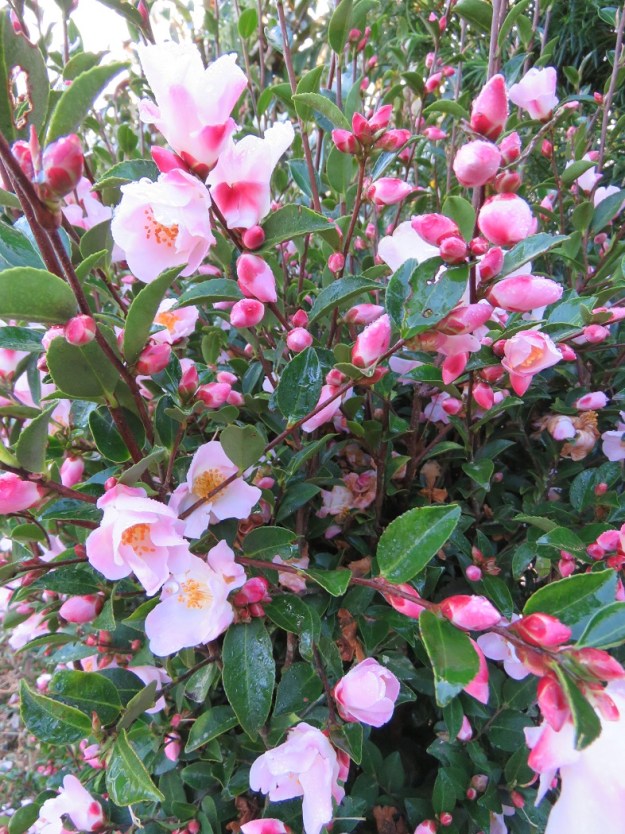
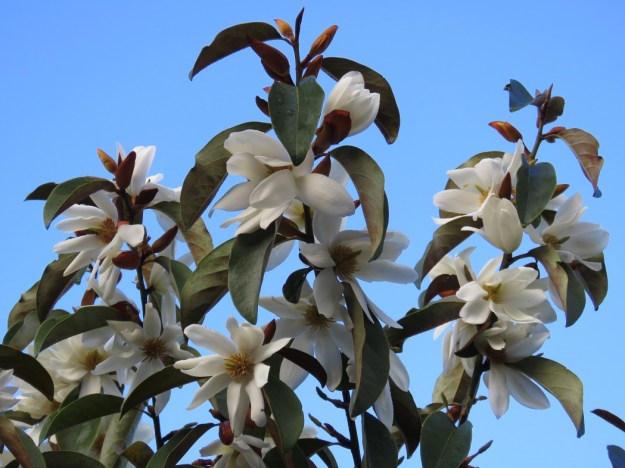
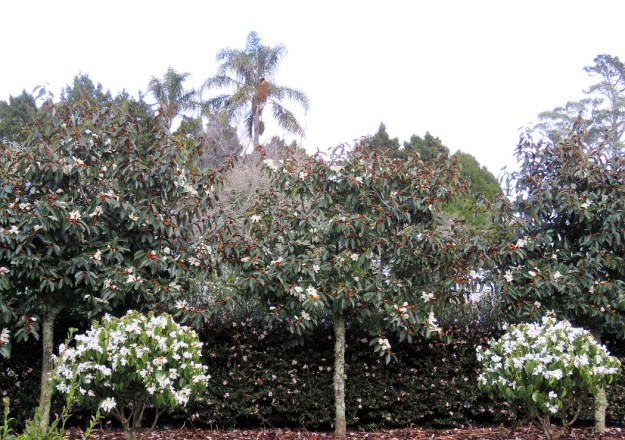
“It is very white out there,” Mark observed. We were standing in the roller door of our large shed, sheltering from another rainy squall and looking out to the new summer perennial gardens. The photo doesn’t fully convey the white experience. The row of Fairy Magnolia White, Camellia yuhsienensis and Mark’s hedges of michelia seedlings were all in view. Mark was envisaging a carpet of snowdrops at ground level as well, even though they are but a fleeting delight. I was looking at the michelia seedlings.
Mark has planted two sides of the new garden area in michelia hedges. Technically – in accurate nomenclature – these are all magnolias now but we continue to use the earlier term ‘michelia’ for the sake of clarity. When we say ‘magnolia’ here, we are almost always referring to deciduous magnolia trees so it is confusing to include the world of evergreen michelias which also feature very large in our lives at this time of the year.

Some of the seedlings are simply gorgeous but won’t be named
When planting seedlings, it means every plant will be different. For the largest length of visible hedge, he planted out one particular cross that had not come out as he hoped because very few were coloured. The nature of the parentage means that they will flower well, not grow out of control and be suited to clipping but they will never have the precision of planting a row that is all one clone – in other words, identical to each other. Mark likes seedlings for mass plantings because it adds interest to have them all similar but not identical.

Others are pretty on their day but floppy blooms don’t cut the mustard
I paced along his hedging, estimating how many individual plants there are. Getting close to 200, was the answer, planted at about 30cm spacings because we want a quick hedge that can be trimmed as required. Each individual plant in bloom is lovely on its day but some are lovelier than others. However, none will be named and put into commercial production. Mark has already named Fairy Magnolia White and Fairy Magnolia Cream and he won’t name any more white or cream ones unless there is something that is radically different or a major improvement. So these are ours to enjoy alone.
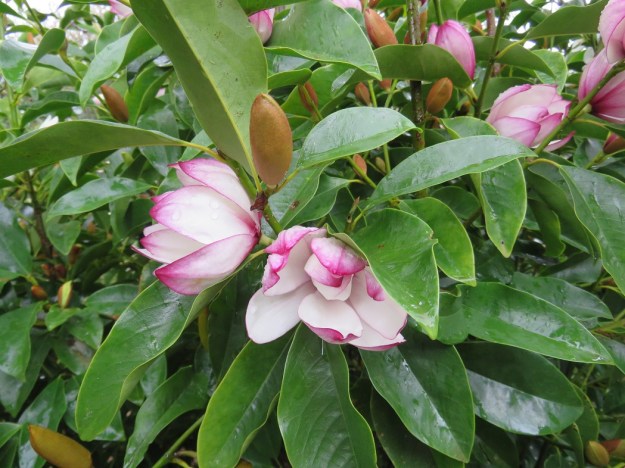
Heading into pink
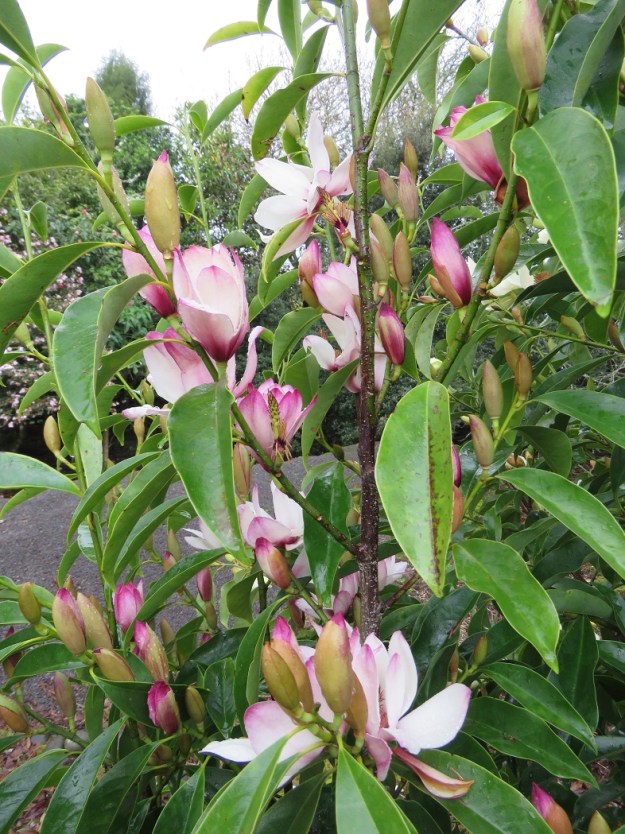
Part of a breeding breakthrough in colour but not good enough to select
At one end, there are about three different pink-toned varieties which are something of an oddity in amongst the cream and white majority. Again, he has already named Fairy Magnolia Blush in this colour range so they will just stay as a quirky aberration in the hedge at flowering time. We are okay with quirks.
Hardy michelias are basically white or cream. While there are new tropical species still being discovered and some of those show more colour, Mark has no interest in trying to breed with them, even if we could get them into the country to work with. Most of the michelias are not overly hardy at the best of times and he has been trying to get hardier selections (will they grow well and flower consistently in places like the UK, is one of his measures) without introducing more tropical genes. But he has managed to get as far as pinks, purples and primrose yellow by ever more complex crosses using the material he has available.
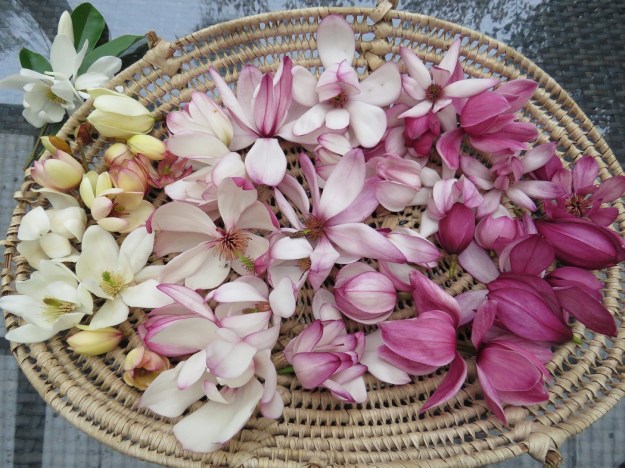
From white through to pinks and purples with a few heading into pale yellow – blooms from the breeding programme
I see it was four years ago that I set out to pick a representation of single blooms from his seedlings to show the range in colour, flower size and shape that he has reached in what is predominantly a white or cream plant genus. While he has continued to flower more since, this photo remains a fair summary. We have selected three new ones that are currently in propagation and performance trials for probable release but there is a whole lot more to selecting a plant than the just flowers. My lips are sealed as to what makes these three worth singling out until we are further down the track of commercial trials.
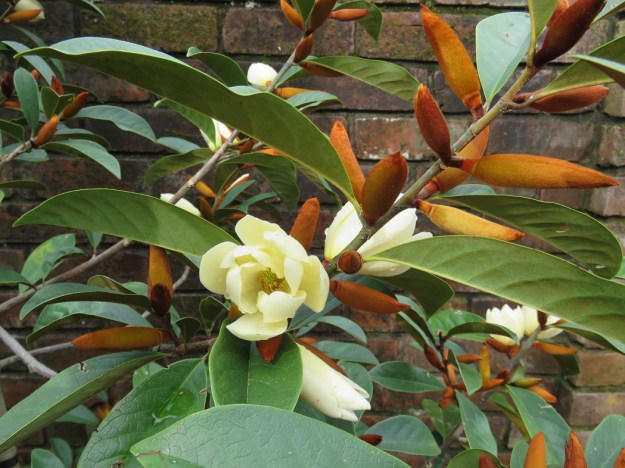
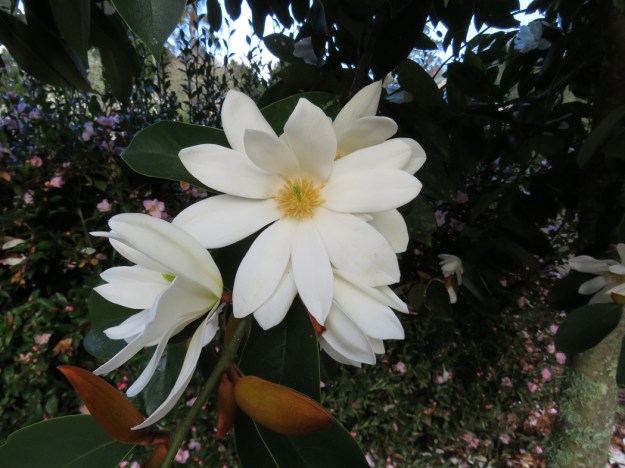
Fairy Magnolia Cream just coming into flower
In case you are interested in what goes into selecting a plant (or you want to name something you have found), off the top of my head, the checklist includes the following:
- Is it either distinctively different or a major improvement to similar plants already on the market? (This is arguably the single most important criterion).
- Are there plenty of flowers? How long is the flowering season (some can be a short flash in the pan)? Does it flower consistently well every year?
- Are the blooms reasonably weather hardy?
- If it is scented genus, are the flowers fragrant?
- Do the blooms age gracefully and fall cleanly?
- Is the foliage as good as the flowers?
- Is the foliage in proportion to the flowers?
- Where do the leaf buds open from? In the case of michelias, does it just set leaf buds on the tips (in which case it will look leggy and bare very soon) or does it set leaf buds right down the stem.
- Does it ever defoliate in a wet spring (a feature of Magnolia laevifolia formerly known as Michelia yunnanensis)?
- What is its performance like as a garden plant , not just grown in a container? It takes several years to make this assessment. In the longer term, will it stay a garden-friendly size? Does it take pruning, trimming or clipping well?
- What is its international potential? How is it likely to perform in more extreme climates?
Only then do the propagation trials start. There is no point at all in selecting a plant that is difficult to propagate, where the percentage of cuttings that do not set roots is too high, where plants *whiff off* – Mark’s phrase meaning die – during production, or where very particular propagation and growing techniques are required for success – growers just do not want to put the time and expense into growing plants that are unreliable or too picky.
New releases used to be the life blood of our mailorder business. Some selections stood the test of time, others not so much. At least all the magnolias have proven to be worthwhile. It is the vireya rhododendron selections and a few of the camellias that have fallen off the Jury plant wagon. These days, we get a new plant through the initial selection and then we hand it over to our agents to manage through final trials and then getting it to market.
It is a long path to getting a new cultivar onto the market. But in the process, we get a lot of unique plant material to use in our own garden.
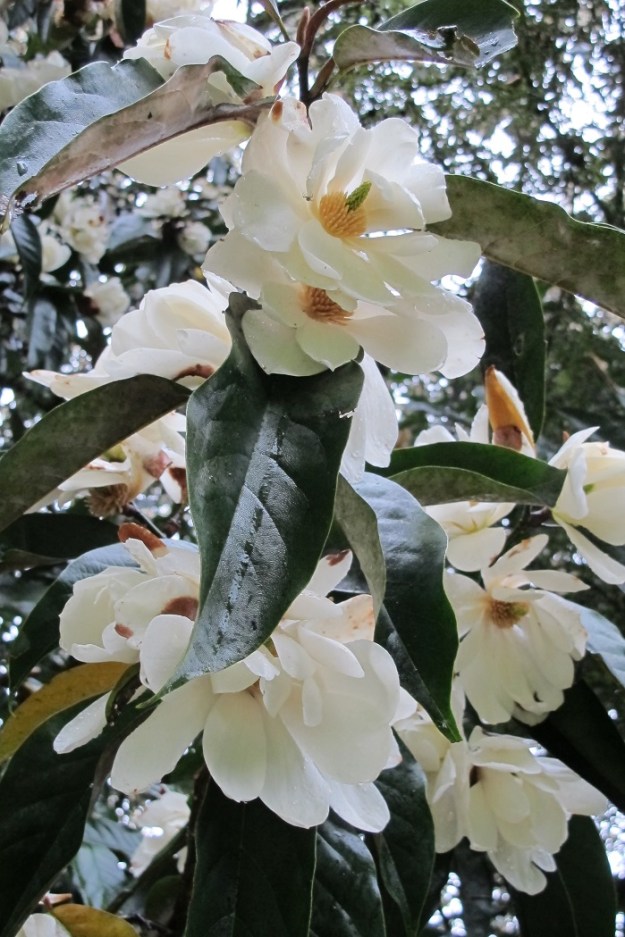
Magnolia doltsopa syn Michelia doltsopa – a selection released as ‘Rusty” by nurseryman, Peter Cave. Pretty flowers but showing typical floppy tendencies of this species and the original plant in our park is massive.
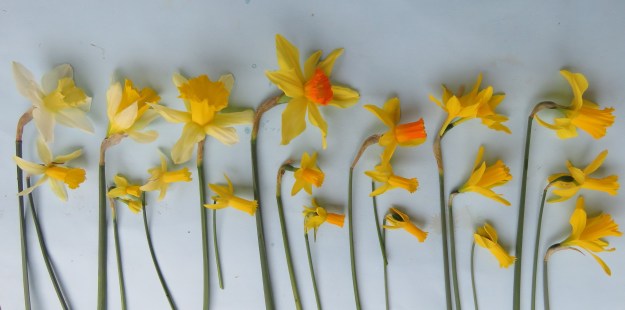 The snowdrop season is all but over already. It is charming but brief. The narcissi, however, have a longer season, at least in part because we can grow a much wider range of species and hybrids. Yesterday felt like a winter’s day – the last gasp of winter, I hope – so I headed out to pick one each of the many different varieties in flower. We don’t grow many of the larger ones at all, preferring the charm of the littlies, the dwarf ones. Bigger may be better when it comes to magnolias – at least in our eyes – but daintiness wins with the narcissi. Most of these are named varieties though Mark is also raising cyclamineus seedlings to build up numbers for planting out and to get some seedling variation within them. The cyclamineus are the ones where the petal skirt sweeps back, sometimes completely reflexed, giving them a slightly startled appearance. He was intending to plant many of these down in the park but hadn’t got around to it so offered them to me for the new grass garden.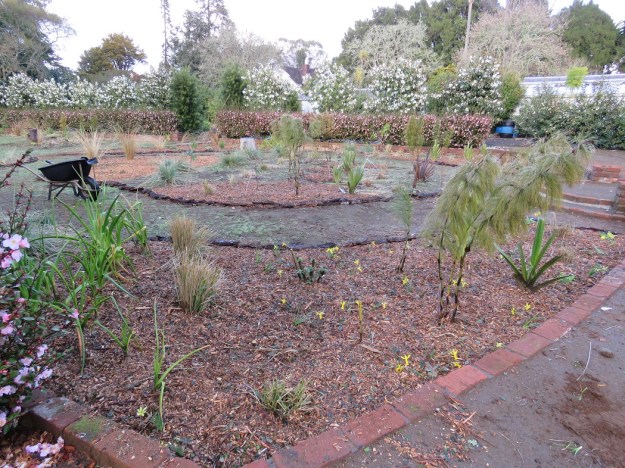

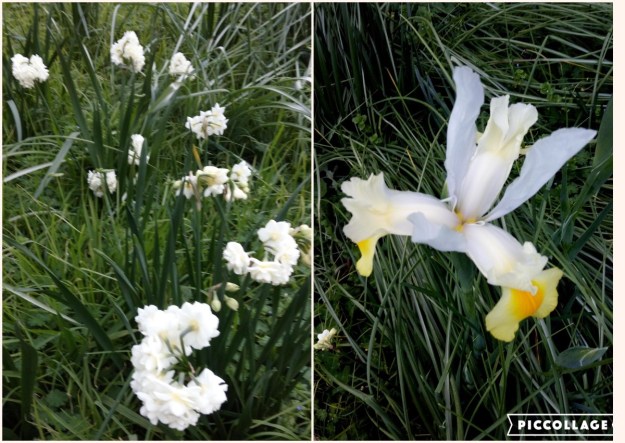 The paperwhite narcissi are gorgeous and deliciously fragrant but they aren’t exactly mass flowering in comparison the amount of foliage. I think they may be interplanted with other varieties that will come into bloom later which is good planning. But if that is the case, the paperwhites could have been concentrated in maybe four separate clumps with others planted between. It would give more visual oomph.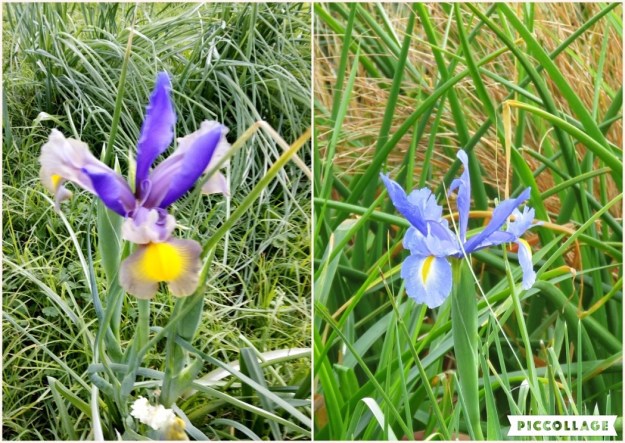
 I feel I am learning constantly so I enjoy analysing what I think works and doesn’t when it comes to plantings. And while this planting was sufficiently delightful to make me stop and turn the car around, I think it would have worked better with concentrated patches of paperwhite narcissi interplanted with purer blue Dutch iris. Now I am going to have to go back in the next few weeks to see what comes into bloom next and how it changes through the spring. I will take my good camera with me. And I do hope that rogue flower pickers leave it alone so we can all enjoy it.

 Tikorangi The Jury Garden