
 A quick trip to Auckland at the weekend saw me rushing hither and yon but also enabled a face to face conversation with Tony Murrell in the studio at Radio Live. Usually we do these by phone. It is at the unseemly hour of 6.30am each Sunday morning so I had to rise even earlier to get to the studio. These conversations are remarkably complex for the early hour but both Tony and I are enjoying them enormously. Last Sunday it was partly about taking inspiration from other people’s gardens and not falling into the trap of thinking that recreating these ideas at home means using their blueprint, often from another climate, another country and another time. The link is here if you want to listen – it is about 25 minutes of solid gardening discussion.
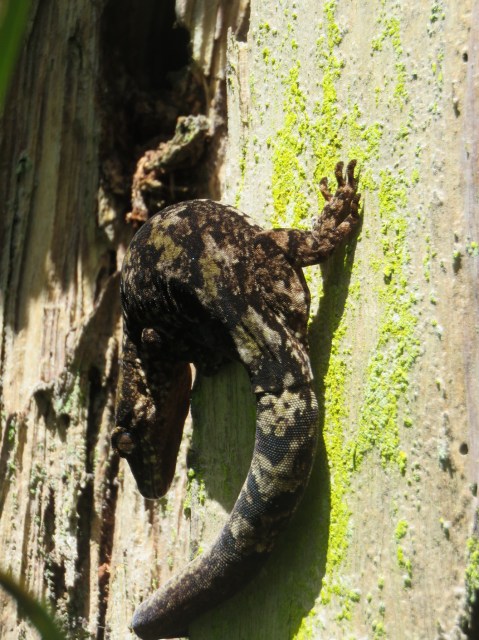 We did not see Glenys, our resident gecko, last year so were thrilled to spot her again last week. But this one is not Glenys. It is considerably smaller so our best guess is that she is the daughter of Glenys. Whether the mother is still around and we just haven’t spotted her remains unknown but having a smaller specimen this year suggests we now have a breeding population. Why do I use the female gender? Because those more knowledgeable about herpetology tell us that this is the behaviour of pregnant geckos, incubating their young. These reptiles can disappear in a flash if they are spooked so it takes quiet movements to sneak up to see. The safe haven appears to be in the fissures of the tree, beneath the bark.
 The UK gardening tour I mentioned last week has done been and gorn. It rained, steadily, when they arrived which was disappointing but we moved them all indoors for tea and cakes and the rain stopped a few minutes into the walk around the garden. While hosting these tours takes a bit of work and a surprisingly large amount of mental energy, the visitors often repay the efforts in more than money. Being able to share the garden with appreciative visitors who have a fairly high degree of knowledge themselves – albeit with an entirely different range of plants – is what it is all about really. We don’t garden on this scale just for ourselves and it can be extremely affirming to share it with a group like this one. I have to report that the lilies in the garden did not flower as hoped but we have enough lilies planted “out the back” as we say for me to pick an impressive display for vases indoors and they did not go unnoticed.

 Also putting on the very best display we have ever seen here is Tecomanthe venusta. Other plants here may be more floriferous. Indeed there are some years that T. venusta doesn’t actually flower at all, but it is lovely when it does.
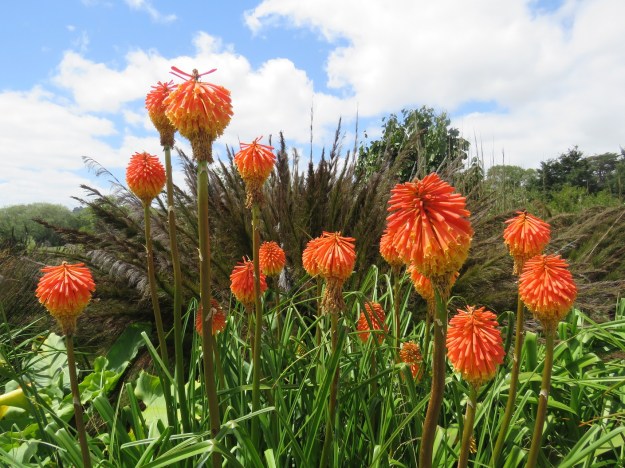 Finally, a few snapshots of summer flowers I liked this weekend. I called in to Joy Plants to check out their perennials and the kniphofia in the gardens were looking marvellous.

There are times we get distinctly sniffy about both agapanthus and red hot pokers in this country but look at this scene – it was simple but lovely.

Auckland Botanic Gardens have some excellent, large scale perennial plantings which are well worth a visit at this time of the year. This yellow achillea with a compact, very dark foliaged dahlia which is opening yellow flowers was a striking combination.
Fingers crossed here for some more sun this week and it really would be awfully nice if the temperature rose a few degrees more so we were in the mid twenties, rather than barely breaking into the early twenties.
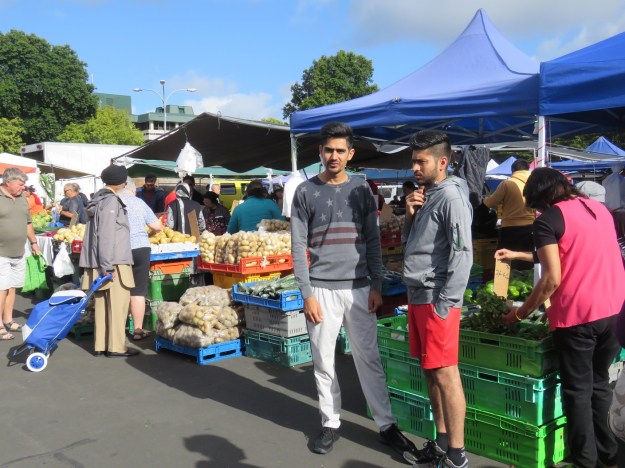 The Otara Markets in South Auckland are held each Saturday morning. Because I come from rural New Zealand, I find the mix of cultures, different styles and colour fascinating. We don’t see much of this in Taranaki and New Plymouth. We also pay a great deal more for our fruit and vegetables and have a way more limited range from which to choose.
 Selling quick maturing Asian greens from the carpark.
  Preaching with a loud sound system but no visible congregation or audience.
 A spot of faith healing being carried out beside the carpark.
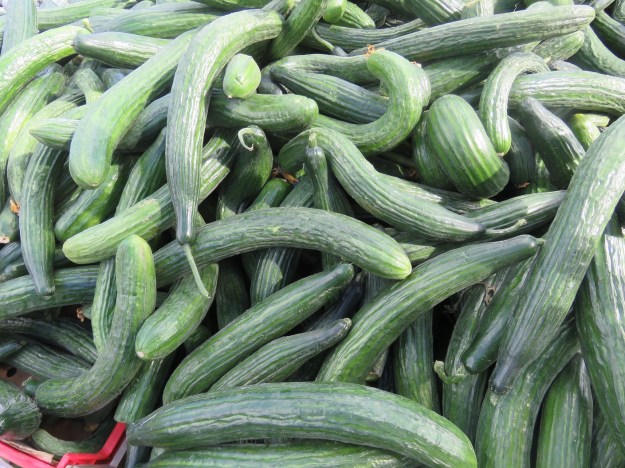
 There is something so visually appealing about piles of fresh garden vegetables being sold on market stalls.

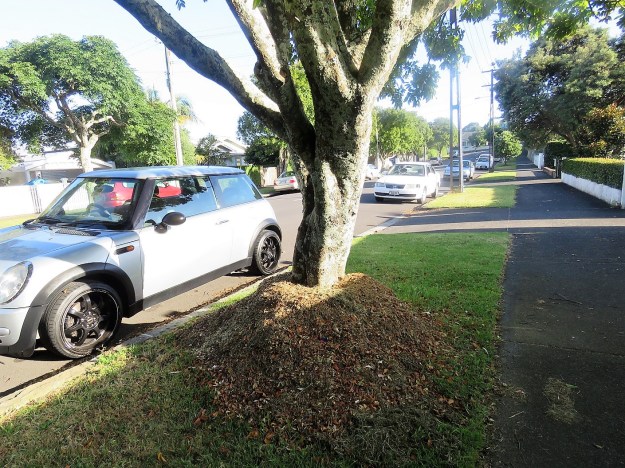 Well lookee here. When I was submitting three new articles a week to the Waikato Times – that was in the days before syndicated features and the resulting copy that became the newspaper equivalent of elevator muzak – I used to be on constant alert for subject matter. Old habits die hard and I reached for my camera to bring you this example of what not to do, photographed on a street in Auckland’s upmarket Mount Eden.
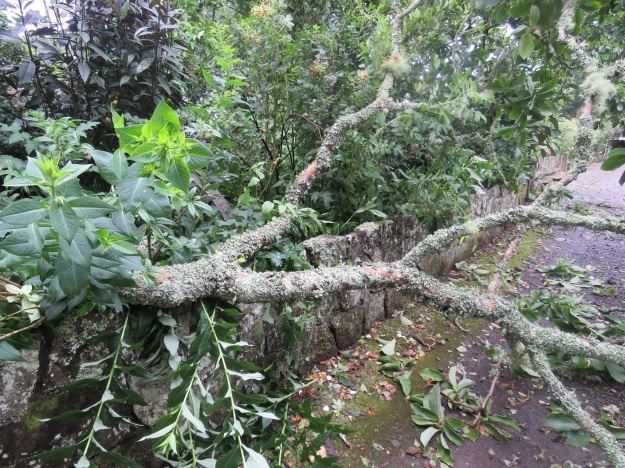 We had the next three days planned for a concerted swoop through the garden in preparation for a small UK gardening tour due on Thursday. While the garden is generally closed, this tour is coming through the Royal Horticultural Society – an organisation to which we have a few personal links and which has resulted in some really interesting and enjoyable garden visitors in the past. We maintain the garden at all times, but there are final grooming tweaks that make all the difference in presenting it well to paying visitors. We may be scrambling for the next few days with the added storm damage. Unless we get some of the elusive commodity this summer – uninterrupted sun – the lilies may not open in time to wow the visitors.
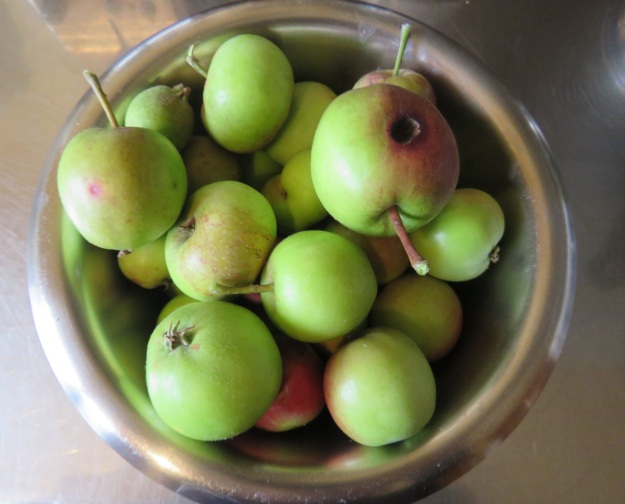 Yesterday was so miserable that I retreated to the kitchen, in part to deal with a surplus of Sultan plums. The tree is cropping very heavily this year but is not particularly flavourful. Mark put this down to his failure to thin the crop earlier in the season but I am sure the shortage of hot sun hasn’t helped, either. Jam, I thought. I shall make some Sultan plum jam, channelling my late mother-in-law who was the best jam-maker ever. These days I only make small batches – we are not great consumers of jam and a few jars for gifts are all I really need. I have learned that reducing the boiling time to set is what makes all the difference. Sometimes I resort to using the jam setting sugar which is, presumably, so heavily laced with pectin that it only takes 4 minutes of boiling to reach setting point. But I didn’t have any in the cupboard and it seems excessive to get in the car to drive to the supermarket for just one item. But fear not. I now know that one can make one’s own pectin by boiling up little green apples and those we have in abundance. I thinned some of the apple crops and chopped and boiled the fruit, using that liquid instead of water in the jam.
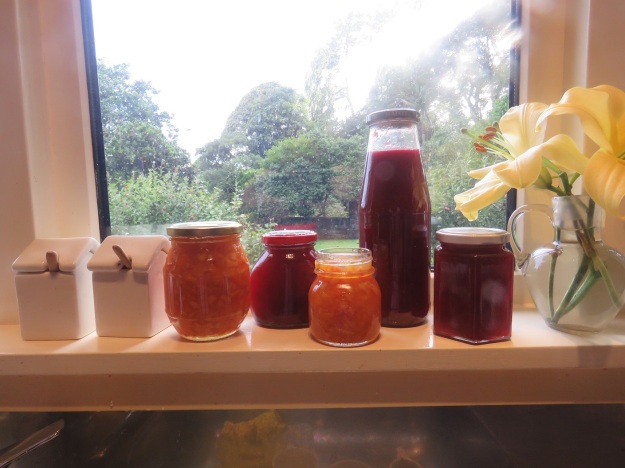 The result was a few jars of brandied Sultan plum jam though the brandy was a bit of a waste. I am not sure it is discernible except, maybe, to those with the most refined jammy palates. I then went onto fresh orange and ginger marmalade and finished up making some plum sauce. After all that, I felt so virtuous I opened a bottle of wine.
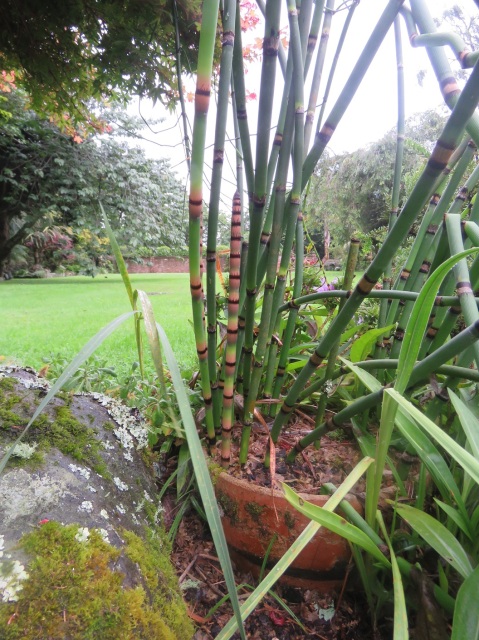 At least we knew the showy equisetum was invasive. I planted it in a pot because it was an interesting looking plant. It succeeded in breaking the first terracotta pot and making a bid for freedom but I was quick enough to nip that in the bud. This week, I will lift this second pot and get rid of it altogether. It is not good enough to keep sacrificing pots to the cause and it is a high risk plant. I asked Mark if he knew which species it was and he shrugged, saying he has zero interest in equisetums except he does know that it can be dried and used as a polishing agent, though we are talking about fine sandpaper polishing rather than furniture oil. We have another little equisetum that his father planted in the rockery and we have been attempting to eradicate ever since – for decades. We will not be inviting any more members of this ancient plant family into our garden.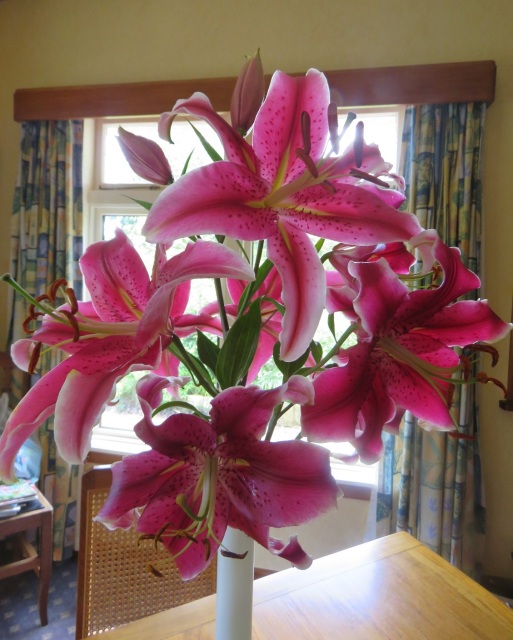

 That is how the snake entered our family. Theo admired it. He was still too little to pronounce his s’ss (or should that be esses, or maybe ‘isses?) and he always referred to it as “my ‘nake”. He had a great deal of fun with it for several years. Yes, you can harass New Zealand cats with fake snakes and even adults instinctively flinch when a snake’s head looms close. When he grew out of it, we relocated it to the Pinus ‘Beuvronensis’. I think it may be time to move it to the back shed and produce it with a flourish should our son, now in his late twenties, ever have offspring.
 Tikorangi The Jury Garden