

I was cleaning the dead wood and needles out of Pinus sylvestris ‘Beuvronensis’ and decided that Theo’s ‘nake could be moved to the back shed instead of lying coiled, menacingly, within this tree as it has for maybe two decades. It is still in very good condition, this rubber snake. I say “coiled menacingly” because it looks remarkably realistic as long as one doesn’t inspect too closely and spot the lichen encrustations.
Overseas readers may not be aware that we are one of few locations in the world without snakes. Not even in zoos do we have snakes, so keen are we to preserve our snake-free status. As a result, we probably have more of a morbid interest and fear of snakes than most people and it amused us over the years to have this rubber specimen discreetly perched in the branches, though not without a recoil and a shudder. I have never forgotten reading ‘The Poisonwood Bible’ by Barbara Kingsolver with the green tree snakes which, from memory, killed one of the children of the obsessed missionary to the Congo. In my mind’s eye, Theo’s ‘nake is intertwined with those fearsome creatures.
Why is it Theo’s ‘nake? When our children were young, Mark used to combine speaking engagements with family holiday trips. I had a rule that the children were only to be subjected to one garden, nursery or plant shop a day. At most. While interesting for us, such places are not necessarily riveting for young children. But California Garden Centre in Wellington in the early 1990s was a hit. Back then, its founder, Keith Lowe, was still actively involved. Keith is well known in the garden centre scene of New Zealand and in bonsai circles and I am sure that anybody who has met him will nod in agreement when I say he is one of life’s special people. He was the first mainstream retailer to turn up to visit when Mark was starting to expand the nursery from its mailorder origins to wholesale and he remained one of our most loyal customers. Not only did he take an interest in us, that extended to our children. When we visited his garden centre – I think it was the first to move into having an expansive gift shop alongside – he was extremely generous. So generous in fact, that I had to quietly ask Theo, our youngest and still a pre-schooler, to stop admiring anything because Keith insisted on giving him any object of admiration.
 That is how the snake entered our family. Theo admired it. He was still too little to pronounce his s’ss (or should that be esses, or maybe ‘isses?) and he always referred to it as “my ‘nake”. He had a great deal of fun with it for several years. Yes, you can harass New Zealand cats with fake snakes and even adults instinctively flinch when a snake’s head looms close. When he grew out of it, we relocated it to the Pinus ‘Beuvronensis’. I think it may be time to move it to the back shed and produce it with a flourish should our son, now in his late twenties, ever have offspring.
It may be our recent trip to Canberra (snake territory… shudder) that made me more squeamish than usual about a rubber snake. There was also a news item last week that California Garden Centre has been sold – to none other than film-maker Peter Jackson. I think it unlikely that Jackson intends to continue running it as a garden centre but none of our family will forget Keith Lowe.
Postscript: I mentioned cleaning out the debris from Pinus sylvestris ‘Beuvronensis’. We have assorted aged, dwarf conifers and I try and do a clean-up once a year. They look a great deal better if I dislodge all the debris that catches within their tight branch formations and I like to think it keeps them in better health.
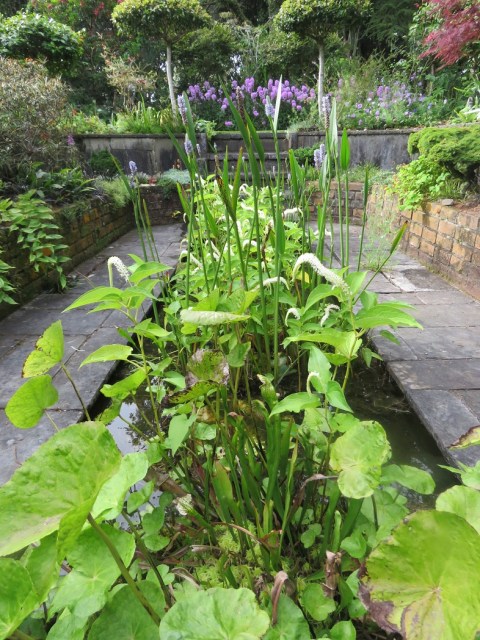 I spent a happy afternoon puddling in the goldfish pond. Every few years – well, maybe once a decade – Mark catches all the goldfish and drains the pond entirely to start again. In the interim, it needs a bit of ongoing maintenance and the pondweeds and plants were building up too densely. I try and keep the plants to a central strip. The goldfish need cover from circling kingfishers. The weed is problematic but it can be kept from reaching choking proportions by scooping with an old kitchen sieve. There are worse ways to spend a quiet summer’s day when the temperatures are not warm enough to warrant swimming.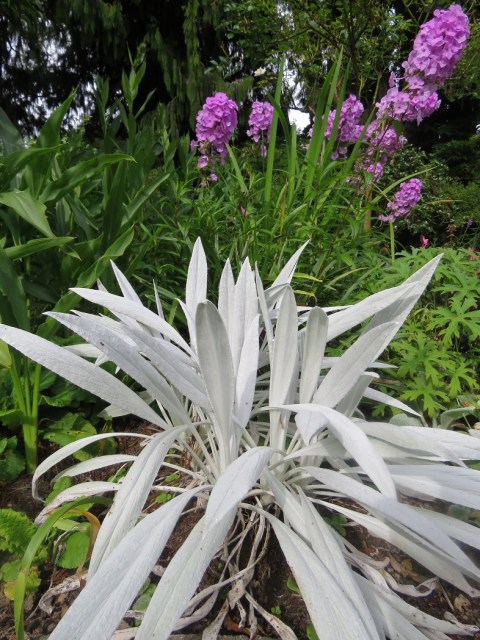
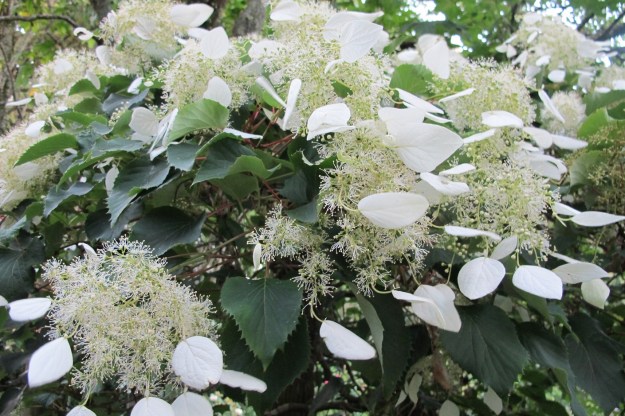 Yes, Schizophragma hydrangeoides looks like a climbing hydrangea but it is not the common climber which is Hydrangea petiolaris. This one comes from Japan and we prefer it to the usual form despite its difficult name. It is a close relative and a member of the same family but one step further back on the plant hierarchy from species to genus to family. Planted side by side, the schizophragma (pronounced skitsofragma or shyzofragma, whichever you prefer) is more floriferous and has significantly larger flower heads which seem to dance on the vine. This may be because its larger, winged petals (technically bracts, not petals) are held singly whereas H. petiolaris has its smaller bracts grouped in four, like a little flower all on its own. The schizophrama is self-clinging and relatively slow growing so it doesn’t take over and swamp neighbouring plants. It needs something to climb up, however. If left to ramble at ground level, it doesn’t seem to flower though it does layer its way along so you can get more plants from it by this strategy.
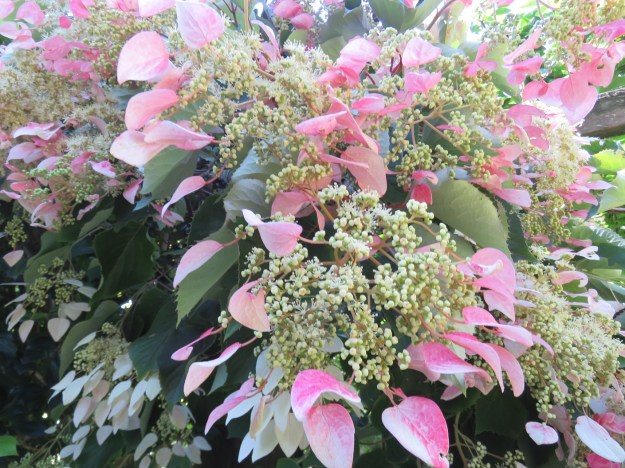 The pink form is even more unusual. This fact was often not appreciated in the days when we used to sell plants. I recall too many customers who were at best ABP – Anything But Pink, at worst IOBW – I Only Buy White (flowers). Such self-imposed rules can certainly limit appreciation.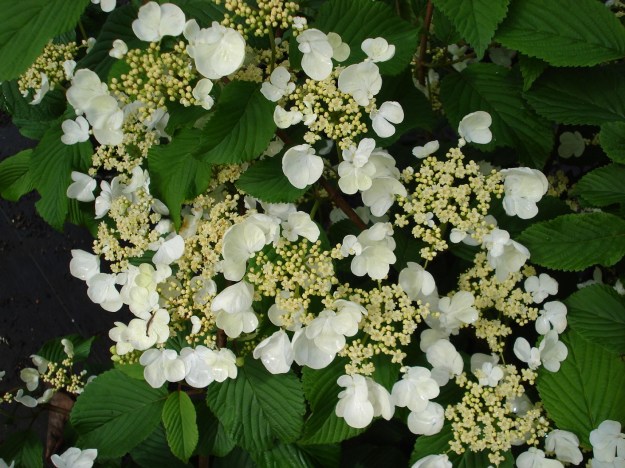




 Tikorangi The Jury Garden