
From statuary to urns – my mind is still on garden decoration. I looked up the definition of an urn – “a tall, rounded vase with a stem and base” so I am stretching the limits with some of my squatter pots but they add to the garden ambience theme.
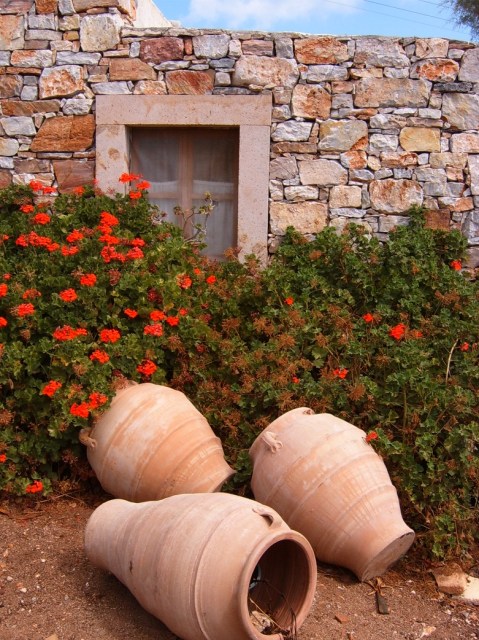 These are the genuine article when it comes to terracotta urns – Greek oil jars. I spotted them just lying about looking absurdly decorative out the back of a shed on a tiny island just off Patmos. It was not until I saw Greek oil jars that I ever considered the different shades of terracotta that come depending on the local clay. On the eastern isles, the terracotta was quite pale with a white powdery finish which I find much more attractive than the more usual orange shades. If I could have shipped some lovely oil jars home, I would have.
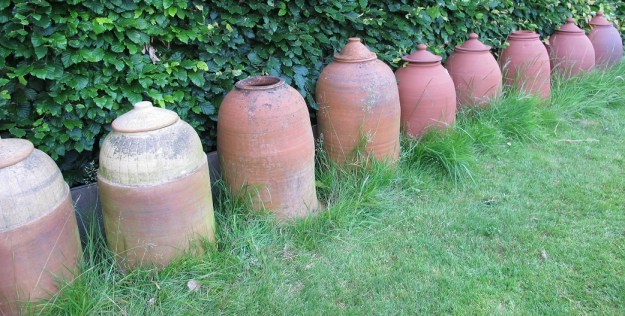
 Hardly urns, but a handy segue on how attractive older utility gear can be, forcing pots, just hangin’ about waiting to be used again in the vegetable garden. Placed over vegetables that need blanching (rhubarb, kale, white asparagus, celery and the like) they produce more tender shoots. We saw them in more than one English garden. I think they are available in New Zealand but with a hefty price tag that will ensure they are used as ornament, not their designated purpose.
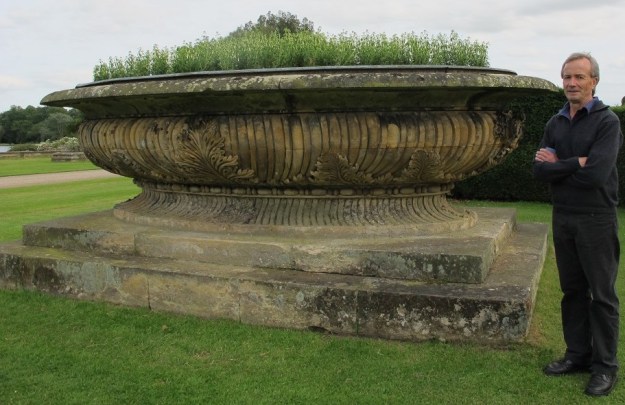 If you are going to have an urn, or a font, maybe, and have a property that is of a suitable scale, then you might as well make it a B I G one. This is at Castle Howard in Yorkshire with Mark standing beside it. I am not sure what is growing in it but it did not really enhance the Experience of the Urn. It may have been more effective left empty.
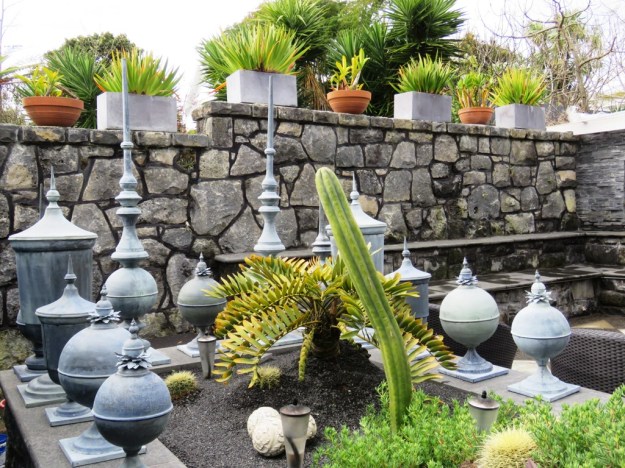 When it comes to lidded urns that bear a slight resemblance to a certain style of funeral urn, the same principle may apply. If you are going to have one, it may well look considerably more dramatic if you have many, as in this interesting and contemporary small Auckland garden.

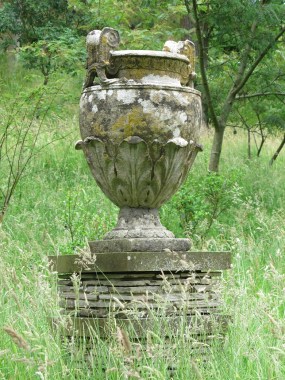 Still with the greys, these two handsome urns are from Arabella Lennox-Boyd’s garden at Gresgarth. The squatter pot was nestled into the garden by the stream, making a charming scene to be viewed at close quarters. The use of a plinth makes the taller pot a statement all on its own. I admired it enormously, even more so in its understated meadow setting.
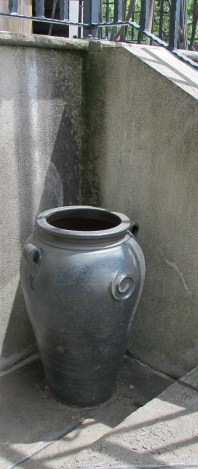
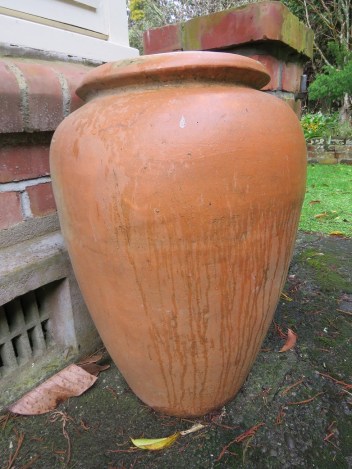
Grey-black can be an attractive colour in a modern garden, as in this pot which was just gently and effectively decorating a blank area. I liked its understatement. It didn’t need to be filled with red pelargoniums or similar colour. The terracotta pot is mine. Bought as a “temple pot” and not, sadly, a high quality Burrelli pot as some have assumed. But it is not unattractive and serves a useful function as a holding place for bamboo stakes in that area of the garden. These tall pots are a classic design that has endured because it is a visually pleasing shape.
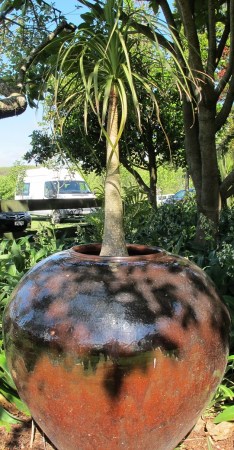
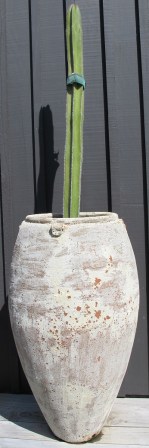 I feel some gardeners haven’t quite taken on board the message that some pots are sufficiently elegant to exist simply as a decorative pot, without a plant in it. Very deep pots can drain poorly – some even come without any drainage holes in the bottom at all – meaning that the roots are going to be very wet all the time. A tall pot on a narrow base is not the most stable design. Adding in a tall plant will make it even more top-heavy. Further, to keep container plants healthy and growing well, they really need to be completely repotted in new mix at least every second year, if not annually. Getting a plant out of a pot with a narrow top is a mission and usually involves either damaging the plant or breaking the pot.
 This modern urn filled with copper foliage (posssibly a cirsium -one of the ornamental thistles) sat on a plinth in an otherwise austere setting – the stable yard, I think it was – in a private Yorkshire garden. One of a pair or maybe even more, I am sure they were not cheap to buy but they were very effective. I thought from one of my photos that they were marble, but looking at the others, it appears they may be a composite stone that is made to resemble marble and the run-off from the copper is giving a subtle patina over time,

 Nobody does cheerful urnage like the Spanish and the Portuguese. At least nobody that I have seen. I photographed these two in Seville because they were so shamelessly flamboyant. The amazing thing is that these pots can be placed in a public area and not be smashed as they would likely be in this country. But honestly, I think it is very difficult to transfer this sort of decoration away from that bright light and cultural context of southern Europe without running the dire risk of it simply looking, well, vulgar. The only time I have seen something similar done successfully was by Lynda Hallinan in Auckland. Her elaborate pot sits empty, you will notice (filling it would really be over-gilding an already gilded lily), nestled in amongst lots of foliage and flowers where it caught my eye.
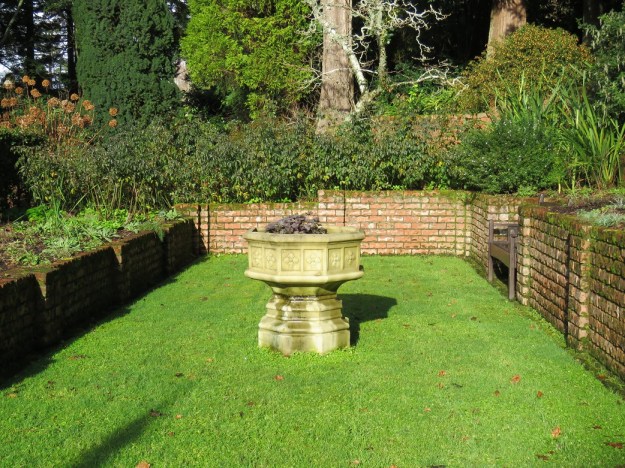 And the modern take on the baptismal font? This is in the middle of the raised beds at Tupare Garden in New Plymouth. I am not sure it is a good enough piece to take centre stage. It may have looked more at home were it in grey stone but that sort of modern take on mellow Cotswold stone is not so much at home across the world. But I guess it comes down to personal taste.


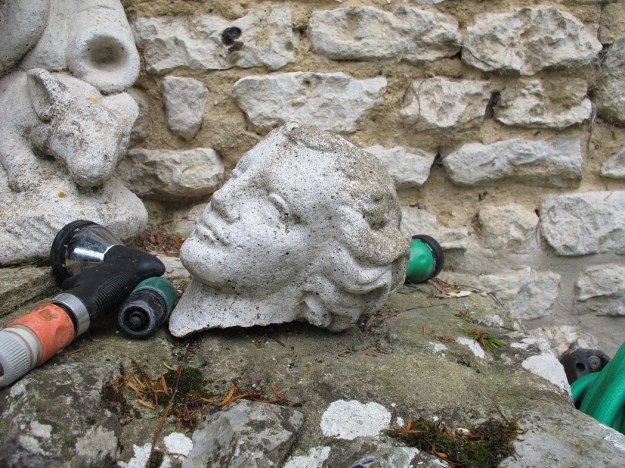
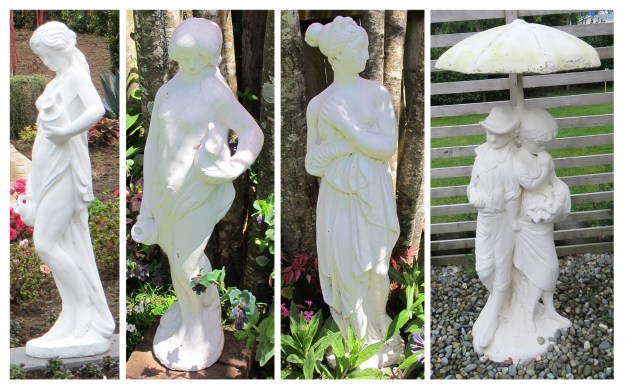 Much of the white domestic garden figurine decoration here probably has a closer debt to the pre Raphaelites and Victorian sentimentality, but personally, I remain unconvinced as to what it adds to home gardens. Especially as so many garden owners appear to feel the need to repaint their figures every year or two, to maintain that pristine whiteness. Each to their own, is all I can say.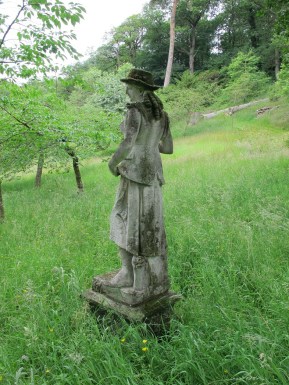

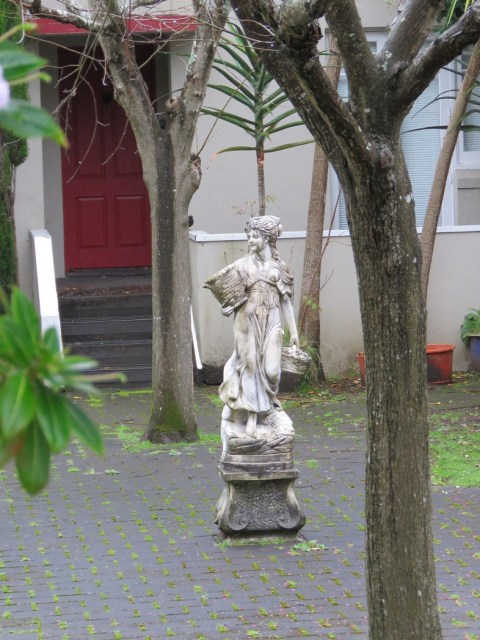 In a similar mould, I think I could even find the right spot for this unloved figure of the harvest maid that is marooned in the area serving some equally unloved apartments in Auckland. By the Countdown Supermarket on the corner of Dominion Road in Mt Eden, if my memory serves me right. But Mark may disagree. “Why,” he says, “must we import the art and history of other countries? Can we not evolve our own?”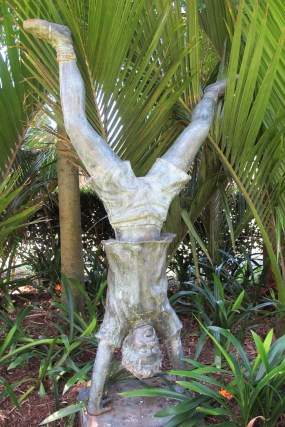
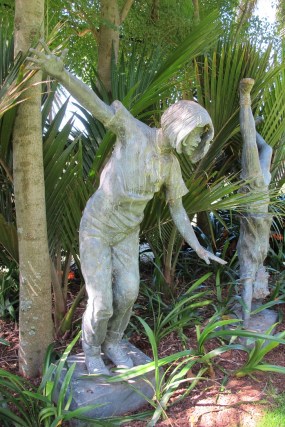
 Similarly, the Holyoakes in New Plymouth are strongly family oriented and told me that their large Lego man makes them smile and acts as a constant reminder of the delights of child rearing. While uncompromising as a piece of garden sculpture, they have placed it in a small courtyard visible only from their living room, surrounded by the grandeur of the very large bird of paradise plant – Strelitzia nicolai.
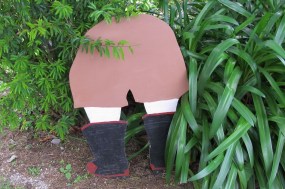
 By no means can all garden statuary be called sculpture. Some is more akin to craft than art although at its best, crafty efforts can cross over to folk art (more on this another time). Figures made from terracotta pots are found relatively frequently, usually created by the garden owner. This is affordable garden decoration, not sculpture or art.

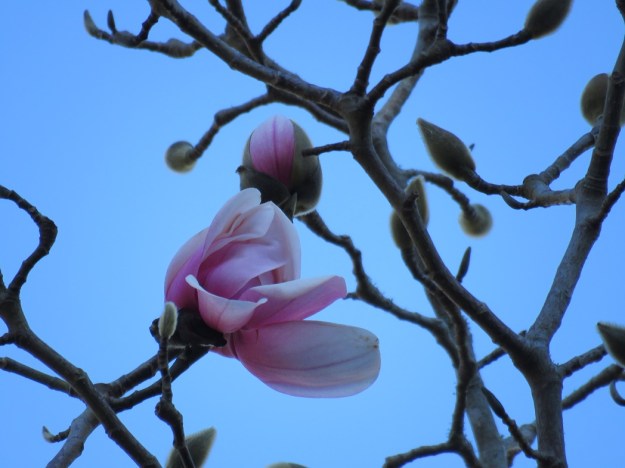
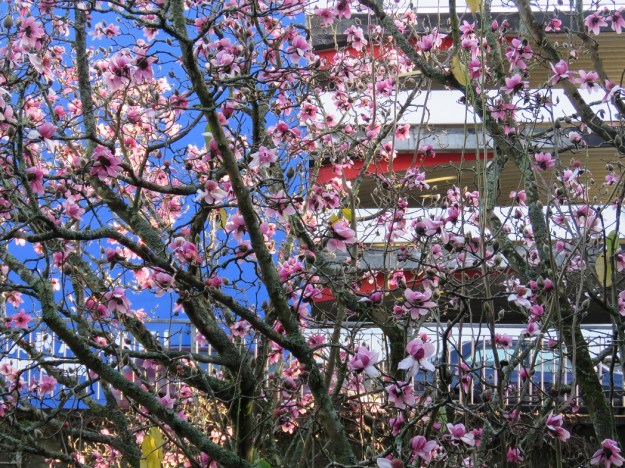
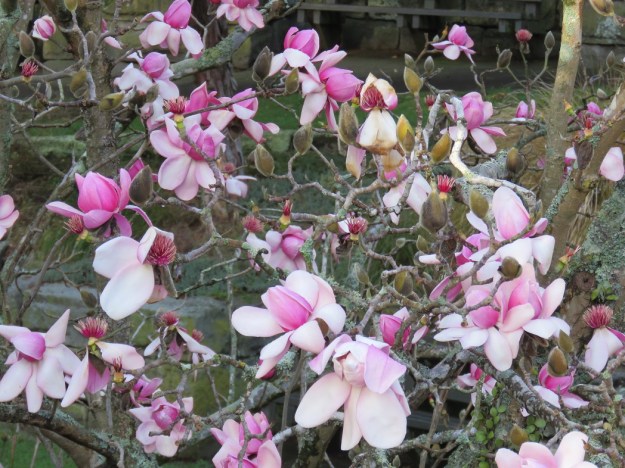
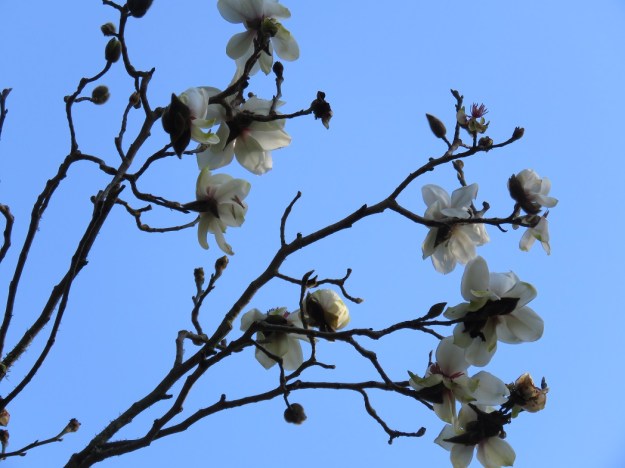
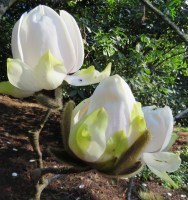 Tupare Garden in New Plymouth has one of the oldest white forms of campbellii in our area, though the tree is not a particularly strong grower. It has a different provenance which the late Jack Goodwin relayed to Mark. Alas Mark did not write it down at the time but his recollection is that Russell Matthews, who created Tupare, bought it as a seedling grown plant from a local nurseryman who had imported seed, probably in the 1940s. This may have been James or Francis Morshead. M. campbellii is renowned for taking many years before it sets flower buds and an anecdote from another source relates the huge disappointment Matthews felt when the first blooms opened white, not pink. More a collector of status plants than a plantsman, he was apparently delighted when Victor Davies – of Duncan and Davies Nurseries – assured him that the white form was most unusual and therefore a real treasure. Only history puts this into context – that the white form is unusual for Taranaki because of all our Quaker Mason pink plants, but not at all unusual in the wild.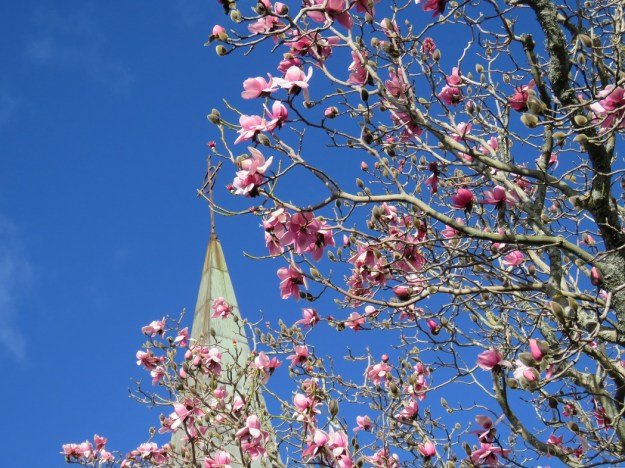
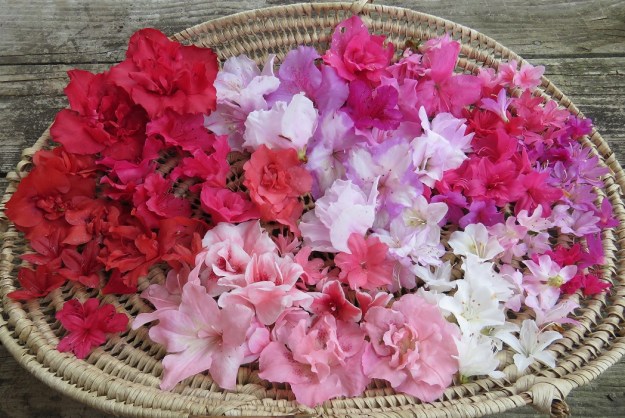
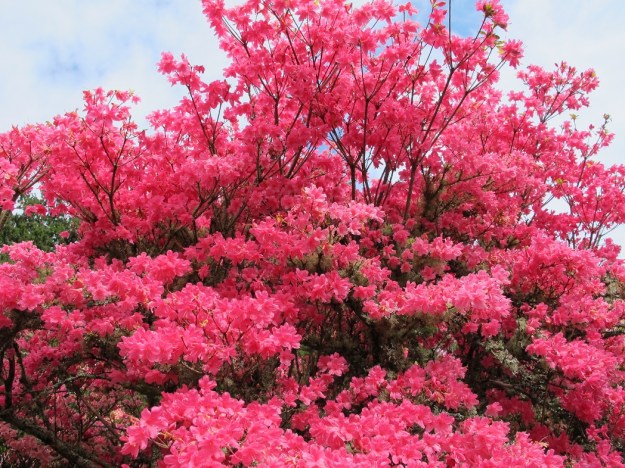 I am on the ‘Mission of 78 Azaleas’. Some years ago, Mark did a cuttings run from plants here and they had reached the point where they really, truly did need planting out. I found homes for about half of them last spring, but there are still 35 sitting out under the shade cloth, looking reproachfully at me and begging to be given permanent homes this winter.* I shall do it this very month. I swear I will. From this, you may deduce that azaleas are one of our backbone plants in the garden, threaded through quite large areas.
 I like to tell the story of a knowledgeable Japanese garden visitor. He came from Kurume and we have a fair number of very small leafed, small flowered Kurume azaleas. He had no English and we have no Japanese, but he managed to convey to us that our Kurumes were simply astounding in their stature and shape but that we needed to take better care of them. He was pointing to the grey lichen infestation in the canopy of a patch growing in full sun. While it is often recommended that you spray for this – lime sulphur or copper is the usual treatment – it is no mean feat to spray above your head height and we are consciously trying to avoid spraying. So I am on a long term campaign – year three into what may be a five year project. In late spring, I manoeuvre my way around on the ladder to take out maybe 20% of the old growth which is most heavily infested, without losing the canopy effect. They do look better for it, but I am grateful that it is only one area that needs this attention.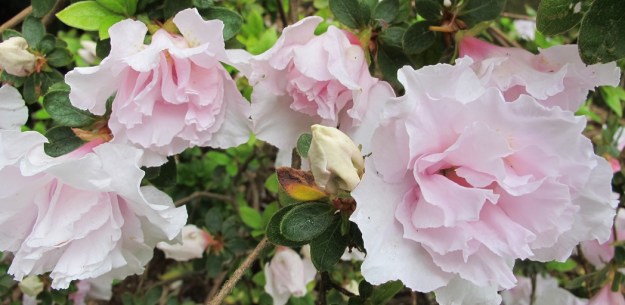

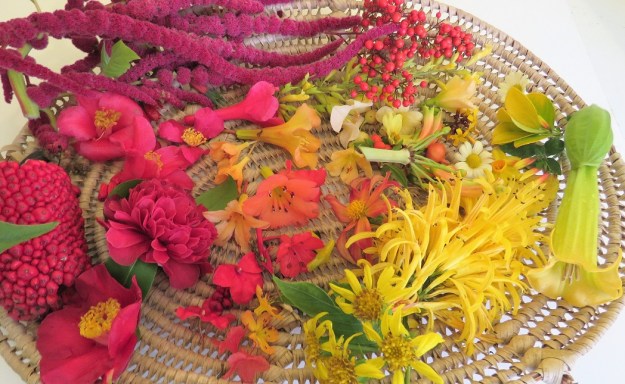 Winter can be very pink, here. Or so I have often declared. I hereby move my position. Late winter and early spring can be very pink – all those camellias and magnolias. In late autumn to mid-winter, the dominant colours are more inclined to the oranges and yellows with a smattering of reds.
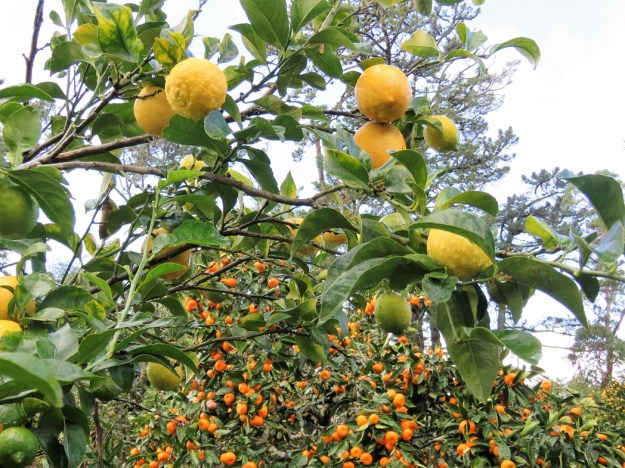 I could of course have added in fruit. The citrus trees add a glorious blaze of colour in the depths of winter – just a common old lemon and a very productive mandarin tree in this photo, but the orange trees we have scattered through the ornamental gardens are also indubitably orange and a very cheerful sight for that.
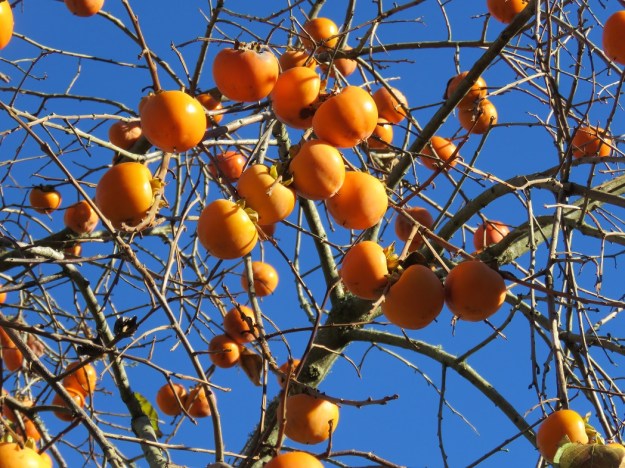 And it is hard to ignore the glory of the persimmon tree, be the sky grey or blue. It is a feature of our climate that we have high sunshine hours and bright, clear light even in mid-winter, albeit interspersed with the rain. We don’t get many days when it is irredeemably grey and gloomy, without spells of clear skies.
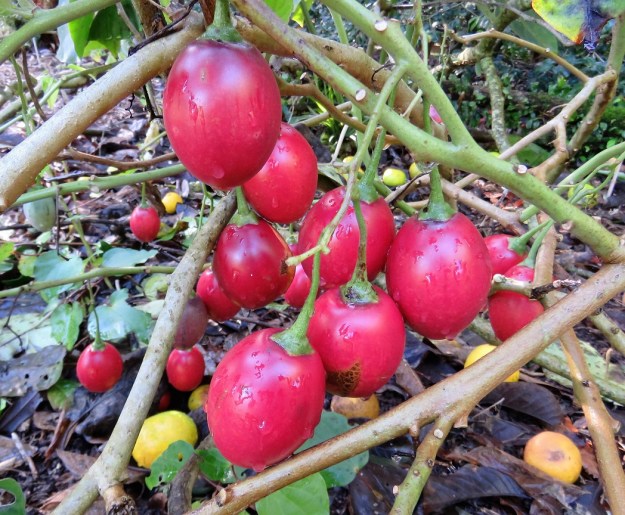 The tamarillos are also hanging decoratively. These used to be known as ‘tree tomatoes’, botanically Solanum betaceum. Apparently the ravages of the potato psyllid have hit commercial production hard, but our plants just continue on in a regime of benign neglect. The fruit is usually stewed with sugar but stewed fruit is not part of our diet. I enjoy them more as a fruit cordial. Mark’s father used to like eating them sliced on wholemeal bread with a little raw, chopped onion. The yellow fruit beneath are windfall grapefruit.
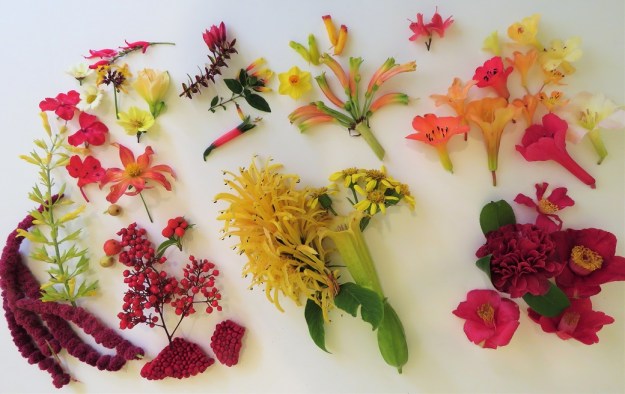 But to the flowers. On the left, we have the vestiges of autumn – salvias, impatiens, tree dahlia hybrids, daisies and Oxalis peduncularis. At the front are a few berries and seeds – baby figs from
 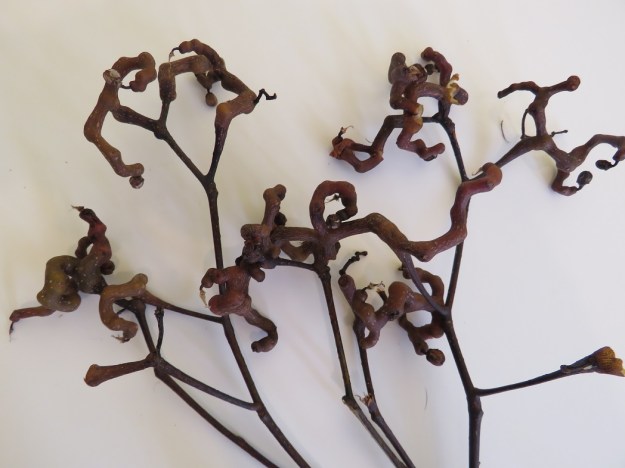 Finally I offer you… the ‘fruit’ of the Japanese raisin tree, Hovenia dulcis. I am guessing that as our plant is maybe 20 years old and planted in a somewhat out of the way position, we just haven’t noticed these before. They are actually the swollen tips of the stems and are edible. They even taste fruity, in a raisin-ish sort of way. Apparently drying them makes them even more raisin-y. It is more a curiosity than an edible essential, but we like these odd additions to our diet here.
 Tikorangi The Jury Garden