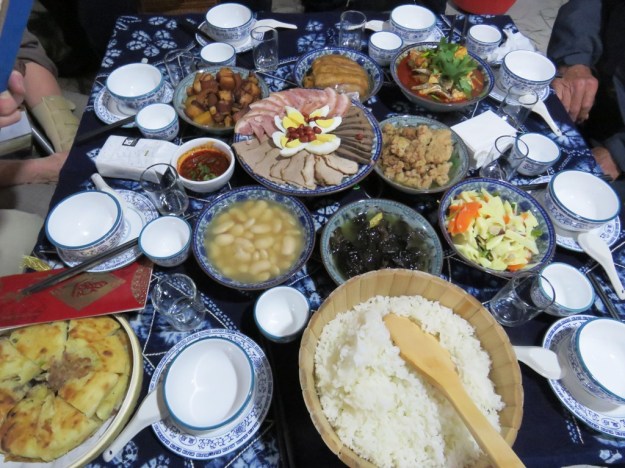
Zoucheng Village – the Bai people’s “Eight Bowls of Dishes”
An army may march on its stomach. Tour groups do not march but food becomes extremely important. I was looking forward to the food in China and some of it did not disappoint.

An uninspired photo but my only one of the vege fields at Longxiadeng Village
We saw huge amounts of productive land growing seasonal crops – mostly what we call Asian greens in early spring. I returned home with an almost total lack of photographs of these but that is because we saw them from moving coaches. Around Dali, the plantings were on some of the best land and they remain in small plots. We were told that each individual was entitled to an area of 20 metres by 10 metres and the plots appeared to be a patchwork of those dimensions, worked largely by hand. We did not see mass production or amalgamation of plots, except at one Bai village.
On the long drive to Baotai Mountain, the steep hillsides were terraced and still being worked intensively for food production. It looked like an old painting but alas, the windows of the small coach were so dirty and we were pressing on at speed to keep up with the entourage making photography impossible.
Mark, feeling his own ageing body, took special note of the posture and techniques of the locals working their plots, hoping that he could learn from age-old techniques passed down countless generations of peasant farmers. He was disappointed to see them using their backs as cranes and making all the mistakes that have led to his dodgy back.
Newly-made American friends on the tour commented that they walked back to the hotel in Dali by a back route and passed an area of vegetable growing where, somewhat to their surprise, they were still using night soil as fertiliser. The stench, they said, was indescribable.
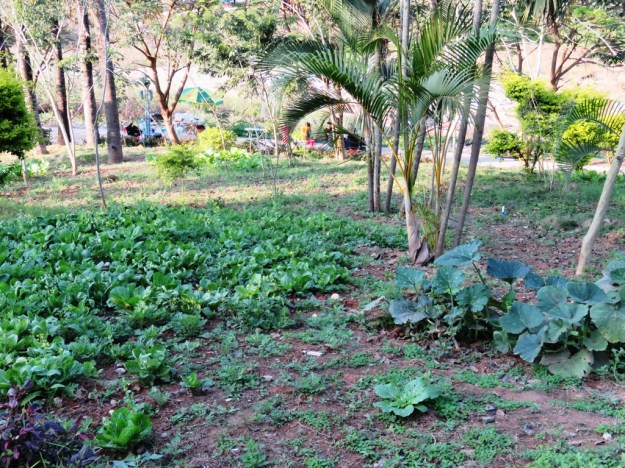
Crops growing on a very domestic scale on what appeared to be public land alongside the Mekong River
Down in Jinghong, Mark and I strolled along the Mekong River and were charmed to see that even public spaces like this are utilised by locals to grow produce, albeit in less than ideal conditions. It takes a lot of produce, of course, to feed a population the size of China’s.
We will draw a veil of silence over the hotel food that was served during the Camellia Congress itself. I have never been a fan of hotel food anywhere in the world, and catering for very large groups is always challenging. The most interesting new taste we experienced there were the scales of Lilium brownii which appeared on the salad bar – slightly sweet and crisp and altogether delicious. It would be worth growing as an addition to the diet.
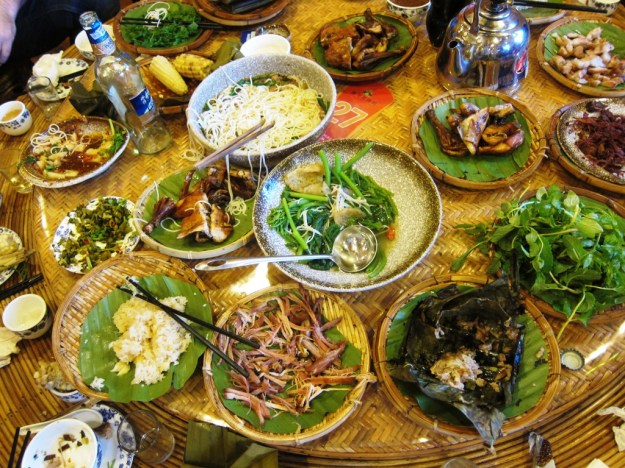
Thai-influenced food down near the southern border in Jinghong – one of the most delicious meals we were served
Allegedly cured goose but it might equally have been cured beef except that we were rarely served beef . With orchid.
It was when we were out and about that the food was a great deal more interesting – usually served at tables of 8 to 10. I like shared meals that are typical throughout much of Asia because it gives the opportunity to try many different dishes and avoids that typically Western envy where the person sitting opposite you always seems to have ordered something that looks more appealing than the dish you ordered. The sheer volume of food was daunting at times, especially when it appeared at lunch and at dinner and I was not alone in wondering what happened to the leftovers. However, in a country where many of the older people will still remember famine, I am sure it wasn’t wasted. I was surprised at the high protein content, especially in relation to the vegetable dishes, though that may have been a reflection of our honoured status. A meal usually involved chicken, duck, pork, somewhat indeterminate cured meats, fish and tofu though the pickings would have been lean for strict vegetarians (especially as the tofu was often part of the fish dish), let alone vegans, though paleos may have been happy.
As a New Zealander, the near total absence of any dairy products was interesting. Even the milk offered with tea or coffee was soy milk as often as UHT from a cow. I am not sure how easy it will be for NZ’s dairy industry to make huge inroads into the Chinese market beyond infant formula when it will involve changing the age-old dietary habits of a nation.
I think it may have been the lack of dairy that had a friend who was on the tour craving what he called “western food”. He later confided that when he took a day off to spend on his own, he found a cheesecake in a shop window and despite an exorbitant price (nearing $NZ 70), he fell upon it and consumed the lot.
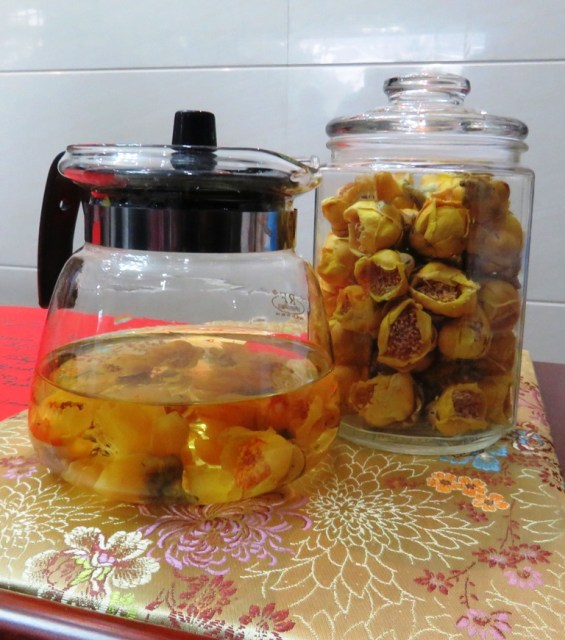
Golden camellia tea
I miss my cup of good, strong, fresh coffee in mid-morning more than dairy and didn’t mind how much the coffee cost on the odd occasions when I found it – generally about $NZ 6.50 which was expensive for China. Tea, often green, was routinely served as part of the generous hospitality we were offered on many occasions. The golden camellia tea was a beautiful addition to the tea range.
 Finally a few snippets: If there is one thing I absolutely loathe on purchased fruit, it is the sticky little labels which do not even break down in the compost. I often peel them off in the shop and leave them behind. These apples solved the problems of labels but we have no idea how imprinting the branding on the skins is achieved.

 I do not know if children’s Saturday sports matches continue to serve up segments of orange as half time refreshments (this may be a tradition that has died out at Saturday netball, rugby and hockey), but if they do, I feel that we could practice more class in the presentation….
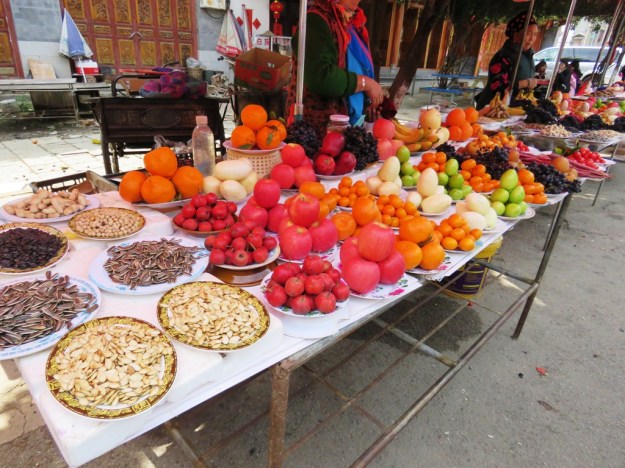 Similarly, the displays of fresh produce in New Zealand can leave a lot to be desired when compared to the care taken with the street stalls that lined a road near Dali.
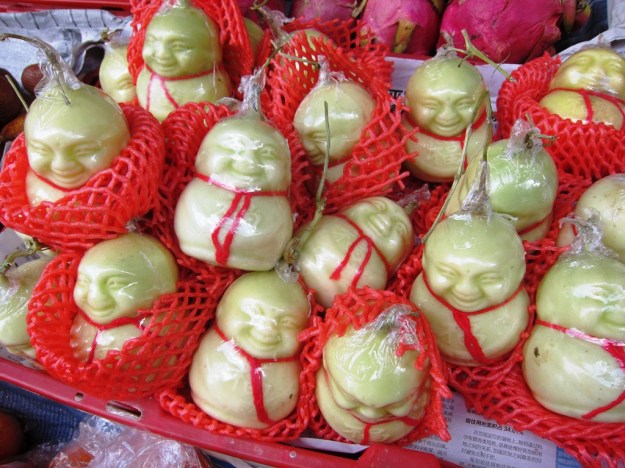 Buddha fruit! Not carved. Grown in plastic moulds, the ever-useful internet tells me. There is a labour intensive way of growing a novelty crop. These may be pears. If your curiosity is whetted, there are many images on line including Chairman Mao shaped fruit. Only in China?

Chinese portaloo
Finally, what goes in must come out etc. Not only does food take on new meaning when travelling in a large group. So do loos. This was the immaculately clean Chinese version of the squat portaloo which amused me at the time. While the hotels we stayed at all had Western-styled toilets, the same was not the case when out and about. I did hear a few rueful comments from some of the older women who struggled with their thigh muscles and flexibility in this situation.


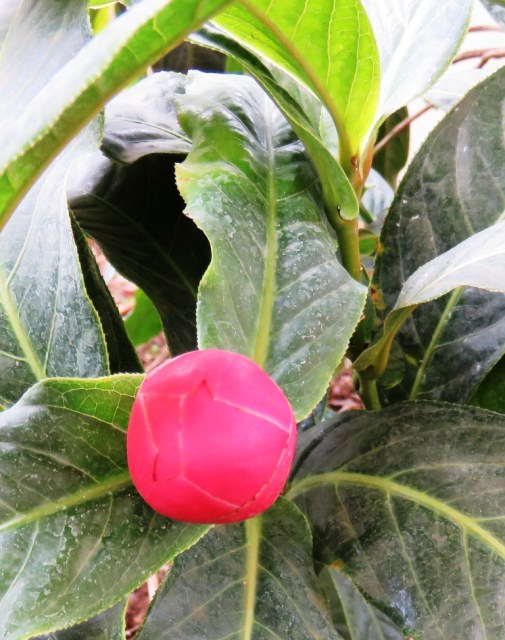

 Some things are not what they appear. This is not a dead leaf. It is in fact a butterfly – quite possibly Kallima inachus, also referred to as the orange oakleaf or dead leaf butterfly. We saw butterfly houses at both the Butterfly Spring in Dali and again in Xishuangbanna, though it was a cool spring so we didn’t see any in the wild.
 I had thought that the advertisement on NZ television that features what appear to be blue as blue monarch butterflies might have undergone some computer intervention to change the colour, but no – they do exist. Though my perfunctory net search does not suggest they belong to the monarch family.
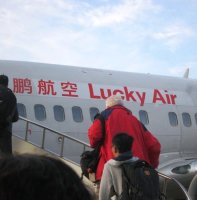 As we flew into Xishuangbanna (on Lucky Air – not entirely sure of that branding), I wondered about the huge plantations visible from the air. Something twiggy. Rubber trees! I had not realised they were deciduous. I have always associated commercial rubber production with Malaya but maybe modern Malaysia has found palm oil more lucrative, leaving a substantial gap in the market for entrepreneurial Chinese. In fact the most common tree used for rubber, Hevea brasiliensis, originates from South America around the Amazon.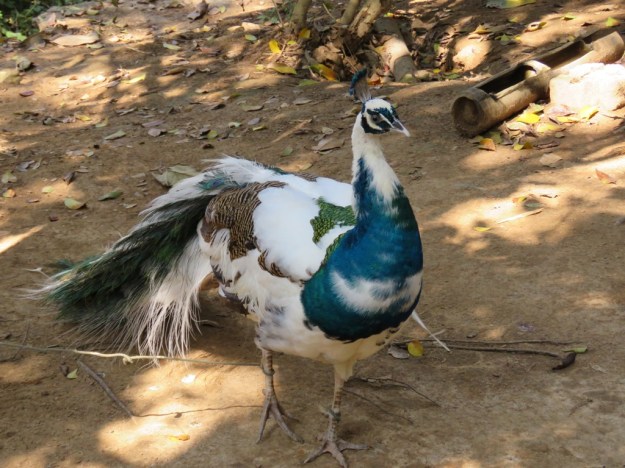
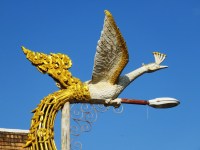 Jinghong is branded as the peacock city – even to light fittings in one area. In the tour of “primitive forest” (I was not entirely sure how primitive it was now that it has been adapted to accommodate tens, nay hundreds of thousands of visitors) there were tethered peacocks. What happens when you cross a pure white with a traditional blue? Why, this interesting combination.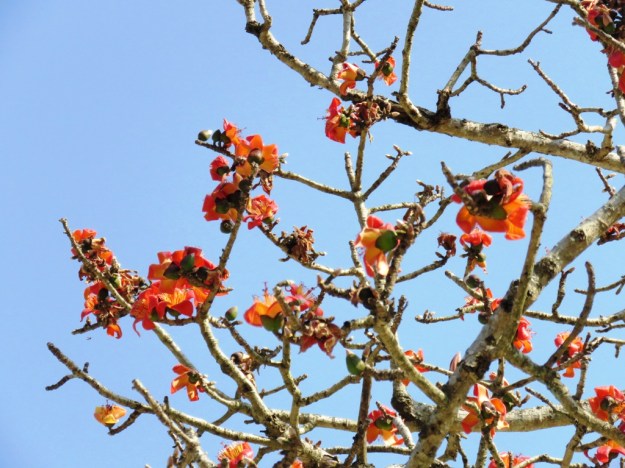
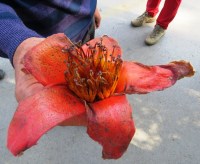 Kapok flowers. Some of us are old enough to remember the days of kapok mattresses and pillows but I doubt that many of us knew that they were stuffed with the fluff from the seed pods of the kapok tree, Ceiba pentandra. However that species has flowers that are considerably less spectacular than the ornamental kapoks. We had seen kapoks used as street plantings in Hue in Vietnam some years ago but they were not in flower.
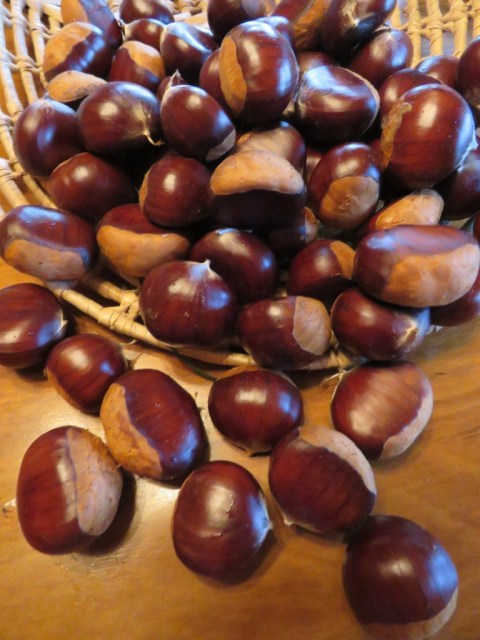 It is chestnut season.
 First published in the NZ Gardener April edition and reprinted here with their permission.
  Tikorangi The Jury Garden