
 Some things are not what they appear. This is not a dead leaf. It is in fact a butterfly – quite possibly Kallima inachus, also referred to as the orange oakleaf or dead leaf butterfly. We saw butterfly houses at both the Butterfly Spring in Dali and again in Xishuangbanna, though it was a cool spring so we didn’t see any in the wild.
 I had thought that the advertisement on NZ television that features what appear to be blue as blue monarch butterflies might have undergone some computer intervention to change the colour, but no – they do exist. Though my perfunctory net search does not suggest they belong to the monarch family.
We must have been very miserable and ill in Singapore airport on the way home (we both went down with a bad bout of flu from China which laid us low for a good fortnight after we got home). I judge how ill we were by the fact that we spent the time in transit in Singapore in the pay-in lounge immediately adjacent to the butterfly house in the airport terminal and neither of us felt like moving. Not even the ephemeral appeal of butterflies was enough to entice us to while away an hour.

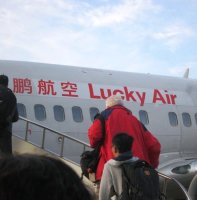 As we flew into Xishuangbanna (on Lucky Air – not entirely sure of that branding), I wondered about the huge plantations visible from the air. Something twiggy. Rubber trees! I had not realised they were deciduous. I have always associated commercial rubber production with Malaya but maybe modern Malaysia has found palm oil more lucrative, leaving a substantial gap in the market for entrepreneurial Chinese. In fact the most common tree used for rubber, Hevea brasiliensis, originates from South America around the Amazon.
The Chinese plantings are monoculture on a massive scale and any monoculture brings environmental issues with it. South American leaf blight is a apparently a real threat to the rubber trees of South East Asia but maybe these recent plantings are of more resistant clones. Maybe. We could see evidence of traditional harvesting by tapping with the tins in place to collect the sap. Our local guide informed us that it was a lucrative crop for the plantation owners and it is one that can be grown on the very steep slopes typical of the area.
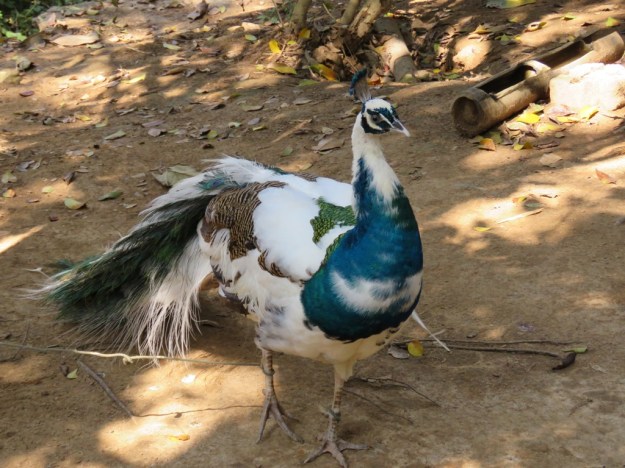
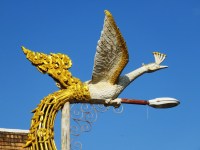 Jinghong is branded as the peacock city – even to light fittings in one area. In the tour of “primitive forest” (I was not entirely sure how primitive it was now that it has been adapted to accommodate tens, nay hundreds of thousands of visitors) there were tethered peacocks. What happens when you cross a pure white with a traditional blue? Why, this interesting combination.
In the days just before digital cameras, we visited Isola Madre on Lake Maggiore in Italy. I much preferred it to the better known Isola Bella. One of my enduring memories (not captured on camera) is of the oh so elegant and refined pure white peacocks perching on the magnificent old stonework. It was the epitome of style.
Peacocks are glorious birds but if you are thinking they would be nice to have in your own garden, do some research first. Any creature that size is going to cause a lot of damage perching on plants and fossicking around. I recall a local gardener who targeted the wedding market telling me she had to get rid of her peacocks. The excrement is so large and abundant, it was an issue for wedding parties, especially the wedding gown trains.
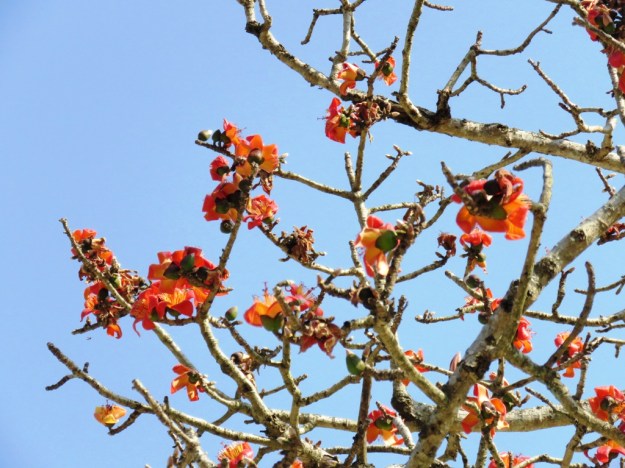
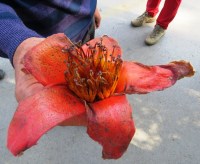 Kapok flowers. Some of us are old enough to remember the days of kapok mattresses and pillows but I doubt that many of us knew that they were stuffed with the fluff from the seed pods of the kapok tree, Ceiba pentandra. However that species has flowers that are considerably less spectacular than the ornamental kapoks. We had seen kapoks used as street plantings in Hue in Vietnam some years ago but they were not in flower.
Since the exotic chorisia has been reclassified as a ceiba, there appear to be about 20 different species of the latter and we didn’t know which one this large flowered orange tree seen in southern China derived from. In our mild conditions in Tikorangi, we can grow some of these tropical trees but not necessarily get them flowering (this is the case with our chorisia, more correctly called Ceiba speciosa these days) although they will bloom in the warmer north of New Zealand.

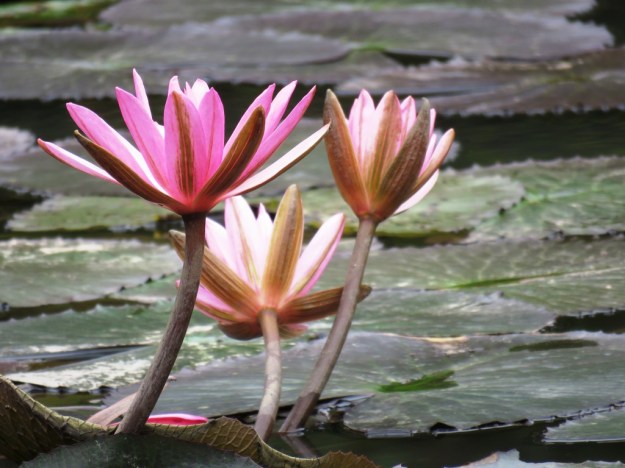
Finally, I don’t know anything about tropical waterlilies but they made a lovely picture in the expansive pond (maybe a smallish lake) at the Xishuangbanna Tropical Botanics Garden where we spent a thoroughly delightful morning.
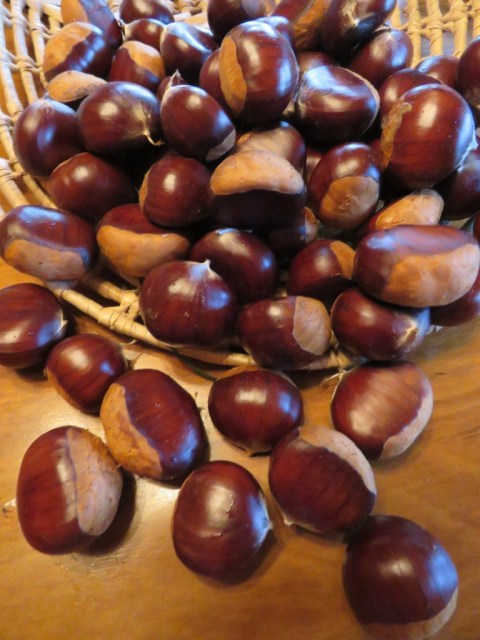 It is chestnut season.
 First published in the NZ Gardener April edition and reprinted here with their permission.
  Ping ducks! Not the Yangtze River, but as soon as I saw these ducks, I recalled The Story About Ping. It dates back to 1933 so I am guessing it was part of my childhood. We certainly read it to our children and it must be in the bookcase somewhere to this day. I was shocked, shocked I tell you, that none of the others around me at the time had ever heard of Ping. They must have had deprived childhoods is all I can say. Ping ducks in China were a delight. I bought a little Chinese bird whistle – the sort where you blow through water and get bird warble rather than a piercing squeak – to gift with the book to our grandson in due course. (The Story About Ping by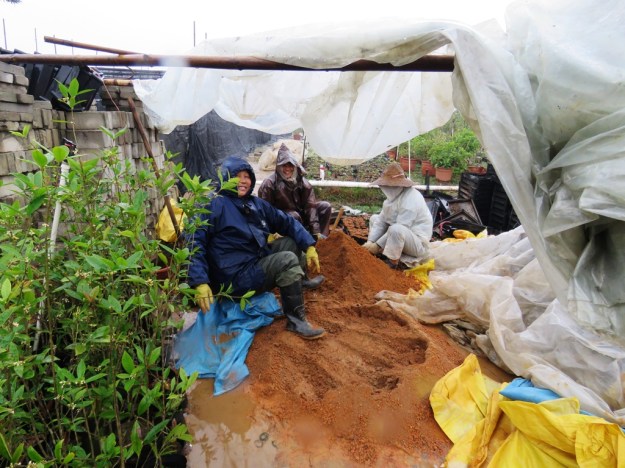

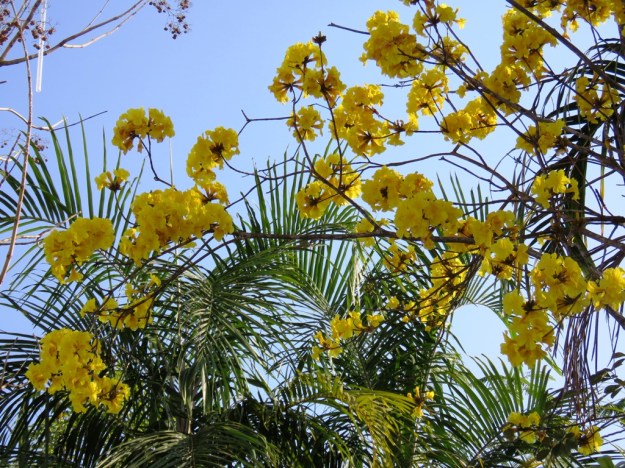 Sometimes Mark can surprise me with his knowledge. “It’s a tabebuia,” he said when he looked at this photo, though he had never seen one in real life. He then had second thoughts and wondered if it is Tecoma stans. A search on Wikipedia has us leaning to the tabebuia because it was more tree than shrub. Both tecoma and tabebuia are in the bignoniaceae family so there is a familial connection between them though they are not close relatives. The big yellow trumpets were a delight in the sub tropical climate of Jinghong, at a temple beside the Mekong River in Southern China.
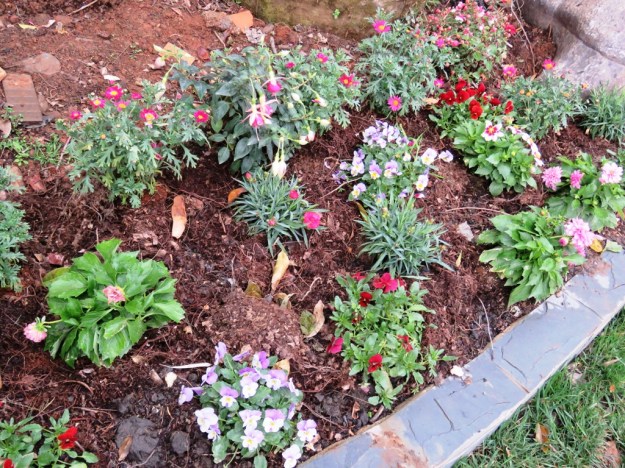 Ha! Under planting can be as crass, random and ill thought out in China as in New Zealand. When I visited a group of open gardens at home, I noticed that the under planting was a major weakness but I did not feel able to use the photos I took because the owners might well recognise their place and feel hurt and betrayed – even if I did not name the location. But honestly, planting bedding plants in alternating colours or random arrangements rarely cuts the mustard. In some of our local gardens, I have seen alternating blue and yellow pansies as a border edging beneath well kept pink roses. Neither is alternating white alyssum with yellow pansies creative or classy and alternating two colours of petunias is no better. If you don’t want your garden to look like an amateur version of a traffic island, then be very circumspect with punnets of annuals from the garden centre.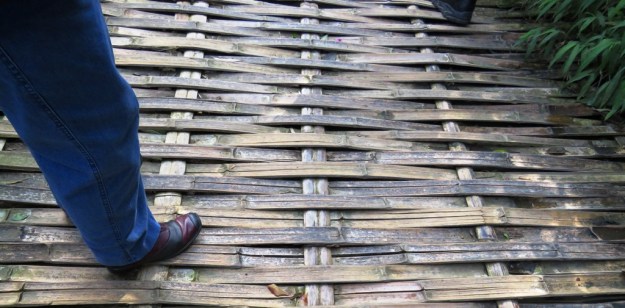
 There were no panda bears to be seen on our trip, but what can’t you do with bamboo? Here we saw it used as a walkway in what is described as a primitive forest in Xishuangbanna. It was also used in much wider expanses as decking over rough ground at the Jinhuo tourist village. It is a bit shaky to walk on and I have no idea about its longevity but the use of a traditional material that is fully biodegradable has some appeal in a modern world of concrete and plastic.
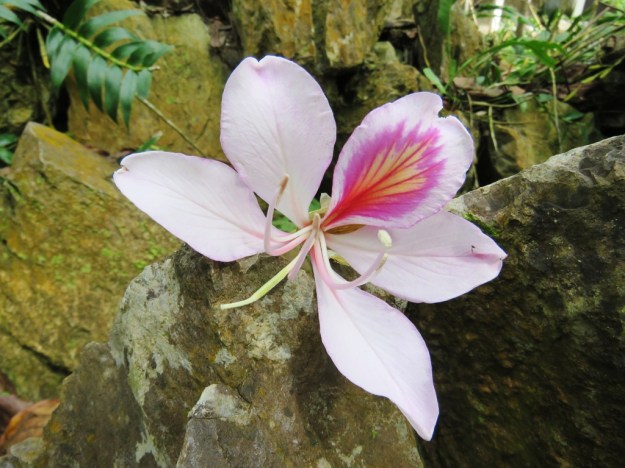 I have a sentimental attachment to bauhinias with a personal memory of Mark bringing me a bauhinia flower in our early days together. It was just the most exotic and beautiful bloom. So they caught my eye, growing in southern China in the Xishuangbanna area (near the border with Burma).
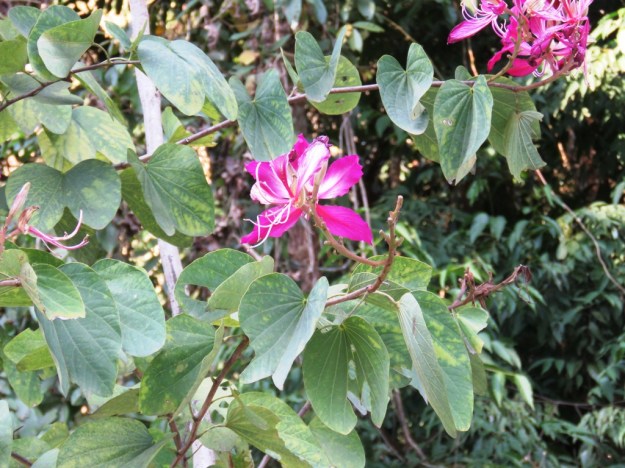 The bauhinia family is huge – around 500 different species – and in the fabaceae family (so a legume). I can’t unravel them to identify the ones I photographed, though the dark pink may be Bauhinia x blakeana, otherwise known as the Hong Kong Orchid Tree and the floral emblem of that island. They are not orchids, they just look as they should be. Or maybe exotic butterflies.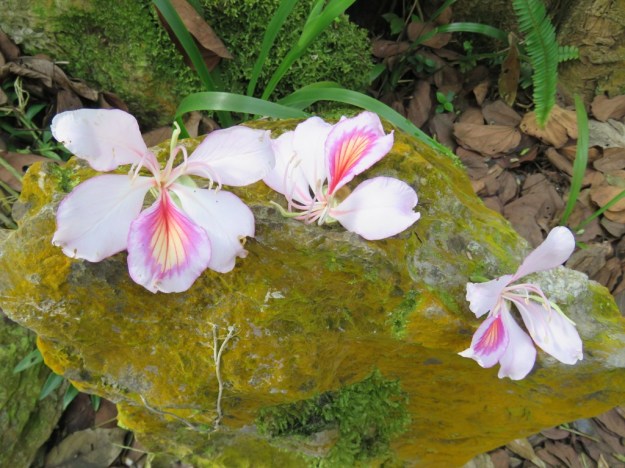
 Tikorangi The Jury Garden