Garden lore: chainsaw pruning

“There appears to be a large element of tree worship in us Americans, and anything remotely connected with a tree is approached with a numinous awe. People who are slothful by nature and who never get around to cutting down the peony and lily stalks in November (though this is well worth the labor) and who never divide irises on time, or plant the daffodil bulbs before Thanksgiving, or prune the climbing roses – such persons nevertheless leap into action when leaves fall, as if the fate of the garden depended on raking them immediately. I do not intend to comment on that situation, on the grounds that fiddling with leaves is no more harmful than cocktail parties, marijuana, stock car racing, and other little bees that people get in their bonnets.”

Henry Mitchell, The Essential Earthman (1981).

Camellias severed to bare stumps 6 months ago

Camellias severed to bare stumps 6 months ago

Times have certainly changed since Mitchell wrote the above para. The modest rake is more likely to be a noisy leaf blower these days. Loosely related, I thought some readers may be interested to see the after effects of extreme winter pruning.

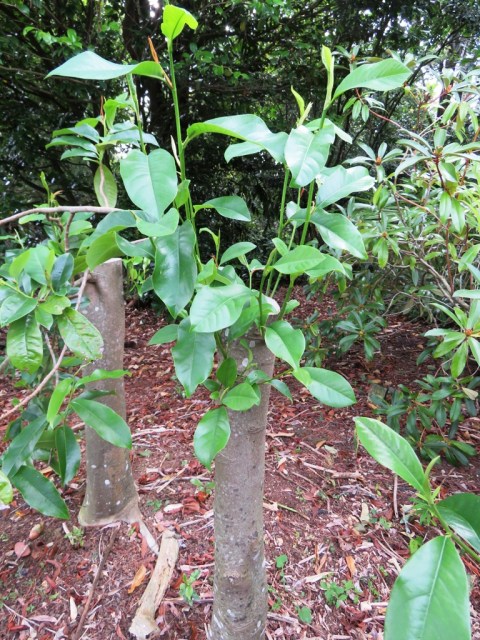
Both the michelias and camellias were four to five metres high, stretched and thin as they reached for the light. Because we are making a new garden and have opened the area to the light, we wanted a hedge effect, not a straggly, willowy shelter belt. In winter last year, these plants were taken to with a chainsaw. They were cut off at about a metre in height, in many cases leaving no foliage at all.

Well established michelia hybrids respond to hard pruning with abundant fresh growth

Well established michelia hybrids respond to hard pruning with abundant fresh growth

After about six months and a spring flush, the new growth is phenomenal. We won’t get any flowers this year but we will have a bushy, well established hedge sooner, rather than later.

This extreme action does not work with all shrubs but it can be done with camellias and michelias. It may not work in harsher climates, either, but in our mild, temperate conditions it is fine. The timing is relatively important. It needs to be done well before the spring flush and we find early winter is the best season. It is a hedging technique. The trade off is that you lose the shape of the plant but gain bushy growth instead.

Plant UNcollector – the tale of our disappointing white nepeta

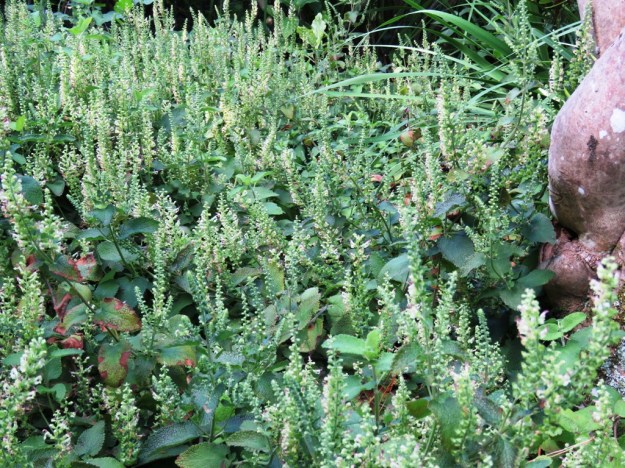
In reality, it is even more insignificant than in this photo

In reality, it is even more insignificant than in this photo

There are not many plants as disappointing as our white nepeta. Before you rush to set me right by telling me that your white nepeta is absolutely gorgeous, I will declare that I have had a look at the internet and I see there are various white forms around and most of them look to be an improvement on the one we had here. Note the past tense. We have taken it out – and there was a fair swag of it – and it is now on the compost heap.

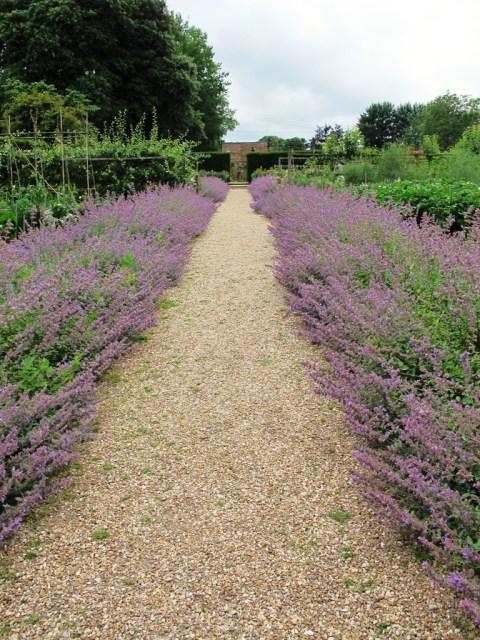
Nepeta is not exactly a plant of class and distinction but it is easy to grow, forgiving and on its day, it gives a haze of colour as well as feeding the bees. We were quite taken by its use in plantings that resemble rail tracks in a couple of English gardens we visited, despite my reservations about both the use of edging plants and planting in rows.

The railway track effect at Tintinhull in England where the nepeta looked lovely

The railway track effect at Tintinhull in England where the nepeta looked lovely

We came home and looked at our nepeta in askance. I could not remember ever being wowed by its lilac haze in bloom but it was certainly spreading widely. This season, I said to myself, I will take special notice. It was not growing in a spot I walk past every day but it was relatively prominent. Dammit, I thought, when I saw seed heads on it. How did I miss it again? Was it really such a flash in the pan? Mark, it turned out, had been thinking the same. We stood looking at it together and realised it was possibly the world’s most boring white nepeta with the tiniest of insignificant flowers at the same time as setting seed. Sure the bumble bees liked it but they will like our lilac nepetas just as much or maybe more. Mark has a tray of seedlings raised, ready to plant as an immediate replacement.

Mark is unconvinced by the notion of white nepeta which, in his mind, contradicts the very nature of nepeta which should be blue or lilac. But the joke is on us that we had both failed to notice that ours never flowered in the right colour.

On the verges

Agapanthus with the dreaded convolvus - the latter is pretty in flower but we do not need it

Agapanthus with the dreaded convolvus – the latter is pretty in flower but we do not need it

As you drive around the countryside in January, ponder this: does a sprayed roadside with dead grass and roadside litter look better than wildflowers? And are garden escapes (which takes in most roadside plants and flowers) environmentally worse than repeated application of weedkiller? Maybe it is time we reviewed our attitude to weeds.

It is often said that a weed is simply a plant in the wrong place, though I see Sara Stein is attributed with the extended statement, “A weed is a plant that is not only in the wrong place, but intends to stay.” After all, even weeds are native to somewhere and one country’s treasure can be another country’s problem.
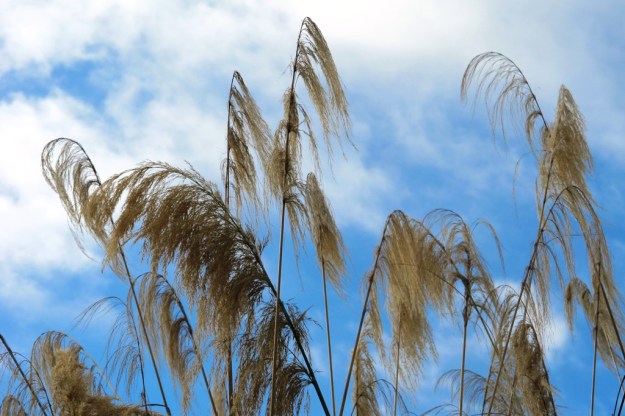
Toetoe beside the new Waikato expressway

Toetoe beside the new Waikato expressway

A disclaimer first: our native bush and forest are precious and vulnerable to takeover by invasive and aggressive imports. We do not need another old man’s beard (Clematis vitalba) and perish the thought that Japanese knotweed (Fallopia japonica) ever gets a major foothold here. If you are lucky enough to live adjacent to near-pristine native bush, that brings an obligation to be very careful with what escapes your property and colonises roadsides. It also behoves us all to have some awareness of what is on our Regional Council banned and watch lists.

But most of us live in heavily modified environments and I suspect a preference for weedkiller over wildflowers arose from our farming heritage and feeling of obligation that “weeds” should not be permitted to invade precious farmland. Nowadays, when farming has become much more industrialised – a green desert, often, lacking even shelter belts – based entirely on imported grass and feed species, I don’t think that argument holds.

The ugliness of the sprayed  verge

The ugliness of the sprayed verge

Each time we visit Britain, we are entranced by their hedgerows and natural roadside vegetation. Apparently, after major clearance in decades past, there came an awareness that hedgerows contribute a great deal to the eco-system and grants were made available to reinstate them. There is not widespread mowing of road verges, let alone the ugliness of spraying. Would that we had such an enlightened attitude here. In vain do we protest that repeated spraying creates a vacuum into which unwanted weeds move first (notably the invasive, yellow bristle grass in Tikorangi), but it also prevents the ground from absorbing rainfall. Instead, the surface water is funnelled down drainage ditches, washing with it weed spray and any petrol residue from the road into waterways. How much better to have a growing roadside which filters the run-off?
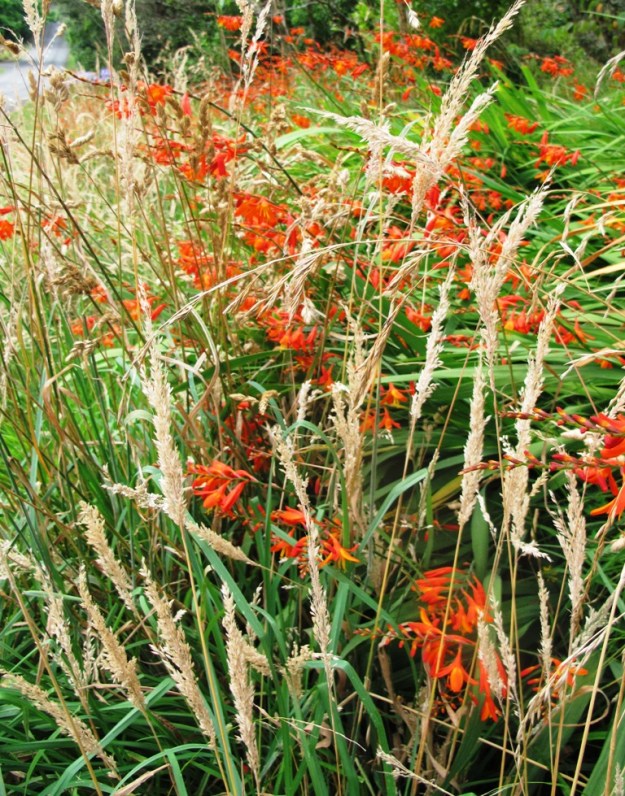
Crocosmia - weed or woldflower?

Crocosmia – weed or woldflower?

Roadside vegetation is more interesting visually too, offering flowers and seasonal colour. Add to that a wildlife corridor role and we argue that they can make a significant contribution to a healthy environment. If you are worried about using imported ornamentals, you can encourage native re-vegetation. The native plantings alongside the new Waikato Expressway feature an abundance of toetoe which is wonderfully sculptural and interesting, especially silhouetted against the sky.

But we like the random mix of plants and colours we see. I look for the point where wild hydrangeas on the Otorohanga bypass change from blue tones to pink tones. I guess that marks the transition to limestone country. All our hydrangeas in Taranaki are blue as blue and they thrive on roadsides in a climate where we get summer rainfall.
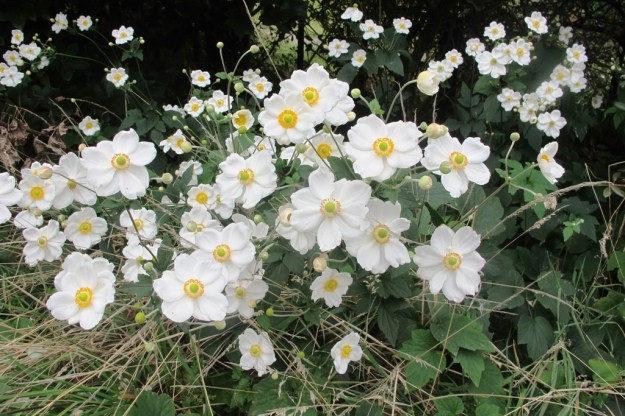
005The white Japanese anemones that flower in the long grass around the country corner where we live make me smile every autumn. Orange-red crocosmia – earlier referred to as montbretia – feature large around here. So too do red hot pokers, fennel, arum lilies and cannas while further north the ox-eye daises, yellow vetch and wild carrot feature more.
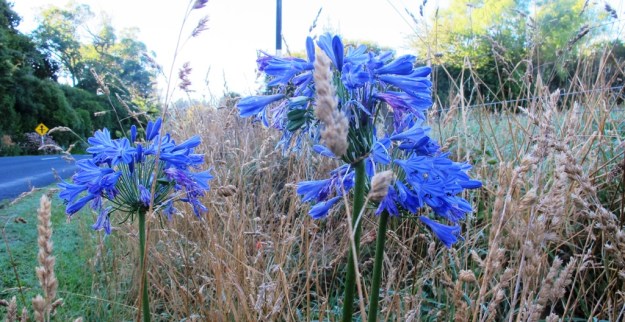
012And agapanthus. There is a plant that is a great deal more revered overseas than here. It is controversial, actively discouraged and some forms banned in northern regions. Some folk hate it with a passion and it cannot be sprayed out with glyphosate. But truly, our roadsides round here would be the poorer without the summer display. In its defence, we have not seen this tough plant seed down any great distance from its parent in our conditions and it is also very good at stabilising clay banks.

I recall two English garden visitors a few years ago who asked what were the “giant bluebell and what looks like a lace-cap yellow hydrangea” flowering on all our roadsides. The yellow lace-cap was fennel but the giant bluebell had me absolutely stumped until I next drove out. It immediately dawned on me that they were referring to agapanthus. It is not cold-hardy in large parts of Europe and the UK and is a prized garden plant. No wonder they failed to identify it growing wild in abundance here.

abbie 20 10 2015 copy

Fennel, not lace cap hydrangea

Fennel, not lace cap hydrangea

First published in the January issue of New Zealand Gardener. 

Tikorangi Notes: January 10, 2016. Gardening this week.

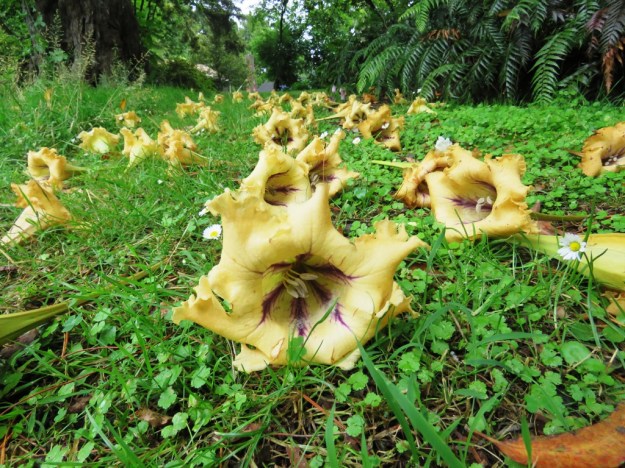
IMG_6739Petal carpets! I take great delight in petal carpets. I even have a folder in my photo files designated ‘petal carpets’ and may go through and collate the best for a post later. It is beyond my comprehension that some gardeners try and remove every petal from their lawns. I first read this in a profile of a garden open to the public at a time when Prunus Awanui is in full bloom. The owner proudly proclaimed that he had to rake beneath it twice a day and mow the lawns every day to keep the pristine appearance. All I could think was “why?”
More recently, a friend was telling me he was taken on a tour of a large garden where the owner paused to pick up every leaf and petal that spoiled the appearance of his immaculate lawns. That is what I call fighting nature – gardening in a style where success is measured as a triumph over nature.

This week’s petal carpet comes to you courtesy of the strong climbing solandra vine, S. longiflora, I think. Again. This is an annual event.

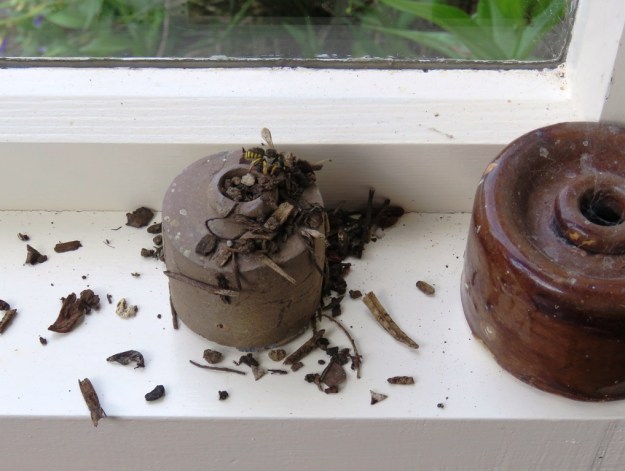
The busy little wool carder bee at work, building her nest

The busy little wool carder bee at work, building her nest

We were delighted to watch a little wool carder bee building her nest in our front porch. First she filled the container with white fluff gathered from around the garden over a period of a few days. Presumably she then laid her eggs in it and then, as we sat watching, she industriously carried in pieces of compost – some larger than herself – in a somewhat vain attempt to cover it over. Then she disappeared. We are guessing the progeny have to fend for themselves when they hatch.

The wool carder bee is a relatively recent arrival in this country. It may not be to their credit that they closely resemble wasps at first glance but they are not the curse that the latter are. Wool carders are solitary bees, the males strongly territorial, and if you are looking closely you may see one working its own patch of the garden while fighting off any intruders. Given the plight of the bees, we are happy to encourage any which will lend their energies to pollination.

On the topic of wasps, Mark is vigilant at this time of the year and has already dealt to over 20 nests. He gets them when they are small and is not the son of his father and nephew of his Uncle Laurice for nothing. Both those men were extraordinarily observant. Mark used to describe his uncle as being like an Aboriginal tracker, such was his intense focus on reading the signs of nature all around him. I rarely pick a nest but the signs are a few wasps entering and leaving from the same spot. I posted a photo sequence earlier showing Mark’s cautious but effective method of dealing to wasp nests without harming other insect life around the place.
IMG_6746
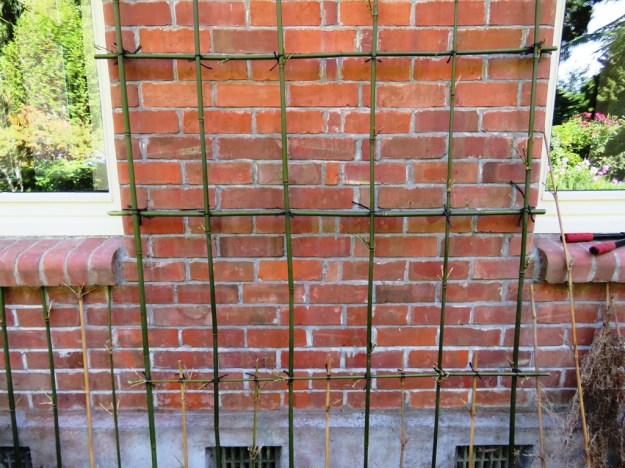
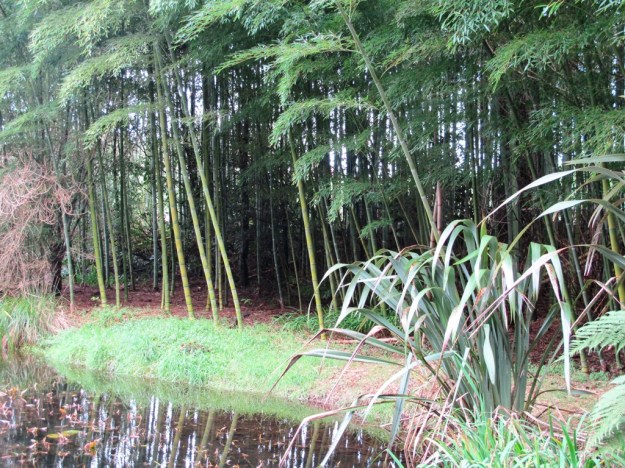
As I harvested bamboo to build wall frames – particularly for the spring appearance of Tropaeolum tricolorum along one wall of the house – I thought both how lucky I was to have bamboo at the ready to harvest and also how every large garden would benefit from something similar. I understand the nutteries of England provide a similar resource for hazel rods.

We have both thin bamboos and giant bamboo growing. The former is a running type which makes it easier to harvest (the clumping varieties have canes growing much closer together which makes it more difficult to get in with the loppers). The latter also runs, which can be a problem because one patch is on the boundary with the farm next door. We like the natural look of the fresh, thin canes when it comes to staking plants in the garden and leaving the leaf axels on means that plants don’t usually need to be tied to the stake. The bamboo only lasts a season or two where it meets the ground – longer in a very dry border under the eaves – but we are not asking them to be permanent stakes.
IMG_6752
The giant bamboo is harvested for a variety of purposes – washing line prop (where we must get about 10 years out of each length), super long rake handle for pulling out weeds from the larger ponds, obelisks and what Mark calls hitching rails. The latter uses a length of giant bamboo tied to tanalised fencing standards to hold back plants that are engulfing paths – in this case a New Guinea tree fern.

There is much to be said for having wilder areas in the garden which can accommodate plants such as bamboo.
004

Welcoming in the new year:2016

IMG_6701

After about 20 years of garden writing, I am not sure I have anything to say about new year’s gardening resolutions that I have not said before, so instead I will send out generalised wishes of enjoyment and pleasure in gardens and gardening, along with a plea to think carefully about environmental impacts of the activity. Gardening is NOT synonymous with being environmentally responsible. In fact many common garden practices are downright unfriendly and my hope is that we will see more people move towards modifying their activity and their expectations to work with nature, rather than being driven by a determination to control it or, worse, to conquer it.

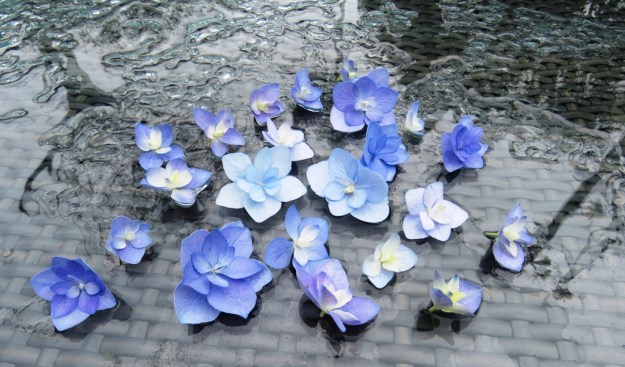
On this day of welcome gentle rain (we have been unusually dry, sunny and hot of late), I offer you the prettiest of hydrangeas. These are from the You-Me series, originating from a Japanese breeder. Which is which, I am not sure, but they are all very pretty indeed and grow on obligingly compact bushes. There is quite a bit of variation on individual bushes, depending on the maturity of the flower heads. They also pick well. I have just refreshed my Christmas vase of these hydrangeas with pink alstromerias. IMG_6711

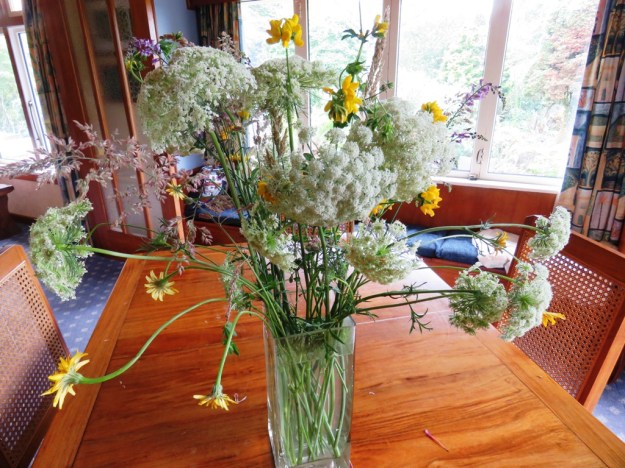
IMG_6723 Having just posted the pensive message above, I walked into the kitchen to find Mark arranging flowers. Umbellifers! Which one, I asked. “Manchester Table, to be precise,” he replied. Daucus carota subsp. sativus – in other words carrot that was bolting to flower and seed. It did strike me that there was a certain symmetry between my words and Mark arranging his floral display of Manchester Table, Yorkshire fog, Lotus major and linaria.
IMG_6731