Delighted by A. dahaiense
Not all flowers are beautiful, but my goodness arisaemas have curious flowers and equally peculiar propensities.
Arisaema ringens has been around New Zealand gardens for a long time – sometimes called Jack-in-the-pulpit though that is more correctly used for the American species, A. triphyllum. While A. ringens has handsome, glossy foliage, the flowers hide beneath in such seclusion that you are likely to miss them entirely.
The last twenty years have seen an influx of new Asian and Japanese species to the country, many of which have piqued the interest of collectors. Even now, the choicest ones are difficult to source – often more a case of who you know rather than where you can buy them. And if you get hold of them, some are very difficult to keep going, especially in garden conditions as opposed to nursery pots.
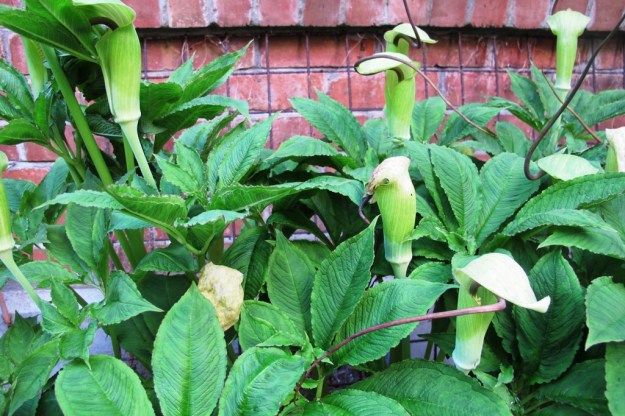
Arisaema tortuosum
Not all are devilishly difficult. A. tortuosum is easy and will seed down freely, a bit too freely, we find. It makes a big patch, maybe 75cm tall, with the green hooded flowers sitting above the foliage. We find it is perfectly happy in the border right beside the house on the eastern side where the only water it gets is run off from the adjacent path.
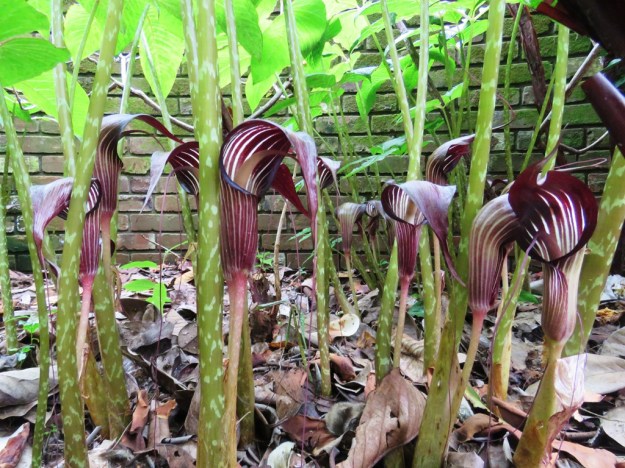
Arisaema speciosum
A. speciosum is another easy variety in semi shade. It has handsome foliage, lovely mottled stems and curious flowers in burgundy-brown that really do look like hooded cobras. But the issue is that the flowers are held beneath the foliage so unless they are planted on a slope or on a margin where you can see into the patch, you may miss the flowering season. The early summer blooming A. candidissimum is one of the prettiest forms and is not difficult to grow with its palest pink and white hooded blooms appearing before the foliage dominates. It also multiples well.
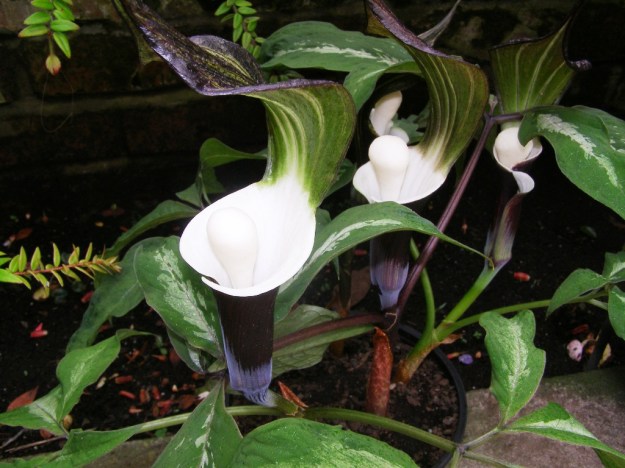
Mark’s A. sikkokianum hybrids
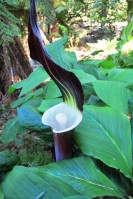 And then there are the tricksy ones, few more so than the Japanese A. sikokianum with its phallic spadix and hooded spathe rising prominently above the foliage. It is a show stopper in spring, though definitely curious rather than beautiful. After many years of growing it, I can tell you that it is difficult. We have never seen it increase from the corm. Growing well, it will set seed but these need to be raised in controlled conditions because it will not seed down naturally here. Even then, the patches tend to get smaller with time, rather than larger. It was for this reason that Mark experimented with hybridising it, to try and get increased vigour. This is known as hybrid vigour, in a similar way that the controlled breeding of designer dogs can make the offspring a stronger genetic strain than the highly refined parentage of pure breds. It has worked for us. The offspring carry all the best characteristics of A. sikokianum but they grow more strongly and are reliable as garden plants. Few would pick the difference to the lead species, but we know they are actually hybrids.

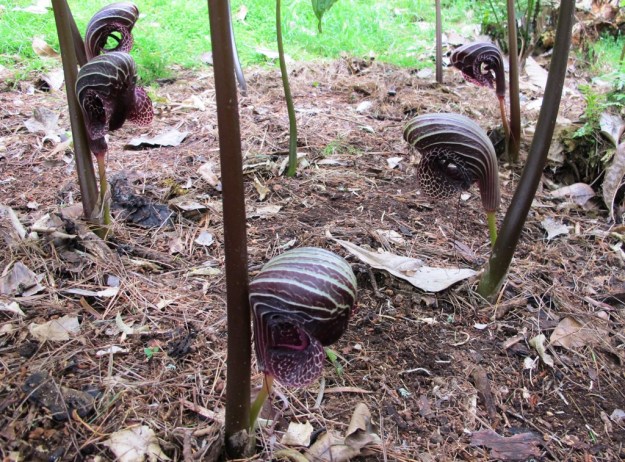
Arisaema dahaiense
For sheer bizarre appearance, the more recent acquisition of A. dahaiense has to take the cake. It is very peculiar and not a carnivorous plant, though it looks as if it should be. The mottled, frilly flange is particularly striking. Because we are gardeners rather than plant collectors, the fact that this large-flowered curiosity has settled down quite happily in the leaf litter of open woodland conditions is a real bonus.
Peculiar propensities? Arisaemas are hermaphrodites. When they are young or growing weakly, they are male. Only when conditions are right and the plant is strong, do they become female and therefore capable of reproduction. Then if they need a wee rest, maybe after a season of prolific seed set or drought, they revert to male again. Is this a metaphor for the human condition, some may wonder. I could not possibly comment.

A. taiwanense seed
If you notice a vague visual similarity to the mouse plant (Arisarum proboscidium), the striped Arisarum vulgare or arum lilies you are correct. Though not close relatives, they are all aroids in the Araceae plant family. Arisaemas go dormant in late summer and grow from corms – often roundish balls or larger round discs, though speciosum corms can look more like something unfortunate that the dog has left behind. Some species set copious amounts of seed which can be attractive in itself in autumn, though it helps to know your species. I remove the tortuosum seed because it can spread too freely whereas the speciosum seed, while abundant, has not created problems for us.
If you really want to know more about this plant genus, the gold standard reference is currently still a book, a proper book, not the internet – “The Genus Arisaema” by Guy and Liliane Gusman.
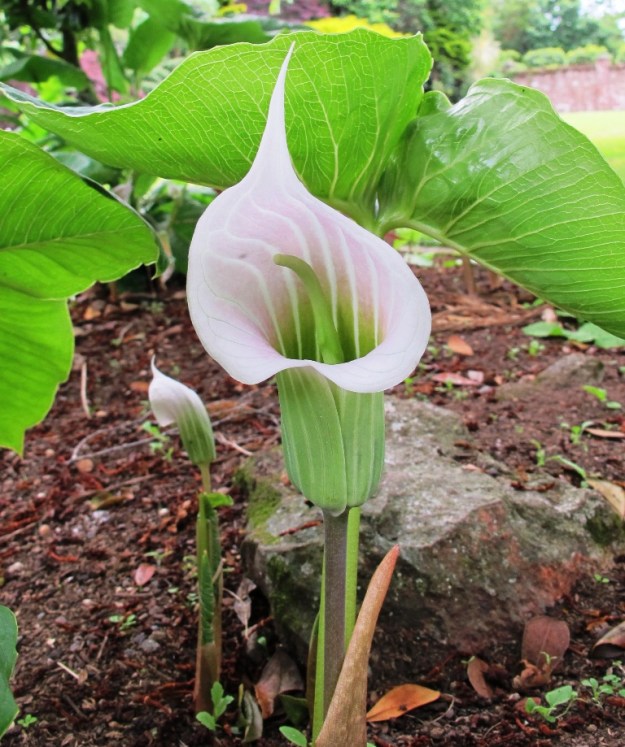
Arisaema candidissimum
 First published in the December issue of NZ Gardener and reprinted here with their permission.

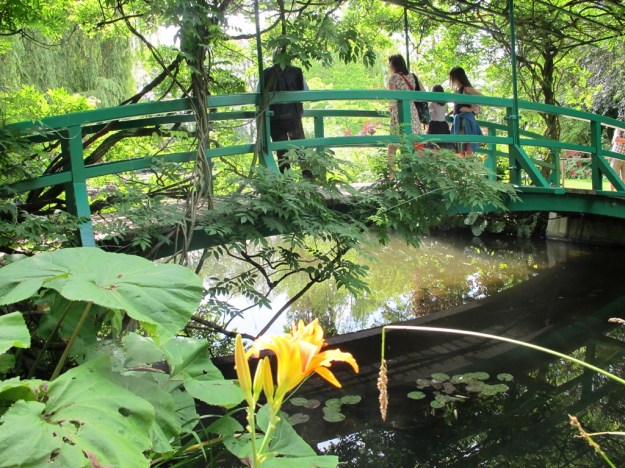 Monet’s garden in Giverny has probably given us the most recognisable garden bridges – gently arching in form and painted. While originally Japanese in inspiration, Monet gets all the credit these days.
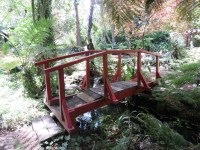
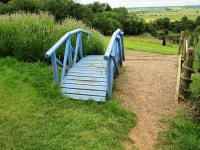
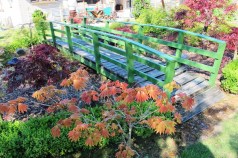
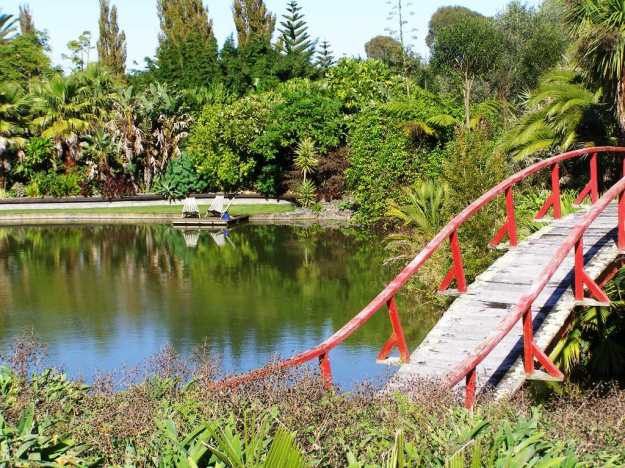

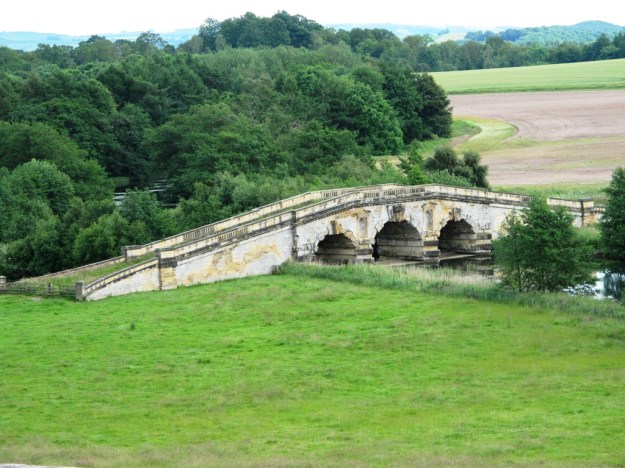 Away from the domesticity of Monet-style, I photographed this handsome, apparently disused bridge at Castle Howard in Yorkshire. What a handsome landscape feature it is, though I failed to find out the story behind its construction.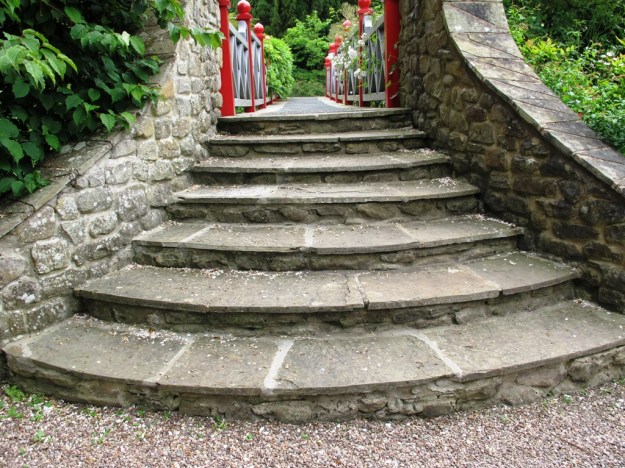
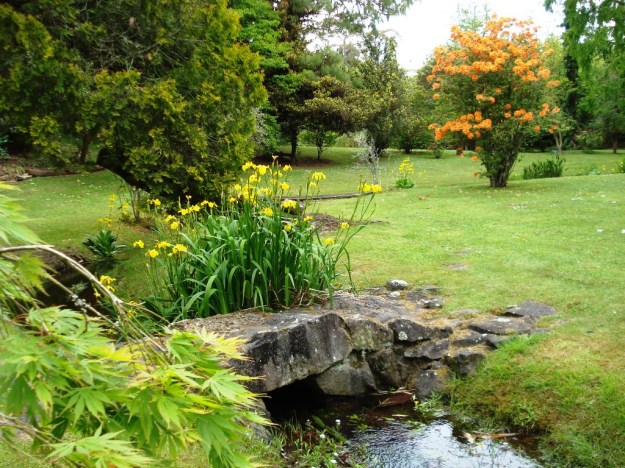 We have a small stone bridge in our park, modest in scale though perfectly functional and gently permanent in its visual appeal.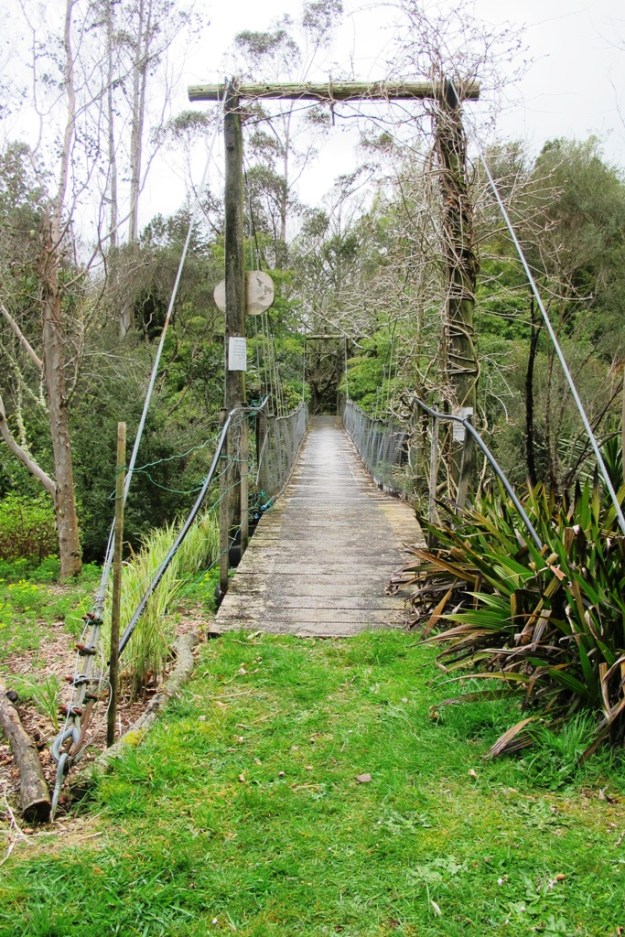
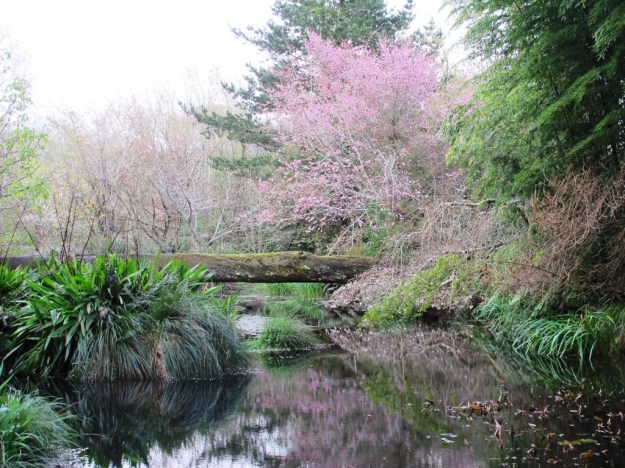
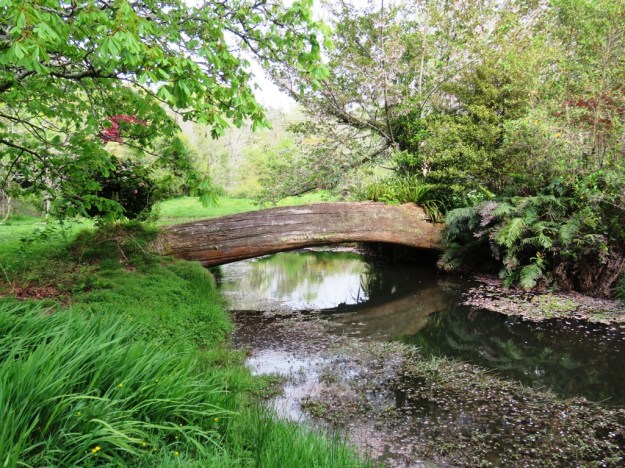

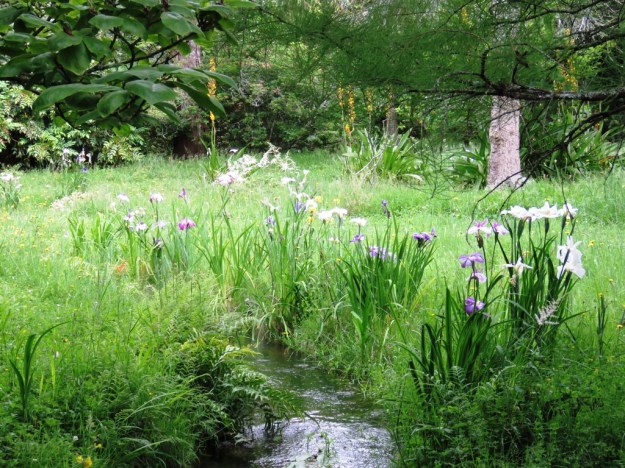 A water meadow! I was delighted at the sight in our park this afternoon. We stopped regular mowing of our park two years ago when we first closed our garden to the public. We were keen to see how far we could push the meadow effect in our climate and also concerned at our heavy dependence on internal combustion engines to maintain the garden. Long grass and flowers are far more ecologically friendly than mown grass.
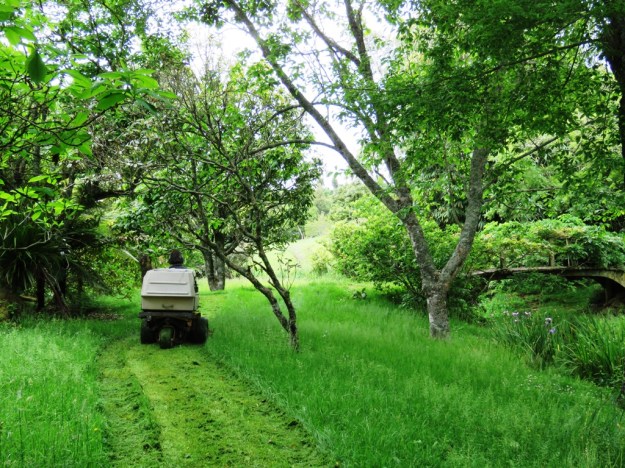 Mark took note of my request that we mow double width paths through the grass this year. A single mower width looked a bit mean to my eyes. I commented to him earlier this week that my only worry was the abundance of buttercup that we now have. He wryly pointed out that it has always been that way. His childhood memories are of the yellow buttercups and dandelions and white daisies throughout the park. We have just returned to that, though not to grazing with sheep.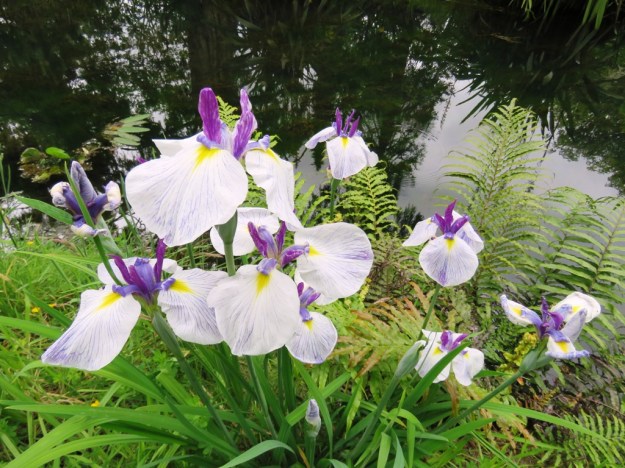
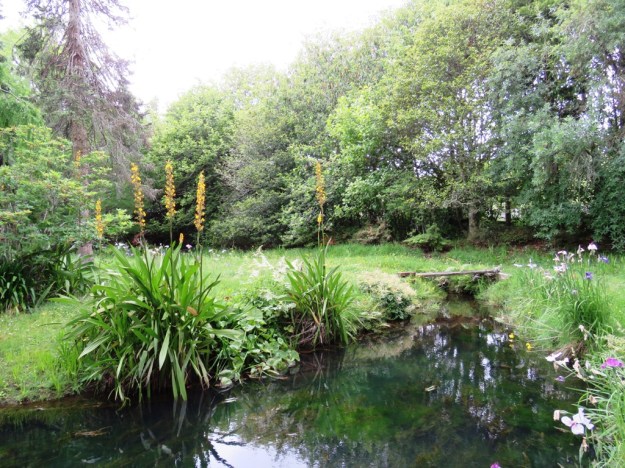
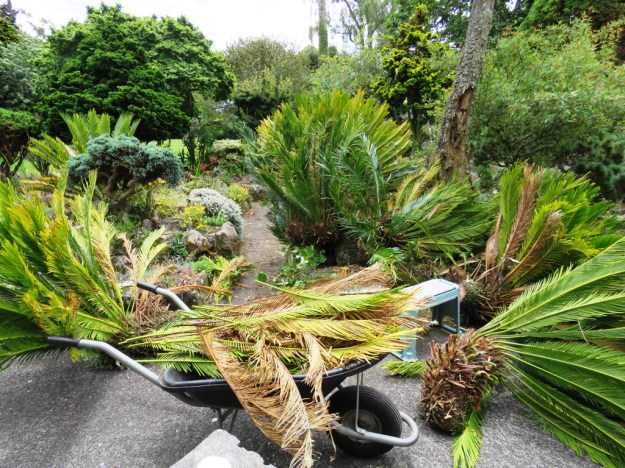 Before the thunder storm hit this afternoon, the sheer size of the
  News from Australia that Mark’s new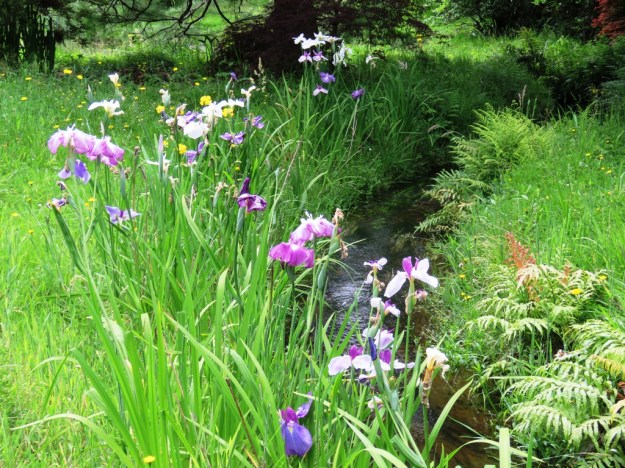

 I have been meaning to stop and photograph this watsonia growing wild down the road. Mark tells me it is a species but I have yet to put a name on it. The dusky apricot colouring appeals to me. Some may call these weeds but oh, when I compare these roadside plants to the ugliness and environmental unfriendliness of scorched, sprayed earth, all I can say is give me these weeds which make a contribution to the eco-system. It is such folly to think that spraying roadsides is desirable. All it does is to create a vacuum where less desirable weeds will re-colonise the area and, in the interim, all the water flows away, washing residual spray and road residues into our waterways. My column in the January issue of NZ Gardener is on the topic of roadside plantings. We often talk about this as we drive and we despair at the ugliness and the willy nilly use of weed spray in this country of ours. Clean and green New Zealand? Not in reality.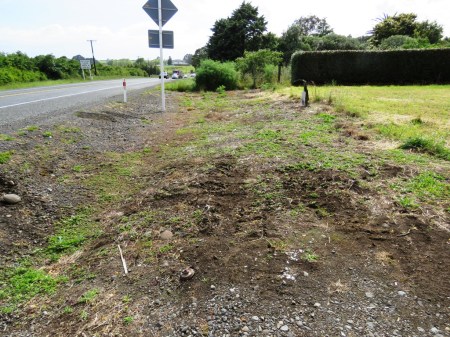
 More cheerfully, the so-called Australian frangipani (Hymenosporum flavum) growing by the road halfway to town has been delighting me for several weeks. Many flowering trees are glorious on their day – but you can count their flowering season in days, rather than weeks. Not so this hymenosporum. It is not even a close relative of the frangipani, though it is scented. It needs frost free conditions to get established and good drainage but is worth growing for its late spring, early summer blooming.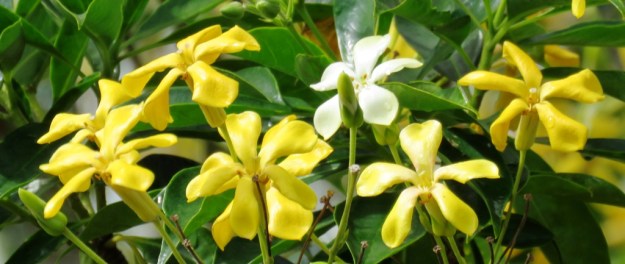
 I don’t swear on this blog (though I admit I am not so restrained in real life) so you will just have to fill in the missing letters when I describe this as an example of f*** off utility urban design. Clearly nobody wants to even try and grow plants here (and conditions would certainly be difficult to get anything established, let alone looking good), but could nobody come up with a filler idea that was less hostile than this?
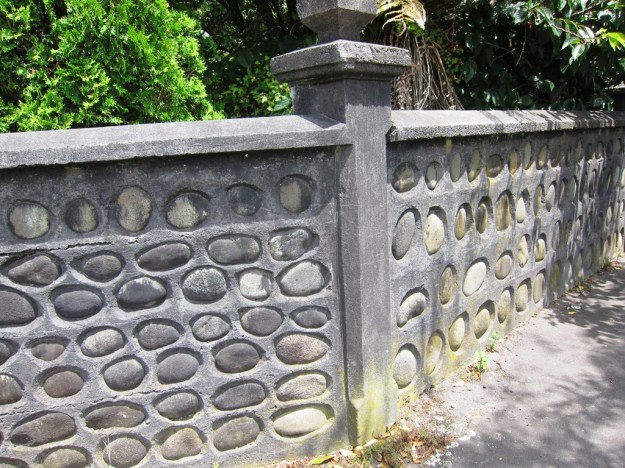 I much prefer the old concrete and stone wall, constructed a long time ago in my local town of Waitara. Someone took a lot of care over this.
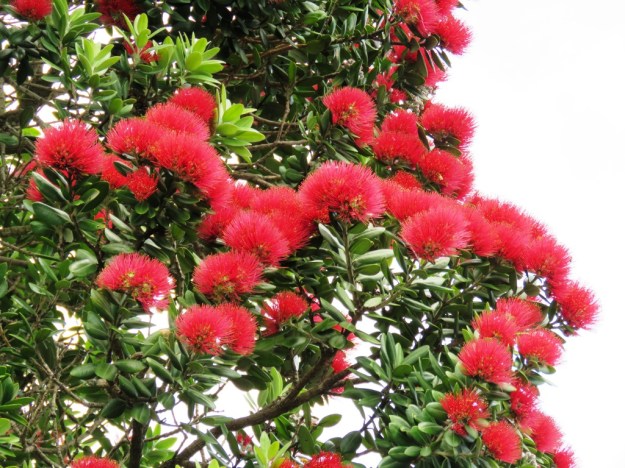 Pohutukawa! Often called the New Zealand Christmas tree. What a wonderful sight they are at this time of the year. As I looked at all the trees coming into bloom along New Plymouth’s water front, a mere two short blocks down from the main street, I felt a pang at the loss of 28 (or was it 29 in the end?) mature trees beside our Waitara River. I even contemplated making Christmas cards for all our Taranaki Regional Council elected officials and senior staff who were responsible for the casual removal of the trees. I thought it could feature the flowers on the front with a message inside saying “Seasons Greetings from the 29 Waitara pohutukawa chainsawed down this year”. But it is a lot of effort to go to for something they would just throw in the bin. Better instead to admire the beauty of trees still standing.
 The public amenity planting in New Plymouth can be delightful and appropriate. On the exposed west coast, there are limited plant options that will grow right beside the sea. That is why the sturdy pohutukawa is so important. But also our native flaxes. They are in flower and how lovely do the flower spikes look silhouetted against the big sky and the big sea we get here?
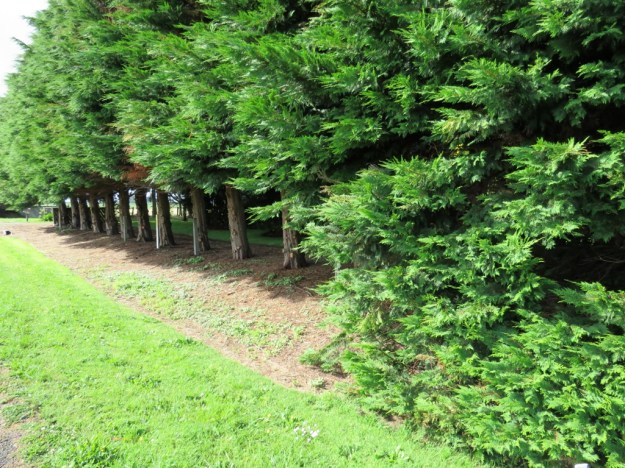 Finally, coming home, I stopped to record the effective trimming of this Cupressus leylandii down the road. It was just an ordinary shelter belt until the lower canopy was recently lifted, exposing the trunks. The fact the branches have been trimmed reasonably flush helps but it adds a whole new dimension, being able to look through. It has turned an unmemorable shelter belt into something much more graceful and distinctive.
 Tikorangi The Jury Garden