
“My garden sweet, enclosed with walles strong,
Embanked with benches to sytt and take my rest:
The knots so enknotted, it cannot be exprest,
With arbors and alyes so pleasant and so dulce.”
George Cavendish (1499 – 1561).

How to punctuate the end of hedge with panache and style in 2015.
I was taken to see the gardens at The Kelliher Estate on Puketutu Island in Auckland last week. When we say island, it is connected by a causeway. No ferry crossings were required. The gardens have been undergoing a major renovation in the last few years. There is a difference between a restoration and a renovation. The former attempts to recreate the gardens as they were in their glory days. In our climate with rampant growth and a heavy dependence of woody trees and shrubs, restorations are somewhat ill-conceived, in my opinion.
Renovations are a reinterpretation of a garden and in public gardens can range from pedestrian to insensitive, from ego-driven (the modern gardener determined to ‘make his or her mark’) to compromise by committee. Occasionally they are carried out with genuinely creative flair and there were indubitably elements of this showing in the gardens at the Kelliher Estate.
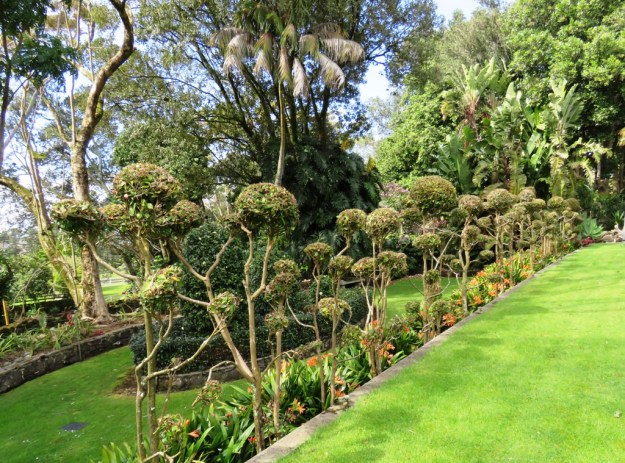
I was simply delighted by the reworking of the formerly overgrown lilly pilly hedge at the entrance – cloud pruned. With panache. I am no expert on lilly pilly. In fact it is more akin a yawning gap in my knowledge, especially as there are a number of plants which carry this common name. But I am guessing that this particular lilly pilly was the Australian myrtle also known as Syzygium smithii syn Acmena smithii (see footnote). If you are going to try something like this at home, take your time. You can’t rush the process of finding the natural shape of each individual plant. And trim flush to the stem. Nothing looks worse than nubbly elbows poking out all over the place where you have lopped off branches.
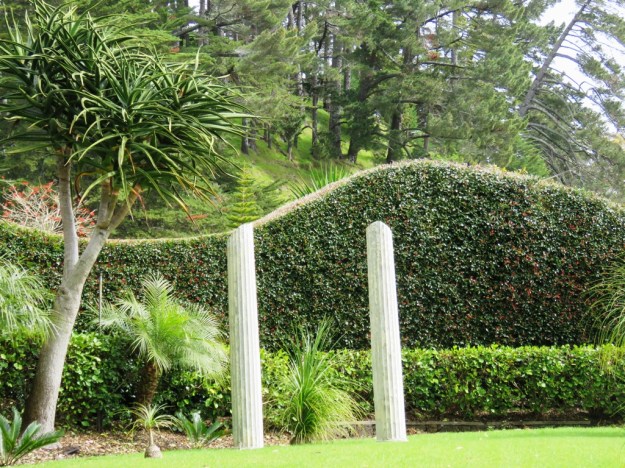
Finally the wave hedging is a device I have seen in UK and Europe but not in this country before. It echoes the natural shapes of the landscape but gives some form without the regimented and straitjacketed predictability of the usual flat topped, formal hedge.
The one key element to remember if you decide to get more adventurous with your own hedges is to ensure that they will tolerate hard pruning and resprout from bare wood if you are going to reshape. Not all hedging plants do and conifers can be particularly touchy.
Postscript: Social media can be very helpful. The following more knowledgeable comment on lilly pillies was made on the garden Facebook page by Andrew from Twining Valley Nurseries:
“You’re not wrong with the naming of Lilly Pilly. I’ve been to garden centres and seen the same plant labeled with three different names!
The correct taxonomic names for the 3 most commonly grown Lilly Pilly’s in NZ are-
Waterhousia floribunda (Old name: Eugenia ventenatti or Syzygium floribundum) Common name: weeping Lilly Pilly
Syzygium australe (Old name: Eugenia australis) Common name: brush cherry or Australian rose apple and is the most common.
Acmena smithii (Old name: Eugenia smithii) Common name: Lilly Pilly (or weed!)”
Thanks Andrew.
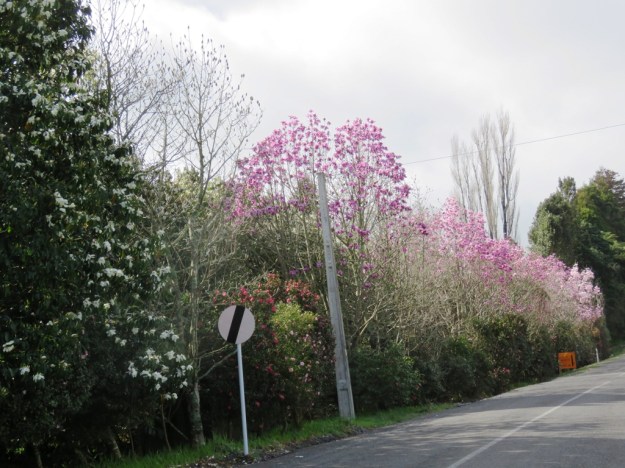

 Generally speaking, people talk to us about our boundaries full of flower and scent because they really like them. Indeed we often hear vehicles slowing down to get a better view at this time of year.

 Sunday was wet and gloomy so I picked hellebores to photograph indoors. And what a wonderful subject for photography they are. All I did was collect one representative bloom from a number of plants. This was more illustrative in intention than artistic endeavour.

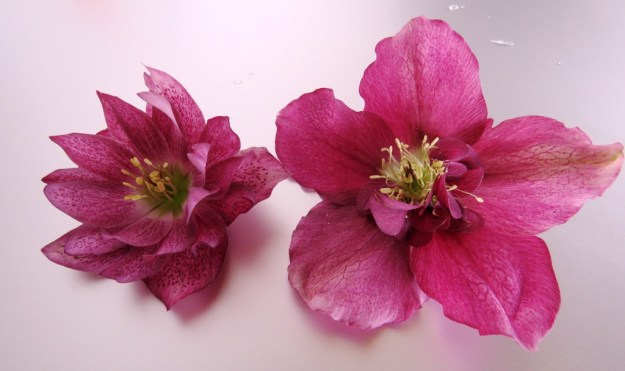 Mark has been raising hellebores in the nursery, in preparation for the upgrade. And he is interested in whether he can get better performing selections for our conditions. Generally, hellebores like a colder climate and the best ones we have seen are in areas with much more winter chill. The very dark flowered ones with bluish tones – referred to as slate – are not exactly booming here. Similarly, the doubles that we, and every other keen gardener at the time, rushed to purchase don’t seem to get much larger and showier than they were when we bought them over a decade ago. Mark’s seedlings may perform better though the wonderfully large pink with petaloids is probably blown up by nursery conditions. In the garden, the flowers may scale down.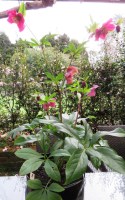
 We have worked out that the desirable dark colours display far better as garden plants with the contrast of white flowers alongside. We will also banish all the murky ones to the compost heap. While clean pastel pink and green can be a charming combination, in hellebores these often lean to muted shades which are frankly of no merit. We also want plants that will fade gracefully and not to that dirty greenish brown which does not lift the soul.
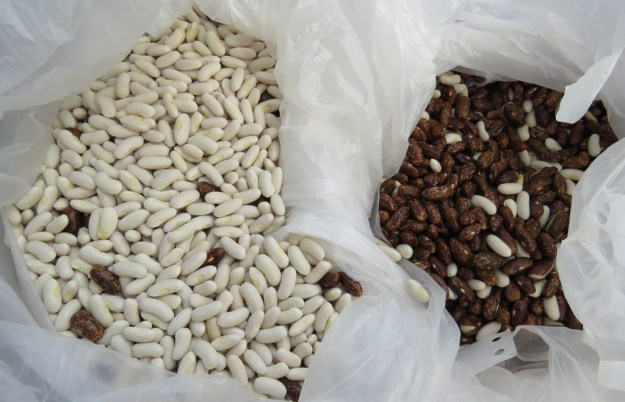
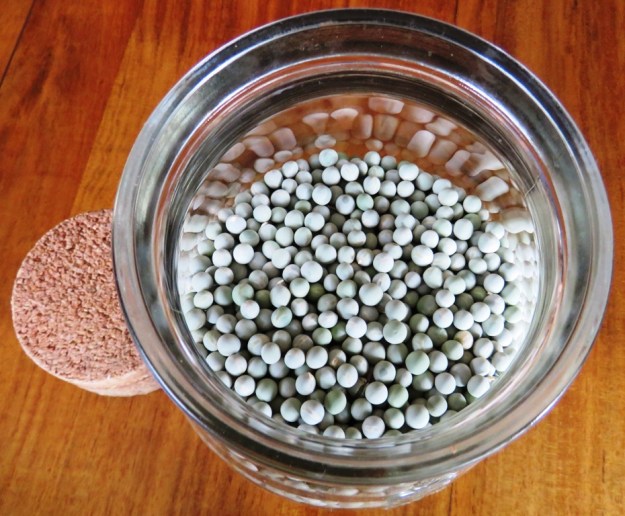
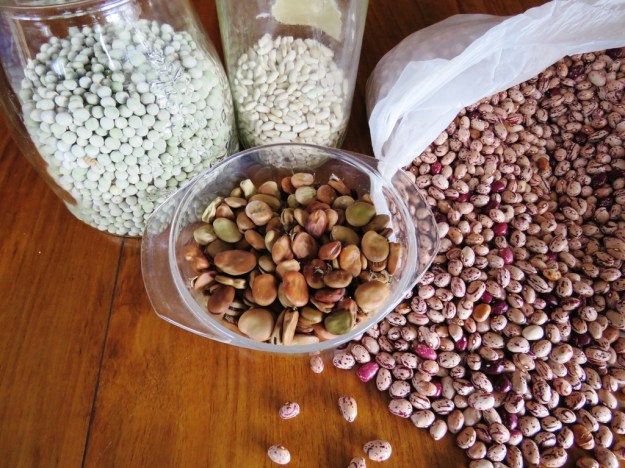 The bean mountain started modestly enough. It was just the surplus from the summer crops that Mark didn’t want to waste a few years ago. Dried beans had not featured large in our diet. Homemade hummus yes, but always with bought chickpeas. At least I started with dried peas and not the instant tinned version. Beyond that, we had never really moved on from the trendy mixed bean salads of the late 1970s. But the beans started to mount up at a faster rate than we were eating them.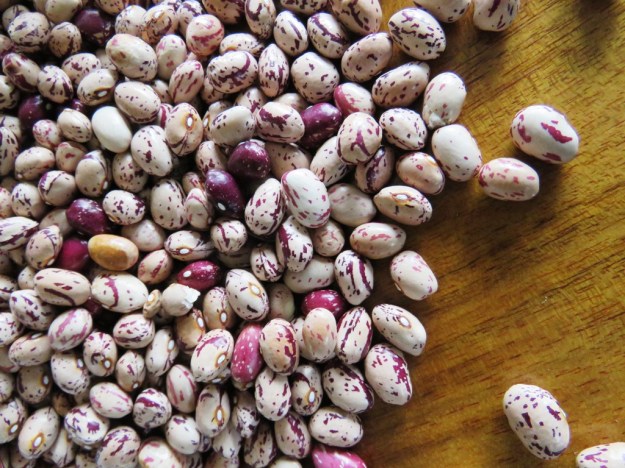


 Tikorangi The Jury Garden