
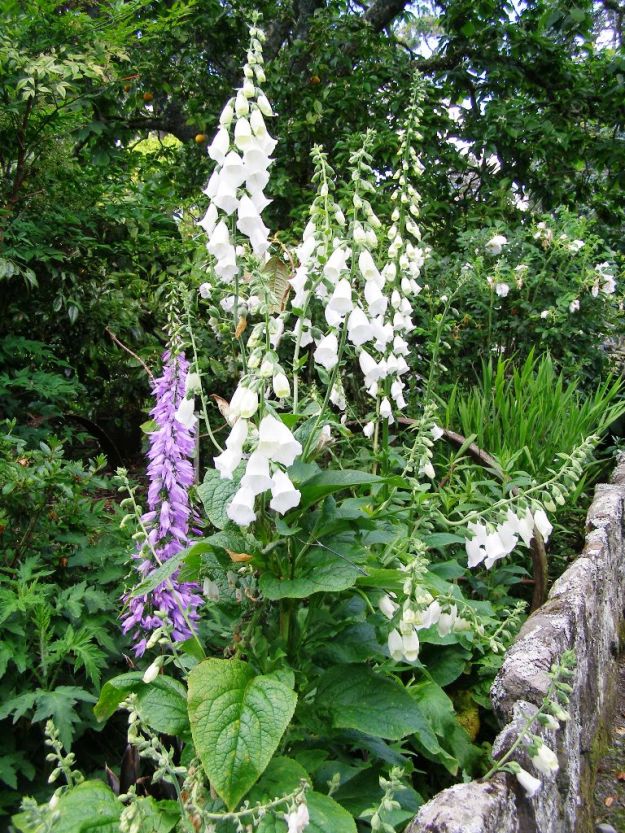
White foxgloves, though at Tikorangi, not Hidcote
An enduring memory of our visit to Hidcote Manor Garden in Gloucestershire was a simple planting of white foxgloves. They stood like grand white sentinels, belying their humble botanical status. A packet of white foxglove seed was top of the list on our next seed order.
Common foxgloves – and the white is just a form of the common Digitalis purpurea – are not difficult to grow. Not at all. We let some pink ones seed down through the park and in outlying garden areas. I think our widespread, dismissive attitude to foxgloves has to do with an earlier rural orientation in this country where such plants are seen as noxious weeds. But we are not farmers, so some seeding wildflowers naturalised on our property are not a problem, adding to biodiversity and providing a food source for insects.

Common Digitalis purpurea seen here with Rhododendron Caroline Allbrook
 The whites I wanted for my rose and perennial garden. After a few years, I am now moving them. They are too big and choke and swamp the smaller perennials I have in that area. I have found a couple of spots which they can have all to themselves. I was amused to see English gardener, Keith Wiley – for whom we have huge respect – on TV talking about growing plants in colonies but noting that some plants are so dominant that they do not want to grow in colonies. He cited foxgloves as an example. They are way too thuggish to co-exist happily with many other plants.
I could have saved myself a lot of trial and error if I had looked to the ground where the Hidcote foxgloves grew and taken note of what else did or did not grow there and how much space each huge rosette of leaves occupied. Instead, I was so enchanted by the summer display at eye level that I failed to observe further.
 Carol Klein on BBC’s Gardeners’ World, once said that she sorted her foxgloves as juvenile plants – the pink ones had pink veining in the leaves and the crown whereas the white ones were all green. I am not convinced she is right though I went through a stage of culling all pink-veined seedlings. I am happy to stand corrected if somebody has been more systematic in assessing this, but I am pretty sure that I have pink-veined ones flowering white and vice versa.
What I can tell you from experience is that foxgloves have very large tops but small root systems so are easy to transplant even when quite large, as long as I reduce the foliage by anything up to 75%. They are tough. I am hoping by next year to have my white Hidcote sentinels flowering in abundance in positions where they can be glorious without smothering other plants.

Seedling variation showing a white centre to the common purple
 First published in March issue of New Zealand Gardener magazine and reprinted here with their permission.



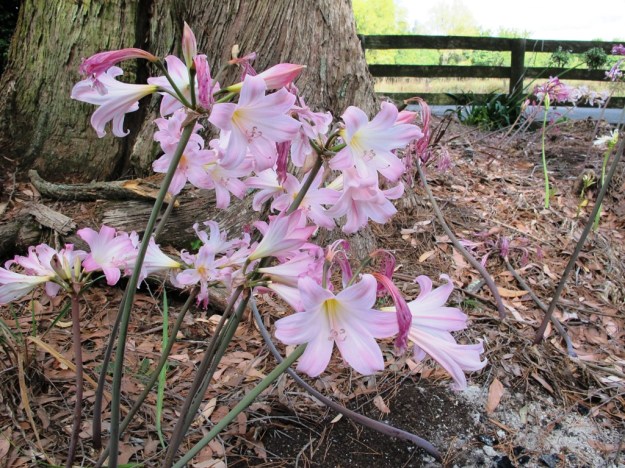 We are inching gently into autumn and the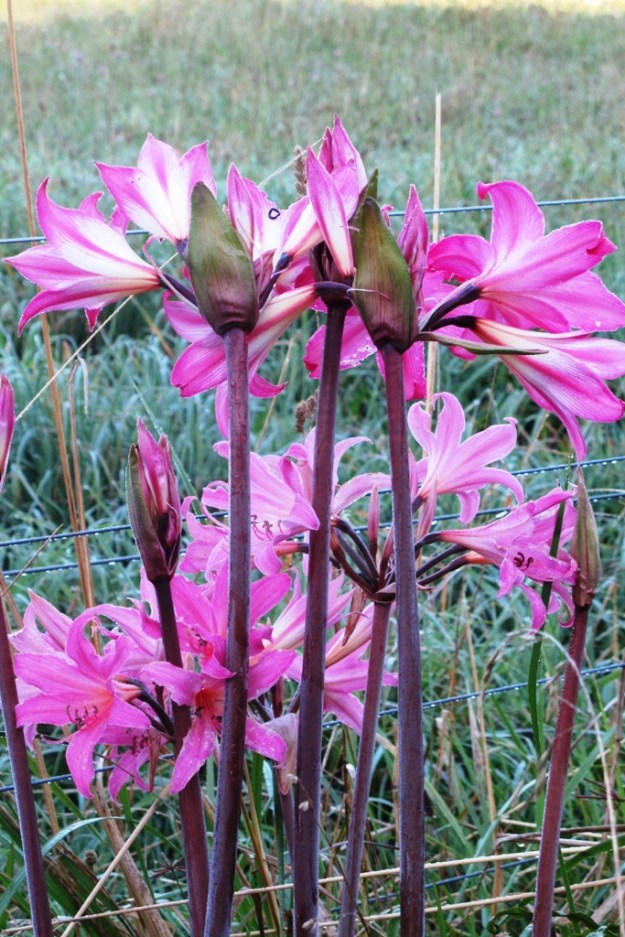
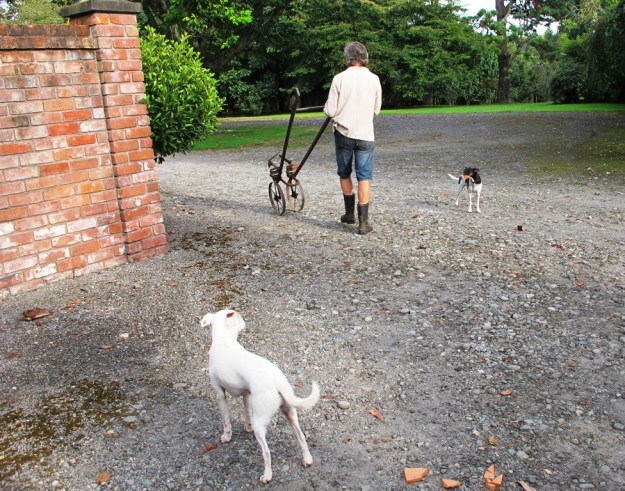 And finally, I leave you with Man, Planet Junior and Dogs this quiet Sunday morning – Mark heading over to his vegetable patch with a treasured implement from times past which he still uses on a regular basis.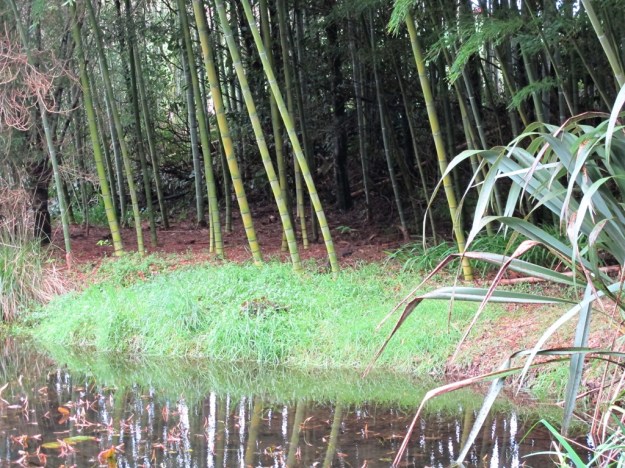
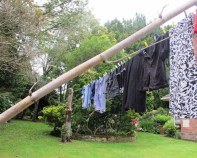 ot sufficiently inspiring to ensure that they became a dietary staple. It is, however, a useful source of very long and remarkably stable poles. One is a prop for the washing line. Mark uses it to build shelter frames for his bananas and even to make super long handles for the rake he uses to clean out our ponds. Inspired by our awe of bamboo scaffolding in Hong Kong, seen on high-rise buildings, he threatens to construct our own scaffolding but I think it is all talk.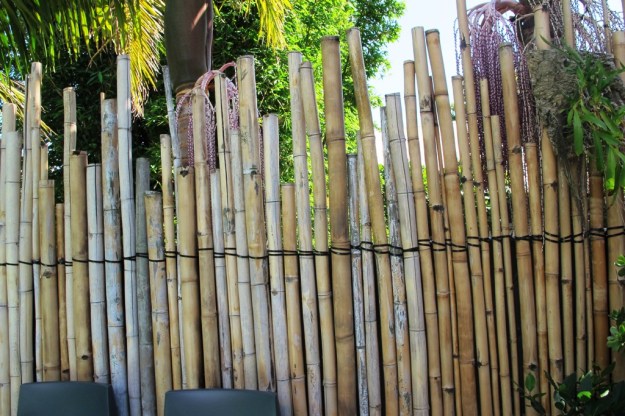


 Also seen at Heroic was this crafted bamboo gate in a Mount Eden garden, which was beautifully executed and appropriate to the restrained, immaculately maintained sub-tropical back garden. This is located in the heart of a densely populated urban area but the garden gives no hint of that. The gate has clearly been coated, presumably both to prolong its life but also to stop the weathering process and preserve the smart, new appearance. Sealing the bamboo will also stop the growth of lichens.
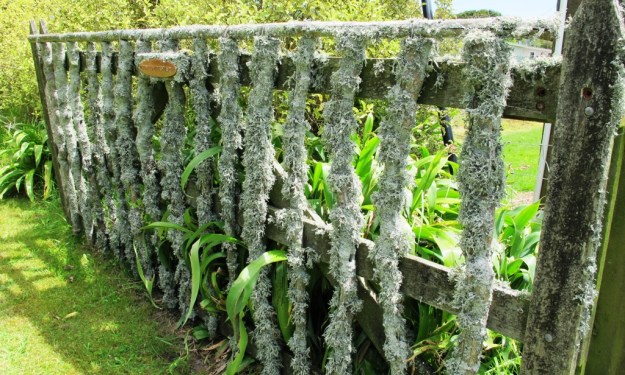 At the other end of the sophistication scale, I photographed these two bamboo gates in an Okato garden last spring. These have been added on to existing gate frames in a garden where many different bamboos are grown, and then left to weather over many years. You can see the high humidity environment and clean atmosphere in our coastal Taranaki that encourages such abundant lichen growth. As long as the bamboo is kept off the ground, it can last a surprisingly long time.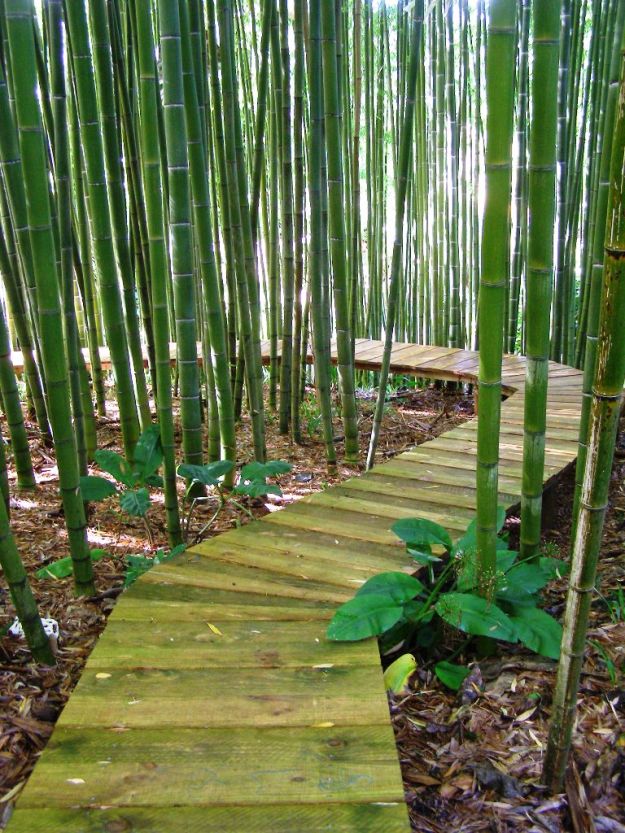
 Tikorangi The Jury Garden