Not Exactly Italy. Despatches from Heroic Garden Festival 2.

“Against the uniform sheet of snow and the greyish winter sky the Italian villa loomed up rather grimly; even in summer it kept its distance, and the boldest coleus bed had never ventured nearer than thirty feet from its awful front.”
Edith Wharton The Age of Innocence (1920)

Coleus, I regret to inform you, appear to be staging a comeback if what I saw in Auckland at the weekend is any guide

Coleus, I regret to inform you, appear to be staging a comeback if what I saw in Auckland at the weekend is any guide


I have done two trips to Italy. The first was a major garden tour in the north, in most elevated international company so it was the full immersion experience where we got to meet head gardeners and, in some cases, garden owners. Why, we even had a reception with the Principe and Principessa Borromeo on Isola Bella. For those not in the know, the Borromeo family have an aristocratic pedigree, wealth, power and influence even today which is beyond the average New Zealander’s comprehension.

Villa del Balbianello on Lake Como

Villa del Balbianello on Lake Como

On my second Italian trip, we were in the south travelling from Sicily to Rome with some incidental garden visiting along the way. The Italian gardening that most of us see is historical and traces its origins to times of much greater personal wealth and power. Yes it is hugely impressive but not, generally, because of the actual plants and gardening. It is the magnificence of the stone structures, the grandness of the villas – which can be very austere – with imposing formality in garden design. Most of it rests on the confident use of space and proportion, delineated in stone. Literally. There is not a hint of tanalised pine to be seen anywhere. The quality of light is also very different to our hard, bright light in this country.

Yes, there tends to be a very restrained plant palette and the same plants are seen in most gardens. I remember writing at one point about the ten plants that show up in every garden. Many of the historic gardens are clipped and groomed to within an inch of their lives and plant health isn’t always great.

Talking to the head gardeners and garden managers, the restricted plant palette is largely climatic. It is not an easy gardening climate, being cold and dry in the north in winter and hot and dry in summer. Further south, it tends to be just dry and dusty. If they could, they would grow a much wider range and that is evident in some fine gardens like Isola Madre and Villa Taranto.

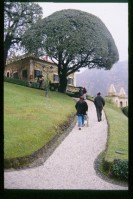
Villa Cimbrone  in Ravello on the Amalfi Coast

Villa Cimbrone in Ravello on the Amalfi Coast

The recently-retired head gardener of Ticino Botanical Park on the Islands of Brissago in Lake Maggiore sought out Mark at the time of our visit. He then stunned us a couple of years later by pedalling in here, unannounced, at Tikorangi. He was biking the country. We really liked Ticino. It was a small island with a villa that seemed more domestic in scale and it had a fine stand of Taxodium distichum growing on the lake edge. His comment to Mark, when he visited here, was: “You must have been very disappointed in Ticino.” He was looking at the range of what we grow compared to the conditions he knew.

So it is a mystery to me as to why New Zealanders, in their quest for “Italian styled” gardens would want to take that restricted plant palette as a mandatory, defining characteristic. This is a country where we can grow almost anything.

The grand historic reality

The grand historic reality

The modern domestic reinterpretation on the other side of the world

The modern domestic reinterpretation on the other side of the world


And can you achieve a domestic version of the grand, historic Italian gardens In New Zealand without the pivotal grand villa and the grace and proportions of a major estate let alone without the historic stonework? I mean, Villa Serbelloni on Lake Como has a genuine Ancient Roman fort in remarkably good condition at the top of the garden. Difficult to top that as a garden feature. And the grand gardens often have landscape vistas of astonishing beauty.

I don’t know anything about contemporary Italian garden design but neither, I suspect, do most New Zealanders. I can say that my limited experience of current domestic gardening in Italy showed a certain leaning towards what they saw as the “romantic English style” – less formal, more frothy and trying the broaden the plant palette.

Not only do New Zealanders on the quest for an Italian-style garden go for a limited range of plants, with the historically questionable exclusion of colour and bloom, they take a simplistic interpretation of hard-edged formal design without acknowledging that this is the garden design of the super powerful and super wealthy Italians in centuries past.

I could suggest that the Italianate gardening that I have seen in this country is to Italian gardening as a dinette is to a dining room, a kitchenette to a kitchen or as marblette is to marble.

All this is because I visited a garden during the Heroic Garden Festival that billed itself as “transport yourself to Italy…”. I don’t think so. It was a beautifully presented, immaculate garden, very hard edged and clipped with “a controlled palette of plants”. The fact that it is not to my personal taste is completely irrelevant. I can respect the determination and focus that goes into creating and maintaining that sort of garden and it was done to a high standard. I am sure the owners are very proud of it.

But Italian, it is not. I think what we bill as Italianate in this country is more Miami hotel-style reinterpretation of Italy. The Italian inspiration is distant at best.

The real deal in Italy

The real deal in Italy

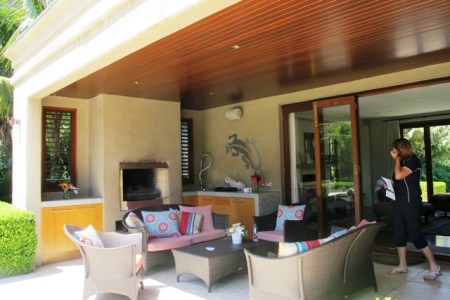
More Miami than Italy in Auckland

More Miami than Italy in Auckland

Mid summer gardens. Despatches from the Heroic Gardens Festival 1

Cannas - not my favourite plant but they can be used well

Cannas – not my favourite plant but they can be used well

I think I can claim to be a vastly experienced garden opener after more than two decades on the front line. But I am a novice when it comes to being on the other side during a garden festival. There were 26 gardens open for the weekend. I managed ten of them in two and a half days, plus two that were not part of the annual festival. Five a day is plenty.
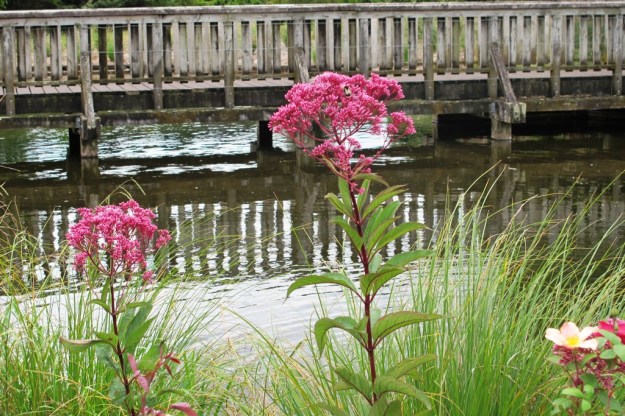
Eupatorium, salvias and gaura planted in generous swathes

Eupatorium, salvias and gaura planted in generous swathes


I won't be planting Rosa Tropical Delight

I won’t be planting Rosa Tropical Delight

I started at the Auckland Botanical Gardens. I wanted to look at their rose gardens where they are growing them without spraying. I hoped that I might get some ideas on healthier varieties to try here but I realised that their dedicated rose beds are in such an open position with full sun and free air movement that the lessons were not really transferable to my sheltered, confined rose garden area. And, to be honest, traditional rose beds leave me cold and roses are not my favourite flower in their shoulder and off-peak seasons which often last about 49 weeks of the year.
B I G swathes - here of asters, Joe Pye weed and cannas

B I G swathes – here of asters, Joe Pye weed and cannas

Old style amenity strip planting

Old style amenity strip planting

But the perennial beds were a delight. Yes you need space for these. Planting in big swathes is what gives the impact. I am not talking the garish stripes of old-style amenity bedding, although unfortunately that is still in evidence so I guess some people must like it. It was the big beds with voluptuous, billowing plants, carefully selected for flower colour and foliage combinations that are at their peak now. Even the canna lilies, which don’t rank in my personal top ten – or even top one hundred favourite plants, looked splendid as the tall back row of the chorus.

The joyous sight of golden rudbeckia

The joyous sight of golden rudbeckia

Compact, dwarf zinnias do not make my heart sing. Spot the interlopers.

Compact, dwarf zinnias do not make my heart sing. Spot the interlopers.

Mark often despairs that the modern breeding of many annuals and perennials is to get smaller, more compact, tidier plants allegedly better suited to suburban gardens and, I would add, floral clocks and traffic islands. These dwarf plants will never have the impact of a big, bold, swathe of golden rudbeckia. They made my heart sing.
Underplanting on the orchard hillside - rudbeckia again

Underplanting on the orchard hillside – rudbeckia again

???????????????????????????????It was the hillside of rudbeckia in Lynda Hallinan’s garden that I liked the most. She has underplanted her orchard trees with a sea of gold and very lovely it was too. Her planting of a white umbellifer (maybe Ammi majus?) with a semi double golden cosmos was equally gorgeous on a day in high summer. At least, I think it was a cosmos. Annuals are not my area of expertise. Lynda’s scale was of course smaller than the Bot Gardens, showing that it can be done in a mid-sized domestic garden.
White cosmos in a front garden

White cosmos in a front garden

Aside from a rather lovely patch of white cosmos in another garden, that was about as good as it got in the summer garden stakes. Of course it is different in tiny urban gardens on very expensive real estate. When your lot in life in life is limited to square metres, most will opt for year round appeal. In Auckland, this tends to mean palms and bromeliads to the exclusion of seasonal highlights and change. I will return to Auckland tropicana in the future.
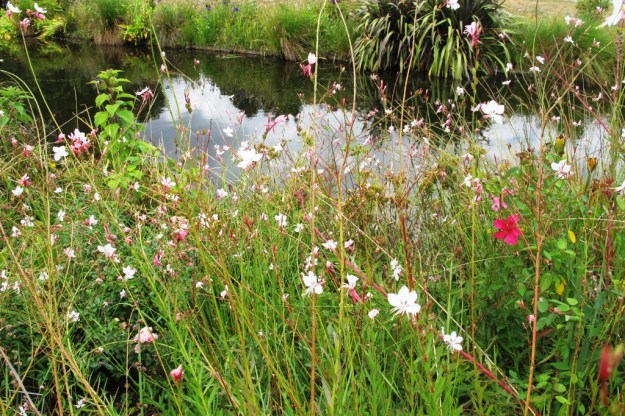
The pondside wild garden at Auckland Botanic Gardens

The pondside wild garden at Auckland Botanic Gardens

It was entirely a reflection of my current thinking that I found the wild pondside garden at Auckland Botanic Gardens so deeply appealing. I am sure some will see this sort of gardening as weedy eyesore but they probably like the garish amenity planting in stripes and will whip out the sprayer at the drop of a hat. I applaud Auckland Botanic’s willingness to explore contemporary directions in sustainable gardening and healthy eco-systems which we have yet to see appearing in many private gardens in this country.
???????????????????????????????

Something to see here – garden mirrors

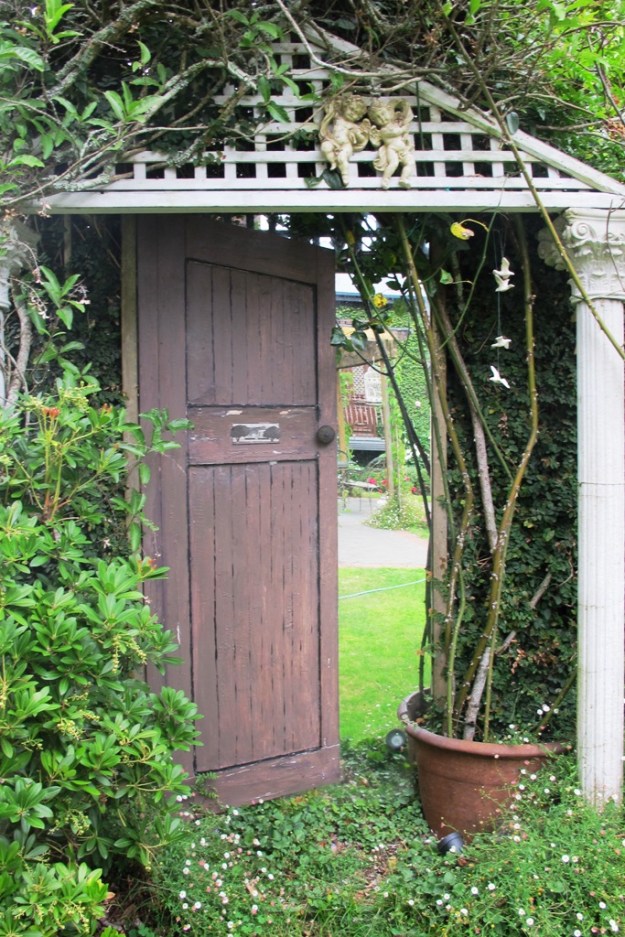
Spot the mirror 1.

Spot the mirror 1.


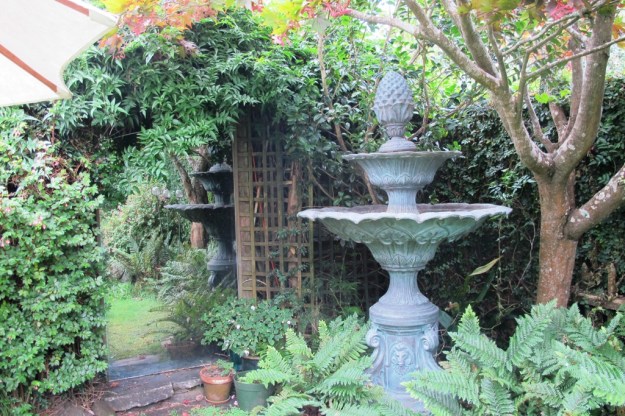
I have never been a fan of mirrors in the garden. But look at these in a small, private garden I visited in Auckland yesterday. It is owned by a retired couple and is not open to the public.
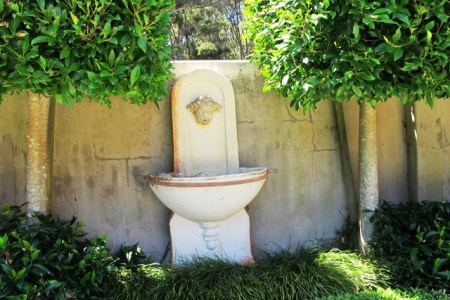
The trompe l'oiel of the world of garden mirrors

The trompe l’oiel of the world of garden mirrors


Spot the mirrors. I failed entirely to work out that they were mirrors until the owner made a comment that they often trick people and I then saw our reflections. Until that point, I had assumed the garden continued on and there was a further “garden room”, or maybe two, beyond. It is very cleverly done especially with the door opening in to the mirror – creating an effect akin to a trompe l’oiel. These installations were beautifully executed in their subtlety.

I am still not convinced that mirrors are a good idea in the hands of those less skilled but I may have to review my earlier blanket dismissal of them. I just have not seen them used well before and I think this is probably an exceptional example.

The bougainvilleas were repeated throughout the garden, carefully managed in small spaces and looking vibrant.

The bougainvilleas were repeated throughout the garden, carefully managed in small spaces and looking vibrant.

Tikorangi Notes: Thursday 12 February, 2015 Wildflowers or weeds?

Pretty by the road to town. The convolvulus IS a problem and agapanthus come in for a lot of criticism in NZ.

Pretty by the road to town. The convolvulus IS a problem and agapanthus come in for a lot of criticism in NZ.

Feeling the need to head my site with something more pleasing than the industrialisation of our beloved Tikorangi in my previous post, I flag wildflowers and roadsides. We have been talking about this a great deal over summer and clarifying our thinking. In New Zealand, these are often – in fact usually – seen as weeds for we are still a pastoral countryside where unrelenting green fields are deemed to be the desirable state. And of course our roadside flowers are almost all introduced plants, a few of which run amok.

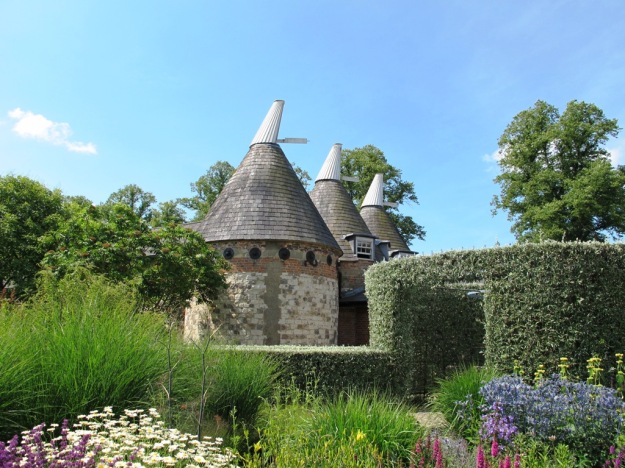
Who wouldn't covet the oast houses at Bury Court?

Who wouldn’t covet the oast houses at Bury Court?

It was interesting watching BBC Gardeners’ World a few days ago. We seem to run about two years behind here so any UK readers may not remember the episode where Carol Klein visited Bury Court and the owner spoke about how he wanted his garden to echo the nature. The nature to which he referred was the hedgerows, meadows and road verges.

We visited Bury Court late last June. Naturally we coveted the lovely oast houses but the garden was also a delight and we learned a great deal from it. We could see the echoes of the English countryside repeated in a managed fashion.

To New Zealanders, nature is more likely to evoke images of our verdant and dense native forests and bush. It is a different perception of the environment altogether and it is taking some thinking to move preconceptions away from weeds to valued wildflowers that contribute to the eco system. Of course the pasture grass that we value so highly for our grass-fed stock is no more native than the wildflowers that grace our verges but the latter still get a bad rap here. I will return to this topic.

More Bury Court. Is this not lovely? I think so.

More Bury Court. Is this not lovely? I think so.

Lessons from the Tikorangi Gaslands

The genie is well and truly out of the bottle. Flaring on Mangahewa E site down the road. Photo: Fiona Clark

The genie is well and truly out of the bottle. Flaring on Mangahewa E site down the road. Photo: Fiona Clark

Never. Sign. Anything. No matter how careful you think you are being, you are signing away all your rights including future rights to things you may not even know are in the picture. We have signed two consents and have been badly burned on both. Ours is not an isolated story.

If you don’t sign, they will go ahead anyway if they possibly can. But at least you haven’t signed away what few rights you may have.

Being nice to a petrochemical company does not mean you will get a better deal. Better deals go to those who are the hardest negotiators. It is likely the reason why a petrochemical company insists you sign confidentiality agreements is because they do not want you comparing notes with your neighbours where you may well find they have negotiated a much better deal than you have. By way of example, when it comes to payments to farmers for the installation of gas pipelines across their land, a reliable source has told me he has seen agreements where the daily rate is four times higher than the base rate that is initially offered and accepted by most farmers.

Some may be grateful for a hamper containing Bluebird salt and vinegar chips and housebrand Pam's  Christmas mincemeat tarts

Some may be grateful for a hamper containing Bluebird salt and vinegar chips and housebrand Pam’s Christmas mincemeat tarts

Some people go all out for whatever compensation or sweeteners they can get – and sweeteners come in many forms starting with modest Christmas hampers. A few refuse to touch anything. Most will take the sweeteners but, because compensation is rarely offered, they are too polite to demand it. We have never been offered or asked for compensation. In the past we have accepted some minor sweeteners. Whether you want to go all out for whatever you can get, whether you want to accept, maybe even be grateful to the company for sweeteners or whether you prefer the chilly moral high ground of refusing all such offers is entirely personal choice.

Save your home baking for friends and family

Save your home baking for friends and family

Somehow it is more upsetting to be trampled by a petrochemical company when you have allowed their people into your house to talk to you. When the company man or men have sat at your dining room table on a number of occasions, drinking your coffee and eating your home baking, the sense of betrayal feels very personal indeed. I know some residents who will not let them past the doorstep and others who insist on meeting on neutral territory because they don’t want them on their property. I can certainly understand that last position now. These company representatives are not your friends and it is fine to suspend old fashioned rules of hospitality in this situation.

Keep records including notes of all interactions. Never delete emails. File all paperwork. Keep diary notes. You never know when you might need to refer to them. Do not make the mistake of assuming your emails to your *friendly* petrochemical company criticising Council will remain with that company. You may find them in your Official Information Act pack from Council, showing that the company has forwarded them on to the Council. I have.

When a company approaches you for your signed consent, never assume you are being told the truth, the whole truth and nothing but the truth. What you are told is likely to be well short of the whole truth. It will be best case scenario for you – but not the company whose best case scenario is very different. And nobody checks what they have told you to get your signature so if, in time, it proves to be inadequate or inaccurate, you have no recourse whatsoever. Because in signing, you signed away your rights.
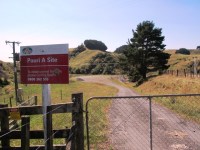
The way things used to be
The way things used to be

"Just a single well. Probably."

“Just a single well. Probably.”

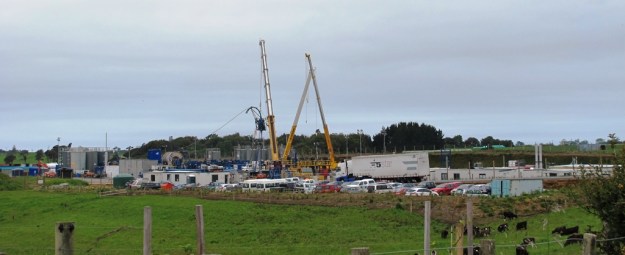
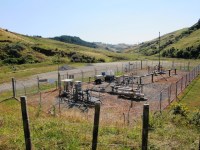
Or it could be a behemoth of a modern site

Or it could be a behemoth of a modern site

If a company leads you to believe that it will just be a little site – “you will hardly know we are there” one company is reported as saying – do not make the mistake of thinking you will get a little old-style site with a few pipes coming out of the ground and no noise or disruption. Modern sites are different, as evidenced by this behemoth of a site down the road from us and the even larger one on the farm next door. Check what they tell you against their applications for consent. Sometimes they are different. There is a big difference between “we are just going to drill one well” and their application for the full suite of eight wells plus production facilities, as one local family found.

Do not make the mistake of thinking that it will all be over when the holes are drilled. Oh no sirree. Not necessarily. Not at all. There is much ongoing work that will be done and with a big site, you can expect that frequent work to continue, we now find, for the lifetime of the site. But they won’t tell you that when they get you to sign.

Once in on a site, there is the potential for activities to escalate. Because of course they are already there so each small – or indeed large – increase in activity is just another building block on top what they have already laid. After all, in this industry it is impossible to plan ahead with any certainty and of course it is their right to escalate activities. They have invested all this money (for the good of the people, you understand, for private profit is never mentioned) and you signed away your rights back at the start.

Be prepared for the oft-repeated sneer from shallow thinking dumbos: “Well you drive a car, don’t you? You want us to go back to horse and cart? Hahaha.” This has nothing to do with fuelling our cars, even less so when it is gas, as it is in Tikorangi. Suitable replies may be: “I drink milk but I don’t think dirty dairying is okay,” or “I own a gun but it doesn’t mean I believe in war.” Glib, but parallel arguments. Derisory comments come from those who are either benefitting personally from petrochemical development or those who have no idea whatever how bad it can be for the residents living alongside the development.

Don’t expect your local councils to keep you informed. While they may and do have a great deal to do with the petrochemical companies and Their Processes allow them to assist the companies to repeatedly massage their resource consent applications until they fit the clipboard check list, these very same processes do not include keeping the most affected residents and ratepayers informed. At least not until the final decision has been made and it is too late for you to raise any concerns.

No matter how sympathetic some elected councillors may be, they cannot help you. The power base at local body bureaucracy level rests with the paid senior staff. The role of elected councillors is to be the public fall guys for staff actions and decisions and the sooner some new councillors realise this, the happier the organisation will be.

The Councils will assume that everything in the consent applications is complete and correct on the part of the companies and approve it accordingly. There is too little due diligence that I have seen. When you find out after the application has been signed off that it may not have been full and correct, it becomes a matter of personal pride for Council staff to defend their decisions. Catch 22 but no matter, the winners will be the companies.

You are on your own. There is nobody tasked with protecting the residents’ interests. You are just a small fry to be squishied as the Councils and the companies work “to get things right moving forward”.

Stress. Be prepared for considerable stress over a long period of time. I have heard the ongoing anxiety over company plans blamed for marriage breakups amongst residents. Who knows if this is the case, but I do know that the stress is protracted, genuine and very personal. And that stress is all your very own stress so if you feel your anxiety levels rising, you may need to look for help. It can take a year or two from when a company first comes a-knockin’ at your door to get all the consents in place and start the activity. They may drill one hole and then go away. But their consents are commonly for eight holes and they can come back repeatedly over the next two decades – longer for the earlier consents which don’t have an expiry date at all – and drill again. And again. Then they may apply for a variation to the consent to add more activity on the site. That stress ebbs and flows but it doesn’t go away and none of the official processes recognise the stress placed on residents. It drives some residents out but when moving is not an option, you just have to batten down the hatches and cope.

For all these reasons above, trying to work “within the system” is pretty much doomed to failure for the individual. Oh you may have some small victories to keep you happy along the way, but when it comes to the important issues that really matter, the system ensures that the powerful voices triumph.

Coming up soon: Toxic Transport and other delights from the Tikorangi Gaslands.

???????????????????????????????