
 My first encounter with a garden strongly promoted for its romanticism was in northern Italy – Villa San Remigio. If you have ever been to the Italian lakes district, you will nod in agreement when I say that the whole place seems impossibly romantic. Stresa, Mennagio, Bellagio (the Lake Como one, not the Las Vegas one) – in the right circumstances these are places of charm bordering on enchantment.
Villa San Remigio had a wildly romantic back story – the love affair between a Neapolitan poet and musician and an Irish artist. If my memory serves me right, there was some sadness, earlyish deaths and childlessness. It had the mandatory handsome villa and a particularly lovely old church along with beautiful views across Lake Maggiore. But were the gardens romantic? It was all gentle decay when we were there, especially of the old concrete (and there was a lot of old concrete in larger than lifesize shrine-like constructions and terraces) and whoever managed the place was hoping to get grants for a major restoration. It may have been done by now but competition for restoration money is stiff in a country with such a long history and so many things in need of major investment.
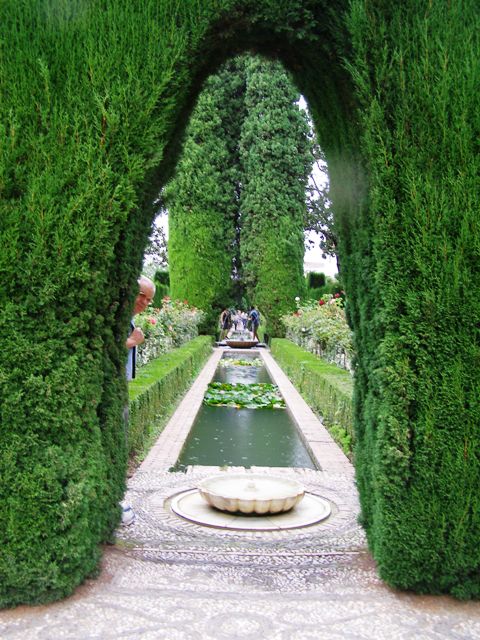
The gardens at the Alhambra are re-creations. Note the gentlemen on the left, politely trying not to intrude on my photo.
I searched on line and found an article in the UK Telegraph, listing their pick of the ten most romantic gardens. Villa San Remigio wasn’t on it, but the Alhambra in Grenada, Spain and Monet’s water lily garden in France were and I have been to both of those. The Alhambra is an amazing place but the gardens are a modern re-creation. It is the whole package there that makes the romance – the history, the beautiful palaces which are on quite an intimate scale, the light, the view across to the Albaicin (or medina)…. The garden enhances but does not generate the romance. The most recent. modernistic gardens at the Alhambra were anything but romantic.
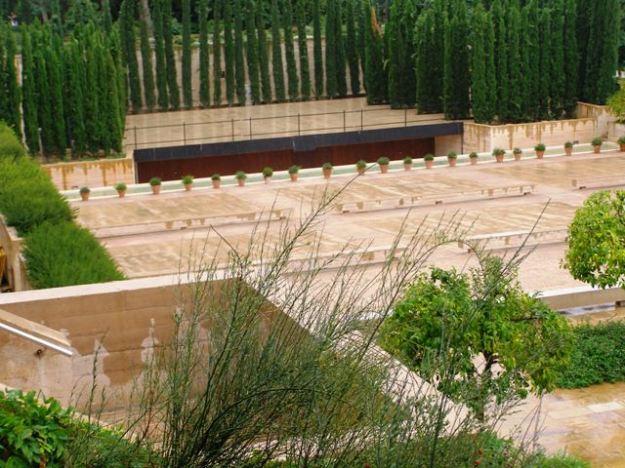
There is nothing romantic at all about the latest, hard-edged modern garden addition at the Alhambra.
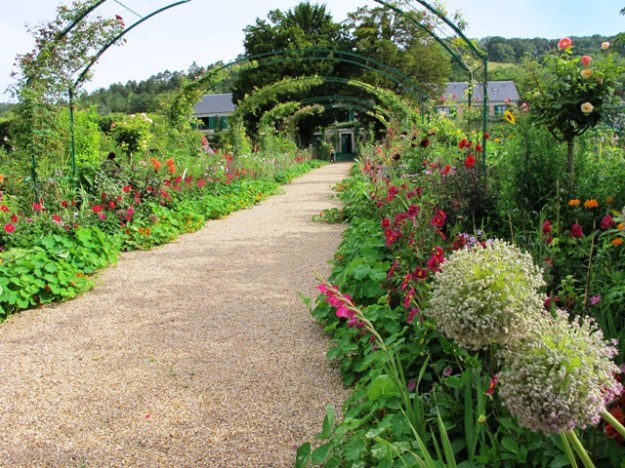
Monet immortalised his garden in so many paintings which imbues the place with added mystique. An analysis of the garden itself rather belies that. However the water lily garden is loosely maintained and in a naturalistic style which contrasts with his more rigid stripes in the upper garden.

Monet’s waterlily garden is charming enough, as long as you don’t mind sharing it with many strangers.
What these gardens have in common is a rich history, age and gentle decay, some solid architecture of note and romantic back stories. The gardens do not necessarily stand on their own merits. And let’s face it, in this country we lack most of the above although some of us can manage some gentle decay. But age is measured here in decades, not centuries.
These gardens – and most of the ones on the Telegraph list – are all well out of private ownership now but the love of romantic gardening dates back to the original visions of private owners, albeit generally ones with considerable personal wealth to achieve their dreams. These days the romance is a product of sophisticated marketing. I am yet to be convinced that an institution or business ownership model is capable of generating a romantic garden.
But private individuals can and do. I would disagree with the Telegraph’s list but that is because I am interested in the modern return to romantic gardening – what is being done here and now, not what was done last century or the centuries before.
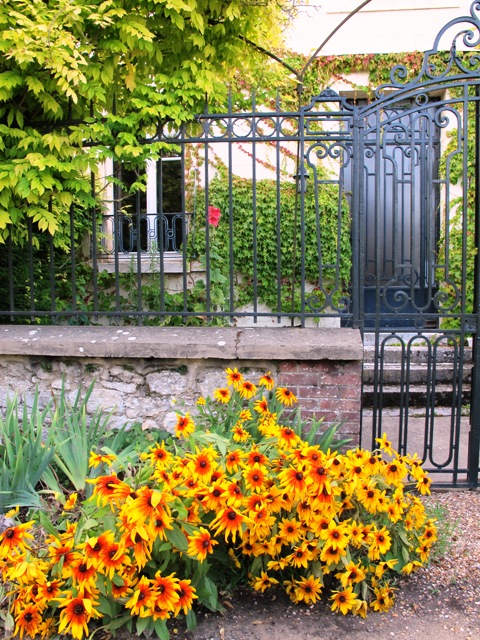
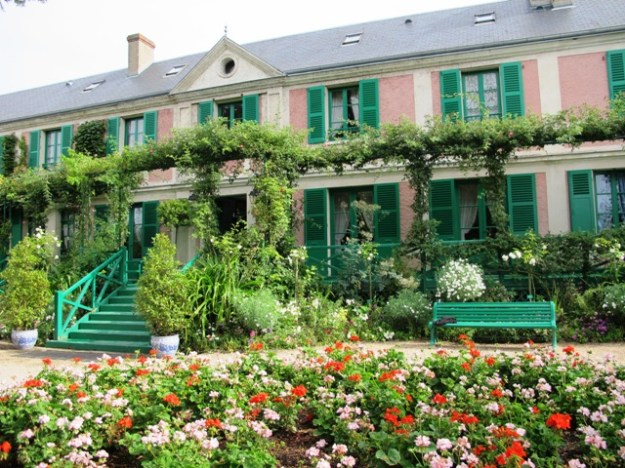
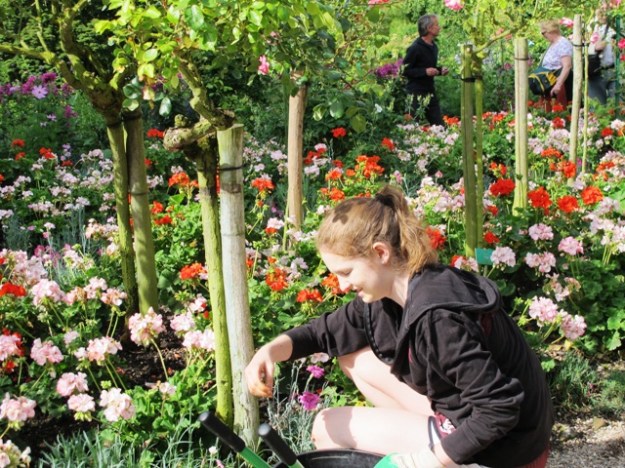
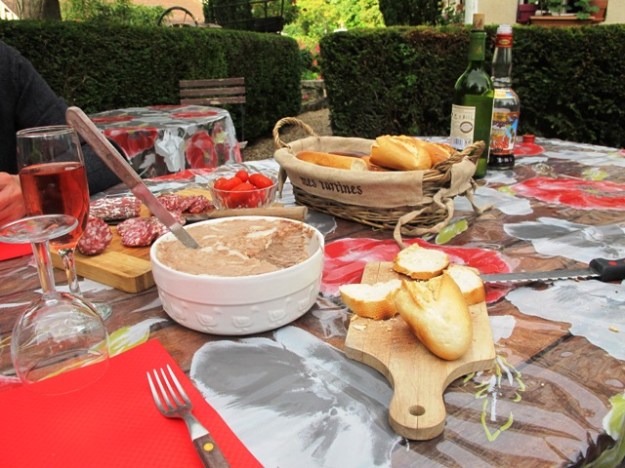
The soft-edged naturalism, helped by French village style, showed romantic gardening at a very domestic level.
We spent a couple of nights in the village of Giverny where Monet’s garden is located. I am quite willing to admit that our delight in the charm of the village may have been influenced by the departure of the daytime crowds, the soft evening light and the consumption of the fermented fruit of the French vine, but we found ourselves more engaged with the village scenes than we were with the star attraction. This was romanticism on a very personal, domestic level. The soft-edged naturalism, often with charming detail, has nothing to do with great wealth, grand vision and power. It is equally within the reach of the individual.
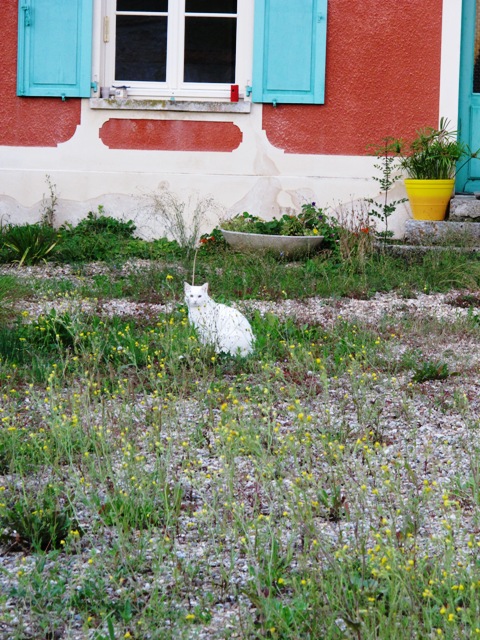
In the village of Giverny, even le chat français and le yellow plastic pot had a certain romantic charm in the evening light.
First published in the Waikato Times and reprinted here with their permission.
 I approached this book with a little trepidation because it seemed to be part of the trend to release Australian publications in this country, assuming that they will be equally relevant here with no significant difference in conditions and plant varieties. In this case it works. This is a charming and helpful book written by somebody who combines vast experience with a genuine love for the topic. The author ran a rose nursery for 25 years where they chose to go to organic production well before many others came to realise that our growing of roses had become bad practice environmentally. There is no doubt it would be easier in Australia to grow good roses without chemical intervention because of their dry climate, but her experience is invaluable. I am not sure how readily available some of her alternatives are in this country yet – but they are stocked even by Bunnings in Australia so if the demand is here, I am sure we will see them soon. That is eco-fungicide, eco-oil, eco-neem and eco-amingro.

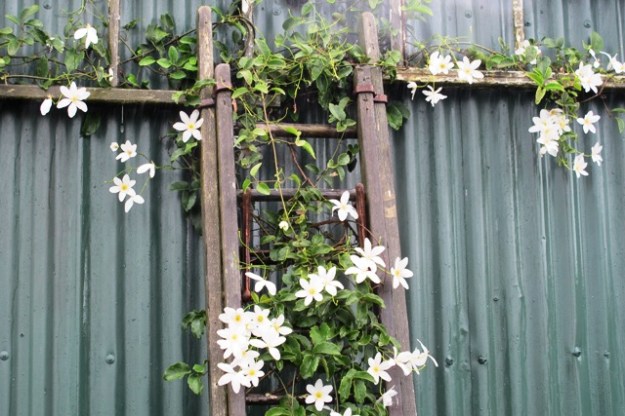 1) The old wooden ladders, one vertical and one secured horizontally across the top, are the effort of a creative gardener down the road. The clematis appears to be a strong growing variety which will cover pretty much the entire shed wall in relatively quick time. If you can find old ladders cheaply, it is a quick solution but I do not think that old aluminium ladders would be so pleasing visually.
 2) Where you have masonry or brick surfaces, separate framing can avoid the need to drill holes. Here we have constructed a simple bamboo grid, tied together with twine, to give a light weight frame for the seasonal climber, Tropaeleum tricolourm. Gridded wire used to reinforce concrete can also make a handy and economical frame for climbers which can be cut to the required size.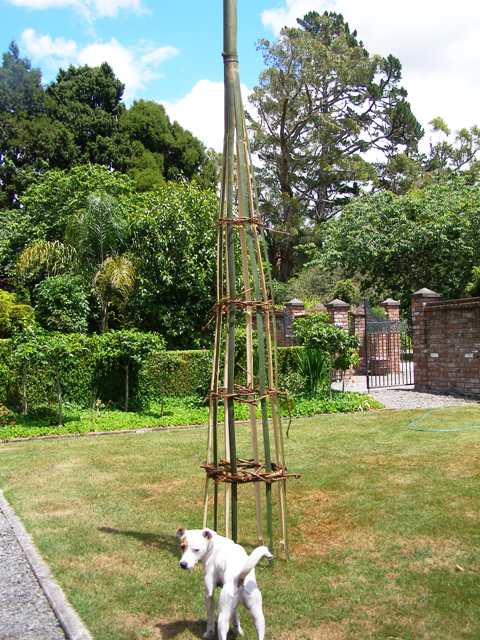
 3) We make our own bamboo obelisks specifically to hold clematis. They last for several seasons you need access to fresh giant bamboo to use as the raw material. That is grape vine pruning holding the verticals apart. You can improvise something similar with wooden or cane teepees. If you want step by step instructions for the bamboo,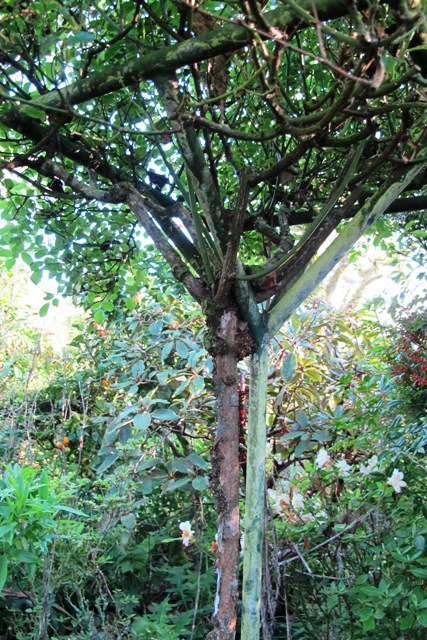
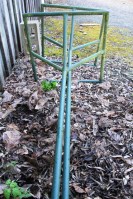 4) I had these pipe frames built to hold my tall weeping roses, though I am now using two of them for wisterias. They were not cheap at the time, but they have proven their worth over more than 15 years. They need to be driven a long way into the ground – around 40cm at least – to keep them rock solid but they are capable of supporting a weighty mass of foliage at the top. Top heavy plants can readily snap off when only the stem has been staked.
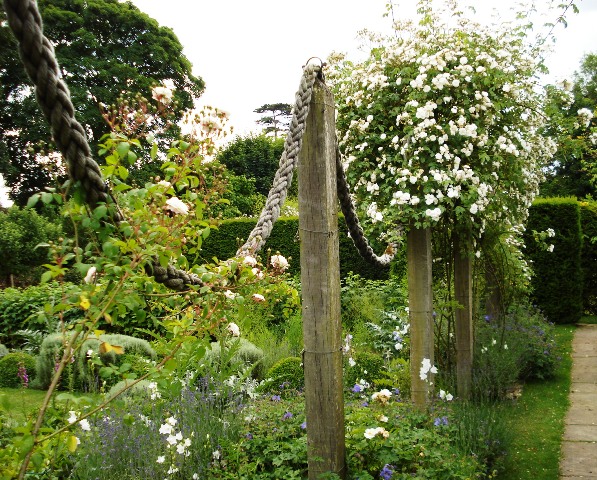 5) Tanalised timber posts and old maritime rope have been used to construct this frame which gives a simple garden structure as well as a support for climbing plants. It should last for many years and the only stumbling block I can see is sourcing the rope. The aesthetics rest entirely on having heavy, old rope. Modern, coloured nylon rope with a thinner girth just will not cut the mustard.
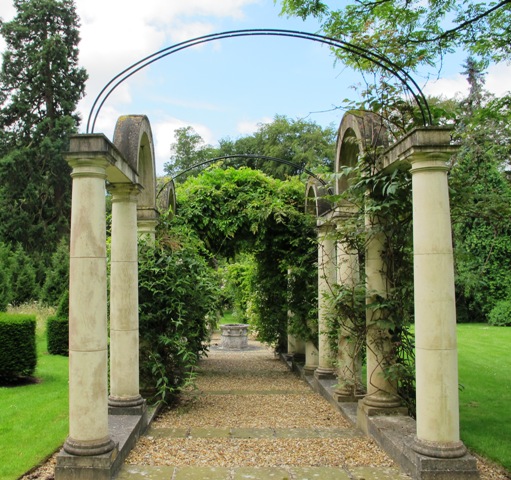 6) From the cheap and cheerful, to the mid priced permanent, to this handsome splendour – which I photographed in a Yorkshire garden. The owner deprecatingly refers to this modern recreation as a “plant carrier”. It is there solely to support climbing plants and to provide an attractive structure within the garden. It is all concrete but using the ground-up local stone added to the concrete mix gives it a weathered stone appearance and colouring that fits the local environment.
 Tikorangi The Jury Garden