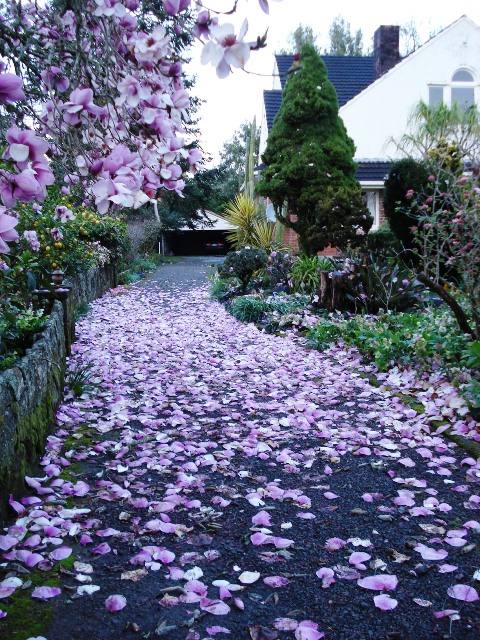
Petal carpets are a second delight
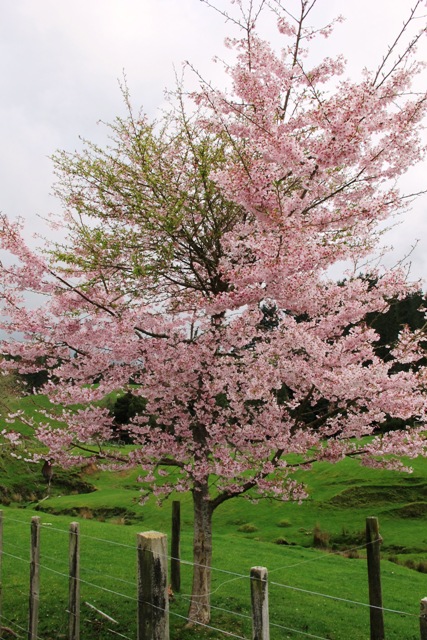
This is just as well in Taranaki, because spring stretches out well past the prescribed three months – from August to early December, I would suggest. The combination of a lack of extremes in temperature, high rainfall and high sunshine hours keeps us in extended flowering mode.
Petal carpets feature large for us. Spring storms may batter plants in bloom but with large trees, the strewn petals offer a second delight, albeit shorter-lived. These used to be more problematic before we discovered a bane of suburban life that is a boon for large gardens – the leaf blower. Once the petals start to discolour and decay, we blow them onto the garden beds where they can quickly rot away to nothing. There is nowhere near the nutritional compost value in fallen petals that there is in leaves, but they are part of the cycle of nature.

Magnolia Iolanthe
. The original specimen of Iolanthe is beside our driveway and now measures around 10 metres tall and 7 metres across. In the glory of full bloom, it takes our breath away year after year. If you can give trees the room to grow to maturity, future generations may thank you.
The big-leafed rhododendrons in our park are already passing over. They are showy but flower very early in the season and are vulnerable to frost. They are also difficult to propagate and take up a lot of space so you rarely find them offered for sale. If you are determined, raising them from seed is the best option for the patient gardener. Other rhododendrons are opening however and the season extends right through to Christmas.
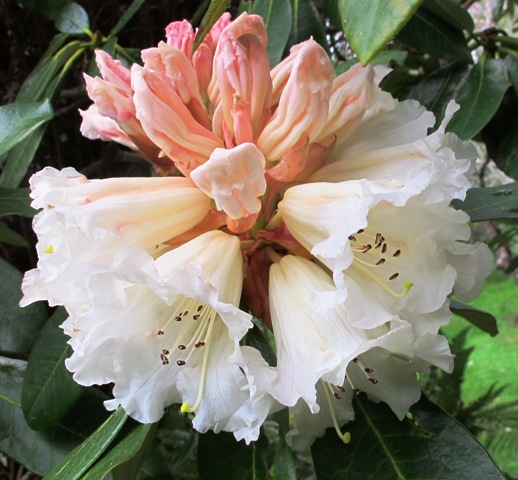
Rhododendron ‘Eyestopper’
I am madly digging, dividing and reorganising summer perennials. We returned from our trip to see English summer gardens inspired and energised. We were very focussed this time, wanting to see the contemporary gardens rather than the classics like Hidcote, Sissinghurst and Great Dixter. Gardening, after all, moves on and the Arts and Crafts garden style derives from the first decades of last century.
We haven’t heard much in this country about the New Perennials Movement, naturalistic gardening, the Sheffield School and prairie gardening but it has been as big a revolution in garden design and planting as the garden rooms of Arts and Crafts were in their day, or the cottage garden genre that followed. It is a whole lot more than just adding in grasses to perennial plantings, as some sniffily deride.
We were lucky to get into a few private gardens that are not open to the public and we looked at the work of some of the major designer-practioners – Piet Oudolf, Christopher Bradley Hole, Tom Stuart Smith and the late Henk Gerritsen, as well as lesser-known gardeners.
Our conditions are different so it will never work taking the lessons from another country and imposing them here. We need to use different plants in many cases (pampas grass is on our banned list and the lovely Stipa tenuissima is threatening to become a noxious weed according to the Weedbuster’s website). Our management also requires different strategies and some of the gardening practices we saw just won’t work here.
But the underpinning philosophy is relevant and many of the ideas are challenging our preconceived notions. We are serious about the move to more environmentally friendly gardening even though it will push the boundaries of what most New Zealand gardeners regard as acceptable in terms of tolerance for weeds. Our interests also lie in extending our spring flowering well through summer and into autumn and we can’t achieve this without managing perennials much better. No matter. We are inspired. And as gardeners, we take the longer term view.
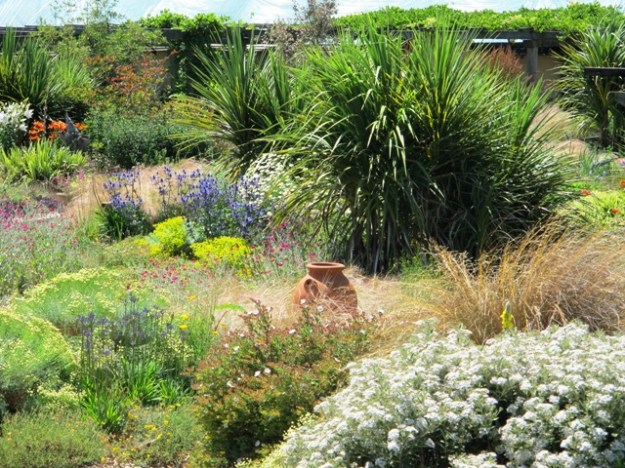
Wildside in North Devon was the one that excited us most
in North Devon. This is the garden created by Keith and Ros Wiley. You will have to make do with Googling it or buying Keith’s book because they have now closed to the public. This garden was an inspiration in every way. It brought together vision, energy, determination, sheer hard work and advanced plantsmanship which left us in awe.
First published in the New Zeakland Gardener and reproduced here with their permission.


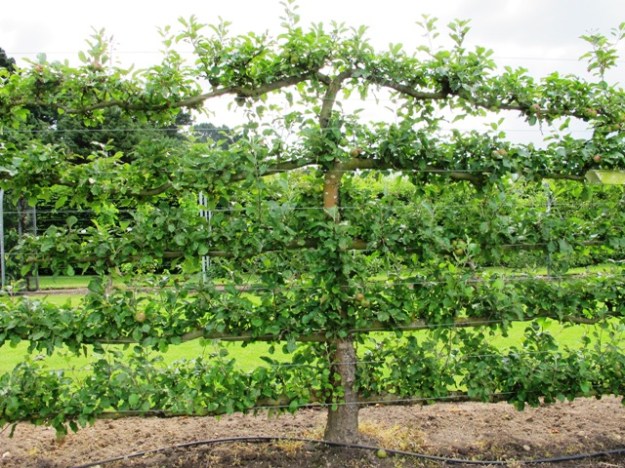 1. The freestanding horizontal espalier. You can see clearly the advantages of a two dimensional plant. Good air movement will reduce disease. It is easy to tend the plant and the fruit all receives equal sunlight. You can also see that the supports are heavy duty. This is not an exercise to be done with a few bamboo stakes and stockinette ties.
 2. The cube requires some heavy duty framing but is quite stylish, even if I was worried by the top branch that was trained back on itself. Using a frame which gently rusts as it ages will make it less visually intrusive than the tanalised pine we often favour in this country. It is the plant shape you want to emphasise, not the support structure. This design allows good air movement through the centre of the tree.
 3.The diamond row was visually the strongest in terms of pattern. I raised my eyebrows at the potential rubbing of bark where branches cross. Stem damage can let disease into the plant and a rule of thumb in all gardening is to avoid crossed branches. Presumably in an intensively maintained espalier, you are replacing the branches regularly with fresh growth so there is a bit of leeway if this is the look you want.
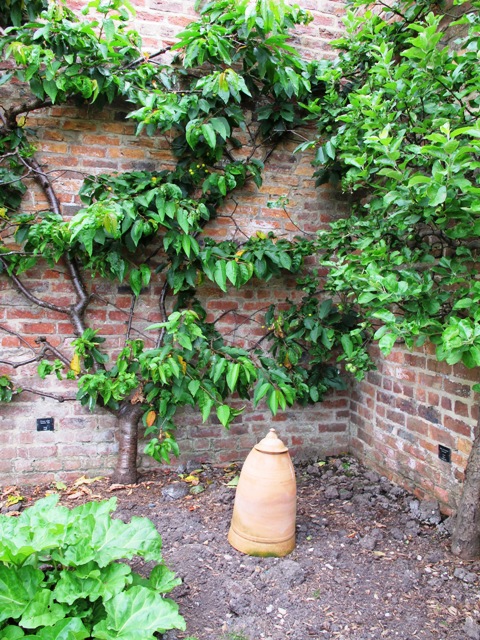 4. There is little doubt that your fan-shaped espalier will look better if you clad the fibrolite garage in old brick veneer and casually pose a stylish, vintage, terracotta forcing pot in front. The advantage of espaliering against a wall is the increase in heat for marginal crops. We don’t need to do it for apples and pears in this climate but I can see that it could work well for figs and some of the stone fruit.
 5. I have mentioned trendy stepovers before – the training of an espaliered fruit at knee level. This is a dry climate technique and where rains are light and misty. Our torrential downpours will cause rain splash and spread disease faster than you can blink. We need maximum air movement and to be above the splash line in our humid climate. That said, you can see disease in this example. I have yet to see one which remains at step-over height all growing season.
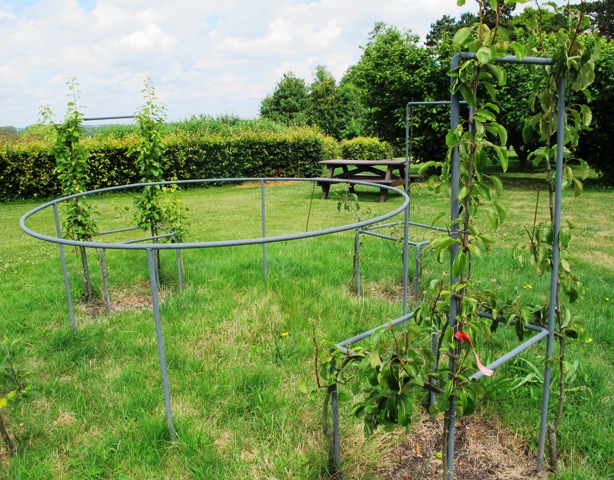 6. These table and chairs are obviously not yet established. I offer them as an idea without comment, secure in the knowledge that regular readers will know exactly what my personal opinion is likely to be. However, for those who like a little novelty in their garden, here be they. I even recorded some instructions for you.
 Tikorangi The Jury Garden