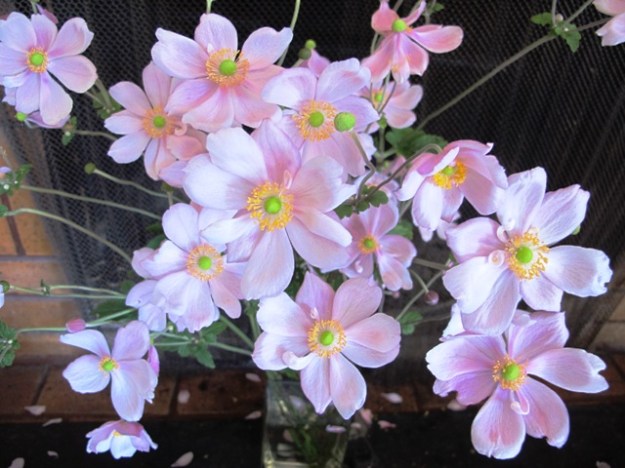
Windflower romance

Wind flowers are a personal marker of our wedding anniversary

Wind flowers are a personal marker of our wedding anniversary

On the evening before we married, Mark turned up with an armful of Japanese anemones that he had gathered from the Taihape roadside. Don’t even ask why we got married in Taihape when we neither lived there nor came from there. It’s a complicated story. Wind flowers, he called the anemones and believe me, although back in the mists of time, it was a romantic gesture I have never forgotten.

Every year the wind flowers bloom on our wedding anniversary and he often brings some indoors. Last week he followed the old cut flower wisdom – re-cut the stems and burned the ends and they have lasted a full week in water.

We have three different Japanese anemones, in light pink, white and a semi double dark pink which is more compact in growth. It seems that the first two are the straight species, A. hupehensis. Although known throughout the world as Japanese anemones, they are originally Chinese – from the eastern province of Hupeh, in fact. They have been grown so widely in Japan for so long that common parlance attributes them to that country. It is no surprise that the Japanese, with their cultural penchant for simplicity and natural form, took a liking to them.

Japanese anemones are commonly found in pinks and white although selections are being made to extend the colour range into lilac blues

Japanese anemones are commonly found in pinks and white although selections are being made to extend the colour range into lilac blues

The semi-double darker one will be a hybrid and a named form that was purchased. Mark commented vaguely that he thought it may carry a woman’s name but I see that this plant family is more highly prized overseas than in New Zealand and there are a fair number of named forms, several of them named after women. For the botanically inclined, the Japanese anemones classified as A. hybrida are likely to be mixes of A. hupehenis with A. elegans and A. vitifolia. This is a plant family that crosses readily – though to get a cross you generally need plants that flower around the same time.

Weeds, I hear some readers saying. Weeds. Yes they can be overly vigorous, given the right conditions and become rampant, bordering on invasive because they spread below ground. You probably don’t want to unleash them in areas with plant treasures which they may out-compete. Lovely though they are in flower, you can have too many of them.

That said, I see that there is general agreement that they are not always easy to establish which made me feel better about our meagre showing of white ones in the woodland garden. I had spotted a pretty patch down the road, growing as a roadside wild flower and it is those I photographed. I love the combination of the single, white flowers dancing above the dried grasses.

 The white Japanese anemone down the road looks better than the patch we have in our garden

The white Japanese anemone down the road looks better than the patch we have in our garden

Our pink ones are planted on our roadside and come into flower after the summer colour has largely faded. We have designated our rural road verges no-spray zones with the local council so we carry out our own maintenance. We mow a grassy strip immediately beside the road, get rid of noxious weeds like the dreaded bristle grass and we can do what we like with the rest. And what we like are roadside wild flowers – agapanthus, hydrangeas, robust begonia species, oenothera (evening primrose), belladonnas, crocosmia and the like. It is not just for passing motorists. It is also to feed the bees and to keep some roadside cover in an intensive dairying area which can otherwise resemble a green grass desert.

There are actually somewhere over 120 different anemone species. By far the most common in gardens are A. coronaria. These are the spring flowering corms that you buy as de Caen (the singles, mainly in blue and red but also in pinks and whites) and St Brigid (the doubles). They are very cheerful and cheap to buy. If you get a bulk pack, split it into four and soak one batch at a time overnight before planting. Done at weekly intervals, you can extend the flowering for the first season.

A. blanda is a little Greek species with predominantly blue flowers, more like a carpet if mass planted. A. nemerosa is the European wood anemone. We would like both of these dainty species to naturalise far more widely in our garden than we have achieved so far. They are transient early spring delights.

But in autumn it is time for the wind flowers to star.

First published in the Waikato Times and reprinted here with this permission.
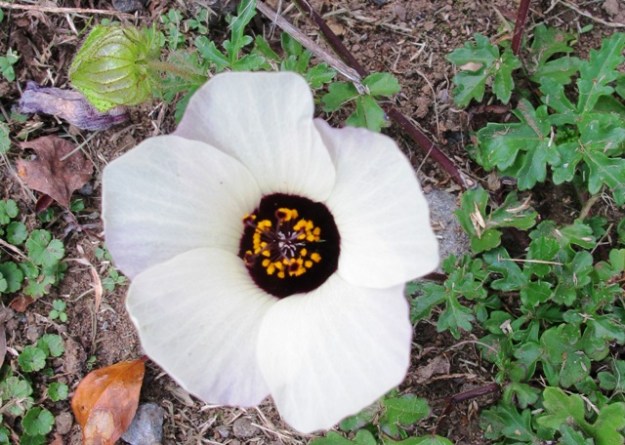
Plant Collector: Hibiscus probably trionum

Hibiscus probably trionum

Hibiscus probably trionum

This plant took a little unravelling. It is a self sown seedling with large, short-lived flowers and serrated foliage which is lying almost flat to the ground. Mark thought it was a native but I think he is wrong. There is no shame in that. Most of the country thinks it is native and it is only recently that it has been separated from a very similar species, now called H. richardsonii, which is truly indigenous and indeed critically endangered in its natural habitat of northern east coast areas.

If I am right, this is actually H. trionum which originated in the Levant area of the Eastern Mediterranean, which more or less stretches from Cyprus to Palestine. It seems that the very dark eye to the flower is what makes it H. trionum rather than H. richardsonii. Well, that and chromosome counts. There are countless references on the internet to H. trionum being native in New Zealand as well as being widespread internationally. It has certainly naturalised here and by the time common usage catches up with the differences, it is likely that what we will have are hybrids between the two. It will fall to the botanists to try and keep a pure strain of the native H. richardsonii.

Both forms of hibiscus are usually short-lived perennials, often behaving as annuals, especially in frosty areas. They are in the mallow family (or malvaceae) and are showy, even if the individual flowers don’t last long. The common name is the unromantic bladder plant, though that is more correctly applied just to H. trionum. We do have one other native hibiscus and that is H. diversifolius.

First published in the Waikato Times and reprinted here with their permission.

Garden Lore

“I like trees because they seem more resigned to the way they have to live than other things do.”

Willa Cather (1876-1947)

002 - Copy

Autumn harvest and freezing tomatoes

The autumn harvest is being wheeled into house by the barrow load at the moment. They are melons in the photo – both water and rock varieties. The annual challenge for Mark is to get good crops of both through and to this end he takes some care and plants several different varieties of each. This year we have a bumper crop – too many to eat and give away so we have gone to juicing them for lunchtime smoothies. I did worry this week that the current fad of mixed fresh fruit and vegetable smoothies may in fact be the hipster take on Complan, that powdered product that used to be fed to fading elderly folk with no teeth. My anxiety is that we may be on the cusp of moving way past hipster age and approaching the elderly door.

But about the tomatoes. Experienced preservers will have their own tried and true techniques. For novices, faced by a surplus of tasty toms, I offer my method. In a fair division of labour, Mark grows them, harvests them, washes them, cuts out the tough stem end and any bad bits and lays them in a single layer in baking dishes. They are fan baked for a couple of hours around 130C. I then take over, strain off much of the clear liquid which is very flavourful and excellent for creamy winter soups. This I decant to plastic bottles and freeze. I then pull all the skins off the baked tomatoes. It takes a fraction of the time to do it after cooking rather than before. I then pack to meal-sized containers and freeze them. That is it. I add any extra flavourings at the time I cook with them, not at the time of freezing. I know tinned tomatoes are cheap to buy, but the only dollar cost in freezing our own is running the oven. The time required in preparation is minimal and, given the choice, we prefer to know where our food came from.

First published in the Waikato Times and reprinted here with their permission.

Autumn seed

Autumn can seem a slightly melancholy time of year, the opposite to the bright promise and floral extravagance of spring. It is that sense of ‘passing over’, of annuals dying and other plants retreating in preparation for winter. We tend to focus on the flowering capacity of most plants but some have a subtle, understated beauty on the other side with their seed heads. Not all, of course. Some simply look scruffy, brown and of no interest. But once you get your eye in, there is an astonishing range of different forms and some are well worth admiring in their own right. Where plants are not weedy, leaving the seed heads in place provides a valuable food source for birds.

Fennel - foeniculum vulgare

Fennel – foeniculum vulgare

“Don’t buy any more fennel seed,” he said as these plants crossed over from flowering to seeding. Fennel is one of my favoured cooking herbs. In fact these are the seed heads of Florence fennel or finocchio which never made it as far as the vegetable garden. The common fennel that flowers on many a roadside but never develops that edible bulbous base is the usual one that is harvested for herbal purposes.

Phlomis russeliana

Phlomis russeliana

We find Phlomis russeliana an undemanding, handy little perennial which flowers well even in conditions of high shade. Its flowers are soft yellow, arranged like a tiered cake stand and the stiff seed heads retain that interesting form. I had to pick these to photograph them and you can see the see the seed falling out. Usually the birds – and maybe the mice – will clean up this seed.

Clematis tangutica

Clematis tangutica

While these cute seed heads are from Clematis tangutica, it is a typical clematis seed form, although these are silkier and greener because it is a late season bloomer. That light ethereal form is usually a sign that the seeds are spread by wind, as indeed is thistledown from dandelions. The plant of course has evolved not to please humankind but to ensure its own survival.

Pachystegia rufa

Pachystegia rufa

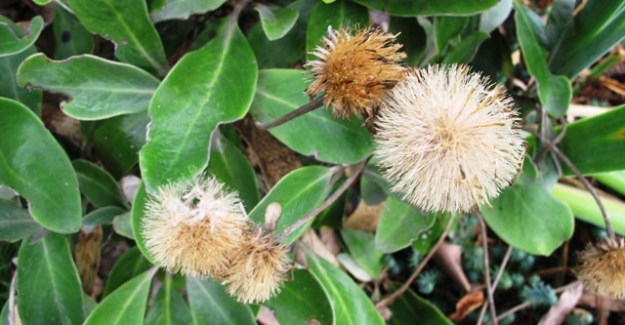
Pachystegia have fluff balls of seed, another wind dispersal candidate. This one is P. rufa, a different form of the Marlborough rock daisy to the highly prized, larger-leafed P. insignis. There is something very tactile about these soft pompoms.

Arisaema seed head, in this case A. tortuosum

Arisaema seed head, in this case A. tortuosum

Arisaemas are bulbs from the Asian subcontinent with hooded flowers somewhat reminiscent of a cobra. Many of the arisaemas, and indeed other aroids like arum lilies and zantedeschia, set attractive seed pods. The birds don’t touch these which is usually an indication that they are poisonous. Small children are not as discriminating as our feathered friends and it pays to check the safety of any plant which sets such attractive seed, as well as teaching your little ones not to put stray seeds and berries in their mouths.

Agapanthus - weed or wildflower?

Agapanthus – weed or wildflower?

Even the humble and often maligned agapanthus has an attractive seed head. These are heavy seed and don’t often fall far from the parent plant but, given the concern about weediness, dead heading seems a wise move, especially if you have them near waterways or reserves. Water is an efficient method of seed dispersal as can be witnessed by downstream and riverbank weeds.

First published in the Waikato Times and reprinted here with their permission.

Garden Lore

“It would be worthwhile having a cultivated garden if only to see what Autumn does to it.”

Alfred Austin, The Garden That I Love (1894).

047
001Garden lore – rat catching

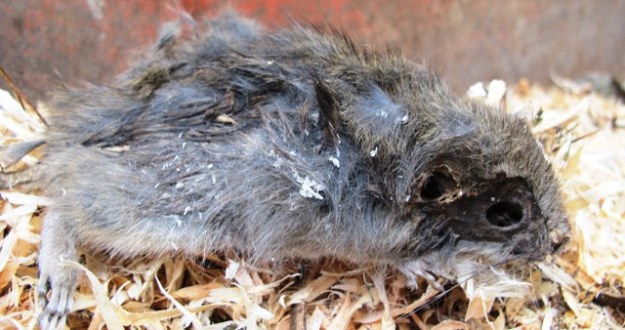
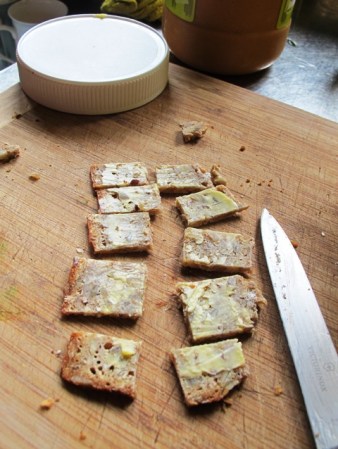
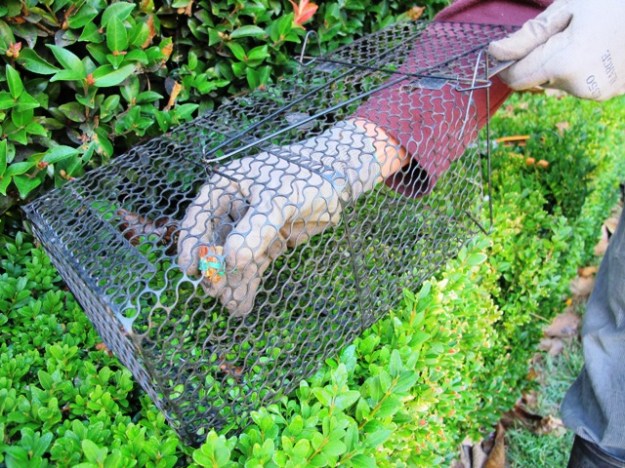
Sadly, rats are a fact of life and not an indication of squalor as I am sure many river-side residents will know. We get rats here because we have a macadamia nut orchard and processing plant immediately next door and we also have a flowing stream which can bring them in. The current tally this autumn is already 21 despatched. We have a strong preference for trapping, not poisoning these days and a trapping round is part of Mark’s daily routine. He uses small squares of stale bread spread with both butter and peanut butter as bait. The downside of trapping is that you do have to be willing to kill the rat. He used to leave this to the dogs but gave up when one escaped from them. Nowadays, he tips the trapped prey into a sack and whacks the sack on concrete. It is a quick end.
002
You can buy poison across the counter but follow instructions. A regional council pest control officer once told me he despaired at the number of people who thought they knew better than to secure the bait because the rat would take it back to its nest. He had pulled out a fridge in a shed and found maybe 200 baits behind, stockpiled by the rats (which were still alive) as a squirrel stockpiles acorns. The bait needs to be secured and out of the way of dogs. We had a dog once that ate rat bait. It was a traumatic wait to see if he would survive. He did. We have also seen one of our dogs and a cat from earlier days get quite ill after eating poisoned rats. The experience of having a dying, poisoned rat wedge itself in the chimney breast (they go in search of water), there to decompose over many weeks put us off poisoning once and for all. Hence the return to trapping.

And I managed to get that far without making a joke about the Pied Piper of Hamilton.

First published in the Waikato Times and reprinted here with their permission.