
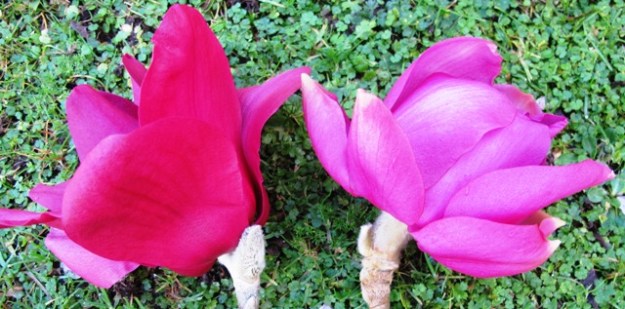
Vulcan to the left, Lanarth to the right
Few people realise that the story of the red magnolias is a New Zealand story. Probably even fewer realise that when it comes to stronger colours in magnolias, we get the best colour in the world here.
I am talking about deciduous magnolias. The evergreen grandiflora types are resolutely white in bloom and adding colour to the softer-leafed, evergreen michelias is very much a work in progress. But deciduous reds, we do well.
Most deciduous magnolias are in the white and pink colour range and very lovely many of them are too. But with many plant genus, there is always that quest to extend the range of flower form and colour, to build on what happens in nature to get a better performing, showier garden plant. Some of it is about pushing boundaries to see what can be done. A truly blue rose is still an unfulfilled quest but it is highly likely it will come sooner or later.
Some would argue that we do not yet have truly red magnolias and there is truth in that. There is no scarlet, no fire engine red. All the red varieties on the market still retain a blue cast to them and fade out to pink or purple tones rather than to the orange end of the colour spectrum. But if you line one of the red magnolias up against a purple one, it is clear that they are a different colour.
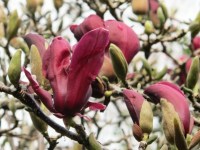
This (liliiflora ‘Nigra’)
I started by saying that the story of red magnolias is a New Zealand story. In fact it started as our family story. Back in the 1970s, Felix Jury wondered if he could get a large flowered, solid coloured red magnolia on a smaller growing tree. He started with the red species – M. liliifora ‘Nigra’. In itself, ‘Nigra’ is a nice enough, low spreading magnolia but nothing showy. He crossed it with the very showy, indubitably purple ‘Lanarth’ (technically M. campbellii var. mollicamata ‘Lanarth’). The rest, as they say, is history.
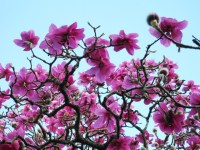
crossed with this (Lanarth)
‘Vulcan’ took the magnolia world by storm. This was the break in colour and form. It is not perfect. We know that. The flowers do not age gracefully. It flowers too early in the season for some areas. It does not develop its depth of colour or size of bloom in colder climates and is a shadow of its own self in most UK and European destinations. But after more than 20 years, it is still hugely popular and very distinctive, particularly in Australia and New Zealand. It set the standard and it opened the door to other cultivars.

… and the result was this: Vulcan
In due course, but slowly, slowly, Mark followed on from his father. He raised hundreds of seedlings and named ‘Black Tulip’ (the darkest of the reds), ‘Felix Jury’ and ‘Burgundy Star’.
Fellow breeder, Vance Hooper, started his programme on the reds and he has named several. The best known is ‘Genie’. Like Mark, he is continuing determinedly down the red magnolia line in the quest for perfection, although improvement or variation will do as steps along the way.
There are other reds on the NZ market now, though none from sustained breeding programmes to match those undertaken by Mark and Vance.
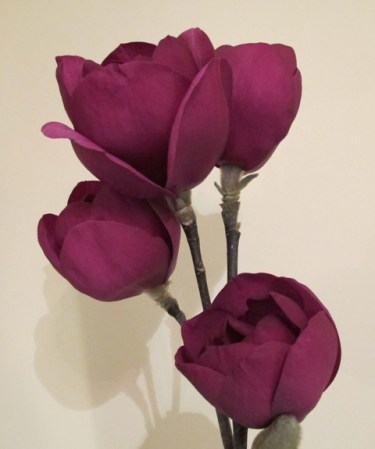
Black Tulip – the first of the second generation red magnolias
It appears that it is ‘Black Tulip’ that has enabled the rise of new selections in UK and Europe. It sets seed and every man and their dog is now raising seed and naming selections. Mark is a little wry as he comments that he raised hundreds of plants to get one ‘Black Tulip’ whereas others raise a few seed and name several. He has an ever-decreasing level of patience for amateurs who, as he says, “raise five seedlings and name six of them” based on the first or second flowering only, when he is still assessing seedlings which are 20 years old and showing their adult form, habit and performance.
So New Zealand is about to lose its position of world domination in the red magnolias. But we still get better colour here than others do overseas. There is no certainty yet as to whether that is related to our mild climate, our soils, the root stock used or the quality of light – likely a combination of all. ‘Felix Jury’, which can flower strong red for us is more an over-sized pink flamingo so far in European gardens. We are just relieved that it achieves full-sized flowers and plenty of them, even if it is not red in their conditions.
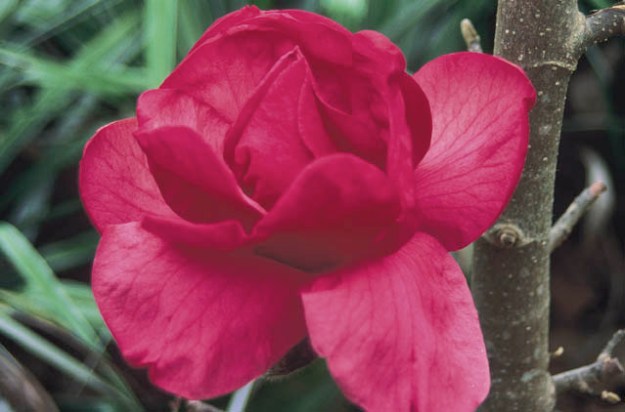
Magnolia Felix Jury at its best here
The quest for truer reds continues. A red that loses the magenta hue. Mark is assessing several with which he is quietly very pleased. They are not scarlet but they are an improvement in colour. Just don’t hold your breath. This is a long haul.
Finally, while NZ leads the world in reds, it was USA which gave us yellow magnolias. These all descend from one yellow American species – M. acuminata. I just say that for the record. Credit where credit is due.
First published in the Waikato Times and reprinted here with their permission.
 Hi de hi, guys!
 • We know that Tikorangi residents were united in their opposition to the Kowhai C site but we have GOOD NEWS. We have halved the number of gas wells Greymouth Petroleum can drill on this site. They are only allowed to have four wells – to start with anyway. This is a win-win situation. They win. And in the future, if they apply for a variation to their consent, they will likely win again.
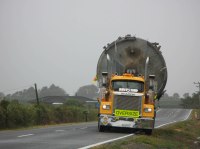 • Greymouth Petroleum have asked us to assure residents that they have not forgotten their undertaking to NPDC councillors on June 11 that they will be setting up a blog, holding community meetings and sending out community newsletters to keep you folk informed. They have just been such busy little beavers that they haven’t had time to do it yet. However, they do want everybody to know that they are very, very sorry about the incident back on March 17 when one of their loads took out the power supply to Tikorangi. They assure us that this was a fully compliant load and they are sure that there were pilot vehicles. Somewhere. Of course we understand that little accidents can happen.
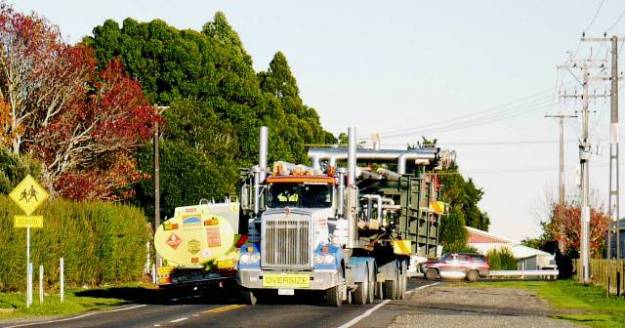 • We have had positive reports that the large loads on your roads are a special attraction for the preschoolers in the area. And some dads, too. Isn’t it just so cute how the appeal of big rigs never fades? You can tell your littlies that there is plenty more to come so the excitement will continue.
 • An innovative initiative is about to start as we want to teach Tikorangi residents that their roads are safe and that local children will be well looked after if they return to using the free school bus service. This will have the added benefit of reducing traffic on the roads if parents stop driving their children to school instead. “Keep left” will be the slogan. There is plenty of room in the drain for pedestrians, cyclists and horse riders. Wear gumboots if it is raining. Just stay as far left as you can because some of these are very large vehicles and the bigger they are, the more important they are.
 • New Plymouth District councillors want us to tell you what a wonderful day they had on their tour visiting the companies and they thoroughly enjoyed the hospitality. They are sorry they couldn’t fit in the residents on this recent familiarisation tour, facilitated by Tikorangi’s very own elected representative, Cr Craig MacFarlane. But they were reassured by the companies that any negative impacts on residents are grossly exaggerated and claims of increasing industrialisation of your district are nothing but hyperbole. They saw this for themselves so that is good news. You will be reassured by this and no doubt you will all be voting to re-elect Cr MacFarlane in appreciation of his sterling efforts on your behalf.
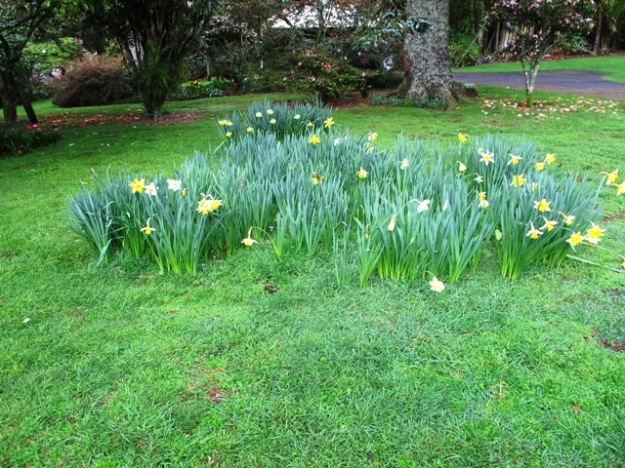
 Tikorangi The Jury Garden