Plant Collector: bilbergia

Bilbergia flowering in the winter woodland

Bilbergia flowering in the winter woodland

On a chilly mid winter day, there is nothing more exotic than a bilbergia flowering in the garden. It is a bromeliad, in case you can’t recognise it, and bromeliads can flower through winter when they look impossibly out of context and wonderfully bizarre.

Easily the world’s best known bromeliad is the pineapple, introduced to Europe from South America by none other than Christopher Columbus. All bromeliads are native to the Americas from Virginia south to the northerly reaches of Argentina, with most bilbergias coming from Brazil.

We have never had names on our bromeliads. This one may be Bilbergia distachia – although equally it may not. There are a fairly large number of species and named cultivars to choose from. Bilbergias often have quite a deep cone of foliage and their flowers are pendulous. The downside is that the flowers usually only last a few weeks instead of the months of some other types.

We like them through our evergreen woodland areas which remain frost free. Most are epiphytic, holding water in their vase shaped leaf rosettes and they are a really easy care plant. In more shaded areas, the foliage tends to become more muted but a plainer green backdrop highlights the exotic flowers wonderfully well.

Collecting bromeliads can become quite addictive. If you get keen, there are two comprehensive books on the topic by NZ author, Andrew Steens. Bromeliads for the Contemporary Garden will get you started, then you progress to Bromeliads, The Connoisseur’s Guide. We have a strong preference for using them in mixed plantings so there is not a whole stretch of just bromeliads looking spiky and alien. We find they combine well with clivias, ferns, orchids and other lush shade loving plants which provide a foil to show off their exotica.

First published in the Waikato Times and reprinted here with their permission.

Grow it yourself: Oriental radishes

Two weeks ago, I wrote about European radishes but considering how near our Asian neighbours are, we have been slow to catch on to the oriental varieties. Only the long white Daikon type is now sold widely in this country. According to the Kings’ seed catalogue, over 25% of vegetable production in Japan is radish of the Oriental types. These are larger growing varieties and therefore take somewhat longer to mature but they are still speedy at a two month turnaround from sowing to harvest. Being larger, they are somewhat easier to handle for the cooking process (certainly when it comes to grating into soups and casseroles) and perhaps more akin to a sophisticated turnip substitute for warmer areas where that crop is not suitable.

Oriental radishes are the same botanical family as more common European ones so they are a brassica and don’t want too much nitrogen in the soil. But being considerably larger root vegetables, they will need conditions which are very well cultivated and well drained to a considerable depth. A radish that is 40cm long is not going to like big clods of soil or compacted earth as it stretches downwards. If you can’t get that depth of friable soil, go for one of the squatter, rounder selections or shorter carrot-types rather than the traditional long white daikon. There are some coloured alternatives available as well.

Radish seed is very small and is scattered along the row and covered lightly with soil. You will have to thin after germination. These thinnings are edible so use them in salads or stirfries. Final spacings will depend on the variety you have chosen. Long thin ones will need to be around 10cm spacings, rounder, fatter ones require more room.

First published in the Waikato Times and reprinted here with their permission.

Stop Press: Magnolia Black Tulip in another Royal garden

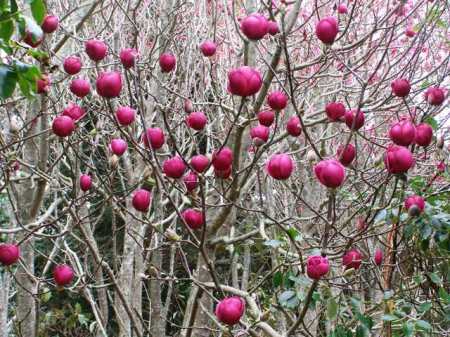
Magnolia Black Tulip

Magnolia Black Tulip

News this morning, via The Telegraph complete with short video, that our very own Magnolia Black Tulip was the tree selected for a ceremonial planting by Burmese opposition leader and Nobel peace laureate, Aung San Suu Kyi in the company of Prince Charles and the Duchess of Cornwall. The planting took place at the Prince’s London residence, Clarence House. Black Tulip is now sited adjacent to a magnolia planted previously by the Dalai Lama in 2008.

Magnolia Black Tulip was bred here at Tikorangi by Mark. Last year, the Queen herself was given a presentation of Black Tulip, though it looks as if the Clarence House specimen may be slightly larger.

We are honoured by this international recognition, though Mark would have preferred them to have planted his Magnolia Felix instead.

Tikorangi Notes: Friday 22 June, 2012

Latest posts: June 22, 2012
1) The garden identity crisis (or why you need to do quite big things around about year 15). My column from the Waikato Times this morning.
2) The sugar candy pink of Luculia gratissima Early Dawn on a winter’s day. Not my favourite luculia, perhaps. Plant Collector from the Waikato Times this morning.
3) The strawberry bed should be planted this weekend. Time is running out. From the Waikato Times this morning.
4) Much of what you may want to know about the early flowering camellias (plus more). From the latest edition of Weekend Gardener.
5) In the garden this fortnight. On actually getting around to digging and dividing instead of merely advising others to do it and getting rid of excess mondo grass – my garden diary from Weekend Gardener.
6) For absolute beginners – how to plant a tree. Outdoor Classroom has a second coming with our step by step guides.
7) Latest cookbook reviews – and why it may be better to keep local. In fact our NZ cookbooks are particularly good so it is a mystery to me as to why a NZ publishing house would want to import and release this utility series from Kyle Books in the UK.

A reasonably remarkable mid winter sight - the original R. macgregoriae aged 55 years!

A reasonably remarkable mid winter sight – the original R. macgregoriae aged 55 years!

A week of typical winter weather – random rain, torrential at times with thunder storms and just enough sun to remind us that our weather isn’t too bad, temperatures swinging from cold (like 10 degrees during the day) to a balmy 16 or 17. A typical mid winter’s week, really. I have at least started my major renovation of the rose garden. It is fun and not all gardening is fun. Wait for more – it is all part of learning to garden with perennials and finding a level we are happy with in terms of a modern look without resorting to mass planting and utilitiarian ground cover.

The snowdrops are opening here and that is a simple delight. But the flowering star this week is the vireya rhododendron, R. macgregoriae. This is the original plant that Felix Jury collected in what was just New Guinea in 1957. It is a particularly good form and gave the basis of a breeding programme here. But the astonishing thing, for anyone who knows vireyas, is that it is still thriving after 55 years. This is not a plant genus that is known for its longevity.

Early flowering camellias

First published in the Weekend Gardener and reproduced here with their permission.
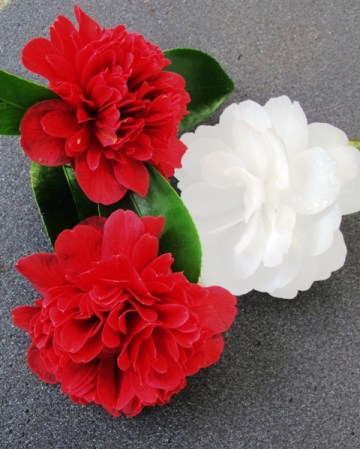
White ‘Early Pearly’ is one of the most beautiful of the sasanquas, while red ‘Takanini’ is a japonica which flowers from early to late in the season.

White ‘Early Pearly’ is one of the most beautiful of the sasanquas, while red ‘Takanini’ is a japonica which flowers from early to late in the season.

There is always something magical about the first flowers and camellias are no exception. They seem fresh and new, heralding the progression of seasons. While the main camellia season is from late winter to mid spring, the earlier varieties bring colour to the late autumn and early winter garden. Early flowers also escape the curse of camellia petal blight which affects mid and later season varieties.

Early camellias fall into three groups: the sasanquas, early flowering species and a few japonica types and hybrid camellias which have an exceptionally long flowering season, continuing from early to late.

We particularly enjoy the charming sasanqua ‘Crimson King’, seen here as a mature shrub with a graceful, arching form.

We particularly enjoy the charming sasanqua ‘Crimson King’, seen here as a mature shrub with a graceful, arching form.


Camellia sasanqua ‘Bonanza’ is a bright spot of colour on a grey day

Camellia sasanqua ‘Bonanza’ is a bright spot of colour on a grey day

The sasanqua camellias originate in Japan and are renowned for being sun tolerant, having smaller leaves and being suitable for clipping to hedges. While some are slow to get going as garden plants, over time they can make graceful, airy, large shrubs. They mass flower and most are scented, in a mossy, slightly sweet sort of way. Their blooms are softer and lack the defined form and substance of most later flowering camellia types. This is an advantage when the flowers fall and break up quickly, rather than leaving a sludge of brown at the base of the plant. While white sasanquas have been particularly popular for some years, they also come in a whole range of pinks to red tones and bi-colours. We prefer the coloured ones for a splash of winter cheer in the garden when there is not a lot else in flower.
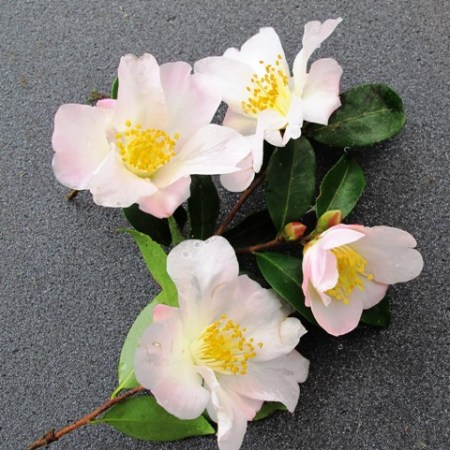
‘Fairy Blush’ is a scented hybrid with a very long flowering season.

‘Fairy Blush’ is a scented hybrid with a very long flowering season.

There are a range of early flowering species but these are unlikely to be found for sale these days. The most useful of them for us, are dainty little C. brevistyla and C. microphylla which offer potential as replacements for buxus hedging and are a great deal prettier than box when in flower.

There are some japonica and hybrid camellias which have remarkably long flowering seasons. In the reds, ‘Takanini’ flowers early, middle and late and should be readily available. Later season blooms develop an unusual purple hue. ‘Roma Red’ is a new release and not as widely available, with its formal flowers in mid red. ‘Mimosa Jury’ is a perfect formal in pretty pink and shows good weather hardiness. ‘Fairy Blush’ is a scented, small flowered pale pink and white miniature bloom with an exceptionally long season. These varieties open their first flowers with the sasanquas but continue long after they have finished and will still have flowers when the late season varieties are on show.

For perfection in a bloom, it is hard to go past the formal shape of Camellia ‘Mimosa Jury’ which has the added benefit of showing good weather tolerance without marking badly.

For perfection in a bloom, it is hard to go past the formal shape of Camellia ‘Mimosa Jury’ which has the added benefit of showing good weather tolerance without marking badly.

GROWING CAMELLIAS IN CONTAINERS
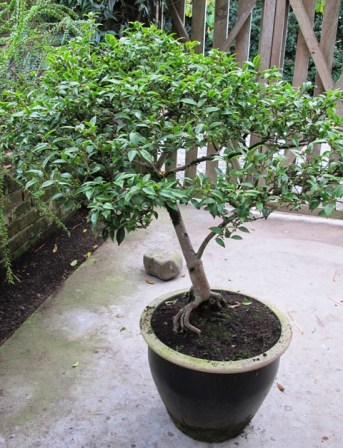
Camellia ‘Itty Bit’ is a dwarf variety that has been kept in a pot here for 20 years

Camellia ‘Itty Bit’ is a dwarf variety that has been kept in a pot here for 20 years

All camellias can be grown for a year or two in a pot but you are fighting nature if you want to keep a larger growing variety long term. Plants need repotting every two years to keep them healthy and lush. Unless you are root pruning and shaping the plant regularly, larger growing varieties will soon get too big to handle.

Do not make the mistake of thinking that small flowers mean the plant is small growing and vice versa. You are better to start with varieties with words like “compact”, “dense growth”, “dwarf”, or “slow growing” in their description. Where heights are given, pick those of 100cm or under (and remember that heights are almost always understated on plant labels).

We have had Camellia minutiflora in a succession of containers for about twelve years. We have a miniature “Itty Bit” which has been featured in a container for at least twenty years. On the other hand, it is clear that “Spring Festival” is going to be too large after only three years.

Rules of thumb are not to drown a small plant in an over large pot, to ensure that the pot has plenty of drainage holes at the base and to use a good quality potting mix with slow release fertiliser. Feed by top dressing after the first year and repot with fresh mix after two years.

WHITE SASANQUA CAMELLIAS
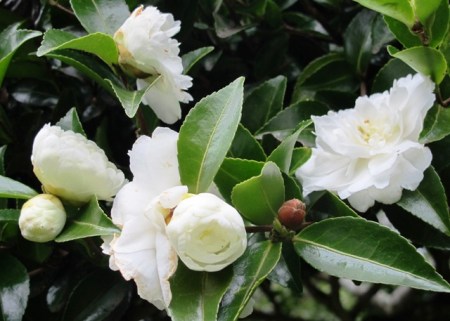
There is a range of sasanqua camellias in white. ‘Silver Dollar’ has a long flowering season and is an excellent option for a more compact hedge.

There is a range of sasanqua camellias in white. ‘Silver Dollar’ has a long flowering season and is an excellent option for a more compact hedge.

While ‘Setsugekka’ is the best known white sasanqua in this country, it is not the only one. For perfection in a sasanqua bloom, it is hard to go past ‘Early Pearly’ with its formality in that shape that resembles a water lily. It is unusual to see a formal flower in sasanquas. ‘Silver Dollar’ is a smaller, bushier growing white with a mass of pompom flowers over a long season. It makes an ideal lower hedge option, able to be clipped to about a metre high. ‘Mine No Yuki’ is a slow growing variety, though will ultimately get large if it is not clipped (ours is at least 3 metres high and spans 4 metres wide, though that is after about 50 years). ‘Weeping Maiden’ grows rapidly to give a quick result with its arching growth and masses of large, single white blooms with golden stamens.

CAMELLIA PETAL BLIGHT
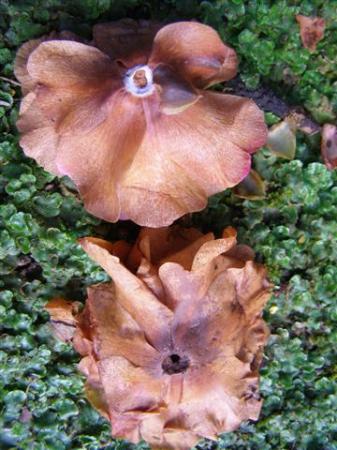
Camellia petal blight shows in the top flower as a distinctive white ring whereas the lower flower has been spoiled by botrytis.

Camellia petal blight shows in the top flower as a distinctive white ring whereas the lower flower has been spoiled by botrytis.

If you have been thinking that your mid season camellia display is not what it used to be, you will be right. Camellia petal blight has taken firm hold and cut the display to a fraction of what it used to be.

We have always had botrytis in New Zealand. It is the fungus that turns camellia flowers dark brown and mushy, especially in long periods of damp weather. Petal blight is different. It turns the flowers to a paler coloured mush, spreading through each bloom rapidly. A brown mark one day can cover most of the flower the following day. If you turn the affected bloom over and remove the calyx (the small cap holding the petals together at the end of the stem), you will see a white fluffy ring, indicating camellia petal blight. If it is dark and greyish, it is botrytis. Unfortunately, blighted flowers often hang on the bush rather than falling cleanly. Petal blight is a great deal more rampant than botrytis.

There is no cure and it will take many years before we see resistant varieties on the market. It does not usually take hold before late June or July, so the early flowering camellias can get through with their mass display unaffected.
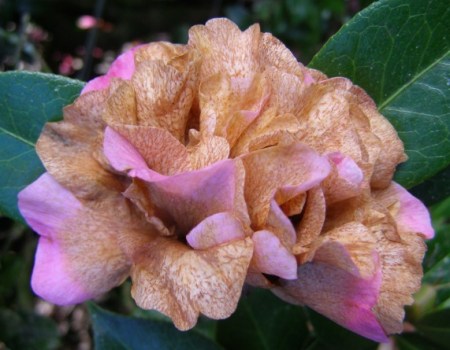
The ugly face of camellia petal blight which affects mid and later season blooms.
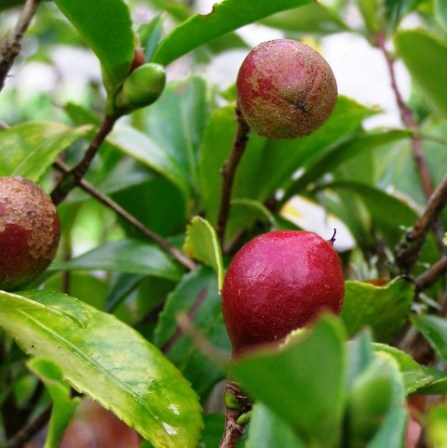
The ugly face of camellia petal blight which affects mid and later season blooms.

Camellia species can be grown from seed. There will be some seedling variation in the plants but they are usually close enough on appearance for hedging purposes. These are last year’s red seed pods on C. microphylla.

Camellia species can be grown from seed. There will be some seedling variation in the plants but they are usually close enough on appearance for hedging purposes. These are last year’s red seed pods on C. microphylla.

COMPACT CAMELLIA HEDGING
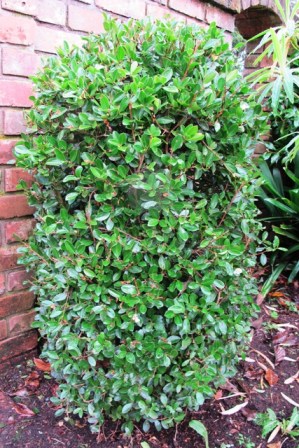
Camellia species brevistyla and microphylla offer an option as buxus hedging replacement and can be grown from seed. This plant is C. brevistyla.

Camellia species brevistyla and microphylla offer an option as buxus hedging replacement and can be grown from seed. This plant is C. brevistyla.

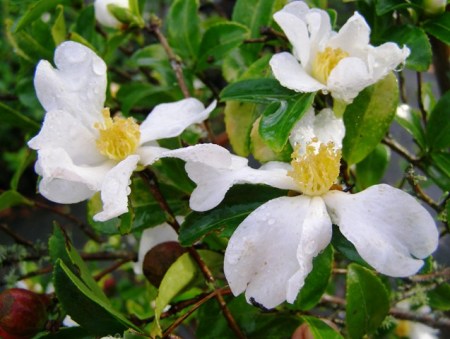
Simply the best camellias we have found as a potential replacement for buxus hedging are C. brevistyla and C. microphylla. These two species are very hard to tell apart and must be closely related. Their leaves are a little larger than buxus but they clip very tidily and are a good dark green. Both species have pure white single flowers very early in the season. C. brevistyla is a little slower growing and smaller but its flowering is over quickly. We have built up C. microphylla as replacement hedging for our own garden.

These species may be hard to source but if you can find a parent plant, they can be raised easily from seed. Both set seed freely. Ask at your botanic gardens. Both species were sold in the past by Camellia Haven in Papakura.

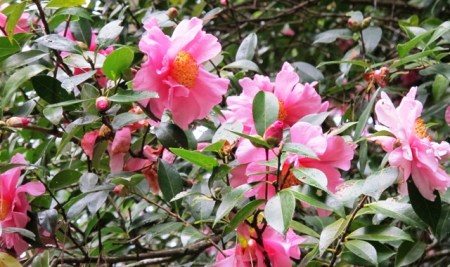
There is nothing special about the individual blooms on Camellia sasanqua ‘Showgirl’, but at the time when it flowers, there is nothing to rival its showiness.
There is nothing special about the individual blooms on Camellia sasanqua ‘Showgirl’, but at the time when it flowers, there is nothing to rival its showiness.

The dainty flowers on both C. microphylla and C. brevistyla are almost identical but last longer on the former, seen here.
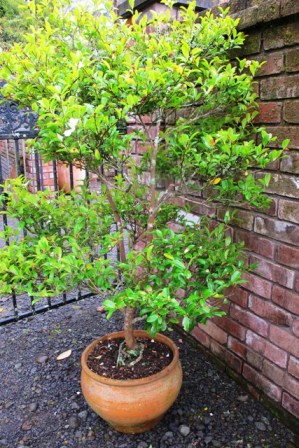
The dainty flowers on both C. microphylla and C. brevistyla are almost identical but last longer on the former, seen here.

C. microphylla has been kept clipped and shaped in containers for at least 12 years.

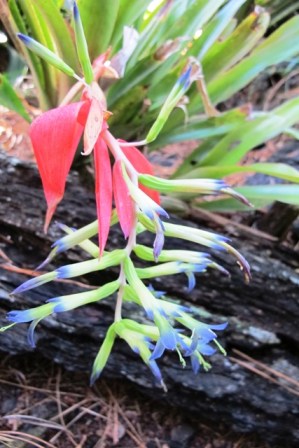
C. microphylla has been kept clipped and shaped in containers for at least 12 years.