Outdoor Classroom: digging out large, clumping plants.

1) Huge, clumping plants which have outgrown their space can be a challenge because it is not always easy to know where to start and they have to be dug out, as opposed to cutting off woody plants. This is an unusual plant called Curculigo recurvata which has grown enormous but many home gardeners may have large clumps of flax or astelia. (The dog is Zephyr.)

2) A reasonably fit and strong person is necessary, armed with a sharp spade. Don’t try it with a blunt spade because it requires a combination of cutting and digging. Sometimes an axe is helpful to cut through big masses of crown. (The suitably strong person is our Lloyd.)

3) Sort out if you have any underground wires or pipes before you start. We didn’t this time. Fortunately the pipe supplying water to our house was alkathene so it was easy to repair.

4) Clear a space around the plant. You need room to move so lift anything precious close by. Starting from the outside perimeter of the clump, take off the sections piece by piece. Don’t try and dig the whole plant at once.
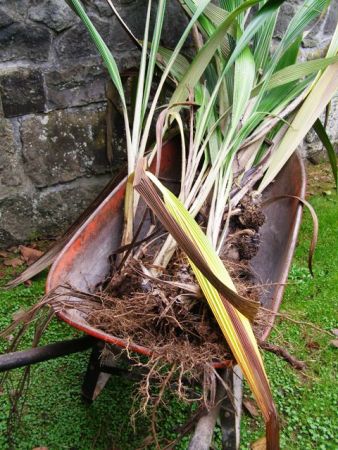
5) Taking it off in sections makes the process manageable. Because this is a relatively rare plant, we will be using some divisions elsewhere in the garden and potting some for sale.

6) We left three small clumps to grow again in the original position. If you are removing the entire plant, the critical part is to get all the foliage and the growth shoots from the base of the clump cut off and removed. It doesn’t usually matter if some of the fibrous roots remain because few plants will grow away again from severed roots. Leaves such as flax or astelia take a very long time to rot down and don’t compost well so we chew them up in the mulcher. You may need to take them for green waste recycling or put them in a discreet place to rot down over the next few years.
Tikorangi Notes: Friday 20 April, 2012

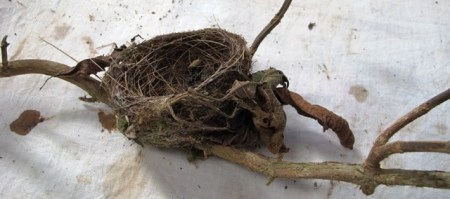
The perfection of the fantail nest

The perfection of the fantail nest

Latest Posts:
1) Lagerfeld Rules – what the fashion maestro might say, should he ever turn his attention to gardening.
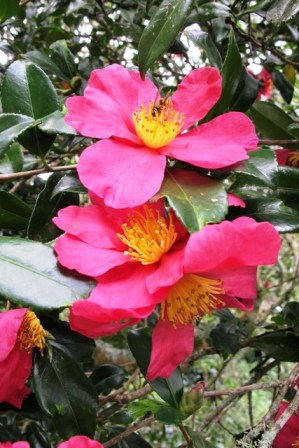
2) Despite the tendency in New Zealand to think that there is only one sasanqua camellia and that is the white Setsugekka, there are others and even some which are not white at all. Crimson King in Plant Collector this week.
3) Grow it Yourself – kumara this week. You have to get your timing right where we live because it needs maximum warmth over a relatively long period to get a good crop but it can be done.

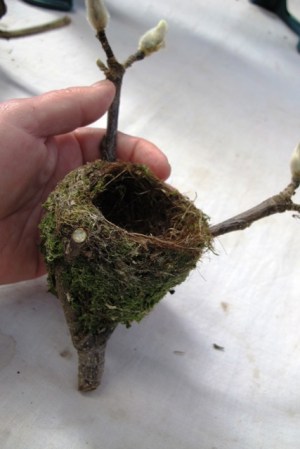
And a second fantail nest, crafted in the fork of a magnolia stem

And a second fantail nest, crafted in the fork of a magnolia stem

Plant Collector: Sasanqua camellia Crimson King

Crimson King - harbinger of autumn

Crimson King - harbinger of autumn


Crimson King forms a graceful, open shrub when mature

Crimson King forms a graceful, open shrub when mature

Crimson King heralds the arrival of autumn. It is a sasanqua, one of the autumn flowering camellia family from Japan. Too many people seem to think that sasanqua is synonymous with Setsugekka (how clichéd is the Setsugekka screen planting?) and only comes in white. In fact there are a relatively large number of family members, including Crimson King. It has the usual sasanqua attributes of finer foliage and a graceful, open habit of growth as it matures. In addition to that, the exceptionally long flowering season means it will last well in winter.

Single flowers have just one row of petals and exposed yellow stamens in the centre. The birds and the bees, and indeed the butterflies, need these stamens exposed to be able to feed from the flower. Big full forms or sterile formal flowers are not a source of pollen and nectar. Most sasanquas lack the highly refined flower forms so prized in japonica camellias but single flowers like this shatter and dissipate without ever leaving a sludgy mess below. There is also a simple charm in such a simple flower.

Sasanquas are renowned for being one of the most sun and wind tolerant types of camellias. They also flower early enough in the season to avoid the dreaded camellia petal blight. Overseas reports say that they can suffer from this dreaded fungal ailment but we have never seen it in our sasanquas here. Crimson King has a pleasant scent if you stick your nose right in the flower but I think that the faint waft of fragrance in camellias is rather over-hyped.

First published in the Waikato Times and reproduced here with their permission.

Grow it yourself: kumara

The world has many different types of sweet potato but the one we have made our own in New Zealand is the kumara. Had we grown them this year, we would be looking to harvest around now. But we didn’t so we will be buying them instead. Kumara are a warm climate crop so the further south and the further inland you are, the more problematic they are to get through. They need somewhere between five and six months of warm weather (preferably in the low 20s) to set plenty of tubers. You can help by planting in black plastic and using cloches early in the season. They are easier to grow well if you are right on the coast and gardening in sandy soils which heat up. However they don’t want to bake and dry out in midsummer.

Kumara will sprout like potatoes over winter so you can cover the tuber with soil or straw in early spring. That tuber will put out many shoots which can be pulled off and planted out when big enough and when roots have started to form. They don’t like any frost at all, so in inland or cooler areas, they can be started in pots for planting out in mid November. Plant them about 40cm apart in the hottest and sunniest spot in your garden and watch them r-u-n. It is easier to understand when you know they are close relatives of convolvulus. Besides keeping a little water up to them all summer, the other care they need is to have their wayward vines lifted every week or so, or trained over a wall or path. If you don’t do this, the vines start to send roots down along their length and a plant which is using its energy to create a whole lot of new roots is not developing good tubers. Harvest when the foliage turns yellow and store in dry conditions about room temperature.

First published in the Waikato Times and reprinted here with their permission.

Tikorangi Notes: Friday April 13, 2012.

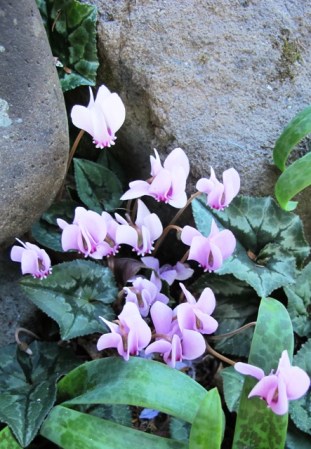
The Cyclamen hederafolium are a delight

The Cyclamen hederafolium are a delight

Latest Posts:

1) Those who shun all of the vast oxalis family because of the abominable habits of a few miss out on the autumn delights like Oxalis massoniana.

2) Raised beds and to dig or not to dig – that is the question. It seems these days that the rage is for raised beds, irrespective of whether they are needed.

3) GIY broad beans – we are very partial to this crop in our household.

4) Common wisdom is that you should only grow plants well suited to your area and conditions but Real Gardeners know this is a fallacy. It is wonderfully rewarding to succeed with marginal plants. My latest garden diary from Weekend Gardener magazine.

5) Secrets of a Lazy French Cook – nothing whatever to do with gardening, this one. But one of my other activities is book reviewing – mostly recipe books and children’s books (in addition to the gardening ones I receive.) This one is an entertaining read and a handy starting point for classic French dishes.

There has not been a whole lot of gardening going on here in the last week or two – too much energy and time required to renovate our one and only rental house on our property across the road. I think the role of property owner and landlord is much over-rated. But I did finally get to visit New Plymouth’s much loved and awarded new bridge on its coastal walkway. And it is a sensation, evoking the rolling waves so close by. It is wonderful to see a bridge that goes way beyond utilitarian and is dedicated entirely to pedestrians and cyclists. On a gloriously sunny and calm autumn day, it was a magical scene which left me in awe at the beauty of the district where we live.