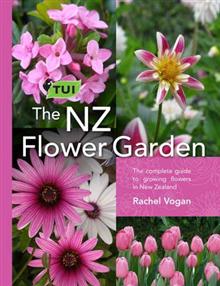
The Tui NZ Flower Garden by Rachel Vogan

Tui NZ Flower GardenSigh. Another joint venture infomercial from Penguin Books and Tui Garden Products whereby you, the customer, get to pay about $50 to be told what Tui products you need to buy in order to grow lovely flowers like the ones in the photographs. That is about it in a nutshell. On the plus side, this book does at least have an index and, hallelujah, it actually gives the botanical names in small print of the main plant families. It is just a shame that neither author nor editor understand the conventions of plant nomenclature. Common nouns like daffodil, magnolia, lily and bluebell do not have a capital letter every time they are used.

The bulk of the book is alphabetical listings of flowering plants (trees, shrubs, climbers, bulbs, perennials, annuals – yes, apparently you can cover the greater part of the plant kingdom in just one book) and it appears completely random as to whether the plant will be listed under its botanical name or its common name. Recommended varieties are equally random.

I am afraid the author lost us when we read the page on magnolias. It was bad enough to mislabel a photo of our Magnolia Vulcan as Genie, let alone misspell our famed Magnolia Iolanthe as Lolanthe but when we got to read that the evergreen Magnolia Little Gem is a small growing form of the aforementioned deciduous Lolanthe, we threw our hands up in despair. And we have actually managed to grow quite a few magnolias here without planting them into Tui Garden Mix and fertilising them each year with Novatec.

When the recommendation came that you plant anigozanthus (kangaroo paws – Australian plant that thrives in marginal desert conditions) with Saturaid, we worried about the advocacy for routine use of a soil wetting agent. There is no faster way to kill a woody plant or a dry loving plant in humid areas with high rainfall.

By the way, Penguin, it is time you dispensed with the auto spellchecker. The author of this book winning prizes for exhibiting her Gladys rivals a previous author counselling readers to throw out their Algarve. The author may have been using the colloquial term of gladdies, but even that is inappropriate for the text on page 164 and 165 where poor Gladys has her name taken in vain repeatedly. Gladiolus stands for one, gladioli for more than one. Gladdie is the vernacular, not the common name. Gladys is somebody’s grandmother.

Otherwise, it is a typical Penguin/Tui book which sits alongside its three sister volumes on vegetables, kid’s gardening and the infamous fruit one. I am hoping they have called it a day and don’t plan to inflict further volumes (maybe on organics or natives?) on the buying public.

The Tui NZ Flower Garden by Rachel Vogan (Penguin; ISBN:978 014 356553 6) reviewed by Abbie Jury.

First published in the Waikato Times and reproduced here with their permission.

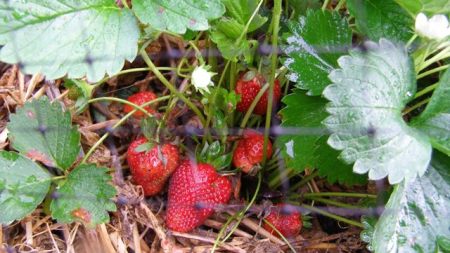
A mast year for strawberries in the quest for semi self sufficiency here

It appears to be a mast year for strawberries here. That is a term for when plants produce a significant abundance of fruit. In nature this can be important. Apparently kakapo need rimu to have a mast year in order to breed. But here it just means we are having a bumper strawberry harvest. Not wanting to overstate the case, but they are coming in by the bowl full.

This leads me to the issue of self sufficiency and the observation that if you want to be self sufficient, you have to accept that there will be mast years and there will be famine years for some crops. At least we have the supermarket option these days so the famine stakes are not as high. I have noticed that self sufficiency has become trendy again, often espoused by people who claim that it is terribly easy and achievable in very small areas, taking relatively little time. All I can say is that self sufficiency must mean different things to different people and varying levels of home provision are being hailed as self sufficiency.

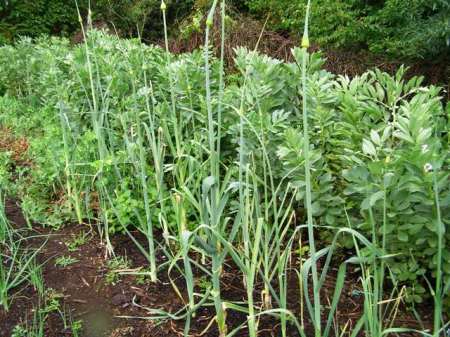
We describe ourselves as relatively self sufficient in fruit and vegetables. We produce enough fruit for high individual consumption all year and only buy additional fruit for variation in the diet and seasonal treats which cannot be grown successfully in our area. We generally produce sufficient vegetables but there are times we have to supplement. The husband felt such a failure when I had to buy a bag of potatoes last week because we had run out of old ones and we had eaten the first crop of early ones already. The onion harvest was poor this year so we have had to buy. Purists would maybe go without onions for the year.

But we are nowhere near self sufficient if you take in grains and animal protein. We don’t even attempt to produce our own grains. While we raise our own beef, we haven’t done our own poultry for years. To be genuinely self sufficient, you would need to factor in sufficient grain cropping to be able to feed the poultry as well.

Nevertheless, it is astonishing quite how much area gets taken up in providing sufficient to keep us going at the level we like for just the two of us and how much time it takes on the part of He Who Produces it All (aka Mark). Fortunately he enjoys doing it. If it was left to me, it would be a poor harvest of basil and lettuces at best because I would rather grow flowers. Mark has long scoffed at suggestions that you can achieve self sufficiency in a tiny plot and in dinky raised beds so we returned to The Oracle to see how much land she thought was needed. The Oracle is Kay Baxter, founder of the Koanga Institute. She only preaches what she practices and she has close to 40 years of experience in food production, organics and self sufficiency. We have the utmost respect for her opinion. According to her: “To grow all your veges and grains, you will need 100 square metres per person.” Yes that does include grains, which not many of us produce, but it does not include fruit. That is a hundred square metres of healthy soils in full sun with good shelter – per person. For a family of five – five plots of 10 metres by 10 metres. There are reasons why modern society has turned to the industrialisation of food production and one is the economies of scale.

If you want to produce your food on organic principles, you may need an even greater area. Generally speaking, organic production relies on producing crops at optimum times and not pushing the boundaries either end of the season (because that is when pests and diseases will strike more readily). You also need to be meticulous on crop rotation and soil management because you don’t have the fall back position of a chemical arsenal to rectify problems.

Factor in time as well. Time every week, not just when the gardening bug strikes in spring. To get reliable production in the vegetable garden requires constant vigilance, planning and regular work. If we costed in our time, it would be cheaper for most of us to buy all our food.

For us, it is a measure of a very high standard of living that we can produce most of our fruit and vegetable requirements. It is not a point of principle so much as a measure of quality – quality of both produce and life. When our lives were more frenetic and we had the demands of running a seven day business, there was not the luxury of time to produce food which could be bought cheaper and more conveniently from the local shops. There can be luxury in simplicity. Just don’t believe the current advice that you, too, can be self sufficient in fruit and veg in next to no time with minimal area and effort and it is all wonderfully simple. Ask such proponents again in twenty years time and you may be told something very different.

First published in the Waikato Times and reproduced here with their permission.

Grow it Yourself: Rhubarb

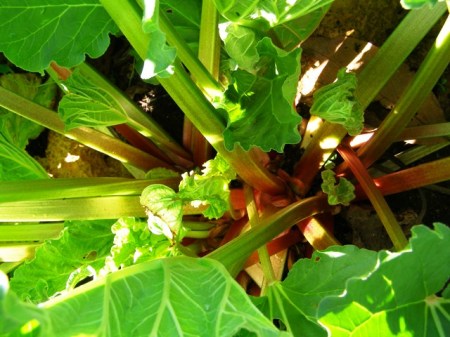
Rhubarb is one of the few long term plants in the vegetable garden. A clump can last anything up to 10 years, though if you are a rhubarb fan, you are more likely to be renewing your patch more regularly than that to ensure uninterrupted supply. Think of it like a clumping perennial – it grows from a crown below the surface of the ground and makes its own offshoots. Like most perennials, it likes to be planted in ground that has been well dug over with plenty of humus or compost added in. Beyond that, it does not want wet feet in winter (which will kill it) and it is fine in half to full sun. Just feed it or mulch with compost once a year – spring is a good time. An established plant is going to take anything up to a round metre is space (that is, as opposed to a square metre).

Usually the pinker the stem, the nicer they are to eat but apparently there are varieties that stay green so you may be waiting forever with them. The leaves and roots are poisonous because they contain oxalic acid so you do not want to eat them or to eat the closest stem parts. However it is an urban myth that it is not safe to put them in the compost heap. I have yet to meet anyone who eats their compost and the natural toxins break down in the composting process.

It is easy to grow rhubarb but it is only worth the effort if you like its taste and are prepared to cook with it. I like to add a little gelatine to my stewed rhubarb, being a jelly fan. Adding a little grated fresh ginger while cooking takes it up more than one notch and I found the children ate it quite happily when it was cooked with some sago added (check out Alison Holst’s recipes).

First published in the Waikato Times and reproduced here with their permission.

Tikorangi Notes: Friday 2 December, 2011

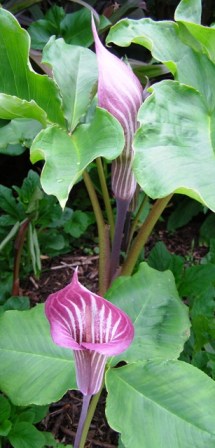
The next series of Mark's arisaema hybrids is coming into flower

The next series of Mark's arisaema hybrids is coming into flower

Latest Posts:
1) A love/hate relationship with roses – Abbie’s column.
2) My fortnightly garden diary from the latest issue of the Weekend Gardener.
3) Continuing the rose theme, Plant Collector is on Roseraie de l’Hay.
4) Grow it Yourself is on capsicums this week (though apparently we will not be growing them ourselves this year).
5) Fruit by Mark Diacon (British gardeners are apparently sufficiently intelligent or adequately educated and they are allowed an index in a gardening reference book).

Tikorangi Notes: Friday 2 December, 2011
The second wave of Mark’s arisaema hybrids are coming into flower. These are visibly candidissimum hybrids but with colour (and stripes). In our conditions, we struggle with many of the species but hybrids add a new vigour. They may not appeal to the purist and the plant collector, but they will appeal to gardeners! However, the hybrid arisaema have not been offered for sale at all, and at this stage we have no plans to do so.

We have been delighted to see our Cordyline Red Fountain honoured with an award in Japan this week (it was Australia a couple of weeks ago).

And I have been having some fun on the website of our national museum with the DIY Monet facility – turning a photo into a Monet lookalike (of sorts).

The DIY Monet image, courtesy of the Te Papa website

The DIY Monet image, courtesy of the Te Papa website

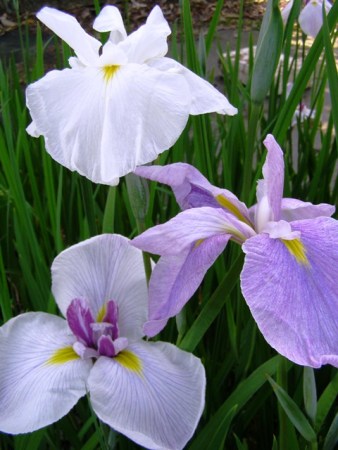
Coming up next week: the Higo irises

Coming up next week: the Higo irises

A love-hate relationship with roses

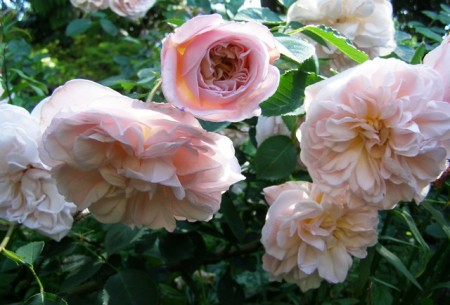
There is something undeniably romantic about Rosa Cymbeline

There is something undeniably romantic about Rosa Cymbeline

I have a bit of an ambivalent attitude to roses. On the one hand, there are only two types of flowers I consistently cut and bring indoors – roses and auratum lilies. There is something wonderfully opulent about a vase full of fragrant roses. Most roses rank pretty high up the scale for flower power. In other words, in reasonable conditions, they give a high number of flowers over a good length of time, given the size of the plant. Roses have an air of romance and promise. Well, most roses do. We will ignore the naff patio standards and freaky types. Just as the complete garden has a productive kitchen garden, so should it have at least some roses – in our opinion at least.

On the other hand… well. Roses are grown for the lovely flowers. Very few bushes are things of beauty. They harbour more pests and diseases than any other plant I know. They are probably second only to lawns in being the cause of home gardeners pouring a whole range of nasties into the environment. I hate their thorns and resent splinters and gouges during pruning. I am always nervous of wounds since being told by a nurse how she had to special a patient who caught a thorn in her elbow and it subsequently turned extremely septic. Disposing of prunings is a problem because they have to be burned or go to landfill. They get black spot and have few leaves after about March. They positively lure aphids. Climbing roses are so rampant that it becomes a major battle to contain them. The year I spent an entire afternoon pruning and tying in one plant of Albertine was its last. I decided that the resulting reward was not worth that amount of effort. The list of negatives is extensive.

The bottom line is that, despite all their disadvantages, roses remain a big seller so clearly the general opinion is that they still justify their place in the garden because of their lovely blooms. And I haven’t taken all mine out and put them on the burning heap because I still love them. I have taken some out, though and another is destined to go soon. It has black spot and yellow leaves already.

The issue here is that we don’t spray our roses. Ever. I don’t spray anything and the husband is adamant that he won’t spray roses and I should just pull out the non performers. Despite having grown up as the Chemical Generation (would that be Gen C?), we have made a conscious decision to try and garden with a greatly reduced spraying regime. There are only a few key plants that get sprayed here. Picea albertiana conica is one – the red spiders will take it out otherwise. For the rest, if they can’t survive and thrive in hospitable conditions, planted well and fed regularly with compost, then they aren’t worth keeping.

In times gone by, the classic rose garden tended to be an area of scorched earth with no build up of leaf litter below which stopped diseases from wintering over. Plants were spaced well apart, usually only one of each variety and predominantly hybrid teas, so there was plenty of air movement which reduces problems with mildew. And it was easy to spray. It is a pretty dated look and really only applicable to a picking garden.

The modern rose garden is more likely to go one of two ways. Either the roses get bedded into what is essentially a cottage garden mixed border, filled with a froth of perennials, annuals and small shrubs. That is what I do, in the hope that as the roses defoliate through the season, the other plants will hide the shortcomings.
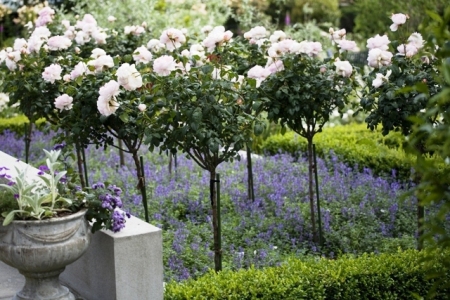
A modern take on the rose garden at La Rosaleda in New Plymouth (photo by Jane Dove Juneau)

A modern take on the rose garden at La Rosaleda in New Plymouth (photo by Jane Dove Juneau)

Alternatively, one can go the formal path, as at Coleen Peri’s garden, La Rosaleda, where she has planted a grid of matched Sharifa Asma standard roses with a solid groundcover of catmint or nepeta beneath. To carry this look off, you have to maintain your roses in the highest health or they will look unloved, uncared for and considerably more of an eyesore than my defoliated specimens in a mixed border.

What annoys me is that it has taken so long for rose breeders and rose nurseries to heed the call for disease resistant varieties. The Flower Carpets led the way and I have to say that while they are not picking roses and they lack some of the romance of old roses, let alone the fragrance, the white and coral variants of Flower Carpet are two of the very best performers in our garden. I am told the new amber variety is particularly good too. But aside from that series, the trialling and selection of roses based on the criterion of being able to grow them in the home garden without spraying appears to have moved at a snail’s pace. Maybe the clamour from the consumer has simply not been loud enough yet? There is a pretty quick turnaround on rose breeding, certainly compared to the slow process that comes with magnolias, camellias and similar woody trees and shrubs.

Two final comments: firstly, if you are not going to spray, you have to be thorough with pruning and feeding to promote health. We feed through regular applications of compost mulch. I do a textbook hard prune in winter and I constantly summer prune lightly to remove spent stems, weak growth and diseased areas. That repeated pruning encourages the rose to keep pushing out fresh leaf buds.

Secondly, we were told by an international rose breeder in Holland that perfume and longevity as a cut flower are incompatible. That is why many florists’ roses lack scent. They are bred for vase life. Nobody has ever confirmed that for us, but we assume he knew what he was talking about, it being his speciality.
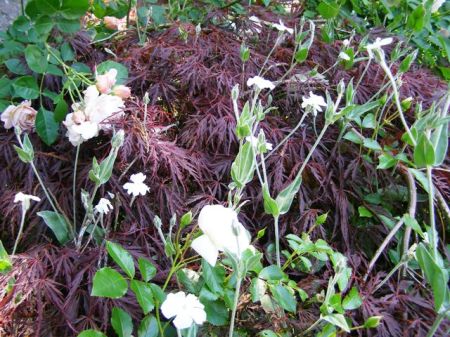
I grow my roses in a mixed border situation - with the hope that the other plants will disguise the defects of the unsprayed rose bushes

I grow my roses in a mixed border situation - with the hope that the other plants will disguise the defects of the unsprayed rose bushes

First published in the Waikato Times and reproduced here with their permission.