The constructions at Paloma

First printed in the Weekend Gardener issue 322 and reproduced here with their permission.

Clive Higgie and his slightly surprising small companion, the irrepressible Pablo.

Clive Higgie and his slightly surprising small companion, the irrepressible Pablo.

Over the years, Clive and Nicki Higgie have amassed one of this country’s foremost collections of plants and turned them into a remarkable garden at Fordell, near Wanganui. With his farming background, Clive is both practical and innovative and enjoys turning his hand to both construction and sculptural installations for the garden. He is not afraid to mix and match different styles and the results can be both surprising and original.

Some of Clive’s work is edgy, even flamboyant, and pushes boundaries in unexpected ways. A plain board fence at the entrance has been transformed into a statement by using witty wall writing – it is rather too whimsical and well executed to be described as graffiti.
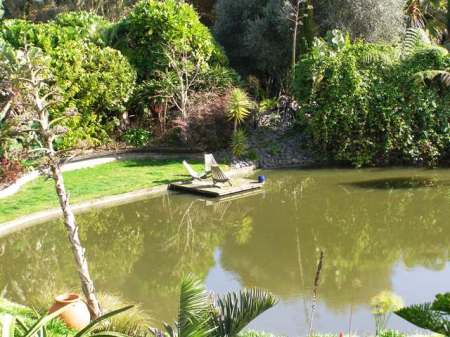
The seating deck built out over the large pond area is also a little edgy. There is something a little insecure about sitting in such an exposed position even if the water is shallow. Clive says he made a few design mistakes on this small platform, particularly making it so low that leaves accumulate below the deck. Clive also constructs the seats. He calls them his Barebum Chairs, which I originally misread as Ba-ree/-bum.
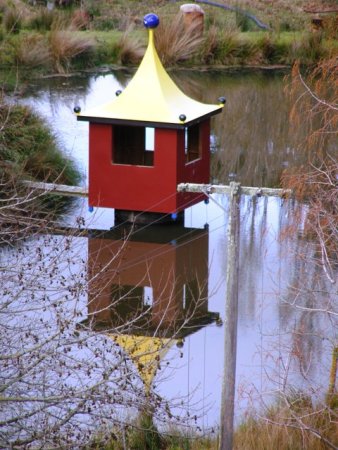
The boathouse is a work in progress. Showing typical ingenuity, Clive has used a concrete water tank as foundations for the structure. The roof is made from fibreglass matting coated with acrylic while the balls are ceramic.


The Iona Cross is distinctly monumental construction made by Clive, standing nearly two and a half metres tall. It is concrete and was poured flat before being moved to its location. By contrast, the Polynesian influenced vertical panel was boxed up and poured in its final location. These are just two of a series of installations surrounding his earth labyrinth which reference the ancestry of Clive and Nicki’s first grandchild.
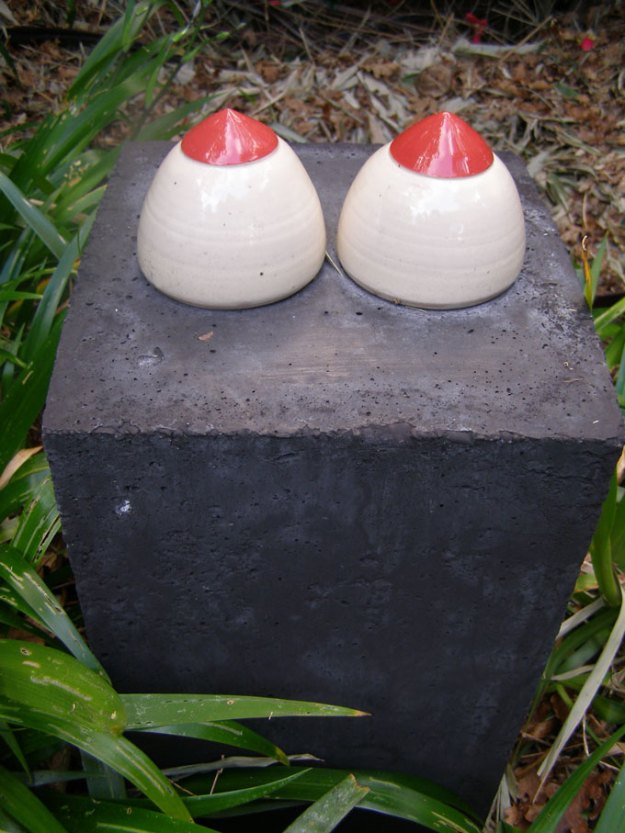
Paloma Six

Clive is pleased with his recent constructions of simple concrete plinths. “I add a bit of oxide to colour the concrete and to stop it being that glaring white of fresh concrete. I really like the plinths. Sometimes a small vase or sculpture can get lost in a garden setting but the plinths make them stand out.”
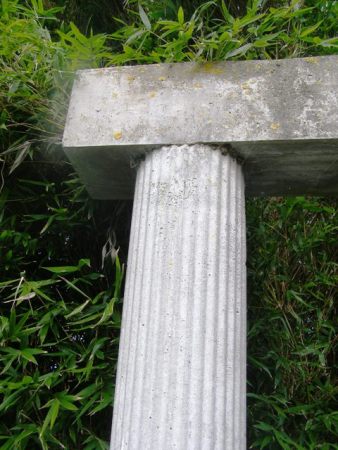
The ribbed pillars have a clear debt to ancient times but have been created using labour saving modern techniques. The mould was simply a product called baby iron (small profile corrugated iron) bent in a circle and filled with concrete. These have reinforcing rods down the centre and are boxed up and poured in their final location.

Paloma orange

Elsewhere in the garden, Clive has made extensive use of pillars constructed from terracotta field tiles. He first saw the technique used at Tupare in New Plymouth. He explains: “The pipes are irregular so I mortared them together before filling them with concrete. The mortar joins give structural strength. They didn’t do that at Tupare and many of their pipes had cracked and split.”
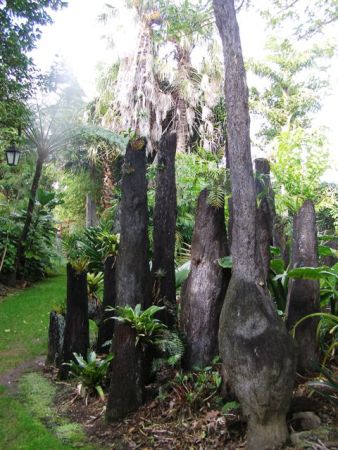
Not all construction is in concrete. Clive used ponga longs of irregular shapes and sizes to build a simple stumpery installation. The pongas vary from waist height to around 3 metres.
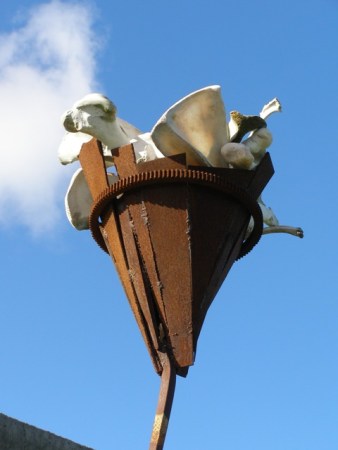
In his new Garden of Death, his friend, sculptor Steuart Welch, made the hanging crucibles which he calls Dracula pots. Clive has filled them with bleached animal skulls to complement the theme of the garden which is based around the social history of poisonous plants.
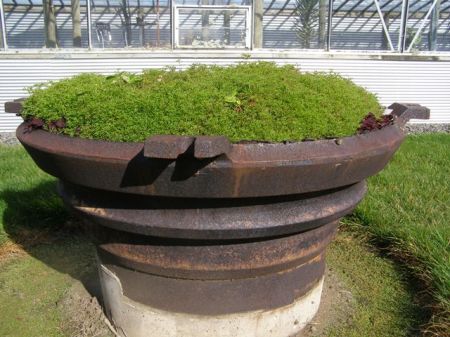
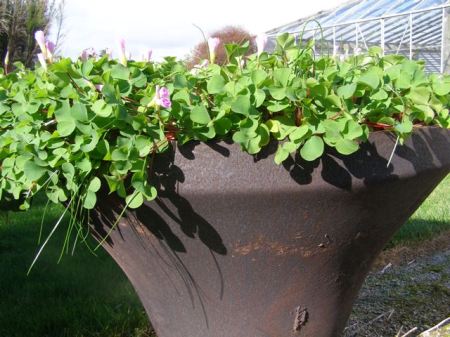
The attractive large planters came from a quarry stone crusher and, originally, the smooth sided bowl fitted inside the ribbed one, breaking large stones down to form road gravel. Being magnesium steel, they were of no scrap value but now contain large plantings of ornamental oxalis.
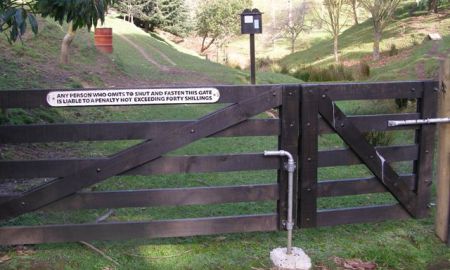
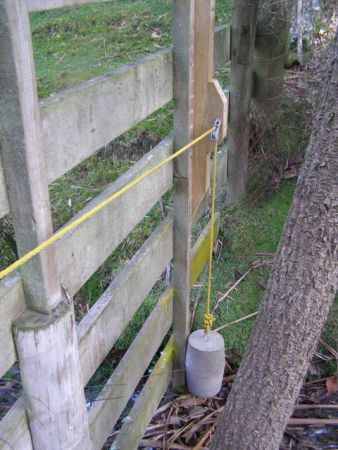
Clive is pleased with his simple solution for the side gate leading from the lower garden to the Matchless Arboretum. Because sheep graze beneath the trees, it is important that the gate be kept closed. A simple system of a counterweight pulls it shut behind visitors.

Paloma Gardens are open to the public all year round. For further information, check out their website: http://www.paloma.co.nz, email clive.nicki@paloma.co.nz or phone 06 342 7857 For my earlier story on Paloma, check Breaking the Mould of the Modern New Zealand Garden – the Dreams at Paloma.

A Sign of the Times

We are amused. We have received a letter from the Taranaki Rhododendron Group advising us that as they no longer have competitive displays, the committee is looking at what to do with the trophies. There are, apparently, three options. The first is to return them to the donors or their families. The second is to donate them to the local museum (in which case, please would we supply full details of the horticultural achievements of the donor). Should the museum not want them, the third option is for the committee to decide on their disposal.

Quite some time ago, Mark went all out one year with exhibition blooms and, as far as we can recall, he won all but one of the trophies. In due course, a large carton arrived here with the engraved trophies for us to hold for the year. They were fairly extensive. Besides the usual cluster of silver cups, there was a very large barometer which did not work, a large crystal vase which made up for in size what it lacked in style, the odd tray or two, maybe a shield and a fairly remarkable, large wooden piece carved out of rhododendron wood in a freeform fashion, adorned with handpainted clematis. Maybe it also had Mount Taranaki on it. It was certainly a curious mixture of European folk art and traditional Maori carving designed to be the centrepiece of any room in which it was placed. I am sorry to admit that these trophies spent the whole year of our possession living, unseen, in their carton. I am sure it fell to me to clean the silverware before they were returned for the following year’s awards.

I banned Mark from ever entering again. Though, in his defence, he had already decided that it was not fair for amateur members to be competing against professionals and it would be poor form for him to try and repeat his successful performance.

Fortunately the silver cup which Felix donated (for the best maddenii hybrid bloom) is of modest proportions and reasonably inoffensive. We have advised the Rhododendron Group that it seems most appropriate to return it to us as part of our family history. I think we can spare the local museum from the problem of what to do with the Felix Jury cup.

Tikorangi Notes: August 27, 2011

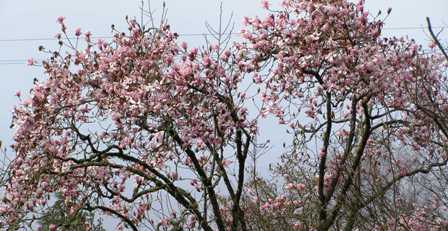
Magnolia sargentiana robusta came through last week's winter unscathed

Magnolia sargentiana robusta came through last week's winter unscathed

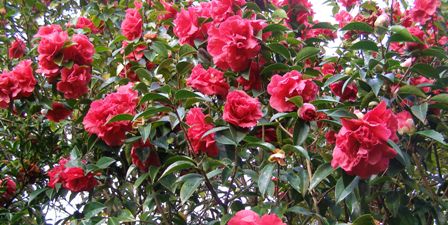
The reticulata camellias are in full bloom

The reticulata camellias are in full bloom


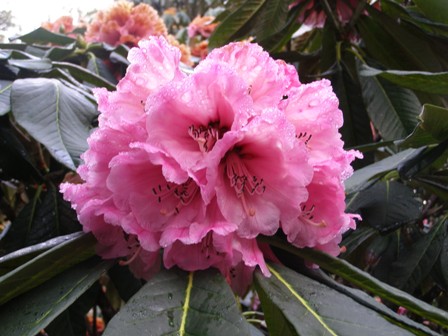
R. protistum var. giganteum "Pukeiti" - with the frosted version just visible behind

R. protistum var. giganteum "Pukeiti" - with the frosted version just visible behind

Tikorangi notes: August 27, 2011
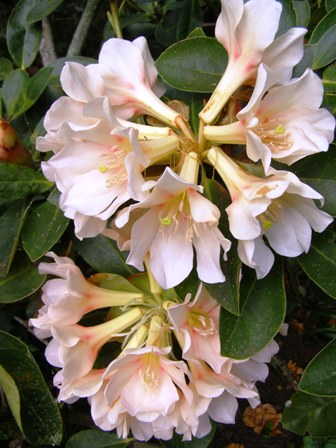
Last week it snowed, followed by a frost in the coldest few days we can ever remember. This week it is indubitably spring. Certainly there is damage in the garden – many of the early magnolias and michelias did not appreciate it at all, though M. sargentiana robusta appears to have come through unscathed. The same cannot be said of the big-leafed rhododendrons. I was searching to find an undamaged bloom and Mark felt that one of my shots of an R. grande hybrid showed we could rename it as Hokey Pokey (a reference to a favourite NZ icecream which has streaks of butterscotch coloured candy throughout). The big leafs have gone the same way as Magnolia Lanarth – 2011 may be the least memorable flowering ever. The campanulata cherries are alive with native tui, the reticulata camellias are in peak flower, the lovely daffodils continue to flower in succession and, just to prove that even in frost and snow, our climate can’t be all that bad, a vireya rhododendron, R. konori, is flowering beautifully and completely untouched in the rose garden area.
The beautiful, fragrant and touchy vireya R. konori flowers on regardless

The beautiful, fragrant and touchy vireya R. konori flowers on regardless


Mark has been poddling about with his calanthe orchids while I am grooming the rockery. Winter pruning is complete (fruit trees, hydrangeas, roses, wisterias and the like). Now we are laying mulch on many of the garden beds – we favour our home made compost for this.
Our first garden visitors for the season have started arriving but if you want to see the magnolias at their peak this year, hold off for another week or two to allow more to come out. That said, Magnolias Felix Jury and Black Tulip are recovering well from the earlier ravages by the weather and there are some lovely flowers showing now.
Magnolia Black Tulip - for those who prefer a more understated size of flower

Magnolia Black Tulip - for those who prefer a more understated size of flower

Buxus alternatives for garden hedges

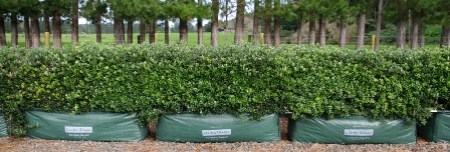
With buxus blight cutting a swathe through many gardens, it is clear the problem is here to stay. We set out to review some of the alternative plant options. The advantages of box for low hedging include:

• only needs to be trimmed once or possibly twice a year
• has a very small leaf which means that trimming with hedge clippers doesn’t leave unsightly half leaves visible
• good dark green colour
• sprouts from bare wood if trimmed hard
• so easy to root from cutting that it is cheap to buy and easy for the home gardener to propagate more plants
• will also tolerate a certain amount of shade

We have yet to find a proven like-for-like replacement, only plants that fit some of the criteria.

1) Lonicera nitida – ticks all the right boxes bar one, but that is an important one. Good dark colour, tiny leaves, easy to propagate, cheap… but it grows so rapidly that you will have to clip frequently. This may be as much as once a month in the growing season. It will get very twiggy and leggy if you don’t keep it tightly clipped. The same goes for teucrium which needs even more clipping and isn’t even green, though it does make an attractive hedge.

2) Myrtus ugni, usually referred to as the NZ cranberry. Little leaves, easy to strike from cutting, easy to train and can be kept low, delicious fruit but it develops bare patches. It is really only an option for the edible garden area and it won’t make a nice tidy little hedge that resembles buxus. It doesn’t like shade and can be thrip-prone.

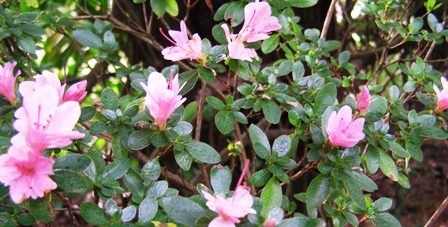
Kurume and Gumpo azaleas - there are also white flowered options for those with refined tastes

Kurume and Gumpo azaleas - there are also white flowered options for those with refined tastes

3) Gumpo or Kurume azaleas – these are the small leafed, low growing, evergreen azaleas. Good foliage, clip well, can be kept small though the leaves are larger than buxus and they have excellent shade tolerance. They flower, which some gardeners may not want. Gumpos tend to have larger flowers than the Kurumes. The big disadvantages are the expense per plant which will be prohibitive for many gardeners and the difficulty in sourcing large enough runs of the same variety. Some will get thrip (particularly the Gumpo types) so choose the variety with care. Evergreen azaleas are much easier to strike from cutting than most rhododendrons so keen home gardeners with a long term view, may want to try building them up at home.

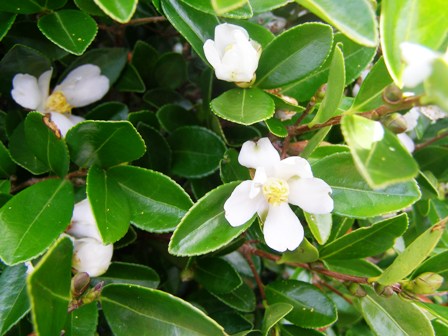
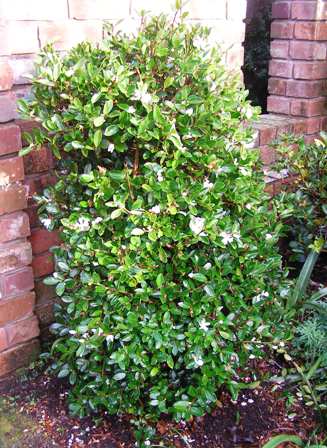
Camellia hedging options - C. brevistyla

Camellia hedging options - C. brevistyla

Camellia brevistyla

Camellia brevistyla

4) Camellias – some of the slow growing, small leafed varieties are suitable though the leaves will still be larger than buxus. They trim well, resprout from bare wood and are a good colour. There is a limited number suitable for keeping down to a metre, let alone 30cm, so varietal selection is important. Camellias are not easy to root from cutting for the home gardener and can be expensive to buy. Microphylla and brevistyla set seed freely so could be raised from seed at home if you can find a parent plant. Itty Bit is a true miniature for low hedges. Night Rider is very slow growing, though ultimately larger in size. You could keep it to a metre but it will be expensive to buy. We have opted to go the camellia route in the event of our moderate metreage of buxus hedging getting blighted and have raised seedlings of C. microphylla in the nursery for replacement.

Euonymous

Euonymous

5) Euonymus – there are assorted selections of small leafed euonymus being hailed as buxus replacements, including one named Emerald Gem. These look promising but international reports are that euonymus are somewhat disease prone and local reports are that it can be thrip-prone which will rule it out for shady areas. We would recommend trying this as hedging in a modest way before getting too carried away and we have yet to be convinced of its long term merit. It should be relatively easy to root cuttings and is sometimes available in a hedging grade at a reasonable price.

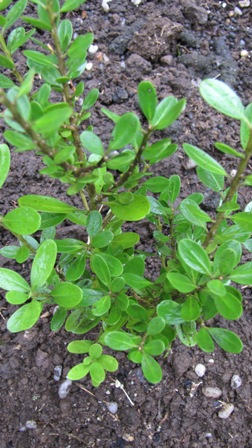
Melicytus obovatus

Melicytus obovatus

6) Our friend Tony is sold on Melicytus obovatus, a native from northwest Nelson which takes clipping very well. In the wild it will grow to 2 or 3 metres (but common buxus can become a huge shrub resembling a small tree left unclipped). Plantsman Terry Hatch at Joy Plants is very keen on this melicytus and produces it for sale. As far as we know, it has yet to be tested in the long term (by which we mean as a garden hedge past a decade) but it is worth a close look.

7) Selected pittosporums will make good taller hedges but you are fighting nature to keep them to the low level of edging buxus. Their leaves are also correspondingly larger. The compact pittosporums, Golf Ball and similar selections, make a quick option for clipping balls and topiary, if you don’t mind the paler shade of green. Keep them in full sun with plenty of air movement too.

8) Corokia will make a good hedge and there are dwarf selections available but they are harder to trim if the new growth is left to harden. If not cared for, they can develop bare patches.

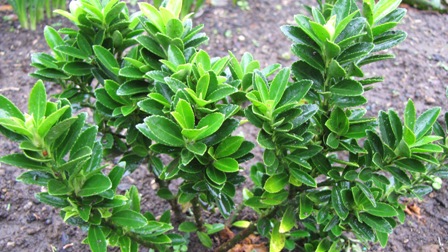
Ilex crenata 'Helleri'

Ilex crenata 'Helleri'

9) Twining Valley Nurseries in Pokeno are producing Ilex crenata ‘Helleri’ as a buxus sub. Ilex are the holly family and crenata is a small leafed species from Japan and Korea. It is recognised as a good hedging plant but I have only seen it in photographs and I don’t know how low it can be kept. It is worth investigating.

New Zealand totara - a long term prospect for hedging

New Zealand totara - a long term prospect for hedging

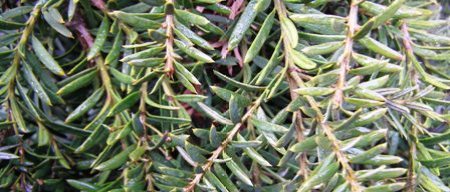
10) Our native alpine totara, Podocarpus nivalis, stays very low and can be clipped hard to get dense foliage. However, it is a long term option, it will be expensive to buy in quantity and it does not have the good green of buxus.

We have yet to hear of low hedges which have stood the test of time – by which we mean 10 years, not one year. Until there are more reliable reports, we would not advocate spending too much money and effort on major plantings of alternatives. There simply are no easy answers for a replacement for buxus and we keep coming back to the view that it may be timely to review the role of low hedges in New Zealand garden design.

For earlier articles on the topic of buxus blight and the role of buxus in a garden situation, check out:
* The appropriately named buxus blight
* There is life beyond buxus hedging
* Trouble with buxus
* DEBBO (that is: death by bloody buxus overload)

The ilex again

The ilex again

Ideas to Import

Simple ideas from English gardens. First printed in the Weekend Gardener, issue 321 August 25 to September 7 and reprinted here with their permission.

Lutyens steps at Hestercomb

Lutyens steps at Hestercomb

Lutyens steps at Great Dixter

Lutyens steps at Great Dixter

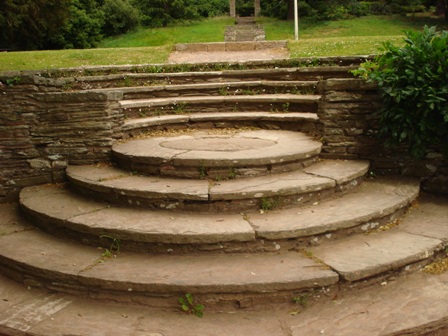
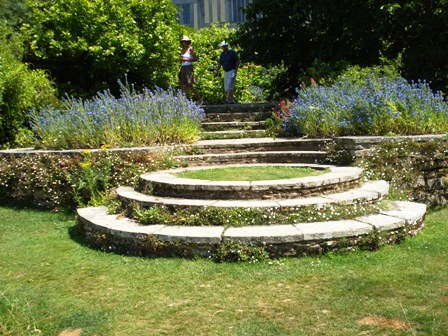
Nobody does statement garden steps quite like the great English architect Edwin Lutyens did. Outward facing semi circles lead you into the steps from both sides with the transition of a full circle in the centre. These examples are from Hestercomb and Great Dixter.

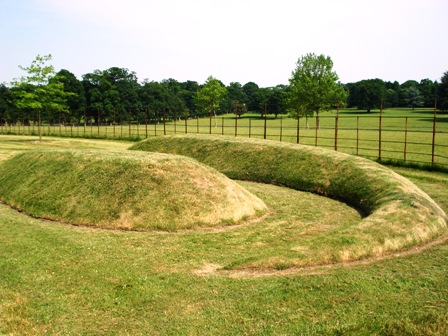
Discreet and informal seating for up to seven people in the outer reaches of the garden at Helmingham Hall. The tree trunk sections are set at the same height and backed by an informal brush barrier which frames the seating area. The view from the seating area is across a recent freeform earth feature towards the Tudor deer park.

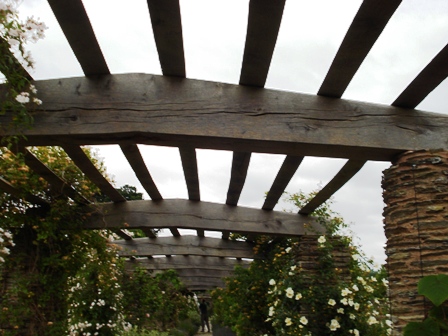
The simple device of subtly shaping the cross beams of this pergola at Hestercomb gives a lighter, more graceful effect as well as guiding the eye down the long view.

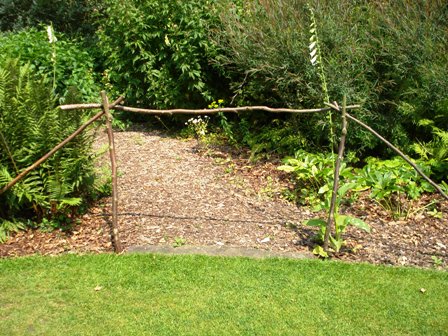
It is clear that this path is closed in Beth Chatto’s garden and the use of fresh saplings (probably hazel) forms a discreet visual barrier. Traditionally, English gardeners have used stakes and supports in their natural form, harvested from their own property, rather than the common use of imported bamboo, tantalised timber or metal stakes used in New Zealand.

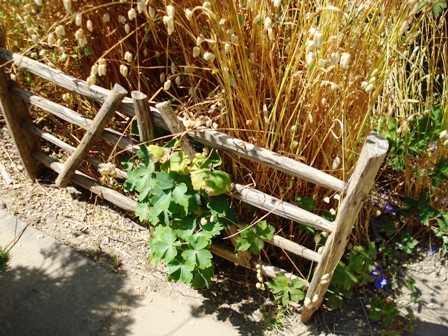
A rustic, low wooden fence built like a gate is an attractive, permanent means of holding back the floppy growth from falling over the narrow paths at Great Dixter.

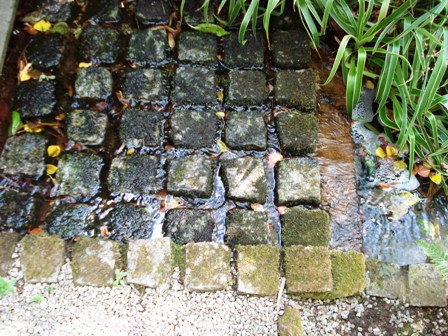
Using small, square cobbles makes the most of what is otherwise a rather insignificant small stream at Lamorran Garden in Cornwall.

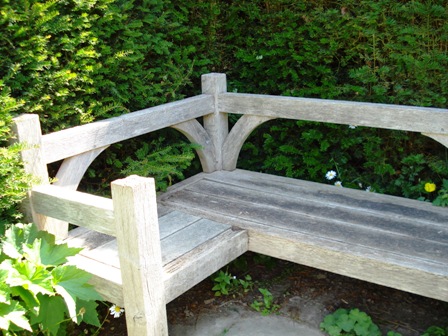
Adding a return to this seat at Great Dixter makes it a generous and attractive feature rather than just another wooden garden seat. It does not, however, increase the seating capacity.