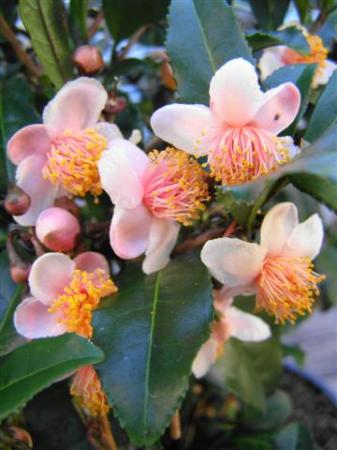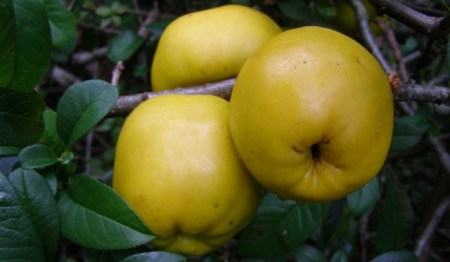
The chaenomeles - attractive and aromatic but not overly versatile when it comes to doing anything with them
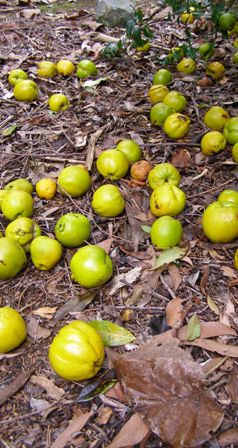
Feeling guilt at wasting the windfall chaenomeles
It is in the nature of Mark’s and my life that we receive a certain number of invitations to be guest speakers. Not that we are on the celebrity speaker circuit, I hasten to add. Nobody is offering to pay us $4000 to listen to our gems of wisdom. We might be a great deal more enthusiastic if they were. These days we decline most such invitations – it takes a great deal of time and effort to prepare a talk, quite aside from the travel time to go and deliver it. But I relented and accepted an invitation from outside the area to speak to a horticulturally inclined group this week. The reason was quite simple. I needed to learn how to put together a power point presentation and this would force the issue. Which it has done, but not without stress. A quick lesson from power point-savvy daughter at Christmas more or less equipped me to start. I put together a sequence of images on a theme of learning about summer gardens from England and the garden design debt to Moorish Spain. So far so good. We headed out to check that it all worked with a friend who regularly gives such talks. But there was a problem and it was a case of the semi sighted leading the nearly blind as we tried to solve it. We had to have another glass of wine instead and the next day, I returned to the problem of trying to fit photo images to screen size. Spending all day in front a computer screen is not the norm for me, so I tend to fluff around and multi task. There I am, laptop on power point stretching me beyond my technology skills, while starting to cook dinner and making fresh grape jelly when Mark asks: “What are you going to do with the passion fruit crop?”
To be fair to Mark, his question was not unreasonable. He has cooked, skinned (I dislike cooked tomato skins) and frozen large quantities of home grown tomatoes. He has taken corn off the cob, blanched it and quick chilled it, and packed it in meal sized portions. He has been cleaning and drying beans. He consulted with me about how many tins of tomato we might buy throughout the winter and spring and how often we might eat corn. I suggested up to 70 servings of tomato (twice a week) and maybe 40 of corn. Having reached that target, he started worrying about what to do with the remainder. Meanwhile the avalanche of autumn produce continues. What to do with the many bucket loads of pears, a variety without keeping qualities and rather too blemished to appeal to others? And the grapes? Our tastes have matured to the point where we are no longer so desperate as to make homemade wine. We haven’t even started on the apples yet and the feijoas will be starting soon. The chaenomeles are falling. Fortunately the pumpkins and potatoes just need sorting and storing but there are other crops shouting for attention and basil and tarragon seem to be going to waste. There is such a lot of pressure in this self sufficiency drive.
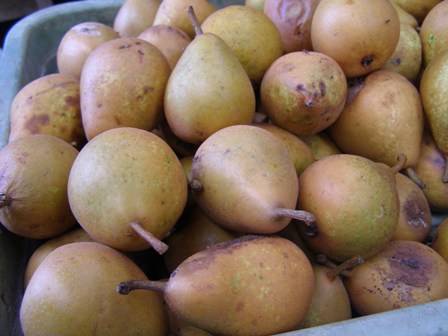
The crop of motley looking pears
Back in the late seventies, the world clock of peace ticked, apparently inexorably, towards the midnight which would signal the onset of the feared nuclear holocaust, petrol rose dramatically in price and home interest rates were up to 24% for second mortgages. Along with others, we felt the drive to simplify life and to be less dependent on outside supplies. We bottled and dried and froze food, ate largely from our own garden and shunned all tinned and pre packaged options. I will even admit to doing macramé (it was the age of macramé, an aesthetic aberration that has probably bypassed younger generations). The knotted sisal rope holders I constructed for our stereo speakers were a tour de force. I made elaborate patchwork dresses from old fabric (called vintage these days) which I smocked and embroidered and sold to a local craft shop. Mark produced handsome woodturning and I bought him a book on how to make sandals from leather and old car tyres. The sandals never eventuated but we were children of the land. In modern parlance, our carbon footprint was very low indeed. So we are not without experience in this field of partial self sufficiency even if it has taken us thirty years to return to the practices.
But my goodness, hasn’t the Christchurch earthquake been a timely lesson for us all on considering how we might cope in a similar disaster? True, all Mark’s tomatoes and corn would defrost. Depending on the freezer for food storage means one is also dependent on electricity. But we are not going to build our daily lives around a worst case scenario and it takes even more time (and indeed expense) to preserve food by bottling.
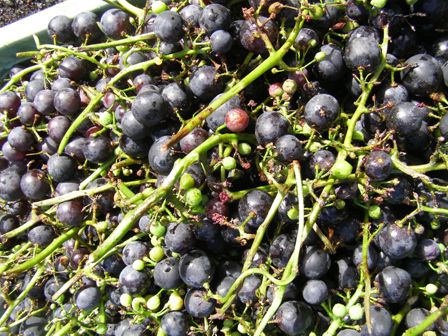
What to do with a surplus of grapes when home made wine does not appeal?
Interestingly, it is the time element that we had forgotten about. It takes a great deal of time both to grow food at home in sufficient volume to come anywhere near meeting one’s needs and then it takes even more time to prepare and store that food. If you don’t derive pleasure from doing it, the commitment is more likely to seem like an unnecessary burden. If you measure your time in dollar values, it is hugely more economical to simply hop in your car and go out to buy the food you require. But it is not the same. There is no way anyone could derive the same sense of satisfaction from unpacking supermarket bags and putting away packets and tins as one can from stowing away home grown food. Squirrel Nutkin Syndrome, I call it. The woodshed is full, the freezer is filling, and the pantry has a wide range of food options, even if it is a lifestyle choice which will not appeal to some. Mark also comments frequently that it takes a lot of land to produce a surplus of food and some of the extremely low estimates of how much area you need have him perplexed. And that is without even attempting to grow our own grains.
Should we suffer a natural disaster on a par with Christchurch, you can be sure of tomato and corn chowder here for about the first week. It may be cooked over an open fire but there should be plenty of it. However, the problem of what to do with the passion fruit harvest remains. As do the pears.