In memory of Christmas 2010

Altogether too reminiscent of a dead sheep to a New Zealander, alas

Altogether too reminiscent of a dead sheep to a New Zealander, alas

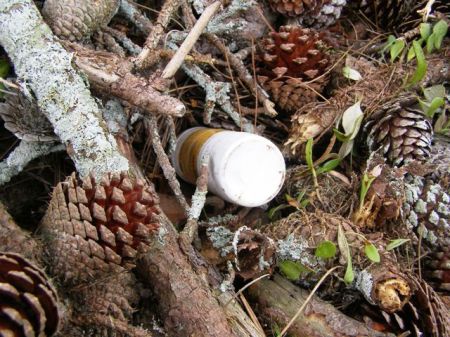
Regular readers may recall the DIY Christmas tree we showed in December, constructed from toetoe grass (or possibly pampas in other countries). I found its remains today where Mark had dumped it – looking uncomfortably like a dead sheep, alas. Maybe some toetoe plumes will rise from its remains in the future, if it has seeded down in our wild garden as Mark hoped.

Kevin, Sharon and our Christmas tree

Kevin, Sharon and our Christmas tree

Tikorangi Notes: Friday 11 February, 2011

The gecko - a first for us to find a live one in our garden

The gecko - a first for us to find a live one in our garden

LATEST POSTS: Friday 11 February, 2011

1) Gecko (singular but rare), many kereru and a mass of monarch butterflies in Abbie’s column this week. I admit that the photograph of the kereru was staged. It is not easy to get close enough to them and I had lost my one good image. In desperation we got one out of the freezer where Mark stores dead native birds he finds (all from natural causes) to pass on to a local kuia to pluck for use in making korowai or Maori feather cloaks. We had to partially defrost it to mould it, hold it in position and then hastily refreeze it as it was starting to smell rather high.

2) Amaryllis belladonna – often seen as rather coarse and common roadside flowers in this country but worth a second look. Plant Collector.

3) Garden tasks for this week though there is not a whole lot one can do at this time of the year beyond dividing bearded irises, daffodils and bluebells.

4) Not your ordinary everlasting flower – Helichrysum Silver Cushion in Plant Collector last week.

5) A little after the event now – garden tasks for the first week of February in an antipodean summer.

6) The second in our Outdoor Classroom series on making compost – step by step hot compost mixes with an impressive shot of our compost heap resembling an attraction at a thermal reserve.


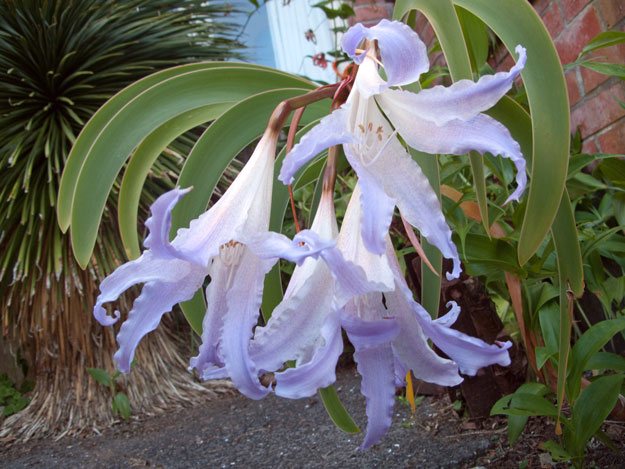
Worsleya rayneri in the garden, just starting to open its blooms

Worsleya rayneri in the garden, just starting to open its blooms

TIKORANGI NOTES: Friday 11 February, 2011There weren’t any Tikorangi Notes last week. I think I was feeling uninspired and having a great deal of trouble focussing my eyes on the computer screen – the result of not seeking help earlier for what turned out to be part of a seed head embedded in one eye. Such are the dangers of gardening. But this week was marked by two events – finding that we have a resident gecko in the garden (the gecko being a rarely sighted native lizard) – written about in Latest Posts 1, and the opening of not one but two Worsleya rayneri blooms in different locations in the garden. The worsleya flowering is not quite as rare as the sighting of a live gecko – it has happened twice before – but to manage this feat with bulbs planted out in the garden rather than kept in controlled conditions in a container is a reasonably significant triumph.

Wildlife in the garden – New Zealand style

Spot the gecko - a rare sight in New Zealand

Spot the gecko - a rare sight in New Zealand

As we sat outside having our morning coffee last Sunday, Mark commented that he had counted five native wood pigeons in the gum tree. Now there is nothing unusual about one or two kereru around here but five is close to a crowd for these birds who do not make a practice of hanging out together. As we watched, another two or three flew in to join them, followed by more, and then some. And but wait there were still more. We ended up with fifteen of these large and cumbersome but beautiful birds in our gum tree. A convention, we decided. They must be having a convention of local kereru. These are not birds renowned for having great brains and clearly their concentration spans are of short duration because they soon decided that it was time to break for morning tea. They flew over, more or less as a flock, to sample the offerings on the karaka tree. A quick snack and it was time for a field trip to a nearby pine tree from where they gradually dispersed. It made for a memorable coffee break.

Our native wood pigeon or kereru in the Ficus antiarus

Our native wood pigeon or kereru in the Ficus antiarus

As far as we know, our kereru stick around the area all year. Give them enough to eat and there is not a lot of point in them moving on. If you do a search for plants to grow for kereru, most sites list native plants including puriri and miro and only give exotic or introduced plants as an afterthought. But, like most of our native birds, kereru are untroubled by political correctness and they browse widely. They are gloriously untroubled by whether the food is nasty privet berries or nikau seeds. All that matters is that they are herbivores so they eat berries, seeds, fruit, flowers and leaves. In late autumn they come in close to eat the apple leaves just before leaf drop at a time when the sugars are concentrated. They are very partial to guavas and, apparently, to plums. Mark has watched them eating the kawakawa (pepper tree) berries, they raid the karaka tree, the flowering cherries, kowhai blossom and a host of other food sources. Being large birds which tend to crash land rather than being light of wing and foot, they feed from trees and shrubs which can hold their weight. You don’t see these birds on the ground, so they are not going to feed from annuals or perennials.

The delight for Mark this week was to find his first ever live gecko in the garden. In fact he has only ever seen one dead one before and that was in his glasshouse. In the lizard family, New Zealand only has skinks and geckos – the former are relatively common but the latter are rarely sighted. This particular gecko was presumably trying to warm itself on the trunk of a very old pine tree. Now that we have our eye in for this extraordinarily well camouflaged creature, we have found it out sunbathing in the same spot each day since so it is presumably resident. It now has to get accustomed to Mark bringing every visitor to stare at this rare sight and to make admiring noises even if they can’t tell it apart from the pine bark.

We did a bit of a Google search on NZ geckos which appear to be devilishly difficult to research and photograph, complicated by the fact we have a large number of different species. Ours was indubitably a brown one and on the larger side, something similar to Hoplodactylus duvaucelii. But it is just as likely to have been one of the other 38 or so different types already recorded.

We are by no means alone in our dedication to assisting the procreation of monarch butterflies

We are by no means alone in our dedication to assisting the procreation of monarch butterflies

Monarch butterflies we have in abundance here. Judging by the search terms which bring people to our websites at this time of the year, others are equally enthralled by these ephemeral beauties. I keep seeing questions typed in to Google like: how many monarch caterpillars can a swan plant support (depends entirely on the size of your swan plant…) and how long does a caterpillar take to grow (about three weeks). Can a caterpillar chrysalis on something other than a swan plant was another much searched question. The answer to that is yes, definitely, and it pays to encourage them to do so by poking in some bushy twigs by the plant. Having them chrysalis on the swan plant itself can be a real problem if their very hungry younger siblings munch right down the bare stems and the defenceless chrysalis then falls off. At this time of the year, earlier generations have often hammered the swan plants for food and newer caterpillars are running short. You can finish growing caterpillars on sliced pumpkin but it is not a complete food so it is unsuitable for getting very little ones through their weeks of growing.

Swan plants grow readily from fresh seed and if you are even halfway serious about wanting monarchs in abundance next summer, sowing a row in your vegetable garden in very early spring is a good means of getting the plants to a well established grade for later season egg-laying butterflies. Swan plants are generally biennial (so last two years) but they don’t like heavy frosts. This year’s plants can recover to support the first of next season’s caterpillars with the early spring sowing as a back up for later generations in the season. However, you do have to keep the young plants netted to stop them being stripped while very small. Letting some annual flowers seed down in spots of the vegetable garden can also provide food for the butterflies.

Food for the butterflies - a rather garish cosmos

Food for the butterflies - a rather garish cosmos

They need single flowers with visible stamens such as cosmos, marigolds, zinnias, daisies and poppies. A visitor stood in one of Mark’s vegetable gardens recently and suggested that it was not so much a veg patch as a mixed cottage garden.

The final word on the monarchs this season comes from one of our neighbours with whom we have had a running joke over time about stealing our monarch butterflies. Send them home, we have said. All the monarchs in this area are ours. Added Mark recently: please stop taking pot shots at our wandering monarchs. Ah, said neighbour riposted, those are the very rare and highly prized lacewing or whistling monarchs – the sound of the wind blowing through the holes in their wings. What more could we say?

Plant Collector: Amaryllis belladonna

Surprising perfection in the under-rated Amaryllis belladonna

Surprising perfection in the under-rated Amaryllis belladonna

Belladonnas naturalised on a vertical road cutting

Belladonnas naturalised on a vertical road cutting

Looking at the white perfection of the bloom just opening, it is not that easy to pick it as a common old belladonna, but that is what it is and just a random seedling at that. We tend to be a bit sniffy about belladonnas here and see them as roadside wildflowers to be taken for granted. Fortunately they thrive on benign neglect, preferring to be left undisturbed and quite happy to grow in quite difficult conditions. This one is on a vertical bank where Mark broadcast some seed several years ago.

The amaryllis family has only one solitary member and that is the belladonna – which stands for beautiful lady rather than the more common epithet of naked lady. The reference to nakedness comes from the plant’s habit of flowering before any foliage appears. This is another bulb from the Cape Province of South Africa and it is summer dormant. The flower pops up well before it actually comes into growth for the season. The colour range is from pure white through a gamut of pinks – pastel to bright sugar pink to a deep cerise bordering on red.

The more common candy pink of the belladonnas

The more common candy pink of the belladonnas

Apparently there are now some double forms around but I have yet to see them. I found a tray of perfect white ones at the back of the nursery last year and made a spot in the summer garden for them but now I am wondering about revisiting some of the other clumps we have hanging around the place to feature them more as a late summer flower. Their only real downside is that they have rather a lot of foliage for much of the year so they are best planted in a position where they can be left to their own devices and their scruffier times are not intrusive. If you are planting belladonnas, they like to be baked in the summer sun and left with their necks above the ground.

In the Garden: February 11, 2011

• My optometrist tells me that the most common cause of embedded foreign objects in eyes he sees is… gardening. He mentioned this as he fished out what he thought was part of a seed head well stuck to the cornea of one eye. As I couldn’t spot anything wrong, I had thought I must have an eye infection and was rather slow off the mark to seek help, during which time the condition of the eye deteriorated rapidly. I just mention this so readers know to be less stoical and faster to seek treatment should they experience escalating eye problems after being in the garden.

• Bearded irises can be lifted and divided now. These spring flowering beauties need attention every three years or so and we did an Outdoor Classroom on the topic last year which you can find on this site (type “dividing bearded irises” in the search box on the right of the page). In summary, discard mushy or old sections of the tubers, trim off the roots from the sections you are saving, chop off two thirds of the foliage and replant to a shallow depth in light, friable soil in full sun.

• Bulbs are arriving in garden centres so keep an eye out. Anything choice or unusual is likely to disappear quickly.

• If you planned to lift and divide daffodils in your garden or lawn, do it now because they will start putting on fresh, white root soon. The same goes for bluebells which are early starters.

• Pinch back rampant runners on cucumbers, melons, courgettes, pumpkins and other vegetables that grow in the same way. You want the plant to concentrate its energies on ripening its crop rather than making a run for the neighbour’s place. The tips are delicious when young and tender – steam them lightly.

• The recent wet and humid weather means there will be an explosion of fungal ailments in both the vegetable and ornamental gardens. These often show as a white powder over the leaves. It is a fact of life in our climate. You can be out there spraying your cucurbits every week if you want to but we just live with it. Thin the foliage to allow as much light and air movement as you can but don’t spread the diseased foliage through the garden or compost heap, unless you make a hot mix. You either have to bury it or put it out in the rubbish.

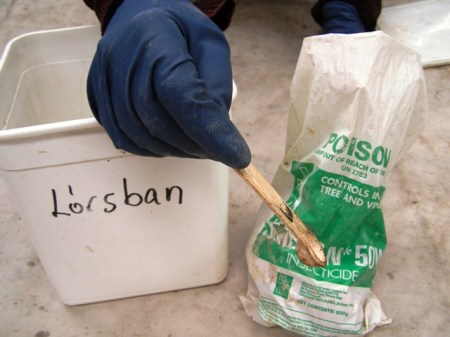
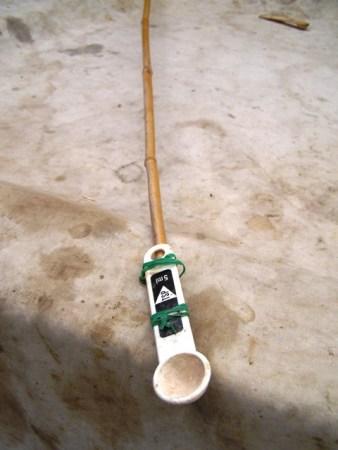
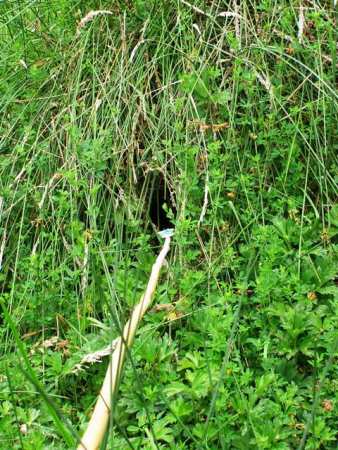
• I was going to do the next Outdoor Classroom on making cold compost (by far the most common for home gardeners) but dealing to wasp nests is more timely so we will return to the final instalment on compost a little later.